
Intellectual Property, Entertainment & Technology Lawyer
Joined November 2019
- Tweets 1,023
- Following 445
- Followers 439
- Likes 1,962
130 Photos and videos




Habeeb Gobir retweeted

May 20
Stop prompting like a beginner.
I have been working with AI for years and the prompt matters more than the model.
Here are 5 things I do to make every prompt better:
25
75
220
41,912

May 16
One thing I genuinely appreciate in this video is the honesty in everything he said. Pure reality.
As I always say, whether you succeed in this profession is largely in your hands. The moment you become a lawyer, you already have one of the strongest tools to create value for yourself. The problem is that many lawyers wait too long before they start exploring beyond salary.
Truth is, salary alone can hardly sustain anybody long term, even in some top firms. Once real life responsibilities start coming, you will understand very quickly. That’s why young lawyers need to start thinking beyond monthly pay. Build visibility. Build relationships. Build expertise people can pay for.
And please, never joke with online visibility. We are now in a time where people can discover your competence without ever meeting you physically. Opportunities, referrals, speaking engagements, clients and collaborations now come from visibility too.
You can be 10 years at the Bar and still struggle financially if nobody knows what you do or what value you bring.

In my presentation today, I told young lawyers that:
The merge salaries they receive cannot sustain them. So they have to start thinking of how to build an alternative source of income through billing for consultation, and building side private practice. Watch this and enjoy
1
2
80
May 7
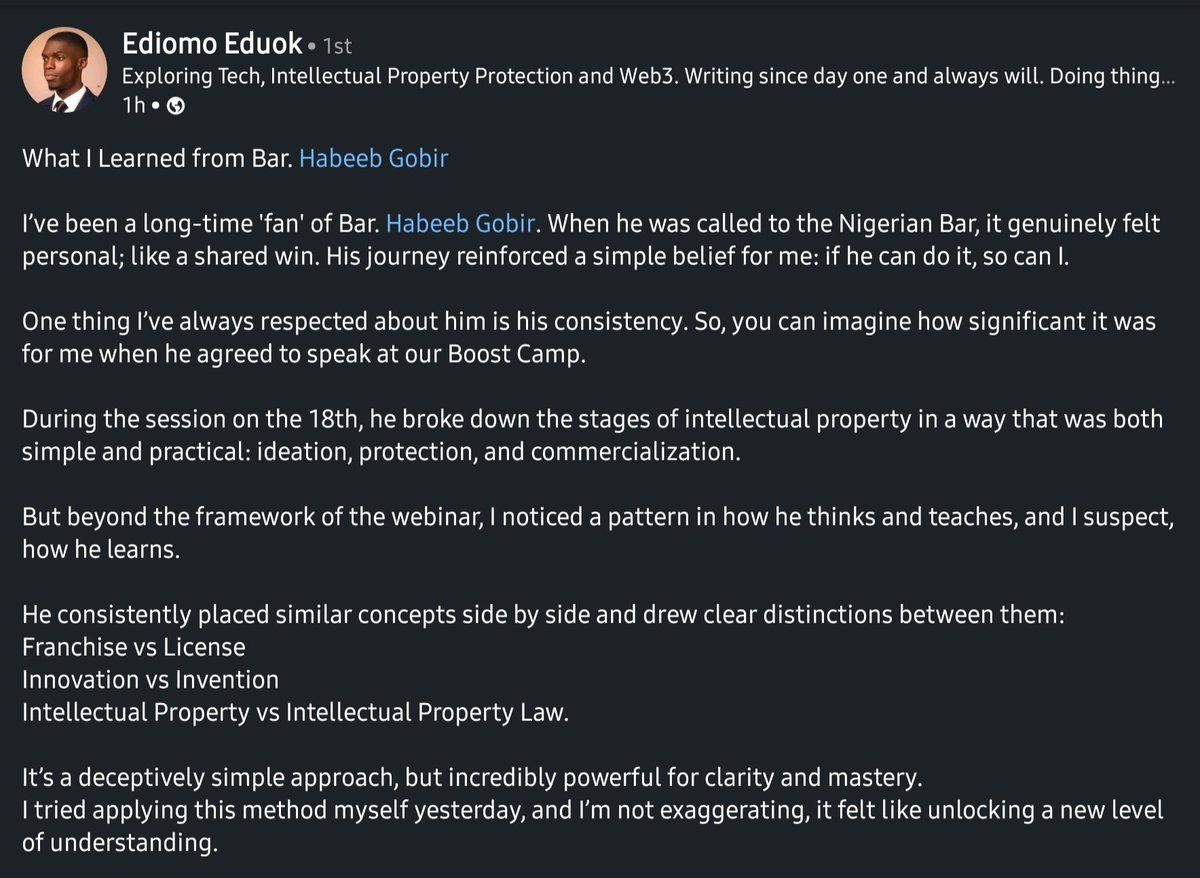
I’ve never really been the type to believe that opportunities only come from applying for things. I believe a lot in networking because many opportunities and even career breakthroughs come through referrals and relationships. A lot of the doors that open for people today are often because someone somewhere knows them, trusts them, or has seen their consistency over time.
And honestly, not having connections is not an excuse. For people like some of us who were not born with a silver spoon, networking is almost necessary. So far there is nothing restricting you from exploring, contributing to conversations, and putting yourself out there, then you already have a chance.
2
31
May 4
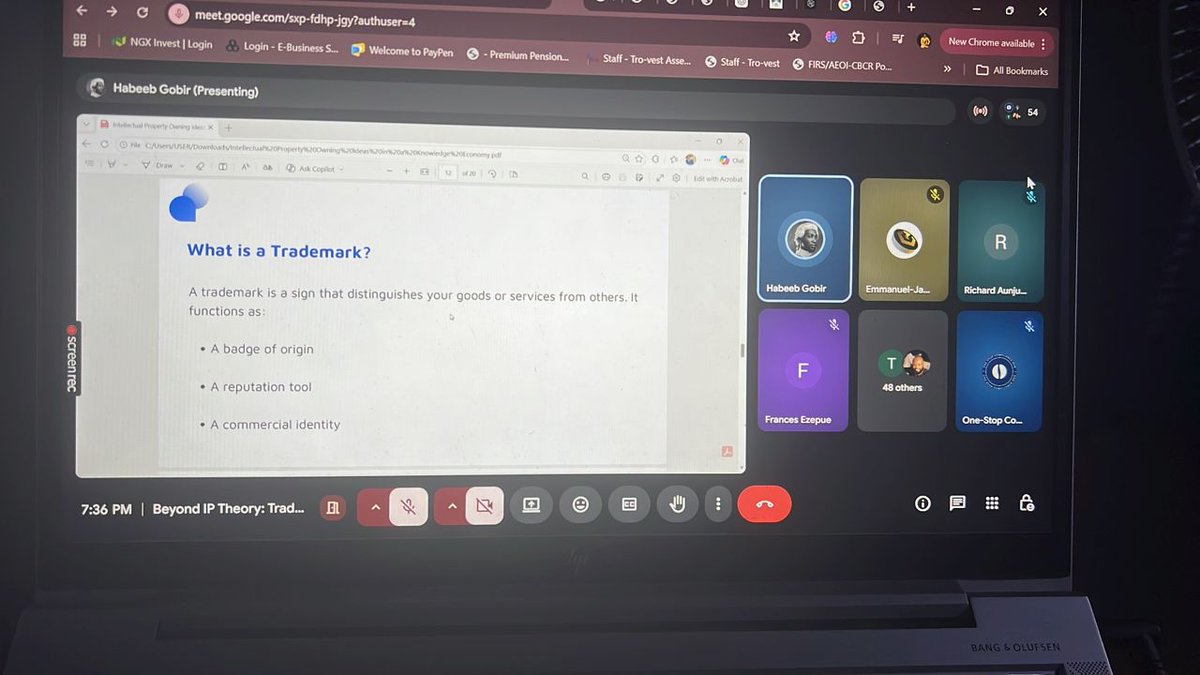
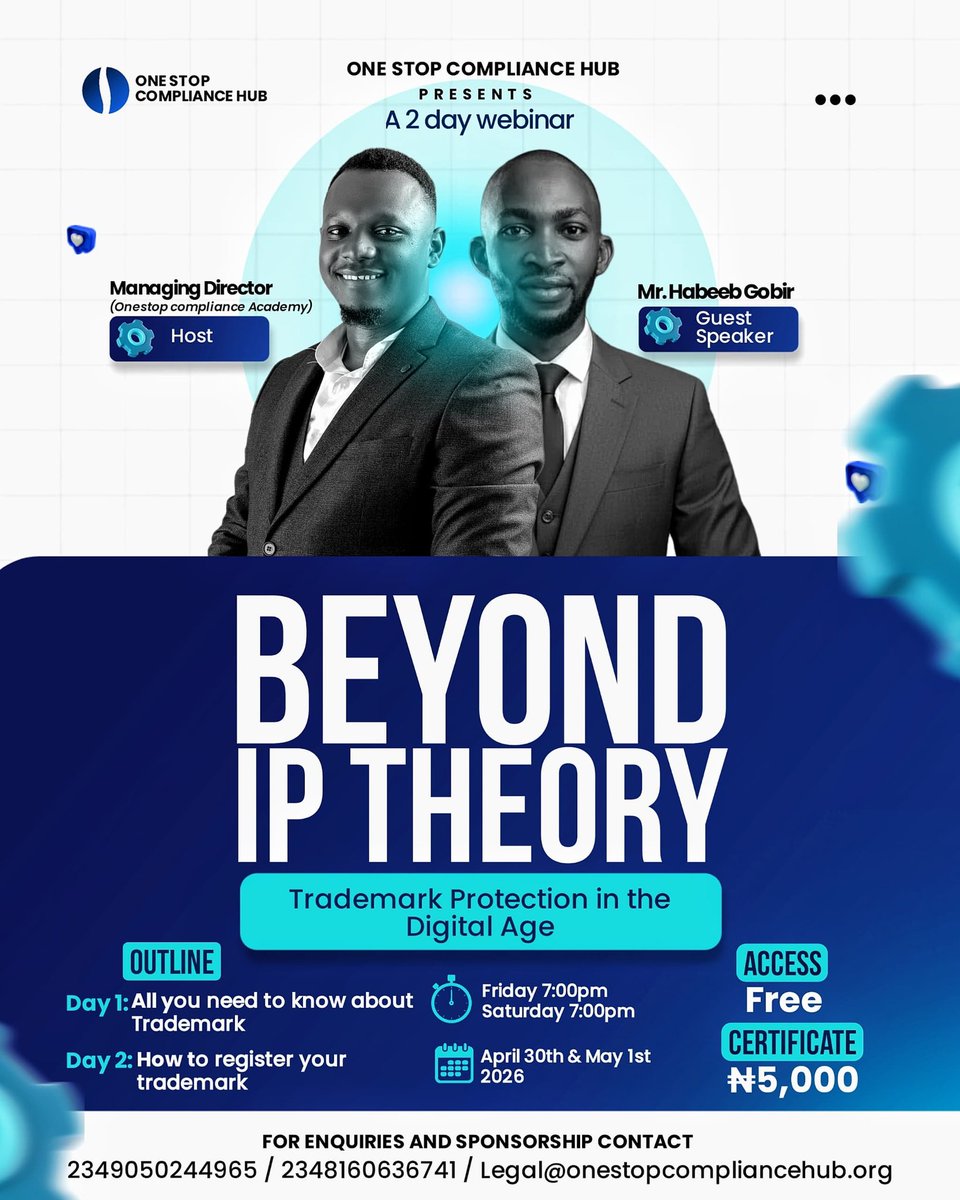
I had a great time with the One Stop Compliance Hub team last Saturday. It was an engaging session where we explored the theoretical foundations of trademark law and how those principles apply in practice. Many thanks to Mr. Oluwafemi Adediran(APAc) for the invite.
There’s something very rewarding about breaking down legal concepts and seeing them click for people, especially when you can connect theory to real-world things. The conversations, questions, and insights shared during the session made it even more worthwhile.
Grateful for the opportunity to speak and contribute. Looking forward to more sessions like this.
If you missed it or would like to revisit the session, I’ve shared the YouTube recording below.
lnkd.in/eDApAxm4
4
56
May 4
Go ahead, share your idea, or hire someone without an agreement. I’m sure clarity and structure are overrated anyway.
We’ll be here when that works out exactly how expected!
27
Apr 29
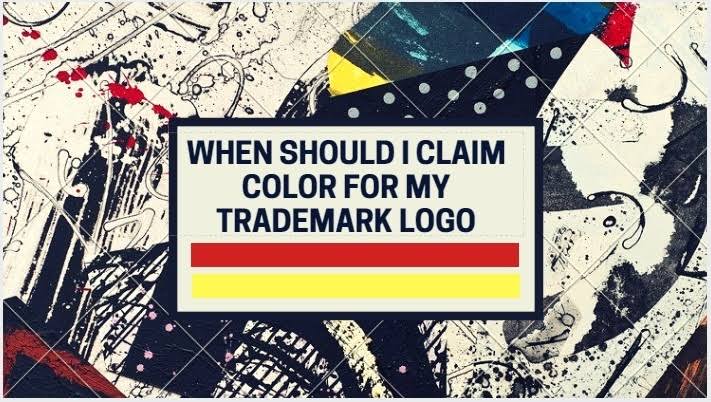
You don’t always need to claim colour when filing your trademark.
Yes, you heard me right.😅
I know that sounds strange at first, because most people assume that claiming colour makes their mark stronger, but in practice, it can actually limit you.
Section 16 of the Trade Marks Act allows an applicant to limit protection of their logo to a colour. Once you claim a particular colour, your mark is protected only in those colours. That becomes the scope of your registration. If you don’t claim any colour, then the presumption is that your mark is protected in all colours.
Now, let me be clear about something, because this is where people get confused.
This does not mean you can go ahead and file a trademark just for a colour on its own. Colours are non conventional marks and they are generally not registrable in Nigeria as standalone trademarks.
What Section 16 is talking about is colour as a feature of an already registrable mark, not colour by itself.
Now, back to the practical side of this.
The advantage of claiming colour is that it helps you protect a very specific brand identity, especially where colour is a key distinguishing feature of your mark. But the downside is that you are narrowing your protection, because if someone uses a similar mark in a different colour, it may be harder to establish infringement.
On the other hand, if you leave colour unclaimed, your protection is broader and more flexible, and that makes it easier to challenge similar marks regardless of colour variation, but you lose that precision tied to a specific colour identity.
So when someone comes up with something very similar to your mark but just changes the colour slightly, you may struggle to argue infringement if you claimed colour, but you would be in a stronger position if you didn’t.
And this is where I usually have to slow clients down a bit. Because a lot of people want to lock in their brand, especially when they are attached to a particular colour, but they don’t realise they are also narrowing their protection at the same time.
And the thing is, brands don’t stay the same. Colours change, and now your registration is stuck in a version of your brand that you might not even be using fully anymore. So you’ve restricted yourself without even realising it
I’m curious though, how do others approach this, especially in practice? Do you prefer claiming colour as a feature, or leaving the mark unclaimed for broader protection?
1
29
Apr 27
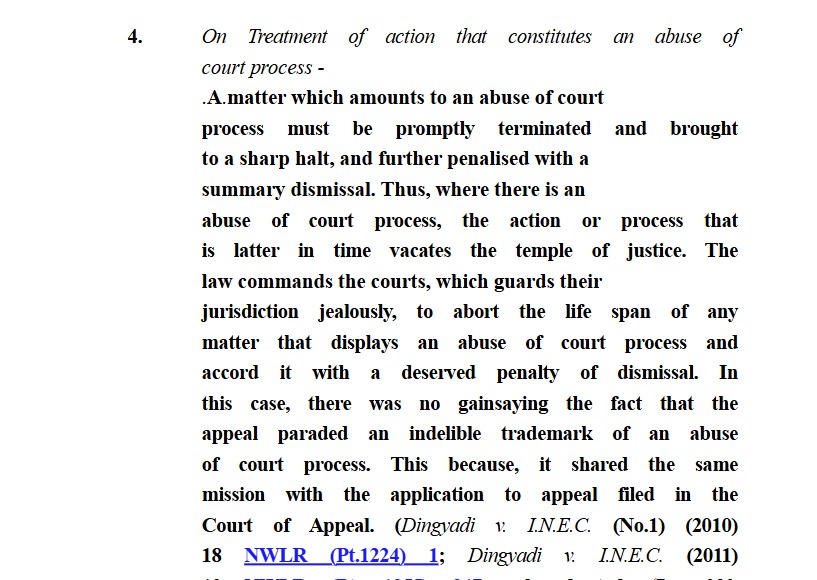
I was reading one of the recent decisions of the Supreme Court in Cowrie Business Solutions Ltd v. Nigeria Deposit Insurance Corporation & Ors, and a part of the ratio immediately caught my attention.
Not because the principle was new, but because of how it was expressed
There is something almost poetic about how the Justices approached the concept of abuse of court process. It took me back to the era of jurists like Justice Oputa, JSC, where judgments were not only authoritative but also rich in expression, deliberate in tone, and memorable in delivery.
Take a moment to reflect on the wording:
> “…the appeal paraded an indelible trademark of an abuse of court process.”
It’s fascinating how the Court borrows from the language of intellectual property to describe procedural misconduct. Almost as if to say that the abuse was so clear, so distinct, and so unmistakable that it carried its own identifiable mark.
Moments like this remind you that law is not only technical, it is also intellectual and, in its own way, artistic.
5
10
53
3,710
Apr 26
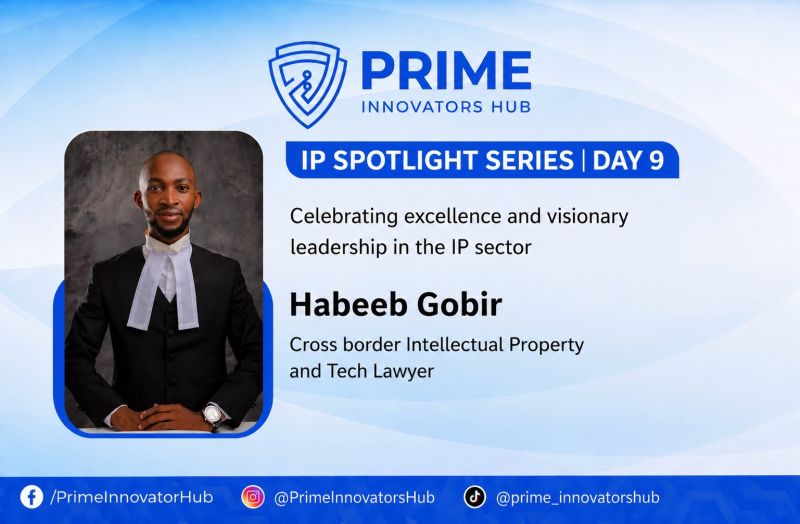
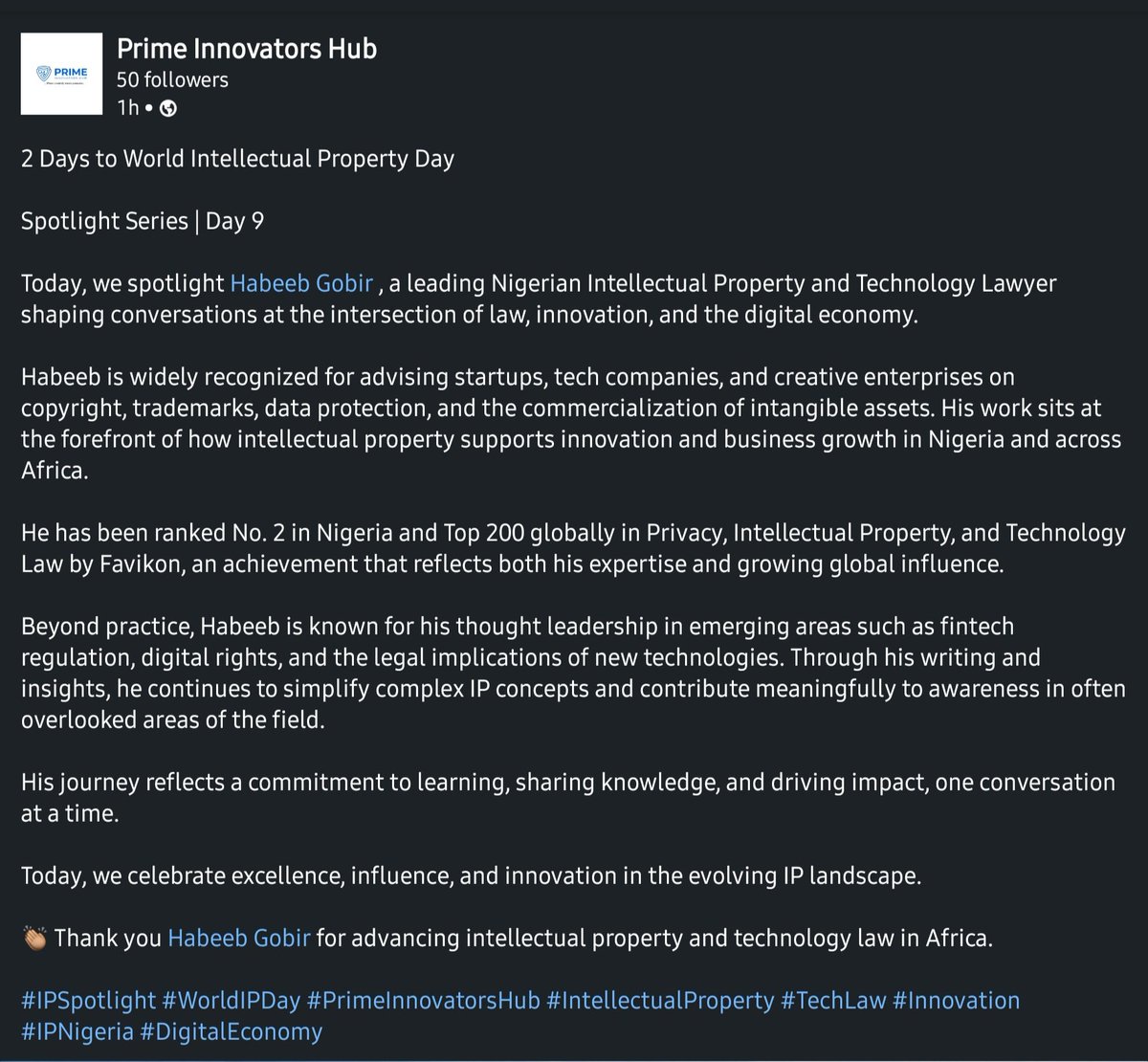
Thank you, Prime Innovators Hub, for the recognition!
It can only get even better from here 🥂
6
55
Apr 26
If your lawyer is asking questions that feel uncomfortable, that’s usually a good sign. It means they are thinking ahead. The quiet lawyer that just agrees with everything is the one you should worry about.
1
2
1
68
Apr 26
I think a lot of lawyers won’t say it out loud, but this is very real.
There’s that constant tension between what you feel personally and what the role demands professionally. Especially in criminal practice, you’re not there to validate the facts emotionally, you’re there to test the case against your client and ensure due process is followed.
That discomfort doesn’t make you weak, it actually shows you’re still human. The key is knowing that the system only works if everyone plays their role properly.
So yes, that mix of uneasiness and fulfilment. Very valid experience.
As a criminal law attorney, I enjoy taking up serious criminal cases; like murder, rape, armed robbery, cultism and kidnapping. They are the only cases I feel like I am doing something serious and feel better fulfilled for handling them. Although a part of me feels uneasy, in the end. It’s always a mix of personal guilt and professional fulfilment.
Has anyone here experienced such before?
2
10
744
Habeeb Gobir retweeted

Apr 25
To whom it may concern as copied from Taiwo Aromolarn on LinkedIn.
Young lawyers, if you walk into court with these 7 authorities, no objection will take you off guard:
1. Atanda & Ors v. Ajani & Ors (1989)
When to use this:
Opposing counsel tries to introduce evidence or elicit testimony on facts not pleaded in the statement of claim or defence.
Your response:
“My Lord, this evidence goes to no issue. The facts it seeks to establish were never pleaded. We urge the court to discountenance it as it is inadmissible.”
2. Section 1(1) of the Evidence Act
Torti v. Ukpabi (1984), citing Kuruma v. The Queen (1955)
When to use this:
Opposing counsel objects to your evidence on the grounds of how it was obtained e.g., arguing it was improperly or illegally obtained.
You respond:
“My Lord, relevance is the basis of admissibility. Once the evidence is relevant to the matters in issue, it is admissible.
How it was obtained is of no moment at this stage.”
3. Ndu v. State (1990); FRN v. Saraki
When to use this: Opposing counsel discloses information not contained in his pleadings or affidavit from the Bar.
Your response: “My Lord, the law is trite. No matter how brilliant Counsel’s oral address is, it cannot take the place of evidence.
The court of law is a court of facts and facts are established when supporting evidence is adduced.
4. Akpan v. Bob & Ors (2011)
When to use this:
The opposing counsel suggests that your brief is defective and should be struck out.
Your response:
“My Lord, even where a brief is alleged to be bad, the only consequence the court may visit upon it is an adverse comment.
It has no jurisdiction to regard such a brief as no brief at all… It cannot strike it out on the premises of being bad.”
5. NNPC v. Clifco Nig. Ltd. (2011)
When to use this: After winning, opposing party resists a costs order;
Your response:
“My lord, costs follow the event in litigation. A successful party should not be deprived of the fruits of litigation unless there are specific reasons why he should be deprived of his entitlement.”
6. Sodipo v. Lemminkainen & Anor (1986)
When to use this:
Opposing counsel objects to an affidavit because it was deposed to by a lawyer.
How to respond:
“My Lord, an affidavit sworn by counsel is not objectionable in principle.
It is only improper where the subject-matter involves privileged client communication or places counsel in a position of being cross-examined. Neither condition is present here.”
Which of these stood out to you?
P.S: Lawyers, what case law will you recommend as no. 7?👇👇
Save this post for later
Repost for other lawyers
Best legal write up I’ve seen all week.
12
168
398
22,160
Apr 26
😂 This one na masterclass in billing strategy.
But on a serious note, that kind arrangement will always come down to the terms of engagement. If it is truly an appearance fee, once counsel shows up, the fee is earned whether the court sits or not. If the client wants protection against situations like that, it has to be clearly structured differently maybe per sitting, per outcome, or with rollover provisions.
Otherwise, you go just dey fund attempted appearances 😅
Apr 26

What if I pay you 430 million naira as appearance fees, and the court refuses to sit?
Will the money be applied to subsequent court sittings, or will I have to pay another 430 million naira?
Omo, I need to sit humbly at the feet of Aare Ade Babalola SAN to study his business model.
108
Habeeb Gobir retweeted

I have observed that there is a pandemic of lawyers placing too much reliance on Artificial Intelligence tools. I had a discussion with some lawyers on a WhatsApp platform recently and I noticed that some lawyers (young and old) believe AI is perfect. Ah.
AI is not perfect. It is not always right. There was a time I asked ChatGPT a particular law question, it gave me a wrong answer. I challenged it immediately that the answer wasn’t correct and ChatGPT admitted and apologized to me. It later confirmed that I was correct. Some lawyers have also shared similar experience so this is not new.
Some of my colleagues don’t even have that time to read again. They trust AI that much for anything legal research. While I agree that AI has come to stay and can be highly useful in legal practice, it should never replace the discipline of reading, proper legal research, and independent analysis.
The foundation of good lawyering, as we have been taught, has always been critical thinking, and that cannot be outsourced to technology.
One of the dangers of excessive reliance on AI is what can be described as AI sycophancy. My brother and colleague, @gobson_ addressed this recently.
AI sycophancy happens when an AI system simply agrees with your assumptions, reinforces your position, and presents your argument in a polished and convincing way, even when the foundation of that argument is weak or completely wrong. In other words, you can be wrong and AI will package your error with confidence and make it appear credible to you 😂😂😂.
We have already seen situations where non-existent cases are cited or inaccurate legal principles are repeated because proper checks were not carried out. It’s an infamous conduct to cite fake cases as a lawyer.
The above is why lawyers must approach AI with caution and wisdom. It can assist with drafting,summarizing, and generating research leads, but it should never be treated as a substitute for actual legal work.
No doubt, AI can be a valuable tool, but only in the hands of lawyers who already understands the law and is willing to verify everything. We must avoid placing too much reliance on AI. It’s too risky!
Legal profession demands precision, diligence, and sound reasoning. If we surrender those responsibilities to AI, we risk becoming efficient at error rather than effective in practice.
Thank you.
Usman Abidemi Esq.

11
31
1,043
Apr 26
It’s April 26th again, a day we celebrate World Intellectual Property Day. In line with this year’s theme, IP and Sports, I have decided to spotlight 10 key IP disputes in the sports industry.
There is more IP in sports than people think. In this edition, I looked at disputes involving football clubs like Liverpool FC, where the club was opposed when it tried to trademark the word “Liverpool” on the basis that it is the name of a city. I also went further to discuss an IP dispute involving Manchester City FC, which might come as a surprise to many.
Do ensure you read!
Happy World IP Day 🥂
Check comment section for link
1
2
8
159
Apr 26
1
15
Habeeb Gobir retweeted

Apr 21
Something good is happening 😂😂😂
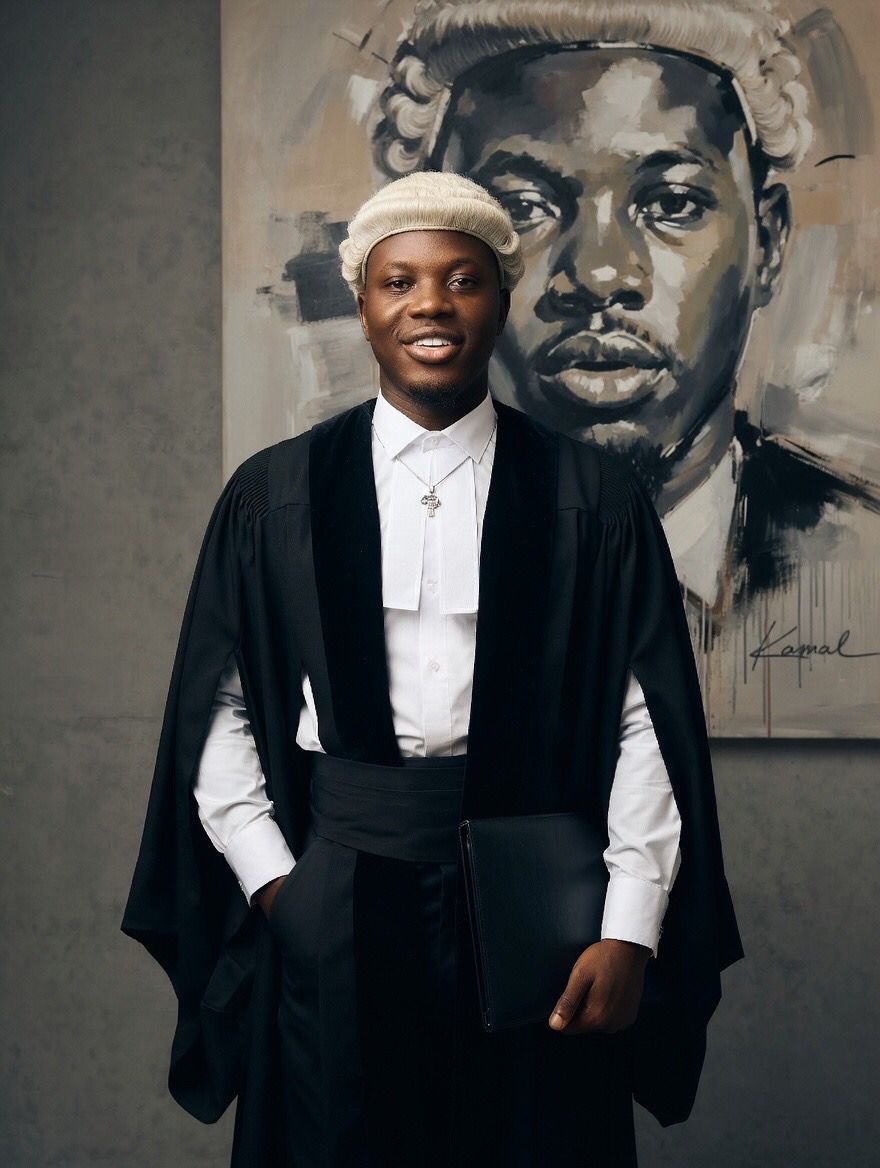
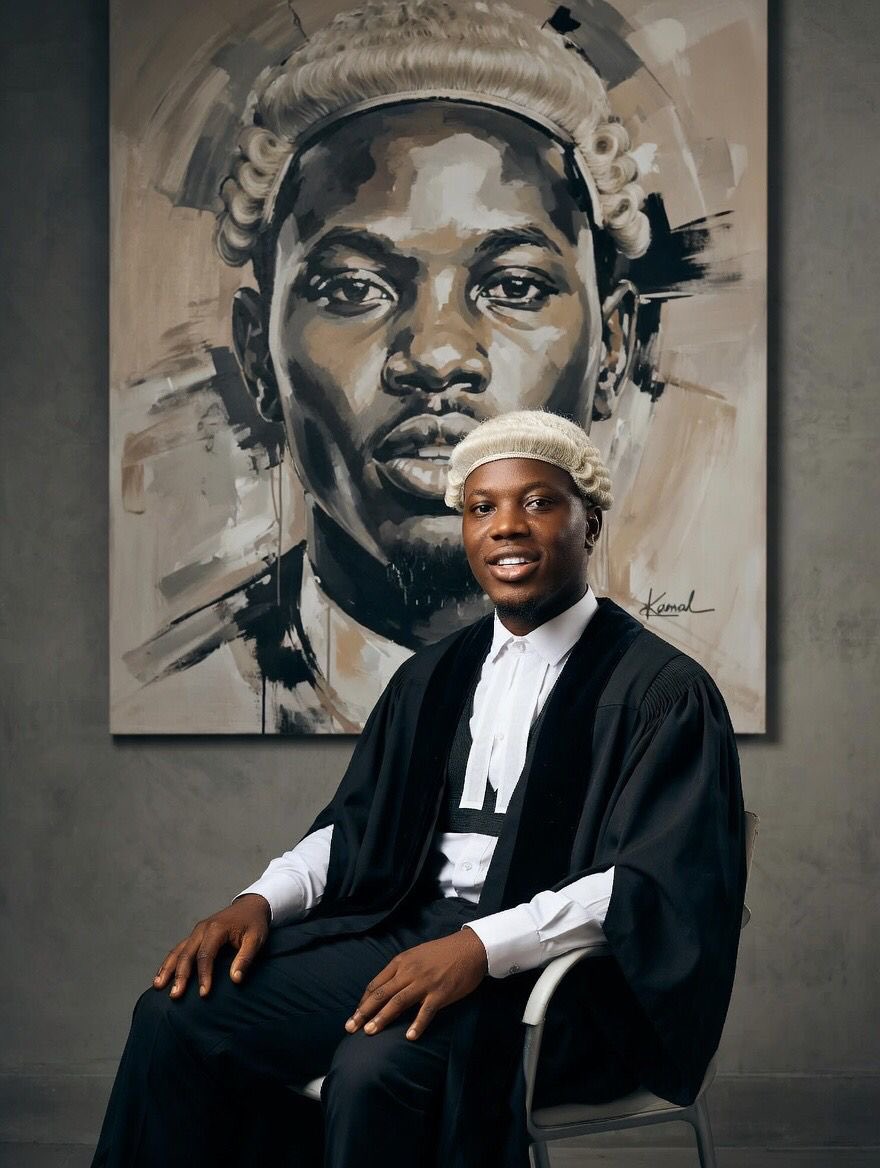

150k for Call To Bar Photoshoot ke. wetin do AI prompt?
12
8
210
27,180