
Empowering a Sustainable AI Future
Joined March 2010
- Tweets 94
- Following 1
- Followers 672
- Likes 2
40 Photos and videos











What happens when AI reacts too slowly?
In customer service, it creates frustration.
In physical AI—robots, drones, autonomous systems—it can create safety risks.
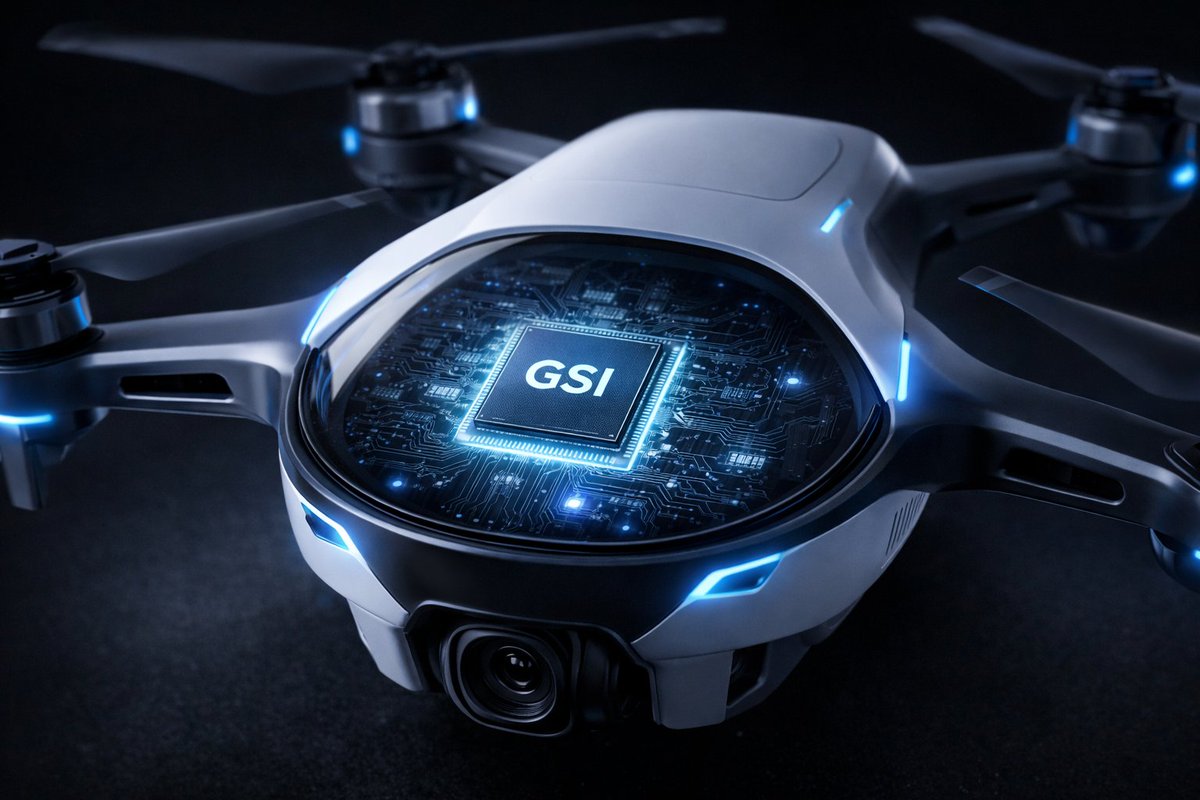
The difference between a robot avoiding an obstacle and colliding with it often comes down to one metric: Time-to-First-Token (TTFT).
This article explores why AI reaction speed matters, the critical latency thresholds that govern real-world machine behavior, and why the future of physical AI depends on delivering awareness in seconds—not minutes.
From microsecond motor control to sub-3-second situational awareness, learn how next-generation compute architectures are enabling safer, more intelligent autonomous systems.
Read the full article: forbes.com/councils/forbeste…
#ArtificialIntelligence #PhysicalAI #Robotics #EdgeAI #AutonomousSystems #MachineLearning #AIInfrastructure #SmartManufacturing #Innovation
1
2
597

May 22
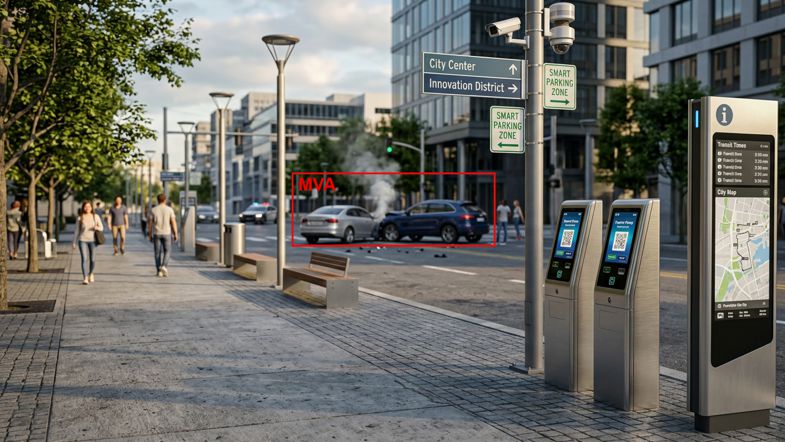
Smart cities don’t need more data. They need better awareness.
In our latest podcast, we discuss how cities are shifting from passive monitoring to real-time, instructed observation using edge AI and sensor fusion.
Learn how GSI Technology’s APU helps identify critical events faster—from public safety threats to infrastructure failures—while enabling low-power, scalable deployment close to the data.
#SmartCities #EdgeAI #AI #PublicSafety #SensorFusion #Infrastructure #Semiconductor #APU
gsitechnology.com/smart-citi…
1
1
5
277
Apr 13
Discover why time to first token (TTFT) is the make-or-break metric for edge AI—and how a breakthrough in compute-in-memory could unlock the next generation of real-time intelligent systems.
In this article, Lee-Lean Shu, CEO of GSI Technology, breaks down the root causes of latency and explains how a new architectural approach is reshaping what’s possible at the edge.
forbes.com/councils/forbeste…
2
1
9
526
Apr 6
Latency isn’t just “fast vs. slow” — it’s the brain architecture of Physical AI.
In our latest episode, we break down the 3 critical latency layers that turn robots from reactive machines into intelligent agents:
⚡ Sub-15ms → reflex-level control
🧭 Sub-50ms → real-time navigation
🧠 Sub-3s → awareness & reasoning
If you care about robotics, AI, or the future of autonomous systems… this is a must-listen.
gsitechnology.com/understand…
2
4
2,979
Feb 26
Most AI chips move data back and forth. What if you could compute where the data already lives?
In episode 12 of our podcast, we break down how @gsitechnology's Gemini-II compute-in-memory architecture slashes data movement and unlocks real edge AI performance.
If you care about bandwidth, power, and faster time-to-first-token — this one’s worth your time.
gsitechnology.com/compute-in…
1
2
9
796
Feb 12
Matrix math is cheap. Moving matrices isn’t.
Learn how GSI Technology's Gemini-II computes directly in memory and why this matters for multimodal LLM TTFT and edge AI systems.
bit.ly/4qJghsI
3
6
707
Jan 29
Edge AI isn’t coming—it’s already here.
From CES-deployed robots to autonomous vehicles, this episode dives deep into why time-to-first-token (TTFT) is now the metric that matters and how GSI Technology's Gemini-II APU delivers real-time, multimodal AI at a fraction of the power of GPUs.
If you care about latency, architecture, and AI that actually works at the edge, Episode 11 of our podcast is a must-listen.
bit.ly/4a3wfaK
2
1
6
747
Jan 13
AI is moving beyond the cloud and into the real world.
Lee-Lean Shu, CEO of @gsitechnology , explores how in-memory computing overcomes the power and performance limits of traditional architectures to bring data center–level AI to the edge—enabling real-time decision-making in applications like agriculture, drones, satellites, and defense.
bit.ly/45Ft5IG
2
2
10
875
18 Dec 2025
Episode 10 is live!
AI is moving out of the cloud and into the real world. From edge inference to multimodal intelligence, we explore how AI is becoming faster, smarter, and more autonomous—right where data is created.
Join us as as we break down the evolution of AI at the edge, why time-to-first-token matters, and what this shift means for drones, vehicles, and remote systems.
Listen now and see why the future of AI isn’t centralized—it’s embedded. #AI
gsitechnology.com/ai-at-the-…
3
2
9
1,045
26 Nov 2025
What if satellites could think?
In our latest episode, we explore how @gsitechnology's Gemini-II APU enables on-orbit SAR, change detection, object ID, and more!
Listen today! bit.ly/3JZunqx
2
2
9
1,944
13 Nov 2025
In Episode 8 of our podcast, we dive deep into the world of true autonomy at the edge, powered by @gsitechnology's Gemini® APU. From navigating dense cities to seeing through storms and darkness with Synthetic Aperture Radar (SAR), to running multimodal LLMs on-board, this chip is redefining what's possible for autonomous systems. #EdgeAI #LLMs
gsitechnology.com/revolution…
1
6
1,122
31 Oct 2025
Cornell University's research on @gsitechnology's APU revealed Compute-in-Memory performance that’s…honestly a little unsettling.
- Lightning-fast vector search
- Navigating like it has spooky sixth sense
- Performing through digital “fog” that would leave GPUs trembling
Cornell opened the lab door. GSI built what walked out.
#EdgeAI
bit.ly/3WxHRwo
Happy Halloween!
1
5
11
2,079
20 Oct 2025
Independent research by Cornell shows that the Gemini-I APU delivered comparable throughput to GPUs while delivering over 98% lower energy consumption.
The APU’s unique design allows it to shorten total processing time by up to 80% compared to CPUs.
bit.ly/4olaRD6
6
8
24
2,360
17 Oct 2025
Time to First Token (TTFT) is key for LLM performance on edge devices. In our latest podcast, we dive into how @gsitechnology's APU is redefining efficiency at the edge. #AI #EdgeComputing
Tune in to learn more: bit.ly/4hjAFgM
1
12
1,622
3 Oct 2025
Listen to our fifth podcast where we discuss how @gsitechnology's approach to true compute-in-memory represents something revolutionary.
It’s not just an incremental improvement—it’s a fundamental rethinking of how computation should work. #AI #Compute
bit.ly/4nSux1H
1
1
7
944
17 Sep 2025
Episode 4 is live!
Join us for the latest installment of our podcast series as we dive into how @gsitechnology's APU is revolutionizing AI at the edge—powering the next generation of defense and aerospace applications.
Listen now: bit.ly/4nuRlDS
1
3
716
3 Sep 2025
AI is moving to the edge—and breaking away from the cloud. In our latest episode, we explore how GSI Technology’s Gemini-II chip is breaking the bottlenecks and powering AI where it matters most. #AI #GSIT
bit.ly/3VCgtMV
1
3
719
20 Aug 2025
In Episode 2 of our new podcast, we dive into @gsitechnology's APU — a compute-in-memory engine redefining AI inference.
Improving performance and lowering power.
A game-changer for scalable, energy-efficient AI.
#AI
bit.ly/4oK5oab

1
2
463