
YES.
Created for 2simple
goals, easy money transfer,
easy border crossing.
Now a mega,Tyrannical,
backstop governing body.
Rules over member country
citizens lives&businesses at
minute level. EU has a dept
for every endeavor.They set
the rules. Digital currency&
id final steps🙏
9

In college there was a girl I spoke to TWICE in those 4yrs. Nvr hung out, just had 2simple 3min convos w her & 1group project. Found out she HATED me for the entirety of the 4yrs & was religiously talkin shit.
Mind you, to this day idek her name. All bc I was outspoken & bubbly.
1
1
36
1,132


Why WahooPredict?
1Market fit: Perfect place for gamers, enthusiasts, traders and of course gamblers
2Simple UI: WahooPredict makes navigation as simple as possible
3Automated markets created immediately there’s a trend
1
37
139

Mar 20
✍️ ICICI vs SBI Super Top-Up – Detailed Comparison:-
One of followers asked comparison
“ICICI better hai ya SBI?”
Sach simple hai 👇
👉 Dono ache hai… but purpose alag hai
🟢 ICICI Lombard General Insurance👇
👉 For people who want strong protection & fewer surprises
✅ Pros (Why people choose ICICI)
1More feature-rich product
2Flexible deductible options
3Multiple add-ons available (Claim protector, inflation etc.)
4No strict room rent cap (better claim experience)
5Better control over claim structure
6Covers modern treatments & advanced procedures
7Strong network hospital support
8Good for high coverage planning (₹25L–₹1Cr )
9Suitable for long-term health planning
10Better overall claim experience perception
❌ Cons (What you should know)
1Premium is slightly higher
2Product is a bit complex to understand
3Add-ons increase cost
4Not ideal for very price-sensitive buyers
5Needs proper advisor to explain fully
🟡 SBI General Insurance👇
👉 For people who want simple & budget-friendly option
✅ Pros (Why people choose SBI)
1Affordable premium
2Simple & easy-to-understand plan
3Backed by SBI brand trust
4Good for basic protection needs
5High sum insured options available
6Works well with corporate base policy
7Suitable for first-time buyers
8Less complicated structure
9Decent coverage for standard hospitalization
10Good option for cost-conscious families
❌ Cons (What you should know)
1Limited advanced features
2Fewer customization options
3Possible room rent restrictions
4Less flexibility during claim structuring
5Not ideal for premium planning clients
6Add-ons not as strong as competitors
7Claim experience depends more on case handling
8Less control on deductions
9Not designed for complex medical scenarios
10Basic product — not a “complete protection strategy”
⚠️ Real Truth (Most Important)
👉 Policy buying time → sab same lagta hai
👉 Claim time → difference samajh aata hai
🧠 My Straight Advice
•Long-term, serious protection → ICICI Lombard
•Budget, basic safety → SBI General
👉If you need help understanding which option suits you better, feel free to connect on DM or Comment Guide me. Happy to guide 🤝
#InsuranceIndia #HealthInsurance #ClaimSupport #AdvisorMatters #ICICI #SBI #Mumbai #Navimumbai #Banglore #Gurgaon #delhiNCR #Hyderabad #Chennai #Andrapradesh #Karnatka #Orrisa #Kolkata #Kanpur #Lucknow

5
8
30
1,745

🔥🔥🔥 “Beyond all reckoning, the goofy DOGE geniuses did it! It’s done.
For six years, they guarded this data like the nuclear codes. Yesterday, DOGE slapped it on the internet, ribbon-wrapped for Valentine’s Day. DOGE —whose death was obviously slightly exaggerated— just dropped a tactical nuke on both the vaccine debate and welfare fraud— and launched the biggest crowdsourcing project in human history…
DOGE teams originally accessed the HHS data in February, over the backs of hysterical Democrats and enough lawsuits to keep a medium-sized law firm busy for a decade. Since then— crickets. Until now.
And it was the most Elon solution ever. They open-sourced HHS’s top-secret Medicaid claims database —11 gigabytes worth— and dumped it on the internet before Democrats could even say “injunction.”
The release was framed as an anti-fraud move, surfing a wave of public outrage washing out of Minneapolis and Nick Shirley’s viral video. In making the announcement (on X, of course), DOGE-HHS pointed out, “For example, using this dataset, it would have been possible to easily detect the large-scale autism diagnosis fraud seen in Minnesota.” The space billionaire quickly chimed in. “Medicaid data has been open-sourced, so the level of fraud is easy to identify,” Musk wrote. “DOGE is not a department, it’s a state of mind,” he added…
The 11GB file can be searched or downloaded at OpenData HHS, and includes aggregated provider-level claims data, by billing code, by month, between 2018 and 2024— bookending the whole pandemic period. (Note— It does notcontain patient-level data.) It includes records from all Medicaid claims submitted by providers for reimbursement during that period.
This is clearly not just a DOGE project. It is a coordinated effort across the Trump Administration. For example, timed with the release of the data, Treasury Secretary Scott Bessent announced a related new program. Not only have they open-sourced the research, but they have gamified it. Bessent said Treasury was setting up a website for people to report Medicare fraud— and they’ll get up to 30% of whatever’s fined and recovered.
If the $1 trillion fraud estimate is even half right, the government just turned fraud detection into the world’s largest treasure hunt. Some kid in a bedroom with a laptop, a chatbot, and a case of energy drinks might make more money this year than most hedge fund managers. Dog the Bounty Hunter: Fraud Edition is coming soon, to a laptop near you.
Social media quickly began lighting up across the board. Within hours of the data release, citizen analysts had started flagging facilities billing for physically impossible numbers of procedures, clinics with addresses at residential apartments diagnosing hundreds of children with autism per month, and at least one provider that seems to have performed more Medicaid services than there are actual humans in its zip code.
…informatic superheroine DataRepublican quickly noted a bizarre coincidence…
What she was signaling was that HHS lists 184 active Medicaid providers supposedly operating in a small (11,000 sq ft), rundown commercial building at 2614 Nicollet Avenue, Minneapolis, not even including fake daycare centers…
In less than 24 hours, here’s what we’ve learned:
1It’s easy to find fraud flags if you are looking for them.
2Simple cross-checking against other publicly available data helps a lot.
3The hardworking federal employees at the big government agencies have been unable to accomplish these trivial tasks, and it’s costing us up to a trillion dollars a year.
4Thanks to Treasury’s bounty, fraud finding is now a well-paying job that anybody can take.
The fraud hunt is on! Uncover a single fraudulent provider, and possibly earn millions! It’s even better than Bitcoin. Stop learning to code right now, and get out there and find Jimmy Buffett’s lost shaker of salt…”
—Jeff Childers, @jchilders98
20
220
617
25,510

Feb 10
Sewerage floods in to Wellington coast
Comes from Moa point
Needs to be fixed
Don't need wasted money on an enquiry
Surely Moa Point (as they deal in Shite) know what the problem is?
So fix it
2Simple??
Moa Point sewage spills in ocean @nzherald nzherald.co.nz/nz/wellington…
1
2
89

25 Dec 2025
Merry Christmas from all of us at 2Simple 🎄
Card designed by Mrs Holmes at Sandal Primary School, winner of the Staff category in the 2025 Festive Card Competition

2
126


11 Nov 2025
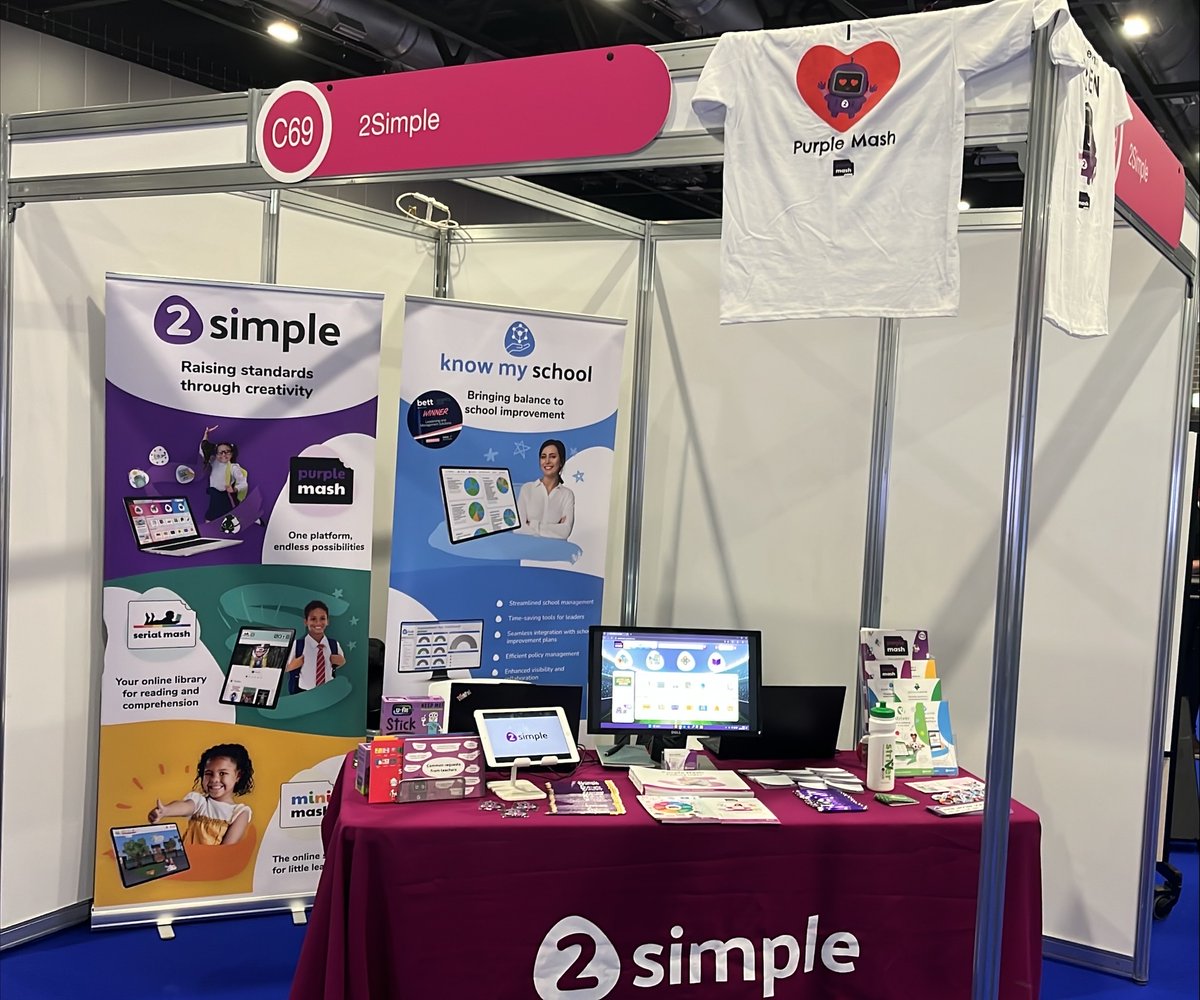
We're here at the @brilliantfest today!
If you're attending, stop by the 2Simple stand (C69) for a chat with @MrG2S and Ben about how our resources for teaching, learning, and leadership can help you and your school!
#BRILLIANT2025 #PurpleMash #KnowMySchool
1
2
119


18 Aug 2025
Mera toh resume hi shortlist nhi ho rha
ek bnda placed hogya 14lpa mein with 2simple project
one linear reg and other powerbi dashboard!!
shit Man!!
1
3
111

19 Jul 2025
It was fun while reading through @EspressoSys white paper and yesterday i was able to share about the. Core Capabilities attached with Expresso.
Furthermore, there are research projects involved which i will talk about one after the other.
1/CIRC (Coordinated Inter-Rollup Communication)
2/Liquidity Defragmentation
3/Sequencing Market Design
4/Shared Sequencing across rollups
So i’ll briefly talk on CIRC
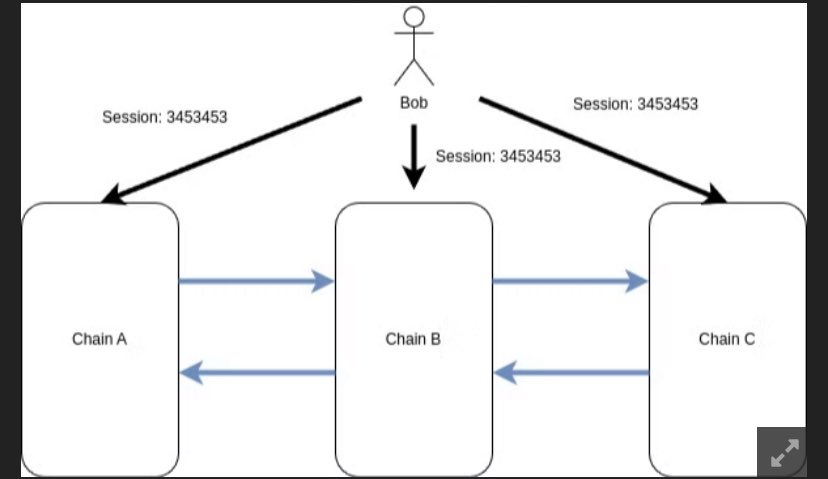
CIRC (Coordinated Inter-Rollup Communication), a simple yet powerful cross-chain messaging protocol that enables synchronous composability across L2s. CIRC offers several key advantages:
•No VM modifications: L2s can implement the protocol using smart contracts, without altering their existing virtual machines.
•Parallel proving: L2s can independently prove state transitions while maintaining interoperability with other chains.
•Cryptographic enforcement: The protocol is cryptographically enforceable. It does not rely on economic security or slashing mechanisms for correctness.
•Integration with a Confirmation Layer: CIRC can be complemented with a layer that sequences transactions across rollups and provides fast, reliable pre-confirmations.
CIRC is built on three core components:
1Mailboxes: Messages between applications on different chains are handled by mailboxes, which are implemented as contracts on each rollup (rather than on Layer 1). This allows decentralized apps (dapps) to engage in several rounds of communication within a single L1 time slot.
2Simple and flexible message handling: Messages are stored in a key-value map, avoiding the overhead of enforcing messages order (as would be necessary with a Merkle tree for example). Session identifiers differentiate between multiple concurrent cross-chain interactions, and message payloads is defined by the application itself. As a consequence, while we describe our solution assuming all chains are EVM compatible, our design naturally extends to non-EVM chains.
3Settlement Layer Contract: The correctness of state updates and consistency across rollups are enforced by an aggregated proof verified by a shared Settlement Layer Contract deployed on Layer 1. This contract also serves as a unified bridge.
gEspresso ☕️

7
2
11
247
11 Jul 2025
What a fantastic day we had at @CVS_Slough - a huge thank you to @Computing_CVS 💜 it was incredible to see all the children enjoying the books and activities! Get yours in the 2Simple Shop 2simpleshop.com and selected @onestopstores
2
2
288
9 Jul 2025
Pete Potato's Problem Pile-Up is now available to buy from the 2Simple Shop, along with Arthur Apple and Betty Beetroot's own stories: zurl.co/Rf8WV
#PurpleMashPublishing #ChildrensBooks #BookLaunch
1
2
118
7 Jul 2025
Arthur Apple and the Mysterious Noise will be available to buy on Wednesday, 9th July from the 2Simple Shop: 2simpleshop.com/collections/…
#PurpleMashPublishing #ChildrensBooks #BookLaunch
2
3
3
621
2 Jul 2025
Cody is enjoying the sunshine @EducationFest and looking forward to seeing everyone tomorrow on stand D9
#festivalofeducation #cody #2simple

1
2
416
24 Jun 2025
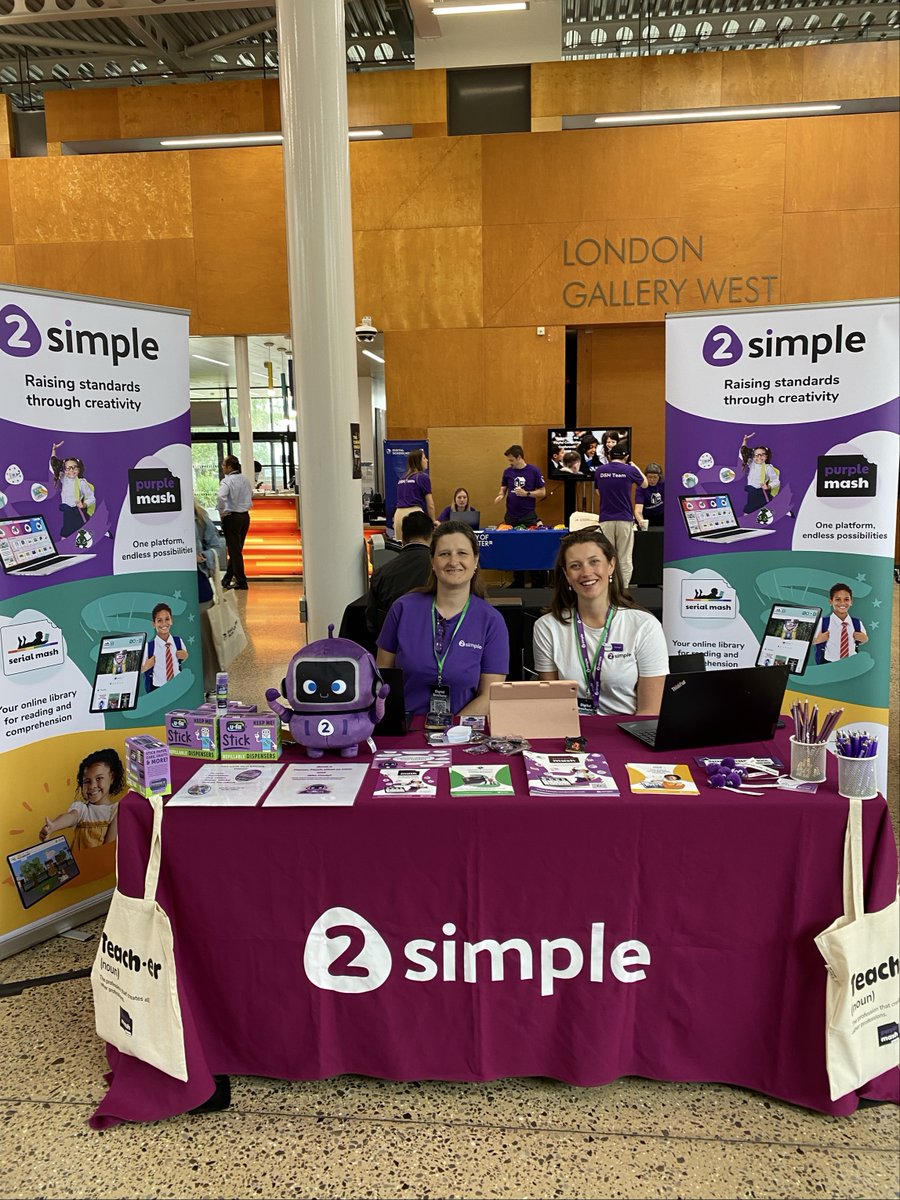
We're at the #PlayfulComputing Conference from @DigSchoolhouse today! If you're attending, visit Dora and Georgia at the 2Simple stand to learn about our transformational software packed full of resources for teaching and learning!
#PurpleMash #PythoninPieces #KnowMySchool
1
2
3
486
18 Jun 2025
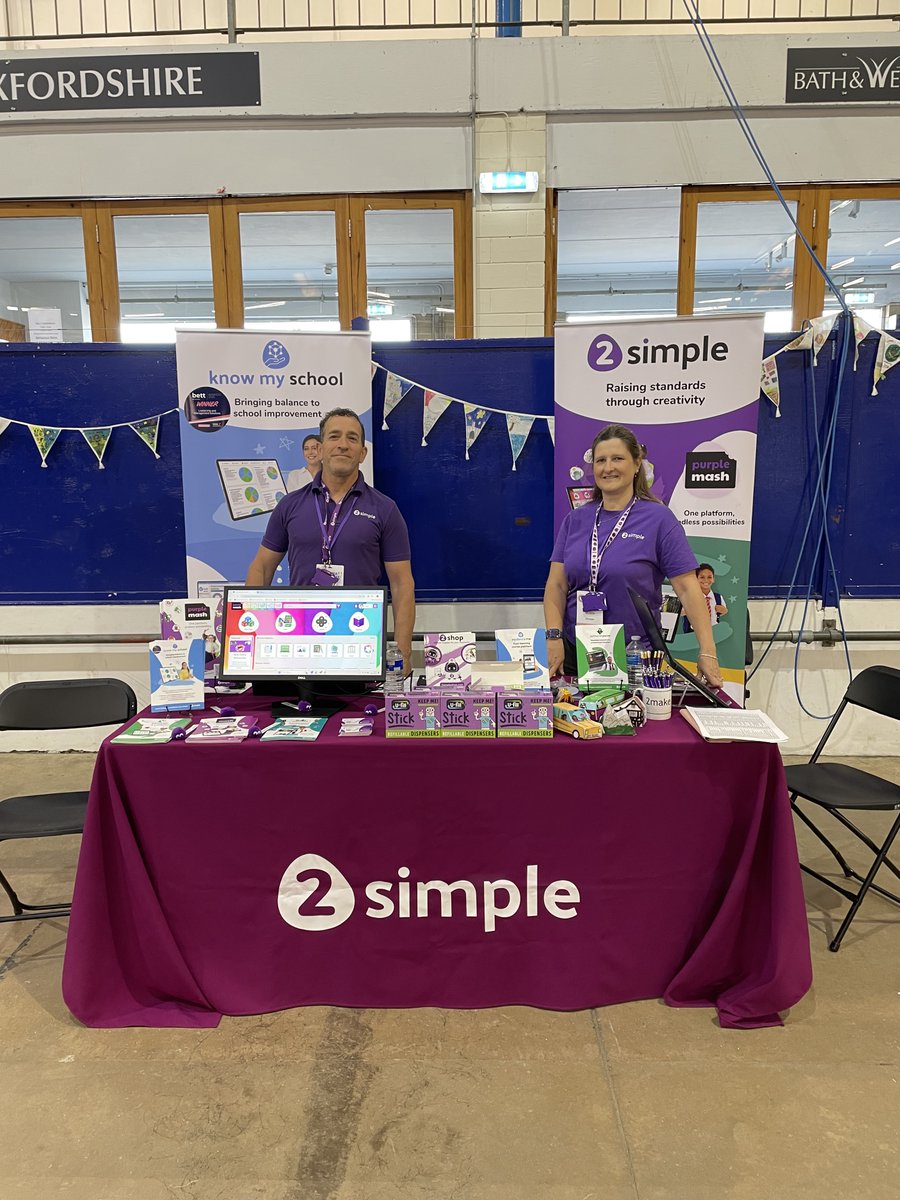
We're at the @BathWellsTrust Fest today! If you're attending, visit the 2Simple stand for a chat with Andy and Dora about how our resources for teaching, learning, and leadership can help you and your schools!
#BWMATFest #PurpleMash #KnowMySchool
2
3
476