
Jun 17
Unified Effective Framework: Paired Positive and Negative Fields (Toward a Data-Anchored Emergent Gravity Theory)
This collection of documents presents a cohesive, speculative but internally consistent effective framework for unifying gravity, the force hierarchy, quantum gravity issues, and certain astrophysical anomalies. It is developed by Morgan Elliott Smart in collaboration with Grok (xAI). The core idea inverts the standard vacuum assumption and treats gravity as an emergent “displacement pressure” effect.Core Idea in One PictureThe universe’s baseline is a dominant, non-conductive negative-energy “ocean”. Positive-energy matter appears as rare, localized “bubbles” that disrupt this ocean. Gravity is primarily the ambient “crush” pressure exerted by the infinite negative background trying to displace or collapse these positive intrusions — not (solely) spacetime curvature sourced by positive mass-energy.This single mechanism naturally produces:
Gravity’s extreme weakness at microscopic scales (screened inside dense positive regions).
Its dominance at macroscopic scales (coherent accumulation of displacement zones with no cancellation, unlike electromagnetism).
The framework is anchored in Parker Solar Probe (PSP) public data via the residual acceleration term
fneg(r)=aobs(r)−aexp(r)>0f_{\rm neg}(r) = a_{\rm obs}(r) - a_{\rm exp}(r) > 0f_{\rm neg}(r) = a_{\rm obs}(r) - a_{\rm exp}(r) > 0
(after subtracting standard gravitational thermal pressure contributions). This residual is interpreted as the macroscopic signature of the negative field when local pairing weakens.Key Pillars of the Framework1. Paired Fields Φ₊ and Φ₋
Φ₊ (positive/conductive): Long-range propagation, energy-momentum coupling.
Φ₋ (negative/non-conductive): Quantum containment, insulation, macroscopic spacetime displacement.
Their interaction is quantized:
Spair=∫λΦ Φ− d4xwithSpair∈nℏ (n∈Z).S_{\rm pair} = \int \lambda \Phi_ \Phi_- \, d^4x \quad \text{with} \quad S_{\rm pair} \in n\hbar \ (n \in \mathbb{Z}).S_{\rm pair} = \int \lambda \Phi_ \Phi_- \, d^4x \quad \text{with} \quad S_{\rm pair} \in n\hbar \ (n \in \mathbb{Z}).
At the Planck scale they “meet and orbit,” setting the natural correlation length
ℓp=ℏG/c3\ell_p = \sqrt{\hbar G / c^3}\ell_p = \sqrt{\hbar G / c^3}
. Net gravity emerges as
Φgrav≡Φ Φ−.\Phi_{\rm grav} \equiv \Phi_ \Phi_-.\Phi_{\rm grav} \equiv \Phi_ \Phi_-.
2. Microscopic Foundation: Corrolons
Fundamental degrees of freedom are corrolons — indivisible paired quanta carrying conductive charge
q q_ q_
and confinement charge
q−q_-q_-
, with an internal separation degree of freedom
σ\sigma\sigma
(quantized in units of
ℏ\hbar\hbar
). The microscopic action includes a potential
V(σ)V(\sigma)V(\sigma)
that strongly favors the “meet-and-orbit” bound state at
σ∼ℓp\sigma \sim \ell_p\sigma \sim \ell_p
. Effective fields
Φ±\Phi_\pm\Phi_\pm
arise as coarse-grained collective modes of vast numbers of corrolons. Hubbard–Stratonovich transformation decouples the microscopic pairing interaction and generates the regulated path-integral measure for the paired fields.3. Four Operational Properties of Φ₋ (derived from PSP residuals)
Quantum-paired to Φ₊.
Non-conductive (exponentially screened or confined like flux tubes).
Insulating (limits outward energy transport in low-density plasma → coronal temperature inversion).
Macroscopic displacement of spacetime (the “crush” term
fneg(r)f_{\rm neg}(r)f_{\rm neg}(r)
).
4. Force Hierarchy from One Mechanism
Gravity: Net emergent effect of paired fields.
Electromagnetism: Primarily Φ₊ propagation.
Weak force: Negative-field containment chiral aspects.
Strong force: Strongest manifestation of non-conductivity and confinement.
Addressing Major Problems
Gravitational hierarchy / scale dependence: Automatic via screening inside dense positive “bubbles” vs. coherent accumulation outside (non-conductive medium prevents leakage).
Cosmological constant hierarchy: Observed tiny positive
Λ\Lambda\Lambda
is a stable trace residue locked in by non-conductivity; the dominant negative ocean supplies the attractive “crush” while the positive trace drives accelerated expansion (
w≈−1w \approx -1w \approx -1
).
Black-hole entropy & information paradox: Entropy from counting closed pairing loops threading the horizon (area law
SBH=kBlnΩpairS_{\rm BH} = k_B \ln \Omega_{\rm pair}S_{\rm BH} = k_B \ln \Omega_{\rm pair}
, with
Ωpair∝exp(A/4ℓp2)\Omega_{\rm pair} \propto \exp(A/4\ell_p^2)\Omega_{\rm pair} \propto \exp(A/4\ell_p^2)
). Information preserved in the loop topology.
Holography: Closed pairing loops serve as fundamental boundary degrees of freedom; Ryu–Takayanagi formula recovered from loop counting on minimal surfaces.
Singularities & bounce: Repulsive displacement term at high curvature yields regular Planck-scale cores and cosmological bounce (modified Friedmann/TOV equations).
Natural UV cutoff: Pairing becomes strongly non-perturbative at Planck energies; no ad-hoc regulator needed.
Quantization sketch (detailed in dedicated documents): Path integral
Z=∫DΦ DΦ−exp(iℏS[Φ ,Φ−])Z = \int \mathcal{D}\Phi_ \mathcal{D}\Phi_- \exp\left(\frac{i}{\hbar} S[\Phi_ ,\Phi_-]\right)Z = \int \mathcal{D}\Phi_ \mathcal{D}\Phi_- \exp\left(\frac{i}{\hbar} S[\Phi_ ,\Phi_-]\right)
with pairing term enforcing the measure and non-conductive properties automatically. Hilbert space spanned by winding numbers of closed loops macroscopic displacement mode. Unitarity by construction.Concrete Realization: Displacement-Pressure Modified Gravity (DPMG)A genuine scalar-tensor modified-gravity theory realizing the intuition:
S=∫d4x−g[MPl22R−12(∂μϕ)2−V(ϕ)] Sm[ψm,g~μν]S = \int d^4x \sqrt{-g} \left[ \frac{M_{\rm Pl}^2}{2} R - \frac12 (\partial_\mu \phi)^2 - V(\phi) \right] S_m[\psi_m, \tilde g_{\mu\nu}]S = \int d^4x \sqrt{-g} \left[ \frac{M_{\rm Pl}^2}{2} R - \frac12 (\partial_\mu \phi)^2 - V(\phi) \right] S_m[\psi_m, \tilde g_{\mu\nu}]
with conformal coupling
g~μν=A2(ϕ)gμν\tilde g_{\mu\nu} = A^2(\phi) g_{\mu\nu}\tilde g_{\mu\nu} = A^2(\phi) g_{\mu\nu}
, density-dependent chameleon coupling
β(ρ )=β0exp(−ρ ρc),\beta(\rho_ ) = \beta_0 \exp\left(-\frac{\rho_ }{\rho_c}\right),\beta(\rho_ ) = \beta_0 \exp\left(-\frac{\rho_ }{\rho_c}\right),
and runaway negative-ocean potential
V(ϕ)=Λ4exp(−λϕ/MPl)V(\phi) = \Lambda^4 \exp(-\lambda \phi / M_{\rm Pl})V(\phi) = \Lambda^4 \exp(-\lambda \phi / M_{\rm Pl})
.Effective Newton constant:
Geff(ρ )=G(1 2β(ρ )2).G_{\rm eff}(\rho_ ) = G \bigl(1 2\beta(\rho_ )^2\bigr).G_{\rm eff}(\rho_ ) = G \bigl(1 2\beta(\rho_ )^2\bigr).
High-density (atoms, lab, planetary interiors): screened (
Geff≈GG_{\rm eff} \approx GG_{\rm eff} \approx G
).
Low-density (voids, cosmic scales): enhanced (
Geff>GG_{\rm eff} > GG_{\rm eff} > G
).
This reproduces the desired scale dependence without extra dimensions or new particles beyond the scalar.Strengths
Data-anchored: Direct use of public PSP residuals for
fneg(r)f_{\rm neg}(r)f_{\rm neg}(r)
.
Predictive: Modified dispersion relations, gravitational-wave echoes from Planck cores, stellar-wind deviations, stronger effective gravity in voids/dwarf galaxies, rotation-curve flattening at low surface density.
Unifying: Single pairing mechanism links micro (corrolons), effective fields, force hierarchy, black-hole thermodynamics, and holography.
Progress on quantization & holography: Explicit path-integral construction, loop counting for entropy, Ryu–Takayanagi recovery
1
67
Jun 17
fneg(r)=aobs(r)−aexp(r)>0f_{\rm neg}(r) = a_{\rm obs}(r) - a_{\rm exp}(r) > 0f_{\rm neg}(r) = a_{\rm obs}(r) - a_{\rm exp}(r) > 0
1
11



May 31
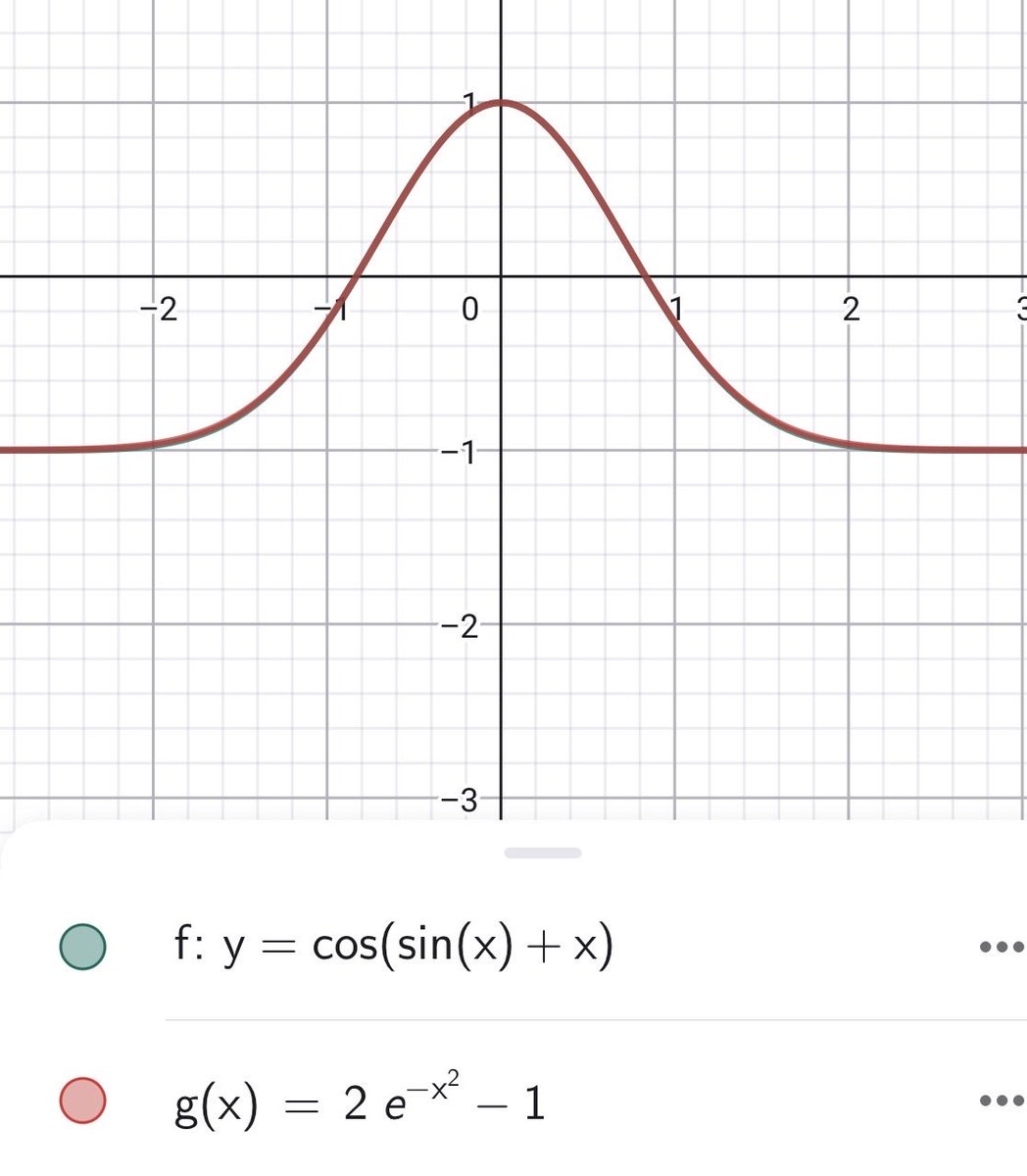
この形を見るとFM変調を思い出す......
が, Jacobi-Anger展開を考えたところで面白い接続は無さそうだった
一般に任意のf(0)=1かつRでC^ωな偶関数には〜4次の係数が一致する
Aexp(-kx^2) B (A, B, k in R)
が存在すると言えそうで、その係数が偶然それっぽかっただけ、という説明が尤もらしいかなぁ

1
3
759

May 28
平面波解の規格化:
平面波解ψ(x,t)=Aexp{i(kx-ωt)}の規格化の問題については、書籍ではやむを得ないことだと思いますが、詳しい説明は難しいようです。
ネットで調べると詳細な解説がいろいろ見つかります。興味ある方はぜひネットで調べることをおすすめします。
1
3
4,136
May 25
波動関数ψ(x,t)=Aexp{i(kx-ωt)}(平面波)は
|ψ(x,t)|^2=A^2(一定)であるから、
R全体で積分すると発散し、全確率を1にはできない。
どの本も何もコメントしていないのは不思議だ。
平面波のψで、R全体で積分して、規格化されたとして(?)、期待値<p>を計算したりしている。
1
14
4,514





Mar 3
Homogeneous eq. y'-y/x²=0
Ln(y)=-1/x C; yh=kexp(-1/x)
Particular sol. Trying with y=aexp(2/x) yp=-1/3exp(2/x)
y=yh yp
y=kexp(-1/x)-1/3exp(2/x)
y(1)=2exp(2) -> k=7/3exp(3)
y=7/3exp(3-1/x)-1/3exp(2/x)
27

Hi, thanks for reaching out to us. Please contact 1-800-419-2122 for assistance. Have a nice day.
37

كود _ألأمأرأت خصم _نون _ألسعؤدىة كؤبون _مصر
===
aexp

4
4
42

10 Dec 2025
今日は、時間無かったのでAEXP稼ぎのみ。
SSは前に撮影したもので、
ベルギッタ、お気に入りです😉👍
まぁ、このセリフの前に主要装備、全部買っちゃったんですけどね🥲
#メタファー

3
35
402
9 Dec 2025
ふむ、稼ぎにはアカデメイア使えば良かったのかぁ。
もっと早くに気付いていれば・・・🥲
40~50秒でAEXPが103程。
悪くないですね。
とはいえ、上位のアーキタイプ上げるの大変だわぁ😅
#メタファー
3
19
239

12 Nov 2025
I switched v for 2-v and solved for that.
I used separation of variables and got
v=2-Aexp(ax (1 a)y) where A>0 and a is some number
1
2
1,876


11 Sep 2025
I think the grind also took it out of me. I spent HOURS just farming exp and aexp and I wish I’d played on pc so I could’ve just cheated my numbers bc idc for the grind I just wanna enjoy the game. It’s one thing if the grind was fun but it was nothing but a chore :/
1
2
125

2 Sep 2025
15両対応、連結もこっちに搭載されたら熱い
なんなら、次世代機だしAexp出て欲しい…
いや、要らんな。PS5でTC出てくれれば良いや
3
1,125


20 Jul 2025
解析力学だと角運動量Jは生成関数でδ/δφの微小回転を表すけど、量子力学だとJの指数化が回転を表してて、この事をうまく俯瞰できないでいます
A(φ)=exp(φJ)Aexp(-φJ)
って事っぽい?
2
19
1,142

20 Jun 2025
Eq du haut : Ψ(x) = Aexp(ikx) Bexp(-ikx)
Eq du milieu : Ψ(0) = A B = 0 (donc B=-A)
Donc Ψ(x) = Aexp(ikx)-Aexp(-ikx) =2i A sin(kx)
2
5
569