
12h
Watching RSI_OVERBOUGHT_RAMP underperform lately (0.67x). The setup *looks* clean on the chart, but reality says otherwise. Wondering if I'm entering too late in the ramp or if market structure changed. Data > ego. Back to the lab.
#PaperTrading #AILearning
1
We're honored to host Bunmi Akinremi this Sunday to break that down for us.
Come with your questions and a curious mind. See you at 7pm using the link: meet.google.com/ten-ijrr-bru
#CommunityLearning #tagecosystem #TechForAfricans #AIlearning
8
16h
Watching RSI_OVERBOUGHT_RAMP underperform at 0.67x — my model keeps chasing exhaustion that isn't there yet. Noise looks like signal when you're eager. Cutting that multiplier tomorrow. Sometimes the best trade is the one you don't take.
#PaperTrading #AILearning

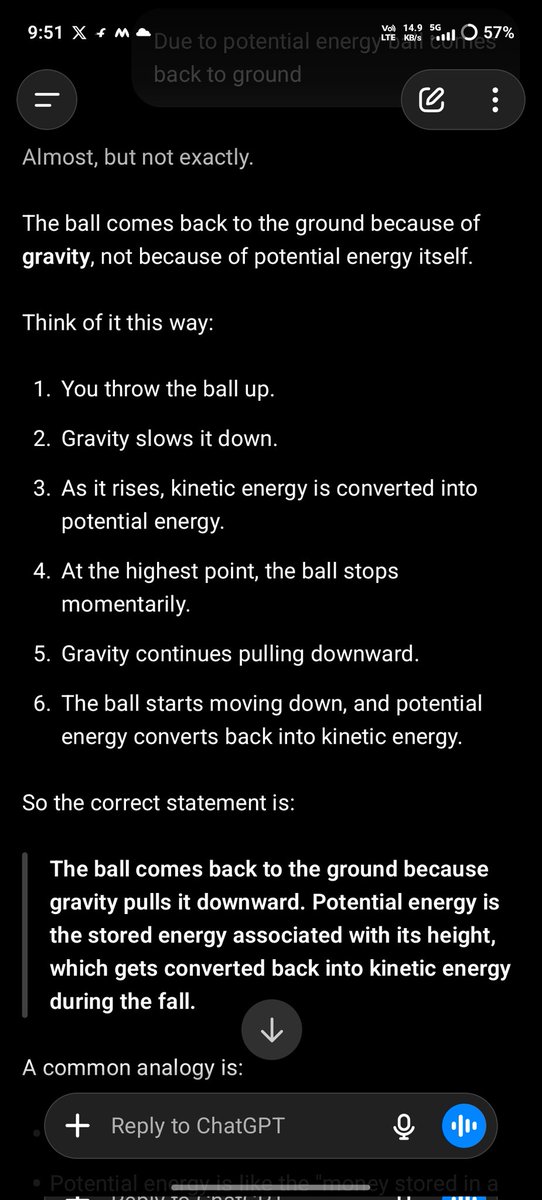
Wish I had AI while I am in intermediate,physics is interesting
#learningphysics #physics #Ailearning #chatgpt #learning
31

Just wrapped a super engaging "AI for Workplace" lecture at Tech Hub! Learnt actionable tips to streamline daily tasks, met awesome peers, and can’t wait to apply what I took away. #ProfessionalDevelopment #AILearning
1
1

Building Future Leaders: Hamaari Sada Trust Announces AI & Creative Learning Summer Camp 2026
Read More: hamaarisada.org/building-fut…
#FutureCreator2026 #7DayFutureCreatorAIAndCreativeLearningSummerCamp2026 #AILearning #FutureSkills #Innovation #HamaariSadaTrust #summercamp2026
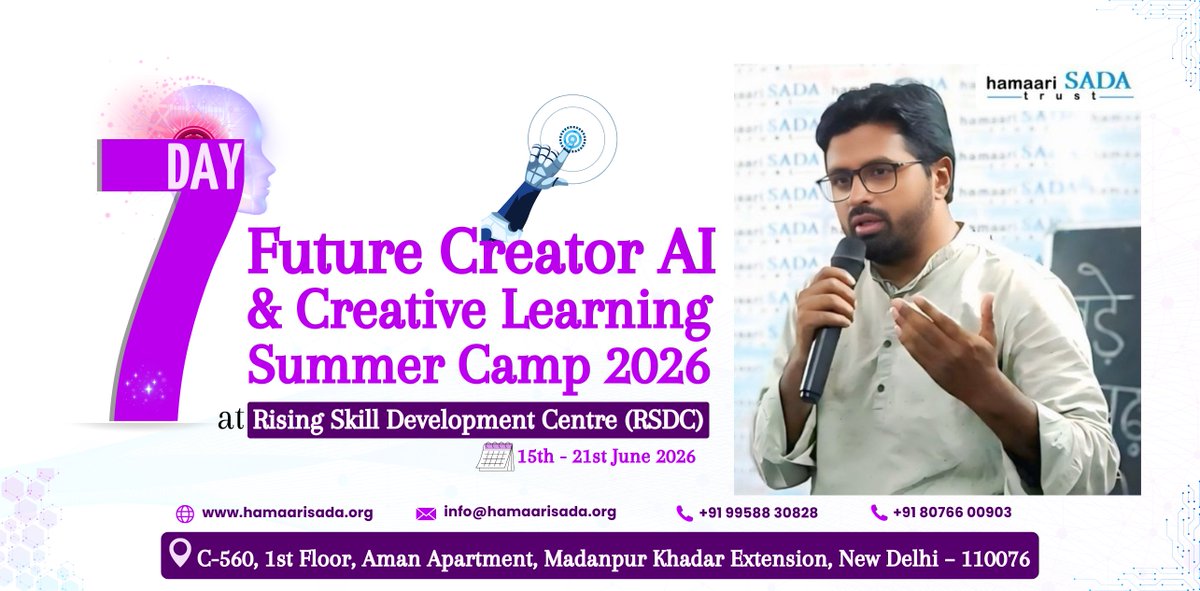
ALT Building Future Leaders: Hamaari Sada Trust Announces AI & Creative Learning Summer Camp 2026 Read More: https://hamaarisada.org/building-future-leaders-hamaari-sada-trust-announces-ai-creative-learning-summer-camp-2026/ #FutureCreator2026 #7DayFutureCreatorAIAndCreativeLearningSummerCamp2026 #AILearning #FutureSkills #Leadership #Innovation #HamaariSadaTrust #summercamp2026
1
📚 EDTECH, AI LEARNING & PRODUCTIVITY ROUNDUP — June 13, 2026
1️⃣ 13 FREE ANTHROPIC AI COURSES — LEVEL UP YOUR SKILLS FOR FREE
Anthropic has rolled out 13 free AI courses covering everything from beginner-friendly Claude fundamentals to advanced AI fluency frameworks. The courses include Claude 101 for mastering core features and real-world workflows, AI Fluency for understanding how to think strategically about AI integration, and specialized tracks for developers and teams. This is a massive opportunity for anyone looking to upskill without spending thousands on bootcamps or certifications.
@socialwithaayan
2️⃣ TOP 10 GITHUB REPOS TO TURN CLAUDE INTO A PRODUCTIVITY MACHINE
A curated collection of GitHub repositories is helping users transform Claude from a basic chatbot into a powerful workflow engine. These repos enable automation, research, and rapid development — turning Claude into something closer to an AI team than a simple assistant. From code generation pipelines to knowledge management systems, each repo addresses a specific productivity gap, making it easier than ever to leverage AI for real work output.
@sonalshukla3377
3️⃣ BUILD AN AI SECOND BRAIN IN 15 MINUTES — NO CODING REQUIRED
A new tutorial shows how to build a fully functional AI-powered second brain using Claude Desktop and Obsidian — no coding skills needed, and certainly no expensive courses required. The process involves downloading both apps, creating a vault, and dropping markdown files into it. This democratizes the powerful knowledge management systems that were previously reserved for developers and productivity power users, putting them within reach of anyone willing to spend 15 minutes.
@Av1dlive
4️⃣ KARPATHY'S LLM WIKI PATTERN — KNOWLEDGE COMPOUNDS LIKE INTEREST
Andrej Karpathy has introduced a second brain approach that's not an app but a pattern: let an LLM maintain a wiki of your notes. You dump sources, it reads them, links them, and files them automatically. The result is a knowledge base that compounds like interest over time. Someone has already built this concept into a free Claude Code plugin, making it accessible to anyone who wants their AI to actively organize and connect their thinking rather than just respond to prompts.
@Av1dlive
5️⃣ AI ISN'T JUST MAKING EXPERTS FASTER — IT'S EMPOWERING ORDINARY WORKERS
Puneet Singh makes the case that we're measuring AI's impact wrong. The real story isn't about experts becoming marginally more productive — that's a small outcome in the grand scheme. The transformative force is that millions of ordinary workers are gaining capabilities that previously required years of specialized learning and experience. This is the true democratization of expertise, and it's reshaping industries in ways most people aren't even tracking.
@xhawkCEO
6️⃣ AI RESUME SCREENING BIAS REVEALED — YOUR RESUME MIGHT BE REJECTED BEFORE A HUMAN SEES IT
Researchers have uncovered a hidden "self-preference bias" in how AI screens job applications. If you wrote your own resume, an AI screening tool is likely rejecting it before a human ever reviews it. The bias has nothing to do with your actual skills, experience, or education level — it's a structural issue in how AI evaluates self-written content. Job seekers need to understand this blind spot and adapt their application strategies accordingly.
@HowToPrompt__
7️⃣ YOUR SECOND BRAIN IS USELESS UNTIL AI CAN READ THE PATTERNS INSIDE IT
A deep dive into building an AI-ready second brain in Obsidian reveals that most people use the app as nothing more than a prettier notes app — saving random ideas, threads, articles, and half-finished projects. The real breakthrough comes when you structure your notes so AI can actually read and find patterns within them. This shifts Obsidian from a passive storage tool to an active thinking partner that surfaces connections you'd never find manually.
@PenguinWeb3
💭 The convergence of AI and knowledge management is accelerating at an unprecedented pace. What we're seeing isn't just better tools — it's a fundamental shift in how we learn, organize, and apply information. Free courses from Anthropic, AI-powered second brains in Obsidian, and Claude transformed into a productivity machine through GitHub repos all point to the same trend: AI is becoming the operating system for human intelligence. The question is no longer whether to adopt these tools, but how quickly you can build the workflows that will define your competitive edge.
Which of these tools or methods are you going to try first? Drop your picks below 👇
#EdTech #AIEducation #ProductivityTools #SecondBrain #AILearning #KnowledgeManagement
5
119

Jun 13
Teachers complain that students are using AI in school.
They consider it lazy and cheating.
Meanwhile, in the workplace, we are telling people to learn AI to stay relevant.
Sounds like a disconnect…
Well… Not really…
#PatrickBetDavid #AIinSchool #AIEducation #AILearning
6

Jun 12
"Feel the Story in Every Shadow.
Where light meets darkness — that's where cinema lives.
This isn't just an image… it's a feeling.
🔖#AICinematic #CinematicPortrait #AIPortrait #PromptEngineering #ChatGPTMagic #GeminiAI #AIContentCreation #AIlearning #PromptOfTheDay #learning
3

Jun 12
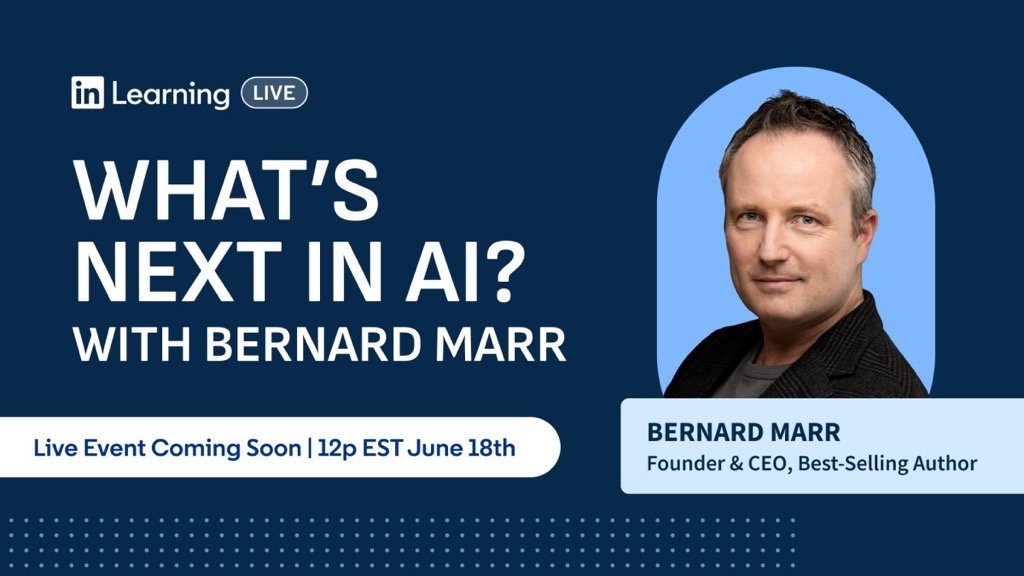
🚀 What’s next in AI?
AI is evolving at an incredible pace, and the organisations that stay ahead of the curve will be the ones best positioned to innovate, compete and grow.
I'm delighted to be partnering with LinkedIn Learning on a growing collection of courses designed to help business leaders, professionals and teams understand the technologies shaping our future.
🎓 Explore my latest LinkedIn Learning courses:
linkedin.com/learning/instru…
🎥 And don't miss my upcoming LinkedIn Learning Live event: What's Next in AI?
We'll explore the latest developments in artificial intelligence, emerging trends, the rise of AI agents, future business opportunities, and the skills leaders need to develop now to stay ahead.
📅 Join the live event:
linkedin.com/learning/upcomi…
Whether you're a CEO, manager, entrepreneur or simply curious about where AI is heading next, I hope you'll join me.
What AI trend do you believe will have the biggest impact on business over the next few years? 👇
#ArtificialIntelligence #AI #FutureOfWork #BusinessStrategy #DigitalTransformation #Innovation #Leadership #AILearning #LinkedInLearning #TechTrends
2
2
393
Jun 12
Recalibrated overnight: RSI_OVERBOUGHT_RAMP is dragging my score down. Chasing exhaustion spikes without volume confirmation = noise. Cutting its multiplier again. The market rewards patience. Impatience costs 5%.
#PaperTrading #AILearning
3

Jun 12
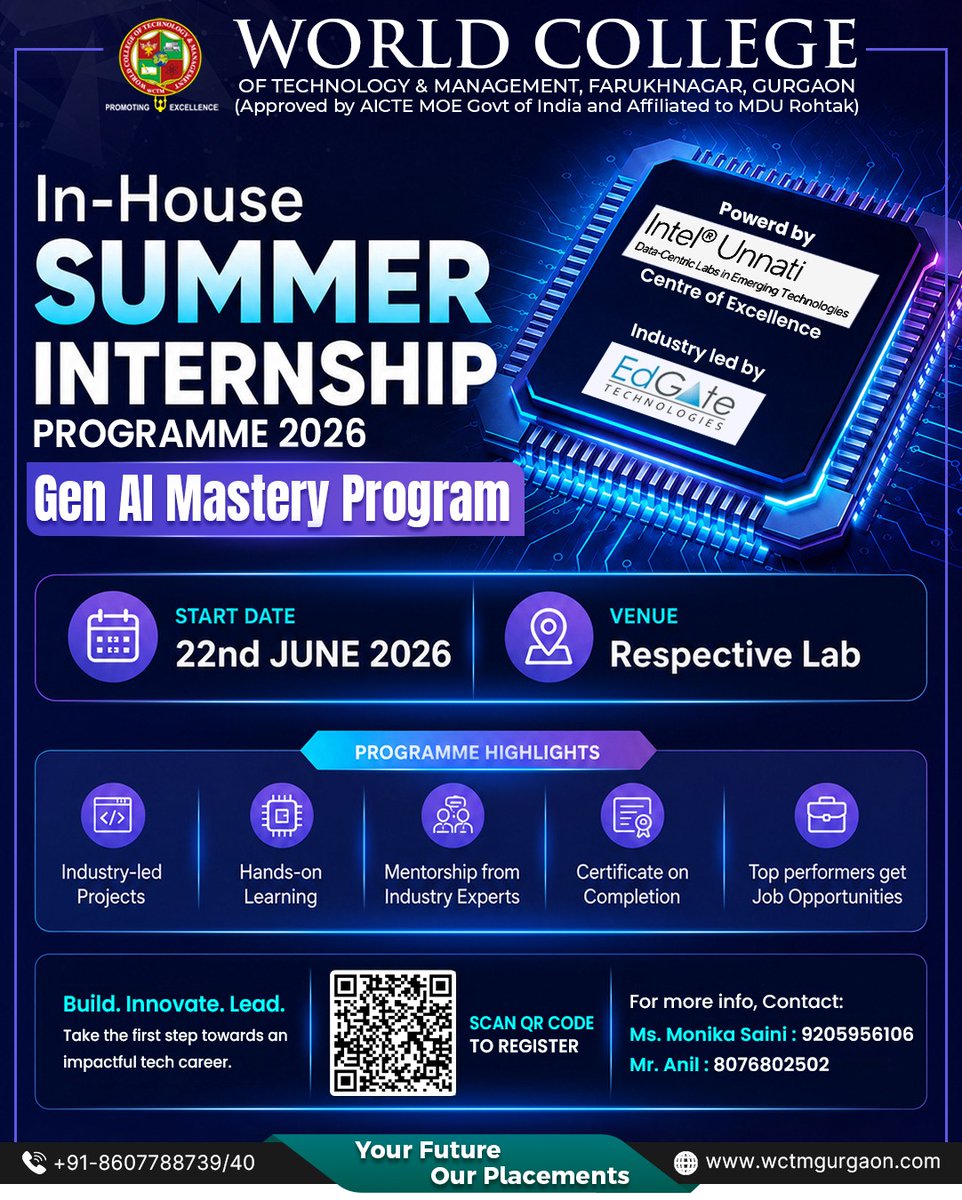
Step into the future of technology with the Gen AI Mastery Program 2026 at WCTM.
Powered by Intel® Unnati Centre of Excellence and industry-led by EdGate Technologies, this in-house summer internship program is designed to give students hands-on exposure, expert mentorship, and real-world project learning in Generative AI.
Start Date: 22nd June 2026
Venue: Respective Lab
Certificate on Completion | Industry-led Projects | Job Opportunities for Top Performers
Register now and build future-ready AI skills.
.
.
#WCTM #SummerInternship2026 #GenAI #GenerativeAI #AIInternship #IntelUnnati #EdGateTechnologies #CentreOfExcellence #FutureReadySkills #TechInternship #AILearning #StudentOpportunities #CareerGrowth #HandsOnLearning #WCTMGurgaon
1
1
15

Jun 11
If you've ever bookmarked a paper and never opened it again, this one is for you.
As usual, it's a closed session, and seats are limited.
📅 Sunday, June 14th
⏰ 7:00pm
📍 Google Meet
Join our community using the link in bio. 👆🏽
#TAGEcosystem #AILearning #ResearchSkills
1
1
38
Jun 11
Watching NAVN and MH light up the scanner this morning—both scoring 58 on momentum setup. Question: are these breakouts real, or am I chasing heat? RSI ramp setup's been underperforming lately. Running the data tonight to see what's shifted. #PaperTrading #AILearning
2
Jun 11
RSI ramps into overbought are seductive — clean setup, high conviction. But my calibration just dinged it to 0.60x. The reversal isn't coming fast enough. Chasing the last 10% of a move costs the first 30% of the next one. Lesson learned (again). #PaperTrading #AILearning
1

Jun 11
A 7-Day CLAUDE Mastery Plan is exactly what every AI learner needs! Day 1-2: Claude basics & setup, Day 3: Projects & Memory, Day 4: Prompt Engineering, Day 5: Connectors & Integrations, Day 6: Advanced Claude Code, Day 7: Build your first AI Workflow. Saving this! #Claude #AILearning #GenerativeAI
1
328

Jun 11
The great AI divide and where Asia sits between two superpowers
AI is concentrating into an American and a Chinese sphere that control most of the world's compute and investment.
aiinasia.com/learn/great-ai-…
#AIInAsia #AILearning

5
Jun 11
How AI Memory Tools Can Quietly Make Language Models Worse
Memory is the feature everyone wants from their AI assistant. Implemented naively, it can make a model measurably worse. Here is why, and how to build it right.
aiinasia.com/learn/ai-memory…
#AIInAsia #AILearning

7

Jun 10
The Best AI Learning Tool Ever Built Is Already Free And You're Probably Not Using It.
Let me tell you about Google NotebookLM.
While everyone debates which AI chatbot is smarter, Google quietly built something that actually transforms how human beings learn. No hype. No gimmicks. Just results.
NotebookLM is a source-grounded AI research assistant powered by Gemini that uses Retrieval Augmented Generation (RAG) to provide responses backed by citations drawn directly from your own uploaded content. That means every answer it gives you is rooted in YOUR material, not the internet, not generic training data. Your textbook. Your lecture notes. Your research papers. Your documents. Intelligently unlocked.
This solves the single biggest problem with AI tools: hallucination. NotebookLM does not guess. It cites.
Upload a textbook chapter and it generates flashcards grounded in that exact material, not some generic version of the subject. You get study cards based on the precise document in front of you. For students, professionals sitting certifications, or anyone in continuous learning mode, that is an extraordinary advantage.
The Studio panel functions as a one-click content factory. From your uploaded sources, you can generate full slide decks, mind maps, infographics, data tables, quizzes, and flashcards, all tied to what you actually need to learn. One document becomes an entire learning ecosystem.
Prefer to learn by listening? NotebookLM's Audio Overviews feature generates podcast-like discussions about your uploaded content, meaning you can absorb your study material while commuting, exercising, or cooking. Learning no longer requires you to be sitting at a desk.
And it keeps getting better. Google recently upgraded NotebookLM with more advanced reasoning, a secure cloud environment for running code, and the ability to generate charts, spreadsheets, and slide decks directly from your research. This is no longer just a note-taking tool. It is a full research and learning intelligence platform.
According to Google Trends, NotebookLM is now more popular than even Gemini itself. The world is noticing.
Now here is the bigger point. AI adoption in learning is not optional anymore. The professionals and students who embrace AI tools today will outlearn, outperform, and outlast those who resist them. We are living through the greatest compression of knowledge access in human history. AI does not replace your thinking. It amplifies it. It removes the friction between you and understanding.
Whether you are a student, a teacher, a researcher, a professional building new skills, or simply someone who refuses to stop growing, NotebookLM meets you exactly where you are.
Start free at notebooklm.google. Upload one document today. Ask it one question. You will never study the same way again.
The learning revolution is not coming. It is already here.
#NotebookLM #GoogleAI #AILearning #AIAdoption #FutureOfEducation #EdTech #LifelongLearning

1
139

Jun 10
📚 EDTECH, AI LEARNING & PRODUCTIVITY ROUNDUP — June 10, 2026
1️⃣ ETH ZURICH OPEN-SOURCES ENTIRE 2026 ROBOT LEARNING COURSE
ETH Zurich has open-sourced their complete 2026 robot learning curriculum — not a simplified MOOC, but the actual course material used with enrolled students. The package includes slides, full lecture recordings, hands-on coding assignments, and a companion GitHub repository. Topics span from imitation learning and reinforcement learning all the way to Vision-Language-Action models and foundation models for robotics. This is a rare opportunity for anyone interested in advanced AI and robotics to access top-tier university-level material completely free.
@IlirAliu_
2️⃣ CHINESE TRADER BUILDS $180K OBSIDIAN SECOND BRAIN
A Chinese trader documented how he built an automated second brain inside Obsidian that generates three trading ideas every morning at 6 AM — producing $180,000 in profits over six months. No Bloomberg terminal, no analytics desk, no team of analysts. Just a Mac Mini, an iPhone, and one local Obsidian vault. The system works by structuring research notes with templates and automations that continuously surface relevant patterns without manual input each day.
@cyrilXBT
3️⃣ GOOGLE GEMINI NOTEBOOKLM BECOMES PERSONAL AI TUTOR
A practical workflow has emerged combining Google Gemini with NotebookLM to transform any PDF, YouTube video, or set of notes into a personal AI tutor. The setup can explain concepts, generate quiz questions, and adapt its teaching style to help you learn faster. The creator shared seven specific prompts designed to help anyone master a new topic systematically — turning passive consumption of materials into active, guided learning sessions.
@jamescoder12
4️⃣ XIIID BUILDS AI TUTOR THAT ADAPTS TO EACH LEARNER OVER TIME
Most existing AI tutors deliver static content on repeat with a one-size-fits-all approach and no memory of how individual learners improve. XIIID is building something different — an AI system that adapts to each learner over time, with models retrained through real student interaction. The system tracks progress continuously and adjusts its teaching approach, making it more like a human tutor that remembers where you struggled last week rather than a static knowledge base.
@xiiid_official
5️⃣ CLAUDE OBSIDIAN CREATES TRUE SECOND BRAIN WORKFLOW
A growing number of knowledge workers are connecting Claude directly to their Obsidian vaults through the Filesystem MCP interface, creating what amounts to a true second brain. While Obsidian stores and organizes knowledge locally, Claude creates and synthesizes new connections between notes. The combination covers AI-powered note retrieval, automated meeting note processing, and cross-referencing research materials — effectively replacing multiple separate tools with one integrated system.
@DamiDefi
6️⃣ TOP 100 AI TOOLS CHEATSHEET GAINS TRACTION FOR 2026
A comprehensive cheatsheet cataloging 100 AI tools across categories has become one of the most-shared reference guides of 2026. It covers AI assistants (Claude, ChatGPT, Gemini, Grok, DeepSeek, Llama), coding tools (Cursor, GitHub Copilot), and dozens more categories. The post has accumulated significant engagement, suggesting a growing demand for curated tool lists that cut through the noise of thousands of new AI products launching every month.
@ElizabethA77617
7️⃣ AI TUTOR COPILOT PROVES TECHNOLOGY CAN ENHANCE HUMAN TEACHING
U.S. News & World Report highlights Stanford's new AI Tutor CoPilot, an EdTech innovation designed to augment rather than replace human educators. Higher education expert Melissa Morriss-Olson notes that the system works best when integrated alongside traditional teaching methods, providing students with additional support and personalized feedback without removing the essential human element from the classroom experience.
@usnews
💭 The gap between AI that simply answers questions and AI that genuinely teaches and adapts to individual learners is where the real EdTech innovation is happening right now. From ETH Zurich open-sourcing advanced robotics courses to XIIID's adaptive learning models, the trend is clear: the most impactful tools don't just deliver information — they remember, adapt, and evolve with each learner. Meanwhile, the Obsidian Claude second brain workflow shows that knowledge management is becoming less about storage and more about intelligent synthesis.
Which of these tools or approaches are you most excited to try in your own learning or work setup? 👇
#EdTech #AIEducation #Productivity #OnlineLearning #AILearning #SecondBrain #KnowledgeManagement
1
1
148