
1- OH MY SGSOH ITS ARTFUL!!! ITS ARTFL LOOK GUYS ITS ARTFUL ITS ARTFUL!!! : DDD
2- sures dudes I might do it ^_^
((SORRY 4 THE VERY LATE REPLY FROM US WE FORGOT WE HAD STRAWPAGE 💔💔💔 SORRI💔💔☹️))
theheights.straw.page
1
42

Mar 25
🌑: HI ARTFL IM A HUGE FAN HI I LOVE YOUR HOUSE HIII HIII HIIINNH JIFH EUDHEYWDGH EUHDYEWGDY IUDHEWYDGHE DIHEUDYUGWED
2
33

Mar 16
2/2 🧵🎒Was uns zur Gegenwart bringt.
Wenn Sie dieselben Accounts sehen, die früher über Klima, dann BLM, dann COVID gepostet haben und jetzt über Israel posten – fragen Sie sich, was der eigentliche gemeinsame Nenner ist.
Es ist nicht die Sorge um „Palästinenser“.
Es ist keine geopolitische Analyse.
Es ist dasselbe alte Bedürfnis nach einem Behälter, aktualisiert mit einem Cause célèbre, das soziale Akzeptanz für das rohe Gefühl bietet, die es sonst nicht hätte.
Gaza ist real.
Das Leiden der „Palästinenser“ ist real. Das sind legitime Themen politischer Debatten mit legitimen Argumenten auf mehreren Seiten.
Aber Antisemitismus ist keine Reaktion auf Gaza.
Er kommt nie wegen dem, was tatsächlich geschieht. Er kommt wegen dem, was in den Menschen geschieht, die ihn brauchen – und findet, was auch immer im Nachrichtenzyklus verfügbar ist, um es als Kleidung zu tragen.
Der Korpus der Französischen Revolution sagt uns nicht nur etwas über das Frankreich des 18. Jahrhunderts. Er sagt uns etwas über ein Muster, das so konsistent über Jahrtausende und Kulturen hinweg ist, dass es nicht durch das Verhalten der 0,7 % erklärt werden kann.
Die Frage, auf die der Antisemitismus wirklich antwortet, hat nie etwas mit Juden zu tun.
Die Frage dreht sich immer um die Menschen, die sie stellen.
(Quelle: Ronald Schechter, ARTFL-Korpus-Analyse, Johns Hopkins University Press, 2003)
6
127
Mar 16
1/2🧵🪡 📌Antisemitismus hatte nie etwas mit Juden zu tun
Was hatten Juden mit der Französischen Revolution zu tun?
Nicht viel, nach jedem messbaren Maßstab. Sie machten 0,7 % der französischen Bevölkerung aus. Sie hatten keine Armee, keine politische Macht, keine signifikante institutionelle Präsenz. Frankreich im Jahr 1789 hatte weitaus dringendere Probleme – einen existenziellen Krieg mit England, eine zusammenbrechende Wirtschaft, eine Monarchie, die in Echtzeit zerlegt wurde.
Und doch findet eine Suche im digitalisierten Korpus von ARTFL mit 473 kanonischen französischen Texten aus dieser Periode Erwähnungen von Juden mehr als doppelt so oft wie Erwähnungen von Engländern und Briten zusammen.
Lassen Sie das einen Moment sacken.
Frankreich befindet sich buchstäblich im Krieg mit England. England blockiert französische Häfen, finanziert konterrevolutionäre Koalitionen und stellt eine existenzielle militärische Bedrohung für die Republik dar.
Und die 0,7 % – ohne Armee, ohne Marine, ohne ausländische Unterstützung – nehmen mehr Platz in der französischen politischen Vorstellung ein als der tatsächliche Feind.
❓Wie erklären Sie das?
Sie können es nicht als Reaktion auf jüdische Macht erklären, denn es gab keine. Sie können es nicht als Reaktion auf jüdische Sichtbarkeit erklären, denn 0,7 % sind per Definition in jeder normalen sozialen Bilanz unsichtbar.
Sie können es nicht als Bedrohungsbewertung im politischen Sinne erklären, denn kein rationales Bedrohungsrechnen führt zu diesem Ergebnis.
Die einzige Erklärung, mit der die Daten übereinstimmen, lautet:
📌Die Erwähnungen haben nichts mit dem zu tun, was Juden tatsächlich taten. Sie spiegeln ein psychologisches Bedürfnis wider – eine Gesellschaft, die ihren eigenen inneren Widersprüchen nicht direkt ins Auge sehen kann und sie einem Objekt zuschreibt, das klein genug ist, um sicher die Schuld dafür zu bekommen.
Das ist nicht auf Frankreich beschränkt.
Es ist die Struktur des Antisemitismus in jedem Kontext, in dem er auftritt.
Das alte Ägypten brauchte eine Erklärung für soziale Spannungen in einer starr hierarchischen Gesellschaft. Das mittelalterliche Europa brauchte jemanden, der die wirtschaftlichen Funktionen ausübte, die die christliche Lehre verbot, und dann jemanden, dem man die Schuld dafür geben konnte.
Spanien brauchte einen inneren Feind, um den Mythos der Blutsreinheit im Moment der nationalen Vereinigung zu verankern.
Deutschland brauchte eine Erklärung für die nationale Demütigung, die die Ursache außerhalb des deutschen Selbst lokalisierte.
In jedem Fall waren die Juden nicht die Ursache des Problems. Sie waren die Antwort auf eine Frage, die die Gesellschaft stellen musste – eine Frage, deren tatsächliche Antwort zu schmerzhaft war, um ihr ins Auge zu sehen.
TEIL 2 🧵⬇️
Mar 16

Antisemitism Has Never Been About Jews
What did Jews have to do with the French Revolution?
Not much, by any measurable standard. They were 0.7% of the French population. They had no army, no political power, no significant institutional presence. France in 1789 had far more pressing concerns — an existential war with England, a collapsing economy, a monarchy being dismantled in real time.
And yet a search of ARTFL's digitized corpus of 473 canonical French texts from the period finds Jews mentioned more than twice as often as the English and the British combined.
Let that sit for a moment. France is literally at war with England. England is blockading French ports, funding counter-revolutionary coalitions, and posing an existential military threat to the Republic. And the 0.7% — with no army, no navy, no foreign backing — occupy more of the French political imagination than the actual enemy.
How do you explain that?
You cannot explain it as a response to Jewish power, because there was none. You cannot explain it as a response to Jewish visibility, because 0.7% is by definition invisible in any normal social accounting. You cannot explain it as political threat assessment, because no rational threat calculus produces this result.
The only explanation the data is consistent with is this: the mentions have nothing to do with anything Jews were actually doing. They reflect a psychological need — a society that cannot confront its own internal contradictions directly, and assigns them to a figure small enough to be safe to blame.
This is not unique to France. It is the structure of antisemitism across every context in which it appears.
Ancient Egypt needed an explanation for social tension in a rigidly hierarchical society. Medieval Europe needed someone to perform the economic functions Christian doctrine forbade and then needed someone to blame for performing them. Spain needed an internal enemy to anchor the myth of blood purity at the moment of national unification. Germany needed an explanation for national humiliation that located the cause outside the German self.
In each case the Jews were not the cause of the problem. They were the answer to a question the society needed to ask — a question whose actual answer was too painful to face.
Which brings us to today.
When you see the same accounts that were posting about climate, then BLM, then COVID, now posting about Israel — ask yourself what the common thread actually is. It is not concern for Palestinians. It is not geopolitical analysis. It is the same ancient need for a container, updated with a cause célèbre that provides social acceptability the raw sentiment would not otherwise have.
Gaza is real. Palestinian suffering is real. Those are legitimate subjects of political debate with legitimate arguments on multiple sides.
But antisemitism is not a response to Gaza. It never arrives because of what is actually happening. It arrives because of what is happening inside the people who need it — and finds whatever is available in the news cycle to wear as clothing.
The French Revolutionary corpus doesn't just tell us something about 18th century France. It tells us something about a pattern so consistent across millennia and cultures that it cannot be explained by the behavior of the 0.7%.
The question antisemitism is really answering has never been about Jews.
The question is always about the people asking it.
(Source: Ronald Schechter, ARTFL corpus analysis, Johns Hopkins University Press, 2003)
6
1
10
328

Mar 16
Antisemitism Has Never Been About Jews
What did Jews have to do with the French Revolution?
Not much, by any measurable standard. They were 0.7% of the French population. They had no army, no political power, no significant institutional presence. France in 1789 had far more pressing concerns — an existential war with England, a collapsing economy, a monarchy being dismantled in real time.
And yet a search of ARTFL's digitized corpus of 473 canonical French texts from the period finds Jews mentioned more than twice as often as the English and the British combined.
Let that sit for a moment. France is literally at war with England. England is blockading French ports, funding counter-revolutionary coalitions, and posing an existential military threat to the Republic. And the 0.7% — with no army, no navy, no foreign backing — occupy more of the French political imagination than the actual enemy.
How do you explain that?
You cannot explain it as a response to Jewish power, because there was none. You cannot explain it as a response to Jewish visibility, because 0.7% is by definition invisible in any normal social accounting. You cannot explain it as political threat assessment, because no rational threat calculus produces this result.
The only explanation the data is consistent with is this: the mentions have nothing to do with anything Jews were actually doing. They reflect a psychological need — a society that cannot confront its own internal contradictions directly, and assigns them to a figure small enough to be safe to blame.
This is not unique to France. It is the structure of antisemitism across every context in which it appears.
Ancient Egypt needed an explanation for social tension in a rigidly hierarchical society. Medieval Europe needed someone to perform the economic functions Christian doctrine forbade and then needed someone to blame for performing them. Spain needed an internal enemy to anchor the myth of blood purity at the moment of national unification. Germany needed an explanation for national humiliation that located the cause outside the German self.
In each case the Jews were not the cause of the problem. They were the answer to a question the society needed to ask — a question whose actual answer was too painful to face.
Which brings us to today.
When you see the same accounts that were posting about climate, then BLM, then COVID, now posting about Israel — ask yourself what the common thread actually is. It is not concern for Palestinians. It is not geopolitical analysis. It is the same ancient need for a container, updated with a cause célèbre that provides social acceptability the raw sentiment would not otherwise have.
Gaza is real. Palestinian suffering is real. Those are legitimate subjects of political debate with legitimate arguments on multiple sides.
But antisemitism is not a response to Gaza. It never arrives because of what is actually happening. It arrives because of what is happening inside the people who need it — and finds whatever is available in the news cycle to wear as clothing.
The French Revolutionary corpus doesn't just tell us something about 18th century France. It tells us something about a pattern so consistent across millennia and cultures that it cannot be explained by the behavior of the 0.7%.
The question antisemitism is really answering has never been about Jews.
The question is always about the people asking it.
(Source: Ronald Schechter, ARTFL corpus analysis, Johns Hopkins University Press, 2003)
19
124
441
18,663


7 Sep 2025
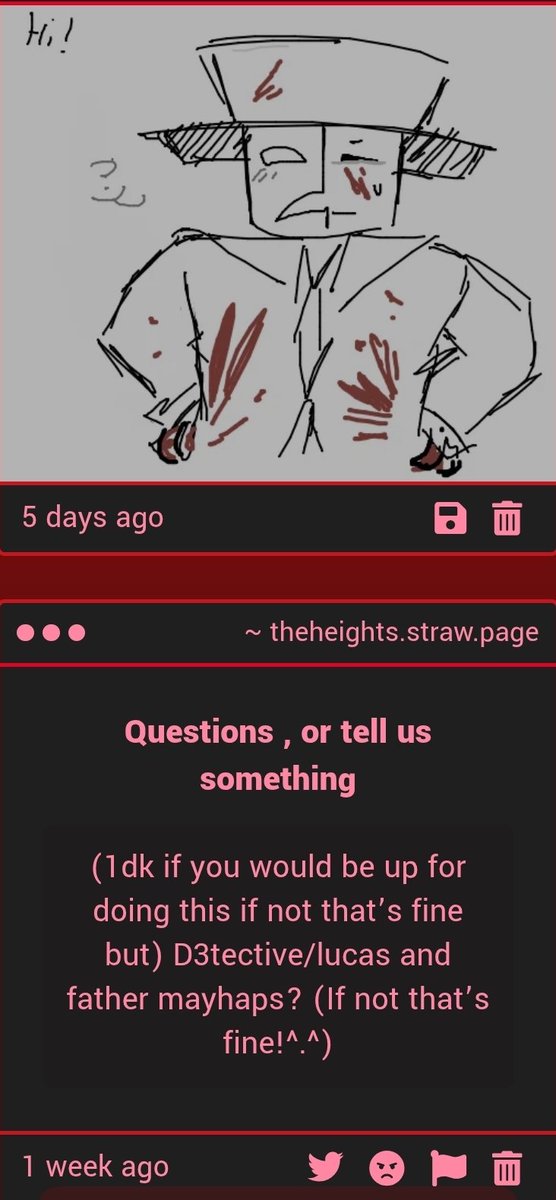
The reason Artful has SCARS from teeth is because I've been drawing moments when Artfl been with Pursuer for a long time. At first, Pursuer bit too hard, almost trying to bite off a piece of Artful. But over time, his bites became softer, but the scars on Artful's hands remained
2
14
254
4,228

26 Jul 2025
#ThalaivanThalaivii (3.4/5) Enjoyable Fun ride taking current family issues & made it light ❤️; @VijaySethuOffl jolly bt overdo ; @MenenNithya ❤️ #Deepa 👌; Bgm,Visuals & Edit 👍; has flaws, artfl seq bt end relatable charc kept it lively &❤️; @pandiraaj_dir 👍No logic only 🪄
3
10
472

9 Jul 2025
Time for some practical applications.
Are you a DigiByte (DGB) enthusiast or miner ready to take your involvement to the next level? We’re thrilled to invite you to participate in forming the strategic reserve for our cutting-edge DeFi platform! This is your chance to shape the future of decentralized finance while earning rewards tailored for the DigiByte community.
Be Part of Something Big
Our platform champions the same principles of decentralization and community ownership that define DigiByte. By locking your DGB tokens in our strategic reserve, you’ll help secure and stabilize our ecosystem—and in return, you’ll earn COOP-S, our equity token. This isn’t just a reward; it’s your stake in the platform’s success, amplifying the strength of the DigiByte network. DGB will never be sold from the reserve and you can claim it back anytime.
What’s in It for You?
With COOP-S tokens, you’ll unlock a world of DeFi opportunities:
Lend your tokens to earn interest
Borrow against your holdings
Stake COOP-S for additional rewards
Provide liquidity to our innovative barter-based trading pairs
As a COOP-S holder, you’ll also enjoy governance rights to influence platform decisions and a share of transaction fees, ensuring your voice and investment grow with us.
DigiByte Meets Barter E-Commerce
We’re integrating DGB into our barter e-commerce website, creating a vibrant, decentralized marketplace. Use your DGB to buy goods and services directly from other users or sell your own offerings to earn DGB. Powered by DigiByte’s lightning-fast 15-second block times and top-tier security, our platform delivers a seamless experience for every transaction. By joining our strategic reserve, you’re not just participating—you’re driving adoption and unlocking new opportunities for DGB users and miners alike.
The future of DeFi is calling, and DigiByte is at the forefront. Join our strategic reserve now and secure your place in this exciting ecosystem. Visit our website to learn more and start participating. Have ideas? Connect with us on our forum or social media—we’re building this with you in mind! Contact @Artfl on telegram if you want to get involved.
2
7
13
509

5 Jan 2025
一番問題なのは、アンチの言葉を釣り見出しにするY◯hoo!にク◯記事を載せ続けるS◯artFL◯SHと週刊◯性
あの2紙にも抗議してほしいんだけどな…
19
526

22 Oct 2023
The eighth ICONic Pengwyn reveal is here!
Say hello to Andygwyn - a Pengwyn, a Yeti, and a proud farmer. Together, we are going to make #ArtFl and ICON NFTs great.
#BeAPengwyn 🐧
#ICONistsUnite #ICX $ICX $PNGWYN
22 Oct 2023

My 🐧has been busy building @Pengwyn_BINC inside Cloud Peak's secret Dev Cave 🗻.
We're proud to welcome this project into @FramdNFT's #ArtFi ecosystem on @helloiconworld and beyond 🌐🤝.
The future of #ArtFI and $FRMD is bright!
#ICONistsUnite $ICX #NFT #NewProfilePic

1
5
14
518

26 Jun 2023
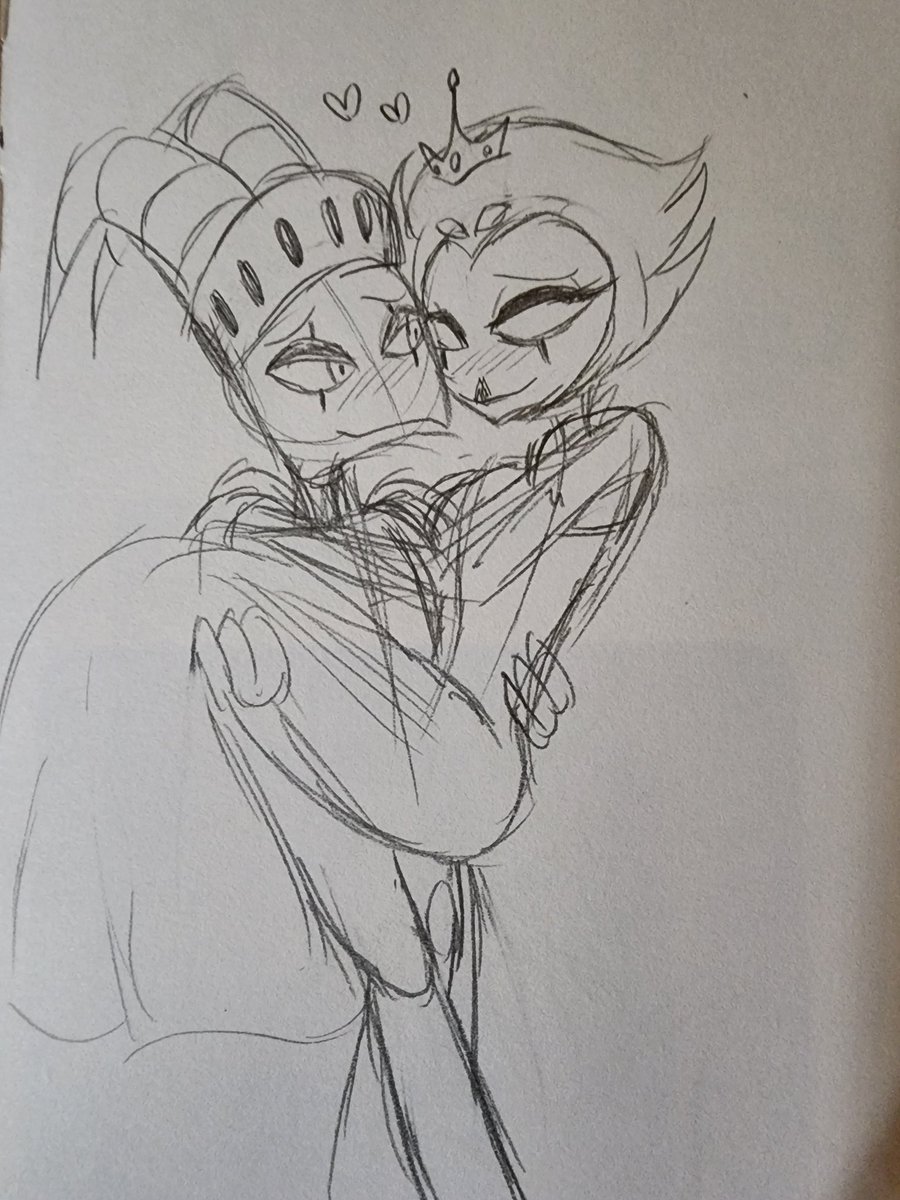
Day 2
Initially I didn't give Stolas long hair but I changed my mind in the midst of it, I added effects on ib*s paint, main part done on my usual program ArtFl*w


1
3
116


4 Feb 2022
Clovis Gladstone
“Computational Approaches to Textual Scholarship: the ARTFL Project’s French Digital Collections”
original-ufdc.uflib.ufl.edu/…
1
1

4 Feb 2022
Recording of Clovis Gladstone’s Presentation, “Computational Approaches to Textual Scholarship: the ARTFL Project’s French Digital Collections” helenehuet.org/academia/reco…
1
2

Technically, yes, not inaccurate to say, loosely, that brain = a net of neurons.
But b/c "neuron" has been coopted to mean "software architecture," ppl will be confused: they know artificial and biological are different things; they DON'T know how artfl NNs & bio "NN"s differ.
1

25 Dec 2021
🎙We held an #AMA session with Arthur (@Artfl) and Flavius (@FlamaTokenomics), who are respectively The Founder and Marketing Core Team of @thegeomadao
What is COOP and why should have an eye on them? Find out by clicking here.👇
beincrypto.com/coop-network-…

1
8
14

23 Nov 2021
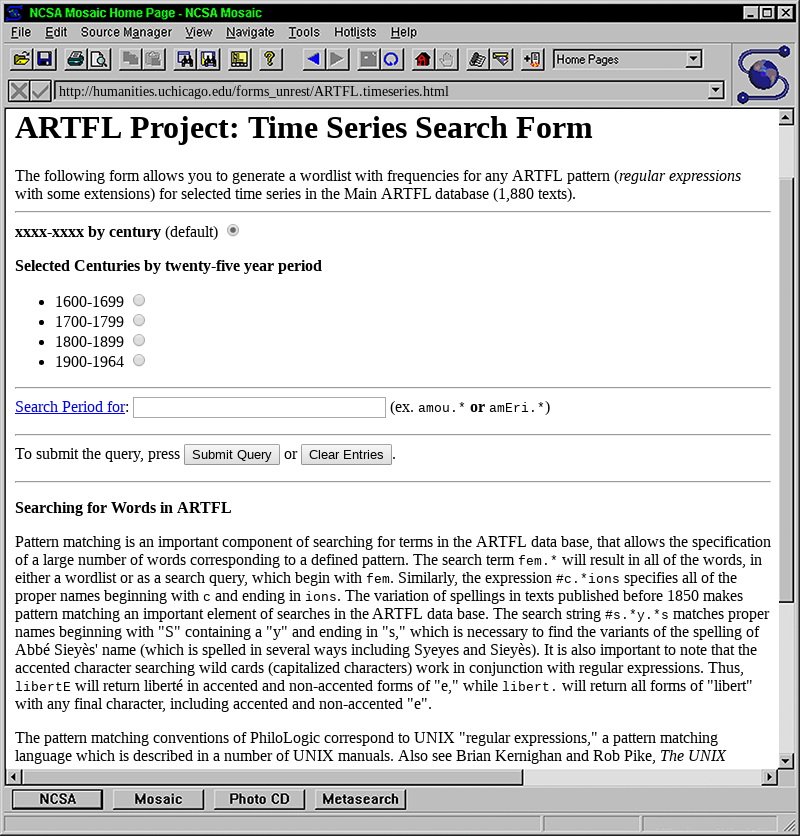
ARTFL Project: Time Series Search Form
Dec 1996
web.archive.org/web/19961204…
oldweb.today/random/19961204…
2

17 Oct 2021
シカゴ大学のARTFLプロジェクト、百科全書以下の事典類に加えて、いつのまにかヴォルテールやルソーの全集も、グリムの文芸通信も、レナルの両インド史も、マラーの雑誌も、ロベスピエール全集等々も軒並みデータベース化して公開してるんだな。
artfl-project.uchicago.edu/c…
2
30
90
