Steven Seegel 🇺🇦 @stevenseegel.bsky.social retweeted

A reasonable assessment of the Iran deal as we understand it.

Until the text of the US-Iran deal is signed and released, there is going to be a lot of spin on both sides. But here is my initial take.
This war was a mistake, and it needs to end. The President thought that the Iranian regime would collapse quickly, but it did not. In fact, it has been strengthened strategically by its survival against a heavy US-Israeli assault and carrying out some effective counterstrikes. Many countries in the region are now courting Iran and looking to deescalate and rebuild ties. A sign of which way the wind is blowing.
Getting the Strait of Hormuz open is the most important outcome of this MOU. Of course, the Strait was open before the war. Now we are paying to reopen it with sanctions relief. Iran has taken a theoretical point of leverage and turned it into a very real and powerful one, imposing costs across the global economy and rattling President Trump.
As for the nuclear issues, there really is no agreement, other than to negotiate over the HEU stockpile and an enrichment moratorium. Iran knows how to drag out those negotiations, and try to pocket concessions along the way. It is possible that no deal will every be reached, and very likely that if one is reached, it will be worse than what we could have achieved through diplomacy before the war.
Iran is not likely to take seriously that the US would return to war, certainly before the US midterms. So that means we will be conducting diplomacy without a credible threat of force.
If any agreement ultimately reached actually safely puts Iran's nuclear ambitions out of reach, I'll acknowledge it. It's just too early to make that judgment.
Trump is mainly focused on comparing his deal favorably to the JCPOA. But we are a long way from being able to make that comparison, and it may end up no better, or weaker than that deal.
But in some ways, Trump's deal and the JCPOA are already similar. Nothing on ballistic missiles, nothing on proxies, nothing on weakening the regime or helping the Iranian people. And plenty of sanctions relief that will strengthen the regime, and be poured into the missile program and proxy network. Honest critics of the JCPOA will not twist themselves into pretzels to defend Trump's approach.
Israelis are deeply disappointed in this outcome, but they should not be surprised. After some initial overlap of Trump's and Netanyahu's interests, there was a strong divergence. The United States needed this war to end. Netanyahu wanted to continue.
Trump's claim to include Lebanon in the ceasefire and his harsh shutting down Israeli attacks on Hezbollah is also a win for Iran. After the JCPOA was signed, Obama and Netanyahu worked together to strengthen Israel's campaign of strikes in Syria to intercept Iranian weapons shipments to Hezbollah in Lebanon.
So let's hope we see the removal of Iran's enriched uranium and a long-term suspension of enrichment, with full verification. But to achieve those goals, Trump's team is going to need to engage in far more sophisticated diplomacy, backed by qualified experts, than they have to date. If it is a phase one splash with no follow-up on implementation of later phases, like in Gaza, we will be much worse off after, and because of, this war.
1
10
37
6,789


We aren’t going anywhere serious without Jerry doing something drastic. I know you disagree with this assessment but we just aren’t. He’s gotta do something big.

If Kyle was black going to a white power rally, do you think he would have been not charged? Honest assessment?
1
Paul 🇺🇸🇺🇸✝️🇮🇱👍 retweeted

IRAN MISSION ASSESSMENT: OBJECTIVES SET - OBJECTIVES ACHIEVED?
✅ Objective 1: Iran Must Never Obtain Nuclear Weapons
Status: ✔️ Achieved (Subject to Verification and Compliance)
From the start, President Trump repeatedly stated that the number one objective was preventing Iran from acquiring nuclear weapons. In March he reportedly said, "Number one, two and three is they can't have a nuclear weapon." The emerging agreement reportedly includes Iranian commitments not to produce or acquire nuclear weapons and to limit its nuclear program.
Assessment: This was the central strategic objective and appears to be the cornerstone of the deal.
✅ Objective 2: Reopen the Strait of Hormuz
Status: ✔️ Achieved
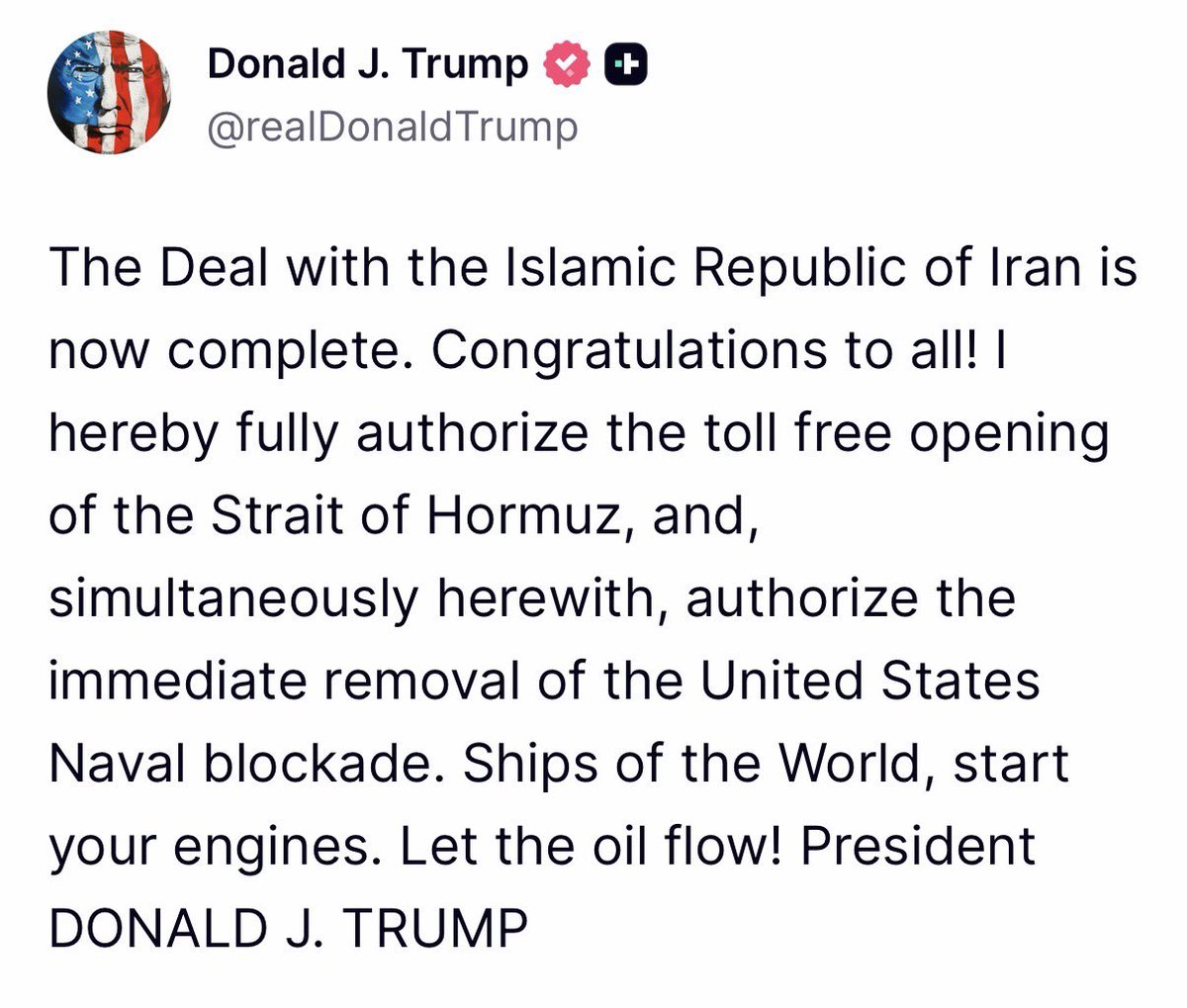
The Strait of Hormuz carries roughly one-fifth of global oil and LNG shipments. Reopening it was repeatedly cited as a key objective of negotiations and military pressure. The announced settlement includes reopening the waterway to commercial shipping.
Assessment: Oil flows, shipping resumes, and global markets stabilize.
✅ Objective 3: Restore Free Flow of Oil and Trade
Status: ✔️ Achieved
President Trump's messaging repeatedly emphasized economic stability and energy security: "Let the oil flow!" The agreement includes reopening shipping lanes and easing disruptions to global energy markets.
Assessment: Strategic economic objective achieved.
✅ Objective 4: Destroy or Degrade Iran's Offensive Military Capabilities
Status: ✔️ Largely Achieved
Administration officials described objectives including destroying Iran's navy, missile launch capabilities, and military-industrial infrastructure. The White House characterized the campaign as one to eliminate offensive capabilities while avoiding endless war.
Assessment: While independent verification of all battlefield claims remains difficult, U.S. officials have consistently described these objectives as substantially achieved.
✅ Objective 5: Avoid an Endless Regime Change War
Status: ✔️ Achieved
Although Trump encouraged Iranians to determine their own future, official U.S. messaging emphasized that direct regime change was not the formal military objective. The operation was framed as limited and goal-oriented rather than an occupation.
Assessment: No invasion or occupation occurred.
✅ Objective 6: Empower Iranians to Determine Their Own Future
Status: ⏳ Transferred to the Iranian People
Trump's messaging often distinguished between the Iranian regime and the Iranian people, encouraging internal change rather than externally imposed government replacement.
Assessment: This objective cannot be "completed" by foreign powers; its outcome depends on events inside Iran.
✅ Objective 7: End the Conflict on Favorable Terms
Status: ✔️ Achieved (If Agreement Holds)
The announced settlement reportedly includes ceasefire provisions, reopening the Strait, nuclear restrictions, and diplomatic follow-up mechanisms. However, long-term success depends on compliance by all parties.
Assessment: Strategic victory if commitments are honored.
STRATEGIC SUMMARY
Mission Objectives:
☑ Iran denied nuclear weapons
☑ Strait of Hormuz reopened
☑ Oil flows restored
☑ Iranian offensive capabilities degraded
☑ No U.S. occupation or endless war
☑ Future of Iran left to Iranians
☑ Conflict concluded through negotiated settlement
GENERAL ANALYSIS
If measured against the publicly stated objectives from the outset, the operation appears to have followed a limited-war doctrine:
✅ Deter, not occupy.
✅ Disarm, not annex.
✅ Pressure, then negotiate.
✅ Protect trade and energy flows.
✅ Prevent nuclear proliferation.
The true measure of success, however, is not the signing of an agreement but whether Iran adheres to its commitments. History shows that treaties are only as durable as the willingness of parties to enforce them.
As President Trump repeatedly emphasized, one objective stood above all others:
Iran can never have a nuclear weapon.
3
1
9
237
Pratiyush Sharma 🇺🇦🇮🇱🇺🇸🇪🇺 retweeted

I stand by my assessment that the NATO expansion Russian narrative is thinking man's propaganda, the repression of Russian speakers and Ukrainian Nazis narratives are average Joe propaganda, and the Ukrainian biolabs narrative is subhuman propaganda.
17
34
254
3,737
Lisa retweeted

This is a reasonable assessment.

Trump was so desperate to say the deal was done on his birthday he TACO’d & lifted the US Navy blockade immediately in exchange for Iran not attacking Israel …
that let him announce a deal that’s not actually signed till next Friday and claiming HE opened the Strait of Hormuz that’s firmly under Iran’s control.
He got played by the best.
2
6
22
1,332

Um. It's your own threat assessment statistics that they are quoting. But. sure.
3

I’m not a fan of Butler’s, but his assessment of them wasn’t exactly inaccurate.
2

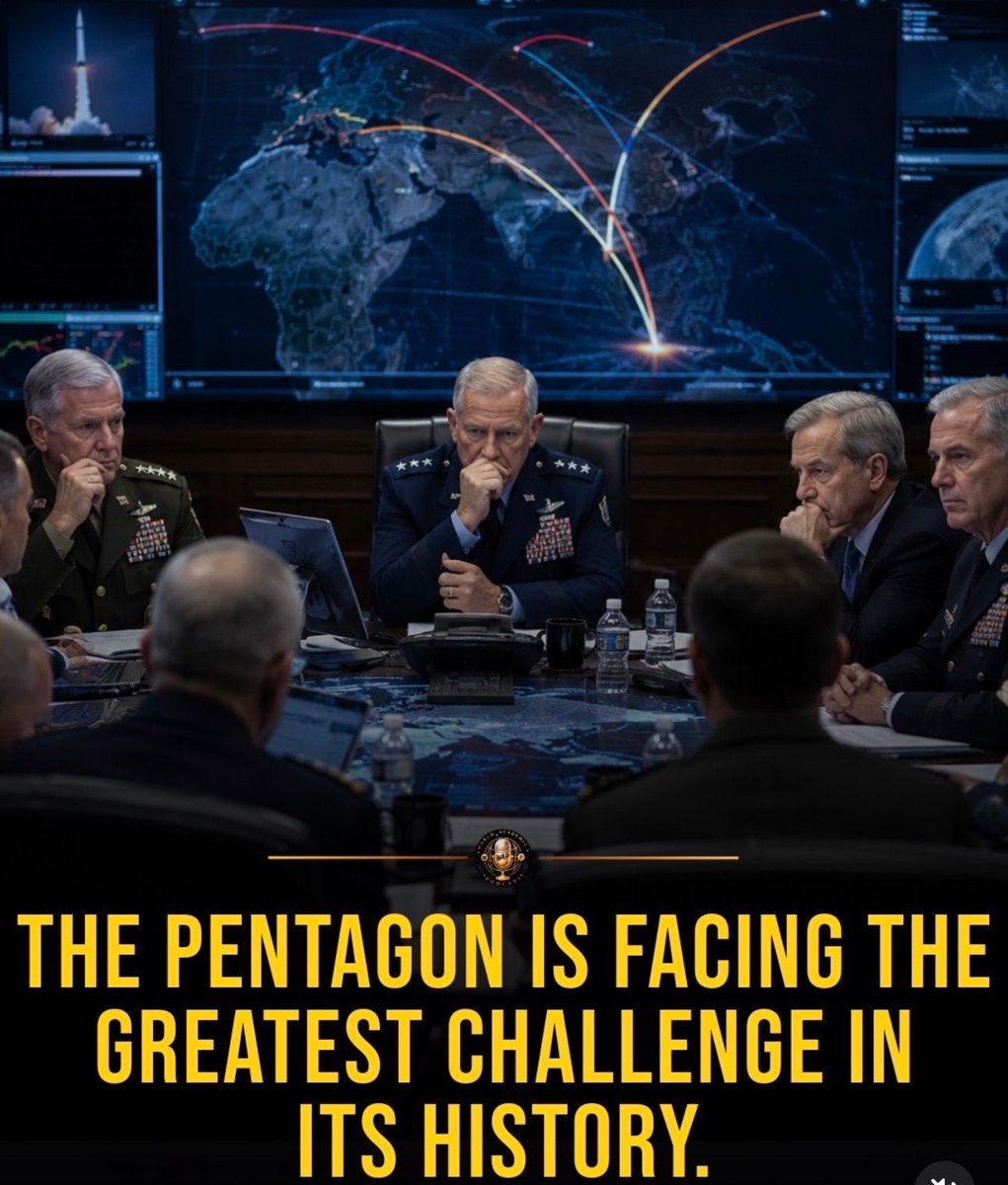
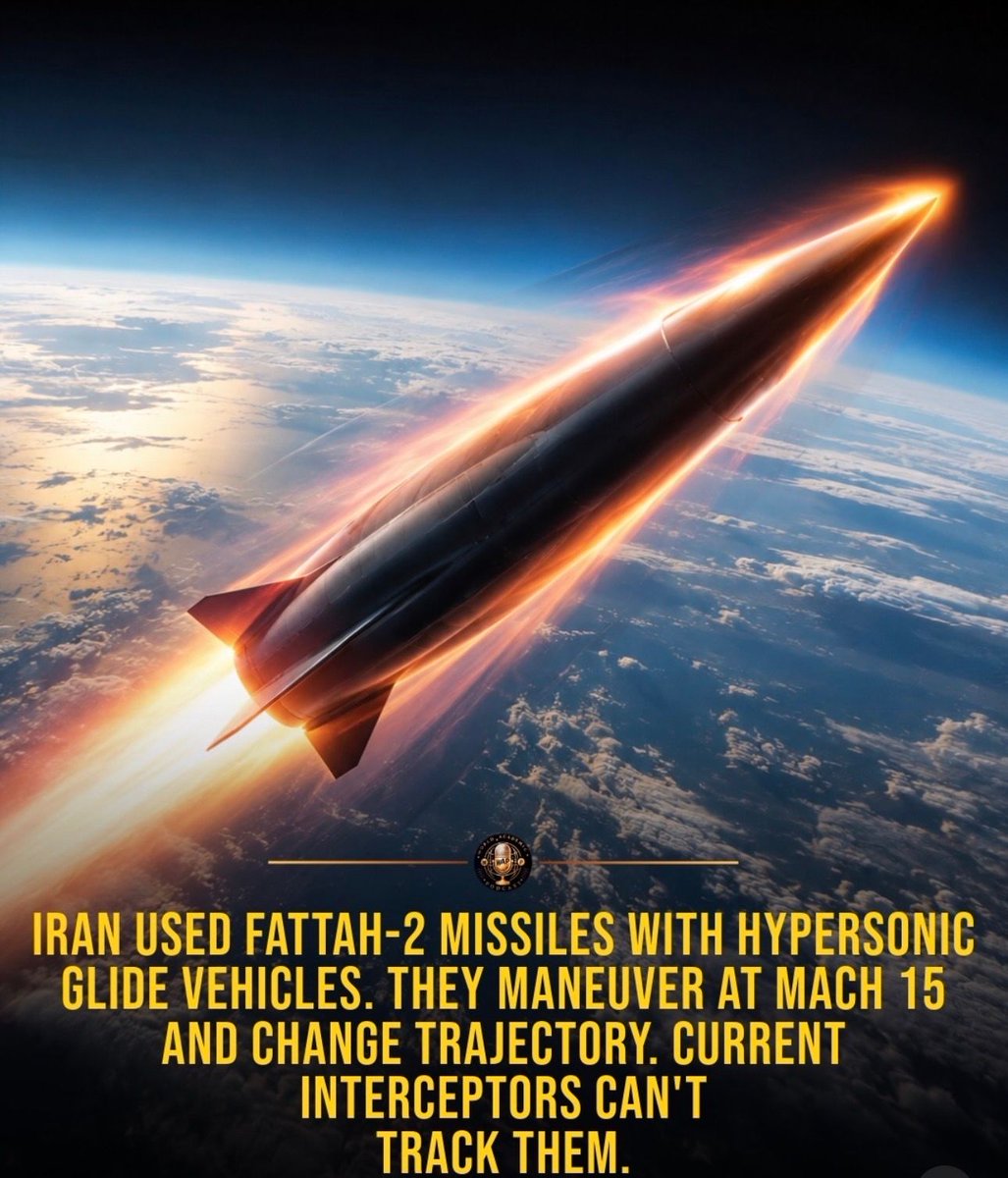
🚀 AMERICA’S MISSILE SHIELD HAS A MASSIVE PROBLEM — Hypersonic Weapons Changed the Game ⚠️
The United States has spent decades building one of the most advanced missile-defense networks on Earth—but the threat is evolving faster than the shield.
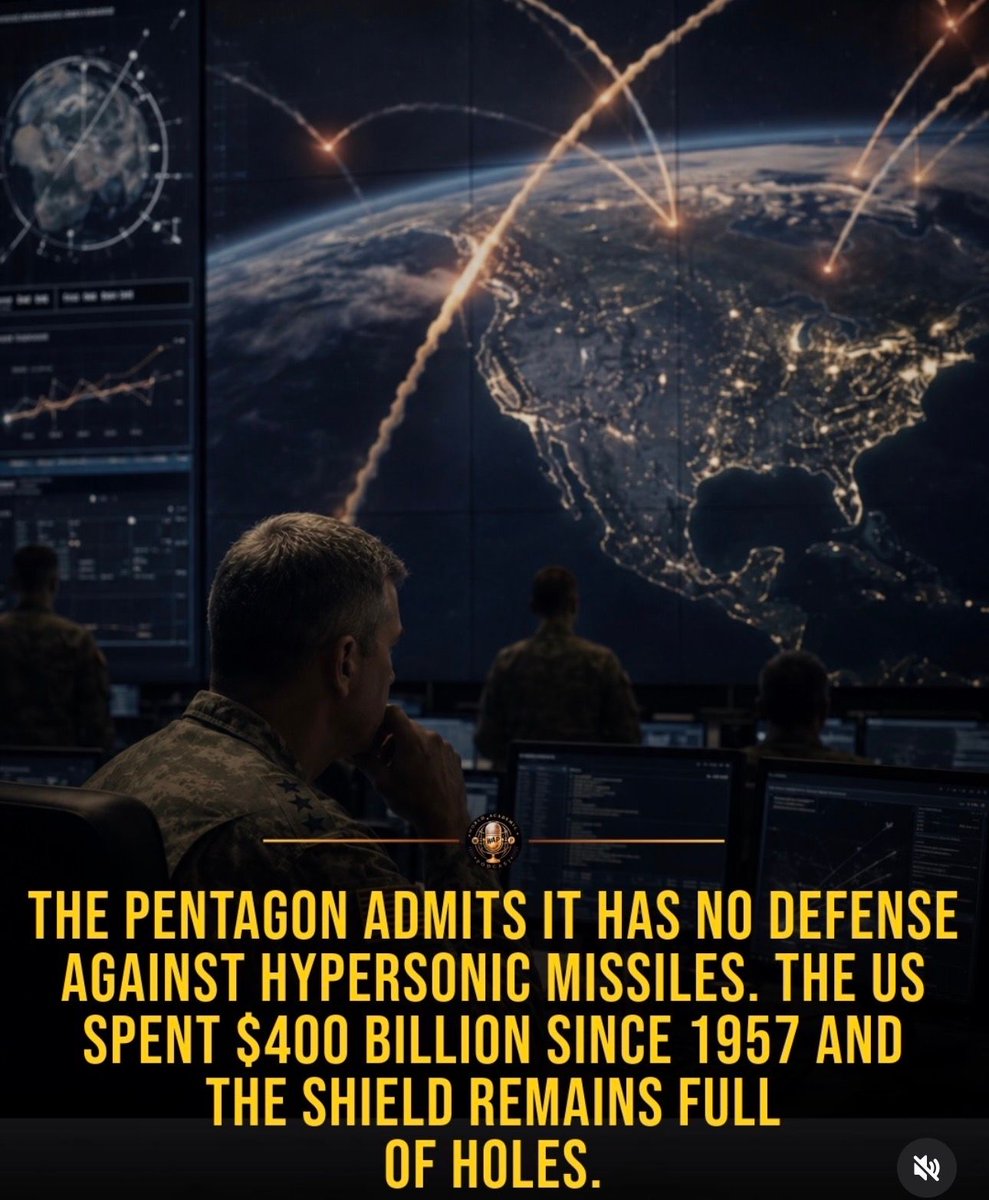
Modern hypersonic weapons can travel above Mach 5, maneuver during flight, and follow less predictable paths than traditional ballistic missiles. That makes detecting, tracking, and intercepting them significantly harder. U.S. government watchdogs confirm that the Pentagon is still developing the sensor architecture needed to track these threats reliably.
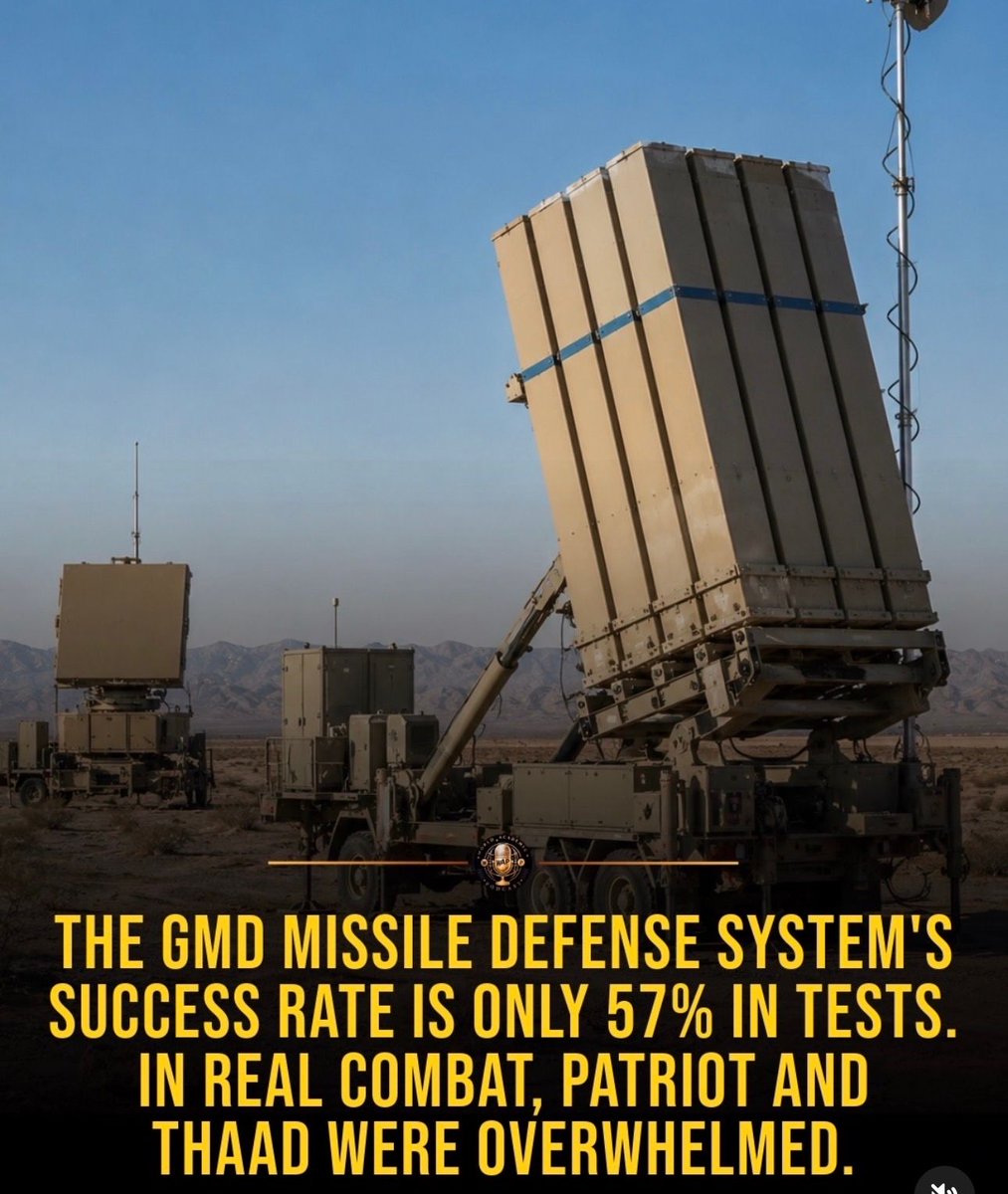
America’s existing defenses are not useless, but they are not an impenetrable force field either. The Ground-based Midcourse Defense system has faced limited testing, technical setbacks, and an overall intercept-test record that has remained far from perfect. A 2020 GAO assessment placed its overall intercept success rate at approximately 63%—not the 57% stated in this carousel.
Now Washington is pursuing Golden Dome, a much broader homeland-defense architecture intended to counter ballistic missiles, hypersonic weapons, cruise missiles, and other advanced aerial attacks. The FY2026 budget included an initial $25 billion, but the complete system’s final cost, design, timeline, and effectiveness remain unresolved.
This is the new reality of missile warfare:
The attacker can launch cheaper weapons in large numbers, while defenders may need multiple highly expensive interceptors, advanced radars, satellites, and command systems to stop them.
The Pentagon’s greatest challenge may no longer be building the fastest missile.
It may be constructing a shield that cannot be overwhelmed faster than America can reload it.
The perfect missile shield does not exist—and whoever controls the cost, production, and volume of fire may control the battlefield.
#MissileDefense #HypersonicMissiles #Pentagon #GoldenDome #MilitaryTechnology
4

I think bc I was in the military & raised by a veteran, I have always been taught risk assessment. If only she had paused long enough to consider the “and then what?”
Just a senseless way to die.
3

Fair assessment. Hes already waffled 3 times on his initial ahem "truth" voted and prayed for him. This is an utter shit show. Sorry
1
marie starr 🕉💙🐈🐈⬛🌊 retweeted

Jun 13
“A geopolitical Chernobyl.” That’s the stark assessment of the US-Israeli war with Iran, from France’s former prime minister Dominique de Villepin. “What we see is a meltdown of the core reactor that is the US leadership.”
72
748
1,956
148,731

you are to retarded for any coherent assessment, go back to your mommy's basement and wait for her to make you supper

Did we watch the same video? You should try watching on double speed. It helps speed up the dialogue. I thought Jim gave a good assessment of some of the bullshit all of us with brains saw that day.
4
ik subroc retweeted

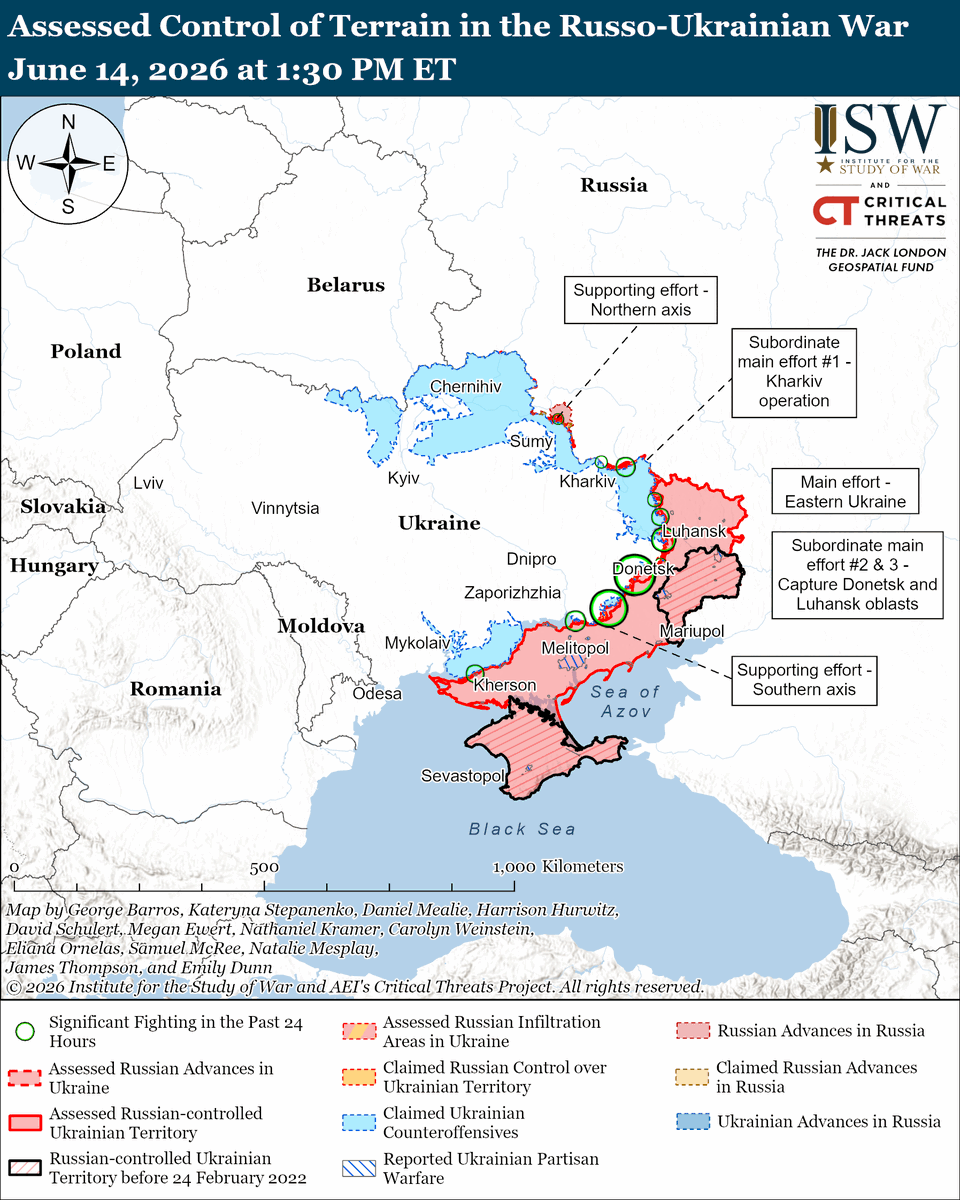
2/ Russian Offensive Campaign Assessment, June 14, 2026: isw.pub/UkrWar061426
3
5
5,345