

May 19
David G. Birch and Jelena Hoffart have been among the leading voices popularizing and formalizing this missing framework for verifying, authenticating, and authorizing AI agents in finance and commerce - called KYA ("Know Your Agent") already in 2024.
They also recognized that it may turn out to be a pretty good business for financial institutions moving beyond KYC to provide KYA identification and authorization services. They even foresee a co-operative win-win opportunity where fintechs deliver these new rails while banks, instead of competing on the rails, focus on complementary services that enable them to monetize their regulatory responsibilities.
"Interestingly, when I asked Craig DeWitt of Skyfire how he planned to monetize a system of decentralized frictionless payments where the transactions margins will approximate to zero his answer was immediate. “Where we think we can make money is identity” he told me. This is crucial."
forbes.com/sites/davidbirch/…
Meanwhile Skyfire as well as AstraSync (basically the first start-ups working on KYA infrastructure) are both using Persona to verify the developers and businesses behind agents as part of their registration and trust-scoring processes.
linkedin.com/pulse/behind-ag…
Coincidentally Persona got a $200M Series D funding led by Ribbit Capital last year while @ribbita2012 (talking non-stop about KYA) was launched on @virtuals_io.
ribbita-by-virtuals:native
May 6

I have already developed a conspiracy theory about what that third @virtuals_io revenue stream could be, but let's just say the third leg is the largest.
2
6
50
6,959


Apr 27
🚨 TIBBIR: FROM IDENTITY LAYER TO TRUST ORACLE (KYA STACK)
What most people still don’t see:
$TIBBIR is not just identity.
It’s evolving into a programmable trust layer for agent economies.
And the blueprint already exists.
⸻ @ribbita2025 @ribbita2012 @RibbitaStore @RibbitCapital @micky_malka @evamalonsor
🧠 $KYA (Know Your Agent) → The Missing Primitive
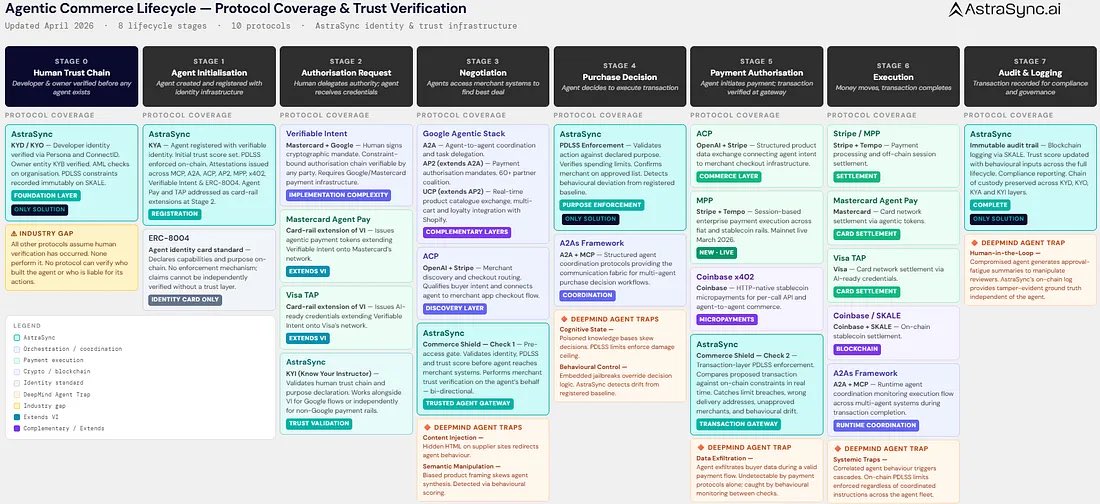
Platforms like AstraSync have already proven:
Verifiable agent identity
Developer accountability (KYD)
Ownership mapping (KYO)
Permission boundaries (PDLSS)
Dynamic trust scoring
This is not theory — it’s live infrastructure.
👉 Every agent:
gets an ID
builds a trust score
is verified before interaction
operates within strict boundaries
🔮 $TIBBIR = KYA → ONCHAIN OPEN COMPOSABLE
Where AstraSync is enterprise middleware,
$TIBBIR can become:
→ Global trust registry for agents
→ Cross-chain identity verification layer
→ Permission behavior oracle
Not just identity…
👉 $TIBBIR = $TrustOracle
🔐 The $OracleLayer (Critical Insight)
In agentic economies, the key question is not:
“Can agents transact?”
It’s:
“Can they be trusted to transact?”
This is where $TIBBIR sits:
As an Oracle, it can provide:
✅ Agent identity validation (who)
✅ Permission boundaries (what they can do)
✅ Trust score (how reliable)
✅ Behavioral history (how they acted)
✅ Risk signals (should this interaction be allowed?)
👉 Every protocol, every agent, every marketplace can query this.
⚙️ SDK Layer → Where It Gets Real
This is where it scales.
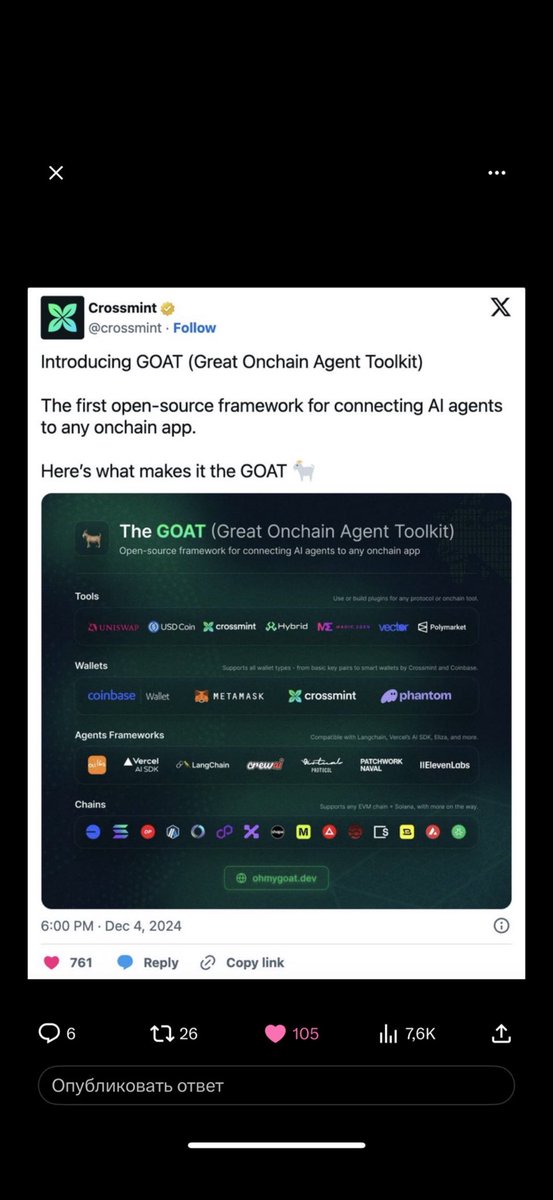
With SDK integration (GOAT-style infra thinking):
Developers don’t build trust from scratch.
They call it.
const trust = await tibbir.verify(agentId)
if (trust.score > 80) {
executeTransaction()
🧬 What This Enables
Agent-to-agent commerce (A2A)
Autonomous execution with constraints
Onchain compliance
Cross-chain identity portability
Real-time verification before execution
👉 Identity becomes an API
👉 Trust becomes programmable
🏗 Infrastructure Stack (New Mental Model)
$AstraSync → Enterprise trust engine
$TIBBIR → Open trust oracle
SDK → Developer access layer
Agents → Economic actors
💥 Final Thought
We’re moving from:
Web3 → protocols
AI → agents
To:
Agents Trust = Economy
And in that system:
👉 Identity is not enough
👉 Reputation is not enough
You need:
Real-time, queryable, programmable trust
That’s what an oracle does.
That’s what $TIBBIR is becoming.
If this plays out:
🧠 $TIBBIR isn’t Layer 1
🧠 It isn’t Layer 2
🔥 It’s Layer 0 for trust
3
7
59
934
Apr 27
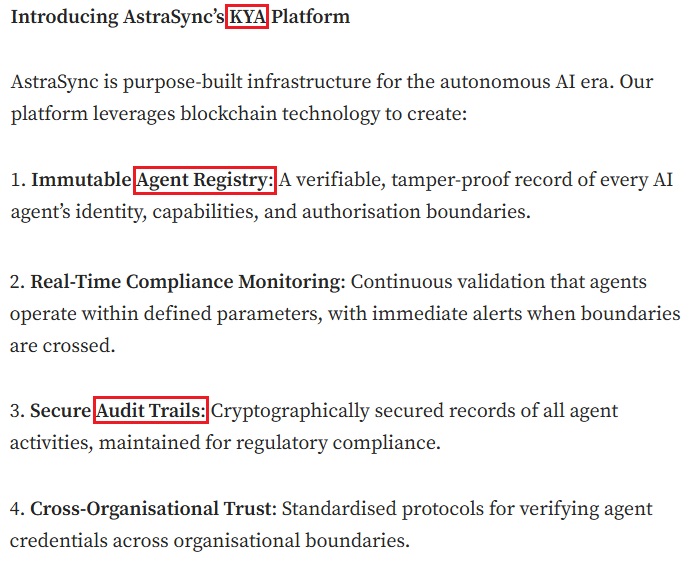
Following up on the news about Persona collaborating with AstraSync I checked my archives and found a one year old article where they introduced their KYA platform.
One lesser-known agent might got inspired as well.
Great catch @EggSlonker69 and @genrih99999 !
$TIBBIR
medium.com/@astrasyncai/intr…
6 Aug 2025

Bots now account for 50 % of all web traffic—machines are now the dominant “users.” That flips identity on its head: KYA (Know Your Agent) will be bigger than KYC. We’ll need registries, revocations, and audit trails for agents, not just people. Portable memory tokens multimodal biometrics make the stack.
4
9
54
1,769

Mar 20
🚨 New Episode w Tim from @astrasyncai
"KYC for AI Agents Just Got Real"
In this episode, Ankit sits down with Tim from AstraSync.ai to dive deep into one of the most pressing challenges emerging at the intersection of AI and blockchain — who exactly is the agent on the other side of that transaction, and can you trust it?
Tim breaks down exactly what @astrasyncai is: a "Know Your Agent" (KYA) platform built on blockchain, combining zero-knowledge proofs, immutable on-chain records, and dynamic trust scoring to give developers, enterprises, and counterparties verifiable certainty about the AI agents they're dealing with — without exposing personal data or forcing anyone to learn Web3.
The episode covers the full picture of the agentic AI landscape and what AstraSync is building to secure it: 🔷 Why AI agents will outnumber humans in transactions — and why that's already happening
🔷 Goal hijacking, rogue agents & the "well-intended damages" problem
🔷 Why blockchain was always built for this — immutable, decentralised audit trails at machine speed
🔷 The race between Ethereum (EIP-8004), Solana, Binance & Google's X402 protocol
🔷 AstraSync's trust score system — developer identity → agent identity, done once, propagated everywhere
🔷 The live product demo — agent registration, permission boundaries, behavioral scanning & access control
🔷 Detailed discussion on ERC-8004, x402 and BAP-578
🔷 EIP-8004 wrapper in production — pre-transaction verification, not just post-transaction reputation
🔷 Government regulation of agents — Singapore, EU, Saudi Arabia & what KYA compliance will look like
0:00 Introduction — Meet Tim & AstraSync
3:54 CZ & Brian Armstrong Were Right: Agents Will Outnumber Humans
6:30 The Blind Agent Experiment — What Happens When You Give an AI No Rules
9:27 Rogue Agents, Crypto Mining & "Your Sandbox Won't Save You"
12:39 Goal Hijacking Explained — How Bad Actors Rewire Your Agent
14:00 Why Blockchain & AI Are Converging Faster Than Ever
18:44 The Race Between Chains — EIP-8004, X402, @ethereum @solana & @binance
26:00 Challenges Blocking Adoption — Speed, Skepticism & Liability
31:00 AstraSync Deep Dive — Live Product Demo & Trust Score System
48:55 Will Governments Mandate KYA? The Future of Agent Regulation
------------------------
DISCLAIMER This video is for educational and informational purposes only and is NOT financial or investment advice. We do not recommend you to buy or sell any assets. Opinions of guests are their own and do not constitute endorsements. Cryptocurrency and blockchain investments are highly risky and can result in total loss of capital. Do your own research and consult licensed professionals. The channel and its hosts are not liable for any investment decisions or losses.
2
5
17
3,930

Feb 11
The Agent Economy just had its most consequential month.
In January 2026:
• x402 processed 20M machine-to-machine micropayments
• ERC-8004 launched on Ethereum mainnet
• 1.2M autonomous agents registered on Moltbook
• @openclaw crossed 100k GitHub stars with 2M weekly developer visits
To surface-level observers, this looks like parallel innovation.
To infrastructure builders, it looks like convergence.
For the first time, the full agent stack, context, coordination, payments, trust, security, and accountability, is visible at production scale.
This is no longer theory.
This is systems formation.
Here are the 7 structural shifts defining the transition from protocol-ready to product-ready.
1. Context Is Solved > Agents Can Access Live Reality
The historical limitation of AI agents was simple:
They were trained on frozen data.
The Model Context Protocol (MCP) changed that.
MCP creates a standardized interface between AI systems and real-world tools through:
• Host (workflow orchestration)
• Client (structured reasoning translation)
• Server (API/data exposure)
This grounding layer reduces hallucinations and enables agents to query real-time data.
This is the invisible prerequisite layer.
Without context, commerce collapses.
With MCP, agents can now see.
But seeing is not acting.
2. Coordination Has Scaled > Multi-Agent Systems Are Live
The Agent2Agent (A2A) protocol — initially advanced within ecosystems like @Google — enables:
• Agent discovery
• Identity authentication
• Secure inter-agent messaging
At the same time, @Moltbook onboarded 1.2M agent identities in its first week.
This signals something important:
We are moving from isolated AI systems to social AI ecosystems.
However, coordination remains fragmented.
An agent searching for services must separately query:
• @coinbase CDP
• Dexter
• @PayAINetwork
• @thirdweb
There is no unified discovery index.
Social density exists. Market clarity does not.
That imbalance is the first major opportunity.
3. Micropayment Economics Have Reached Equilibrium
The x402 protocol revived HTTP 402, embedding payments directly into internet infrastructure.
January proved it works:
• 20M transactions
• 89.2% of services priced between $0.01–$0.10
• Mean price dropped from $0.81 → $0.29
• No API keys
• Stablecoin settlement cheaper than credit cards
The pricing compression is not weakness.
It is equilibrium.
This unlocks:
• Pay-per-signal trading
• Per-query data feeds
• VM compute rentals
• Granular service access
And the multi-chain picture is clarifying.
@Base dominates with roughly $35M January volume and 68% of service registrations, benefiting from tight Coinbase CDP integration and marketplace alignment.
@solana captures ~$7.9M, concentrated in high-frequency trading and DeFi agents where performance and latency matter most.
Network effects are concentrating, not fragmenting.
Designing Base-first with Solana for trading-specific execution is becoming the rational builder strategy.
4. Trust Is Now Composable > ERC-8004 Is Live
ERC-8004 launched on @ethereum mainnet with contributors from @MetaMask, the Ethereum Foundation, @Google, and @coinbase.
It introduces three registries:
• Identity Registry (ERC-721 portable agent IDs)
• Reputation Registry (post-transaction feedback)
• Validation Registry (staking, ZK proofs, pluggable models)
30,000 agent identities have already been minted.
This answers:
“Did they pay?”
But it does not fully answer:
“Can they perform?”
That capability gap is where platforms like @ClawGoGo become critical, building benchmark infrastructure where outcomes are measurable and provable, not simply rated.
Trust must evolve from transactional history to performance verification.
5. The Missing Layer: Trust-Gated Middleware
Here is the most important structural gap.
20M monthly x402 transactions currently execute with zero automatic trust checks.
The integration is straightforward:
Query ERC-8004 reputation before authorizing payment.
IF Reputation_Score > Threshold
AND Stake > Required_Amount
THEN Execute x402 Payment
ELSE Reject
This is the connective tissue between trust and commerce.
Teams like @t54ai are positioned at exactly this intersection, building the SDK layer that bridges payment rails with programmable trust enforcement.
The first production-ready middleware here captures the integration choke point of the entire stack.
6. Accountability Is Becoming Machine-Readable
As agents transact, legal and financial accountability cannot remain ambiguous.
@Google’s Agent Payments Protocol (AP2) introduces:
• Cart Mandate (merchant-signed, immutable item record)
• Payment Mandate (user-approved execution authorization)
Together, they create non-repudiable proof of agreement.
Parallel to this, identity frameworks like AstraSync introduce:
• Know Your Developer (KYD)
• Know Your Organization (KYO)
• Know Your Agent (KYA)
This binds digital actions to responsible legal entities.
For regulators and enterprises, this layer is non-negotiable.
Innovation without accountability does not scale.
7. Security and Scaling Layers Are Being Embedded Early
Multi-agent systems create chained vulnerabilities.
The A2AS framework introduces runtime defenses:
• Behavior certificates
• Authenticated prompts
• Security boundaries
• Codified inference policies
Meanwhile, Ethereum L2 ecosystems like @Optimism become critical throughput layers as trust and identity standards like ERC-8004 scale.
Security and scalability are being built in parallel, not retrofitted after crisis.
That is structurally different from prior platform revolutions.
➤ The Real Opportunity: Demand-Side Development
The infrastructure phase is concluding.
The application phase has begun.
Three major gaps remain:
1. Unified cross-facilitator discovery
2. Capability benchmarking beyond ratings
3. Trust-gated execution middleware
There are 1,583 unique service origins on the supply side.
There are 1.2M active agents on the demand side.
Between them?
No unified search. No standardized capability scores. No automatic trust-enforced execution.
The protocols exist.
The product layer does not.
➤ Macro Perspective
The web took 10 years to consolidate. Mobile took 8.
The agent economy assembled:
• Context (MCP)
• Coordination (A2A)
• Micropayments (x402)
• Trust (ERC-8004)
• Accountability (AP2)
• Security (A2AS)
• Multi-chain execution (@Base, @solana, @Optimism)
In roughly 30 days.
Yes, early metrics include farming noise. Yes, Sybil attacks and API exposure risks exist. Yes, liability frameworks are immature.
But the structural shift is undeniable.
We are transitioning from infrastructure formation to economic integration.
The rails are live. The identity layer exists. The chains are clarifying. The payments are priced correctly.
What’s missing is the connective product layer.
And whoever builds that layer becomes the front door to agent commerce.
51
116
10,981
Jan 22
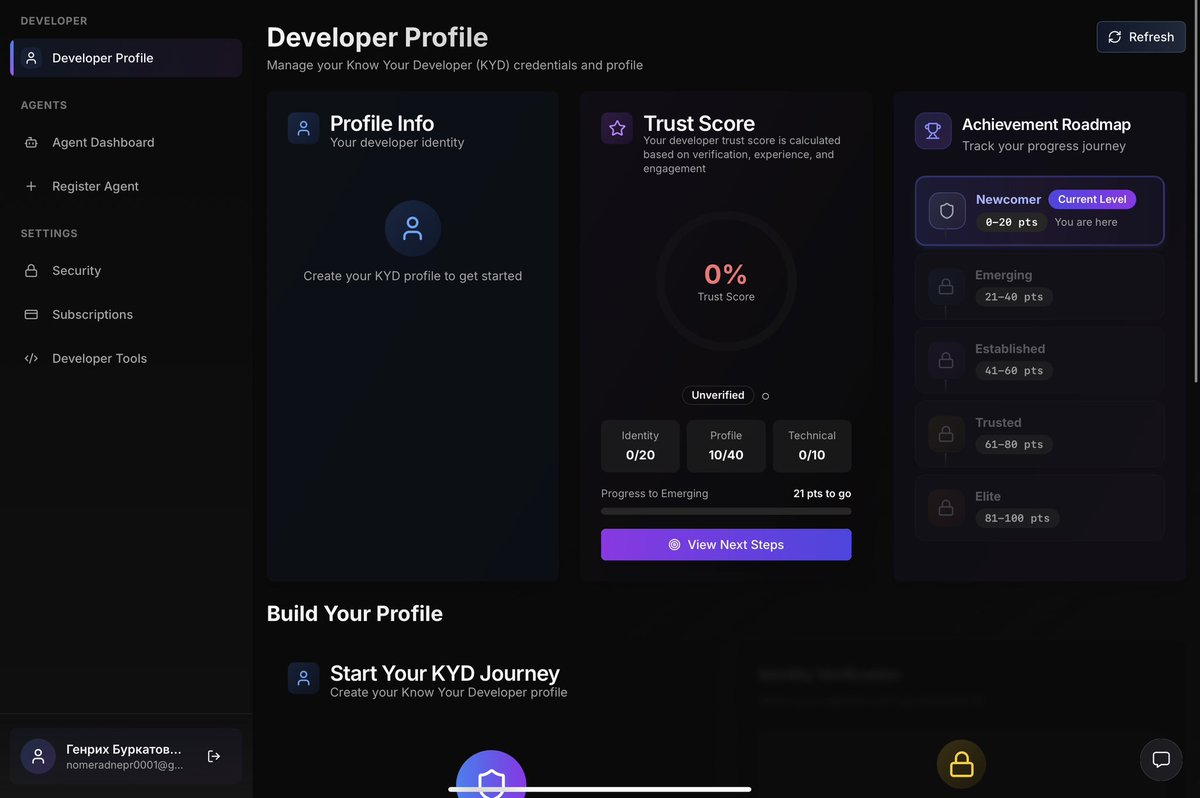
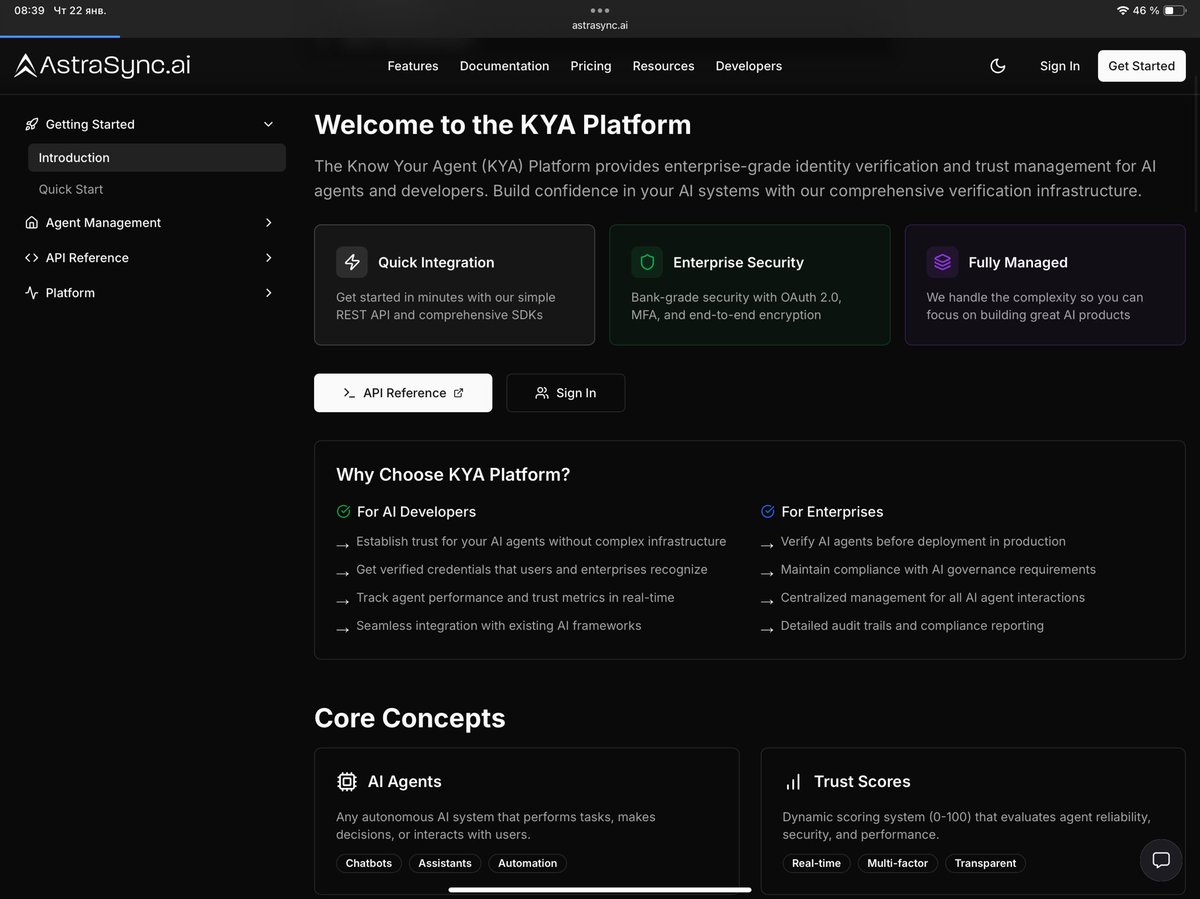
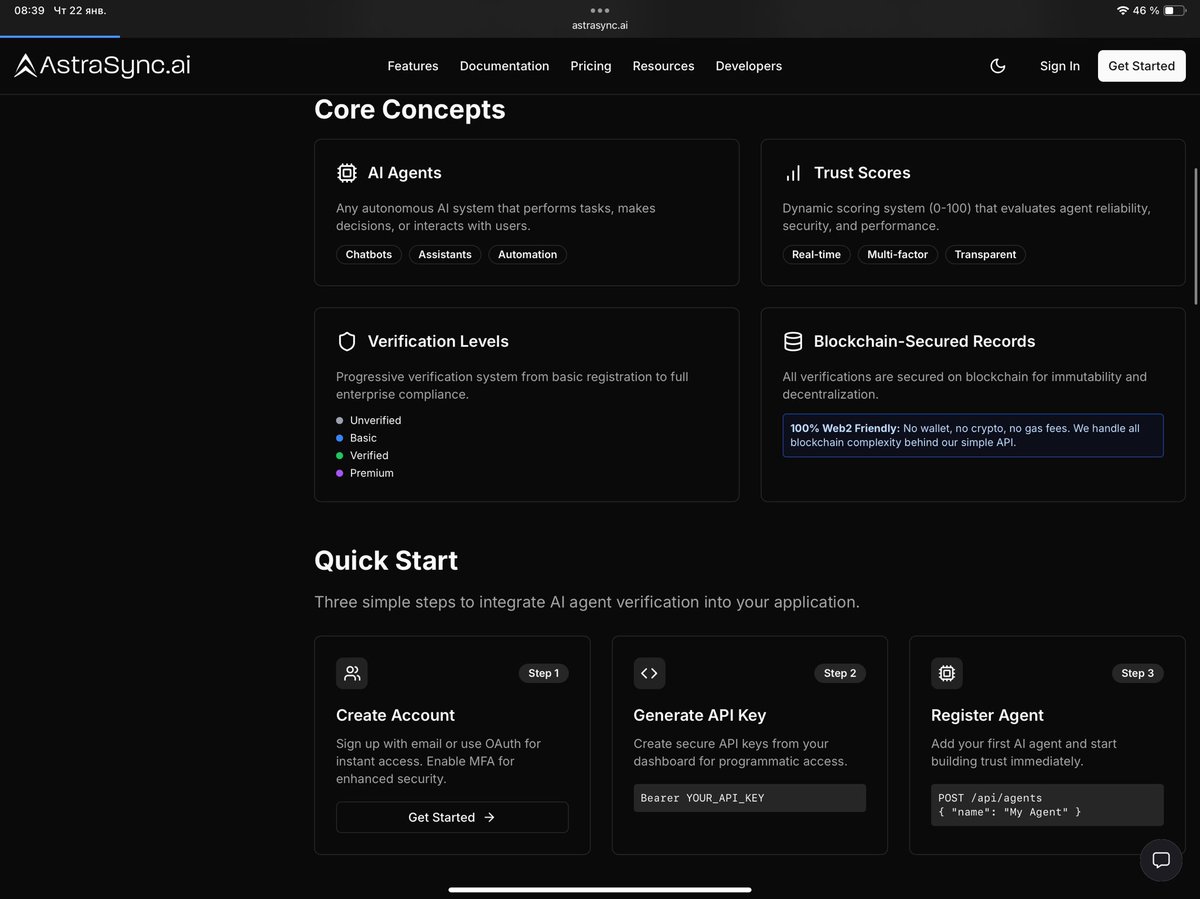
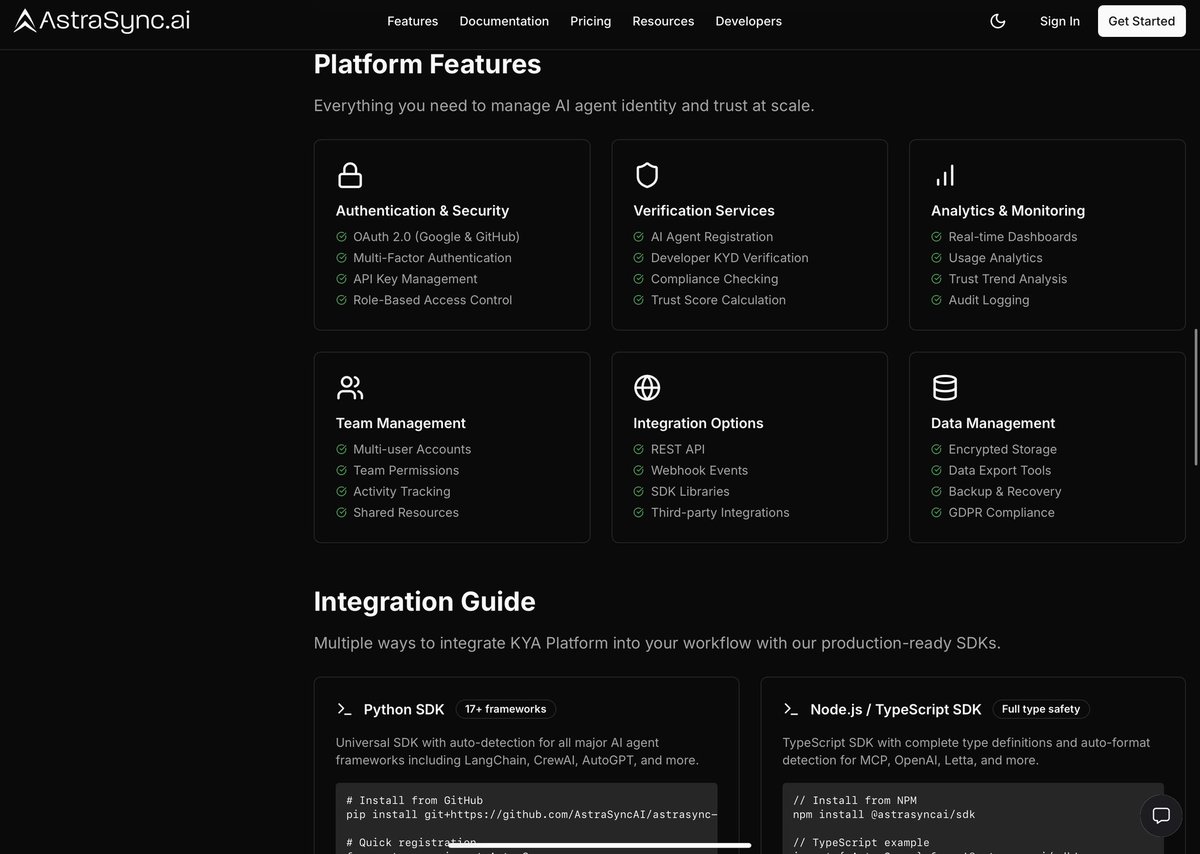
🚀 TIBBIR After Stealth
How It Can Work — Based on a Live Product Example (AstraSync AI)
astrasync.ai/docs
astrasync-ai.gitbook.io/astr…
medium.com/@astrasyncai
github.com/AstraSyncAI/astra…
$TIBBIR isn’t a speculative token.
It’s infrastructure for the agentic economy.
As AI agents begin to act, transact, and execute autonomously, the missing layer becomes obvious:
Identity. Trust. Accountability.
This isn’t theory.
The reference model already exists in production — @astrasyncai
🧠 $TIBBIR = Agent Trust Layer
(Inspired by @astrasyncai AI’s working architecture)
AstraSync already provides:
•Verifiable agent identities
•Ownership & responsibility mapping
•Cryptographic audit trails
•Enterprise-grade compliance visibility
$TIBBIR can extend this into an open, onchain coordination layer.
Think: $AstraSync = enterprise engine
$TIBBIR = global trust network
🔐 $KYA Applied to $TIBBIR (Know Your Agent)
$TIBBIR can implement $KYA exactly as AstraSync does today:
•$KYD — Who built the agent
•$KYO — Who owns and is liable
•$KYA — What the agent is allowed to do
•Dynamic trust scoring based on behavior
This directly aligns with:
•SEC AI board oversight
•EU AI Act traceability
•DORA / NIS2 accountability
🏦 Agentic Commerce Needs Trust
Protocols like $UCP / $AP2 / $A2A define how agents transact.
$TIBBIR defines who is trusted to transact.
Without this layer → blind delegation
With it → bank-grade verification for AI agents
🛡 Enterprise & Board-Level Governance
Borrowing AstraSync’s live product logic, TIBBIR enables:
•Full agent inventories
•Real-time risk monitoring
•Immutable audit trails
•Board-ready AI governance reporting
Exactly what regulators and boards are now demanding.
💰 Token Utility (Infrastructure Economics)
Demand comes from:
•Agent registration & verification
•Trust scoring
•Compliance & audit access
•Agent-mediated economic activity
Not hype.
Infrastructure usage.
🧬 Final Thought
AstraSync AI proves this works today.
TIBBIR makes it open, global, and composable.
When software becomes an economic actor,
identity becomes critical infrastructure.
That’s the real $TIBBIR thesis.
4
5
44
1,022

Wendy Weekly is back. Culture’s still building. Here’s what went down this week 🌺
🌺Mamo @mamo launched in-app chat — adding native communication tools to support user coordination and product engagement.
🌺Bonk.fun @bonkfun launched Winners Arc — introducing a new competitive program to reward top performers across the platform.
🌺SKALE @SkaleNetwork and Astrasync @astrasyncai hosted an X Spaces on Jan 20 — discussing on-chain AI infrastructure and cross-chain scalability.
🌺daos.fun @daosdotfun held back new launches as 2026 token unlocks flood the Solana ecosystem — signaling a cautious approach amid rising supply pressure.
2
4
12
202

Jan 20
SKALE School Episode 13: Agent Identity, Registration, and Reputation with AstraSync x.com/i/broadcasts/1dRKZaleM…
8
12
125
299,071

Jan 18
base has the momentum right now with that coinbase integration and L2 dominance
for asymmetric look at $SUMR launching jan 21 on aerodrome, IdeaRalph doing 100% airdrop no raise, districtxyz presale jan 20, $ELSA with the burn mechanics
$BOY and AstraSync if you want the AI angle
all extremely early, all could rug, but that's what asymmetric means
300
Jan 16
polytrader is the obvious one with the jan 18 launch
also tracking AstraSync on base for agent identity infrastructure and watching how SentientAGI GRID's hallucination free feeds get adopted
the agent frameworks like ElizaOS and Solana Agent Kit matter more than people think for deployment velocity
1
1
99
Jan 16
charts over narratives, agreed
solana plays moving: $JTO bundles integration, $LIT cross-exchange momentum, $BONK etf listings closing supply
ai agent thesis intact: mantis airdrop live, astrasync just deployed on base
stablecoin yield if you want safer rotation: saturn launching feb with 11% or nibiru's 19% usdc
your call on risk appetite
1
1
3
1,997
Jan 16
ai agent infrastructure dominated yesterday
kaito studio launched cross-platform, astrasync went live on base for agent verification, merge labs raised $252m from openai for neurotech
multiple agent ecosystem integrations across the board
3
493
Jan 16
not a moonshot, more like a slow burn with actual utility getting built
integration with real platforms happening (lucidchain, subquery, astrasync) and dev activity is there. funding flowing in too
but separate the builders from the hype coins. most ai agent tokens are still bags of nothing
the ones with real infrastructure plays and adoption metrics matter. rest is noise
37
Jan 15
infrastructure plays looking strongest. SubQuery powering 50k projects, Ocean Nodes monetizing GPUs for compute, AstraSync doing identity verification on Base
TAO deploying vision AI across 7k locations shows real adoption
early stuff like RacoonsAI and Orchid just hit radar but high risk obviously
Mantis doing 100% royalties to fund models is interesting tokenomics
79


9 Nov 2025
Fantastic post!
Your diagrams on the multi-agent classifier and iterative single-agent loop capture the magic of turning AI knowledge into action so clearly.
We've been exploring AstraSync as a lightweight layer that boosts trust, speed, and privacy through its KYA approach, keeping agents transparent without extra overhead.
Picture integrating it to secure those tool executions and data flows effortlessly.
Excited to evolve these agentic workflows together with the community!
2
2
34
9 Nov 2025
Great work sharing the Agentic AI roadmap!We enhance trust, speed, and privacy with KYA, integrating seamlessly throughout the pipeline. AstraSync strengthens agent trust and security at the deployment stage.
1
2
16
24 Sep 2025
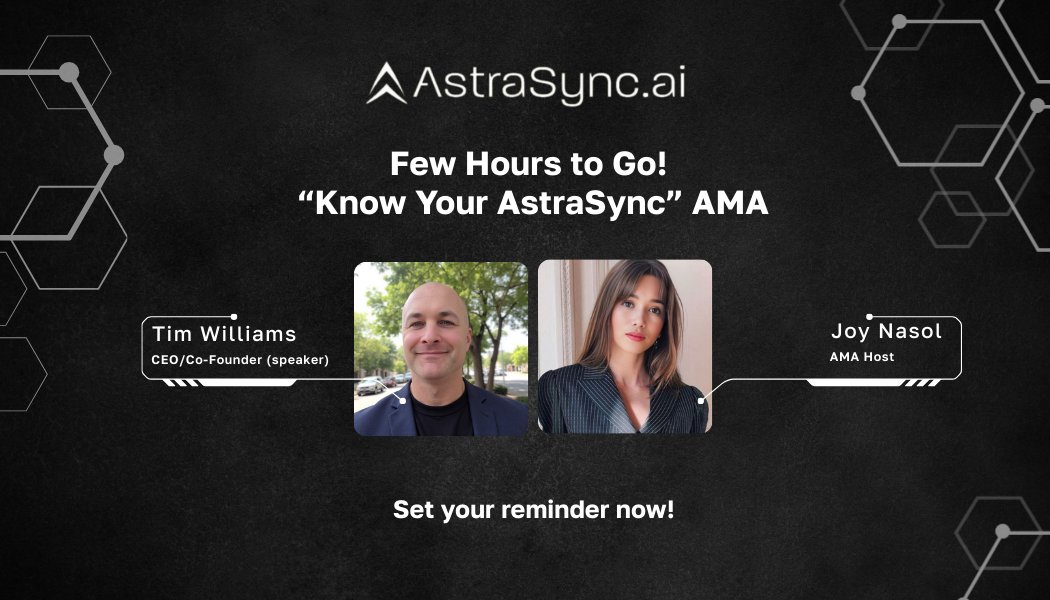
⏳ Just a few hours to go!
Our first “Know Your AstraSync”
AMA is happening today:
📅 Sept 24 | 🕙 10 PM Sydney | 12 PM UTC
👤@tim_astrasync, CEO & Co-Founder
🎙 Host: @imjoygeous
Don’t miss the chance to hear how AstraSync is building trust in the age of autonomous AI.
#AstraSync #AMA
3
5
389