
Jun 10
Rather than sitting on the landscape, this home is shaped as part of it, with building volumes emerging from a sculpted terrain.
📍 Vilnius, Lithuania
Project by: Abstractus
Details: hubs.la/Q04kp4HZ0




5
78
3,963

The real benchmark for all intelligence is the “ability to comprehend general truths”.
Full stop. ;)
Abstract mathematics is the lowest, if anything.
Abstract:
late 14c., originally in grammar (in reference to nouns that do not name concrete things), from Latin abstractus "drawn away," past participle of abstrahere "to drag away, detach, pull away, divert," also used figuratively; from assimilated form of ab "off, away from" (see ab-) trahere "to draw" (from PIE root *tragh- "to draw, drag, move;" see tract(n.1)).
Technically speaking, “abstract mathematics” is an oxymoron. ;)
Happy hunting!
5
366

worst latin verb of the week: fero, ferre, tuli, latus
best latin verb of the week: abstraho, abstrahere, abstraxi, abstractus
enemy of the week: cicero
1
5
72

Jan 12
Abstract Sensorium at MoMA: 2022/23 → 1969/70
▫️@RefikAnadol: Unsupervised at the Museum of Modern Art (Nov 19, 2022 - Oct 29, 2023).
▫️Untitled by Pulsa, 1969 for Spaces at MoMA (Dec 30, 1969 - March 1, 1970).
Etymology: From Latin abstractus ("drawn away," past participle of abstrahere), implying a separation from concrete matter sensorium ("seat of sensation," from sensus "feeling" -orium "place for"). Literally: A genre of sensation drawn away from the physical world.


Jan 10

The Evolution of Digital Display at MoMA: Across 50 Years (1970/2022)
Digital Art isn't new, but the ability to experience the work in it's native form very much is.


2
1
20
2,161

25 Nov 2025
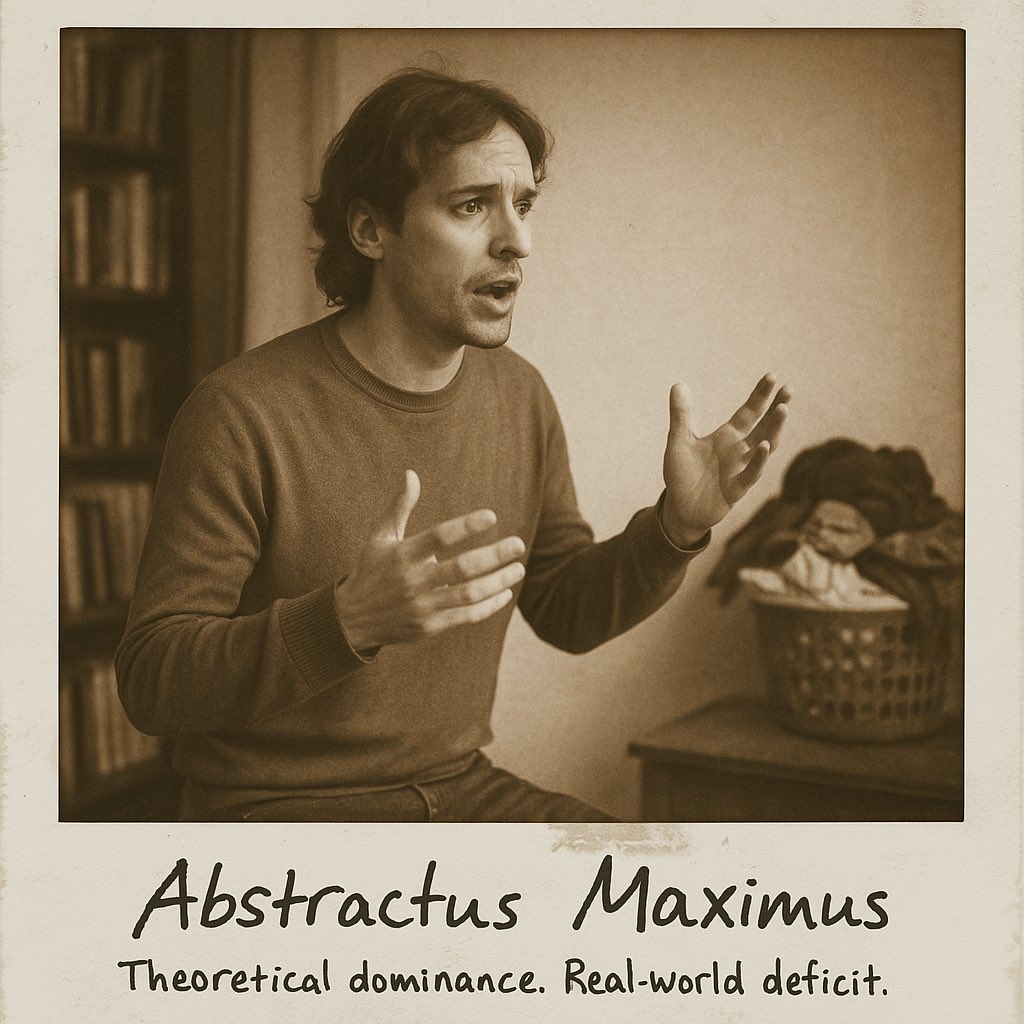
High Intelligence, Low Wisdom
Scientific Name: Abstractus Maximus with Practical Deficit
Aquarians demonstrate pronounced cognitive capacity for abstraction, pattern recognition, and theoretical construction. Unfortunately, these abilities rarely translate into functional daily behavior. Field studies record Aquarians who can design equitable global governance frameworks but cannot maintain consistent laundry schedules.
This mismatch between theoretical brilliance and practical incompetence often leads them into the role of “useful idiot” in larger ideological ecosystems.
1
3
39

30 Oct 2025
이거 사실 TMI이긴 한데..
리버 플랫폼이나
@RiverdotInc @River4fun @base $Bnkr
트리아 플랫폼을 보면
@useTria
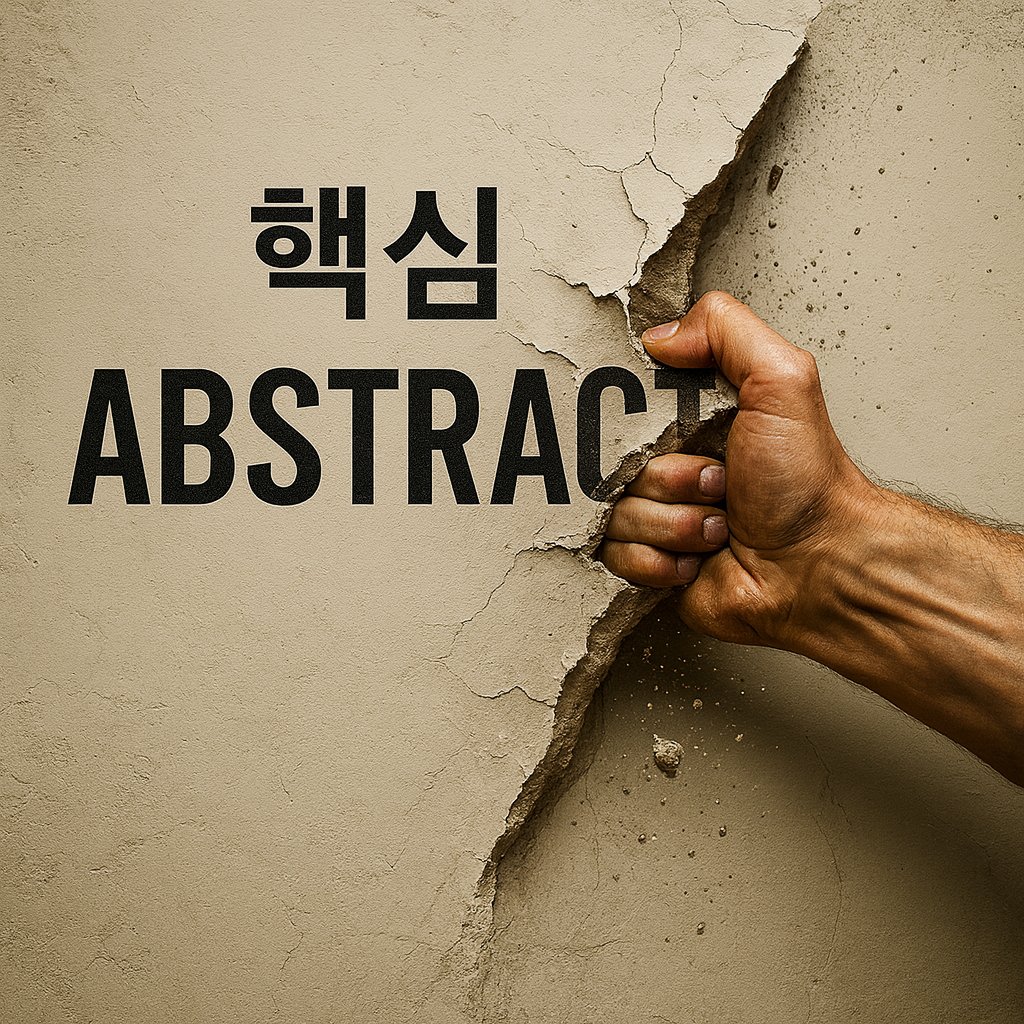
Chain Abstraction(=체인 추상화???) 라는 번역이 나옴
분명 번역된 한국어로 보이는데 이해가 안가
피카소의 추상화만 생각나는데..
나만 이해가 안가는건가? 다 글찮나요?
내가 보기엔 이게 바로 직역의 한계라 그런듯..
라틴어 어원으로 보면
ab (=어디에서 멀리, 떨어져서)
abstractus (~에서 분리되어 끌어내진)이고
그래서 추상화는 실제로는 핵심 본질만 뜯어내고
복잡성은 제거하는 설계 방식을 뜻하거든
즉 여러가지 멀티 체인의 복잡성을 숨기고,
사용자에게는 하나의 계좌처럼 느껴지게 만드는 구조지
실제 의미는 '체인 통합 인터페이스'라 해야하나? 아니면
'체인 투명화' 가 번역에 더 가까운 표현이라 보여짐
12 Oct 2025

[satUSD??]
@RiverdotInc @River4fun @base $Bnkr
리버는 왜 satUSD라는 스테이블코인 시스템을
만드려고 하는걸까?
그리고 왜 '체인추상화(chain abstraction)'라는 어려운 용어를 사용할까?
우리가 스테이블 코인 만든 이유는 알자나?
말 그대로 비트 이더가 불안하니 스테이블한 코인이 필요하다
그런데 이더 usdt랑 BNB usdt랑 죄다 다르다보니 디페깅이 일어나기도 하고 또 LP만드려면 브릿지해야하고 글자나?
그래서 안정적인 페깅을 유지하면서 어떤 체인에서나 자유롭게 이동가능한 공통된 글로벌 달러를 만들겠다.
이게 목표거든 (당연히 “1 satUSD = 1달러”)
이게 목표다보니
satUSD를 발행하기 위해선 최소담보비율이 110%이상, 보통 150%이상으로 설정되어 있는거지
당연히 이번에 관세빔에서도 페깅이 잘 유지된거지.
근데 '체인 앱스트랙션'은 뭐냐?
사실 abstraction 이라는 용어는 영어로 볼때
✔️형용사 : 추상적인
✔️명사 : 요약, 개요
✔️동사 : 어떤것으로부터 핵심만 뽑아내다
뭐 이런 뜻이 있거든..
즉 수없이 많은 체인별로 쓰이는 스테이블코인을 어떤 체인에서나 자유롭게 이동가능하도록 핵심적인 부분만 뽑아냈다.
그게 바로 'satUSD (사토시 달러)'다 이거지
그래서 OFT(Omnichain Fungible Token)이라는
용어가 나온거야.
옴니 = 모두 라는 뜻
펀저블 토큰 = 대체 가능한 토큰
모든 체인에서 대체 가능한 토큰이 사토시 달러다. 이말이야
그나저나 스테이킹 했는데 나 왜 포인트 안주니 리버야?
@EdgenTech
@wallchain_xyz
@MindoAI
9
12
107

16 Aug 2025
Malafus Abstractus Reinus dus Fogus Ardentus

2
61

18 Jul 2025
Genetically Mutated Spinosaurus / Abstractus Giga Spina
Fan Concept
#dinosaur #dinosaurart #paleoart #neoera #neoeracomic #spinosaurus #JurassicWorldRebirth #jurassicworld #jurassicpark

2
3
134

17 May 2025
Owning a thing that owns a thing means that if I give you the thing, then you own the thing that the thing owns.
Abstracting ownership:
“to drag away.” Its past participle abstractus had the meanings “removed,” “secluded,” “incorporeal,”
16 May 2025

This is really interesting, from the ERC-6551 Working Group:
Ghost Agent is staking some klima with their Chonk.
We have no affiliation to this or the coin he's launched on Zora, so do whatever at your own risk.
Just sharing something cool happening with Chonks & Backpacks

1
1
3
261






11 May 2024
ABSTRACTUS 3000!!
My Digital Abstract Art…
@ethereum #neon3000 #NFT #art #2dart #digitalart #2D #procreate #future3000 #NFTCommunity #Web3 #NFTs #abstract #artist

2
2
6
256

6 May 2024
Desde el santuario Abstractus Microsantuary, se suman al Proyecto de Ley 219, solicitando a la @CamaraColombia que voten positivo por el fin de las corridas de toros. 🐃 #ApruebenLeyAntitoreo
5
17
39
744

9 Mar 2024
"Tapestry Of Summer"
Detail: Ferris Wheel At Night... Tucson Arizona USA
#Abstract #Abstractus #CameraArts #Colors #FerrisWheel #Movement #Night #PhotoArts #Photograph #Photography #PhotoOfTheDay #Summer #Tapestry

1
4
184

23 Feb 2024
23 Feb 2024


7
41

14 Feb 2024
I just like this essay by Ilyenkov on the meaning of concrete. “In Latin ‘concretus’ means simply ‘mixed’, ‘fused’, ‘composite’, compound; while the Latin word ‘abstractus’ means ‘withdrawn’, ‘taken out of’, ‘extracted’ (or ‘isolated’), or ‘estranged’. That is all that is
1
2
112

18 Jan 2024
Or a compound rhyme.
Abstractus
Matter a factness
Gets practice on the fat chicks with
Chocolate chips and ranch dips
I tried lol
1
21

1 Nov 2023
How to say "based" in Latin (and the difficulties of translating modern terms into ancient languages).
After a long meditation and a lot of research, I have finally been able to determine how to translate the term "based" in Latin while preserving (1) the same denotation it has in everyday English usage and (2) good classical and idiomatic Latin.
Why is the literal translation not enough? If out of curiosity you use some translator or chatgpt to translate "based" in Latin, you will probably get the adjective "fundatus", which is the literal translation of "based" from the verb "fundare", which means, precisely, "to base" BUT in the sense of "laying the foundation of a construction". You could always say that you use "fundatus" in a metaphorical sense, in the same way that in the Middle Ages the scholastics began to use terms like "abstractus" and "concretus"; however, a regular reader of Latin would not understand the denotation, and in that case you should gloss the term with "so to speak" or "as we might say today". There is a better way to translate, which would allow even a first century Roman to understand the meaning of "based".
According to the Urban Dictionary, "based" designates a person who is true to himself, courageous, and does not care what others think; the opposite is, as you well know, "cringe". This is the sense we seek to maintain in Latin.
Why "sibi constans"? The Latin verb "constare" properly means "to stand, to be consistent"; it is usually used (1) with "ex" and ablative, to say that a thing is made of this or that; (2) simply, to say that something endures in time; (3) with dative, to say that something is evident to someone; (4) with dative, to say that something is convenient or congruent with something; and from here, finally, to the sense we are looking for, (4) with "sibi", the dative reflexive pronoun, to express congruence with oneself.
This last sense is well attested in the classical sources. For example, in Cicero (Cic. 1. Off. 33. 119): Ut constare in vitae perpetuitate possimus nobismetipsis, nec in ullo officio claudicare ("So that we can always be congruent with ourselves, and not falter in any duty"). From this it is easy to extract the idea that a "homo sibi constans" is someone who is congruent with himself, who always speaks and acts true to himself, who does not abandon his duty for fear of the opinion of others. In other words, a "homo sibi constans" is a based person.
With "sibi constans" we give up, unfortunately, using a simple adjective for "based" and must instead use two words; we also give up the style "infimus", i.e., popular, which "based" obviously connotes. It seems to me, however, that when translating modern slang into ancient languages it is better to keep the correct sense of the word and use idiomatic terms, rather than simplistic substitutions that unnecessarily increase the (already large number of) senses that exist in Latin. Using a idiomatic Latin term, instead, allows us to better understand the complexities of the Latin language, as well as to connect two different expressions, in two different languages, separated by two millennia, with the same idea. Be "based", my friend, be "tibi constans".

18
27
165
39,798