





















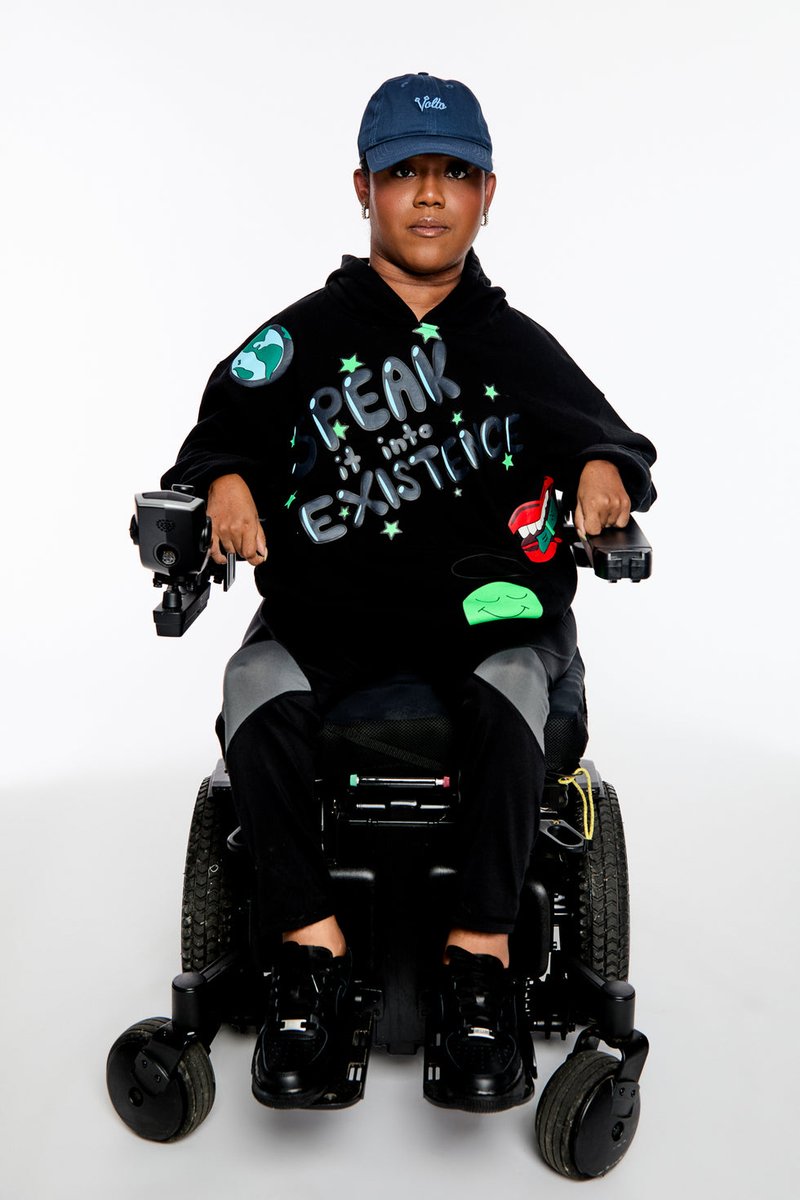



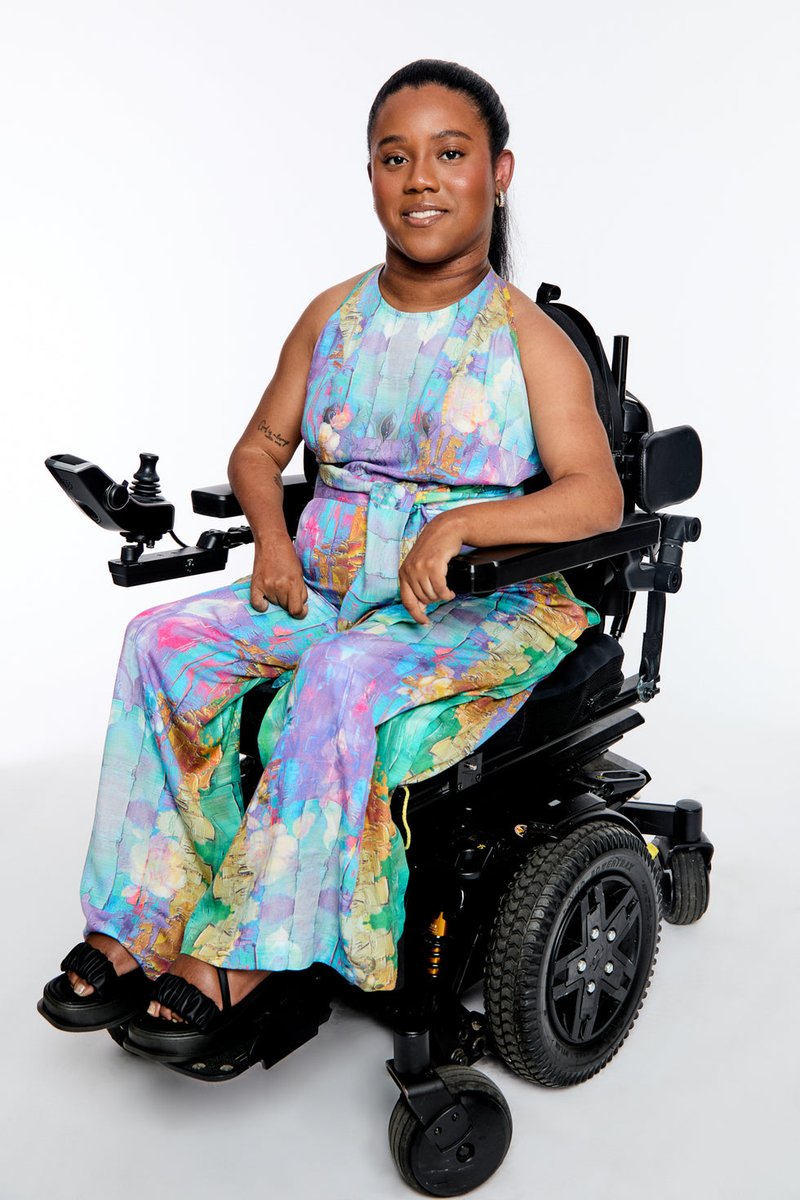
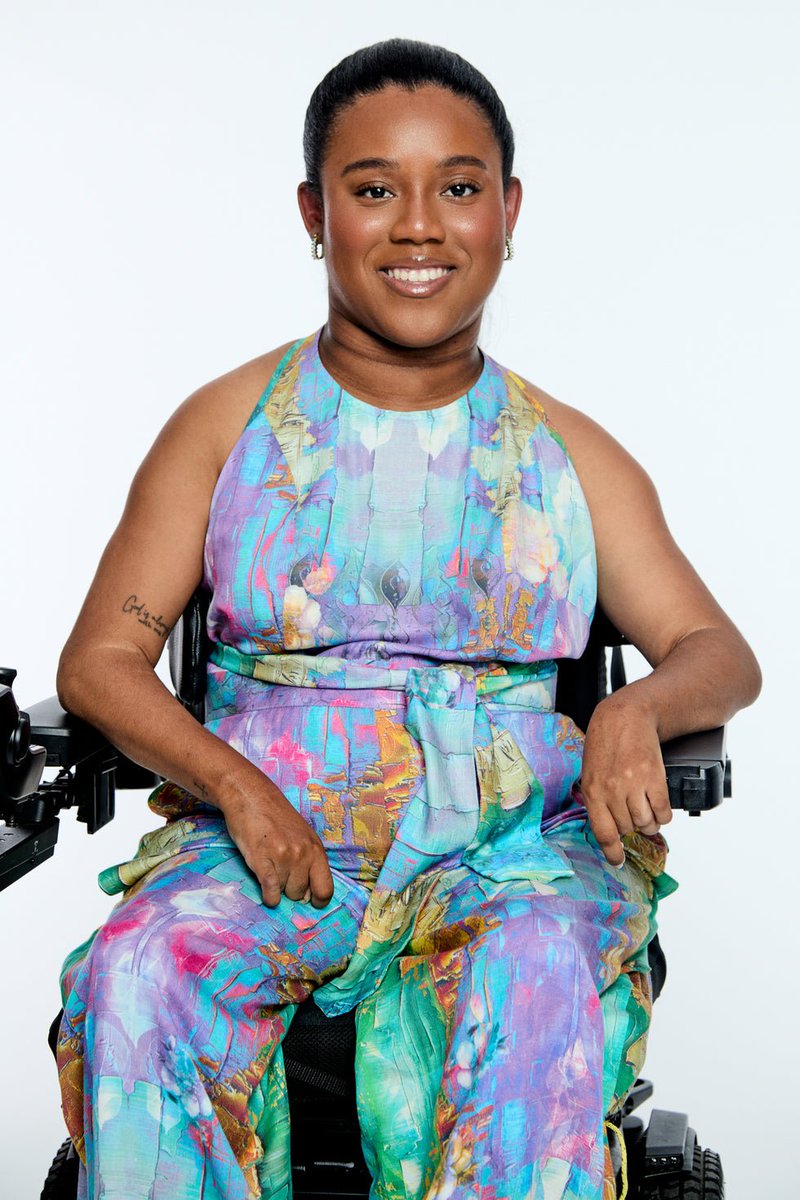
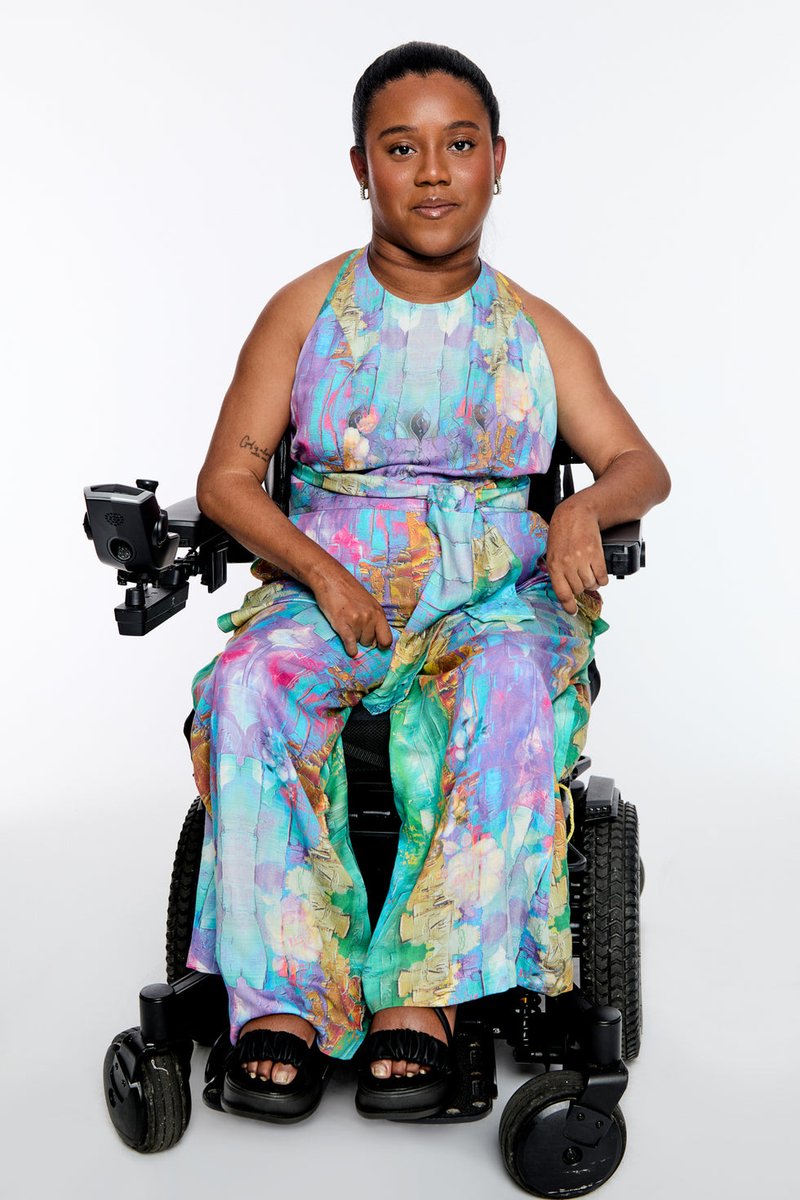
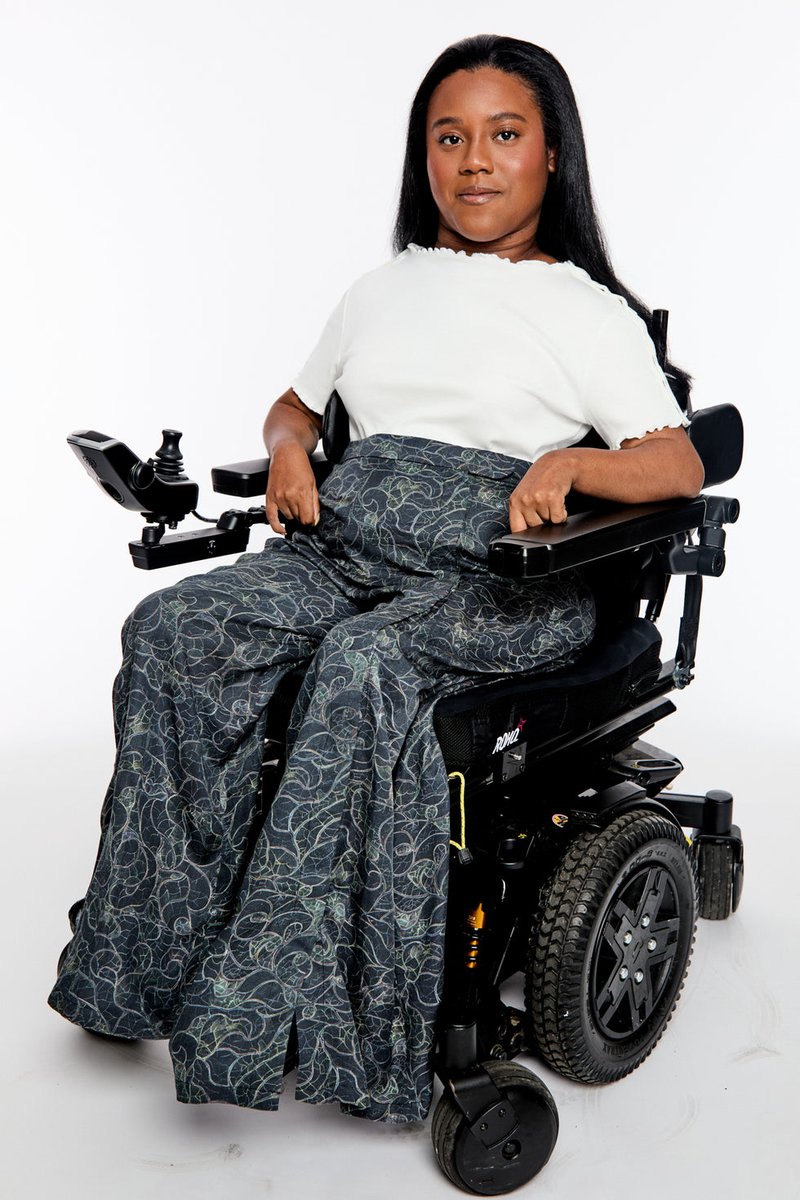
ALT A woman with long black hair, wearing a white short-sleeve top and a long dark pants with a light green swirl pattern, sits in a black powered wheelchair with joystick control, positioned against a white background.
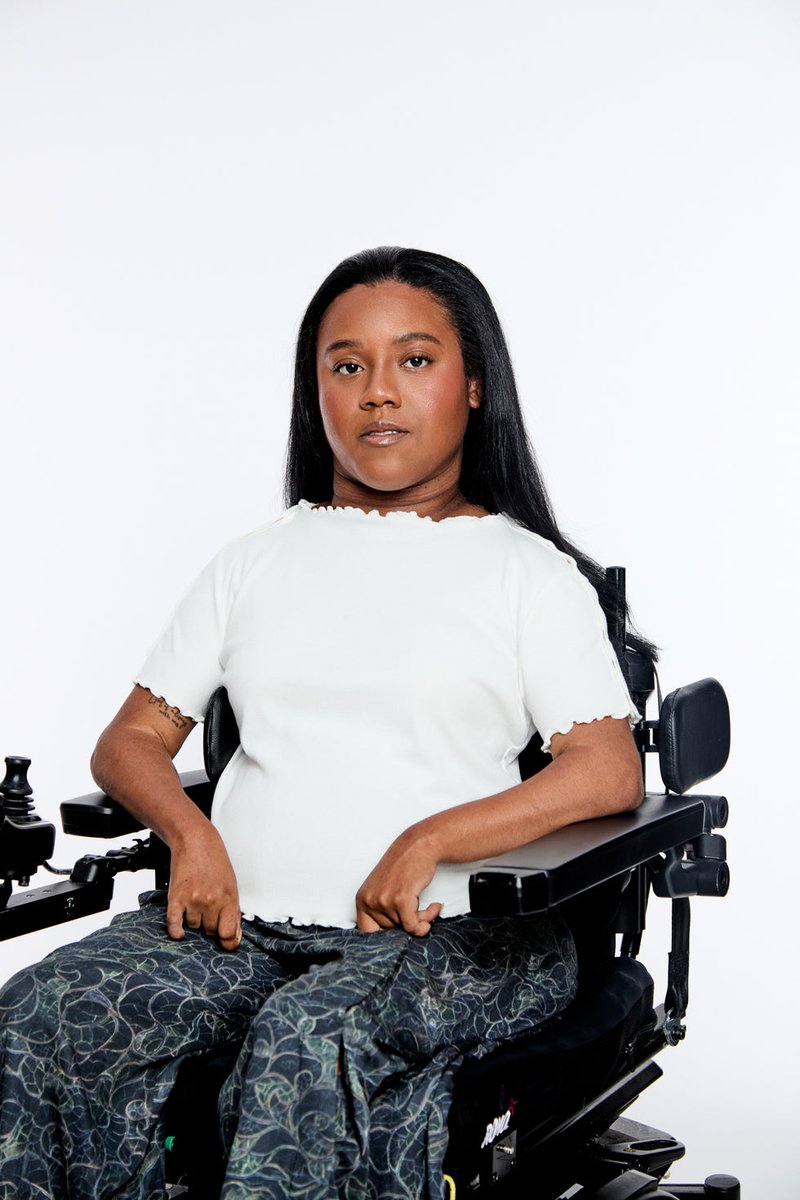
ALT A young woman with long straight black hair and medium-dark skin sits in a black motorized wheelchair, wearing a white short-sleeve top with frayed edges and patterned green pants against a white background. She has a tattoo on her right forearm.
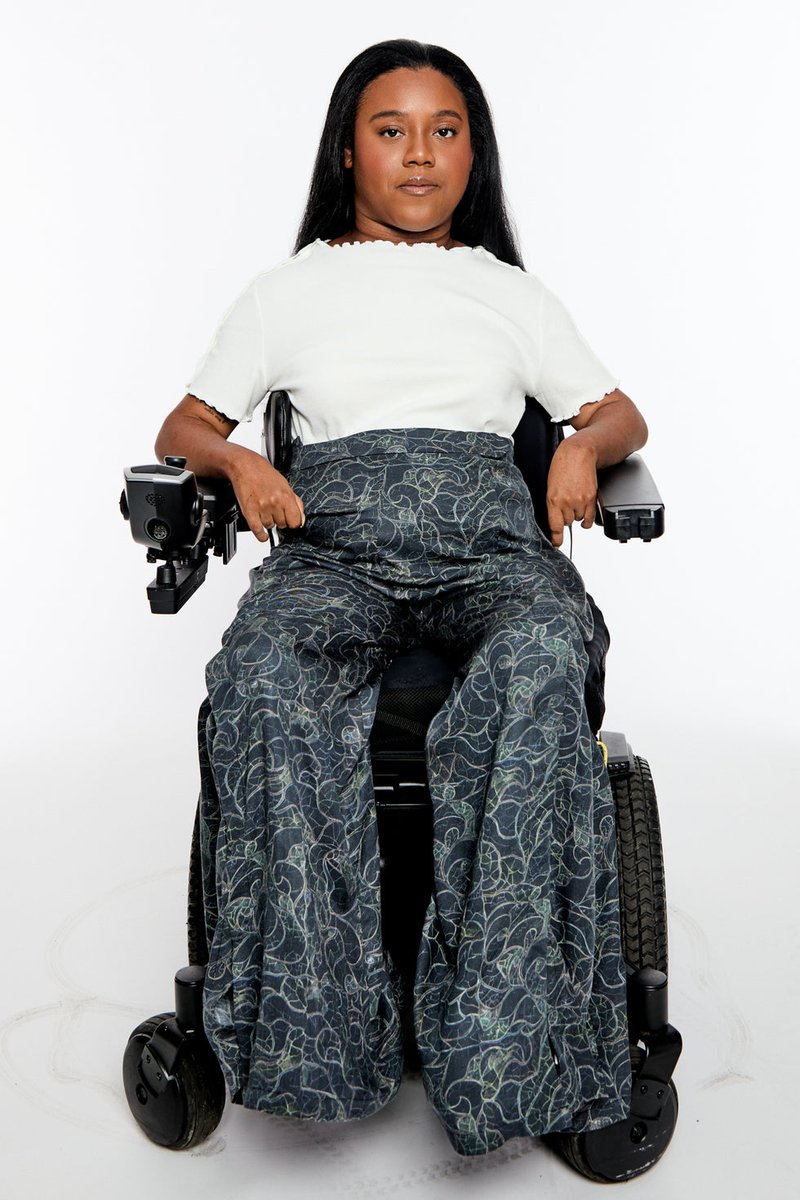
ALT A woman with long black hair, wearing a white short-sleeve shirt and dark patterned pants, sits in a black manual wheelchair against a white background.
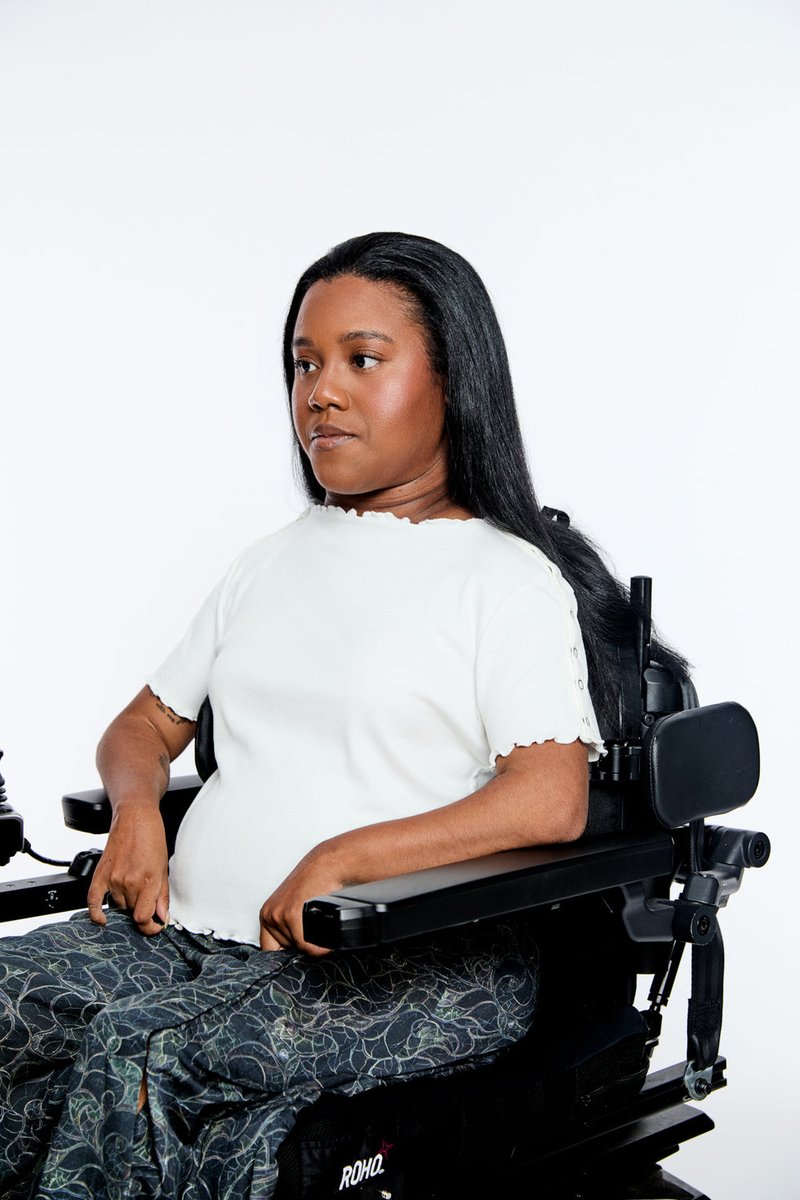
ALT A woman with long black hair and medium-dark skin, wearing a white short-sleeve shirt with scalloped edges and a patterned green pants, sits in a black powered wheelchair with the brand “ROHO” visible on the cushion, looking to the side against a white background.
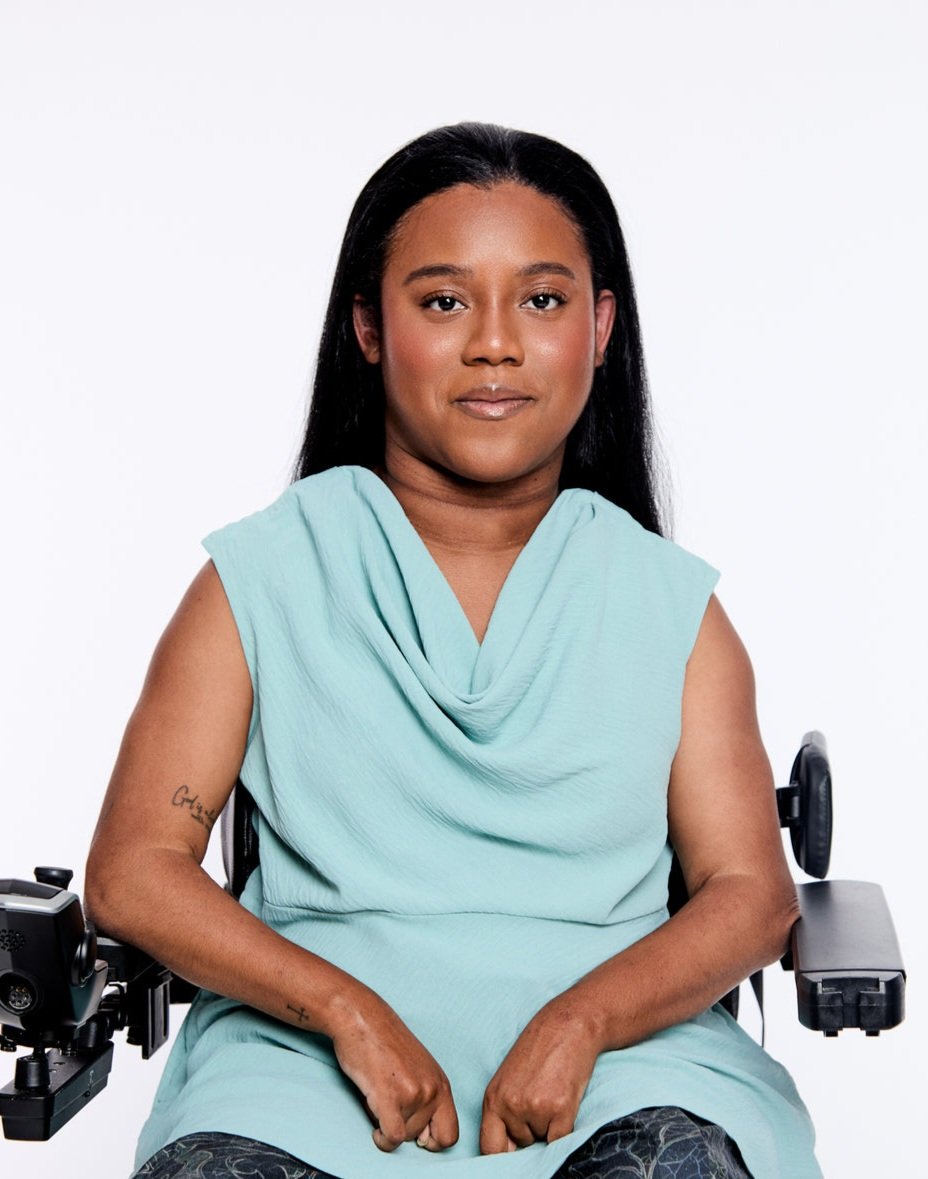
ALT A woman with medium-dark skin and long straight black hair sits in a black wheelchair, facing the camera. She wears a sleeveless teal top with a cowl neckline and dark patterned pants; her hands rest in her lap, and a small tattoo is visible on her right forearm. The background is plain white.
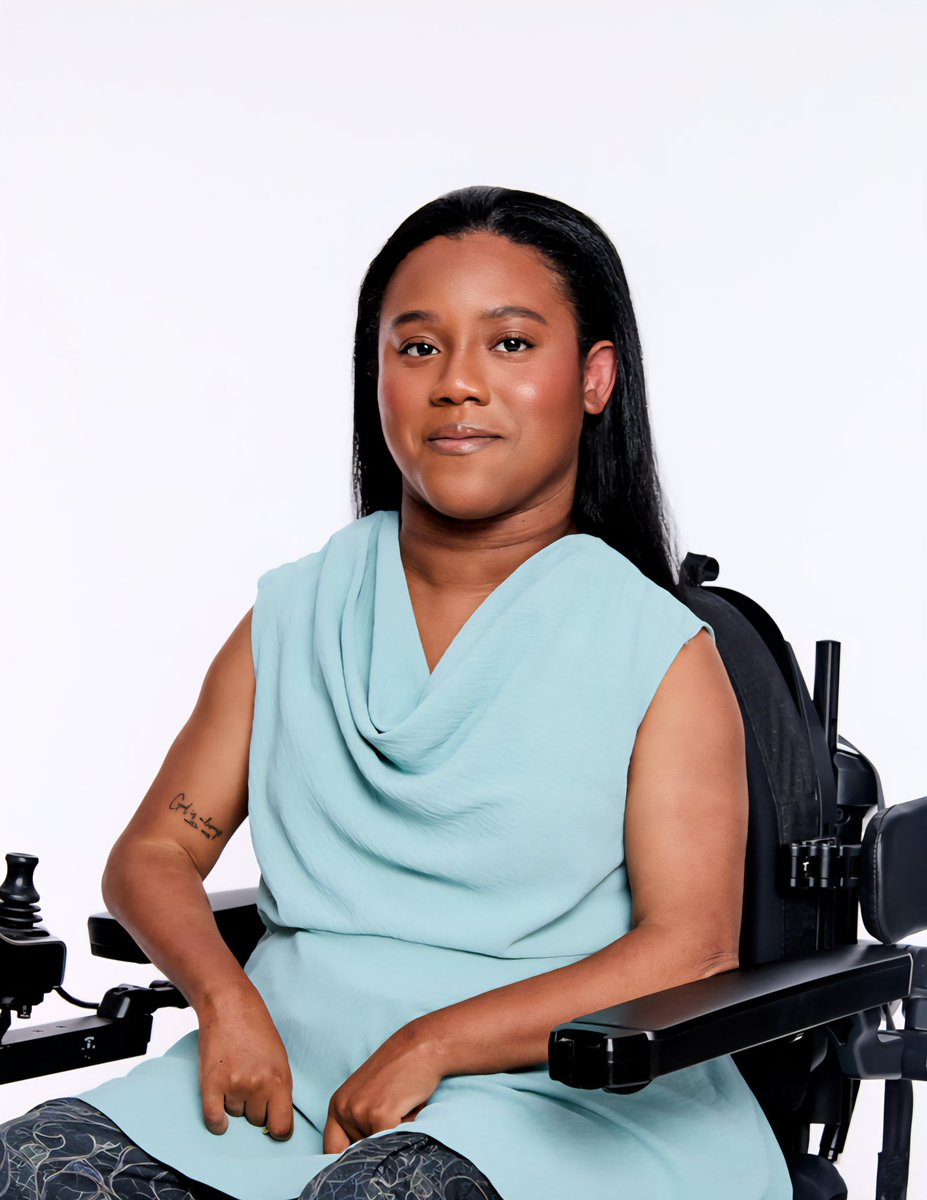
ALT A woman with medium-dark skin and long straight black hair sits in a black wheelchair, facing the camera. She wears a sleeveless light blue top with a cowl neckline and dark patterned pants; her right hand rests on her lap, and a small black tattoo is visible on her right forearm. The background is plain white.