
Jun 3
icon is (re)launching soon. we pivoted from ai ugc to normal ugc with humans in the loop
it’s $399 for:
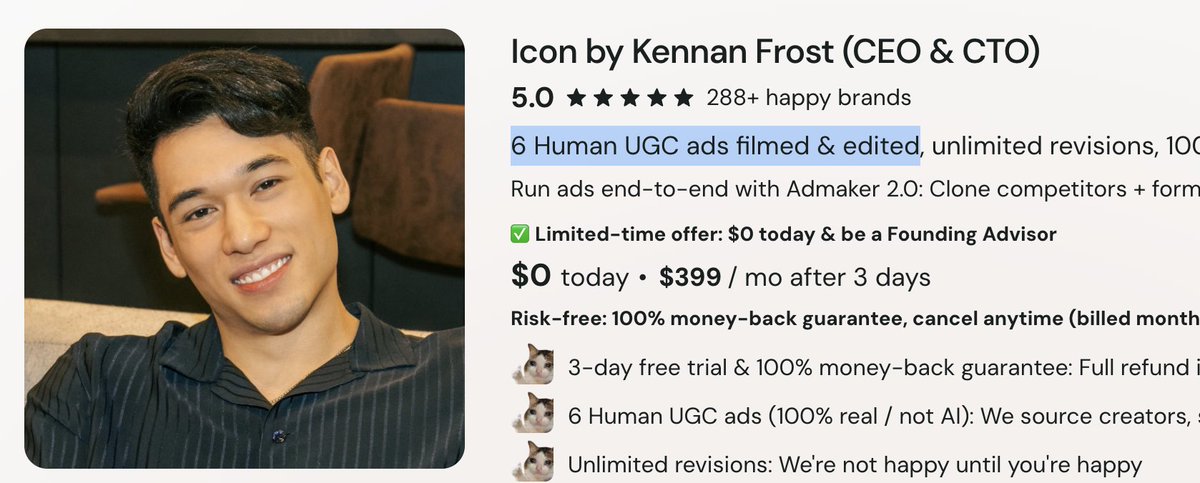
* 6 human ugc ads filmed & edited (100% real / not AI)
* we find creators, ship product, coach, & edit (2 creators × 3 ads)
* agency whitelabel (we make ads for your clients)
* admaker 2.0 software (8-products-in-1, replaces $10K /mo)
* full refund if you’re not happy
self-serve this with a 3-day free trial to get started
alternatively our managed service offering starts at $2K /mo:
* custom your deliverables (ugc, statics, media buying)
* dedicated creative strategist
* shared slack channel
* email kennan@icon.com or dm me for a demo. I will personally demo some of these :-)
🫡🫡🫡
69
6
361
125,208

May 26
TIME's Platner patter:
After decades of nominating buttoned-up technocrats with glittering résumés, many Democrats want candidates with flaws, faded ink, and redemption arcs that resemble their own. Platner’s past, in other words, may actually be his path. “Platner’s rise fits a moment where many Democrats feel the traditional playbook hasn’t worked, either politically or personally,” says admaker Jim Margolis, who advised Barack Obama’s presidential campaigns. “Democrats are willing to bet on someone who may have a few warts but feels fresh, unscripted, and tuned in. His ‘difference’ may well be his secret sauce.”
newsbusters.org/blogs/nb/tim…
2
3
2
722

I wrote about him August 19 2025 and was definitely not part of any progressive herd anything. His campaign consultant/admaker was Morris Katz who was also working for Mamdani. Katz tweeted out the launch ad and I saw it and wrote about it. theeditors.com/p/the-enemy-i…
2
1
28
5,727

May 21
Somewhere a Dem admaker is furiously cutting midterm ads about the $1b ballroom and the $1.7b slush fund

CNN: Would you be okay with people who were convicted of hurting police, getting taxpayer money?
Blanche: Just to be clear, people that hurt police get money all the time.
3
5
1,450

Apr 23
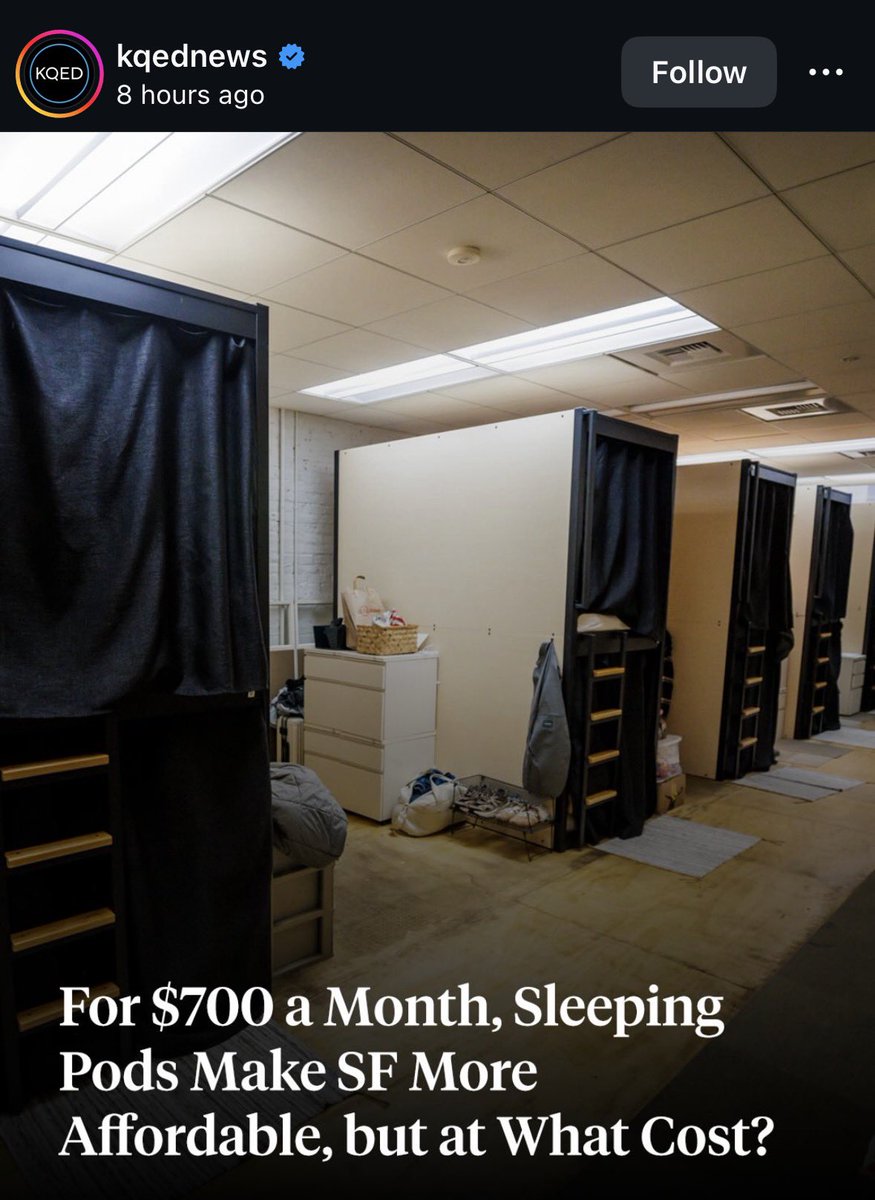
If I was a Republican admaker I would just make a reel of stories like this to sink Gavin Newsom. What a comically mismanaged state.

5
9
88
7,013

Mar 26
OpenAI just shut down Sora. Honestly, I wasn’t surprised at all.
When it launched, the whole internet was on fire. OpenAI positioned it as the “AI TikTok,” everyone was desperately hunting for invite codes. Sora pushed virtual avatars hard—turn yourself into a digital character and make videos to socialize.
Backed by its early lead in video generation tech, it exploded: a million downloads in just five days, rocketing to #1 on the US App Store. For a moment, it felt like OpenAI was about to rewrite the entire short-video playbook.
Viral spread isn’t the problem. The problem is the hype machine and the actual value the product can deliver don't line up.
The video quality was genuinely the best out there. But that kind of growth can’t hold up a real social network.
Social networks live on a flywheel: users create;content pulls in more users;they create even more. Sora’s flywheel never even started turning.
Every single video cost a mountain of tokens. The experience wasn’t smooth, it was slow, jittery, and inconsistent. Most people couldn’t get one clip worth posting in a single session.
Curiosity brought them in. One playthrough burned their credits, and they had zero reason to come back.
Retention cratered from 30% to 1%. That wasn’t an ops failure. It was the growth path and the product shape that were never meant for each other.
Worse still, every casual “let’s just try it” moment was burning real compute behind the scenes. The faster it grew, the faster the money disappeared—while revenue never caught up.
OpenAI was reportedly spending $15 million a day just to keep the lights on, with GPU costs at $1.3 per 10-second video at the time.
It all reminds me of Cluely.
Cluely went nuclear with the “AI cheats for you in interviews and meetings” hook. Controversial clips sparked moral outrage, spread like wildfire, and pulled in a16z money. But outrage only attracts people who feel strongly about the topic, not people who actually need the product.
Users showed up, only to discover the core feature “barely works.” Real-time suggestions lagged 5–10 seconds, hallucinations everywhere, accuracy in the gutter. Even founder Roy Lee admitted early on that the product “barely works.”
All that noise across the internet…, and yet ARR was only $5.2 million.
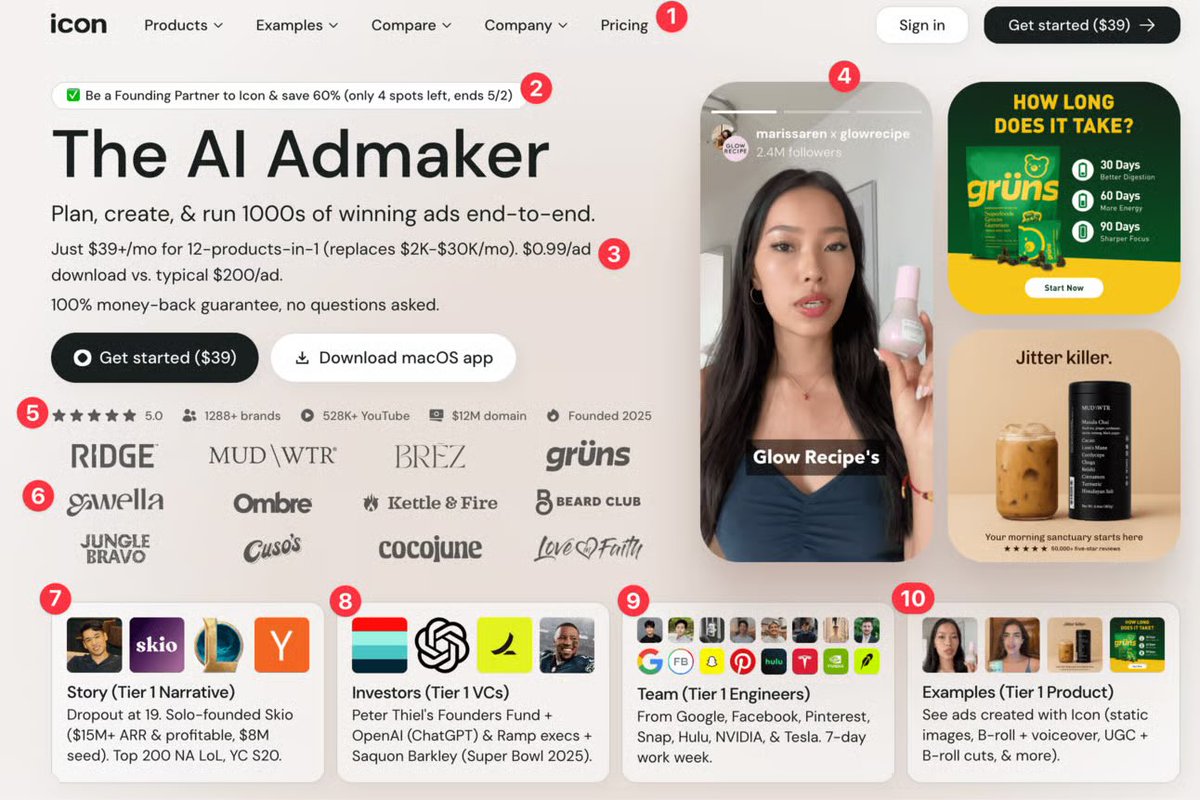
Similarly,Icon dropped $12M on the domain and launched with massive hype as the “world’s first AI Admaker and AI CMO,” claiming one-click ad generation, competitor creative cloning, and replacing entire creative agencies. Now,site’s down, team’s gone.
Actually, most AI tools are just LLM wrappers with no high technical barriers. The real moat is finding your Product-Market Fit. Relying solely on vibe marketing will only be a flash in the pan.
Sora,Icon and Cluely used completely different virality plays, but the fatal flaw was exactly the same: no real bridge between where their growth came from and the actual value the product could deliver.
Viral spread itself isn’t the villain. The villain is when the story, the mechanics, and the delivered value are out of sync.
Both Sora Icon and Cluely nailed the spread, using the wrong story to pull in the wrong crowd at massive scale. The bigger it got, the faster it burned, and the uglier the ending.
In the AI era, growth isn’t about making more people know you exist. It’s about the right people finding you for the right reasons and then choosing to stay.
Mar 24

We’re saying goodbye to the Sora app. To everyone who created with Sora, shared it, and built community around it: thank you. What you made with Sora mattered, and we know this news is disappointing.
We’ll share more soon, including timelines for the app and API and details on preserving your work. – The Sora Team
3
2
12
5,095


Mar 13
Nano Banana 2 is live on UGC AdMaker 🍌
Generate Ai avatars and images with Nano Banana 2 and then them into UGC ads in minute.
Faster generation
Better visual quality
Higher consistency
Create ads for TikTok, Facebook & IG
Try it today ~ Ugcadmaker.ai
1
1
2
74

Mar 11
Bro they’re back at it 😭😭
Now icon is a human admaker?
These guys gotta be in some deep shit
1
3
128

The traditional UGC model is broken. 🪦
If you're still paying $500/video and waiting 2 weeks for creators to ship content, you’re losing the ROAS game.
The future isn't "content creation"—it's the Ad Factory. 🧵
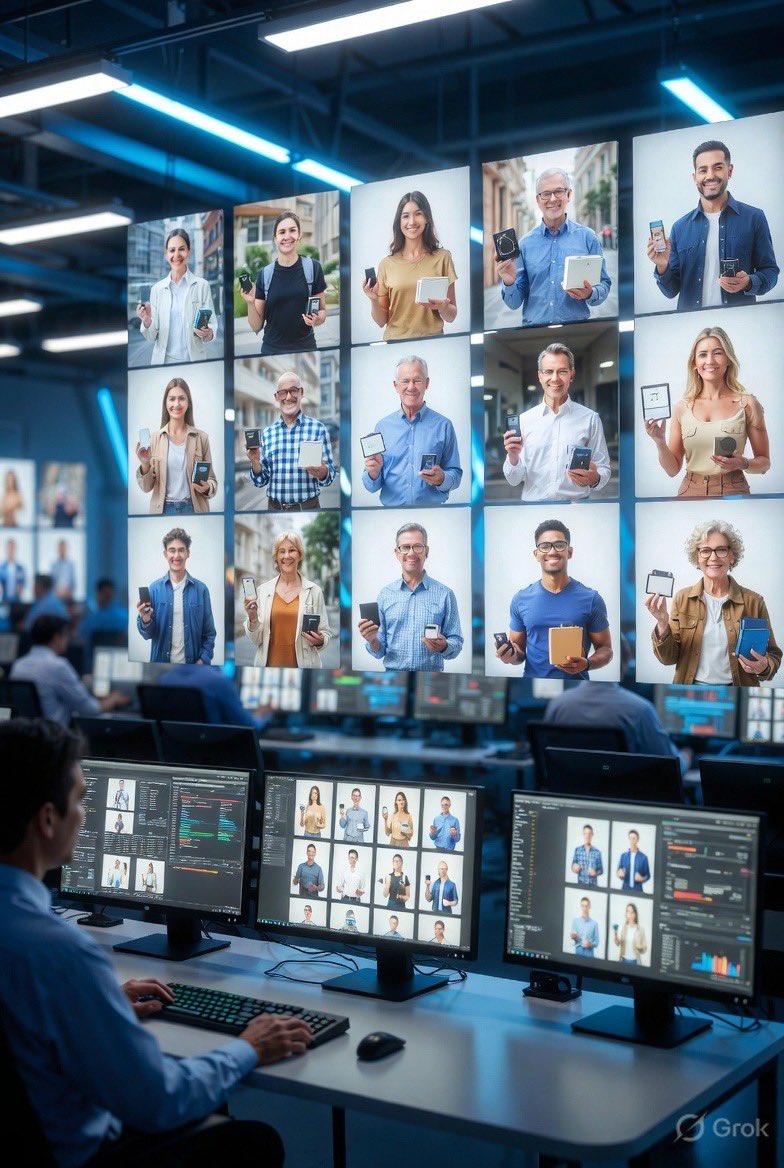
2/5 The biggest brands in 2026 aren't hiring more creators. They are building automated systems to launch 100 ads per day for pennies.
Enter UGC AdMaker. 🚀
3/5 The "Viral Replicator" 🔄 Found a competitor's ad that's crushing it?
1Paste the link.
2AI extracts the pacing and structure.
3Replace assets with your product.
4Get a high-performing ad in under 60s.
4/5 Product-in-Hand 🤳 No studio? No problem. Generate hyper-realistic POV shots of your product being used—indistinguishable from reality. It’s our #1 converting ad format.
5/5 Stop guessing. Start testing 20 angles daily and let the data find your winner.
Go from product photo to viral ad in under 60 seconds.
Start for free: ugcadmaker.ai 🔗
2
24


🪦AI startup graveyard update:
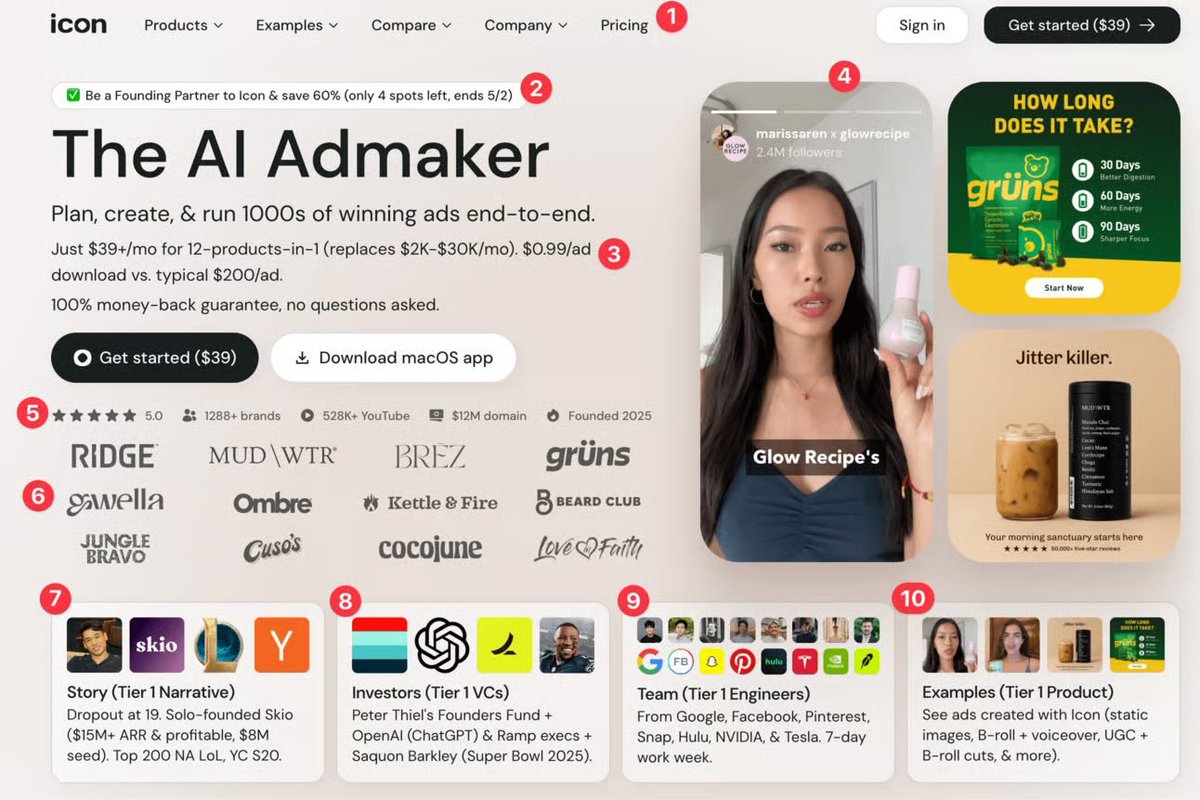
Icon.com — the "AI Admaker" — is dead.
They spent $12M on a domain name before figuring out if anyone wanted their product.
Reminder: @Google started on google.stanford.edu and @facebook started on thefacebook.com
(Your brand isn't your URL. It's your product.)

1
2
398

Mar 5
He dropped $12M on a domain, raised from Peter Thiel, claimed $5M ARR in 30 days
And the whole thing just went dark
- @icon
- Columbia dropout
- YC S20 alum
- solo-founded Skio (subscription management for Shopify)
- scaled it to $25M ARR, profitable
- engineer background: Hulu, Pinterest
The guy had a real exit under his belt. Not a hype merchant but an actual builder
Then came Icon.
February 2025:
- launches Icon as "the world's first AI Admaker"
- pitches it as ChatGPT CapCut for ads
- backed by Founders Fund (Peter Thiel)
- investors include execs from OpenAI, Ramp, Cognition
- total raise: $9.2M
April 2025:
- buys icon(.)com for $12 million
- 6th largest public domain sale ever
- posts "I want to make the $12M I spent on icon(.)com worth it"
- claims $0 to $5M ARR in 30 days
- says he'll beat the $0 to $100M ARR world record in under 12 months
The energy was maxed out. League of Legends ranked player. 100-hour weeks. "I'll eat dog poop if it means winning" in the job description
Then came the cracks:
- job postings go viral for demanding 7-day work weeks
- culture described as "will drive 99.99% of people crazy. And that's by design"
- users start reporting billing and cancellation issues
- a founder publicly says he had to cancel his credit card to stop getting charged
- ad outputs underwhelm
- by August 2025, the "AI-first" product quietly adds a $1,000/mo tier with real humans doing the work
The pivot nobody talked about
The AI couldn't actually replace the agency, so they became one
March 2026:
- icon(.)com shows "Authentication Required"
- product is locked
- no public announcement
- no employees visible on LinkedIn
- Levelsio posts it to X: "Icon, the AI Admaker, just went bankrupt"
- 302K views in hours
The math on this is brutal:
- $12M on a domain as "brand strategy"
- $9.2M in venture funding
- aggressive scaling before product-market fit was proven
- building in the most commoditized space in AI (ad creative)
- every major AI lab ships better image and video gen every quarter
The domain wasn't the problem, it was spending like you've won before you've proven the product works for anyone other than your pitch deck
Kennan had something most founders would kill for
A real track record. Real investors. Real credibility
And he burned through all of it in a year by confusing velocity with product-market fit
The AI ad space is a bloodbath right now. Every tool does roughly the same thing
When your moat is a domain name and vibes, you're one bad quarter from "Authentication Required"
Two companies, same founder, but completely different outcomes
Skio: solo-founded, lean, profitable, $25M ARR, still running
Icon: $21M deployed, massive hype, commoditized product, gone in 12 months
The difference wasn't talent, it was discipline
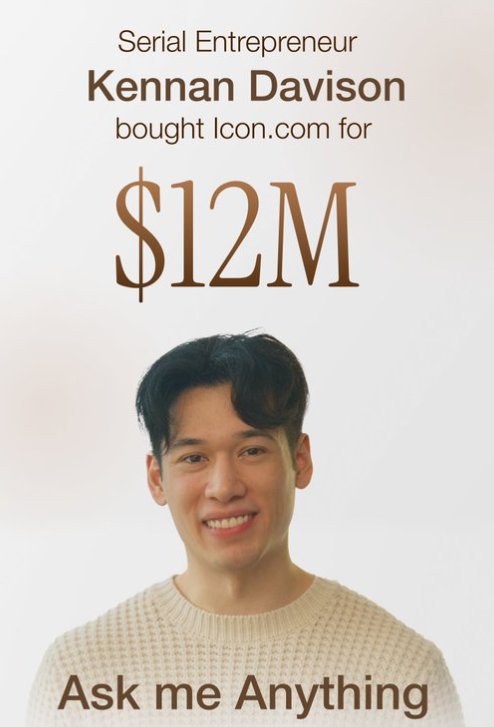

Icon, the AI Admaker, just went bankrupt
They paid $12M for the domain Icon.com and now it's dead

1
3
470

Meet Kennan Davison
- Accepted to university but dropped out at age 19 to pursue entrepreneurship
- Highly ranked competitive gamer, placing in the Top 200 in North America for League of Legends
- Solo-founded Skio in 2021, a subscription management platform for Shopify brands that reportedly reached $15M–$25M in ARR
- Founded Icon.me in late 2024, the "first AI CMO" and "AI Admaker"
- Secured approximately $25 million in seed funding from investors including Peter Thiel’s Founders Fund, Saquon Barkley, and executives from OpenAI
- Purchased Icon.com domain for $12 million in April 2025
- Demanded 7-day workweeks and bragged on social media about his team "eating glass" and working 24/7
- After raising millions, the company began offering human-led services instead of AI
- The website (for which the company reportedly paid $12.5 million) now displays an "Authentication Required" page
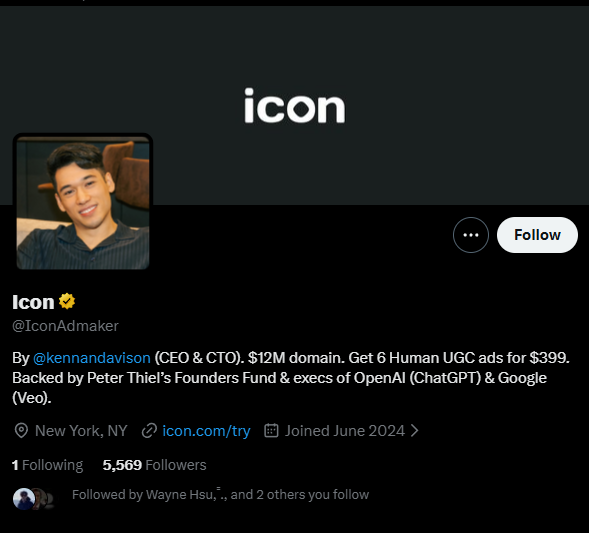
- Put his photo on the brand’s official X page and disappeared like he never existed
Mar 5

Really eager to know the story behind the “failure”
2
3
357

Mar 5
Icon, the AI Admaker, was our top 3 marketing channel in Q2 last year.
Sad to see them go.
Icon, the AI Admaker, just went bankrupt
They paid $12M for the domain Icon.com and now it's dead
5
18
3,071


Feb 21
Spec ad for a health app like HealthifyMe.
No creator.
No production crew.
No editing cycle.
Generated inside ugcadmaker.ai under 2 mins!
At scale, creative stops being a project.
It becomes infrastructure.
If your ad production depends on people’s schedules, you don’t control growth.
We’re building UGC AdMaker for brands that want creative on demand — not on request.
Try it: ugcadmaker.ai
1
1
2
61

Google saw Icon Admaker gave up and decided to take their entire TAM 24 hours later
Feb 19

Today, we’re introducing Pomelli’s latest feature update, ‘Photoshoot’
With Photoshoot, you can start from a single image of your product and easily create high quality, customized product shots to elevate your marketing.
Available free of charge in the US, Canada, Australia & New Zealand! Get started with Pomelli today at labs.google/pomelli
10
990

Feb 18
Working Behind the Scenes in Iran | Prof. Zaki Shalom in an interview with Yaki Admaker and Israel Cohen on Radio Kol Barama: “The American perception says that if we don’t prepare a new government to replace the regime, we haven’t done anything — and American intelligence agencies, and I can estimate that we [Israel] as well, are doing work behind the scenes to prepare the infrastructure.”
Me: This conforms with what I’ve been hearing.
2
4
34
1,510