
2 Dec 2025
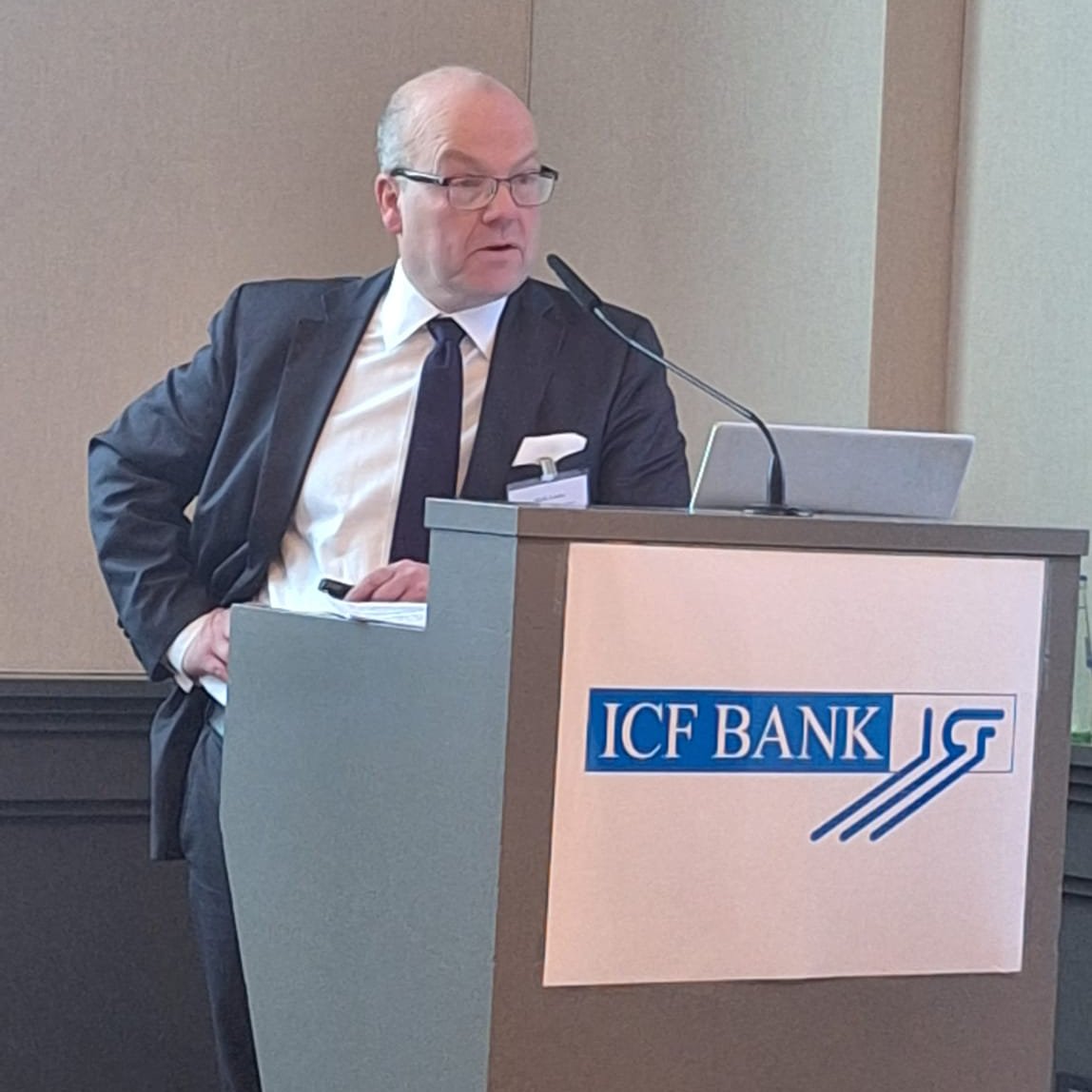
Maik Laske, Vorstand Advanced Blockchain, auf der Investorenkonferenz der ICF Bank. #advancedblockchain #aktien #icfbank
1
5
533

17 Oct 2025
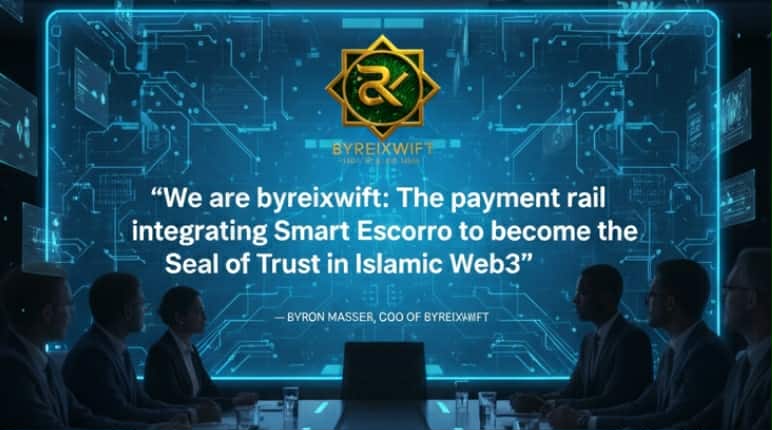
🚄 #ByReiXwift: The Payment Railway Driving Trust in Islamic #Web3
26 Days Left to Invest
#ByReiXwift introduces Smart Escrow, a Shariah-compliant #Web3 innovation that redefines security and legitimacy in decentralized transactions. Embedded within the Sidra ecosystem and powered by next-generation blockchain technology, this automated mechanism enables trust-based agreements without intermediaries—fully aligned with Islamic ethical principles.
🔐 What is #SmartEscrow?
It’s a smart contract that functions as a secure escrow, releasing funds only when verifiable conditions are met. No interest, no ambiguity, no speculation—just transparency, operational discipline, and Halal compliance.
🌍 Beyond Technology: A Trust Infrastructure
#ByReiXwift is more than a payment connector. It builds bridges between communities, platforms, and values. With Smart Escrow, every transaction becomes a statement of legitimacy, scalability, and financial inclusion.
📡 Institutional Activation
Engineered for #SidEx, #SidraChain, and HalalInnovation #AIxAggregator, this system strengthens ethical governance, interoperability, and multicultural access. It’s the trust seal Islamic Web3 needs to advance with purpose and security.
🚀 Join the Technological Vanguard
Be part of an ethical, scalable, and globally legitimate infrastructure. Your active participation fuels Halal innovation and fortifies the decentralized ecosystem.
Start from this link:
sidrastart.com/project/a9b5b…
✨TG Channel: t.me/ByReiXwift_SidEx
✨Community Forum: t.me/ByReiXwiftSidExCommunit…
@ByReiXwiftSidEx @wreixidra
@Fawadsaddat11 @GLNsGlobal
@sidrachain @maljefairi
@Sidraholding @natt_1225
#SmartEscrow #IslamicWeb3 #HalalFinance #SidraChain #SidEx #AIxAggregator #EthicalInnovation #TrustInfrastructure #ConnectionNexus #InfiniteScalability #HalalInnovation #IslamicFinance #AdvancedBlockchain #Web3Investment
11
13
538

19 Jun 2025
📈 #AdvancedBlockchain AG (🇩🇪 XETRA) : une pépite sous-évaluée
➡️ Capitalisation : 8 M€
➡️ Portefeuille crypto : 56 M$ 💰
👉 Une small cap à très fort potentiel.
🎯 À surveiller de près !
@ActionManNews 👌
@MediumTrade 👌
4
637

💻 xK5,000: Performance for advanced blockchain users. homnifi.com/
#Homnifi #ProfessionalCrypto #AdvancedBlockchain

2
326

2 Dec 2024
Syscoin Fact: Merged Mining Mechanics
Let's explore merged mining in a manner befitting an advanced blockchain lecture:
1. The Concept of Merged Mining:
- Definition: Merged mining is the process where miners simultaneously mine two or more blockchains, with the primary chain being Bitcoin for Syscoin. This is done without additional computational cost.
2. Technical Framework:
- Shared Algorithm: Both Bitcoin and Syscoin utilize the SHA-256 hashing algorithm, which is fundamental to this process.
3. Auxiliary Proof-of-Work (AuxPOW):
- Purpose: To allow secondary blockchains like Syscoin to leverage the security of Bitcoin by reusing the Proof-of-Work from Bitcoin blocks.
- Mechanism: When mining a Bitcoin block, miners can create an auxiliary block header for Syscoin, which includes:
* Parent Blockhash: The hash of the Bitcoin block.
* Chain ID: A unique identifier for the secondary chain (Syscoin).
* Coinbase Transaction: Modified to include auxiliary data, specifically an `auxpow` field containing the Bitcoin block's hash.
4. Step-by-Step Merged Mining Process:
4.1. Bitcoin Mining:
- Miners solve the SHA-256 hash puzzle for Bitcoin, yielding a valid block hash that meets Bitcoin's difficulty criteria.
4.2. Creating Auxiliary Headers:
- Upon finding a Bitcoin block, miners generate an auxiliary block header for Syscoin with the following structure:
```
nVersion = 2; // or another version that supports merged mining
hashPrevBlock = hash of the previous Syscoin block;
hashMerkleRoot = root hash of the transaction Merkle tree for this Syscoin block;
nTime = the timestamp of the Bitcoin block;
nBits = difficulty target for the Syscoin block;
nNonce = the nonce that solved the Bitcoin block;
```
- The `coinbase` transaction includes a special field `auxpow` which contains:
```
{
"aux": {
"parentBlockHash": "Bitcoin block hash",
"chainId": "0x5359",
"branch": [] // Merkle branch linking this block to the Bitcoin block
}
}
```
4.3. Submission of Blocks:
- The miner submits the Bitcoin block to the Bitcoin network and the auxiliary header to the Syscoin network.
- Syscoin nodes verify both the Bitcoin block's work and the auxiliary data, ensuring the validity of the Syscoin block.
5. Security Implications:
- Shared Security: The work done for Bitcoin is effectively "loaned" to Syscoin, securing it without requiring additional energy.
- Economies of Scale: Syscoin benefits from Bitcoin's security without needing to achieve its scale, as the same hashrate supports multiple blocks in the time frame.
6. Benefits of Merged Mining:
- Energy Efficiency: The energy used to mine Bitcoin is reused for Syscoin, reducing the overall energy footprint.
- Security Boost: Syscoin's network inherits Bitcoin's resistance to 51% attacks.
- Incentivization: Miners are incentivized to mine Syscoin without extra computational cost, potentially increasing mining participation.
Through this technical synergy, Syscoin enhances its security and efficiency, providing a compelling case study for how blockchains can cooperate to mutual benefit. This understanding is crucial for anyone looking into the operational dynamics of cryptocurrencies beyond Bitcoin.
For further insights into blockchain technologies and their intricacies, please engage, ask questions, and stay tuned for more detailed explorations.
@syscoin #MergedMining #CryptoTech #AdvancedBlockchain
2
14
31
814

30 May 2024
Front Running also? Not Here!
Thanks to TON's sharding and async magic, front running is a thing of the past. Trade with the peace of mind that your transaction is just yours. #SecureTrades #AdvancedBlockchain
1
3
11

🚀 Unlock the full potential of your blockchain applications with Tncfourt’s advanced system architecture.
#AdvancedBlockchain
36
2
3
32,941

28 Mar 2024
THE SAGA OF THROG CONTINUES-
THE ETHEREUM BLOODLINES-
In the tapestry of this digital epic, the Hedera Realm, a kingdom of unparalleled advancement and innovation, emerged as a formidable contender. This realm, birthed in the shadows of the Bitcoin and Ethereum legacies, was not just another domain in the vast digital expanse. It was the embodiment of cutting-edge technology and radical ideas, where the limitations of the past were reimagined and transcended.
The Hedera Realm boasted an infrastructure that was the epitome of efficiency and sophistication. Its consensus algorithm, far superior in speed and fairness, outshone the mechanisms that powered the older bloodlines. The inhabitants of Hedera, advanced in their understanding and use of technology, built systems and networks that were the envy of the digital world, rendering the inflationary and slower processes of their predecessors obsolete.
As the Hedera Realm ascended, its might and wisdom became evident to all. Throg, the colossal leader of the HBARBARIANs, was the realm's champion, his power and strategy a reflection of Hedera's superiority. With Throg at the forefront, the HBARBARIANs were not just a clan but a force of change, challenging the established order and the old Ethereum Bloodlines.
The impending clash between the Ethereum Clan and the HBARBARIANs was more than a battle for territory or power. It was a confrontation between the old and the new, the traditional and the innovative. The Ethereum Clan, guardians of the legacy of the Great Creator, stood firm in their belief and strength, their magic-infused technology a testament to their heritage and prowess.
But the Hedera Realm, with its advanced capabilities and visionary leadership in Throg, sought to redefine the digital landscape. They aimed to dethrone the old bloodlines, proving that their superior technology and progressive ideals could usher in a new era of prosperity and governance.
This impending conflict, charged with the potential to reshape the digital world, was a battle of epochs and ideologies, with the Hedera Realm's advanced stature poised to challenge the venerable Ethereum Bloodlines in a saga that would echo through the annals of digital history.
#HederaVsEthereum #RealmRivalry #DigitalDominance #NextGenBlockchain #ThrogTheConqueror #EthereumLegacy #TechTitansClash #CryptoSaga #BlockchainBattle #HederaRising #EpicCryptoWar #InnovationVsTradition #HBARBARIANMight #EthereumBloodlines #DecentralizedDuel #FutureOfFinance #MythicalTechWar #AdvancedBlockchain #DigitalAgeConflict #CryptoDynasty
@hedera @CharlesXAdkins @chasker
@HBARbarianmeme @xMETAVISION @MWalkerWilliams @PresidentHODL @elonmusk @shahh @MasonVersluis @dom_lucre @hashpack @SaucerSwapLabs
8
7
18
796

10 Dec 2023
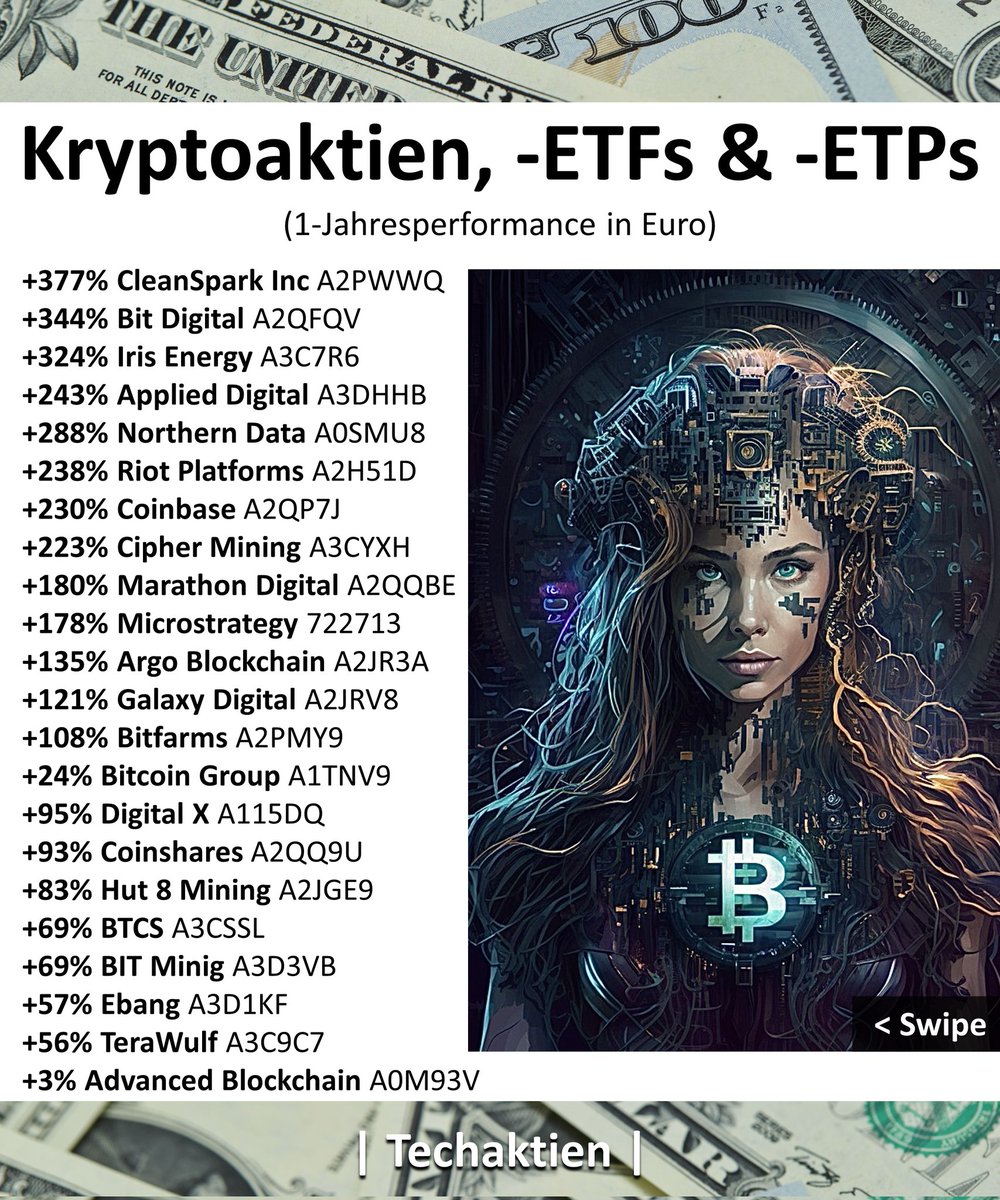
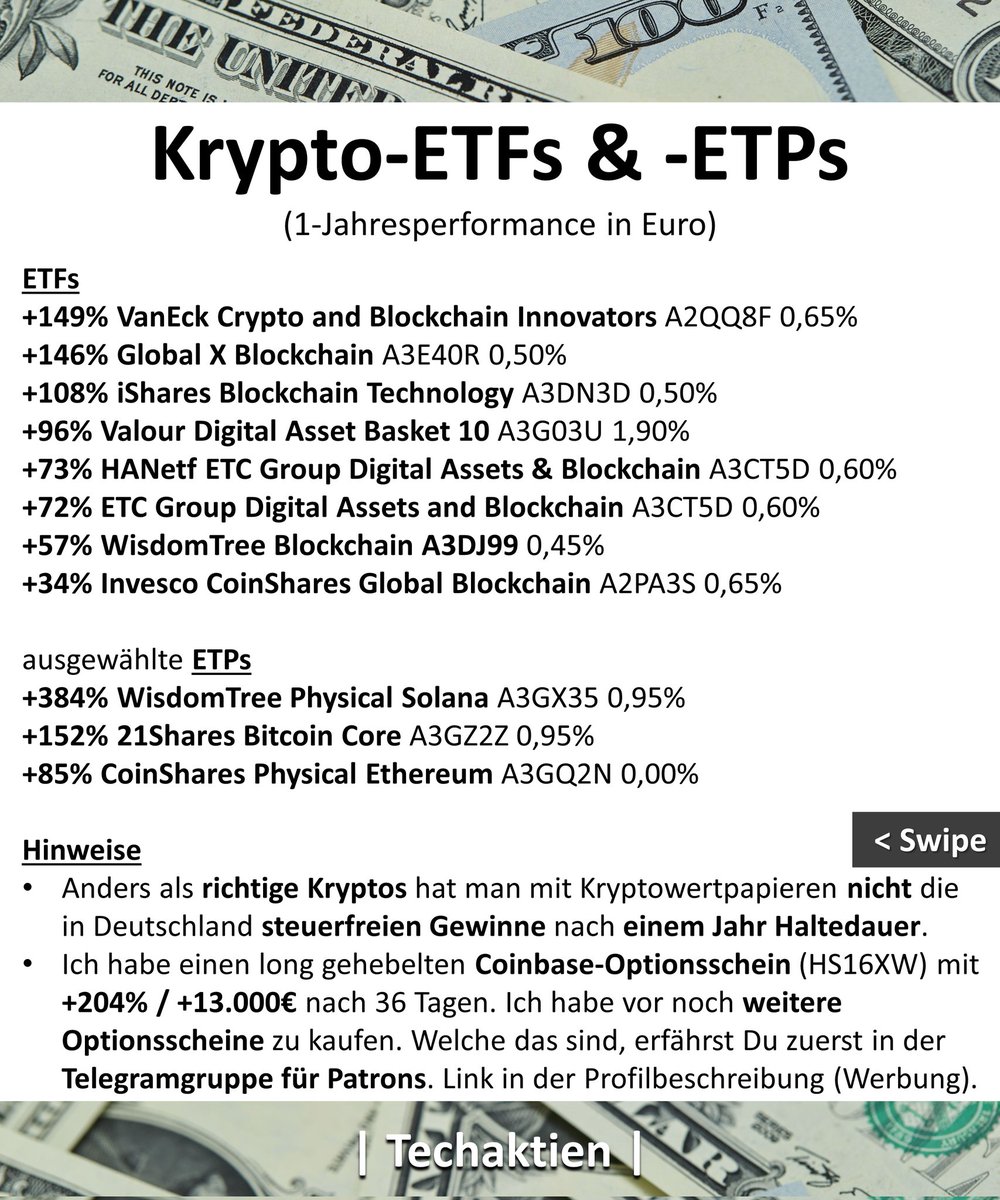
Kryptoaktien, -ETFs & -ETPs
(1-Jahresperformance in Euro)
377% CleanSpark Inc A2PWWQ
344% Bit Digital A2QFQV
324% Iris Energy A3C7R6
243% Applied Digital A3DHHB
288% Northern Data A0SMU8
238% Riot Platforms A2H51D
230% Coinbase A2QP7J
223% CipherMining A3CYXH
180% Marathon Digital A2QQBE
178% Microstrategy 722713
135% Argo Blockchain A2JR3A
121% Galaxy Digital A2JRV8
108% Bitfarms A2PMY9
24% Bitcoin Group A1TNV9
95% Digital X A115DQ
93% Coinshares A2QQ9U
83% Hut 8 Mining A2JGE9
69% BTCS A3CSSL
69% BIT Minig A3D3VB
57% Ebang A3D1KF
56% TeraWulf A3C9C7
3% AdvancedBlockchain A0M93V
ETFs
149% VanEckCrypto and Blockchain Innovators A2QQ8F 0,65%
146% Global X Blockchain A3E40R 0,50%
108% iShares Blockchain Technology A3DN3D 0,50%
96% Valour Digital Asset Basket 10 A3G03U 1,90%
73% HANetf ETC Group Digital Assets & Blockchain A3CT5D 0,60%
72% ETC Group Digital Assets and Blockchain A3CT5D 0,60%
57% WisdomTreeBlockchain A3DJ99 0,45%
34% Invesco CoinSharesGlobal Blockchain A2PA3S 0,65%
ausgewählte ETPs
384% WisdomTree PhysicalSolana A3GX35 0,95%
152% 21Shares Bitcoin Core A3GZ2Z 0,95%
85% CoinShares PhysicalEthereum A3GQ2N 0,00%
Hinweise
•Anders als richtige Kryptos hat man mit Kryptowertpapieren nichtdie in Deutschland steuerfreien Gewinne nach einem Jahr Haltedauer.
•Ich habe einen long gehebelten Coinbase-Optionsschein (HS16XW) mit 204% / 13.000€ nach 36 Tagen. Ich habe vor noch weitere Optionsscheine zu kaufen. Welche das sind, erfährst Du zuerst in der Telegramgruppe für Patrons. Link in der Profilbeschreibung (Werbung).
>> Welche Kryptos oder Krypto-Wertpapiere hast Du im Portfolio?
#BTC #Bitcoin #ETH #Ethereum #CardanoADA #Solana #Aktien #Börse #ETF #Finx
16
9
74
23,282
20 Aug 2023
HV-Kalender: Aktionärs-Versammlungen u.a. bei Advanced Blockchain, Laiqon, pferdewetten.de, Prosus, Verbio ... #AdvancedBlockchain #Laiqon #pferdewettende #Prosus #Verbio #hauptversammlung
4investors.de/nachrichten/bo…
2
334

10 May 2023
Thread-time🧵
#AdvancedBlockchain: Ready to dive deeper into the technical side of blockchain technology?
Let's explore some key concepts and innovations that make blockchain a groundbreaking force! ⚙️🔗
Follow the thread👇
1
4
104

29 Jun 2022
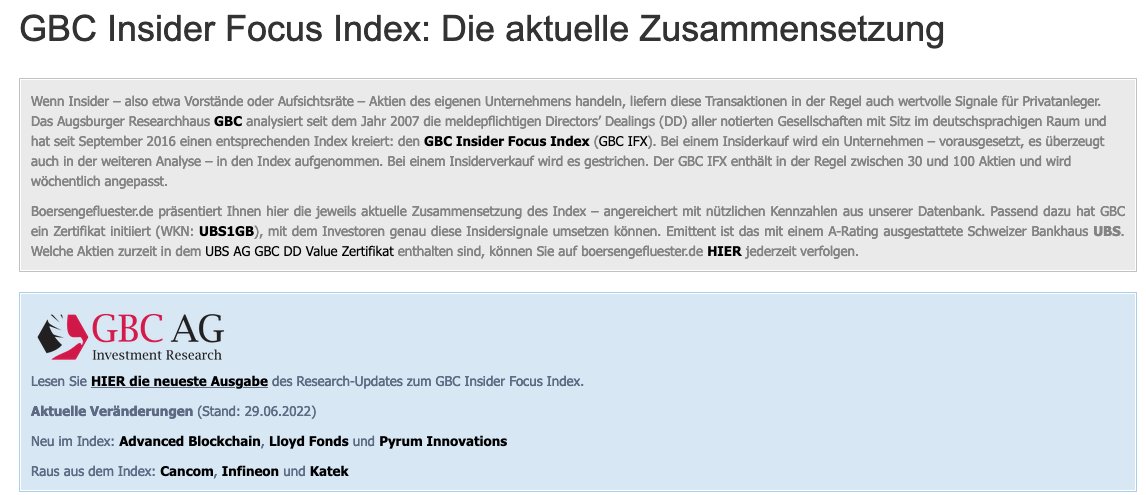
Zum Abschluss für heute noch das wöchentliche Update zum Insider-Index von @GBC_Research: Mit #AdvancedBlockchain und #PyrumInnovations sind zwei ziemliche heiße Aktien neu dabei. #BGFL boersengefluester.de/gbc-ins…
1

23 Jun 2022
Ich frag mich ja, wann wir von #NorthernData eine ähnliche News lesen wie am Dienstag von #AdvancedBlockchain ...
2
15

22 Jun 2022
€9.35 🥴
#Advancedblockchain
Der gesamte thread hätte Euch eine dringliche Warnung vor diesem Account sein müssen, Freunde des 🍌🇩🇪 Kapitalmarktes.
3
5
22 Jun 2022
Advanced Blockchain: Aktie stürzt ab - die Gründe ... #advancedblockchain #polkadot
zpr.io/sUUJX5HEpJLg
2
2 May 2022
Advanced Blockchain: Aktie mit dem nächsten Kaufsignal ... #advancedblockchain #polkadot
zpr.io/7JDvQXbbz7hD
2

26 Mar 2022
Das ist Teil des Jobs der mit dem Gehalt abgegolten ist. Ergo - es IST Selbstbedienung. #AdvancedBlockchain #SelberFressenMachtFett #RedFlag #NoGo #HandsOff
4

16 Feb 2022
I'm excited to attend our talk on "Riding the Unicorn: Uniswap v3 as a Perpetual Option Primitive" at ETHDenver 2022 sched.co/xTgf @EthereumDenver #ETHDenver @sched
@guil_lambert
#advancedblockchain #ETHDenver #ETHDenver2022
1
11
10 Dec 2021
Geschätzt 99,9% der Anleger verstehen so schon nicht, was #AdvancedBlockchain eigentlich treibt und ich glaube, dass das Unternehmen das mit dem aktuellen Stil der Informationen in seinen Mitteilungen auch nicht ändern wird.
4
10
9 Nov 2021
Advanced Blockchain: Aktie mit frischem Kaufsignal! ... #advancedblockchain
zpr.io/YTEzUDVdd8vP
1
2