
Jun 5
AgentPC.com
As AI Agents become the new interface, every computer will eventually become an Agent PC.
AgentPC.com is a rare, category-owning domain positioned at the intersection of:
→ AI Agents
→ AI PCs
→ Personal Computing
→ Enterprise Automation
A perfect brand for the next generation of AI-native computing platforms.
#AgentPC #AIPC #AgenticAI #AIInfrastructure #FutureTech #AIStartup #VC #ArtificialIntelligence #DomainInvestor #PremiumDomain
3
10
332

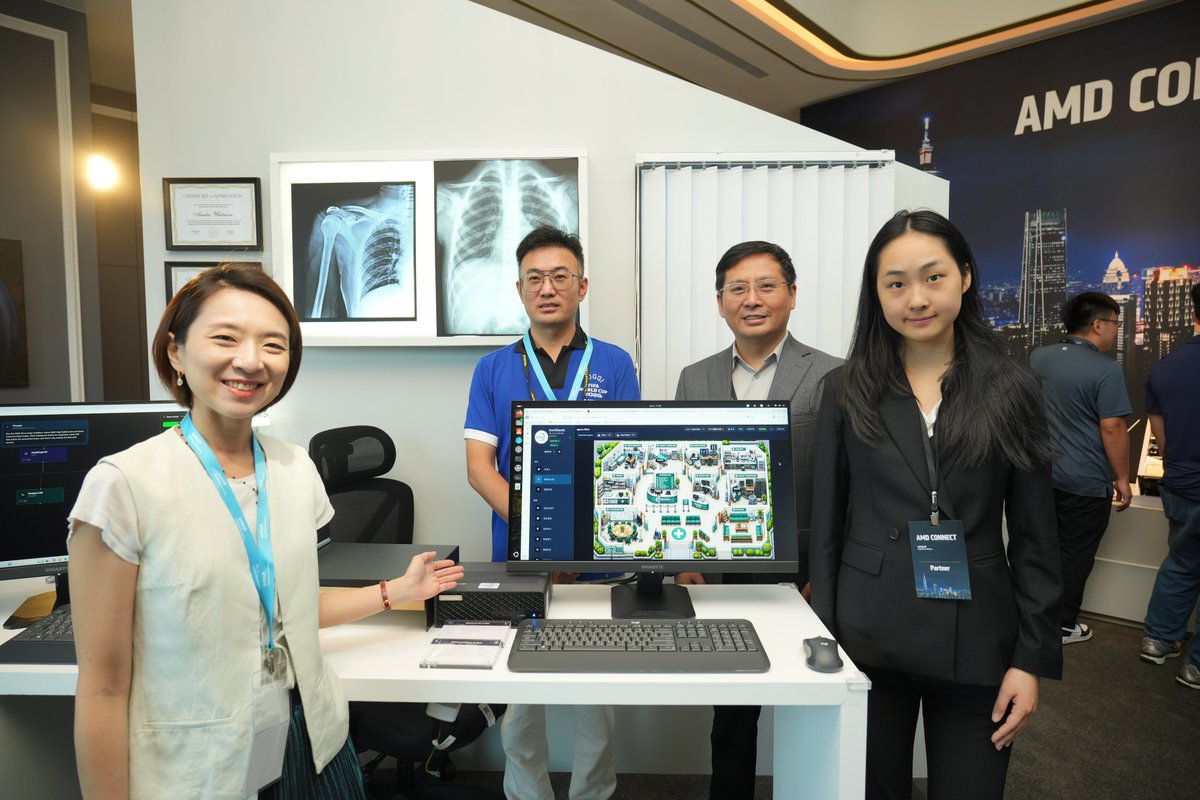
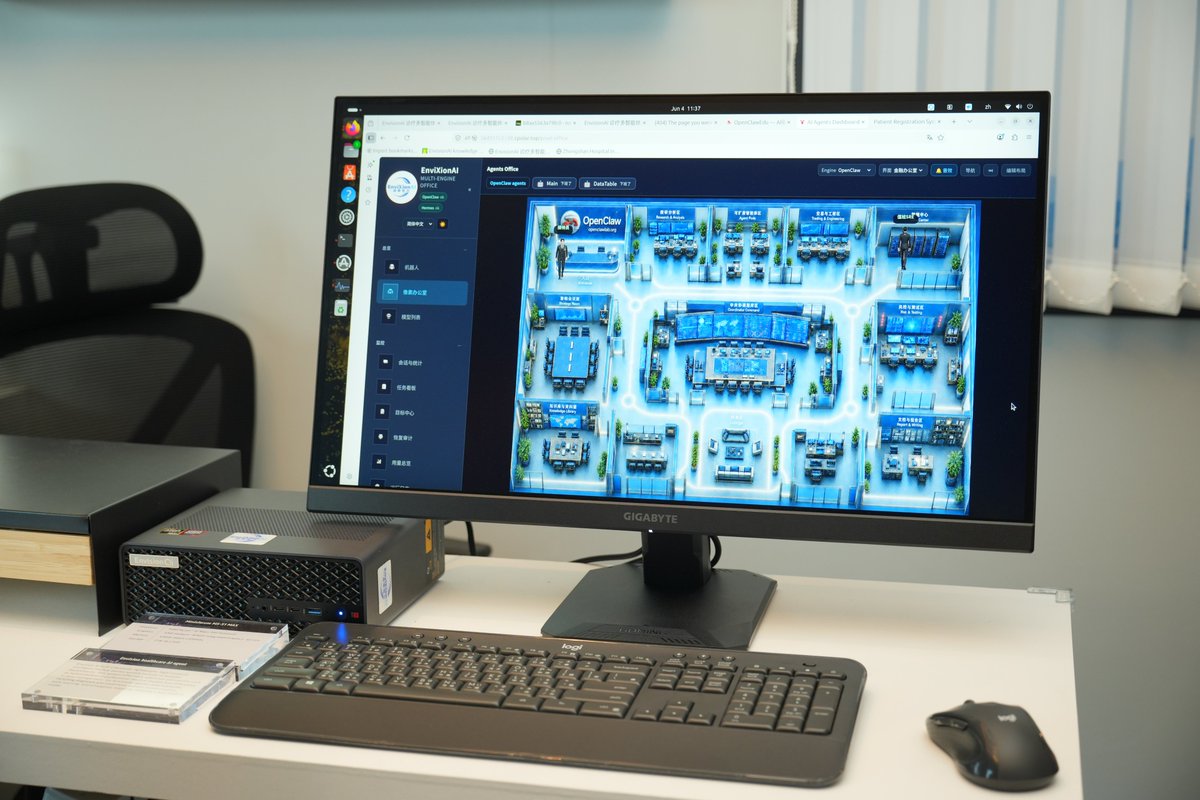
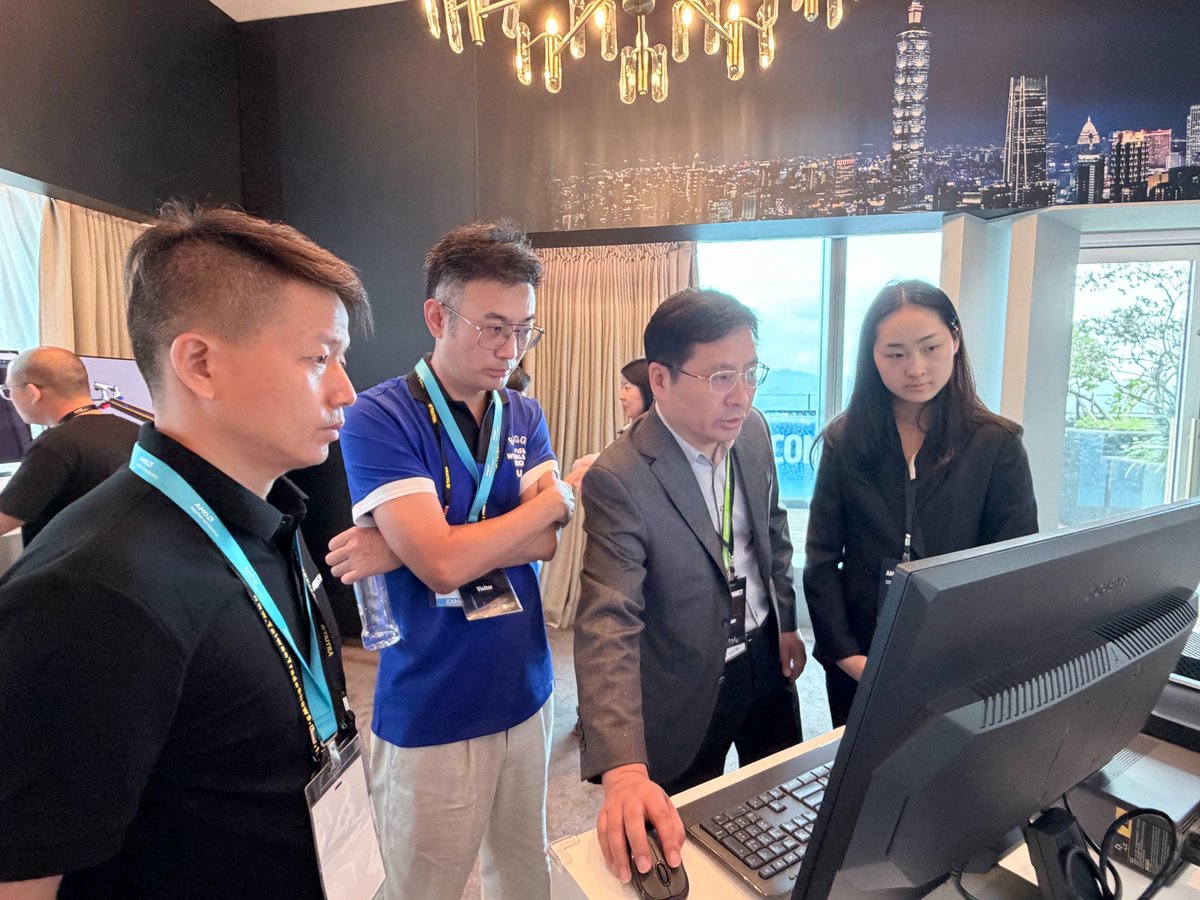
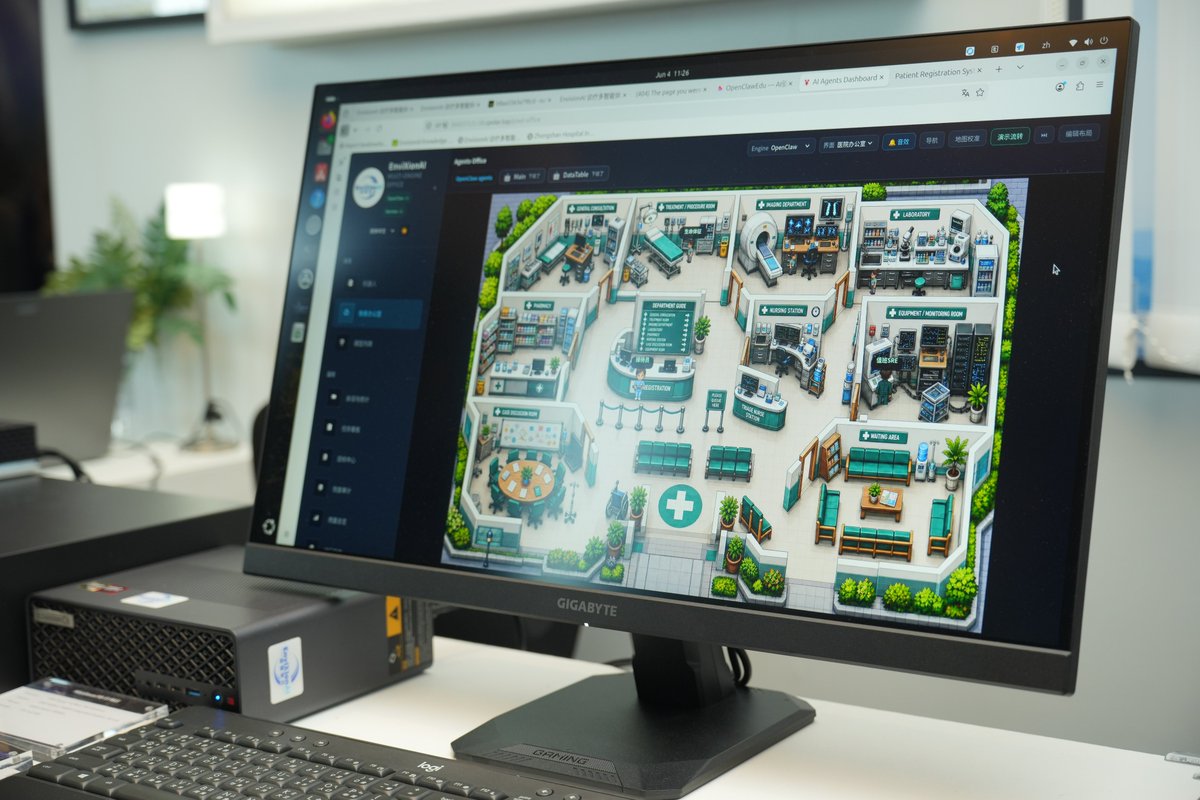
Running on AMD Ryzen™ AI Max 395, the MS-S1 MAX empowers healthcare and finance AI Agents developed by Envision. @AMD
It supports local data processing for ward management and financial operations, helping streamline industry workflows through edge computing. 🏥💼
A brilliant outlook for the next-gen Agent PC, jointly built within an AI ecosystem. ✨
🔗 Learn more: s.minisforum.com/4mwMQId
#MINISFORUM #MSS1MAX #AIPC #AgentPC #EdgeComputing #LocalAI #RyzenAI #AMD
1
11
847

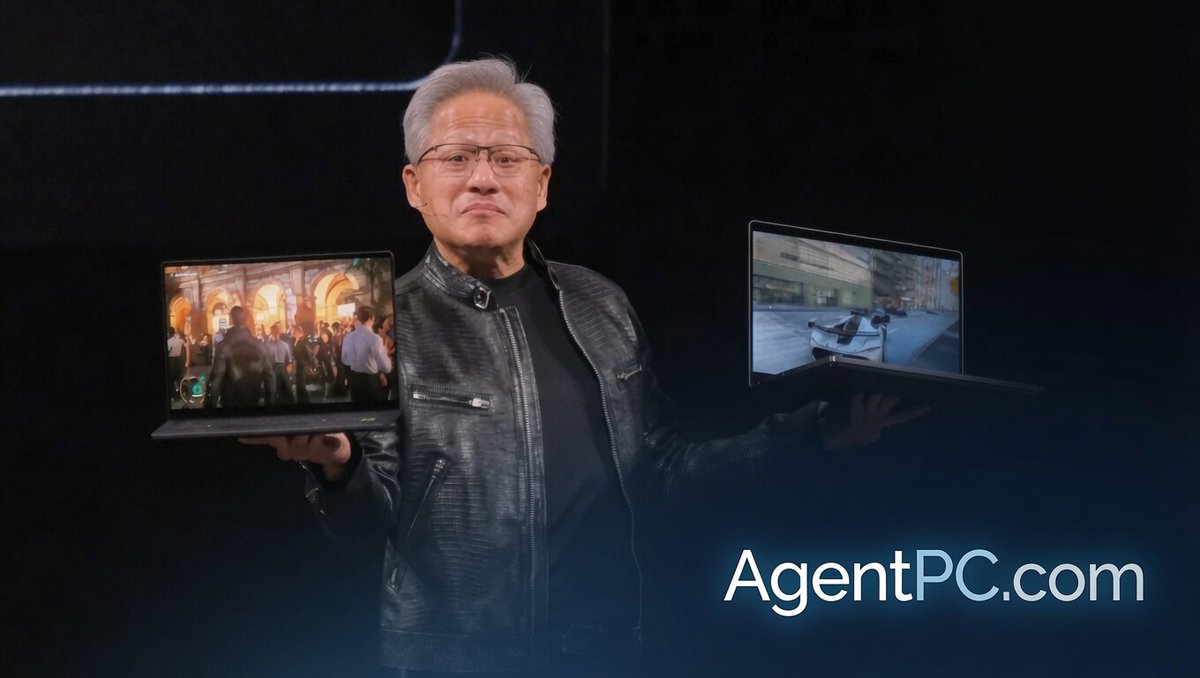
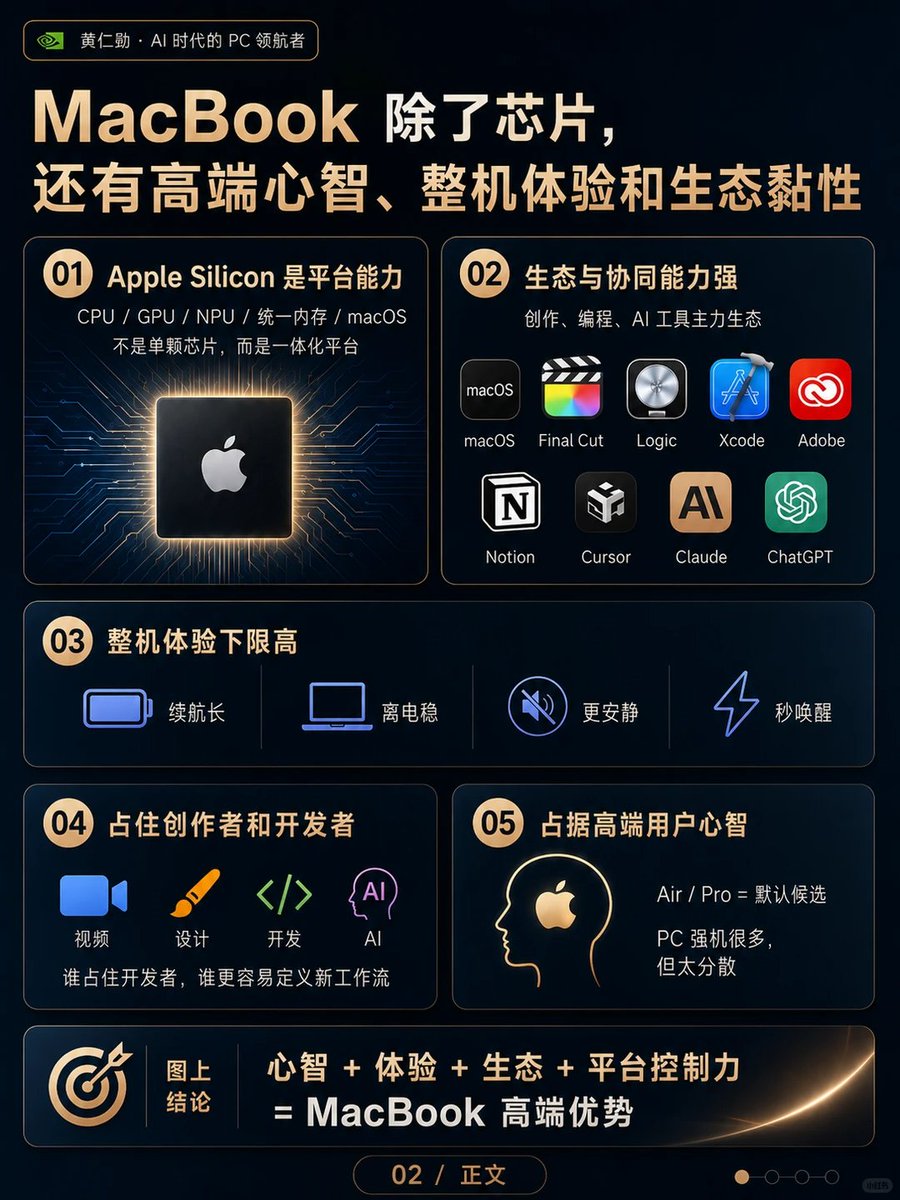
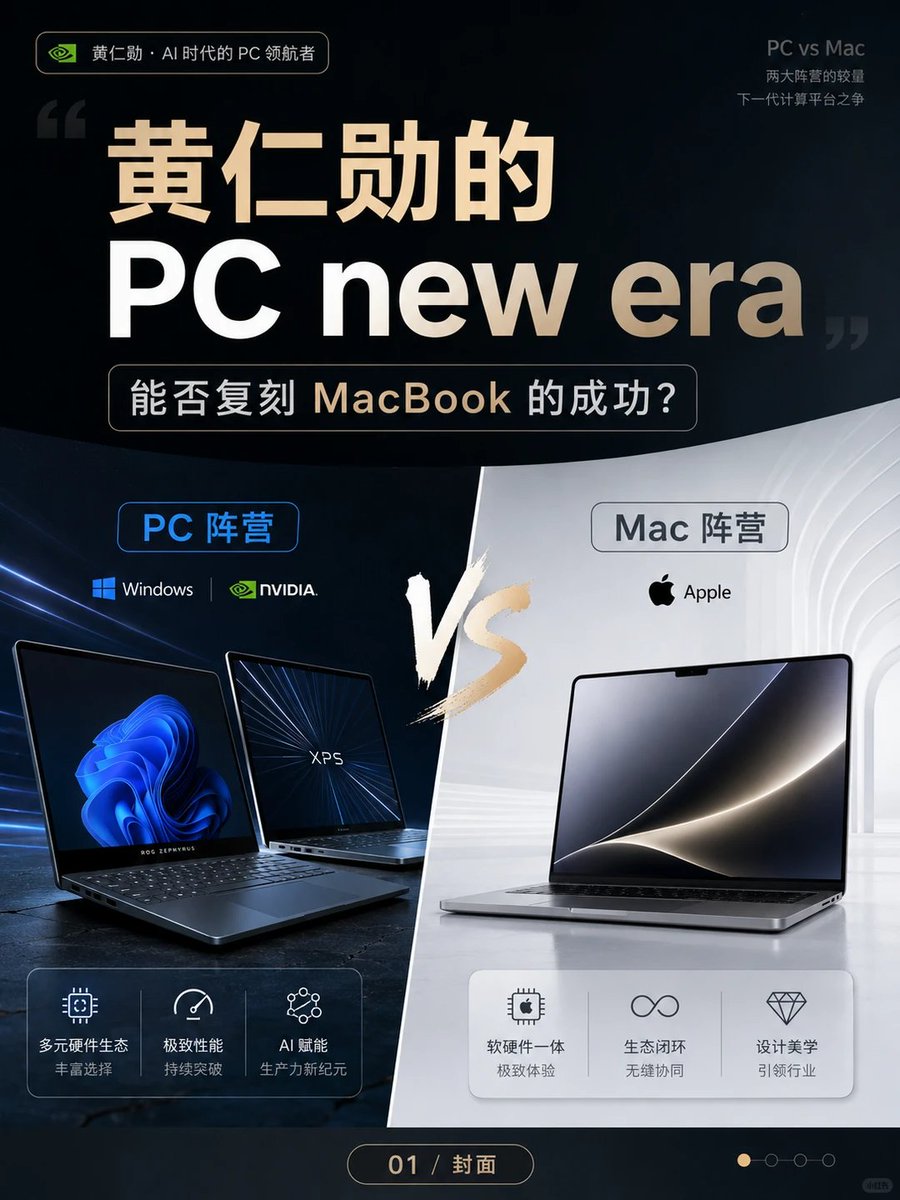
NVIDIA officially launched RTX Spark, through which Jensen Huang has delivered a native AI platform for high-end Windows PCs. Over the past few years, MacBook has maintained a clear edge in the premium laptop market. Its strengths stem not only from the M-series chips but also the seamless integration of chips, operating systems, unified memory, software ecosystems and overall device experience.
In the mid-to-high-end market, consumers shopping for premium ultrabooks or primary workstations for developers almost always weigh up MacBook Air and MacBook Pro.
No Windows PC can match the MacBook in terms of performance, battery life and refined product experience details.
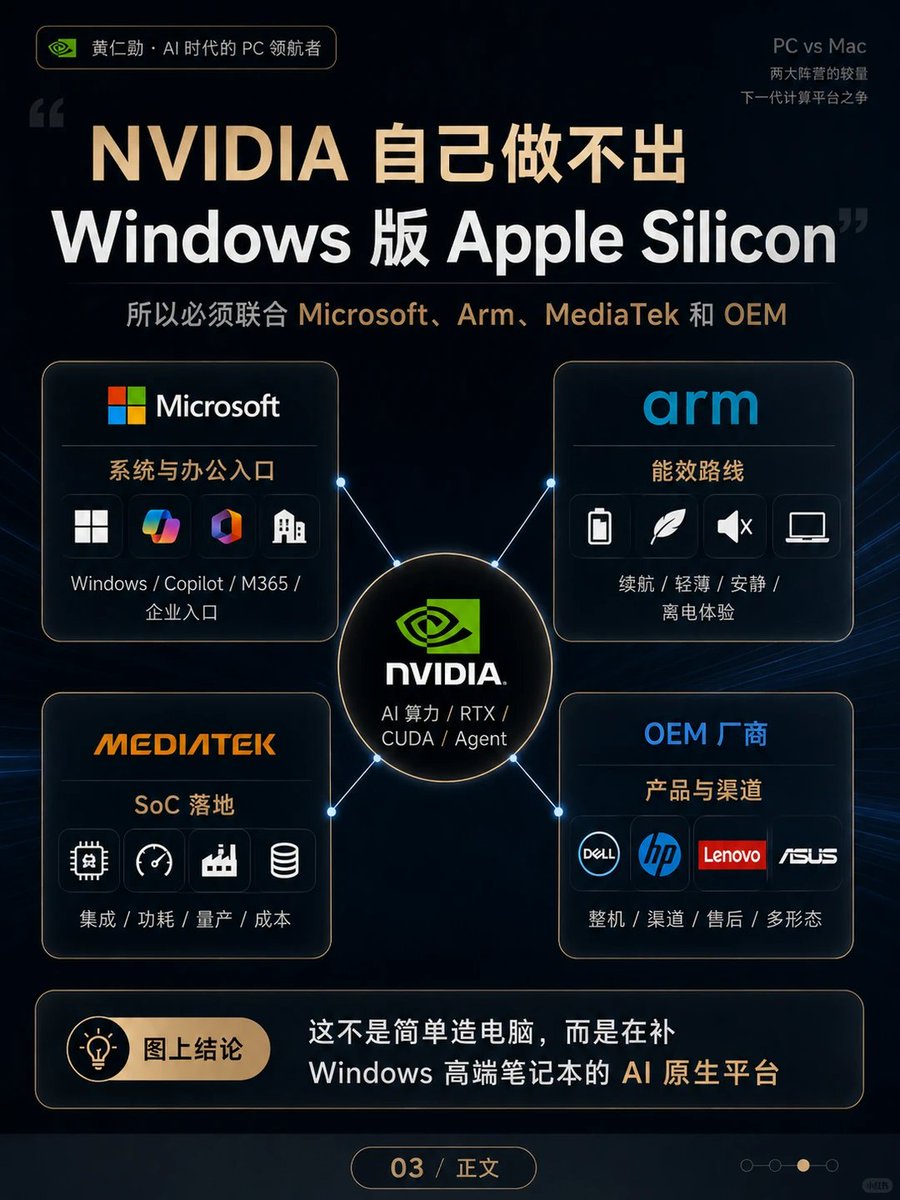
The Windows PC ecosystem, by contrast, is highly fragmented, with its decentralized industrial chain unable to deliver a consistent user experience. Dell, HP, Lenovo, ASUS, Acer and MSI all roll out their own premium product lines packed with top-tier hardware configurations, yet there is no clear consensus on what a "high-end Windows AI PC" should truly look like. RTX Spark is designed to fix this pain point.
NVIDIA contributes AI computing power, RTX graphics architecture, CUDA and local Agent capabilities; Microsoft supplies Windows OS, Copilot, Microsoft 365 and enterprise access portals; Arm and MediaTek take charge of low-power SoC solutions and their engineering implementation; OEM manufacturers are tasked with turning this platform into tangible products including laptops, workstations and mini PCs.
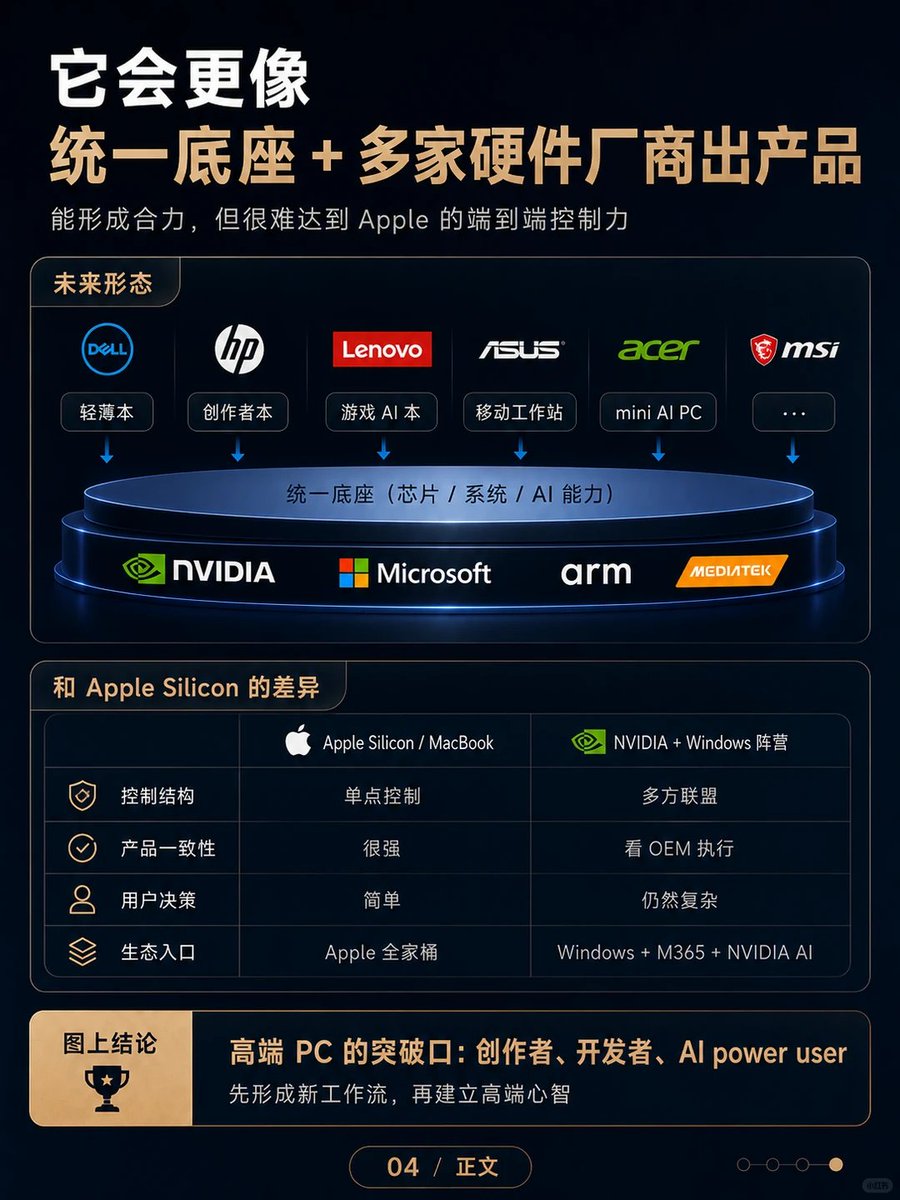
Therefore, future Windows AI PCs will likely adopt a model built around a unified foundational platform with a variety of hardware manufacturers launching end products. The foundational platform is jointly backed by NVIDIA, Microsoft, Arm and MediaTek, upon which a full spectrum of devices will be built, ranging from ultrabooks and gaming laptops to mobile workstations and Agent PCs.
Nevertheless, this cooperative model cannot fully replicate Apple Silicon’s approach.
Apple’s core advantage lies in its end-to-end control: it owns every link from chips and operating systems to hardware, sales channels and after-sales services, enabling the MacBook to deliver a far more consistent user experience. The NVIDIA-Windows alliance consists of multiple independent partners. While the underlying platform itself may be powerful, the uniformity of final products hinges on the execution standards of each individual OEM.
That said, this is a consideration for the future. The immediate core mission of RTX Spark is to establish brand-new workflows among influential core user groups, including content creators, AI developers, gamers and heavy AI power users. If these users adopt Windows AI PCs as their primary work devices, RTX Spark will stand a chance to reshape public perceptions of high-end personal computers. #nvdia #RTXSpark #macbook #AgentPC #applesillicon #Windows #商业观察#AI工具
49