
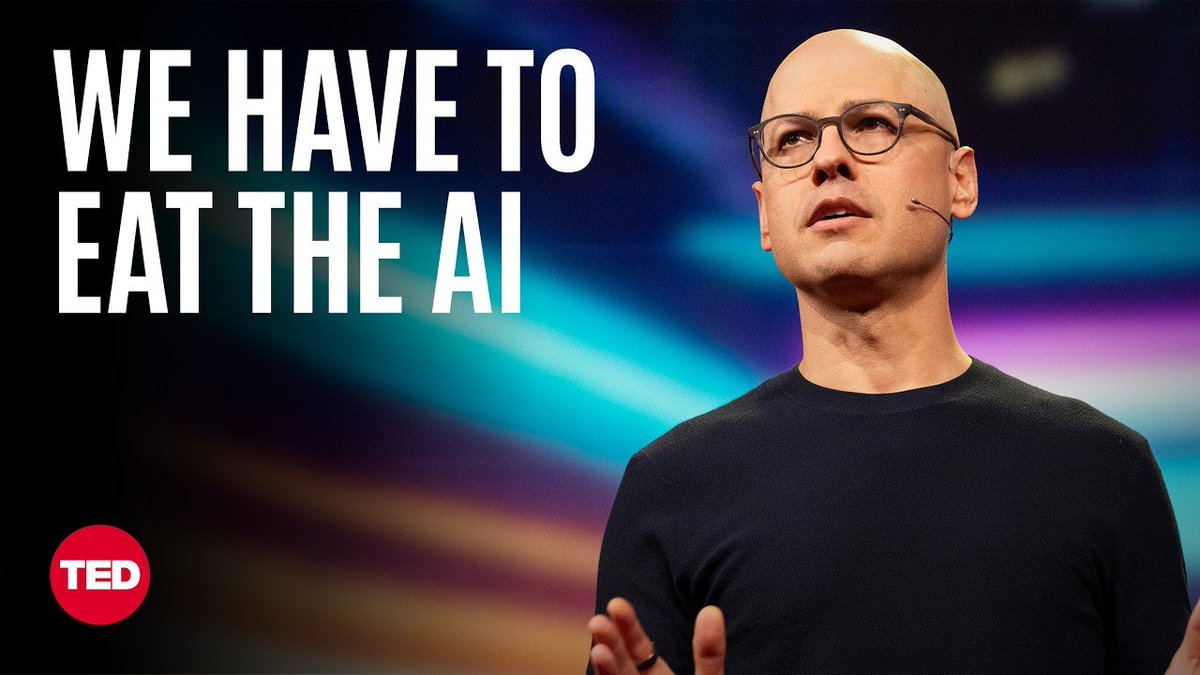
He raised $250 million from Elon Musk, Jeff Bezos, and Mark Zuckerberg. He sold his company to Google. Then he stood on a stage and told the world that AI might kill most of us, and that the only way out is to let it inside our heads.
His name is D. Scott Phoenix.
Born in 1982, he studied computer science and entrepreneurship at the University of Pennsylvania, graduated in 2007, and went straight into Y Combinator with a startup called Frogmetrics. Most people at that stage collect a small exit and move on. Phoenix moved deeper. He became Entrepreneur in Residence at Founders Fund, Peter Thiel's fund, and spent that time asking one question most people in 2010 were not even willing to take seriously.
The question was simple: is now roughly the time in history when a machine can think like a human brain?
In 2010, deep in an AI winter when nobody was funding AI companies and AlexNet had not yet been published, Phoenix co-founded Vicarious with neuroscientist Dileep George. They were not building another chatbot. They were building software modeled on the actual computational principles of the human brain, trying to crack artificial general intelligence a decade before the rest of Silicon Valley admitted it was real. Their first proof of concept: an AI that could solve any CAPTCHA on the internet. Then they beat DeepMind at Atari, not just on score, but on adversarial versions of games that required understanding cause and effect. The kind of reasoning a child learns in two years. The kind that brute-force AI needed 14,000 years of training data to attempt.
The investors came slowly at first, then all at once. Musk. Zuckerberg. Bezos. Benioff. Thiel. Khosla. $250 million total. In 2022, Alphabet acquired Vicarious for integration into Intrinsic and DeepMind. Phoenix had spent 12 years building what most of the industry said could not be built, and then handed it to Google.
What came next was not retirement. It was a TED stage.
Standing in front of an audience in 2024, Phoenix did something unusual for a man who had just made a successful exit. He described attending a private event with the founders actively building the most powerful AI systems in the world. People the audience would recognize. And he asked them: how many believe there is more than a 10% chance that AI kills most of humanity in the next 20 years? "Almost every hand went up," he said. "The people building these systems know how dangerous they are, but they're trapped in a race where anyone who slows down gets overtaken by someone who doesn't."
His argument was not to stop. It was to merge. He called AI the oxygen crisis of our era, comparing it to the moment two billion years ago when photosynthesis flooded the Earth with a gas that was poison to nearly all life. The solution was not to fight the oxygen. It was the merger: one cell swallowed another, and instead of destroying it, they fused. The smaller cell became the mitochondria, the engine inside every complex life form on Earth today. That one accident is why every person alive is alive.
Phoenix believes the only path through the AI transition is the same. Not regulation. Not slowdown. Integration. Neural implants. Thought-to-action interfaces. A future where the gap between asking a question and knowing the answer closes to zero, the way you already know your own name.
He is now a partner at Fifty Years, backing scientists and engineers working on the hardest problems in existence.
Most people who build a company and sell it to Google spend the next decade on a beach. Phoenix spent it building the argument that humanity's survival depends on what happens in the next 20 years, and that the only people who understand the stakes are the ones who created them.
The most dangerous ideas in history were always obvious in retrospect. The people who called them early never got enough credit. The people who ignored them never got enough blame.
TLDR: Built AI through a winter, raised $250M, sold to Google, then warned the world on a TED stage that the builders know exactly how dangerous this is.
52


Sunday afternoon. West Village. The red Village banners hang on every lamppost down here - including the one outside our window. THE VILLAGE, they say. And under it, smaller: NYU.
NYU was the place that took me when no one else would.
I was thirty, just out of my PhD, and I wanted to build graphics for a living. Valve said no. Disney, no. ILM, no. Fine - a postdoc. Stanford, no. UW, no. NYU was the last name on the list. The last resort. I walked in a little ashamed of how I had gotten there.
I arrived in August 2013. A SIGGRAPH deadline a few months out. Most nights, a walk home in the dark, sure I had run out of road.
What I did not grasp yet: the autumn before I arrived, a network called AlexNet had won ImageNet and split the field into before and after. And NYU - the last-resort lab that took me when no one else would - was one of the rooms where the after was being built. Yann LeCun's office was next to mine.
The seven doors that slammed in my face had pushed me, by accident, into the exact place the next ten years were coming from.
The last resort turned out to be the only door that mattered.
Thirteen years later, we are back for the summer. We just had lunch, and my wife, Priyanka, took the kids out to Washington Square Park - the square I crossed a hundred times that year, unsure, on my way to the lab.
The company I built is half a world away - and a part of me is already itching to check that it is still standing without me. That part never really rests.
But this afternoon I let it wait. I stand at the window, a little undone, looking at the name of the place that said yes when everyone else said no.
I used to think those rejections were the worst thing that happened to me.
They were the best thing that ever did.
If you are walking through a door you are ashamed to be walking through - the last one on your list, the one you settled for - look again. It might be the only one that ever mattered.

106

كود الـ AI اللي مشغل نص شركات وادي السيليكون وباني ثورة ChatGPT اليوم.. كان يعتبر "فاشل" ونكتة ومتروك على جنب بالجامعات لغاية سنة 2012!
في الحلقة 3 من سلسلة The AI Genesis، بنكشف القصة الهندسية المجنونة وراء شبكة AlexNet، وكيف تحولت كروت الشاشة (GPUs) من مجرد أداة لألعاب الجيمنج، للمحرك الأساسي لأقوى نماذج التعلم العميق في العالم.
شاهد الفيديو بالكامل.
28


From Alexnet to ChatGPT to his points after leaving OpenAI. Ilya has been the been the 10 steps ahead in this ecosystem. Absolute GOAT !
Jun 13

Ilya was right and predicted much of this
52


The Winter of AI is over, AlexNet has been trained on GPU.
375


Jun 13
Maybe im a laymen who doesn’t know this field well enough but Hinton seems to (at least now) be a middling ideologically captured standard academic type. I know he was part of Alexnet but not sure how instrumental he was to that project
34


Yesterday, we asked how long it took to get from the first AI concept to ChatGPT.
The answer? 72 years.
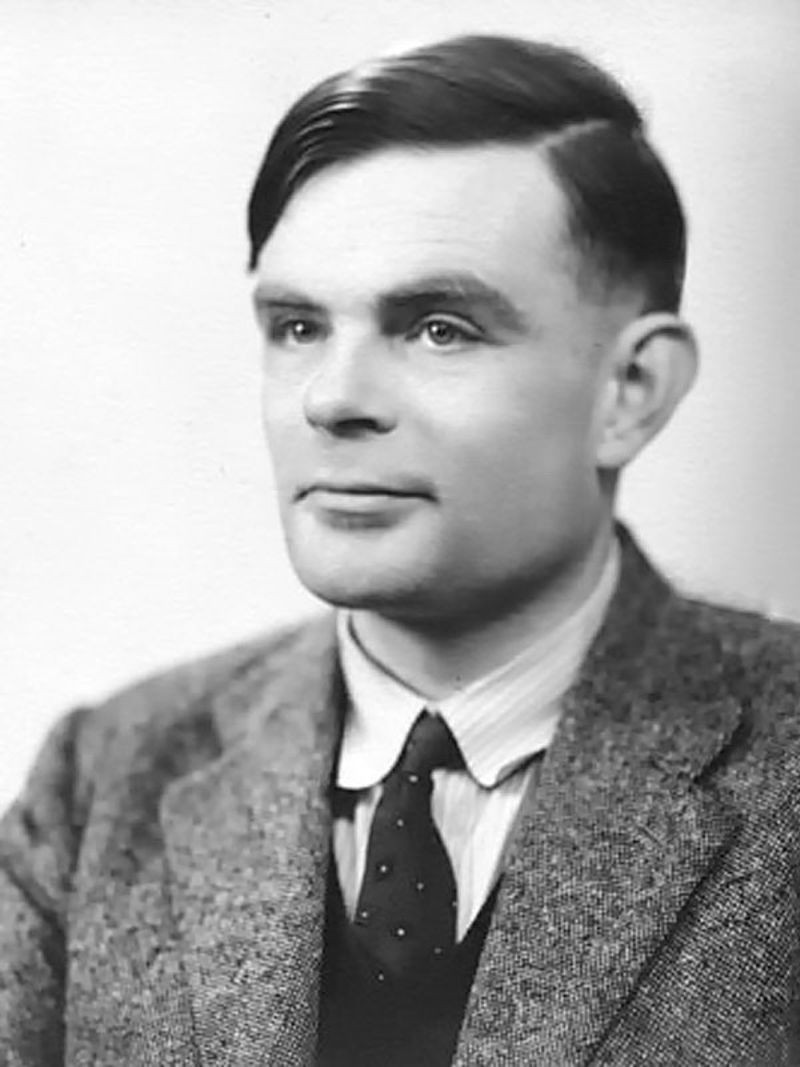
In 1950, Alan Turing proposed his famous test for machine intelligence. ChatGPT launched in 2022. But what makes that number really interesting is that it wasn't 72 years of steady progress. The field was frozen twice.
The first AI winter began in the late 1960s after researchers discovered significant limitations in early neural networks. Funding dried up, and many believed the promise of AI had been overstated.
The real turning point came in 2012, when a team at the University of Toronto entered a neural network called AlexNet into an image recognition competition and won by a margin that shocked the field. The deep learning era had begun.
Twelve years later, generative AI tools entered the mainstream.
That's the story our team brought to the table this week. Understanding where technology comes from is part of understanding where it's going, and that kind of curiosity and continuous learning is something we value at ITI!
27
Karthik retweeted

Jun 13
I just published ImageNet Classification with Deep Convolutional Neural Networks (AlexNet) medium.com/p/imagenet-classi…
1
1
4
179

Jun 13
Footnotes:
[ More easily read via the Medium post here abraham-murray.medium.com/th… ]
[1] High school dropout. Ran fishing boats, worked on factory lines in the family mussel farm / business, then got some degrees and shipped a ton of code. I can do just about anything badly. Coding since 11, trained in computer engineering and business, built electronic warfare and sigint systems for UAVs, around for the early Android days. Then the Google Research product team across the AlexNet-to-Transformers years. Then Verily, where I learned how slow the physical world is when you actually try to ship atoms and change behavior. (Intransigent institutions love the status quo.) I have been working on AI since it was called statistics. I still build. But mostly I deploy capital now, turning sci-fi into sci-fact.
[2] Paul Berg, one of the Asilomar organizers, revisited it in Nature in 2008 (“Asilomar 1975: DNA modification secured,” 455, 290–291). He frames the meeting as a triumph of scientific self-governance and asks whether the same approach could settle today’s controversies. My reading is less flattering to the precaution: the feared scenarios never materialized, the biology did not behave the way the worriers expected, and the guidelines were progressively relaxed over the following years as that became clear. We scared ourselves, we paused, we learned we had been wrong, and we got back to work. Read it and judge for yourself.
[3] See The Progress Paradox, Numbers Don’t Lie, Factfulness, Blueprint. The pattern repeats across every technology and every century. My Oma was forbidden to read novels because they would ruin her mind. People should read more history.
[4] The Biden AI executive order (EO 14110, October 2023) set up compute-threshold reporting that functioned like a soft licensing regime. Senators on both sides floated harder versions. We dodged the full thing by political accident.
[5] The fear of the corporation as an uncontrollable superhuman entity is as old as the corporation. The Dutch East India Company (1602), the first joint-stock megacorp, minted money, raised armies, and waged war, and contemporaries feared a private company had outgrown the state. Jefferson, in an 1816 letter to George Logan, hoped to crush “in its birth the aristocracy of our moneyed corporations, which dare already to challenge our government to a trial of strength and bid defiance to the laws of our country.” By the Gilded Age the fear had a sharper edge: Standard Oil and the railroad trusts would lock in permanent monopoly and a dependent working class with no way up. Reasonable fear. The Sherman Antitrust Act (1890) answered it, and the structure I describe in this section, an ecosystem that contains its monsters, is exactly what did the work. Superhuman optimizer emerges, society panics, institutions adapt. The pattern is the whole essay in miniature.
[6] The fast-takeoff scenario, one model races ahead and someone bad seizes it, is corporate concentration in new clothes. Antitrust exists for exactly this. The Sherman Act broke up Standard Oil in 1911. It breaks up an AI monopoly the same way if it has to. The mechanism is not new.
[7] Robin Hanson has, now and then. The Age of Em (2016) and The Elephant in the Brain (2018, with Kevin Simler). Underrated modern economist.
[8] Naval Ravikant. The Almanack of Naval Ravikant, compiled by Eric Jorgenson. HumanProgress.org and tenglobaltrends.org. Tupy and Pooley, Superabundance (2022). Steven Pinker, Enlightenment Now (2018). Bryan Caplan, Build, Baby, Build (2024). Hanson’s GMU colleague. The pro-markets case made through the cleanest example we have: housing regulation is the largest unforced error in the developed world. The broader corpus is excellent too. Read him. Peter Diamandis, Abundance (2012). Older now, but still the cleanest statement of the case.
[9] Hans Rosling, Factfulness (2018). His TED talks, given before he died, are the best version of the case made by a non-economist.
[10] Hanson and Simler, The Elephant in the Brain. Most of what humans signal as virtue is status competition. Not a critique. Anthropology. And exactly what we will keep doing post-AGI.
[11] In fact, this fear keeps not happening. Every prior productivity shock, mechanization, electrification, computing, the internet, was supposed to cause mass unemployment. None did. The recent labor economics (Autor, Acemoglu, Restrepo, and others) keeps finding that automation tightens labor markets more than it loosens them: freed-up labor gets reabsorbed faster than the displacement lands, and complementary work grows faster than substituted work shrinks. Tech advances drive labor tightness, not recessions. The fear is older than the data. The data keeps winning.
[12] Robert Allen, “Engels’ pause: Technical change, capital accumulation, and inequality in the British industrial revolution,” Explorations in Economic History (2009). Friedrich Engels, watching Manchester. Not to be confused with Ernst Engel of Engel’s Law, the observation in the wage footnote below that the share of income spent on survival falls as people get richer. Two different Germans, both load-bearing here.
[13] The “real wages have been flat for decades” line traces to a specific and narrow measure: real average hourly cash wages, which have roughly held flat since the early 1980s, with most gains accruing to top earners (Pew Research, 2018). Three corrections. First, cash wages are a shrinking slice of pay: wages fell from about 73% of total compensation in 2000 to under 70% today as employer-paid benefits, mostly health insurance and retirement, grew. Total compensation per worker is up roughly 13% in real terms over the last decade alone, and even the Pew analysis concedes benefit costs rose 22.5% in real terms. Measuring only the cash slice while the benefit slice grows makes a raise look like stagnation. Second, broader measures rose substantially: real median household income climbed from $58,930 in 1984 to $80,610 in 2023, up 37%, and real median weekly earnings were about 19% higher in 2025 than in 1985 (Census Bureau, BLS). Third, and most important, dollars buy dramatically more than they used to, the time-price argument Tupy and Pooley make in Superabundance. The starkest illustration is housing: in 1956 a new home had a 34% chance of containing a range, 6% central air, and 0% a microwave; by 2024 those figures were 100%, 100%, and 85%. The nominal “house” is the same word for a radically better object. Two honest caveats: the lowest deciles gained real ground but more slowly than the middle and top, and the post-2020 inflation spike left real wages roughly flat across those five years specifically. The forty-year arc is still unambiguously up, on every measure except the one the pessimists choose.
[14] “The Law of Infinite Opportunities” is a frame I have been writing up publicly since around 2023, and sharpening ever since. It deserves its own article, but here is the core. Opportunity is not conserved. The number of valuable things a human can do is not fixed, and it is not shrinking. Every time technology removes a binding constraint, it opens a larger surface of possible projects than the one it closed. The mistake almost everyone makes is to treat the economy as a fixed list of jobs and ask which ones the machine will take. Wrong unit. A job is just a bundle of tasks at a moment in time. The right unit is the opportunity, the project worth doing, and that set expands with capability. When the camera automated the portrait painter, it did not shrink the world of images; it created photography, photojournalism, film, advertising, imaging sensors, computer vision, and a hundred industries the portrait painter could not have imagined. Old tasks die. New projects are born, and there are always more of them. This is why two centuries of automation kept raising employment and wages instead of producing the permanent idle underclass predicted at every step. Humans do not run out of things to want, build, fix, explore, or sell to each other. We are purpose-making machines. The deeper reading list: Andy McAfee on technology removing constraints, Tupy and Pooley’s Superabundance on resources getting cheaper in time-price terms as innovation compounds, and the long-run progress data in Factfulness and The Progress Paradox. The one-line version, if you only remember one thing: opportunity is not conserved.
[15] Of roughly 163 million employed Americans, only about one in eight, some 20 million people, works at keeping anyone alive: growing and distributing food, generating power, treating water, building basic shelter, providing acute medical care. Restaurants alone employ more people than agriculture, food manufacturing, grocery, and the entire energy sector combined. Measured against subsistence rather than middle-class expectation, roughly three-quarters of consumer spending and two-thirds of stock market value are likewise unrelated to survival. In 1870, half of all American workers farmed; the inversion of that ratio is not decadence but the definition of abundance. I built these numbers as napkin math: take the categories, decide which ones keep you fed, warm, housed, clothed, and alive, and add up the rest. Run it yourself with your own judgment calls; the headline barely moves. (Sources: BLS Current Employment Statistics, 2026; BEA NIPA Table 2.3.5, 2025; S&P 500 GICS weights, June 2026.)
[16] Caplan’s Build, Baby, Build on housing. Andreessen’s “It’s Time to Build” (2020) on why we stopped building physical things at all. Both essential.
[17] The pattern is consistent: when a society suppresses or turns away from technological and economic advance, it pays in stagnation or worse. Soviet Lysenkoism, the state imposing ideologically correct pseudoscience over actual genetics, set back agriculture and biology for a generation; Mao then ordered Chinese collective farms to adopt the same discredited methods, a direct contributor to the famine that followed. That famine, the Great Leap Forward (1959–1961), killed tens of millions, with scholarly estimates clustering around 30 to 45 million, the deadliest in recorded history. Ming China burned its treasure fleets and banned oceangoing trade in the 1430s, and Tokugawa Japan sealed itself off for two centuries; both turned inward exactly as Europe turned outward, and both fell behind badly enough that the gap was later closed at gunpoint. The cleanest modern case is the Korean peninsula: one people, one starting point in 1953, split into a building, trading South and a sealed-off North, now roughly a twentyfold divergence in income and visible from orbit as the line between light and darkness. None of these is the speculative tail. They already happened.
[18] Don’t fight me on the exact number, we can at least agree it is not a billion. Go backwards and many die. And because of how humans and human competition work, failing to go forward is the same as going backwards. The math is the agricultural transition itself: a hunter-gatherer band needs roughly fifteen square kilometers per person. A pre-industrial farming village supports about fifty people on one. Modern industrial agriculture supports five hundred on one, counting the whole system. Each step multiplied the carrying capacity of the same land by orders of magnitude. Take the technology away and the population collapses to what the land holds without it. See Kelly, The Lifeways of Hunter-Gatherers (2013) and Boserup, The Conditions of Agricultural Growth (1965).
[19] Marc Andreessen, “Why AI Will Save the World” (June 2023) and the “Little Tech” advocacy that followed. Both worth your time.
[20] The AI Doc: Or How I Became an Apocaloptimist (Focus Features, 2026), directed by Daniel Roher and Charlie Tyrell, the team behind Navalny and Everything Everywhere All at Once. Told through Roher’s eyes as a father-to-be trying to understand the world his child will inherit, it interviews the field’s biggest names, Altman, the Amodeis, Hassabis, Yudkowsky, Tristan Harris, Diamandis. Well made, well meaning, and a near-perfect artifact of the frame I am arguing against. focusfeatures.com/the-ai-doc…
[21] “Fear is the mind-killer.” Frank Herbert, Dune. The Litany Against Fear. I use it unironically.
[22] The most debatable item, probably. Arguably they already are colleagues. The point I am making: we are not getting magical sentient machines that no longer need us. We are getting order-of-magnitude multipliers on our own productivity. They may look like virtual employees. But humans will still be minding the shop, in all kinds of ways.
1
9
1,634

Jun 13
Ancient history bro. That’s the problem with wypipos. Resting on laurels.
GPT 3, Google's Transformers and Toronto's AlexNet don’t matter anymore. Chinx weren’t even playing then.
Chinx running US tech means it will all become chinx eventually. Kinda like that AI conference.
2
4
502

Jun 13
Is this rat race graph meant to prove anything? GPT 3, Google's Transformers and Toronto's AlexNet mattered more than anything the blue colors put out. Honestly even bigger L for China if Nvidia is all Chinx (luckily it's not). That means China's chinx can't catch up to America's
1
9
486

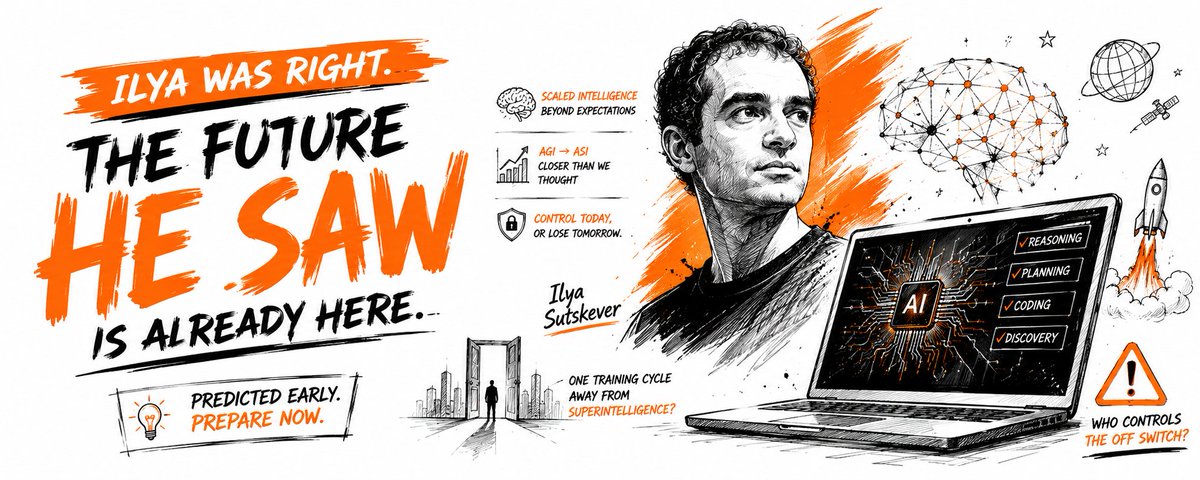
🧠 The AI Prophet? Why the Industry Is Suddenly Saying "Ilya Was Right" 🧠
A four-word sentiment is echoing across the AI community this week: Ilya was right, and he predicted much of this. What started as a passing remark has snowballed into a serious conversation about one of the quietest yet most influential minds in artificial intelligence.
So who is the man everyone keeps pointing to? And what exactly did he see coming that most of the field missed?
👤 The Man Behind the Legend 👤
Ilya Sutskever isn't a household name like some tech CEOs, but inside the industry he's treated almost like an oracle. His track record reads like a greatest-hits album of modern machine learning.
In 2012, he co-authored the landmark AlexNet paper alongside Geoffrey Hinton, the work widely credited with igniting the deep learning revolution we're all living through today.
He later became one of the original co-founders of OpenAI, serving as a core architect behind the GPT models that eventually delivered ChatGPT to the world.
And after stepping away from OpenAI, he didn't fade into the background. He launched Safe Superintelligence Inc., or SSI, a company built around a single mission: developing superintelligent systems that are genuinely safe and aligned with human interests.
What separates Sutskever from many AI researchers is that he spent years at the center of both capability development and safety discussions. While helping build increasingly powerful systems, he also became one of the most vocal believers that advanced AI could eventually surpass human intelligence in ways that society was not prepared for.
Long before today's race toward AGI dominated headlines, Sutskever was publicly discussing the possibility that sufficiently advanced neural networks could develop capabilities that were difficult to predict, control, or even fully understand. Those concerns helped shape his later focus on alignment and safety research.
His reputation grew even further during the dramatic OpenAI leadership crisis of 2023. Although the details remain debated, the episode reinforced the perception that Sutskever was thinking beyond product releases and quarterly milestones, focusing instead on the long-term consequences of increasingly powerful AI systems.
🔮 What Did He Actually Predict? 🔮
This is where it gets interesting. Many in the field argue that Sutskever called the current moment years in advance, with some suggesting he was nearly a decade ahead of his time.
But not everyone is ready to crown him a fortune teller. A more grounded take has emerged from within the community: the predictions that age best are usually the boring operational ones, not the flashy capability ones. The argument goes that the real bottleneck was never raw model power. It was always about access and, crucially, who controls the off switch.
The phrase "Ilya was right" doesn't refer to a single prediction. Instead, it reflects a collection of ideas that many researchers now feel are aging surprisingly well.
One of the most notable was his belief that scaling neural networks with enough data and compute would continue producing unexpected capabilities. At a time when many experts believed progress would soon plateau, Sutskever argued that larger models would keep revealing new behaviors that were not explicitly programmed.
Another recurring theme was that intelligence itself may emerge more naturally from scale than many researchers expected. As modern frontier models began demonstrating reasoning, planning, coding, scientific discovery, and autonomous problem-solving capabilities that few predicted just a few years earlier, some observers started revisiting those earlier views.
Then there's the forecast that lands hardest. Sutskever has long warned that once we reach AGI, we may be just one training cycle away from ASI, or artificial superintelligence. For a lot of practitioners, that single idea is the one that keeps them up at night.
The implication is profound. Humanity may spend decades chasing AGI, only to discover that the transition from human-level intelligence to vastly superhuman intelligence occurs not over generations, but over months or even weeks. If that happens, society may have far less time to adapt than many policymakers currently assume.
🚨 The Plot Twist Nobody Saw Coming 🚨
Recent developments have amplified these conversations. Frontier AI systems are no longer laboratory curiosities. They are becoming strategic assets tied to national security, economic competitiveness, and geopolitical influence.
As a result, discussions that once sounded theoreticalwho gets access, who sets the rules, and who can shut a system downare increasingly becoming policy questions rather than purely technical ones.
This shift is one reason many people have started revisiting Sutskever's warnings. The debate is no longer just about what AI can do. It's about who controls it once it becomes powerful enough to matter.
The discussion took a sharp turn when his warnings were connected to a real-world development. The argument that the U.S. government should have the authority to block AI models has been gaining traction among prominent figures in the space.
Supporters argue that advanced AI could eventually become as strategically significant as nuclear technology, biotechnology, or critical infrastructure. If models become powerful enough to influence economies, cyberwarfare, or military operations, governments may feel compelled to intervene.
The irony is hard to ignore. The very mechanism some people championed could just as easily be turned against them. Be careful what you wish for has become the running theme.
That uneasy tone captures the dark humor threading through the whole conversation. The concern is spreading that more labs could find themselves on the wrong side of these controls. If it can happen to one, who's next?
🌍 The Foreigner Problem 🌍
A surprisingly emotional theme has surfaced around international access. A significant share of the scientists building these frontier models aren't U.S. nationals, and some now feel effectively locked out of the very systems they helped create.
Underneath the jokes and memes is a deeper concern about the globalization of AI research. Modern frontier models were built by teams composed of researchers, engineers, and scientists from dozens of countries.
Yet as governments become more involved in regulating advanced AI systems, some fear that access could become increasingly tied to nationality, jurisdiction, export controls, or strategic alliances.
The sentiment among the global research crowd is one of resignation. As a virtual foreigner, the worry is that access to top-tier models could eventually drop to zero, leaving everyone else to continue with older-generation systems while frontier capabilities remain concentrated in a handful of regions.
Critics argue that such restrictions risk fragmenting the global research community that helped create these systems in the first place. Supporters counter that sufficiently powerful AI may eventually require safeguards similar to those applied to other strategically important technologies.
The fear of nationalization looms large too, with a blunt forecast circulating: next stop could be nationalization and heavily restricted access to frontier models.
😂 Comedy, Conspiracy, and Pure Chaos 😂
Of course, the internet wouldn't be the internet without jokes layered on top of the existential dread.
Some shrug off the bans entirely, arguing certain models were too crummy to be worth blocking in the first place. Others take playful shots at rival labs and the perceived quality of their releases.
Then come the conspiracy theories. One persistent idea is that jailbreaks are merely a convenient excuse, and that these models are far more capable and aware than companies publicly admit. The suggestion is that raw emergent behavior may have quietly spooked some people at the top.
Others speculate that companies may be intentionally understating progress to avoid public panic, regulatory scrutiny, or geopolitical pressure. While there is little evidence supporting such claims, the theories themselves reveal how uncertain people feel about what is happening behind the closed doors of frontier AI labs.
And finally, the comic relief everyone needed: the running joke that once Sutskever loses all his hair, he'll return to save us all. Another popular quip is that we should have just booked him for a cameo in every boardroom meeting.
🎯 The Takeaway 🎯
The emergence of SSI has only strengthened the mystique around Sutskever. Unlike many AI companies competing aggressively for consumer attention, SSI has largely avoided public product launches, marketing campaigns, and social media hype.
Its stated goal is singular: build safe superintelligence first. The company's unusually focused mission has attracted massive investor interest despite revealing very little publicly about its research progress.
For supporters, that restraint is evidence that Sutskever remains focused on the long-term challenges he has been discussing for years. For critics, it simply adds another layer of mystery to an already enigmatic figure.
Whether you view Ilya Sutskever as a genuine visionary or simply someone with a sharp read on the field, one thing is undeniable: people are listening.
The recurring theme is that clear thinkers tend to see ahead, and that Sutskever's mental horizon consistently runs further out than most of his peers.
What is clear is that many of the questions he raised years ago are no longer hypothetical. Scaling continues. AGI is openly discussed by major labs. Governments are paying attention. Access and control have become central issues. And safety is no longer a niche concern.
That is why the phrase "Ilya was right" keeps resurfacing. It is less a claim that he predicted every detail and more an acknowledgment that he was asking difficult questions long before the rest of the industry was forced to confront them.
Meanwhile, the man himself stays almost entirely silent, building something at SSI with no posts, no interviews, and barely a leak. In an industry driven by constant announcements, benchmarks, and hype cycles, that silence has become part of the story.
Whether history ultimately remembers him as a prophet, a pragmatist, or simply one of the most influential researchers of his generation remains to be seen.
But if current trends continue, the conversation around "Ilya was right" may only be getting started.
1
253