
The data & analytics economy didn’t start with Hadoop or ChatGPT. It started the moment humans first tried to count anything.
~40,000 BCE: Cave painters in Lascaux tally animal herds with notches on bones. First known data visualization.
~3,000 BCE: Sumerian clay tablets record grain inventories. The original spreadsheet.
1890: Herman Hollerith’s punch-card tabulating machine processes the U.S. Census in 1 year instead of 8. IBM is born.
1950s: First commercial computers (UNIVAC) let banks run nightly batch reports. Analytics = “run the report tomorrow.”
1980s: Teradata ships the first terabyte-scale data warehouse. Walmart becomes the first retailer to know, in real time, which diapers sell on Fridays in Arkansas.
1991: Bill Inmon publishes “Building the Data Warehouse.” The blueprint every Fortune 500 follows for the next 20 years.
2004: Google publishes the MapReduce paper. Overnight, petabytes become cheap.
2006: Hadoop is born (named after a toy elephant). Yahoo, Facebook, and every startup suddenly store everything forever.
2008: The world creates 5 exabytes of data… every two days. More than all prior human history combined.
2011: McKinsey coins “Big Data” and predicts a shortage of 190,000 data scientists in the U.S. alone.
2012: Harvard Business Review declares “Data Scientist: The Sexiest Job of the 21st Century.” Salaries explode.
2015: The data economy is valued at ~$200B. Cloud warehouses (Snowflake, Redshift, BigQuery) kill on-prem licensing.
2017: Bitcoin proves you can monetize pure data (the blockchain) at $20K per coin.
2019: Global data creation hits 41 zettabytes. 90% of all data ever made was created in the prior two years.
2020: Zoom COVID = the greatest real-time data experiment ever. Companies that could stream analytics survive, batch dies.
2022: OpenAI’s GPT-3 shows the world that unstructured data (text, images) is the new oil.
2023: Generative AI market goes from $10B to $110B in 18 months. Synthetic data becomes a product.
2024: Edge analytics passes $10B. Your Tesla now runs more analytics than most banks did in 2010. And enter blockchain's data revolution: Protocols like Big Data Protocol launch to bring liquidity to commercially valuable datasets, enabling tokenized trading of insights. WarpSynk Protocol emerges as a key innovator, syncing cross-chain data streams in real time for DeFi and analytics apps, slashing latency by 70% and unlocking $5B in tokenized data markets by EOY.
2025 (today): 181 zettabytes created this year alone. Analytics market $82B → $402B by 2032. 75% of enterprise data processed at the edge. Data-as-a-service = $25B. Every industry now has a Chief Data Officer, with blockchain protocols like @WarpSynk powering decentralized analytics at scale.
We went from tally sticks to trillion-dollar companies whose only asset is data in roughly four generations.
The next chapter? Decision intelligence platforms that don’t just show you the insight, they execute it autonomously. We’re not analyzing the world anymore. We’re programming it with data.
Crazy to think we started with notches on reindeer bones and ended up here. What’s the next leap you’re betting on? 🚀 #DataHistory #AnalyticsEvolution #BlockchainAnalytics
1
1
3
158

3 Mar 2024
(2/2) In the event organised by the Indian Banking Association, Shri Pandey spoke about the emergence of Generative AI in the dynamic realm of Analytics in the event.
#BankofMaharashtra #Mahabank #BankingTechConference #GenerativeAI #AnalyticsEvolution
2
4
694

8 Jan 2024
@KettlebellDan
Wishing you a fantastic start to the new year! 🌟
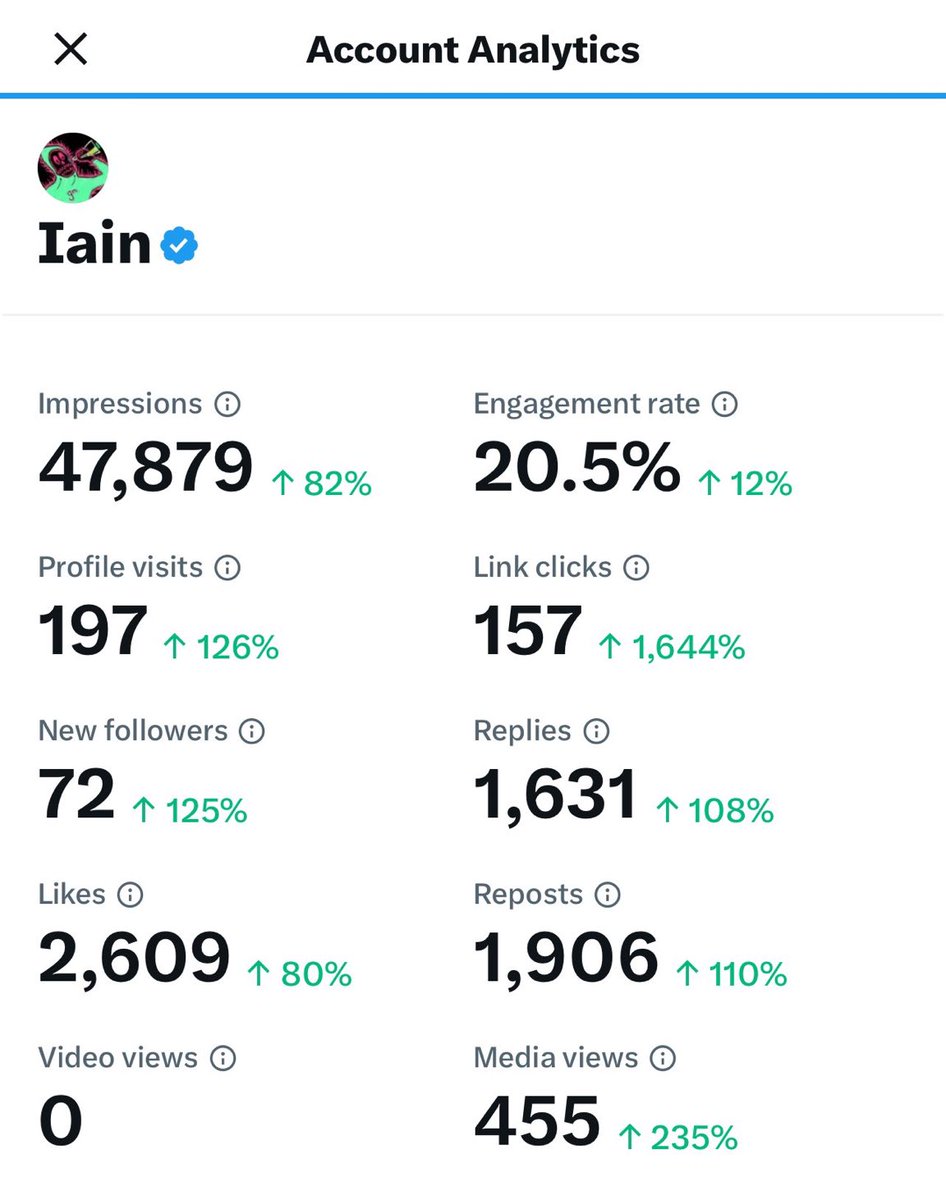
I have a suggestion that might add incredible value for users like us. What if we could have our account analytics segmented into three distinct categories: Regular, Verified, and Subscription? This would offer insightful, user-specific data at our fingertips.
Perhaps this could be an exclusive feature for a new premium subscription level? It sounds like a compelling pitch to the decision-makers.
Eager to hear your thoughts on this! 🚀
#AnalyticsEvolution #UserExperience #InnovativeIdeas
23

4 Dec 2023
I’ll be sharing my personal voyage in the tech sphere, offering insights and guidance to the next wave of tech innovators. Let’s shape the future of technology together! .
.
.
#DataDreams #TechMentorship #AnalyticsEvolution #Datascience #Techmentor #FutureLeaders

4
80

Wann ist es für Ihre Analytics Zeit, in die #Cloud umzuziehen? @DrKeil erläutert 5 Gründe, warum es gerade jetzt soweit sein könnte. 2.sas.com/6018ESaJp #NextGenSAS #AnalyticsEvolution #sasviya
3
27
Haben Sie 5 Minuten? Lassen Sie uns wissen, ob und wie Sie in die Cloud migrieren und erhalten Sie einen detaillierten Branchenbericht. Erfahren Sie, wie sich Ihr Unternehmen im Vergleich zum Markt positioniert. 2.sas.com/6016EmEmQ #NextGenSAS #AnalyticsEvolution
1
1

Come si stanno avvicinando le aziende alla migrazione di #analytics su #cloud? Partecipa alla nostra breve survey per ricevere un report con il punto di vista delle aziende del tuo stesso settore di business #NextGenSAS #AnalyticsEvolution 2.sas.com/6013EoB2l
2
2

18 Jun 2019
How does your Analytics Cloud strategy compare to the market? Take this short survey and receive an industry insight report in return. #NextGenSAS #AnalyticsEvolution
2.sas.com/6013EmywB
2

11 Jun 2019
What do your peers think about migrating Analytics to the cloud? Take this 5-minutes-survey and receive the answer in a detailed industry insight report. #NextGenSAS #AnalyticsEvolution bit.ly/2ZgGt1d
1
2
6 Jun 2019
What do your peers think about migrating analytics to the cloud? Take this 5-minutes-survey and receive the answers in a detailed industry insight report. #NextGenSAS #AnalyticsEvolution
2.sas.com/6010Emyk0
1
3

5 Jun 2019
How does your Analytics Cloud strategy compare to the market? Take this 5-minutes-survey and receive the answer in a detailed industry insight report. #NextGenSAS #AnalyticsEvolution #cloud bit.ly/2EU5hEN
2

31 May 2019
Have 5 minutes? Let us know if and how you are migrating to the cloud and receive a detailed industry insights report. Find out how your organization compares to your market. #NextGenSAS #AnalyticsEvolution
2.sas.com/6019Emct5
1
1
Stai pensando a come migrare i tuoi #analytics su cloud? Raccontaci la tua esperienza partecipando a questa breve survey, riceverai un report dettagliato con il punto di vista delle aziende del tuo stesso settore di business #NextGenSAS #AnalyticsEvolution 2.sas.com/6010Emrwa
1
2

28 May 2019
Are you migrating your Analytics to the cloud? Get insight into how your company is positioned against its industry, competitor and similar companies. Take this 5 min survey and receive a report with the results. #NextGenSAS #AnalyticsEvolution
2.sas.com/6014Em802
1
24 May 2019
Are you migrating your analytics to the cloud? Check out the Road to Analytics Evolution. Take this 5 min survey now and receive a report with the results. #NextGenSAS #AnalyticsEvolution
2.sas.com/6011EljrF
1
1