


Is Trump Fredrich II? Stupor Mundi
Friedrich II, the Wonder of the World, Stupor Mundi, as his contemporaries named him, governed for fifty years and demonstrated daily what the Hauteville principle produced when the Nicene pressure was held at bay long enough for a man to govern as Roger II had governed.
He spoke six languages. He corresponded with Arab mathematicians and Muslim philosophers. He kept a menagerie of lions, leopards, cheetahs, giraffes, and an elephant that he brought to the cold cities of northern Europe to demonstrate that the world was larger than their bishops had told them. He wrote the definitive medieval treatise on falconry, De Arte Venandi cum Avibus, based on years of personal observation and Arabic sources, and it remained the authoritative work on the subject for three centuries. He founded the University of Naples in 1224. He issued the Constitutions of Melfi in 1231, the most sophisticated legal code in medieval Europe, codifying Roman law, protecting the rights of his Muslim and Jewish subjects, establishing standardised weights and measures across the kingdom. He outlawed trial by ordeal. He was excommunicated four times. He was called the Antichrist by Pope Gregory IX. He governed anyway.
In 1228 he sailed to the Holy Land on crusade. He had been excommunicated before he left. He did not fight a single battle. He negotiated with Sultan al-Kamil of Egypt, a man with whom he had been corresponding for years on matters of philosophy, mathematics, and the nature of God, and in February 1229 signed a treaty returning Jerusalem, Bethlehem, and Nazareth to Christian administration. The Muslim population remained undisturbed. Access to the Temple Mount was guaranteed to both faiths. Jerusalem was recovered. No blood was shed.
Pope Gregory IX excommunicated him again for succeeding.
The papal legate in Jerusalem declared the Church of the Holy Sepulchre polluted by Friedrich's presence and suspended all religious services. Friedrich crowned himself King of Jerusalem in the empty church, in silence, because no priest would perform the ceremony. He placed the crown on his own head. Then he left.
He was Roger II's grandson in every way that counted. The court he built in Palermo, Arab scholars, Greek philosophers, Sicilian poets, Jewish physicians, falconers and mathematicians and legal theorists, was Roger II's court continued into the thirteenth century. It was the living proof that the Arian-adjacent model worked. That plurality governed better than uniformity. That a king who speaks to his subjects in their own languages builds a more durable state than one who imposes a single doctrinal identity from above. It was the proof the Nicene institutional order could not tolerate.
Friedrich died on 13 December 1250 at Castel Fiorentino in Apulia, of dysentery, aged fifty-five. He died wearing a Cistercian monk's habit. He was buried in a red porphyry sarcophagus in the Cathedral of Palermo, beside his parents Henry VI and Constanza, and his grandfather Roger II. Four generations in four sarcophagi in one cathedral. The founder and his descendants, together in the city they had built.
2
29


Yes, the Normans ruled much of southern Italy, but their settlement was denser and earlier in Puglia (they established the Duchy of Apulia with strongholds like Melfi).
1
2
14

Red-Figure fish plates first developed in Athens in the 5th century BC. In the 300s BC they became very popular in Greek coastal settlements in Magna Graecia (southern Italy). The fish plates in my photos come from the ancient Greek coastal settlements of Apulia and Paestum in Magna Graecia.
1
1
14
721

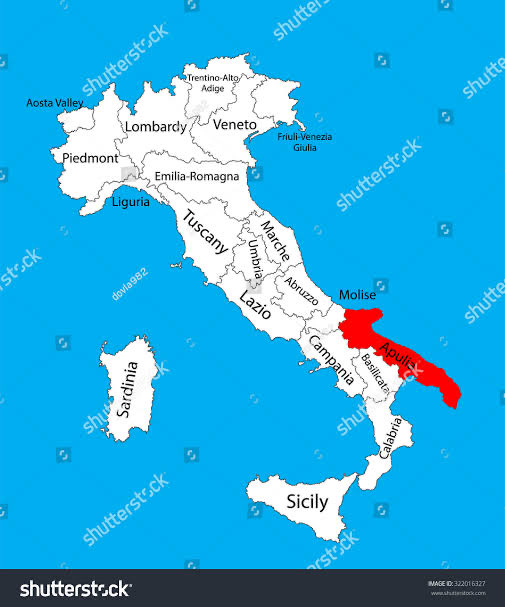
LMAO! Joke aside tho, Apulia is right there! Haha Indy’s squirt boot is just mirrored hehe
1
51

Jun 13
why?
the italian in my family is from bovino in apulia - the achilles heel of the boot
1
2
518


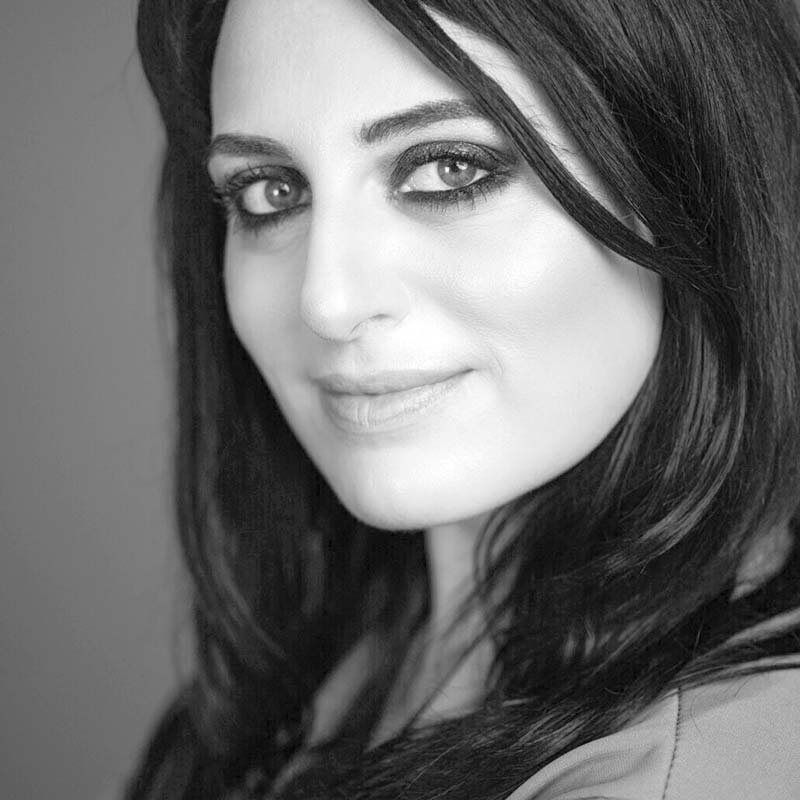
"Un pueblo del sur, una mujer del norte. Dos mundos que se encuentran y que cambiarán para siempre".
Franchesca Giannone
Apulia, Italia: 1982.
8

Jun 13
The backbone of southern Italian Orthodoxy was its vibrant monastic movement. Hundreds of cave monasteries and ascetics (such as St. Nilus of Rossano) populated the rugged landscapes of Calabria and Apulia. They preserved Byzantine liturgy, Greek theology, and Eastern iconography
1
1
2
33



Jun 13
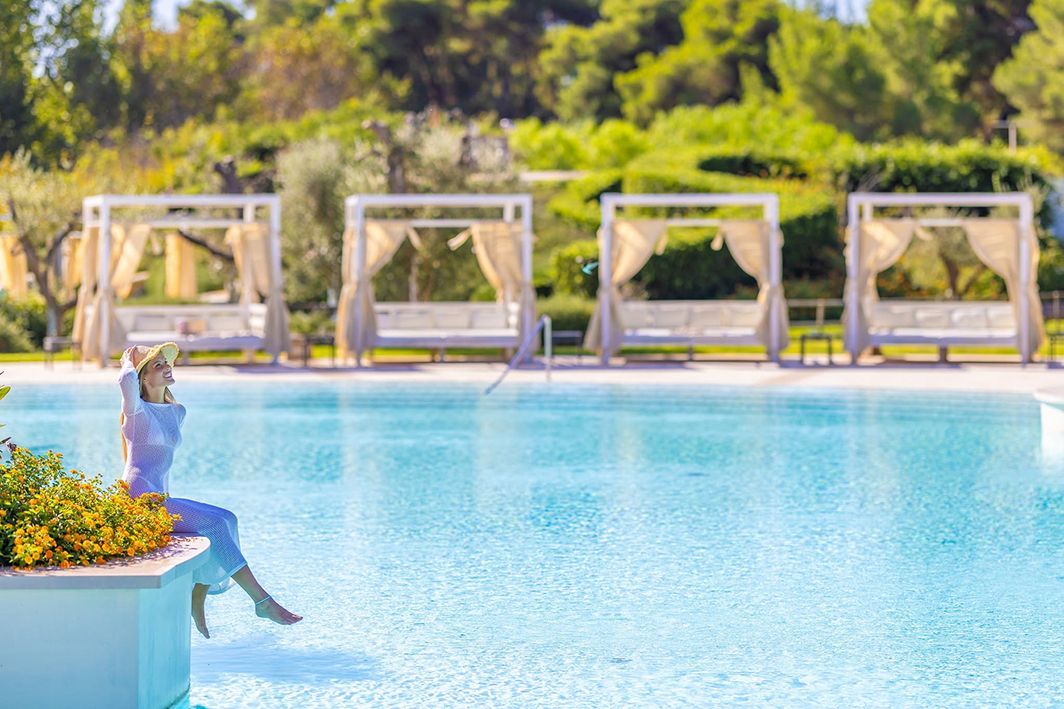
Updated Post: Veronica Milo: al vertice del Vivosa Apulia Resort beautytudine.com/portrait/ve…
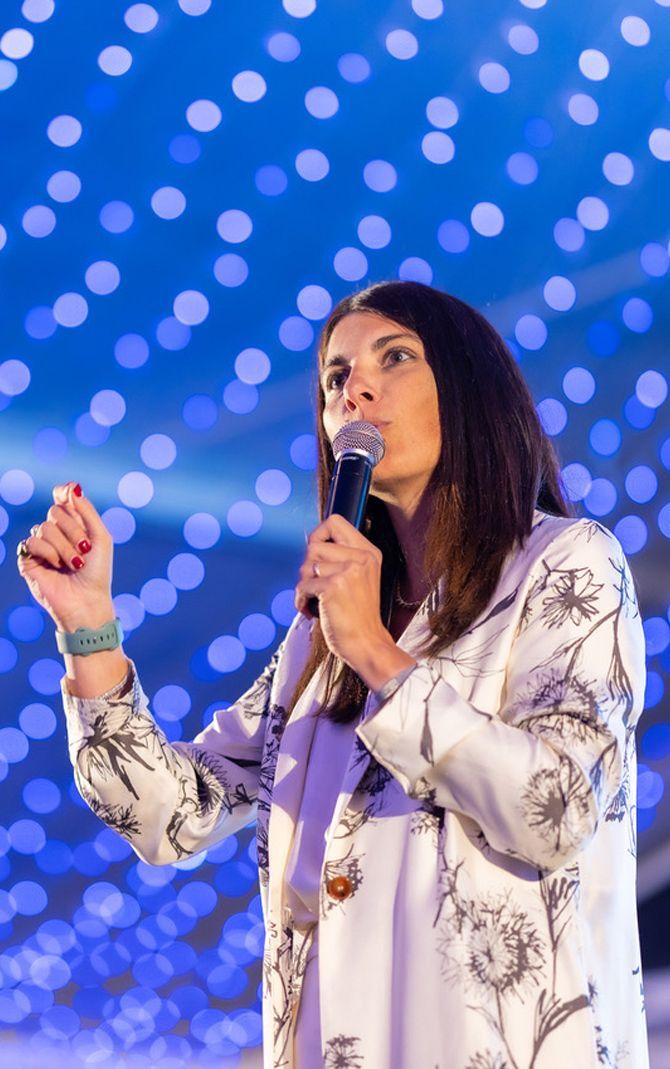
2
46


Jun 12
For instance, an Italian from Piedmont don't look like an Italian from Apulia who doesn't look like an italian from South Tyrol. The same way a Breton don't look like a Marseillais that don't look like a Basque that don't look like an Picard.
1
164

Jun 12
I love Apulia! I'm just a bit surprised about how many southerners there are specifically from Apulia lol
1
3
98
Jun 12
I think I've met two real Emilians of all the Italians I've met, one from Castelfranco and one from San Lazzaro. Literally everyone else is from Apulia lmfao
4
11
932

My history with Darkstalker is similar, I found a cabinet at my uncle' s bathing enstablishment in Apulia, all the persons were glued on Street Fighter II and I tried the first Darkstalker.
Fun fact: The CPS2 board was the japanese one and I understood nothing (I was 8 yo)
14