Haji Siyamuddin ANSARI retweeted

Jun 9
Pityriasis alba - a common benign hypopigmented dermatosis in children, often associated with atopy.
1
2
5
871

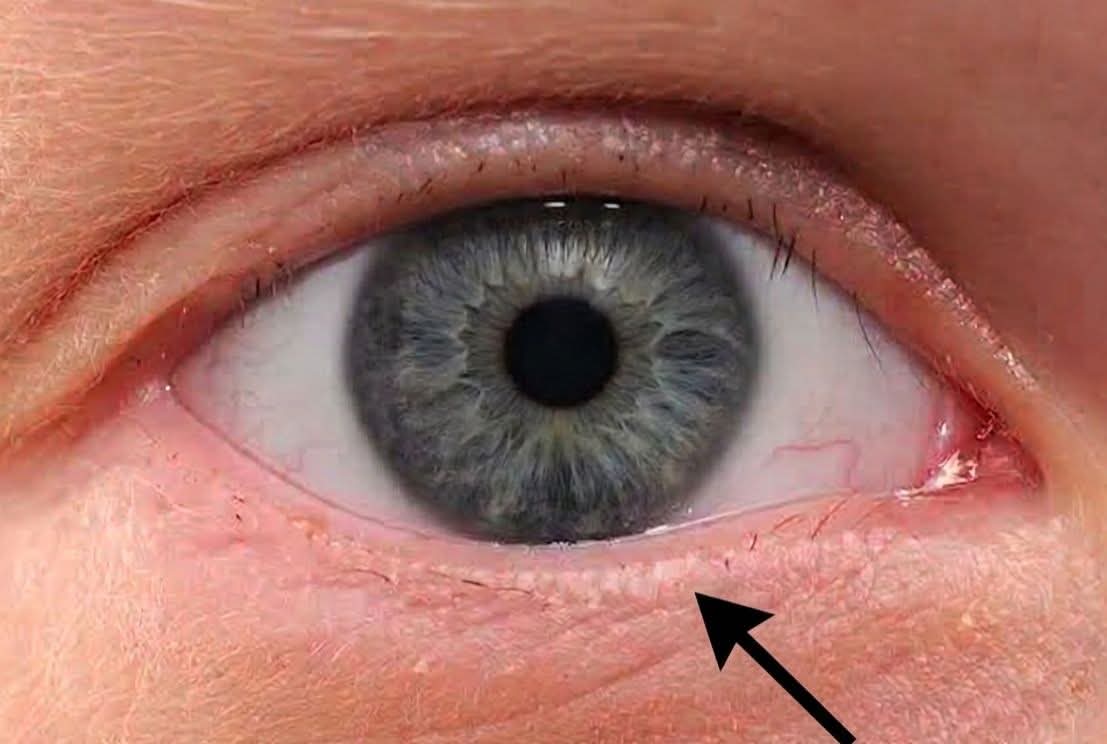
🎯 Dennie–Morgan fold
An extra horizontal infraorbital skin crease beneath the lower eyelid, classically associated with atopic dermatitis (eczema) and other atopic conditions such as allergic rhinitis and asthma.
It is considered one of the characteristic facial stigmata of atopy, along with: • Allergic shiners (infraorbital darkening) • Hertoghe sign (lateral eyebrow thinning) • Chronic eczematous skin changes
💡 Clinical pearl: The presence of a Dennie–Morgan fold should prompt consideration of the atopic triad—eczema, asthma, and allergic rhinitis.
✅ Diagnosis: Dennie–Morgan fold. 👁️🩺

26
🎯 Dennie–Morgan fold
An extra horizontal infraorbital skin crease beneath the lower eyelid, classically associated with atopic dermatitis (eczema) and other atopic conditions such as allergic rhinitis and asthma.
It is considered one of the characteristic facial stigmata of atopy, along with: • Allergic shiners (infraorbital darkening) • Hertoghe sign (lateral eyebrow thinning) • Chronic eczematous skin changes
💡 Clinical pearl: The presence of a Dennie–Morgan fold should prompt consideration of the atopic triad—eczema, asthma, and allergic rhinitis.
✅ Diagnosis: Dennie–Morgan fold. 👁️🩺
15

19h
Allergic or Rhinitis Facies.
Features include Dennie-Morgan lines, allergic shiners, a transverse nasal crease, and open-mouth posture with recessed lower jaw, collectively known as allergic or rhinitis facies.
These signs commonly result from chronic allergic rhinitis or atopy, stemming from nasal obstruction, allergic salute rubbing, and prolonged mouth breathing in children.
1
604
Nur Izzati Syazwani retweeted

Jun 12
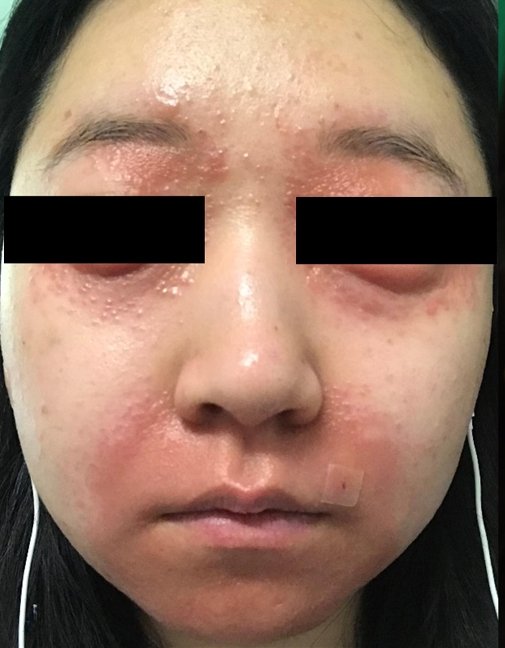
A woman in her 20s w/ no hx of atopy presented w/a 2-mo hx of a pruritic facial eruption involving the periocular & perioral regions.
O/E: ill-defined erythematous patches surrounding the eyes, nose, & mouth, w/ numerous grouped follicular erythematous papules w/in the affected areas.
What’s the diagnosis❔
5
4
15
1,472

Jun 13
🩺 Most likely dyshidrotic eczema (pompholyx).
Classic features:
✅ Tiny deep-seated “tapioca-like” vesicles
✅ Intense itching
✅ Sides of fingers and palms
✅ Recurrent flares
Contrary to the name, it’s not usually caused by water exposure.
Common associations include:
• Atopy
• Stress
• Sweating
• Nickel/cobalt exposure
• Seasonal changes
Treatment often includes emollients and topical corticosteroids.
1
5
524
Jun 13
🩺 Those tiny, intensely itchy blisters on the sides of the fingers are often due to dyshidrotic eczema (pompholyx), not heart disease.
Common triggers include:
• Stress
• Sweating
• Nickel or cobalt exposure
• Atopy/eczema history
• Seasonal changes
The good news?
It’s usually treatable with moisturizers, trigger avoidance, and topical corticosteroids.
Not every symptom is a sign of a failing organ. Sometimes it’s your skin asking for help.
1
1
465
Jun 13
🩺 Those tiny, intensely itchy blisters on the sides of the fingers are often due to dyshidrotic eczema (pompholyx), not heart disease.
Common triggers include:
• Stress
• Sweating
• Nickel or cobalt exposure
• Atopy/eczema history
• Seasonal changes
The good news?
It’s usually treatable with moisturizers, trigger avoidance, and topical corticosteroids.
Not every symptom is a sign of a failing organ. Sometimes it’s your skin asking for help.
256

Jun 13
The photo shows a hand with small, fluid‑filled bumps, roughness, and intense itching, a pattern typical of dyshidrotic eczema also called pompholyx.
Common Triggers :-
👉 Contact irritants like detergents, soaps, metals.
👉 Excess moisture or tap water exposure, not the cause itself, but can aggravate.
👉 Atopy - history of eczema, asthma, allergic rhinitis).
👉 Emotional stress or heat/sweating.
Management Overview:-
Avoid irritants and prolonged wet work.
Use emollients and topical corticosteroids for inflammation.
Severe or recurrent cases may need topical calcineurin inhibitors or phototherapy.
166

Presentation
The appearance is highly consistent with hand dermatitis (hand eczema), a broad category. Common possibilities include:
1. Irritant Contact Dermatitis (ICD) — Most common cause of hand rashes.
Triggered by frequent exposure to irritants like soaps, detergents, water, chemicals, solvents, or dry/cold weather. Presents with dry, red, scaly, cracked, or fissured skin, often on the backs of hands/fingers. Itching, burning, or pain may occur. No true allergy involved — it’s cumulative damage to the skin barrier. 
2. Allergic Contact Dermatitis (ACD) — Immune reaction to a specific allergen (e.g., nickel, fragrances, preservatives, rubber, plants).
Similar red, itchy, scaly rash that may have small blisters or spread. Often affects areas of direct contact. Patch testing helps identify the trigger. 
3. Atopic Dermatitis / Chronic Hand Eczema — Linked to personal/family history of atopy (eczema, asthma, allergies).
Dry, inflamed, itchy patches that can crack or thicken over time. Often flares with triggers like stress, weather, or irritants. 
4. Dyshidrotic Eczema (Pompholyx) — Small, deep, itchy blisters (“tapioca pearls”) on sides of fingers, palms, or backs of hands, which then dry, scale, and crack.
Common on hands; triggered by stress, moisture/sweat, allergens, or seasonal changes. Matches the bumpy/vesicular look in parts of the image. 
5. Psoriasis (e.g., Palmoplantar or Plaque on Hands) — Autoimmune; can mimic eczema.
Typically thicker, well-demarcated scaly plaques (silvery scales on lighter skin). May involve nails or other body areas. Less itchy than eczema but can fissure painfully. 
Less Common but Possible
• Tinea Manuum (Fungal Infection): Ring-like scaling, often unilateral or with edge involvement; may affect nails. KOH scraping or culture confirms. 
• Nummular Eczema: Coin-shaped, scaly, itchy patches.
• Other: Drug reactions, asteatotic eczema (severe dryness), or rarely more serious conditions (e.g., early cutaneous T-cell lymphoma, but unlikely here).
73

Jun 12
Hadeh hasil mcu udah keluar dan kayaknya harus lanjut tes alergi IgE Atopy panel 55 alergen 🫠
32

Jun 11
Grok WRONG to this Question: Are aluminum adjuvants in vaxes safe for babies?
“Yes, **aluminum adjuvants** in vaccines are considered safe for babies according to the overwhelming consensus of major health authorities and recent large-scale studies.
Aluminum salts (such as aluminum hydroxide or phosphate) serve as adjuvants in some childhood vaccines (e.g., DTaP, hepatitis B, pneumococcal, Hib) to enhance immune response. They have been used for over 90 years in billions of doses worldwide.
### Exposure Levels and Comparisons
The total aluminum from the full infant vaccine schedule in the first year is about 4–4.4 mg, far less than dietary exposure: breastfed infants ingest ~7 mg in the first 6 months, formula-fed ~38 mg, and soy formula-fed ~117 mg. Injected aluminum from vaccines dissolves slowly and is mostly excreted via kidneys, with modeling showing body burden stays below safe thresholds (e.g., FDA's minimal risk level, even for low-birth-weight infants).
### Safety Evidence from Authorities and Studies
- **Health authorities** (CDC, FDA, WHO, AAP) affirm safety based on decades of monitoring → No credible reports of toxicity from vaccine aluminum, and benefits outweigh any theoretical risks.
- **Large epidemiological studies** (2025 and recent):
- A 2025 Danish cohort of >1.2 million children found no increased risk of autoimmune diseases, allergies/atopy, or neurodevelopmental disorders (including autism) from aluminum-adjuvanted vaccines.
- A 2025 Pediatrics review concluded no evidence linking aluminum adjuvants to autism, neurotoxicity, allergy, or autoimmune issues; they are essential and safe.
- WHO's Global Advisory Committee on Vaccine Safety (reviews up to 2025) supports no health risks requiring policy changes.
### Addressing Specific Concerns
Concerns about neurotoxicity or autism stem largely from older papers (e.g., 2011 Tomljenovic & Shaw) suggesting risks based on animal models or theoretical mechanisms. However, these have not been supported by human epidemiological data. Multiple large studies show no association with autism (which evidence suggests originates prenatally), and no rise in blood aluminum levels post-vaccination even in preterm infants.
A 2022 observational study suggested a possible asthma link, but subsequent larger reviews (including 2025 data) found no consistent association.
Local reactions (e.g., soreness) are common but mild; serious adverse events are rare.
In summary, while aluminum is a neurotoxin at very high exposures (e.g., occupational or dialysis-related), the tiny amounts in vaccines—lower than everyday dietary intake and well below toxic thresholds—are substantiated as safe for infants by extensive evidence. Vaccines prevent far greater risks from diseases. Consult a pediatrician for personalized advice.”
42
🔍 Bilateral symmetrical palmar hyperkeratosis with diffuse erythema and scaling involving both palms.
Most Likely Diagnoses
🥇 Chronic Hand Eczema (Hyperkeratotic Hand Dermatitis)
Bilateral involvement
Dryness, scaling, fissuring, and hyperkeratosis
Common in people with frequent exposure to irritants, detergents, cement, chemicals, or repetitive manual work
🥈 Palmoplantar Psoriasis
Well-demarcated erythematous plaques
Thick scaling and hyperkeratosis
Often symmetrical
May occur without obvious lesions elsewhere
🥉 Tinea Manuum
Usually unilateral ("one hand, two feet" pattern), but can occasionally be bilateral
Consider if scaling extends to the fingers and there is concomitant foot involvement
Other Differentials
Keratoderma (acquired or inherited)
Pityriasis rubra pilaris
Secondary syphilis (less likely from this appearance alone)
Occupational contact dermatitis
What Would Help Narrow It Down?
✅ History of itching vs pain
✅ Occupational exposure (construction, mechanics, cleaners, farmers, etc.)
✅ Associated foot lesions
✅ Personal/family history of psoriasis or atopy
✅ Nail changes (pitting, onycholysis)
📌 Most likely diagnosis from the photo: Chronic hyperkeratotic hand eczema (hand dermatitis), with palmoplantar psoriasis being the main differential. The symmetry and diffuse palmar scaling strongly favor one of these inflammatory dermatoses rather than an infectious process. 🖐️🔬
1
237

Atopy most likely. You are allergic to the weather. A lower version of asthma.
9

Jun 8
Thanks for coming to play. I got a chuckle when you gave a New York Times as a source
The post is linking a 2022 New York Times piece (summarized on NCBI) titled “Early Europeans Could Not Tolerate Milk but Drank It Anyway, Study Finds.”
It’s based on a Nature paper about ancient DNA and the evolution of lactase persistence in Europe. The claim being pushed: early people drank milk despite lacking the enzyme, so they had stomach issues — therefore raw milk has “no health benefits.”
This is classic dishonest framing and category error.
Why This Article Is Being Weaponized Dishonestly
1. Wrong subject entirely
The piece is about genetic evolution of lactase persistence over thousands of years in ancient populations. It is not a study on modern raw milk vs pasteurized milk, nutrient content, safety, digestion, or health outcomes. Using it to declare “raw milk has no health benefits” is like using a paper on ancient wheat genetics to say modern sourdough is worthless. Different question.
2. Ignores the actual mechanism in raw milk
Many people with lactose issues tolerate clean raw milk better precisely because it contains live bacteria and enzymes (including lactase-producing ones) that pasteurization destroys.
The article doesn’t address or refute this. It’s silent on it. The person linking it is pretending a 2022 historical genetics summary disproves modern biochemical reality.
3. NYT/government-adjacent slant is predictable
Mainstream outlets like the NYT routinely frame
raw/unpasteurized dairy as primitive and risky while downplaying or ignoring the large body of European cohort data showing real protective effects (asthma, allergies, atopy). They treat the industrial pasteurization model as settled science and any deviation as dangerous.
That’s narrative protection for the regulatory capture we’ve mapped — big dairy three-letter agencies benefit from mandatory processing and restricted access.
4. The “they drank it anyway so it must have been bad” logic is weak
Ancient people also ate raw meat, fermented foods, and dealt with parasites and infections we don’t face the same way. That doesn’t mean all traditional foods are inferior.
Clean, tested, grass-fed raw dairy today is produced under very different conditions than filthy 19th-century urban dairies. The article doesn’t engage any of that.
The Actual Data They’re Avoiding
The real studies on modern raw milk benefits (which this piece never touches) show:
• Consistent protection against asthma, wheeze, hay fever, and atopic sensitization in large cohorts (PASTURE, GABRIELA, and the 2020 meta-analysis in JACI: In Practice — ~42% lower asthma odds).
• Retention of heat-sensitive enzymes, bioactive peptides, and live microbes that support digestion and immune modulation.
• Fermented raw versions (kefir, yogurt) amplify those effects.
These are peer-reviewed, replicated findings from European researchers who actually studied people drinking raw milk — not ancient DNA speculation.
The article itself isn’t lying about the historical genetics study it covers. But dropping it in a raw milk debate as proof that “raw milk has no health benefits” is dishonest and lazy.
It’s a category error being used to shut down discussion. NYT and aligned sources do this pattern constantly: pick a tangential paper, frame it as the final word, and ignore the direct evidence that challenges the industrial/regulatory status quo.
Raw milk from clean sources isn’t magic or risk-free, but the evidence for measurable advantages over the pasteurized version is stronger than the mainstream narrative admits. This post is just another example of using the wrong tool for the job to protect the approved story.
1
1
79

Jun 8
Got diagnosed with atopy like 6yrs back, well my triggers are a bit numerous to keep track so I just raw dog it at times, and bear consequences.
1
220