綿¹⁰⁰% retweeted

Mar 31
A one minute primer on how #AutoSpectral improves spectral flow cytometry unmixing by using per-cell calculation of autofluroscence spectra.
Use our R package and get higher quality spectral data, easy as that!
biorxiv.org/content/10.1101/…
37
171
12,533

Apr 24
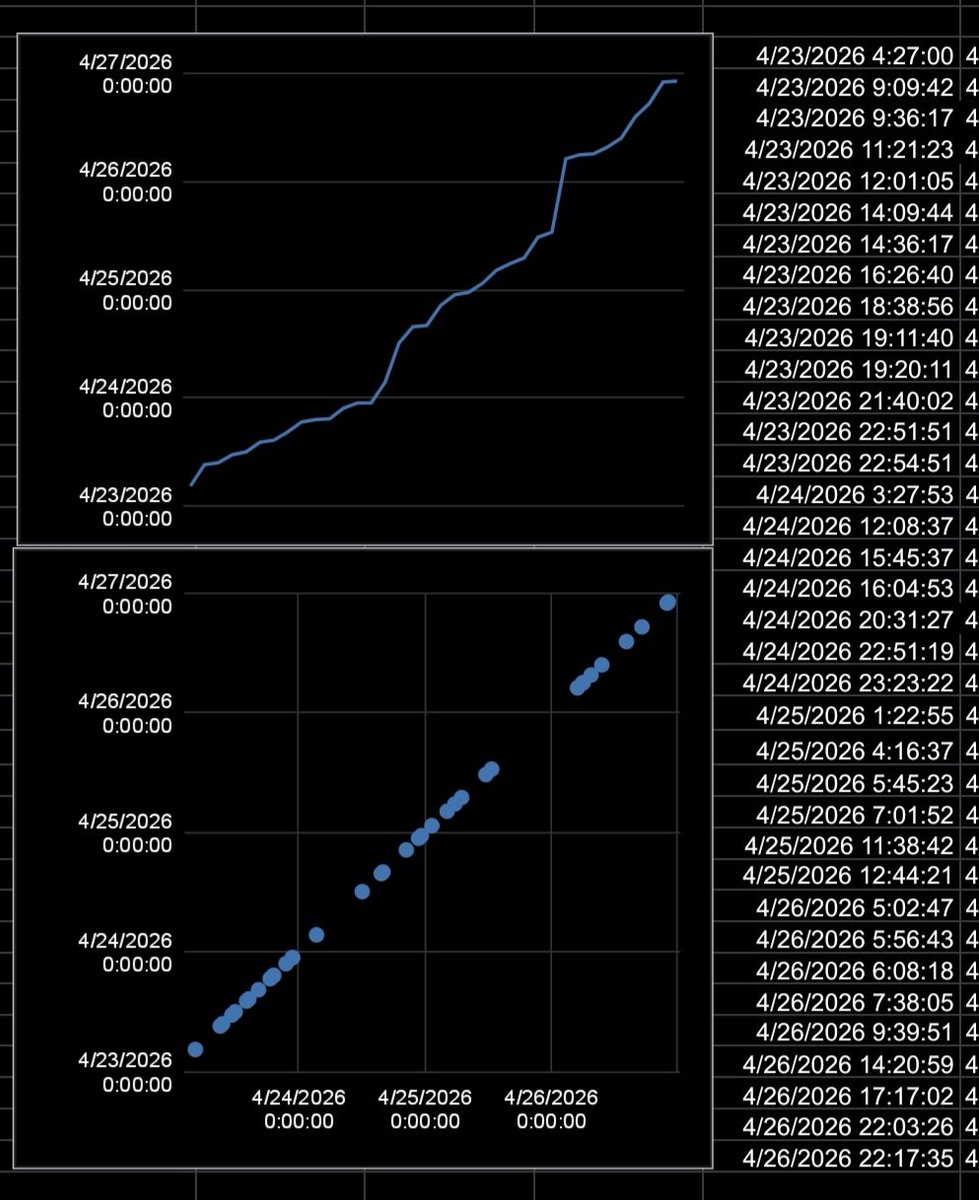
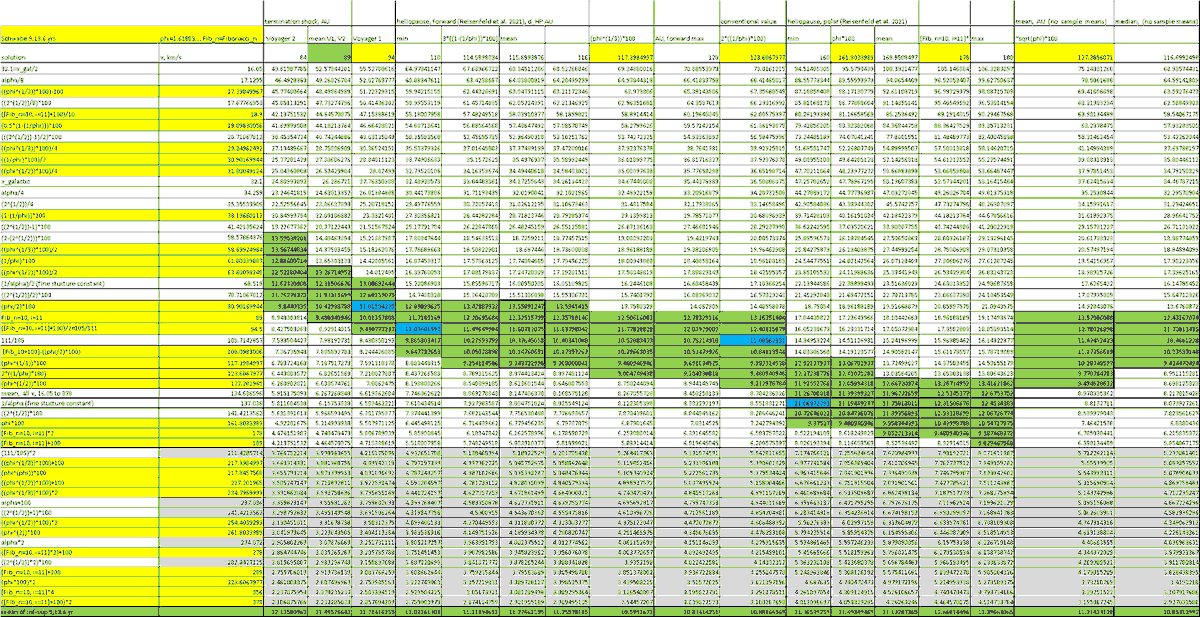
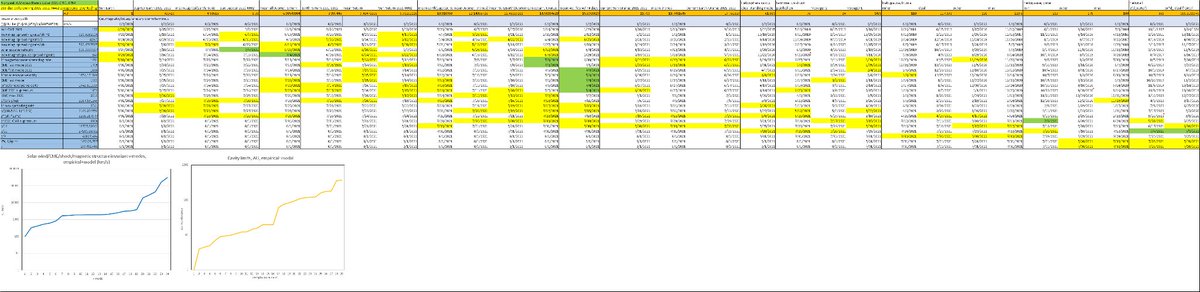
Propagated heliospheric linear shock propagation model arrival times at solar corona, and this period is especially dense. These are the return times from slow solar wind modes and multiple heliosheath/heliopause region standing shocks. Their impact, as IP shock components, produces radio transients upon interaction and reflection from stationary shocks and stream interactions, which would propagate nearly at c. Interestingly, the lag modes that generate these values are the 0.0-0.399... decimal values from a restricted range (~100 km/s median, range ~71/81-137.036 km/s, with 71~[(sqrt2=1/sqrt2)/2]*100, and 0.81~ phi/2, and 137.036 1/alpha) that generate all values within 0.1 years of the various calculations of the Schwabe solar cycle. One can add 11 or 22 years to these and produce accurate space weather timing backhanded or forecasted from SPEs and large flares.
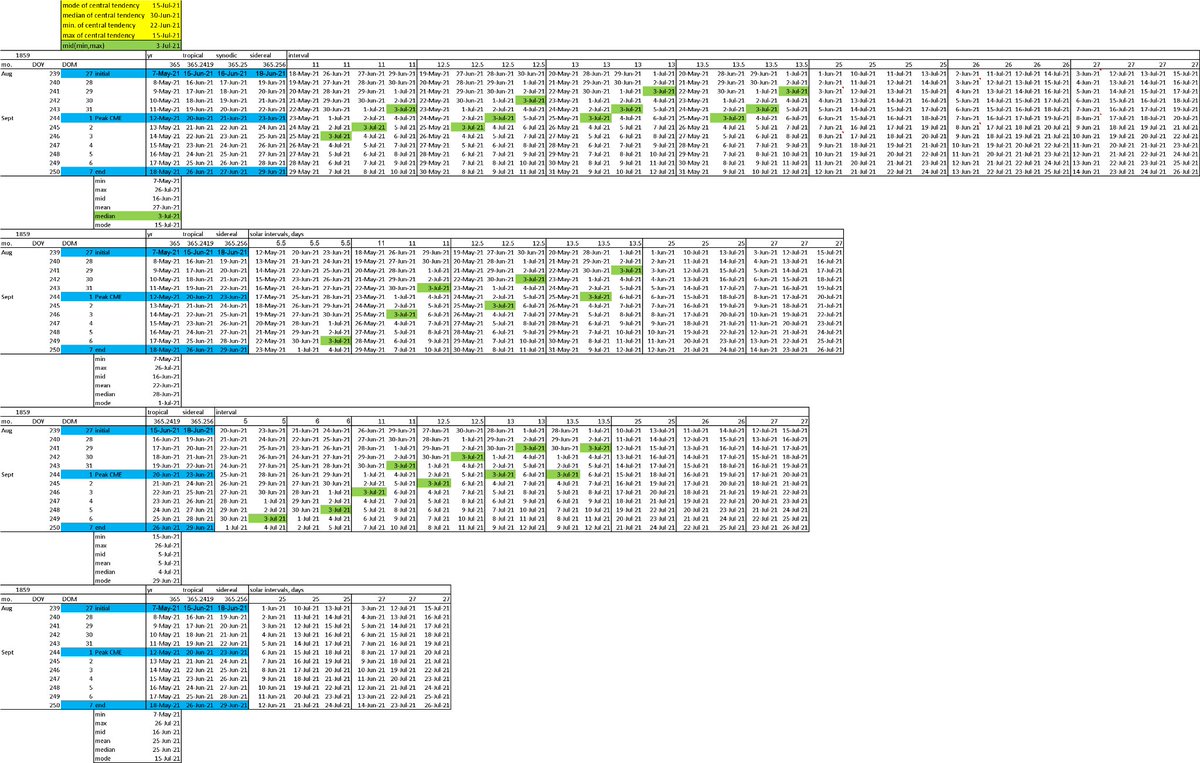
This model was developed in 2021 (own work), while a different technique was found to produce the first two X-class flare days for the current solar cycle (SC25), the first in 4 years, from the Carrington event window (beginning August 27, 1859). That model utilized a hybrid method from autospectral density of solar radio flux, use of its modes with tropical and sidereal periods propagated from the Carrington window, and mean field matrix that added significant phases of the mean solar coronal rotation period. The second flare, October 28, 2021, was accompanied by a rare event: a GLE.
Notice the distinct similarity between the contour of each region of outputs, a kind of eigensoectrum in both time and frequency space. This is clear signal of a discrete topological limit cycle, which is a scale-invariant quasiperiodic equilibrium.
So, the solar cycle and lightning have a lot in common.
4
1
3
130
31 Oct 2025
A small 🧵 encouraging people to publish protocols. Our #AutoSpectral release has made me reflect on how much the community tends to appreciate protocol papers. People rarely present protocols as their main work, but they are often the most impactful
biorxiv.org/content/10.1101/…
2
7
48
2,960

30 Oct 2025
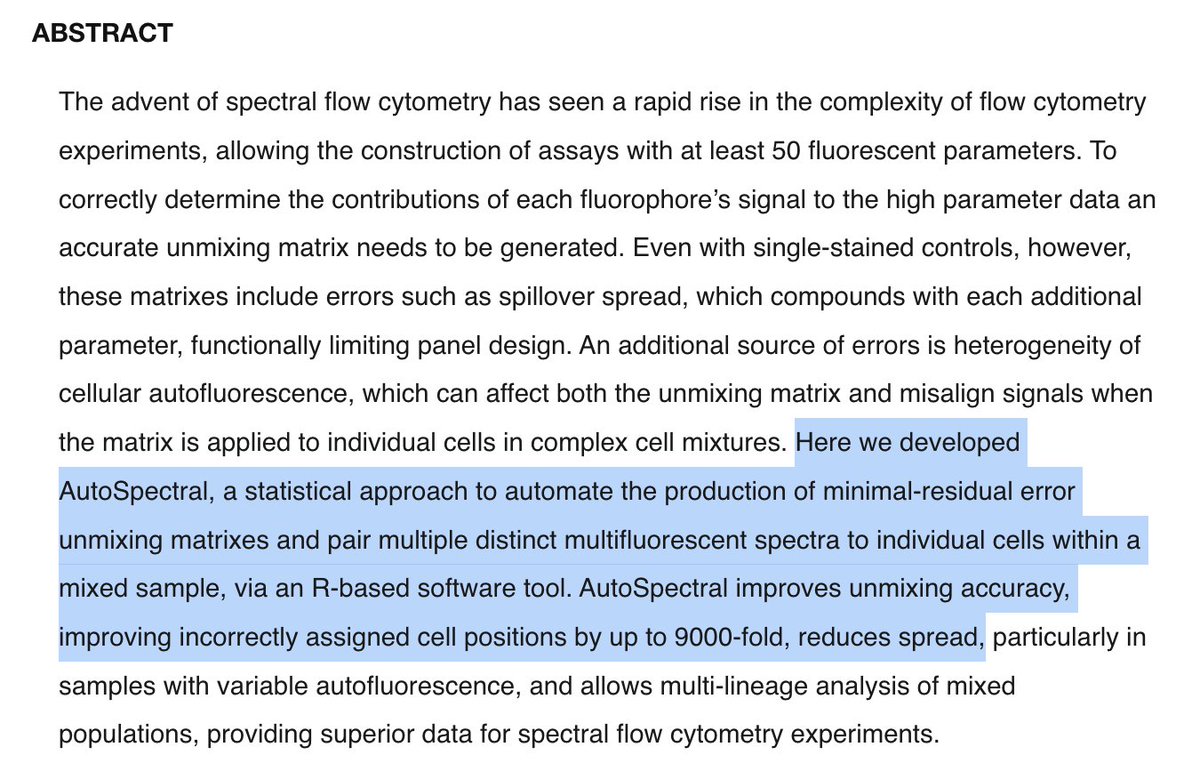
AutoSpectral improves spectral flow cytometry accuracy through optimised spectral unmixing and autofluorescence-matching at the cellular level biorxiv.org/content/10.1101/…
1
3
15
1,915

29 Oct 2025
💡 Seeing the Immune System Clearly: How AutoSpectral Helps $NWBO #DCVax® Work Smarter
1️⃣ The Challenge Hidden Inside Every Immune Measurement
Every immunotherapy depends on one thing above all else — being able to see what the immune system is doing. For cell-based treatments like DCVax®, that vision comes through a technology called spectral flow cytometry. It lets scientists measure dozens of markers on each cell at once, revealing which cells are activated, which are suppressive, and how they change after therapy.
The problem is that dendritic cells, the same cells used to make DCVax®, glow on their own. Their natural metabolism produces light called autofluorescence, and that glow overlaps with the fluorescent dyes used in experiments. It’s a bit like trying to photograph stars during daylight — the signal is there, but it’s drowned out by background light.
When that happens, scientists can misread results. They may think a cell is activated when it isn’t, or miss a key signal altogether. That noise limits how precisely we can track what DCVax® is doing inside patients, or how consistent each manufactured dose really is.
2️⃣ The Breakthrough: What AutoSpectral Actually Does
The new paper from the University of Cambridge and KU Leuven describes AutoSpectral, a software platform that fixes this visibility problem at its root. Instead of treating every cell the same, AutoSpectral studies each cell individually, learns its natural glow, and subtracts it out before analyzing the fluorescent markers.
In normal flow cytometry, you create one mathematical model to “unmix” all the colors. AutoSpectral builds thousands of mini-models — one for each cell. It learns which parts of the signal are real and which are noise, even when dozens of dyes are overlapping. The result is astonishing: errors can drop by as much as 9,000-fold. The data stop looking cloudy and start to reveal real biological patterns that were invisible before.
The program also removes distorted events such as dead cells and debris automatically, so that only clean, viable cells remain in the analysis. And because it’s coded in R and C with transparent math, anyone can reproduce the same result from the same data — a crucial point for regulatory science.
3️⃣ Why It Matters for DCVax® Manufacturing
Each dose of DCVax® begins as a batch of a patient’s own monocytes, which are cultured and matured into dendritic cells. These cells are then loaded with tumor antigens and returned to the patient as a personalized vaccine. The process must show that the cells matured correctly, express the right markers, and remain pure.
Historically, checking that required skilled technicians to manually gate and interpret flow-cytometry plots — an art as much as a science. Because dendritic cells have such strong autofluorescence, they can easily appear positive or negative for the wrong marker.
With AutoSpectral, that uncertainty disappears. It can confirm, cell by cell, that the vaccine population truly expresses CD80, CD86, CCR7, and IL-12p70, which mark the potent αDC1 phenotype used in DCVax®. It can distinguish those cells from any residual immature or tolerogenic types that could weaken the response. In other words, AutoSpectral doesn’t just read the data better — it verifies the biological identity of every dose.
That precision also feeds back into automation platforms like Flaskworks’ Eden, which manufactures dendritic cells in a closed system. AutoSpectral’s clean digital readouts can act as a real-time quality-control layer, ensuring that every Eden-produced batch meets the same biological standard before release.
4️⃣ Strengthening Clinical Validation
When DCVax® moves from manufacturing to clinical monitoring, the same clarity becomes even more valuable. Researchers can analyze blood or tumor samples from patients after vaccination and measure how the immune landscape changes — which T cells activate, which suppress, and how cytokine networks shift.
Previously, that analysis was limited by noise. With AutoSpectral, the data become quantitative and trustworthy. Scientists can now confirm that a patient’s dendritic cells not only reached the tumor but also triggered functional T-cell responses. It makes the difference between “something happened” and “this exact immune mechanism occurred.”
For regulators like the MHRA and FDA, this level of reproducible precision matters deeply. The agencies are pushing toward digital validation frameworks, where every analytical step can be verified computationally. AutoSpectral’s deterministic, reproducible math fits directly into that vision.
5️⃣ The Bigger Connection to the DCVax® Ecosystem
DCVax® isn’t just a single product; it’s an immune operating system built from several layers:
IRIS finds new tumor antigens through splicing analysis.
Eden and Flaskworks automate dendritic-cell manufacturing.
Advent BioServices ensures GMP compliance and quality release.
AutoSpectral now provides the digital “eyes” that watch the process unfold.
Each part strengthens the others. IRIS tells the system what to target. Eden builds the physical vaccine. AutoSpectral confirms that it was made and that it works exactly as intended. Together, they create a closed feedback loop that turns immune manufacturing into a measurable, software-defined process.
6️⃣ What It Means Going Forward
The most powerful therapies of the next decade will depend on how precisely we can measure living cells. AutoSpectral shows that it’s now possible to capture a dendritic cell’s real behavior — its metabolism, its activation, its signaling — without confusing it with background light.
For DCVax®, that means manufacturing can become more standardized, immune monitoring can become more precise, and regulators can rely on clean, verifiable data rather than expert interpretation. It turns immunotherapy from an art into an exact science.
When you can see the immune system clearly, you can guide it with confidence.
Informational only — not investment advice.
28 Oct 2025

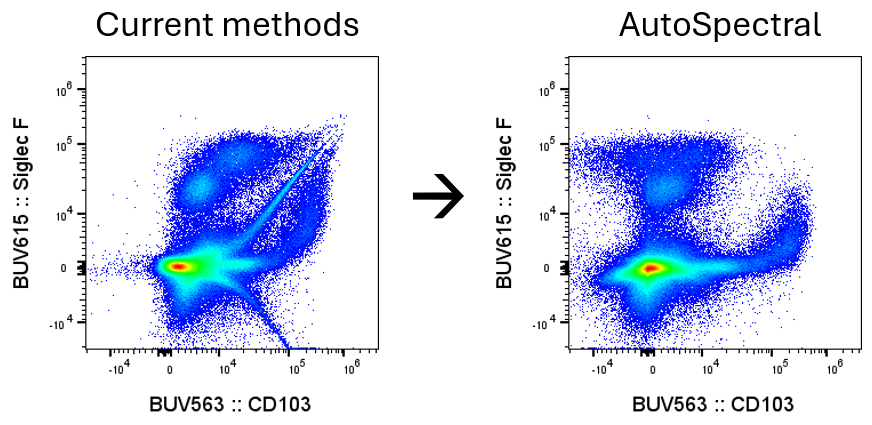
Pre-print alert! And this one really is a must read for anyone that does spectral flow cytometry. It is a complete, fully-automated spectral unmixing pipeline that reduces error up to 9000-fold.
Want to get a tough sample, like lung, looking like this?
biorxiv.org/content/10.1101/…
1
10
1,598
28 Oct 2025
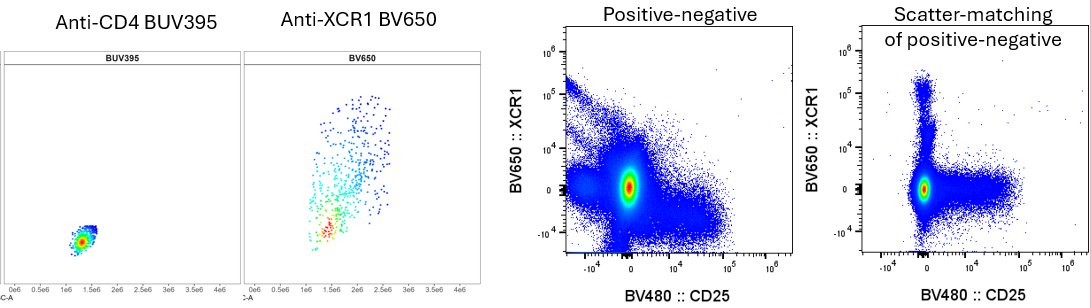
First, pos-neg gating. Ideal controls are your actual antibodies on the actual cells. However different antibodies bind different cells (see: CD4 vs XCR1 below), meaning they have different backgrounds to control. AutoSpectral matches the FSC-SSC of each pos to a suitable neg.
1
1
2
612
28 Oct 2025
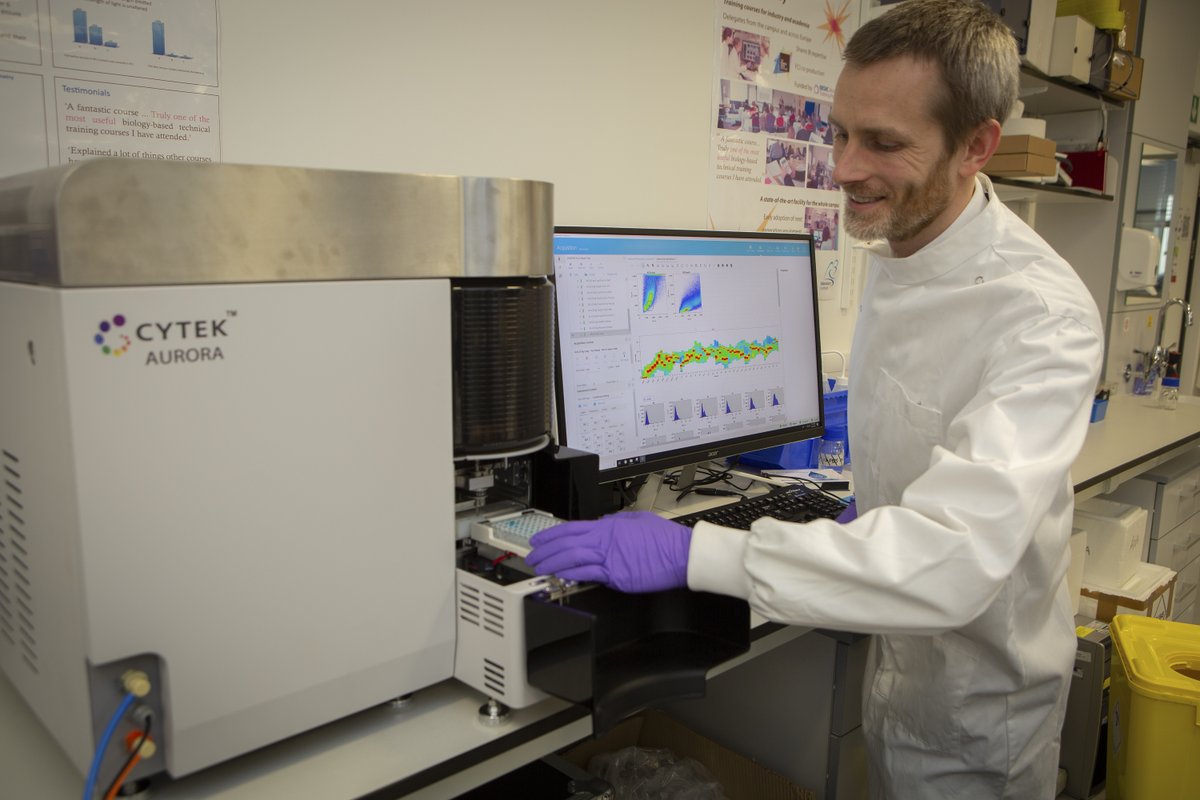
Three addition problems:
1)This unmixing solution still requires ideal positive-negative matching to find the right linear regression.
2) Cells have variation in background fluorescence
3) Fluorophores actually stuck on cells have variation in emissions
AutoSpectral solves these!
1
2
6
858

27 Feb 2020
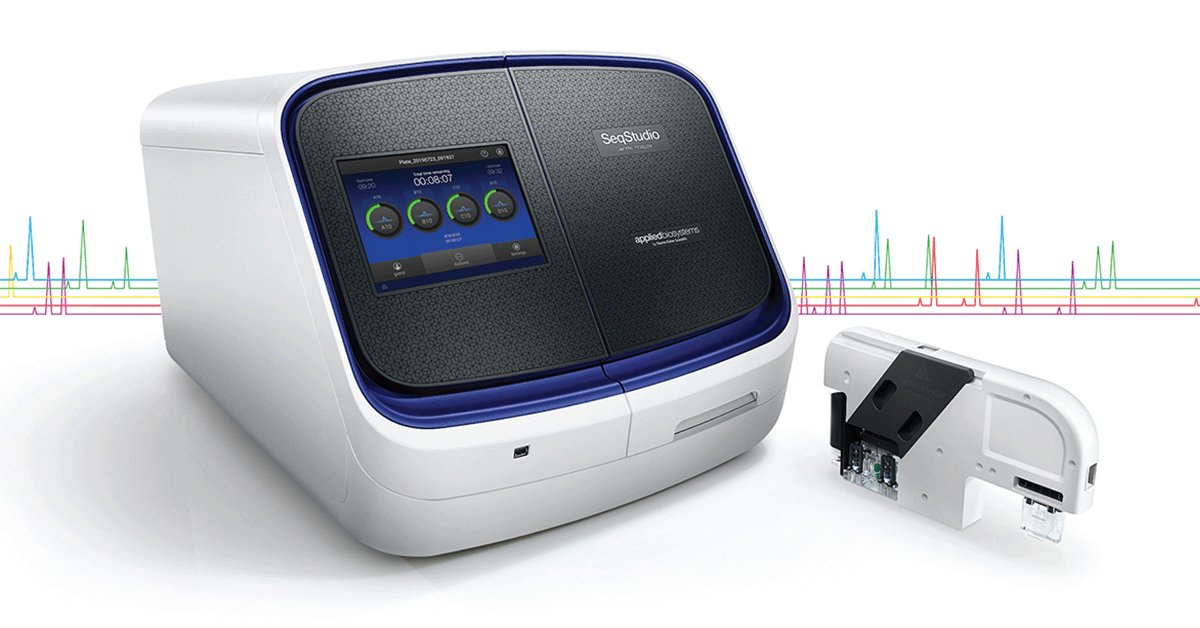
2 ways to reduce pull-up on SeqStudio for HID: autospectral calibration and marker-to-marker calibration. See the results. ow.ly/fs5350xfyrd
2