RSMVIPCPUSfDA * retweeted

Apr 30
🇺🇸 Axoft has tested a brain implant in a Chinese patient in Shanghai, a rare sign of cooperation as the two countries compete to develop the most advanced neurotechnology.
Axoft tested its device temporarily in 11 patients, including the one in Shanghai. The company plans to study its device in more patients in China this year and is planning multiple clinical trials in the country.
It’s the first time a US brain implant company has disclosed that it’s tested a device in China — a significant milestone given neurotechnology is increasingly viewed as a new front in the tech race between the nations. The Chinese government has said mastering the technology is a strategic priority and it intends to develop several world-leading companies by 2030.
Brain-computer interfaces, or BCIs, can be astounding medical treatments, enabling paralyzed people to control computers and other electronic devices. The technology could also be used to monitor productivity and potentially enhance brain function, making them appealing for industrial or military applications. The US defense department’s research arm has funded work in the area, and a venture fund founded by the CIA invested in two US brain implant startups.
Dozens of companies in the US, China, and other countries are developing BCIs, backed by wealthy individuals and global investors. Many US tech elite, including Elon Musk, see brain augmentation as a necessary step for humanity as artificial intelligence becomes more powerful. Musk founded brain technology company Neuralink in 2016.
Axoft was motivated to work in China in part because of how quickly it could test there. The work there was done through a local partner company. He declined to name that company and the Shanghai hospital.
Axoft CEO Paul Le Floch is focusing on the technology’s medical applications, and specifically using its implants to treat patients who are in comas or suffering from other disorders of consciousness. First, he wants to measure a patient’s level of consciousness and determine whether the person might wake up. After that, Axoft hopes to put its devices in patients recovering from brain injuries so that they can communicate via computer. Then, the company wants to build implants to help patients get better.
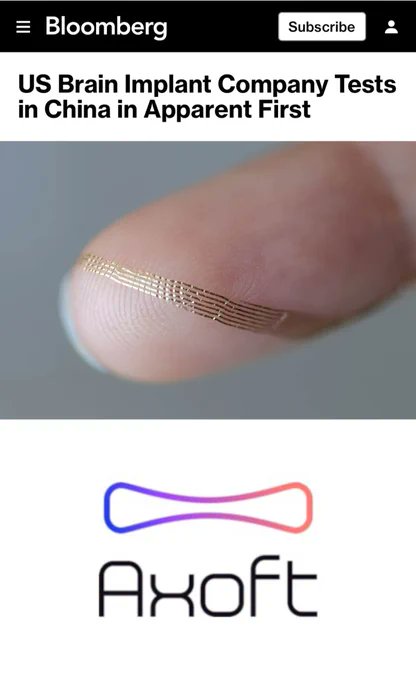
Axoft, founded in 2021, is using a new kind of brain implant material called Fleuron, which the company says is better at connecting to the brain than some other substances. It’s a flexible material that can be inserted deep into the brain. Axoft has also tested the devices in the US and Panama and is planning more trials in the US and Europe.
To advance development, Axoft raised funds from a global set of investors, bringing its total fundraising to more than $60 million. The round announced on Apr 29 was led by CP Group Innovation, primarily based in Thailand, and participants included the China-based fund Gaorong Ventures, investment manager Hillhouse Investment, along with two US groups and others. Axoft declined to share the company’s valuation.
Le Floch co-founded Axoft with two others, Jia Liu, his PhD supervisor at Harvard University, along with Harvard postdoc researcher Tianyang Ye, who are from China.
Gaorong senior vice president Hongbo Zhao said that the fund invested in Axoft because he was impressed with Liu’s work in flexible electronics. Zhao was so eager to make the investment that when Liu was visiting Beijing in January, Zhao found out what hotel he was staying at and showed up in the lobby to talk.
Axoft will use the money to support its studies, build more manufacturing capability, and work on a submission to FDA, which it plans to send in next year, Le Floch said.
bloomberg.com/news/articles/…
2
7
16
6,590

Jun 14
Wishing it was more positive… another 24/7 of neural chip coercive control thru Inteli-connection IBM 2020 neural chip, DARPA Battelle, Axoft, V2K, SPIRAL E, NO ONE SHOULD IMPLANTED
8
18
285
Jun 11
Ive been in my house, for days on end, kept in a lethargic state with their intelliconnection neural chip BCI, along with Axoft DARPA, & Boring Comp, 116MHZ keeps me docile, & easily controlled so the 15 people can coerce me, 24/7
Blocking any type of meds,
1
1
3
66

Odio axoft, odio tango gestión y todo lo relacionado al programa ese que funciona como el orto
37

Axoft (CDL'23) has raised an oversubscribed $55M Series A.
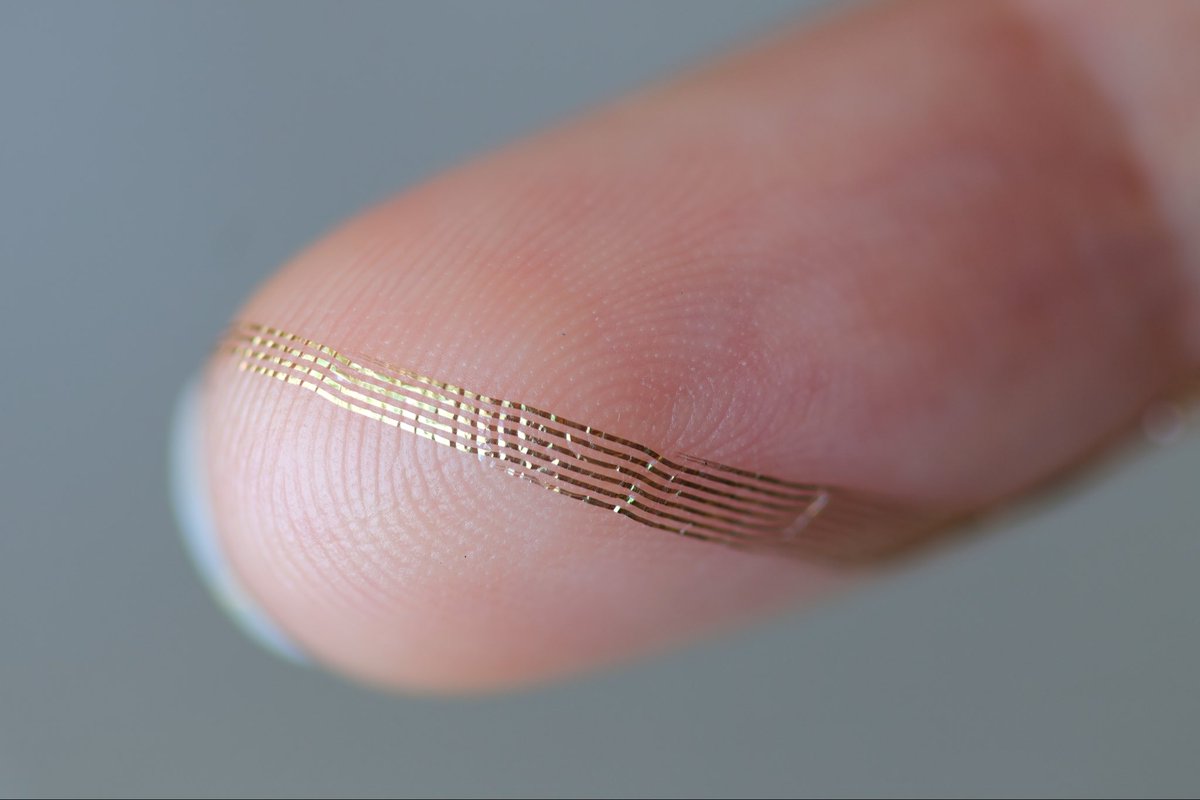
Axoft is developing implantable brain-computer interfaces built on its proprietary Fleuron material, a substance up to 10,000x softer than the polyimide used in existing brain implants
businesswire.com/news/home/2…
1
5
484

米国のBCI企業Axoftが上海で中国人患者への脳インプラント試験を実施し5500万ドルの資金調達も発表した、米中BCI競争における異例の協力事例。
脳は世界を跨ぐ。
iol.co.za/ios/world/2026-05-…
1
8
586

May 6
NEWS🚨: A startup just raised $55M to plug directly into the human brain and the real breakthrough isn’t the chip. It’s the material.
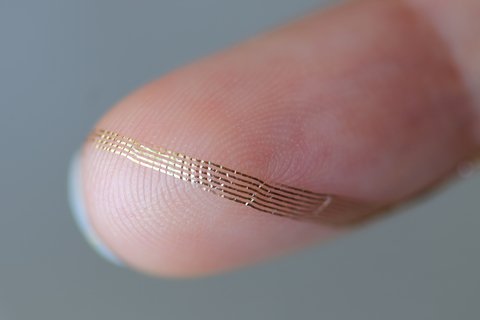
The startup Axoft recently raised $55 million to develop a brain-computer interface centered on a revolutionary material called Fleuron. Unlike the rigid silicon or metal used by companies like Neuralink, Fleuron is a "bio-inspired" polymer that is 10,000 times softer than traditional materials, making it as flexible as actual brain tissue. This allows the implant to move naturally with the brain, preventing the scar tissue and inflammation that usually cause long-term implants to fail. This breakthrough enables permanent, high-bandwidth connections that could remain functional for a lifetime, with the company aiming for FDA clearance by 2027.
1
2
7
148

May 3
🧠El futuro distópico con una startup levantando $55M para leer mejor el cerebro humano.
Axoft creó un implante con un material bioinspirado llamado Fleuron: mucho más blando que los implantes actuales, con menos cicatrices y señales cerebrales más estables durante más tiempo.
La parte médica es evidente: parálisis, enfermedades neurológicas, nuevas formas de comunicación.
La parte incómoda también: si leer señales cerebrales se vuelve fiable, el cerebro se convierte en la próxima fuente de datos.
Clicks, búsquedas, mensajes… todo eso parecerá superficial al lado de impulsos neuronales.
La pregunta importante: quién controla esos datos.
2
6
2,266

May 2
在中美竞相发展先进神经技术之际,美国神经技术初创公司Axoft已在上海对四名中国患者进行脑植入设备测试,显示两国在这一领域仍存在有限合作空间。 zaobao.com.sg/news/china/sto…

3
2
21
9,144

🚨 BREAKING: A startup just raised $55M to plug directly into the human brain and the real breakthrough isn’t the chip.
It’s the material.
What’s new
Axoft built an implantable brain–computer interface using a bio-inspired material called Fleuron that is:
• ~10,000× softer than current implants
• Causes far less scarring
• Captures higher quality brain signals for longer
And it’s already been tested in humans.
Why this matters
Current brain implants fail over time because the brain rejects them.
This changes that.
The interface now behaves more like brain tissue than hardware
Which means:
• More stable neural data
• Access to deeper brain regions
• Longer-lasting implants
The real shift
This isn’t just better hardware.
It’s a new direction:
Design the interface to match biology — not fight it
What this unlocks
• Real-time brain signal decoding
• New treatments for neurological disorders
• Direct training data for next-gen AI systems
Think about this
If we can reliably read the brain…
We’re no longer guessing what the brain is doing.
We’re measuring it directly.
Follow me I track where biology and technology stop being separate systems.
31
167
648
42,509

Axoftの強みは従来材料より最大約10,000倍柔らかい独自材料「Fleuron™」。高密度かつ生体適合性の高いインプラント型BCIを実現し、既に複数患者での埋植実績あり!🧠
businesswire.com/news/home/2…
4
201
またまた侵襲BMIニュース!
英ケンブリッジ発の神経工学スタートアップAxoftが、Series Aで約86億円を調達。
C.P. Group Innovation主導、Alumni VenturesやHillhouseなどが参加で、総調達額は約94億円超に。資金は臨床試験拡大、米国規制対応、GMP製造拠点の構築に充当予定とのこと。
2
4
31
2,371

First-Ever Trial of American Brain Implant Takes Place in China
U.S.-based company Axoft said it has tested a brain-computer interface implant in a patient in China, the first known disclosure of such a trial.
The company said the move reflects growing global competition in neurotechnology, even as experts raise ethical and regulatory concerns.
ntd.com/ntdplus/us-brain-imp…
2
1
5
318

The race to connect the human brain to computers is heating up — and it's becoming a U.S.-China competition. American startup Axoft has disclosed testing its brain implant in China, where regulators move faster and the government has made brain science a national priority. The company raised $55 million this week to accelerate development, but critics are already raising alarms about data security, privacy, and the ethics of modifying the human brain.
2
6
362
May 1
🚨 Beijing has designated neurotechnology a strategic priority, and Chinese VC’s just invested in the latest funding round of US brain implant startup Axoft…
Paul Le Floch co-founded Axoft with two others, Jia Liu, his PhD supervisor at Harvard University, along with Harvard postdoc researcher Tianyang Ye, who are from China.
The funding round announced on Apr 29 was led by CP Group Innovation, primarily based in Thailand, and participants included the China-based fund Gaorong Ventures, investment manager Hillhouse Investment, along with two US groups and others. Axoft declined to share the company’s valuation.
Apr 30

🇺🇸 Axoft has tested a brain implant in a Chinese patient in Shanghai, a rare sign of cooperation as the two countries compete to develop the most advanced neurotechnology.
Axoft tested its device temporarily in 11 patients, including the one in Shanghai. The company plans to study its device in more patients in China this year and is planning multiple clinical trials in the country.
It’s the first time a US brain implant company has disclosed that it’s tested a device in China — a significant milestone given neurotechnology is increasingly viewed as a new front in the tech race between the nations. The Chinese government has said mastering the technology is a strategic priority and it intends to develop several world-leading companies by 2030.
Brain-computer interfaces, or BCIs, can be astounding medical treatments, enabling paralyzed people to control computers and other electronic devices. The technology could also be used to monitor productivity and potentially enhance brain function, making them appealing for industrial or military applications. The US defense department’s research arm has funded work in the area, and a venture fund founded by the CIA invested in two US brain implant startups.
Dozens of companies in the US, China, and other countries are developing BCIs, backed by wealthy individuals and global investors. Many US tech elite, including Elon Musk, see brain augmentation as a necessary step for humanity as artificial intelligence becomes more powerful. Musk founded brain technology company Neuralink in 2016.
Axoft was motivated to work in China in part because of how quickly it could test there. The work there was done through a local partner company. He declined to name that company and the Shanghai hospital.
Axoft CEO Paul Le Floch is focusing on the technology’s medical applications, and specifically using its implants to treat patients who are in comas or suffering from other disorders of consciousness. First, he wants to measure a patient’s level of consciousness and determine whether the person might wake up. After that, Axoft hopes to put its devices in patients recovering from brain injuries so that they can communicate via computer. Then, the company wants to build implants to help patients get better.
Axoft, founded in 2021, is using a new kind of brain implant material called Fleuron, which the company says is better at connecting to the brain than some other substances. It’s a flexible material that can be inserted deep into the brain. Axoft has also tested the devices in the US and Panama and is planning more trials in the US and Europe.
To advance development, Axoft raised funds from a global set of investors, bringing its total fundraising to more than $60 million. The round announced on Apr 29 was led by CP Group Innovation, primarily based in Thailand, and participants included the China-based fund Gaorong Ventures, investment manager Hillhouse Investment, along with two US groups and others. Axoft declined to share the company’s valuation.
Le Floch co-founded Axoft with two others, Jia Liu, his PhD supervisor at Harvard University, along with Harvard postdoc researcher Tianyang Ye, who are from China.
Gaorong senior vice president Hongbo Zhao said that the fund invested in Axoft because he was impressed with Liu’s work in flexible electronics. Zhao was so eager to make the investment that when Liu was visiting Beijing in January, Zhao found out what hotel he was staying at and showed up in the lobby to talk.
Axoft will use the money to support its studies, build more manufacturing capability, and work on a submission to FDA, which it plans to send in next year, Le Floch said.
bloomberg.com/news/articles/…
5
9
20
4,598

美国脑机接口公司 Axoft 已在上海对一名中国患者进行了脑植入设备测试,成为首家公开披露在中国测试设备的美国脑植入企业。该公司迄今已在11名患者身上临时测试了其设备,计划今年在中国扩大研究规模并开展多项临床试验。
Axoft 的核心技术是一种名为 Fleuron 的新型柔性脑植入材料,可深入脑部并与神经组织连接。公司目前聚焦于医疗应用,包括评估昏迷患者的意识水平,以及帮助脑损伤患者通过计算机进行交流。
在融资方面,Axoft 于4月29日宣布完成新一轮融资,总融资额超过6000万美元,由主要在泰国运营的正大集团创新基金领投,参与方包括中国基金高榕资本、高瓴投资及两家美国机构。公司计划明年向美国食品药品监督管理局(FDA)提交申请。
脑机接口(BCI)技术被视为中美科技竞争的新战线。中共已将掌握该技术列为战略优先事项,并计划到2030年培育数家全球领先企业。美国国防部研究机构及中央情报局旗下风险基金均已在该领域投入资金。
1
4
7
2,591

Apr 30
🏛️ Company: Axoft
🔗 Website: axoft.us
📊 Amount: $55 Million
🔄 Round: Series A
⚙️ Industry: Healthcare
🌍 Location: Cambridge, Massachusetts, USA
5
202


"Axoft Secures $55M Series A to Advance Clinical Trials Globally for its Bio-Inspired, Implantable Brain-Computer Interface" businesswire.com/news/home/2…
3
4
192