
Marc Guehi - Lived in England since he was 1
Madueke - Born in Barnet
Saka - Ealing, London
Rice - London
Rashford - Manchester
Eze - London
Morgan Roger’s - Halesowen
I could keep going but they are all of English Nationality, so shut the fuck up
1
15

SorcerySilhouettes (Delusional Vaginist🦕) 💜🤍💚 retweeted

Jun 15
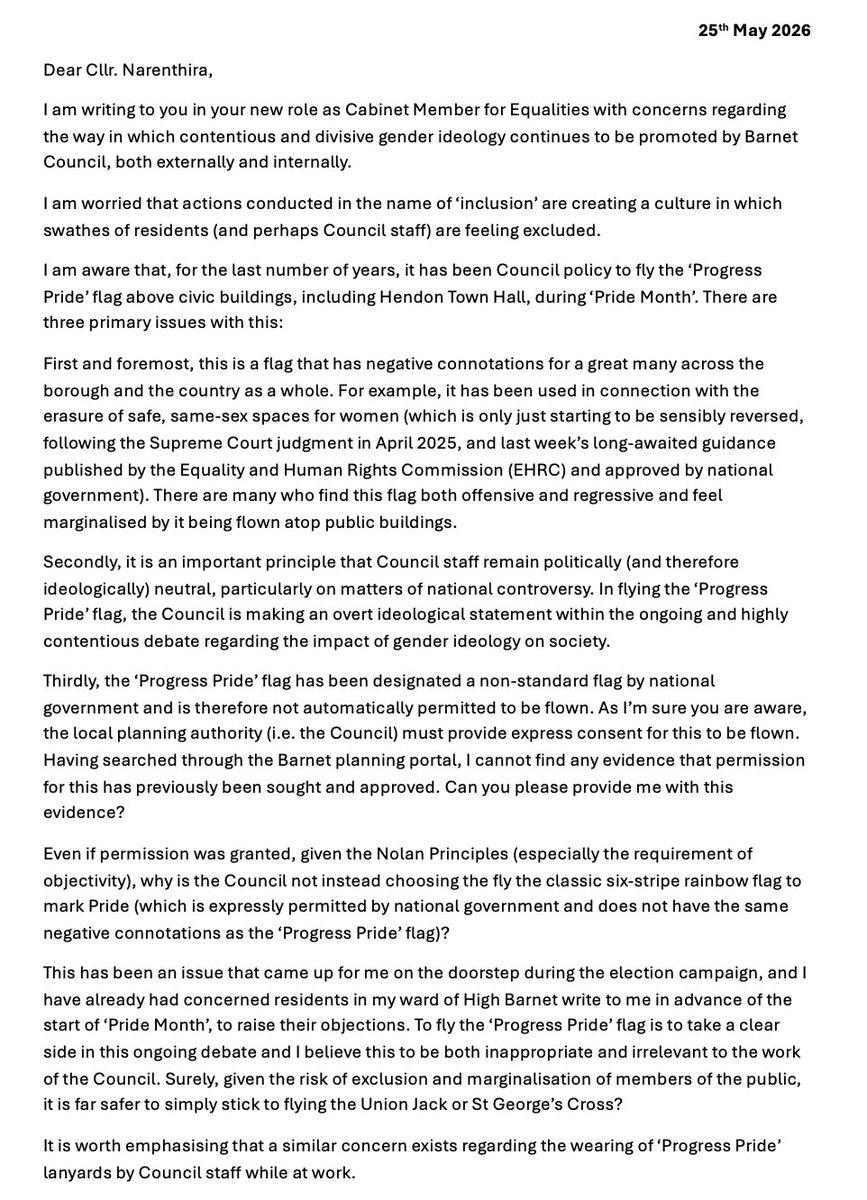
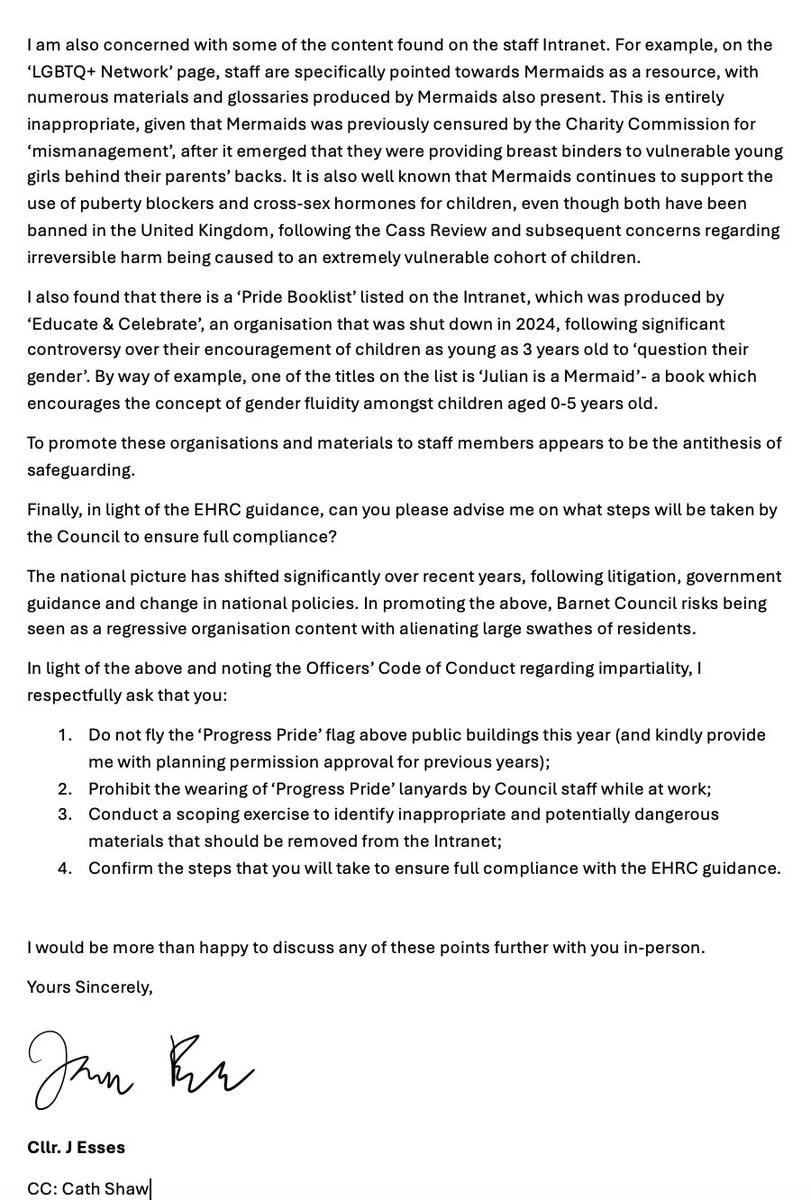
🚨My first act as Councillor in Barnet was to demand that Labour cease flying the divisive Progress Pride Flag outside our Town Hall; for which proper planning permission was never sought.
The flag remains up despite requesting it be replaced with the traditional rainbow flag.

19
59
425
7,003

Helt fruktansvärd historia. Kvinnan som manipulerade barnet och rättsväsendet borde så klart få ett rejält straff också. Tyvärr är väl det brottet preskriberat vi det här laget
1
8
Lucy retweeted

Charli Thompson, a Green Party councillor for Barnet, the borough where the Edgware United Synagogue is located, said the arrests raised wider concerns about the right to protest
newarab.com/news/london-poli…
2
1
175
Kason Wener retweeted

Not Ascot racetrack ready but I'll do for spectating at home.
My Barnet need tamed. Anyone got any hedge shears?

8
1
31
665

Saka was born in Ealing, Madueke Barnet and Eze Greenwich all in London what a pile of shit your talking.
1
1
258

...currently wait, with a nationwide rollout targeted for 2027 if the early trials succeed.
Right now the tool is being tested by Barnet, Camden and Dorset councils. It triages applications, flags key information and drafts an initial assessment, with a qualified planning officer still making every final call.
The second-order effect is the one worth watching. Householder applications, loft conversions, extensions, small alterations, make up nearly 70% of all planning applications in England. Clearing that backlog faster frees up planners to spend more time on the larger housing developments that actually move the needle on the 1.5 million homes target.
There's also a separate tool, Extract, now live for every council in England. It converts decades of paper planning records, some with handwritten notes, into useable digital data in minutes. Planning officers currently spend an estimated 250,000 hours a year doing that manually. That time is now freed up.
The contradiction to hold in mind: AI won't build a single house. The planning bottleneck is real, but so is the shortage of land, builders and materials. Faster approvals are necessary. They are nowhere near sufficient on their own.
Haatch is the UK's largest pre-seed VC fund. We built Pulse to track the macro events that move markets. Follow @HaatchPulse for daily updates on the stories that matter.
x.com/HaatchPulse
14

what a fucking rocket that was, just been going off me barnet in me bedroom ended up on the roof
#IRQNOR
1
34

When lawyers were going to take the case,she was one of them,it’s a face you don’t forget.Horrible left wing bint who must use a Turkish barber for that barnet🫡🇬🇧
1
1
9


It was a fantastic season. We had been the worst team in London (and I include Barnet at the time) The final celebration at Cambridge away was brilliant.
5

"Barn med en svensk pappa och en utländsk mamma
Ett barn till en svensk pappa och en utländsk mamma blev alltid svensk medborgare om barnet föddes i Sverige. Om pappan var gift med mamman fick barnet svenskt medborgarskap vid födelsen oavsett var i världen barnet föddes."
2
20


Du hade nog sett.det varit bättre om det var som i USA, där hade mamman utvisats eftersom hon hade ett sådant beslut och barnet som fötts i landet fått stanna.
Hur kunde ni inte se till att de med beslut utvisades, ni fixade denna skit under era år hur ska ni ta hand om den?
22

Football Insider revealed earlier in June that midfielder Ben Winterburn is a target for Hearts. Hearts are seeking to improve their squad after coming close to winning the Premiership. Winterburn has played for his boyhood club seven times. He spent last season on loan to Barnet

10
585
Annika Gran retweeted

”– När ett barn är född och uppvuxet i Sverige så måste barnet ha rätt till sitt hem, till sitt privatliv, att få fortsätta sin skolgång, att få fortsätta leva med sina vänner. Det måste väga tungt, barnet måste få stanna, säger Annika Hirvonen (MP).
tv4.se/artikel/49BDZ4XY4a8Ke…
1
1
23


Love seeing two former #LUFC players Mike Grella (current @CBSSportsGolazo pundit) & Harry Kewell (failed Barnet manager) give their takes on #USMNT playing the Socceroos later this week.
One is a 🐀, and the other scored a great brace against Kettering Town in an FA cup replay
1
359