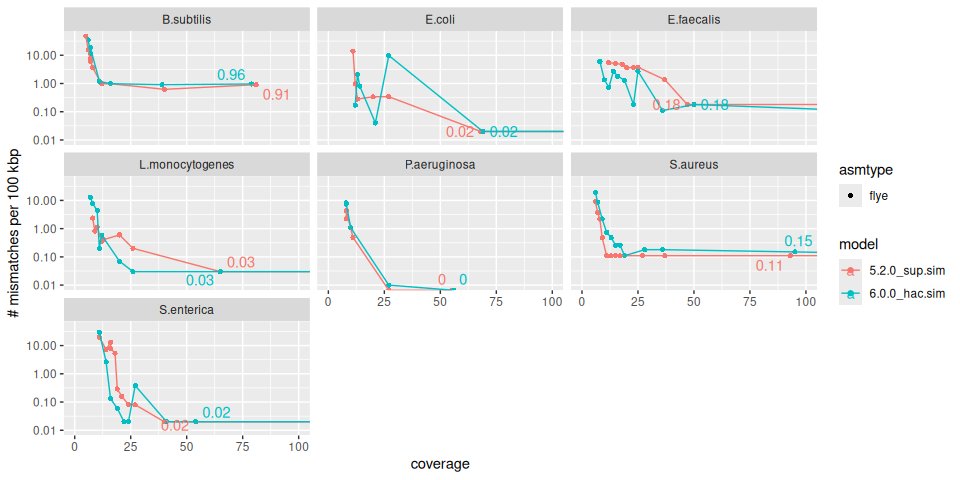
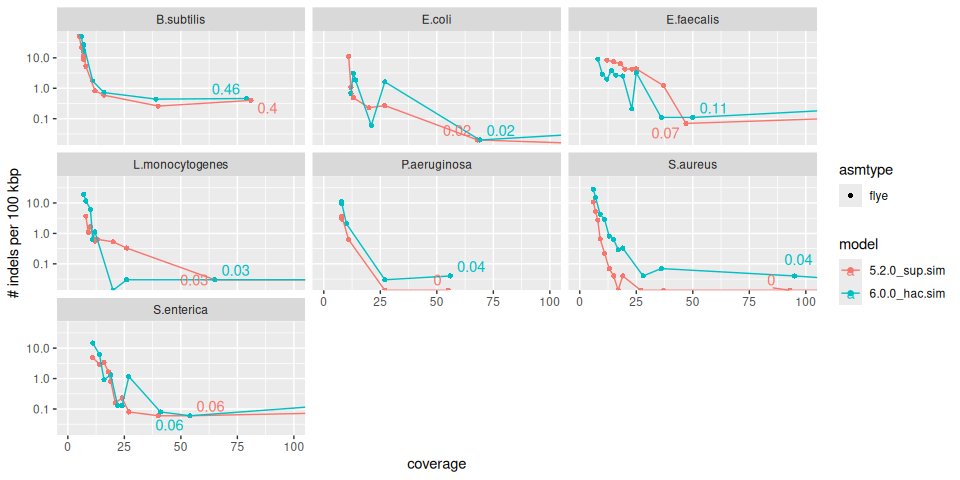
Is @nanopore hac v6 better than 5.2.0 sup? The short answer is no. But is a few errors in a genome worth 5 times more basecalling compute? github.com/Kirk3gaard/MicroB…
1
10
10
1,047

May 29
Unimeth enables simultaneous prediction of all targeted methylation sites w/in each patch and allows the attention mechanism to capture dependencies among neighboring sites. Unimeth uses a multi-phase training strategy. It learns signal features through a basecalling-like task.
3
127
May 29
Unimeth enables simultaneous prediction of all targeted methylation sites w/in each patch and allows the attention mechanism to capture dependencies among neighboring sites. Unimeth uses a multi-phase training strategy. It learns signal features through a basecalling-like task.
2
174

May 29
I built a relay agent remote gpu worker that makes it super easy to offload basecalling. If this is useful for community then happy to share
1
4
64

This move seems to go directly against the consumers, especially in labs where the sequencer doesnt run 24/7 (or where basecalling is done on a cluster).
3
166
The worst decision by @nanopore is to discontinue the P2 solo (to push the P2 integrated)! Currently we can use the external computer (with powerful GPU) for other applications (e.g. modelling) while not sequencing (i.e. basecalling). Now nanopore is taking this flexibility away.
1
3
191

May 26
$PACB $NVDA feature
NVDA: PacBio achieved significant speedups in basecalling, the first computational step that converts raw instrument output into usable sequence data for downstream analysis
developer.nvidia.com/blog/ru…
3
2,029

May 25
"To make this work, I had to navigate multiple disciplines: - writing software to monitor sequencing runs and orchestrate remote GPU infra for basecalling
- learning executing 5 hour long molecular biology protocols
- building a hardware device to quantify DNA concentration"
That´s a complete DNA-kitchen. You are now playing in God mode.
2
917
May 25
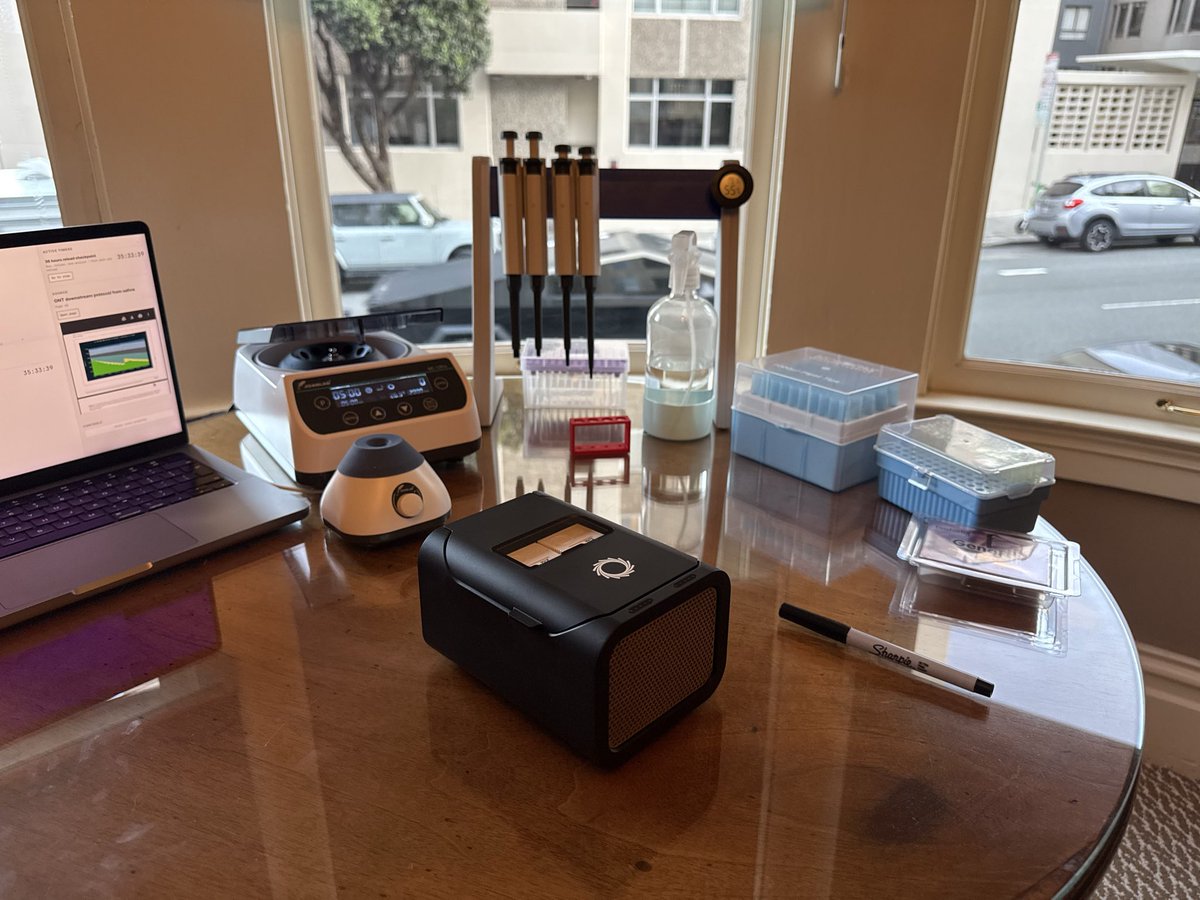
I just sequenced a human genome to 30× coverage entirely at home.
As far as I know, this is the first time this has been done.
I didn’t step foot in a lab once. Every step - from saliva collection, to running the sequencer - took place in a single room with a dining table kitchenette.
Six weeks ago, I had never done wet lab biology before.
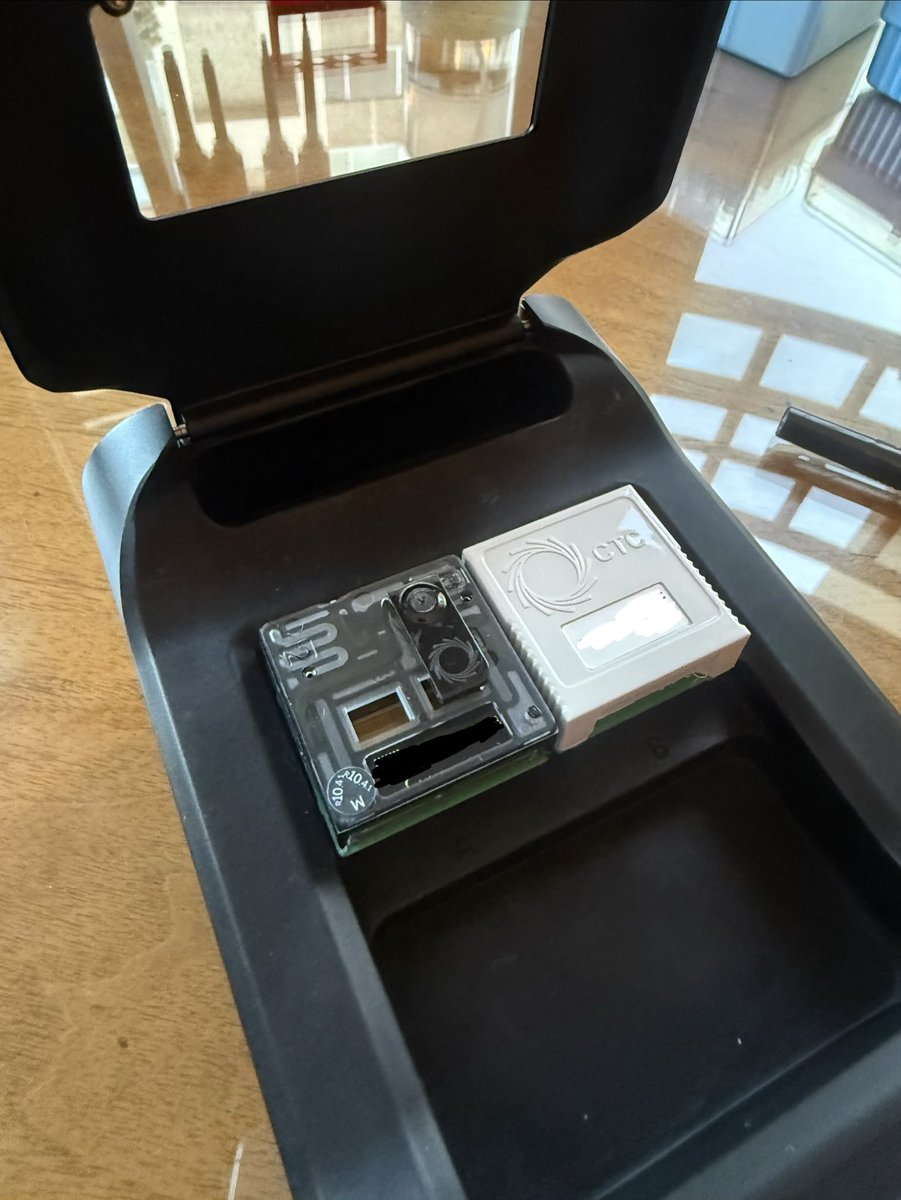
I used an Oxford Nanopore P2 Solo - the only commercially available sequencing device portable enough to do 30x human genome sequencing at home.
Biggest takeaway - I could build something that combined software, hardware, and molecular biology far faster than I thought was possible.
I can name >100 specific instances where AI helped me solve a technical problem that would previously have blocked me because I lacked access to a domain expert.
For example: how do I save my sequencing run when my DNA extraction yield is 4x lower than I need it to be, and I have this limited set of reagents to hand?
To make this work, I had to navigate multiple disciplines:
- writing software to monitor sequencing runs and orchestrate remote GPU infra for basecalling
- learning executing 5 hour long molecular biology protocols
- building a hardware device to quantify DNA concentration
Apologies for the hyperbole, but I feel super lucky to be living in 2026.
A few weeks ago I decided to sequence a human genome to 30x at home.
Then I actually did it. And I did it really quickly.
254
470
4,763
396,888

May 25
I've been deep into ONT basecalling model land as part of my recent archaea study, trying to see if it's worth it in the first place.
Here's read to phred map plot per hour of sequencing time- ONT SUP model on the left, and archaea tuned custom model on the right. Interesting!
4
2
13
1,992

NanoCortex: A Unified Agentic System for Nanopore Sequencing Analysis
ナノポアシーケンス解析を統合するGeminiベースのマルチエージェントシステム
Basecallingから生物学的解釈まで自律実行
github.com/wanunulab/NanoCor…
biorxiv.org/content/10.64898…
3
208


May 21
Too much work so i just got Claude to debunk all of you guys instead.
"every line below is pure math from the last 80 years. every line is in your pocket, your hospital, your car, your bank account, your phone screen, your MRI scan, your Netflix queue, or the satellite that beams down your GPS signal
🔐 CRYPTOGRAPHY
Public-key crypto (Diffie-Hellman 1976, RSA 1977) — modular arithmetic the difficulty of factoring large primes lets two strangers establish a shared secret over a public channel without ever meeting
→ every HTTPS connection on earth. the lock icon in your browser. all online banking. all e-commerce. without this, the internet as a commercial medium doesn’t exist.
Elliptic curve crypto (Koblitz/Miller 1985) — same trick as RSA but using points on elliptic curves over finite fields; equivalent security with 10x smaller keys
→ Bitcoin signatures. Signal messages. your iPhone’s secure enclave. TLS 1.3.
Zero-knowledge proofs (Goldwasser/Micali/Rackoff 1985) — prove you know a secret without revealing the secret itself
→ Zcash, Monero, every ZK rollup scaling Ethereum, private age verification. an entirely new privacy primitive.
Lattice-based cryptography (Regev’s LWE 2005) — hide secrets in the difficulty of finding short vectors in high-dimensional lattices; quantum computers can’t solve this
→ NIST standardized this in 2024 as THE post-quantum encryption standard. every bank and government on earth is migrating to it right now.
Homomorphic encryption (Gentry 2009) — compute on encrypted data without decrypting it
→ Apple’s Private Cloud Compute. servers can process your data while being literally unable to see it.
Differential privacy (Dwork 2006) — add precisely calibrated noise so individual records are provably unrecoverable from aggregate statistics
→ how Apple collects iPhone telemetry without seeing your data. how the US Census is now published.
📡 CODING THEORY (every wireless signal, every storage device)
Reed-Solomon codes (1960) — encode data as polynomial evaluations over finite fields; recover the polynomial even with corrupted samples
→ every QR code you’ve scanned. every CD/DVD. every satellite signal. error correction in your SSD. scratched CDs still play because of this.
Hamming codes (1950) — clever parity bit placement that detects AND corrects single-bit errors automatically
→ ECC RAM in every server. without this, cosmic rays would crash data centers daily.
Viterbi algorithm (1967) — dynamic programming for the most likely hidden state sequence
→ every cell phone signal ever decoded. speech recognition. DNA basecalling.
LDPC codes (Gallager 1962, revived 1990s) — sparse parity-check matrices that approach Shannon’s theoretical channel capacity
→ 5G. WiFi 6. Starlink. the reason your phone gets gigabit data.
🎨 SIGNAL PROCESSING & COMPRESSION
Fast Fourier Transform (Cooley-Tukey 1965) — computes the Fourier transform in N log N instead of N² operations
→ probably the most-used algorithm in human history. every cell signal, every radar, every MRI, every JPEG, every MP3.
Discrete Cosine Transform (1972) — decompose images/audio into cosine frequencies; discard the ones humans can’t perceive
→ JPEG, MPEG, MP3, MP4. every digital image, every streamed video, every song on Spotify.
Wavelets (Daubechies 1988) — multi-scale decomposition localized in both time AND frequency
→ JPEG 2000. FBI fingerprint compression. modern medical imaging.
Compressed sensing (Candès/Tao/Donoho 2004) — if a signal is sparse, reconstruct it from way fewer samples than Shannon-Nyquist requires, via convex optimization
→ MRI scans went from 45 minutes to 5. pediatric MRIs no longer require general anesthesia. pure math from 20 years ago, currently saving children from being put under.
1
2
113


Hello I’m looking for professionals with expertise in the following areas:
🔬 Wet Lab / Molecular Biology:
• DNA extraction
• Library preparation (ligation/PCR barcoding)
• Flow-cell priming and loading
• Running sequencing instruments
💻 Bioinformatics:
• Basecalling (Guppy/Dorado)
• Demultiplexing
• Variant calling and interpretation
• Report generation
If you have experience in any or all of these areas - whether as a lab technician, molecular biologist, or bioinformatics freelancer I'd love to connect!
2
2
16
1,012

Apr 19
Can I get you to add your DGX spark to the crowd sourced GPU benchmark for basecalling? The collection can give people and idea about how much basecalling they can do with many GPUs already 😁 github.com/Kirk3gaard/2025-C…
1
1
9
1,319

Apr 19
Minion mk1D with starter kit is ~5K USD BUT you need a good enough external compute for it to run the basecalling algorithm so your cost jumps to about 7.5k USD for a starter kit (recommended) and compute. IF you find an older Mk1B for cheaper different story.
4
316

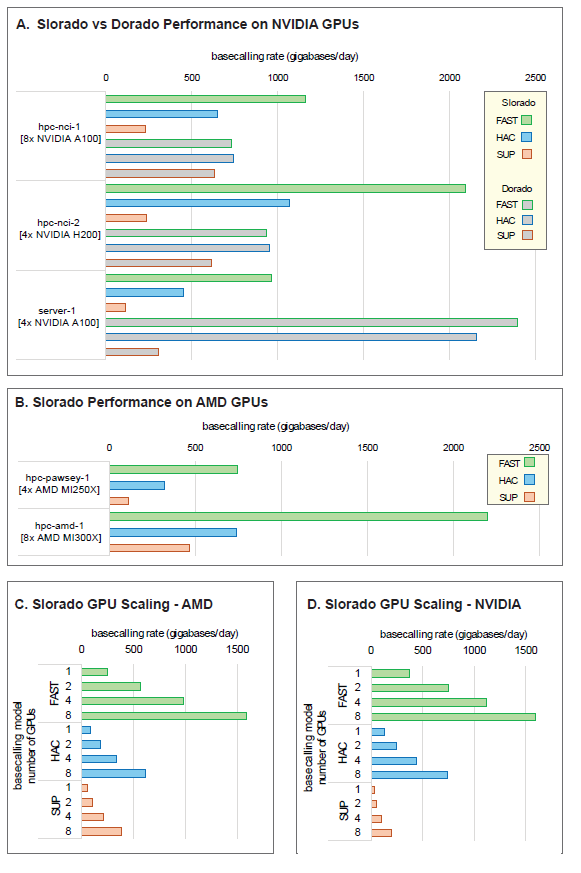
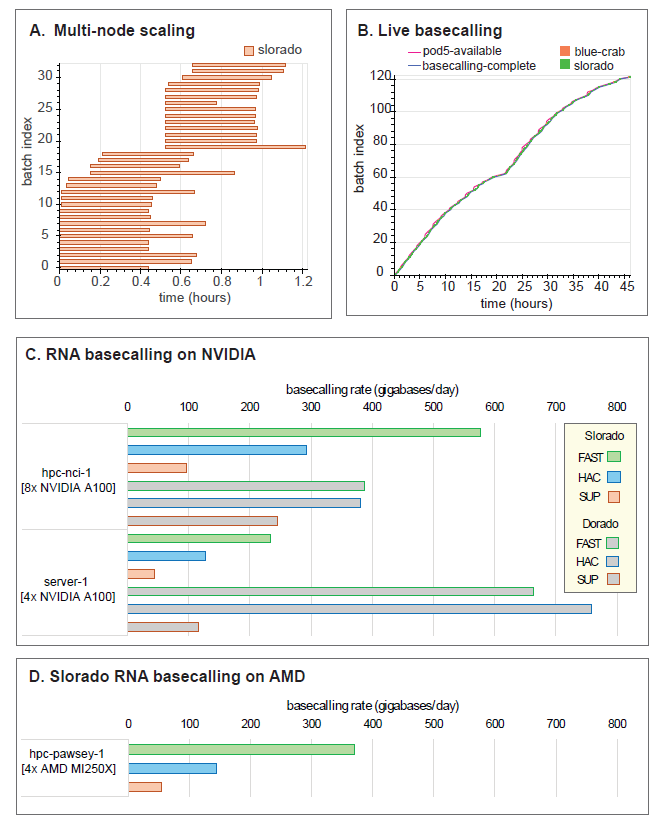
The pre-print for Slorado and openfish is out. biorxiv.org/content/10.64898…
You can do @nanopore basecalling with not just NVIDIA GPU, but also using a range of AMD GPU.
Would be useful since popular GPUs are now 💸💸💸💸(& hard to buy),
Work by @bonson_wong
1
11
28
2,040

Open-source, Hardware-Independent GPU Acceleration for Scalable Nanopore Basecalling with Slorado and Openfish biorxiv.org/content/10.64898… #biorxiv_bioinfo
2
9
978

Mar 15
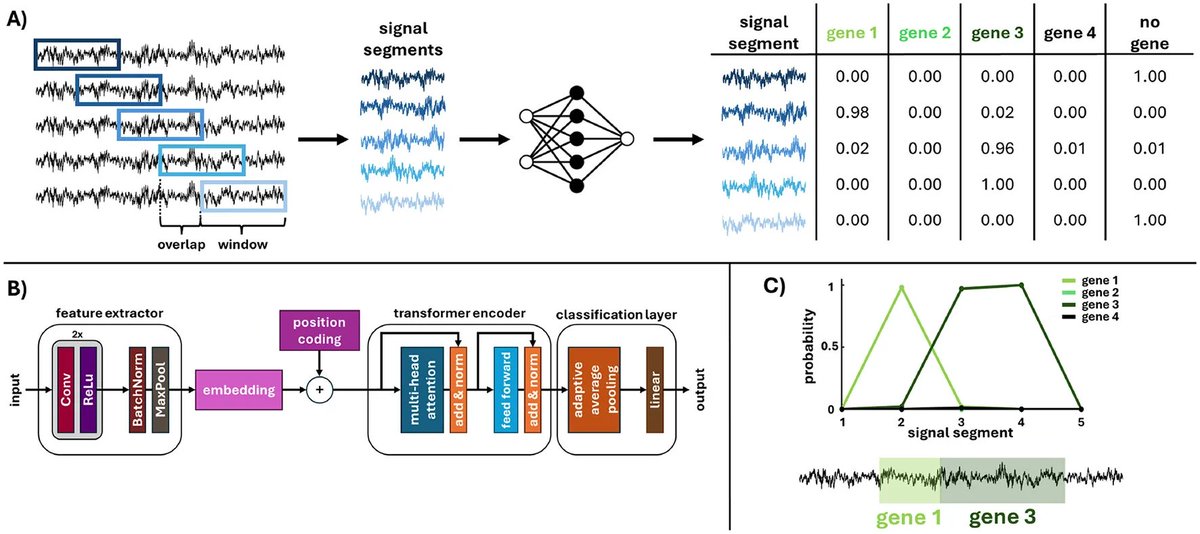
Basecalling-free resistance gene identification using a hybrid transformer in raw nanopore signals. #nanopore #ARG doi.org/10.3389/fmicb.2026.1…
2
10
601