
Apr 30
They are turning HUMANS into a serverless & event-driven decentralized apps (using microservices APIs) by connecting u to the block⛓️ via smart contracts (gas ontology) using EHRs & other physio/biological metadata!
BioThings API
biothings.io
Building a FAIR (pronounced FEAR) API Ecosystem for Biomedical Knowledge
“BioThings” to refer to objects of any biomedical entity-type represented in the biological knowledge space, such as genes, genetic variants, drugs, chemicals, diseases, etc.
The emotion FEAR = FAIR = Findability, Accessibility, Interoperability, & Reusability.go-fair.org
Fear can be measured as an electrical signal & that signal first needs to be found, then it can be accessed digitally. By using FAIR principles & FHIR resources build.fhir.org/overview-clin… the fear can become interoperable & reusable in biobanks/databases.
go-fair.org/fair-principles
BioThings Studio is a pre-configured environment used to build & administer BioThings API. At its core is the Hub, a backend service responsible for maintaining data up-to-date, producing data releases, & updating API frontends.
docs.biothings.io/en/latest/…
BioThings SDK provides a Python-based software development toolkit to build high-performance data APIs (or web services) from a single data source or multiple data sources. It has the particular focus on building data APIs for biomedical-related entities (HUMANS), a.k.a “BioThings”, though it’s not necessarily limited to the biomedical scope.
It can be roughly divided into 2 main components: data hub component & web component.
The hub component allows developers to automate the process of monitoring, parsing & uploading ur data source to an Elasticsearch elastic.co/elasticsearch backend.
From here, the web component, built on the high-concurrency Tornado Web Server,tornadoweb.org/en/stable/ allows u to easily setup a live high-performance API. The API endpoints expose simple-to-use yet powerful query features using Elasticsearch’s full-text query capabilities & query language.elastic.co/guide/en/elastics…
docs.biothings.io/en/latest/
The SmartAPI Project
The SmartAPI project aims to maximize the FAIRness of web-based APIs.
smart-api.info/
x-bte
explorer.biothings.io/
x-bte is an app that creates a federated knowledge graph that is composed of a network of biomedical web services. x-bte leverages semantically precise annotations of inputs & outputs for each resource, & automates the chaining of web service calls to execute multi-step graph queries.
academic.oup.com/bioinformat…
A Blockchain-Based Approach to Health Info Exchange Networks
healthit.gov/sites/default/f…
OpenFaaS: Serverless Functions Made Simple
openfaas.com/
CloudEvents: A Spec for Describing Event Data in a Common Way
cloudevents.io/
Knative: An Open-Source Enterprise-Level Solution to Build Serverless & Event Driven Apps
knative.dev/docs/
AI Mobile Edge Computing (processing data locally on ur device) then sending that biological metadata to the cloud where it can be configured using development containers. Then by sticking AI into the container w/ ur biological metadata the AI can be routed thru ur blood, bone, & tissue!!
ML-Based Orchestration of Containers
dl.acm.org/doi/full/10.1145/…
EDGE/CLOUD COMPUTING & NETWORKING/MIDDLEWARE NEEDED TO MAINTAIN THE PIPELINE
Convergence of Networking & Cloud/Edge Computing
researchgate.net/profile/Qia…
Network Load Balancing for Edge-Cloud Continuum Ecosystems
pavithran.net/wp-content/upl…
Virtualization in Cloud Computing: Moving from Hypervisor to Containerization
academia.edu/download/346159…
Edge Computing for Internet of Everything (IoE)
drive.google.com/file/d/1Kae…
PDMA: Probabilistic Service Migration Approach for Delay-Aware & Mobility-Aware Mobile Edge Computing
arxiv.org/pdf/2106.05584
BalenaOS—Run Docker Containers on Embedded IoT Devices
balena.io/os/
BalenaEngine: A Container Engine Purpose-Built for IoT Devices
balena.io/engine/
2
3
2
89

Apr 1
nano urea? NO.
biothings? NO.
Mar 31

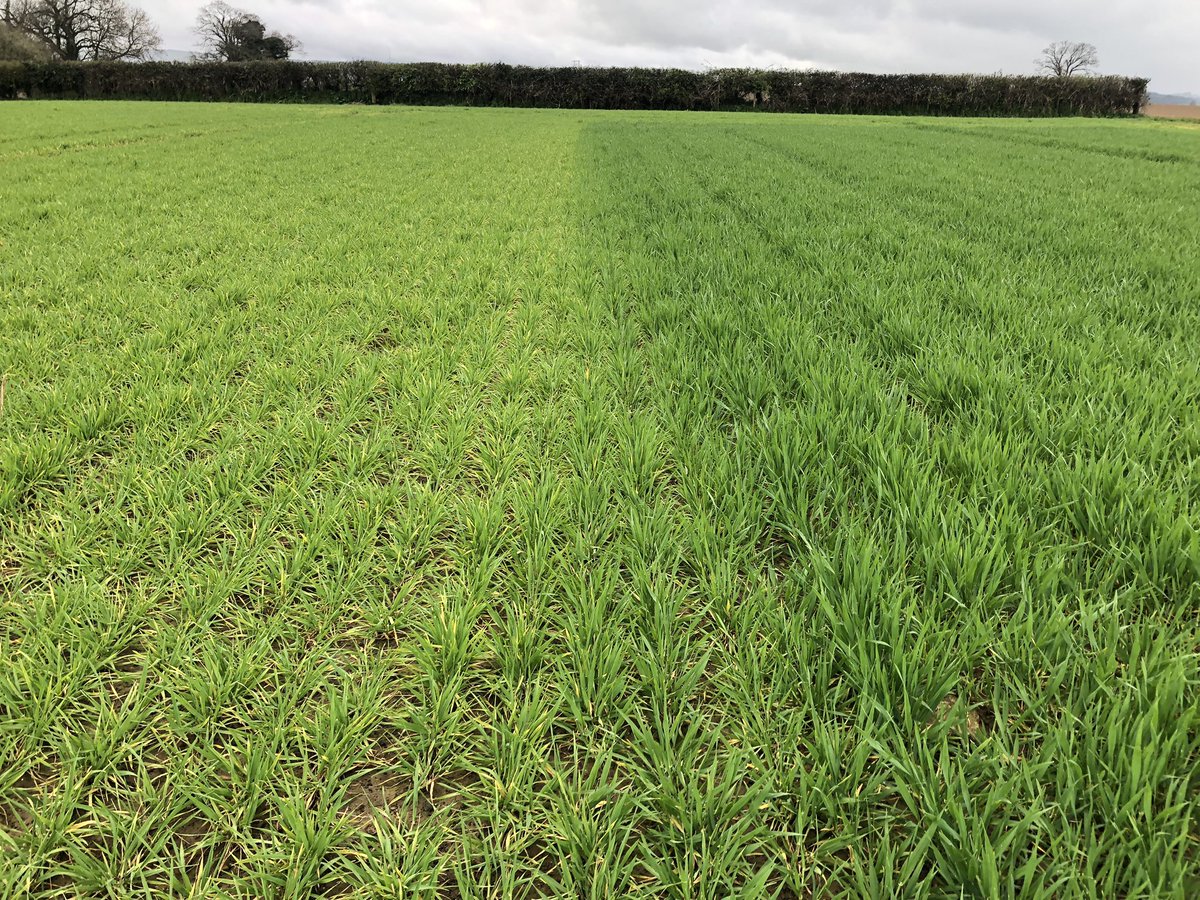
75kg/ha of N vs 125kg/ha of N on winter barley. Same P and K. A picture speaks a 1000 words
#agronomy
#fertilizer
#arableireland
9
659
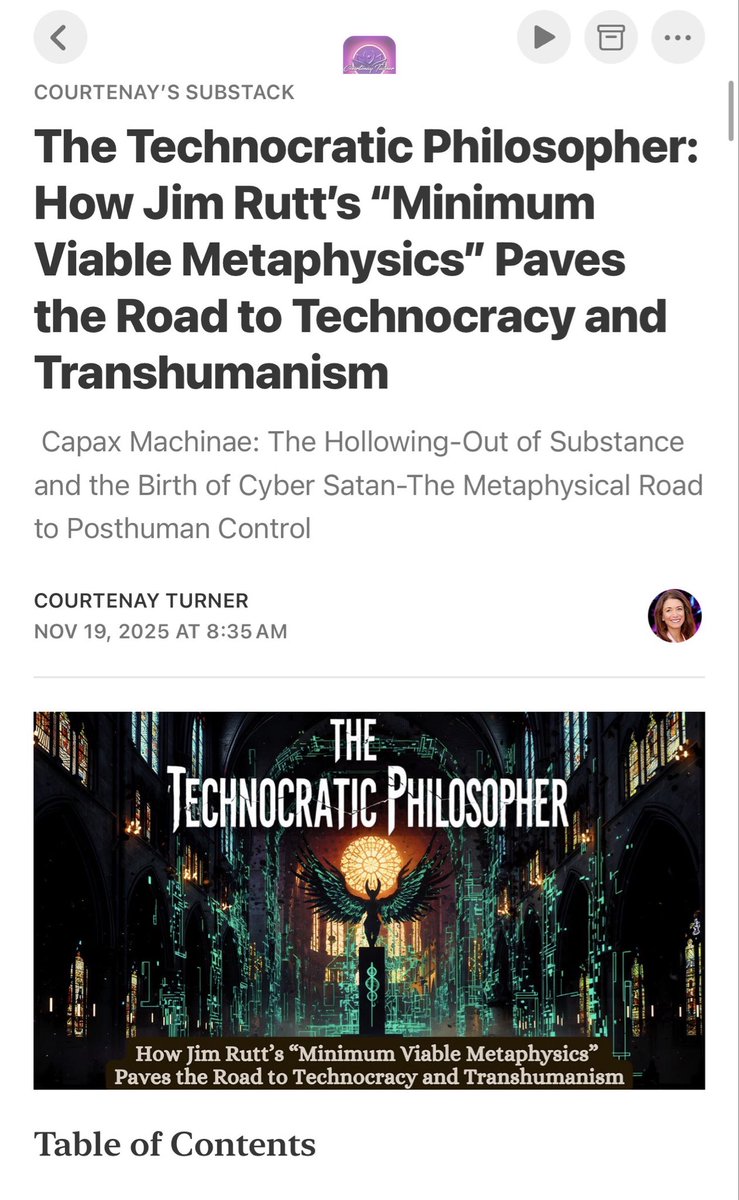
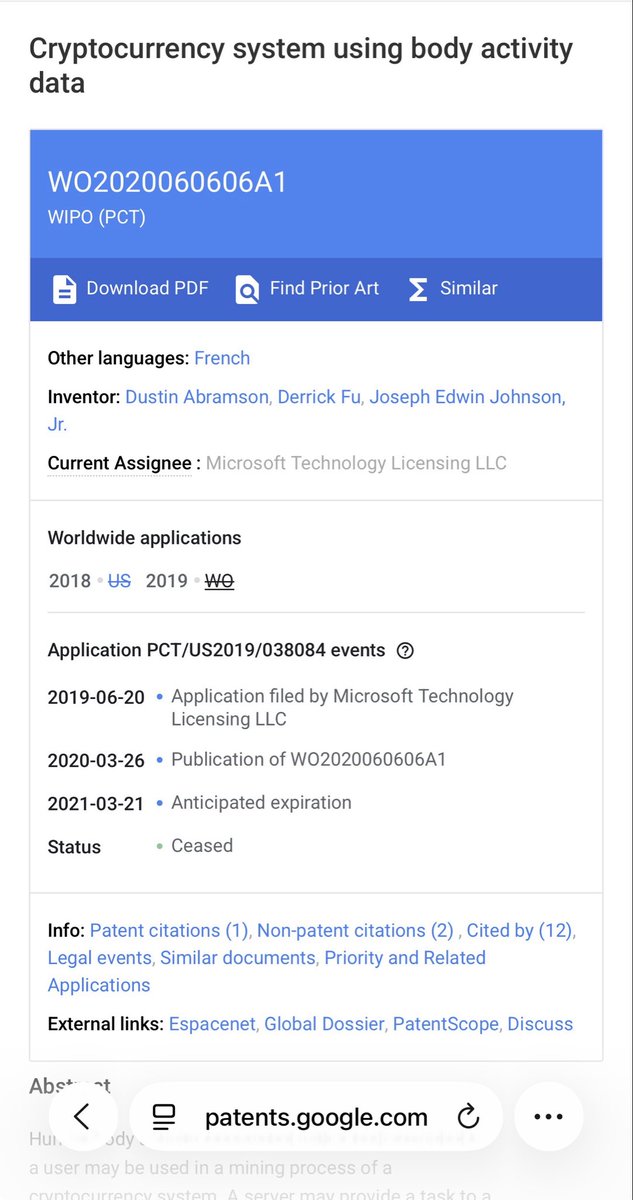
I’m not sure I could sum it up in one line or a short tweet but the main takeaway is that complexity science imo was created to advance the new financial system which will eventually be tied to the the cybernetic organism internet of everything where your body is a “SMART home” via the internet of nano-biothings. The body activity data cryptocurrency patent will become increasingly more relevant imo.

As I’ve been saying repeatedly! This is the epicenter of the issue and it’s precisely why the Sante Fe institute aka the father of complexity science is at the hub of the Epstein files! It’s also the hub of the developing Cryptocurrency system using body activity data! Idk if Epstein had any connection to the patent itself but I wouldn’t be at all surprised to learn if he did!
They have to negate teleological ontology (being) and replace it with “becoming” to achieve their biodigital convergence goals which build the technocracy and lead to their TESCREAL -transhuman leading to post human techno feudal cybernetic organism!
open.substack.com/pub/courte…
1
11
508

So this is very relevant to me: claude.com/resources/tutoria…
I applaud Claude / Anthropic on this.
However, the link "ClinicalTrials.gov MCP Server Documentation" doesn't link to the MCP info but to the search UI at the web site. CTG does have some really nice information their API at clinicaltrials.gov/data-api/…. Suspect many code agents could build a client from that, would be fun to try.
However, Anthropic is not making it easy to simply get that MCP server, you know, like listing it or actually linking to it.
It is easy to search for the MCP server, just do a simple web search or use your favorite MCP index.
Given some of the recent news with Anthropic, I wish they might be a bit more open and community centered. I have to think in the long run it would serve them better.
To help them out, here are a few I know that might be interesting and that can use with any tool, like @opencode .
Bio MCP References
* BioMCP biomcp.org/ (PubMed, ClinicalTrials.gov, and MyVariant.info and more)
* Cracking Shells github.com/CrackingShells
* BioThings github.com/longevity-genie/b… genes, genetic variants, drugs, and taxonomic information
* BioPortal MCP: github.com/ncbo/bioportal-mc…
* Biomni biomni.stanford.edu
* Gget: github.com/longevity-genie/g… genomics queries and analysis, a wrapper of `gget` library
* OpenGenes github.com/longevity-genie/o…
*SynerAge github.com/longevity-genie/s…
2
127
17 Nov 2025
How they turn humans into an application
Biothings
19 Jul 2025

A 🧵: Turning Humans into Applications (Apps)
BioThings Application Programming Interface (API)
Building a Findable, Accessible, Interoperable, Reusable (FAIR) API Ecosystem for Biomedical Knowledge.
Findable, Accessible, Interoperable, Reusable (FAIR) (fairdatapoint.org/) is pronounced FEAR. Like the emotion. Semantics. 📝
biothings.io/
Just like when they bring the 🔥 w/ Health Level 7 (HL7) Fast Healthcare Interoperable Resources (FHIR).
HL7 FHIR
fhir.org/
HL7 Foundry
foundry.hl7.org/
Health Level 7 (HL7) Fast Healthcare Interoperable Resources (FHIR) is pronounced FIRE!!!!! 🔥 🔥🔥
The FHIR 🔥 adheres to the FAIR (FEAR PRINCIPLES) Principles!!
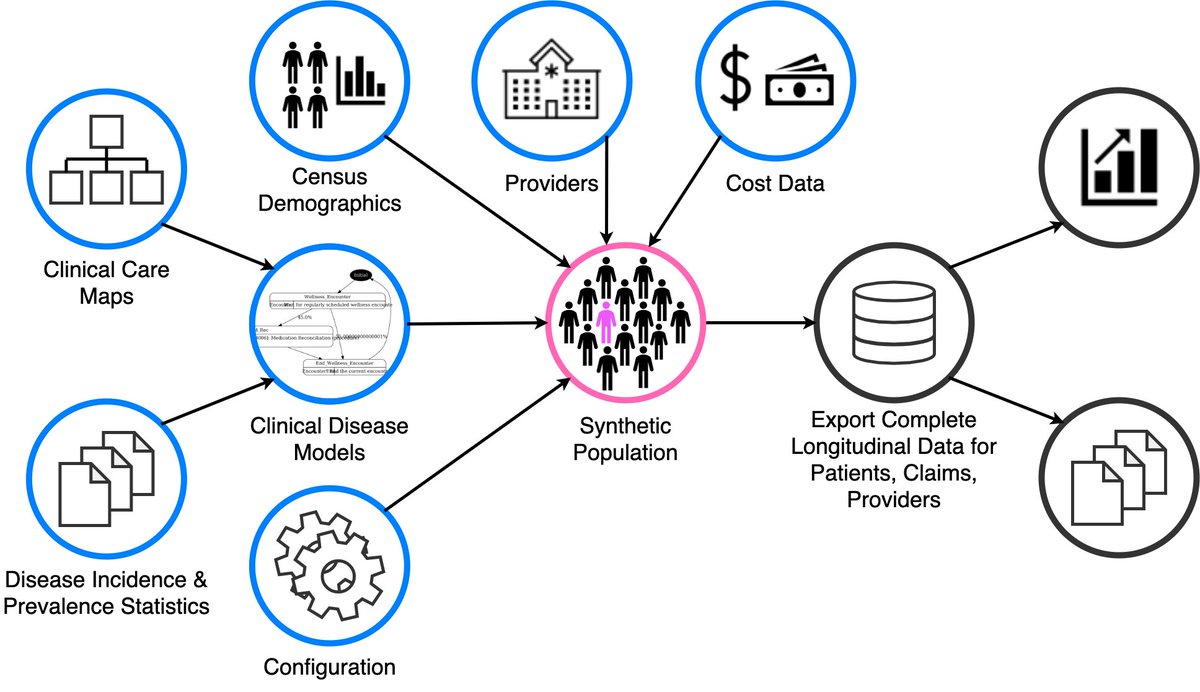
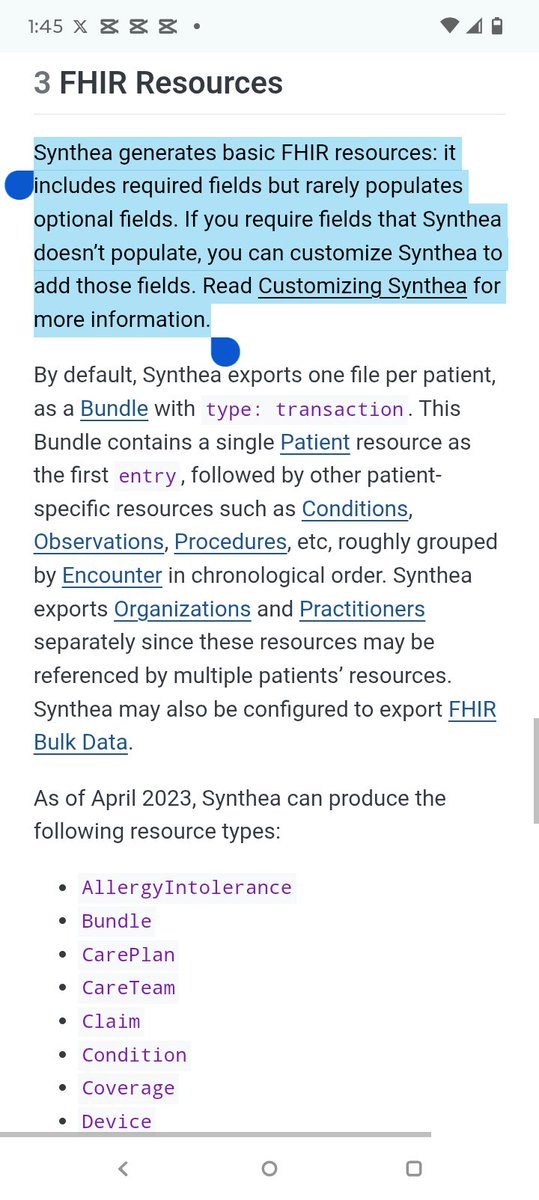
They are bringing the FEAR (bio/physiological signals) thru enrolling people into clinical trials using their medical electronic health records (EHRs) & by GENERATING synthetic EHRs which then are displayed to the world as pandemics. (PLANdemics)
clinicaltrials.gov/data-api/…
cdisc.org/kb/articles/use-fh…
⚠️ Why the FUCK does synthetic (GENERATED!!) Electronic Health Records (EHRs) have an Application Programming Interface (API) to an International Standardization dealing w/ the exchange of Medical Electronic Health Records i.e. Health Level 7 (HL7) Fast Healthcare Interoperable Resources (FHIR)? ⚠️
They are raining hellfire🔥 🔥🔥upon the masses w/ the FEAR Principles!!
cloud.google.com/healthcare-…
synthea.mitre.org/fhir-api
mitre.github.io/fhir-for-res…
genrocket.com/newsletter/syn…
healthit.gov/data/data-brief…
govciomedia.com/hl7s-fhir-fo…
sciencedirect.com/science/ar…
arxiv.org/html/2506.13800v1
BioThings Application Programming Interface (API) Framework
Making high-performance Application Programming Interface (API) for biological annotation data.
github.com/biothings/biothin…
BioThings Application Programming Interface (API) Specifications
BioThings Application Programming Interfaces (APIs) are APIs designed 4 BIOLOGICAL ENTITIES!!
Here are the guidelines to follow when building a new BioThings API.
Why do you think they use that verbiage “ENTITIES” ?
biothings.io/biothings-specs
BioThings Software Development Kit (SDK)
BioThings SDK: A toolkit for building high-performance data APIs in biomedical research
A generalizable & reusable toolkit 4 integrating data from multiple disparate data sources & creating high-performance APIs. This toolkit allows users to easily create their own BioThings APIs 4 any data type of interest to them, as well as keep APIs up-to-date w/ their underlying data sources.
pmc.ncbi.nlm.nih.gov/article…
BioThings SDK is built in Python & released via PyPI
pypi.org/project/biothings/
BioThings SDK docs
docs.biothings.io/en/latest/
MyGene.info
Gene Annotation as a Service.
mygene.info/
MyGene.info
A BioThings API for gene annotations
MyGene.info provides simple-to-use REST web services to query/retrieve gene annotation data.
github.com/SuLab/mygene.info
MyGene.info docs
A typical use case is to use it to power a web application which requires querying genes & obtaining common gene annotations. 4 example, MyGene.info services are used to power BioGPS.
docs.mygene.info/en/latest/i…
MyGeneset.info docs
MyGeneset.info provides simple-to-use REST web services to query, retrieve, & store annotation data for collections of genes.
Access curated genesets from public databases, including: GO, KEGG, MSigDB, Disease Ontology/OMIM, Wikipathways, & Reactome.
Filter genesets to an organism of interest.
Retrieve gene collections w/ an identifier of choice.
docs.mygeneset.info/en/lates…
Scripps Institute | BioGPS
biogps.org/mobile/
scripps.edu/
BioGPS
The Gene Portal Hub
A free extensible & customizable gene annotation portal, a complete resource for learning about gene & protein function.
biogps.org/?full#goto=welcom…
BioGPS Plugin Library
Plugins are the backbone of BioGPS & can be combined into custom Layouts 4 viewing many at once.
biogps.org/plugin/

1
3
105

4 Oct 2025
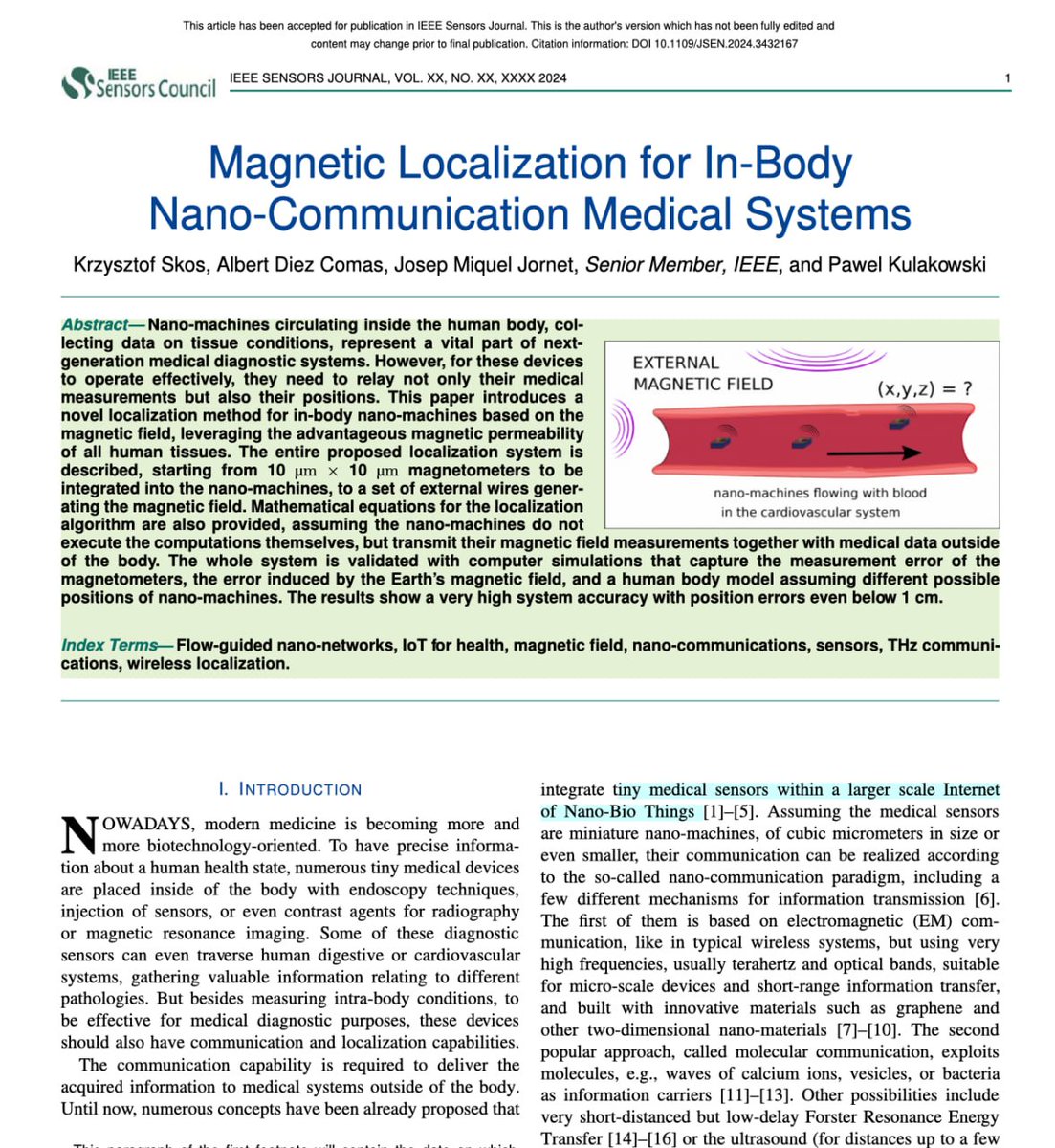
'Medical Sensors within a larger scale Internet of Nano-BioThings' - Jornet et al.
@IcicLaw
@SecKennedy
@realDonaldTrump
I think @CourtenayTurner @ChildrensHD have got some explaining to do
#NurembergCode
researchgate.net/publication…
3
10
11
547
5 Aug 2025
I posted a 🧵 on the BioThings API for biological entities. You should check it out.
19 Jul 2025
A 🧵: Turning Humans into Applications (Apps)
BioThings Application Programming Interface (API)
Building a Findable, Accessible, Interoperable, Reusable (FAIR) API Ecosystem for Biomedical Knowledge.
Findable, Accessible, Interoperable, Reusable (FAIR) (fairdatapoint.org/) is pronounced FEAR. Like the emotion. Semantics. 📝
biothings.io/
Just like when they bring the 🔥 w/ Health Level 7 (HL7) Fast Healthcare Interoperable Resources (FHIR).
HL7 FHIR
fhir.org/
HL7 Foundry
foundry.hl7.org/
Health Level 7 (HL7) Fast Healthcare Interoperable Resources (FHIR) is pronounced FIRE!!!!! 🔥 🔥🔥
The FHIR 🔥 adheres to the FAIR (FEAR PRINCIPLES) Principles!!
They are bringing the FEAR (bio/physiological signals) thru enrolling people into clinical trials using their medical electronic health records (EHRs) & by GENERATING synthetic EHRs which then are displayed to the world as pandemics. (PLANdemics)
clinicaltrials.gov/data-api/…
cdisc.org/kb/articles/use-fh…
⚠️ Why the FUCK does synthetic (GENERATED!!) Electronic Health Records (EHRs) have an Application Programming Interface (API) to an International Standardization dealing w/ the exchange of Medical Electronic Health Records i.e. Health Level 7 (HL7) Fast Healthcare Interoperable Resources (FHIR)? ⚠️
They are raining hellfire🔥 🔥🔥upon the masses w/ the FEAR Principles!!
cloud.google.com/healthcare-…
synthea.mitre.org/fhir-api
mitre.github.io/fhir-for-res…
genrocket.com/newsletter/syn…
healthit.gov/data/data-brief…
govciomedia.com/hl7s-fhir-fo…
sciencedirect.com/science/ar…
arxiv.org/html/2506.13800v1
BioThings Application Programming Interface (API) Framework
Making high-performance Application Programming Interface (API) for biological annotation data.
github.com/biothings/biothin…
BioThings Application Programming Interface (API) Specifications
BioThings Application Programming Interfaces (APIs) are APIs designed 4 BIOLOGICAL ENTITIES!!
Here are the guidelines to follow when building a new BioThings API.
Why do you think they use that verbiage “ENTITIES” ?
biothings.io/biothings-specs
BioThings Software Development Kit (SDK)
BioThings SDK: A toolkit for building high-performance data APIs in biomedical research
A generalizable & reusable toolkit 4 integrating data from multiple disparate data sources & creating high-performance APIs. This toolkit allows users to easily create their own BioThings APIs 4 any data type of interest to them, as well as keep APIs up-to-date w/ their underlying data sources.
pmc.ncbi.nlm.nih.gov/article…
BioThings SDK is built in Python & released via PyPI
pypi.org/project/biothings/
BioThings SDK docs
docs.biothings.io/en/latest/
MyGene.info
Gene Annotation as a Service.
mygene.info/
MyGene.info
A BioThings API for gene annotations
MyGene.info provides simple-to-use REST web services to query/retrieve gene annotation data.
github.com/SuLab/mygene.info
MyGene.info docs
A typical use case is to use it to power a web application which requires querying genes & obtaining common gene annotations. 4 example, MyGene.info services are used to power BioGPS.
docs.mygene.info/en/latest/i…
MyGeneset.info docs
MyGeneset.info provides simple-to-use REST web services to query, retrieve, & store annotation data for collections of genes.
Access curated genesets from public databases, including: GO, KEGG, MSigDB, Disease Ontology/OMIM, Wikipathways, & Reactome.
Filter genesets to an organism of interest.
Retrieve gene collections w/ an identifier of choice.
docs.mygeneset.info/en/lates…
Scripps Institute | BioGPS
biogps.org/mobile/
scripps.edu/
BioGPS
The Gene Portal Hub
A free extensible & customizable gene annotation portal, a complete resource for learning about gene & protein function.
biogps.org/?full#goto=welcom…
BioGPS Plugin Library
Plugins are the backbone of BioGPS & can be combined into custom Layouts 4 viewing many at once.
biogps.org/plugin/
1
1
85
30 Jul 2025
Biomedical Data Translator (“Translator”) Consortium
The Translator program aims to develop a comprehensive, relational, N-dimensional infrastructure designed to integrate disparate data sources—including objective signs and symptoms of disease, drug effects, chemical and genetic interactions, cell and organ pathology, and other relevant biological entities and relations—and reason (INFERENCE) over the INTEGRATED data to rapidly derive biomedical insights. The ultimate goal of Translator is to AUGMENT HUMAN REASONING and thereby accelerate translational science and knowledge discovery.
To achieve its ambitious goal, the Translator project assembled a diverse interdisciplinary team and a variety of biomedical data sources, including electronic health record data, clinical trial data, genomic and other -omics data, chemical reaction data, and drug data. There are hundreds of data sources in the Translator ecosystem, each of which had its own data representation and were in formats that were not compatible or interoperable.
In order to interoperate between knowledge sources and reason across Knowledge Graphs (KGs), Biolink Model was adopted as the common dialect, thus enabling queries over the entire Translator Knowledge Graphs (KG) ecosystem. The result was a federated, harmonized ecosystem that supports advanced reasoning and inference to derive biomedical insights based on user queries.
ascpt.onlinelibrary.wiley.co…
Progress toward a universal biomedical data translator
ascpt.onlinelibrary.wiley.co…
Biolink Model: A universal schema for knowledge graphs in clinical, biomedical, and translational science
Biolink Model is a data model for organizing data in biomedical KGs. The model serves both as a map for bringing together data from different sources under one unified model, and as a bridge between ontological domains. Using the framework provided by the Linked data Modeling Language (LinkML), Biolink Model is distributed in a variety of formats, including YAML, JSON-Schema, SQL-DDL, Python/Java classes, and RDF. Additionally, Unified Modeling Language diagrams provide a visual representation of the model.
ascpt.onlinelibrary.wiley.co…
BioThings Explorer (BTE)
A query engine for a federated knowledge graph of biomedical APIs.
BioThings Explorer is an application that creates a federated knowledge graph that is composed of a network of biomedical web services. BioThings Explorer leverages semantically precise annotations of inputs and outputs for each resource, and automates the chaining of web service calls to execute multi-step graph queries. Because there is no large, centralized knowledge graph to maintain, BioThing Explorer is distributed as a lightweight application that dynamically retrieves information at query time.
explorer.biothings.io/
Deconstructing the Translational Tower of Babel
ascpt.onlinelibrary.wiley.co…
3
6
219
23 Jul 2025
We are applications the API is an interface to edit and re-write.
BioThings Application Programming Interface (API)
Building a Findable, Accessible, Interoperable, Reusable (FAIR) API Ecosystem for Biomedical Knowledge.
Findable, Accessible, Interoperable, Reusable (FAIR) (fairdatapoint.org) is pronounced FEAR. Like the emotion. Semantics. 📝
biothings.io
BioThings Application Programming Interface (API) Specifications
BioThings Application Programming Interfaces (APIs) are APIs designed 4 BIOLOGICAL ENTITIES!!
Here are the guidelines to follow when building a new BioThings API.
Why do you think they use that verbiage “ENTITIES” ?
biothings.io/biothings-specs
2
6
132
19 Jul 2025
A 🧵: Turning Humans into Applications (Apps)
BioThings Application Programming Interface (API)
Building a Findable, Accessible, Interoperable, Reusable (FAIR) API Ecosystem for Biomedical Knowledge.
Findable, Accessible, Interoperable, Reusable (FAIR) (fairdatapoint.org/) is pronounced FEAR. Like the emotion. Semantics. 📝
biothings.io/
Just like when they bring the 🔥 w/ Health Level 7 (HL7) Fast Healthcare Interoperable Resources (FHIR).
HL7 FHIR
fhir.org/
HL7 Foundry
foundry.hl7.org/
Health Level 7 (HL7) Fast Healthcare Interoperable Resources (FHIR) is pronounced FIRE!!!!! 🔥 🔥🔥
The FHIR 🔥 adheres to the FAIR (FEAR PRINCIPLES) Principles!!
They are bringing the FEAR (bio/physiological signals) thru enrolling people into clinical trials using their medical electronic health records (EHRs) & by GENERATING synthetic EHRs which then are displayed to the world as pandemics. (PLANdemics)
clinicaltrials.gov/data-api/…
cdisc.org/kb/articles/use-fh…
⚠️ Why the FUCK does synthetic (GENERATED!!) Electronic Health Records (EHRs) have an Application Programming Interface (API) to an International Standardization dealing w/ the exchange of Medical Electronic Health Records i.e. Health Level 7 (HL7) Fast Healthcare Interoperable Resources (FHIR)? ⚠️
They are raining hellfire🔥 🔥🔥upon the masses w/ the FEAR Principles!!
cloud.google.com/healthcare-…
synthea.mitre.org/fhir-api
mitre.github.io/fhir-for-res…
genrocket.com/newsletter/syn…
healthit.gov/data/data-brief…
govciomedia.com/hl7s-fhir-fo…
sciencedirect.com/science/ar…
arxiv.org/html/2506.13800v1
BioThings Application Programming Interface (API) Framework
Making high-performance Application Programming Interface (API) for biological annotation data.
github.com/biothings/biothin…
BioThings Application Programming Interface (API) Specifications
BioThings Application Programming Interfaces (APIs) are APIs designed 4 BIOLOGICAL ENTITIES!!
Here are the guidelines to follow when building a new BioThings API.
Why do you think they use that verbiage “ENTITIES” ?
biothings.io/biothings-specs
BioThings Software Development Kit (SDK)
BioThings SDK: A toolkit for building high-performance data APIs in biomedical research
A generalizable & reusable toolkit 4 integrating data from multiple disparate data sources & creating high-performance APIs. This toolkit allows users to easily create their own BioThings APIs 4 any data type of interest to them, as well as keep APIs up-to-date w/ their underlying data sources.
pmc.ncbi.nlm.nih.gov/article…
BioThings SDK is built in Python & released via PyPI
pypi.org/project/biothings/
BioThings SDK docs
docs.biothings.io/en/latest/
MyGene.info
Gene Annotation as a Service.
mygene.info/
MyGene.info
A BioThings API for gene annotations
MyGene.info provides simple-to-use REST web services to query/retrieve gene annotation data.
github.com/SuLab/mygene.info
MyGene.info docs
A typical use case is to use it to power a web application which requires querying genes & obtaining common gene annotations. 4 example, MyGene.info services are used to power BioGPS.
docs.mygene.info/en/latest/i…
MyGeneset.info docs
MyGeneset.info provides simple-to-use REST web services to query, retrieve, & store annotation data for collections of genes.
Access curated genesets from public databases, including: GO, KEGG, MSigDB, Disease Ontology/OMIM, Wikipathways, & Reactome.
Filter genesets to an organism of interest.
Retrieve gene collections w/ an identifier of choice.
docs.mygeneset.info/en/lates…
Scripps Institute | BioGPS
biogps.org/mobile/
scripps.edu/
BioGPS
The Gene Portal Hub
A free extensible & customizable gene annotation portal, a complete resource for learning about gene & protein function.
biogps.org/?full#goto=welcom…
BioGPS Plugin Library
Plugins are the backbone of BioGPS & can be combined into custom Layouts 4 viewing many at once.
biogps.org/plugin/
4
77
86
10,304
19 Jul 2025
Process of writing a new SmartAPI yaml with x-bte annotation
The assumption is that we want to add another Translator Knowledge-Provider (KP) API to BTE by registering a new SmartAPI yaml. A "Translator KP" means that the API provides associations between biomedical concepts: an endpoint in the API can be queried with >=1 identifiers (IDs, for specific biomedical concepts), which will retrieve other biomedical concepts (with IDs) that it is associated with.
BioThings Explorer (BTE) will use the KP APIs to retrieve associations that match a TRAPI QueryGraph (QGraph) edge, in a process we call sub-querying. Each combination of subject-category, subject-ID-namespace, predicate, object-category, and object-ID-namespace is described in a separate operation. Each operation will include the information to query the API with the subject and retrieve the object and related information on the relationship.
github.com/biothings/biothin…
Biolink Model: A universal schema for knowledge graphs in clinical, biomedical, and translational science
Biolink Model is a data model for organizing data in biomedical KGs. The model serves both as a map for bringing together data from different sources under one unified model, and as a bridge between ontological domains. Using the framework provided by the Linked data Modeling Language (LinkML), Biolink Model is distributed in a variety of formats, including YAML, JSON-Schema, SQL-DDL, Python/Java classes, and RDF. Additionally, Unified Modeling Language diagrams provide a visual representation of the model.
ascpt.onlinelibrary.wiley.co…
Biomedical Data Translator (“Translator”) Consortium
The Translator program aims to develop a comprehensive, relational, N-dimensional infrastructure designed to integrate disparate data sources—including objective signs and symptoms of disease, drug effects, chemical and genetic interactions, cell and organ pathology, and other relevant biological entities and relations—and reason over the integrated data to rapidly derive biomedical insights. The ultimate goal of Translator is to AUGMENT HUMAN REASONING and thereby accelerate translational science and knowledge discovery.
To achieve its ambitious goal, the Translator project assembled a diverse interdisciplinary team and a variety of biomedical data sources, including electronic health record data, clinical trial data, genomic and other -omics data, chemical reaction data, and drug data. There are hundreds of data sources in the Translator ecosystem, each of which had its own data representation and were in formats that were not compatible or interoperable.
In order to interoperate between knowledge sources and reason across Knowledge Graphs (KGs), Biolink Model was adopted as the common dialect, thus enabling queries over the entire Translator Knowledge Graphs (KG) ecosystem. The result was a federated, harmonized ecosystem that supports advanced reasoning and inference to derive biomedical insights based on user queries.
ascpt.onlinelibrary.wiley.co…
Progress toward a universal biomedical data translator
ascpt.onlinelibrary.wiley.co…
Deconstructing the Translational Tower of Babel
ascpt.onlinelibrary.wiley.co…
2
3
316
19 Jul 2025
MyDisease.info
Disease Annotation As A Service
MyDisease.info provides simple-to-use REST web services to query/retrieve disease annotation data. MyDisease.info provides two simple web services: one for querying disease objects and the other for disease annotation retrieval by common IDs (e.g. mondo, doid, etc.). Both return results in JSON format.
mydisease.info/
My disease.info docs
The Mondo Disease Ontology (Mondo) (mondo.monarchinitiative.org/) aims to harmonize disease definitions across the world. The name Mondo comes from the Latin word ‘mundus’ and means ‘for the world.’
docs.mydisease.info/en/lates…
BioThings Studio
Built on top of BioThings SDK, BioThings Studio is a pre-configured, ready-to-use development environment including everything you need to build and manage your own BioThings API from an intuitive web interface.
At its core is the Hub, a backend service responsible for maintaining data up-to-date, producing data releases, and updating API frontends.
docs.biothings.io/en/latest/…
BioThings Studio Developer’s guide
The architecture and different software involved in this system can be quite intimidating. To help, the whole service is packaged as a pre-configured application, BioThings Studio.
docs.biothings.io/en/latest/…
BioThings Explorer (BTE)
A query engine for a federated knowledge graph of biomedical APIs.
BioThings Explorer is an application that creates a federated knowledge graph that is composed of a network of biomedical web services. BioThings Explorer leverages semantically precise annotations of inputs and outputs for each resource, and automates the chaining of web service calls to execute multi-step graph queries. Because there is no large, centralized knowledge graph to maintain, BioThing Explorer is distributed as a lightweight application that dynamically retrieves information at query time.
explorer.biothings.io/
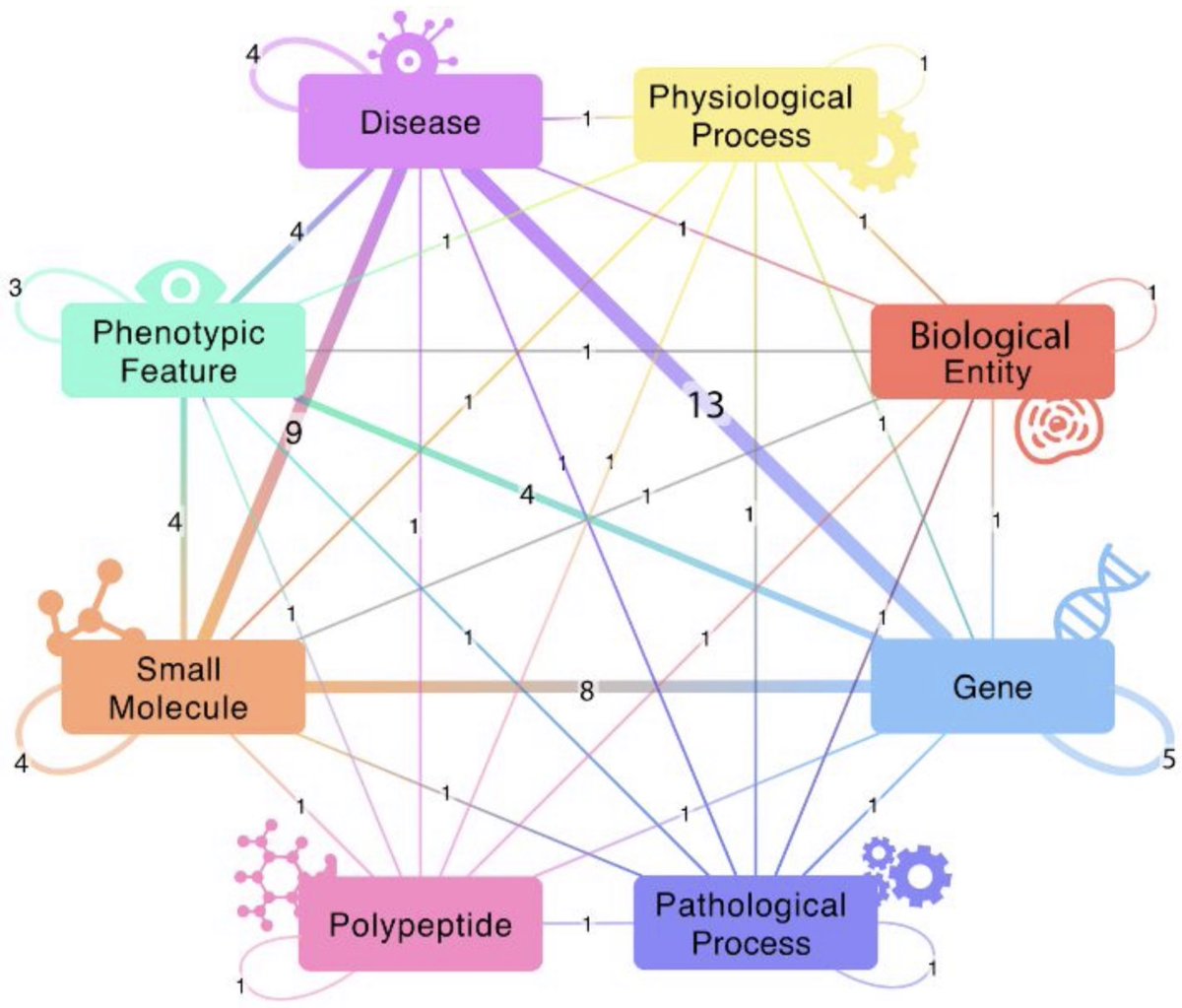
BTE's Meta-Knowledge Graph
A visualization of the meta-knowledge graph for BioThings Explorer. The nodes in this graph are the semantic types that BioThings Explorer can query on (limited to the top 10 most common semantic types). The edges between nodes represent mappings between node types that are provided by the APIs accessed by BioThings Explorer. The edge width reflects the number of APIs for each meta-edge, which is also shown as the edge label.
explorer.biothings.io/about
BioThings Explorer: a query engine for a federated knowledge graph of biomedical APIs
academic.oup.com/bioinformat…
TRAPI service for BioThings Explorer (BTE)
TRAPI stands for Translator Reasoner API. (github.com/NCATSTranslator/R…) It is a standard defined for APIs developed within NCATS Biomedical Translator project (ncats.nih.gov/translator) to facilitate information exchange between resources. BTE exports results via TRAPI to maintain interoperability with other Translator tools. BTE can also consume knowledge resources that expose the TRAPI interface, but it also can consume APIs that have been annotated in the SmartAPI registry (smart-api.info/) using the x-bte extension to the OpenAPI specification. (x-bte-extension.readthedocs.…)
github.com/biothings/biothin…
1
3
150
19 Jul 2025
Humans as Applications
BioThings API
Building a FAIR API Ecosystem for Biomedical Knowledge.
biothings.io/
BioThings API framework - Making high-performance API for biological annotation data
github.com/biothings/biothin…
BioThings API Specifications
BioThings APIs are APIs designed for biological entities. Here are the guidelines to follow when building a new BioThings API.
biothings.io/biothings-specs
BioThings Software Development Kit (SDK)
BioThings SDK: a toolkit for building high-performance data APIs in biomedical research
A generalizable and reusable toolkit for integrating data from multiple disparate data sources and creating high-performance APIs. This toolkit allows users to easily create their own BioThings APIs for any data type of interest to them, as well as keep APIs up-to-date with their underlying data sources.
pmc.ncbi.nlm.nih.gov/article…
BioThings SDK is built in Python and released via PyPI
pypi.org/project/biothings/
BioThings SDK docs
docs.biothings.io/en/latest/
MyGene.info
Gene Annotation as a Service.
mygene.info/
MyGene.info: A BioThings API for gene annotations
MyGene.info provides simple-to-use REST web services to query/retrieve gene annotation data.
github.com/SuLab/mygene.info
MyGene.info docs
A typical use case is to use it to power a web application which requires querying genes and obtaining common gene annotations. For example, MyGene.info services are used to power BioGPS.
docs.mygene.info/en/latest/i…
MyGeneset.info docs
MyGeneset.info provides simple-to-use REST web services to query, retrieve, and store annotation data for collections of genes.
Access curated genesets from public databases, including: GO, KEGG, MSigDB, Disease Ontology/OMIM, Wikipathways, and Reactome.
Filter genesets to an organism of interest.
Retrieve gene collections with an identifier of choice.
docs.mygeneset.info/en/lates…
The Scripps Institute | BioGPS
biogps.org/mobile/
scripps.edu/
BioGPS
The Gene Portal Hub
A free extensible and customizable gene annotation portal, a complete resource for learning about gene and protein function.
biogps.org/?full#goto=welcom…
BioGPS Plugin Library
Plugins are the backbone of BioGPS and can be combined into custom Layouts for viewing many at once.
biogps.org/plugin/
BioGPS Dataset Library
BioGPS makes it easy and quick to use your favorite gene-centric databases. BioGPS has thousands of datasets available for browsing and which can be easily viewed in our interactive data chart.
biogps.org/dataset/
How it works |BioGPS
biogps.org/help_steps/
BioThings Taxonomy API
Taxonomy API provides simple-to-use REST web services to query/retrieve Taxonomy annotation information.
t.biothings.io/ui/f7943e6167…
MyVariant.info
Variant Annotation As A Service
MyVariant.info provides simple-to-use REST web services to query/retrieve variant annotation data. MyVariant.info provides two simple web services: one for variant queries and the other for variant annotation retrieval. Both return results in JSON format.
myvariant.info/
MyVariant.info docs
docs.myvariant.info/en/lates…
MyChemical.info
Chemical and Drug Annotation As A Service
MyChem.info provides simple-to-use REST web services to query/retrieve chemical and drug annotation data. MyChem.info provides two simple web services: one for querying chemical compound or drug objects and the other for chemical/drug annotation retrieval by common IDs (e.g. inchikey, chebiID, pubchem ID etc.). Both return results in JSON format.
mychem.info/
MyChemical.info docs
docs.mychem.info/en/latest/i…
10
19
1,089

17 Jun 2025
1.4 Holy Bio MCP
🏆 $10K winner – Bio x AI Hackathon (Main Track)
Biology has a tool sprawl problem.
Scientists juggle 10-15 platforms to answer even one question. Every task such as BLAST search, UniProt query, AlphaFold model is a copy-paste nightmare.
Holy Bio MCP fixes that.
One command.
Multiple systems.
Seamless orchestration.
🧬 “Find longevity genes → get 3D structures → find drugs → check interactions.”
This now runs end-to-end in a single conversational interface.
Here’s how it works.
The team built a federation of 5 modular MCP servers:
→ gget-mcp: genomics tasks (BLAST, AlphaFold, enrichment)
→ biothings-mcp: access to UniProt, PubChem, ClinVar
→ opengenes-mcp: longevity gene data
→ pharmacology-mcp: drugs, targets, ligands
→ synergy-age-mcp: detect gene synergy/antagonism
These plug into ElizaOS via the Biostratum Plugin, creating a foundation for powerful autonomous research agents.
Scientists can now:
• Run complex queries in plain English
• Use this stack in Cursor, VSCode, or ElizaOS
• Build agents that operate across databases, models, and toolkits
• Reclaim hours of manual work every week
What’s more impressive?
They built this with Python-native tools, solving major integration pain points in ElizaOS. Their approach bridges the agentic future with the scientific present without leaving behind the community or ecosystems that researchers rely on.
GitHub → github.com/longevity-genie/s…
1
2
10
2,276

22 May 2025
I made last year a pretty expansive thread on the topic.. not for the faint hearted.. perhaps now Calley Means and her connections makes more sense too… key word: IoNBT (internet of nano biothings) it connects with mRNA on the why.
this is like mid thread:
x.com/arankaasks/status/1864…
5 Dec 2024

Clip 5-8
High frequency radiation interact with the body but don’t worry Prof Jornet says..cause it is a doorway to new applications..
nano bio sensing..
“We can sense but also induce a reaction or control it”
mad scientist… just listen to all we can do according to him..
6
126

9 Mar 2025
Internet of Biothings. Wireless Body Area Network (WBAN)
1 Nov 2024

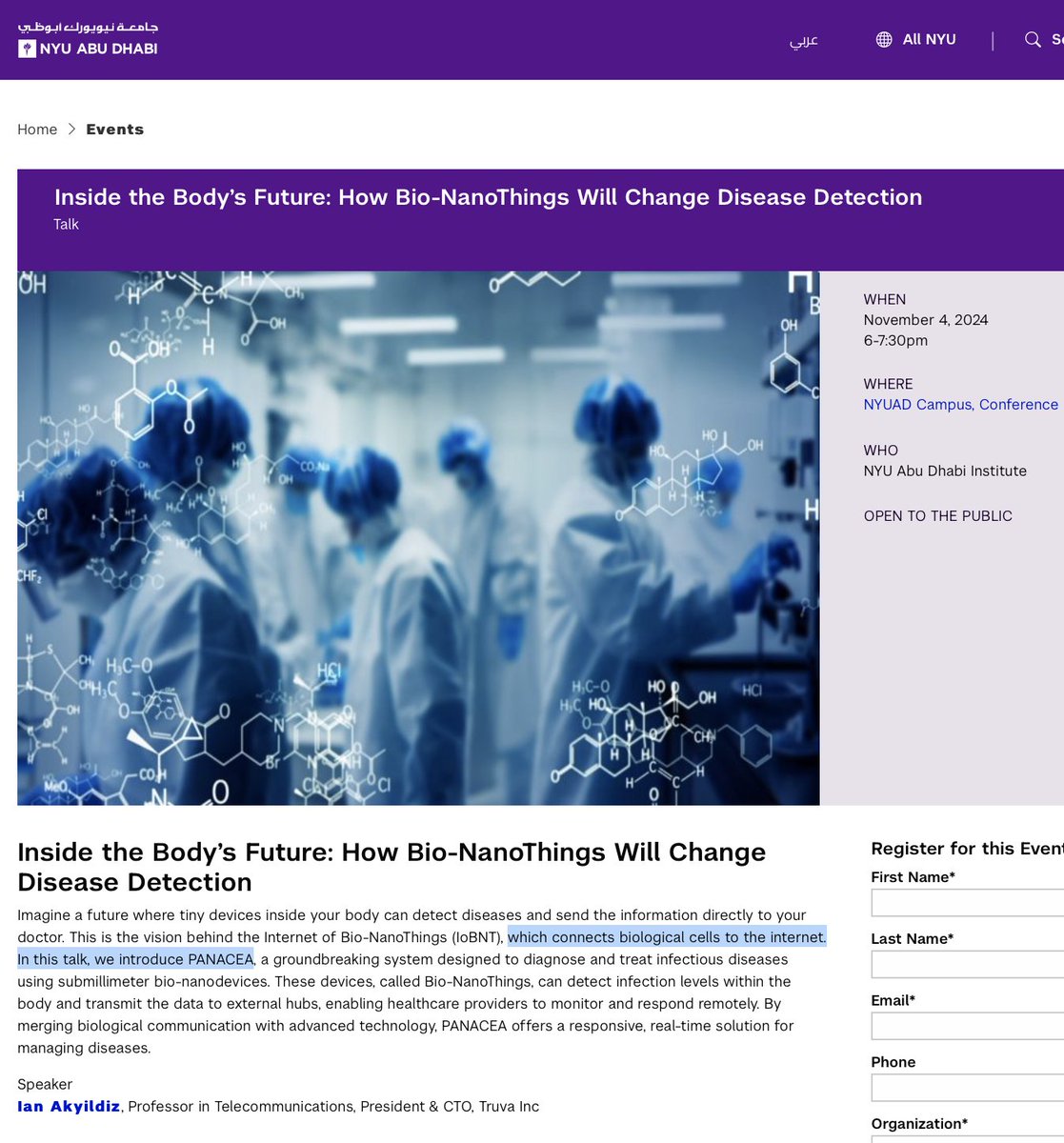
WE. FUCKING. TOLD. YOU.
PANACEA
Cells Connected To The Internet
INTERNET OF BIO-NANO THINGS
Prof. Ian F. Akyildiz
Human Machine Nano-Cyber Interface
nyuad.my.salesforce-sites.co…
1
55

22 Jan 2025
Ultrasound reduces entropy, and increases order, through coherence oscillations at the level of biological Microtubules.
We are not doomed to entropy death.
And Bayesian information only brings order when it impacts the structural "resonance" / "vibes" of a cluster of BioThings
13
16
152
6,809

22 Aug 2024
All his companies seem to be building the noospere… the symbol x represents the point where God meets machine, the Starlink sky net, the neuralace, Neuralink that he is partnered with George Lieber known as the nanotech king. In the AIWS documents they tell us 6G will be used to connect the internet of nano-biothings so we can have a more integrated biosphere & noosphere until the need for the biosphere becomes subsumed by the noosphere.
22 Aug 2024

Please be careful about the noöspshere
5
8
23
1,144

23 Sep 2023
BioThings Explorer: a query engine for a federated knowledge graph of biomedical APIs. #BiomedicalAPIs #Bioinformatics
academic.oup.com/bioinformat…
6
574

19 Sep 2023
BioThings Explorer: a query engine for a federated knowledge graph of biomedical APIs academic.oup.com/bioinformat…
1
1
3
322