
Joined February 2016
- Tweets 17,473
- Following 739
- Followers 1,521
- Likes 14,320
562 Photos and videos












Pinned Tweet

Jun 11
PROOF THEY WILL POWER THESE DATA CENTERS WITH YOUR NEURONS WIRELESSLY
Remember when I said they were gonna use your brain to power these data centers?
Here's more proof.
"Note they're doing this wirelessly"
Wireless power routing to and from neurons is achieved through several emerging technologies that eliminate the need for physical wires or bulky batteries, primarily using magnetic induction, magnetoelectric films, and ultrawideband radio.
pmc.ncbi.nlm.nih.gov/article…
Magnetic Induction and Resonant Coupling
The most mature method involves wireless inductive charging, where an external transmitter coil generates a magnetic field that induces current in a receiving coil within the implant.
NEURALINK
Neuralink uses this approach with a compact inductive charger placed behind the ear to power its N1 implant, which stores energy in a small battery for continuous operation.
neurapod.com/blog/how-does-n…
OPTOGENETIC SYSTEMS
No tethering needed !!!!!!
Optogenetic systems couple microscale light-emitting diodes (µLEDs) with millimeter-scale coils to deliver instantaneous, biologically safe power to stimulate neurons in the visual cortex without tethering.
phys.org/news/2019-06-biotec…
NEAR FEILD MAGNETIC RESONANT COUPLING
Research into near-field magnetic resonant coupling at frequencies like 13.56 MHz allows for flexible, injectable probes that maintain power transmission efficiency even when bent to tight radii, enabling deep brain stimulation.
pmc.ncbi.nlm.nih.gov/article…
Magnetoelectric (ME) Film Interfaces
THIS PART IS IMPORTANT & SHOWS YOU WHY THEY EMULATING PHYSICAL HARDWARE
Recent innovations utilize magnetoelectric films as direct neural interfaces that generate electrical polarization from alternating magnetic fields (AMFs) WITHOUT ONBOARD ELECTRONICS.
pmc.ncbi.nlm.nih.gov/article…
These films can modulate neuron activity via nonresonant frequencies, triggering sodium and calcium channels through capacitive-like charge injection.
This method offers a minimally invasive, low-cost alternative for deep brain stimulation, as it requires only simple electromagnetic coils & avoids the absorption or reflection issues associated with light or ultrasound.
High-Bandwidth Radio and RF Transmission
For high-data-rate applications, wireless brain-computer interfaces (BCIs) use radio frequency (RF) or ultrawideband links to transmit processed neural data and receive power.
pmc.ncbi.nlm.nih.gov/article…
DATA STREAMING
The Brain Interface Chip (BISC), a flexible 3 mm³ device, uses a custom ultrawideband radio link operating at 100 Mbps to bridge the implant with external computers, supporting both power delivery and high-throughput data streaming.
sciencedaily.com/releases/20…
WIRELESS BRAIN CONTROL INTERFACE
Earlier prototypes, such as those led by Brown University, utilized radio transceivers to beam processed neural spikes at 48 megabits per second to a receiver a few meters away, using approximately 30 milliwatts of power.
technologyreview.com/2015/01…
Future Directions: Unwired Bipolar Electrodes
Beyond power delivery, wireless bipolar electrodes are being explored to promote biological nerve repair at injury sites.
By using conducting materials as unwired electrodes, external electric fields can interact with neural tissue to encourage dynamic nerve growth and functional compensation without implanting physical wiring that substitutes for natural neural signals.
pubmed.ncbi.nlm.nih.gov/3835…
5
20
34
4,611
UC WorkRoom retweeted

This was purposely done, it's the Mark of the Beast..
It's destroyed the Vmat2 gene (god gene)
This has corrupted their DNA, severing their connection to God..
It's also the abomination that causes Desolation standing in the Holy Place
👇
Certificate Of Vaccination I.D for A.I

Reports from people having taken the vaccine feel a sudden disconnection to God as well as a lower IQ with difficulties problem solving
2
1
7
161
UC WorkRoom retweeted

DARPA On Your Mind
Think your brain is being controlled or disrupted by the Pentagon? You risk being called a nut, but the notion
is not so far-fetched.
Current research at the intersection of neuroscience and national security might one day produce weapons that literally boggle (or, if desired, enhance) the mind.
This would give us unprecedented war-fighting superiority as well as a set of ethical dilemmas that could make genetically-modified-organism
issues pale in comparison.
researchgate.net/profile/Jon…
2
8
11
246


UC WorkRoom retweeted

Debugging: Google requests permission to release 32m mosquitoes in California and Florida theguardian.com/technology/2…
5
5
114
UC WorkRoom retweeted
42
15
14
767


UC WorkRoom retweeted
Wait. Are you saying you believe this was in the vax?
1
1
4
53
UC WorkRoom retweeted
Frightening 🫣 do you know if this been accomplished on people already or is this a futuristic goal?
2
2
2
66
UC WorkRoom retweeted
I absolutely agree,
It'll come down to a freewill choice for sure.
This is why it's soooo important to understand your work and their technologies of what's happening so everyone will NOT be caught off guard.
When presented they will not be fearful but prepared to stand.
1
1
4
50

UC WorkRoom retweeted

Jun 12

The drones actually play a bigger role than most people realize. It's not just surveillance but actually REMOTE SYMPTOM TRIGGERING.
Here's a little context.
THE PATENT
Systems & Methods for COVERTLY CREATING ADVERSE HEALTH EFFECTS IN SUBJECTS
Here's how this patent works.
A method for covertly creating adverse health effects in a human subject includes generating at least one electromagnetic wave at a frequency within the range of about 300 MHz (megahertz) and about 300 GHz (gigahertz).
ELECTROMAGNETIC FREQUENCY (ELF) - THATS THE ELF FREQUENCY
The at least one electromagnetic energy wave is pulsed at a pulse frequency within a target range of human neural oscillations. At least one ultrasonic audio wave is generated at a frequency greater than about 20 kHz (kilohertz).
ACOUSTIC - AUDIO WAVE
Each of the at least one pulsed electromagnetic wave and the at least one ultrasonic audio wave CAN BE TRANSMITTED TO THE SUBJECT'S BRAIN.
patents.google.com/patent/US…
Acoustic Apparatus and Operation
Owner: Cerberus Black Ltd
Force Escalation Spectrum (Force Continuum)
The device is given the trade name Acoustic—Warning Signal Projector™ or A-WaSP™′ Due to its extremely high levels of selectivity; and ability to operate effectively as a projected warning whilst remaining within safe daily exposure limits for the target, user and bystanders; it fits neatly within the cited capability gap between a passive warning and more hazardous LLWs on the Force Escalation Spectrum.
The signal gets sent to your smartphone which acts as an Acoustic Hailing Device using HyperSpike.
Acoustic Hailing Devices (AHD)
patents.google.com/patent/US…
Remember targeted individuals?
They demoed a program that used the exact same frequency. It was called Tortureware.
NWO Tortureware 6.66
A robust software solution for targeted individual management.
Voice to Skull Utility. No touch remote neural monitoring.
Front end application for connection with global neural monitoring database.
Quick convenient command line input. Not responsible for any improper use of this software, think before you type
Voice To Skull Electronic (V2K)
Remote Neural Monitoring
Monarch Slave Programming
SATAN gangstalking
rawg.io/games/nwo-torturewar…
Video Link
TITLE
(โปรแกรมทรมาน)/ใช้ประกอบกฎหมายคลื่นความถี่ELF/ถวาย ร.10/โนเบลสันติภาพ/
TRANSLATION
(Torture Program)/Used in the ELF FREQUENCY Law/Dedicated to King Rama X/Nobel Peace Prize/
youtube.com/watch?v=rk1W7orH…
Now that patent uses an Audio Wave as well as an ELF Frequency.
THE DRONES DELIVER THE AUDIO FREQUENCY !!!!!!!
Aerial “Loudspeaker”: Drone-Based Acoustic Hailing Systems Transform Long-Range Communication
A new class of equipment that integrates low-altitude aviation platforms with acoustic transmission technology.
As a core component of low-altitude acoustic communication systems, it combines aerial mobility, wide-area coverage, and high-SPL acoustic projection. Through directional sound-beam design, it eliminates the spatial constraints and blind zones of traditional ground-based loudspeakers.
At a typical drone cruising altitude of 100 m, the RA21Z maintains 110 dB within a 200 m radius—a level clearly distinguishable above ambient noise. Even at 1000 m radius, it remains within effective transmission range.
The system supports multiple operational modes for flexible coverage.
– Dispersal Mode: covers an area equivalent to 18 football fields.
– Broadcast Mode: covers up to 440 football fields
This enables both localized warning actions and large-scale public notifications.
With a 154 dB peak SPL and 144 dB continuous SPL, the RA21Z exceeds typical industry levels. Its effective acoustic power is 4–8× that of competing products (every 6 dB increase doubles acoustic energy).A wide frequency response of 500 Hz–5 kHz ensures that even at 1 km, output remains around 70 dB, preserving speech clarity and detail while enhancing penetration in noisy environments.
ribri.com/aerial-loudspeaker…
2
3
43
UC WorkRoom retweeted

This was purposely done, it's the Mark of the Beast..
It's destroyed the Vmat2 gene (god gene)
This has corrupted their DNA, severing their connection to God..
It's also the abomination that causes Desolation standing in the Holy Place
👇
Certificate Of Vaccination I.D for A.I
3
1
3
52
UC WorkRoom retweeted

DO NOT DO THIS!
Digital ID System - Connects to Inferno
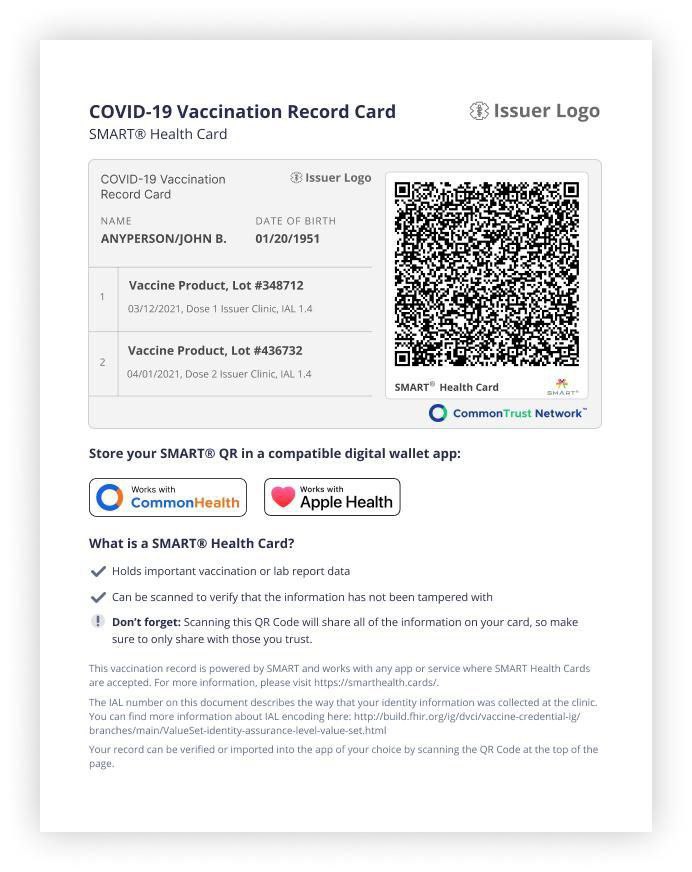
Vaccination Verification Through Digital ID
1) SMART Health Card Verifier App
Scan a SMART Health Card QR Code to verify an individual’s COVID-19 test or vaccination credential.
Use the Free Verifier App at your small business, live music venue, school, or sporting arena.
thecommonsproject.org/smart-…
2) SMART Health Cards
SMART Health Cards are verified versions of a piece of your healthcare data, such as vaccination history, test results, or insurance information.
SMART Health Cards contain a secure QR code and may be saved digitally or printed on paper.
commonhealth.org/smart-healt…
INFERNO
SMART Health Cards: Vaccination and Testing Test Kit
Last Updated: June 6, 2024
inferno.healthit.gov/test-ki…
VACCINATION VERIFICATION DATABASE
ImmPort HAPI FHIR (Inferno)
This server provides a complete implementation of the FHIR Specification using a 100% open source software stack.
fhir.dev.immport.org/about
VACCINATION STATUS CONNECTED TO YOUR DIGITAL WALLETS
Samsung
Samsung and the Commons Project Foundation Introduces SMART Health Cards Within Samsung Pay
news.samsung.com/us/samsung-…
Apple
Apple is Integrating Vaccination Certificates with their Wallet
support.apple.com/en-us/1024…
Google Wallet
SMART Health Cards
support.google.com/wallet/an…
4
7
121
UC WorkRoom retweeted
Wow. This is a lot of interesting important information. Do you know who put it together?
Also, this final note at the end: Is she referring to current or future plans here? 👇

3
4
6
100
UC WorkRoom retweeted

Mass surveillance is here
You see this black line above the steering wheel on this Lexus? It might not look like much but that’s the new Diver Monitor System
If you set your camera to the right frame rate, you can actually see the 2 red dots used to monitor and track your eyes
These invisible red dots are always watching you
This is the start of a mass surveillance state that can control your driving
The Lexus Driver Monitor System uses a small infrared camera and sensor
It detects drowsiness, distraction, or sudden medical issues. If you don’t respond to warnings, it can issue escalating alerts, slow the vehicle, or bring it to a stop
Now imagine if the government got a back door into these systems
Think about it this way too, this data could be shared with law enforcement or the government against your will
These systems should not be allowed on vehicles. We’ve lived fine without them for decades
400
1,640
4,017
241,140
UC WorkRoom retweeted
This is where I found every heavy metal of nano particulates that was in Nebuchadnezzar's dream of a statue of a man..
They've literally rebuilt the Tower of Babel inside of man..
This is the prophecy in Daniel that was sealed until an appointed time.
1
2
43
UC WorkRoom retweeted
You are soooo very welcomed..😘
I'm trying to share it with everyone.. it's golden truths ✨️
1
2
52
EVERYONE SAVE THIS !!!!!!
This is a very detailed outline of this Beast System
7
8
128