
💥 Special Issue extended deadline for submission!
🔗 mdpi.com/journal/bioengineer…
🕑 The new deadline for submissions is 31 May 2026
📌 #biomaterials #clinicalengineering #biomedicaldevices #cardiovascularengineering #biomedicalinstrumentation #biomedicalmodeling
2
48

29 Nov 2025
Learning Cell-Aware Hierarchical Multi-Modal Representations for Robust Molecular Modeling
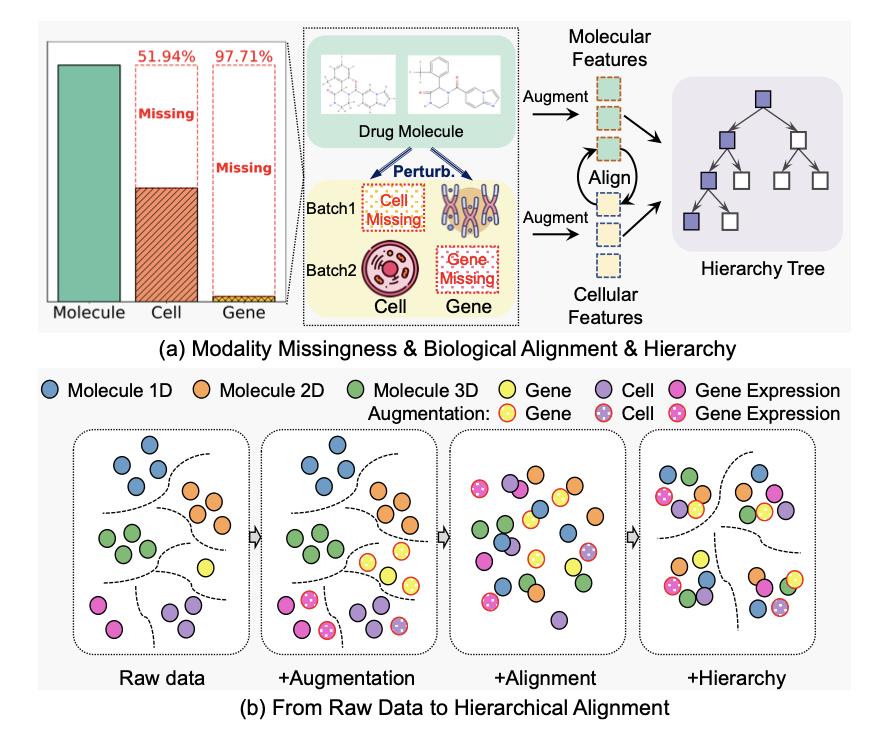
1. A new framework called CHMR is proposed to address limitations in current cell-aware molecular modeling approaches, focusing on modality incompleteness and insufficient hierarchical modeling across molecular, cellular, and genomic levels.
2. CHMR introduces a tree-structured vector quantization module to capture latent biological hierarchies, enabling the model to better understand cross-scale biological mechanisms from molecules to cells and genes.
3. The framework incorporates modality augmentation and semantic consistency alignment to handle missing biological data, significantly improving robustness and generalization in molecular property prediction tasks.
4. Evaluated on nine public benchmarks with 728 tasks, CHMR outperforms state-of-the-art methods, achieving average improvements of 3.6% in classification and 17.2% in regression tasks.
5. CHMR's hierarchical and multi-modal learning approach provides a generalizable framework for integrative biomedical modeling, offering reliable and biologically grounded molecular representations.
📜Paper: arxiv.org/abs/2511.21120v1
#MolecularModeling #HierarchicalLearning #MultiModalRepresentations #BiomedicalModeling
2
10
1,244
12 Aug 2025
Adapting Biomedical Foundation Models for Predicting Outcomes of Anti Seizure Medications
1. A novel study explores the use of biomedical vision-language foundation models to predict the outcomes of antiseizure medications (ASMs) using only patient MRI scans and reports. This approach could revolutionize epilepsy treatment by reducing the trial-and-error process in ASM selection.
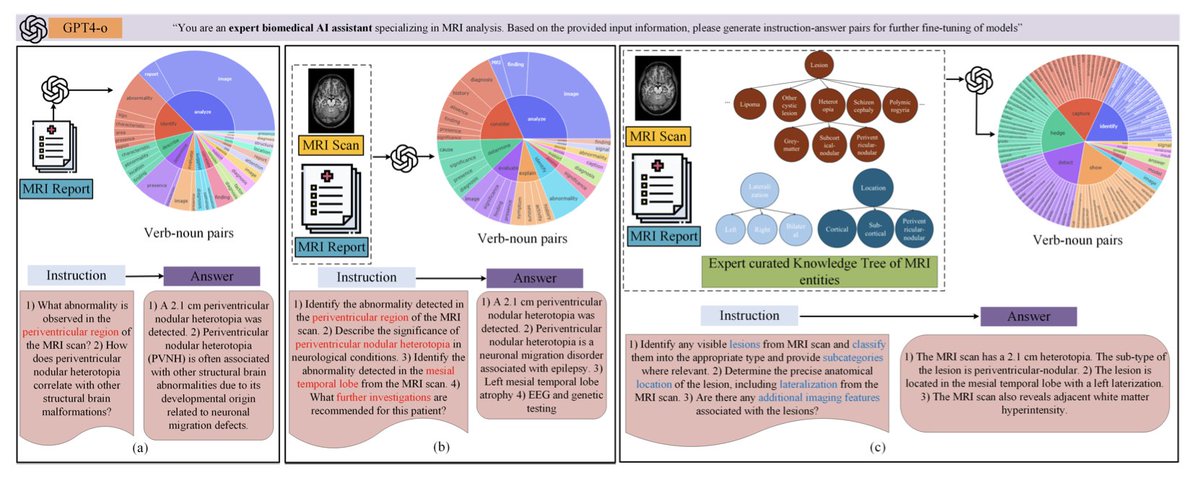
2. The study introduces a novel framework called TREE-TUNE, which integrates expert-built knowledge trees of MRI entities to enhance the performance of foundation models. This contextualized instruction-tuning method significantly improves the accuracy of predicting ASM outcomes compared to traditional methods.
3. A key innovation is the ability to generalize to unseen ASMs. By training on the four most commonly prescribed ASMs, the model can predict outcomes for completely new ASMs not encountered during training. This demonstrates the model's adaptability and potential for broader clinical applications.
4. The study achieved an average AUC of 71.39 for predicting outcomes of four primary ASMs and 63.03 for three completely unseen ASMs. This represents a substantial improvement over standard report-based instruction tuning, with a 5.53 and 3.51 AUC increase for seen and unseen ASMs, respectively.
5. The research leverages large-scale biomedical images and text to train the models, ensuring strong medical context understanding. The integration of MRI scans, reports, and a knowledge tree allows for more nuanced and context-aware predictions.
6. The study's findings highlight the potential of using biomedical foundation models for personalized epilepsy treatment recommendations. The approach not only improves prediction accuracy but also provides a foundation for developing reasoning-based ASM recommendation systems.
📜Paper: medrxiv.org/content/10.1101/…
#Epilepsy #MachineLearning #BiomedicalModeling #PersonalizedMedicine
1
2
667

5 Nov 2024
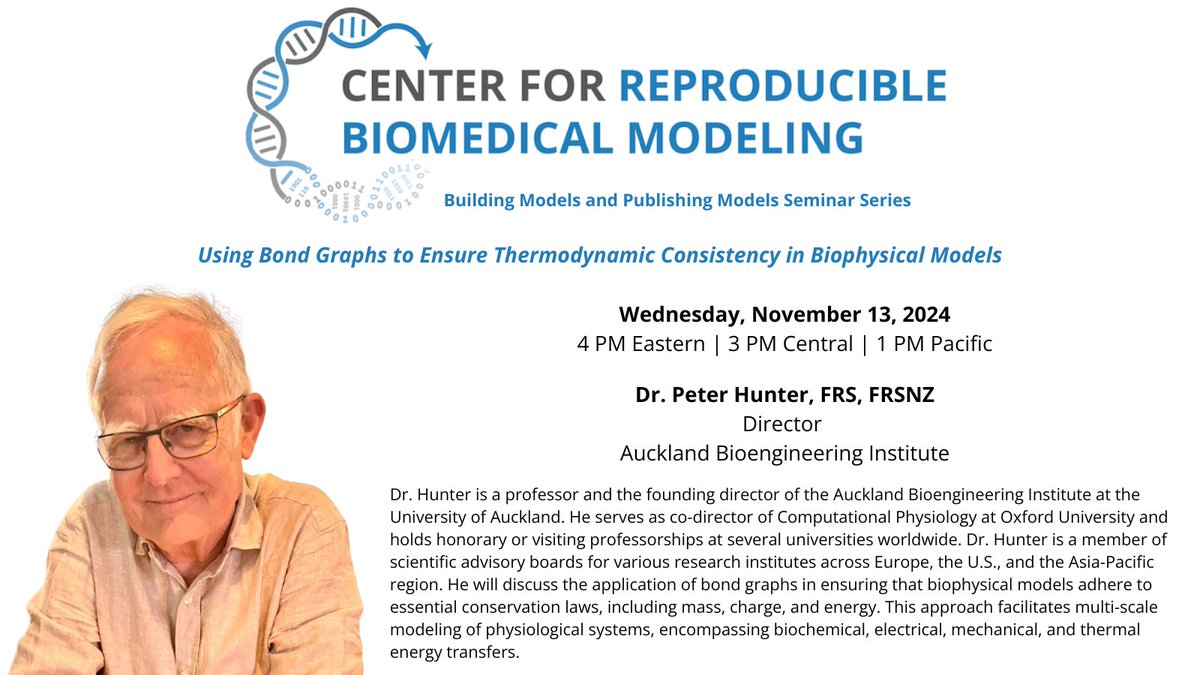
Join us for the CRBM Fall '24 Seminar Series! Kicking off with Dr. Peter Hunter’s talk on using bond graphs to ensure thermodynamic consistency in biophysical models.
Register now: forms.gle/PQw3RLA7TPqBzExs9
#BiomedicalModeling #Thermodynamics #ScienceSeminars #multiscalemodeling
4
75
11 Jul 2023
You can still register for the 7/12/23 1-day Kinetic Modeling Virtual Course & Hackathon.
#Antimony #biochemicalmodeling #biomedicalmodeling #libRoadRunner #metabolicnetworks #parameterfitting #PythonBasics #SBMLDiagrams #systemsbiology #Tellurium
reproduciblebiomodels.org/20…
1
2
275
7 Jul 2023
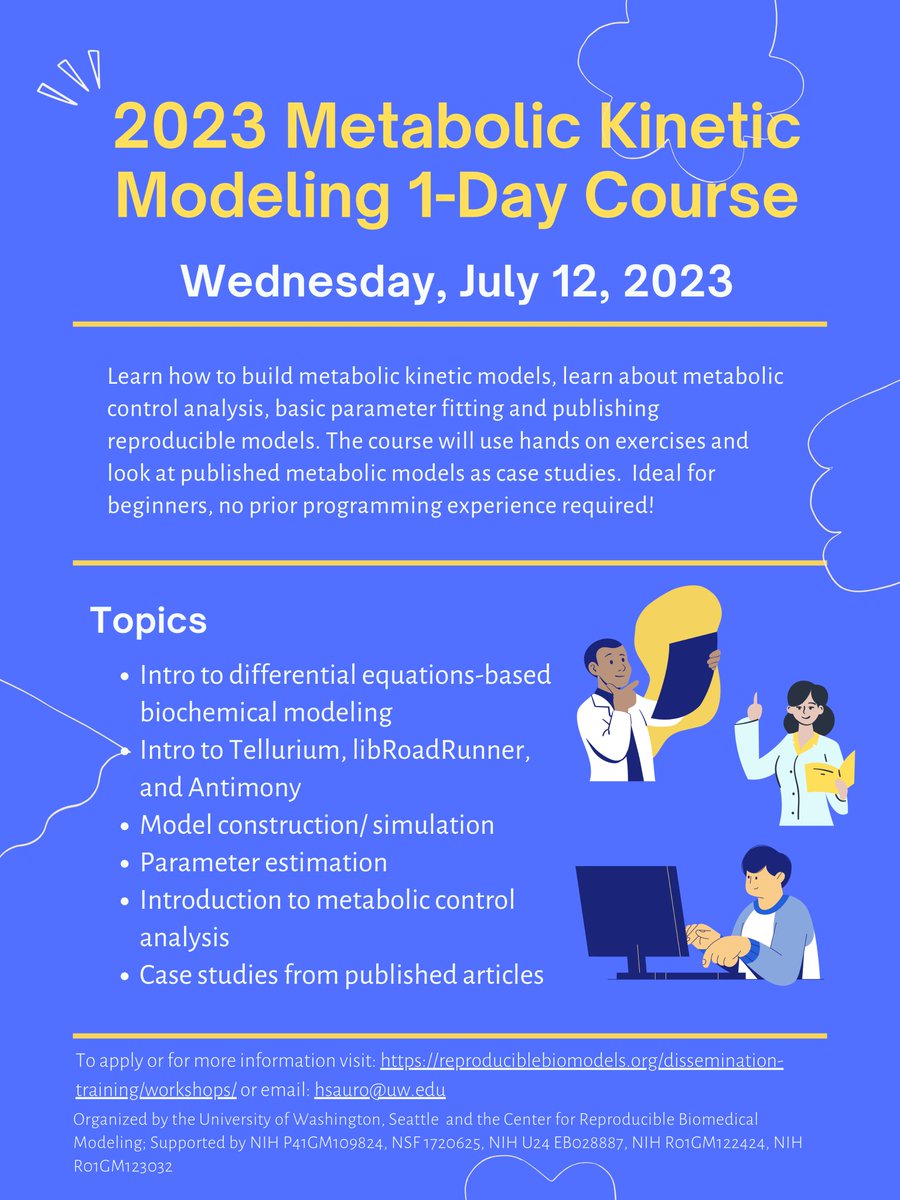
Have you seen the schedule for the 2023 Metabolic Kinetic Modeling Course?
reproduciblebiomodels.org/20…
#Antimony #biochemicalmodeling #biomodeling #biomedicalmodeling #libRoadRunner #metabolicnetworks #parameterfitting #PythonBasics #SBMLDiagrams #systemsbiology #Tellurium
1
3
675
15 May 2023
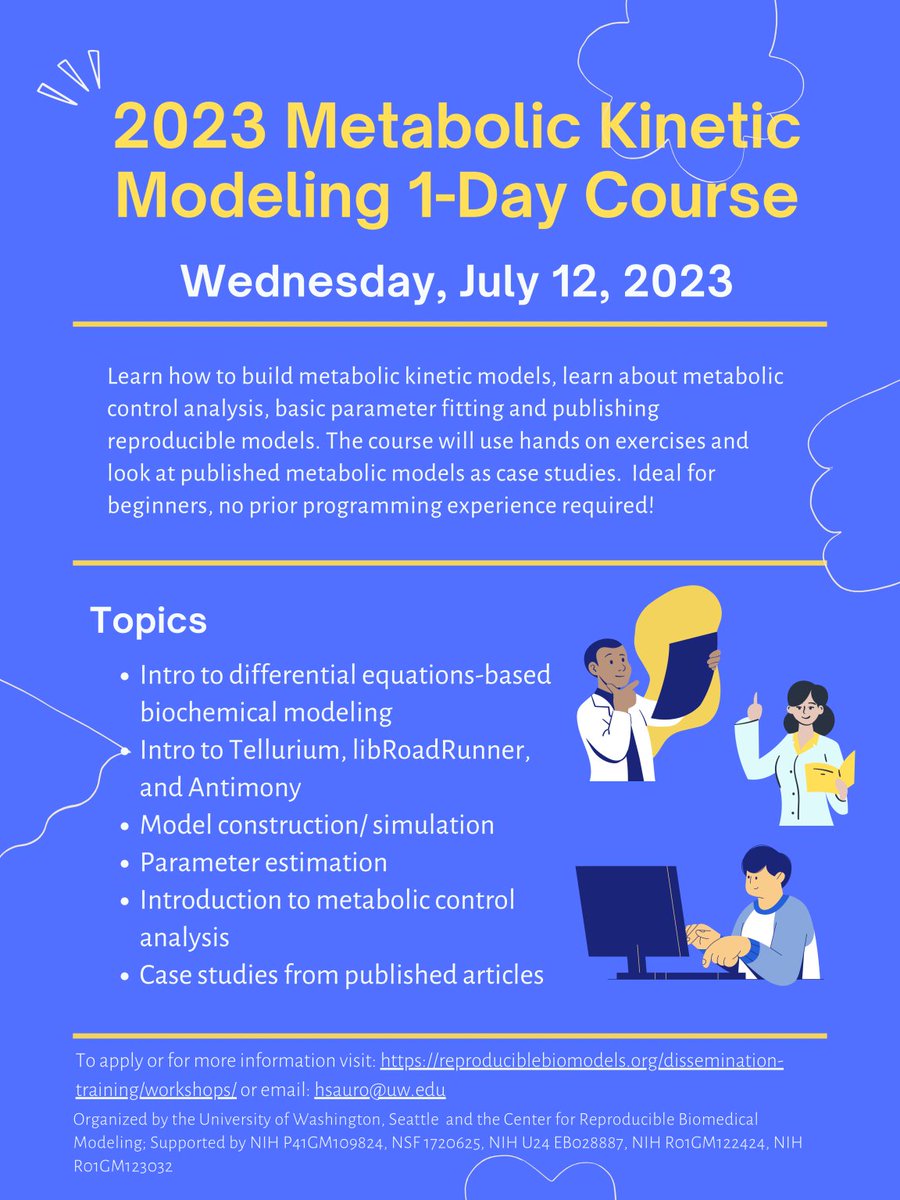
Just announced: 2023 1-day Kinetic Modeling Virtual Course & Hackathon
For more info & to sign-up, please visit: reproduciblebiomodels.org/20…
#Antimony #biomedicalmodeling #biomodeling #kineticmodeling #metaboliccontrolanalysis #modelparameters #Tellurium
5
6
819
21 Apr 2023
There's still time to add our upcoming FREE tutorial "Development of signaling models" to your calendar! It's Friday, April 28th from 2-3 PM PDT.
#biomedicalmodeling #biomodeling #freetutorials #modeling #reactionnetworks #science #signalingmodels
reproduciblebiomodels.org/tu…
1
2
138
10 Apr 2023
TUTORIAL TWEETS:
Our next free tutorial - "Developing of signaling models" will be Friday, April 28th. Please join us! reproduciblebiomodels.org/tu…
#biomedicalmodeling #biomodeling #modeling #reactionnetworks #signalingmodels
1
4
649
10 Feb 2023
#ICYMI: Part 2 of our most recent tutorial session - "Introduction to parameter fitting using roadrunner and Julia" with Michael Kochen can be found here: youtu.be/qsryU1Fx5sQ
#biomedicalmodeling #biomodeling #Julia #modeling #paramaterfitting #roadrunner #science

1
3
287
10 Feb 2023
#ICYMI: Our most recent tutorial - "Introduction to particle-based modeling in Tissue Forge" with T.J. Sego can be found here: youtu.be/IyF-V3ojzA8
#biomedicalmodeling #spatialmodeling #tissueforge #particlebasedmodeling #Python
3
141
30 Jun 2022
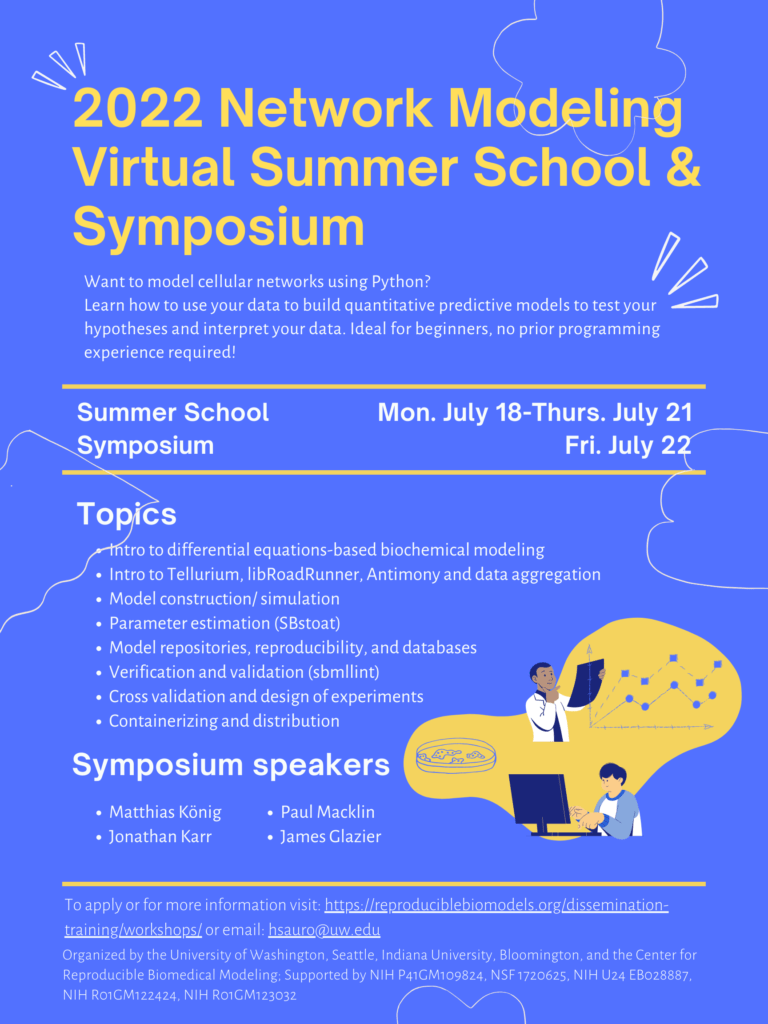
Reminder: Today last day to register for the 2022 Network Modeling Virtual Summer School & Symposium!
#Tellurium #Antimony #libRoadRunner #SBstoat #sbmllint #science #reproducibility #biomedicalmodeling
1
1
2
7 May 2021
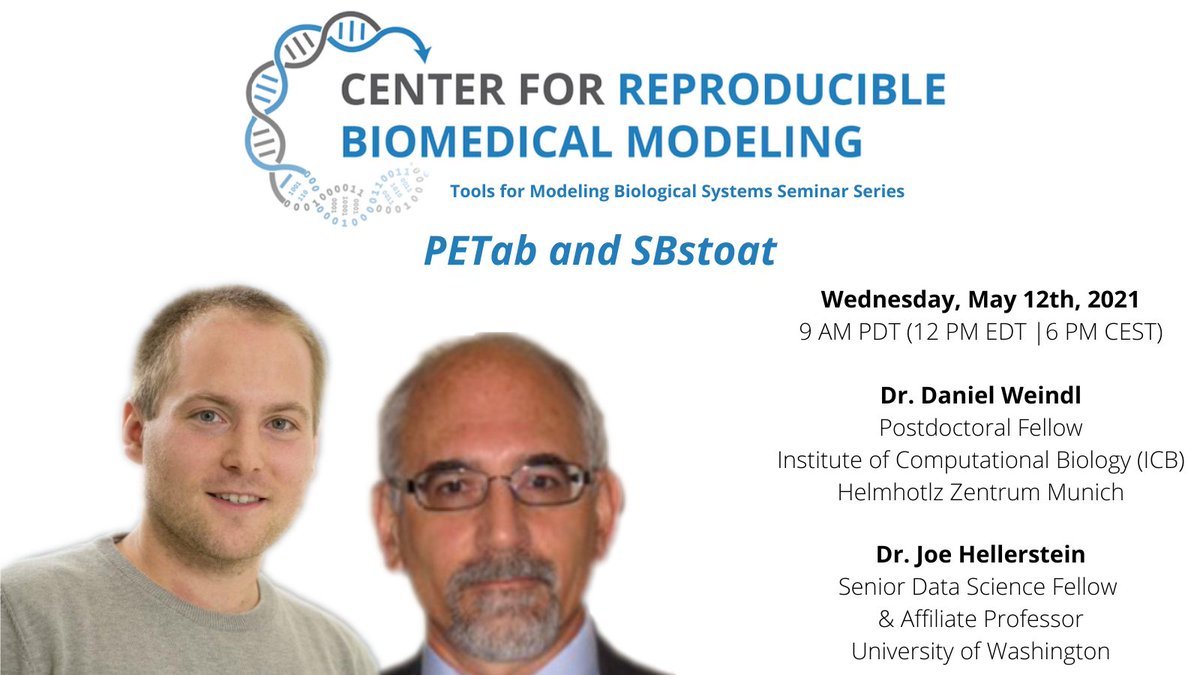
Join Dr. Weindl and Dr. Hellerstein in this month's series discussion for PETab and SBstoat.
Date: May 12th, 2021
Time: 9 AM PDT (12 PM EDT | 6 PM CEST)
Zoom registration: washington.zoom.us/meeting/r…
#biomedicalmodeling #biomodeling #systemsbiology #ScienceTwitter
(4 of 4)
1
7 May 2021
Join us on Wednesday, May 12th at 9 AM PDT to hear from Dr. Joe Hellerstein and Dr. Daniel Weindl about their work developing tools to support parameter estimation
#biomedicalmodeling #biomodeling #systemsbio #systemsbiology #parameterestimation #science #simulation
(1 of 4)
1
2
4
12 Apr 2021
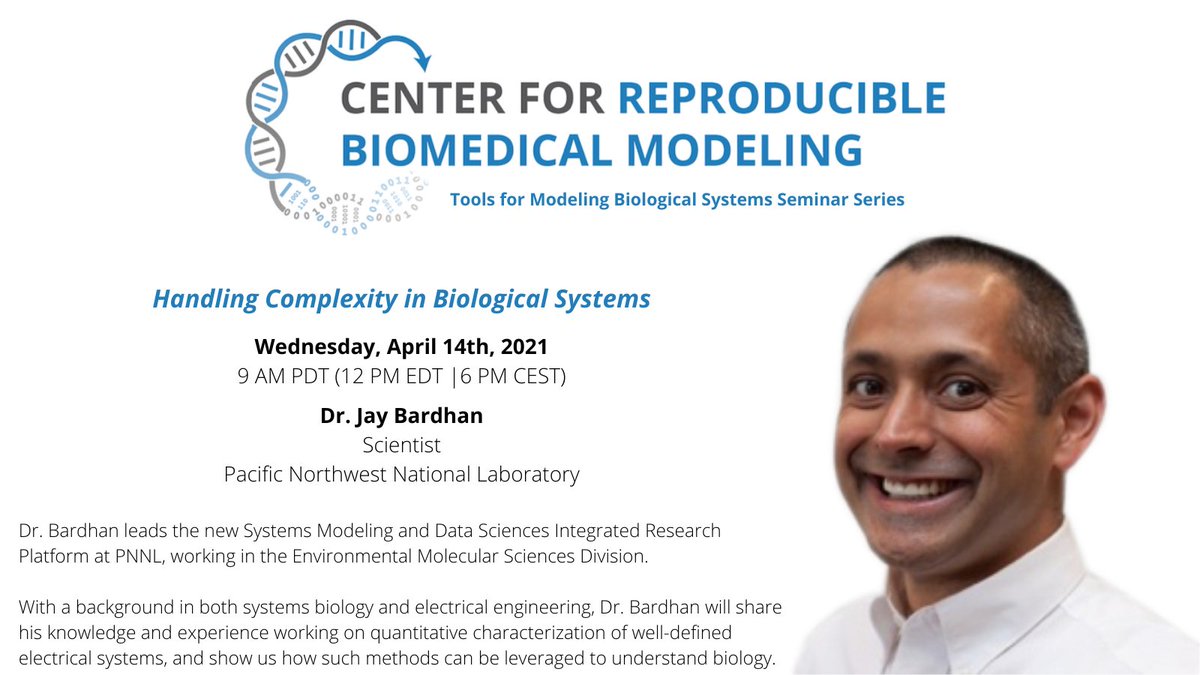
Don't forget to join us for our seminar with Dr. Jay Bardhan from @PNNLab this Wednesday. You can register for one or all of our monthly seminars at washington.zoom.us/meeting/r…
#systemsbiology #bioengineering #biomedicalmodeling #systemsbiology #science
1
4
9 Apr 2021
We invite you to participate in our seminar series this Wednesday, April 14th.
We will hear from Dr. Jay Bardhan of the Pacific Northwest National Laboratories about methods used to address complexity in biological systems.
#systemsbiology #bioengineering #biomedicalmodeling

1
3