
11 Jun 2025
《Phenom Poker Profound Research Report》
by BlockInfinity
Foreword: A Web3 Exploration Reshaping the Online Poker Landscape
Since its inception, the online poker industry has experienced dramatic fluctuations, from a golden age to regulatory storms and crises of trust. While traditional centralized platforms offer convenience, they have also exposed numerous shortcomings: lack of transparency, vulnerability of player rights, and risks to fund security. Fourteen years ago, the U.S. Department of Justice unveiled a 52-page indictment against key figures from major online poker platforms such as PokerStars, Full Tilt Poker, and Absolute Poker. Additionally, the recurring cheating scandals and unilateral rule and benefit adjustments by centralized platforms have continuously eroded the trust foundation of the player community. Against this backdrop, Web3, with its core principles of decentralization, transparency, and user empowerment, brings new possibilities for reimagining the online poker ecosystem.
Phenom Poker has emerged as a pioneer in this wave. Rather than simply introducing cryptocurrency as a payment method for poker games, it attempts to fundamentally disrupt the operational model of traditional online poker platforms. Phenom Poker bills itself as "the world's first poker site where every player becomes an owner," with a core vision of building a decentralized poker ecosystem (crypto poker DAO) "owned and governed by the player community." By introducing the Polygon-based ERC-20 token PHNM , Phenom Poker aims to directly grant platform ownership and profit rights to players participating in the game, and allow the community to collectively determine the platform's future development direction through on-chain governance mechanisms.
Chapter One: Project Background and Main Vision
1. Challenges in the Online Poker Industry
The online poker industry has undergone over twenty years of development since the birth of Planet Poker, the first real-money poker website, in 1998. Between 2003 and 2006, online poker experienced a golden age, with a surge in global player numbers and the rapid rise of major platforms such as PokerStars, Full Tilt Poker, and PartyPoker. However, on April 15, 2011, the U.S. Department of Justice filed lawsuits against major poker sites, freezing hundreds of millions of dollars in player funds, an event known as "Black Friday" that dealt a severe blow to the entire industry.
The main challenges faced by traditional online poker platforms include:
▪️Trust Crisis: Centralized platforms control player funds, posing risks of misappropriation. During the "Black Friday" incident, Full Tilt Poker was found unable to pay $150 million in player accounts, severely damaging player trust.
▪️Lack of Transparency: Paramount processes such as core shuffling algorithms and fund flows lack transparency, making verification impossible for players.
▪️Cheating Issues: Collusion, BOT usage, account sharing, and other cheating behaviors persist despite prohibitions, with limited platform oversight capabilities.
▪️Unilateral Rule Manipulation: Centralized platforms can adjust reward mechanisms, fee structures, and other rules at any time, leaving players without a voice.
Settlement Delays: Traditional payment channels have high fees and long deposit or withdrawal cycles, affecting user experience.
These challenges have long plagued the online poker industry while providing an opportunity for Web3 integration. The decentralized, transparent, immutable nature of blockchain and the automatic execution of smart contracts perfectly address many challenges faced by traditional online poker platforms.
2. Phenom Poker's Founding Background and Vision
Phenom Poker was founded by a group of long-time active members of the poker community, including founder Matt Valeo and Poker Hall of Famer Brian Rast. According to Conscious Poker's website, dissatisfaction with traditional online poker platforms was the main driving force behind the project's birth. Having personally experienced industry pain points such as the "Black Friday" incident, cheating scandals, and platforms unilaterally cutting benefits, the founding team was determined to create an online poker platform truly centered around players.
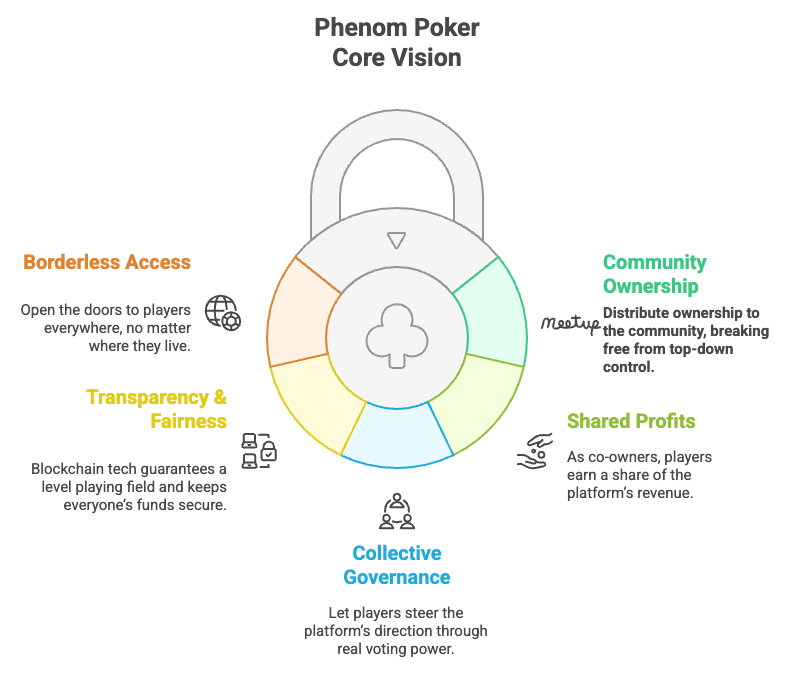
Phenom Poker's vision can be summarized in the picture below.
▪️Community Ownership: Breaking the hegemonic model of traditional centralized platforms by distributing platform ownership to the player community.
▪️Profit Sharing: Ensuring that players, as owners, can directly share in platform profits after its success.
Collective Governance: Empowering players with decision-making authority over the platform's development direction, achieving true community self-governance.
▪️Transparency and Fairness: Utilizing the Polygon blockchain to ensure game fairness and fund security.
Global Reach: Breaking geographical restrictions to provide equal participation opportunities for poker enthusiasts worldwide.
In Brian Rast's public comments, he emphasized: "At the intersection of poker and cryptocurrency, Phenom Poker is a site built by poker players for poker players... This is what online poker has always been missing. That's why I'm proud to be a pro at Phenom Poker."
3. Roadmap & Milestones
Public information indicate that Phenom Poker’s development has progressed as follows:
▪️April 2024: Beta went live to an invite-only group of players.
▪️May 2024: Full public launch with open sign-ups.
▪️May – June 2024: Rolled out the “Race for Tokens” referral campaign to supercharge growth.
During this pre-launch phase, Phenom Poker leaned heavily on an affiliate model: every agent pockets 10% of the rake generated by their referrals (paid in USDT), and both the agent and the new player receive 100 PHNM tokens for each successful sign-up.
4. Team & Investment Structure
Phenom Poker’s core team is composed of seasoned poker industry veterans, including the two key members mentioned above.
Matt Valeo – Founder & CEO of Phenom Poker.
Brian Rast – Poker Hall-of-Famer and marquee pro for the platform.
In addition, the founder of Conscious Poker is both an investor and ambassador. He’s been grinding online since 2004 and, in 2007, ranked as the No. 9 overall winner on Full Tilt.
Specific funding rounds and amounts haven’t been disclosed. What is known is that Phenom Poker follows a hybrid approach, combining conventional capital raises with token allocation: 50% of PHNM tokens are retained by the founders, investors, and ambassadors, while the other 50% are set aside for the player community. Full details are covered in the Tokenomics section.
Chapter Two: Phenom Poker Product Form and Technical Architecture
1. Platform Product Form and Functions
As a Web3 online poker platform, Phenom Poker offers rich game formats and functional features:
a. Game Types and Forms
Phenom Poker offers multiple poker games and their variants, including:
▪️Ring Games: Cash games where players can join or leave at any time, with chips representing actual value.
▪️Sit N' Go: Small tournaments that begin immediately when a preset number of players are seated.
▪️Multi-Table Tournaments (MTT): Large tournaments where players compete across multiple tables until a final winner is determined. According to Conscious Poker's report, the platform offers over 30 poker variants, from classic No Limit Texas Hold'em and Pot Limit Omaha to more niche games like Open Face Chinese Poker and Badugi.
b. User Interface and Experience
Phenom Poker emphasizes an intuitive user interface:
▪️Cross-device compatibility: Supports any device with a web browser, including mobile devices.
▪️Personalized avatars: Offers various characters, outfits, and customization options.
c. Community and Social Features
Phenom Poker provides multiple community interaction features:
▪️Governance voting: Token holders can vote in the platform's development direction.
▪️Community discussions: Players can participate in discussions about platform rules, feature improvements, etc.
▪️Referral system: Players can invite friends to join and receive rewards.
2. Polygon Technical Architecture
a. functional modules
According to official technical documentation and blog posts, Phenom Poker's smart contract system includes the following main functional modules:
▪️Token management module: Responsible for minting, distributing, and burning PHNM tokens.
▪️Revenue distribution module: Automatically calculates and distributes 50% of the platform's net income to token holders.
▪️Price calculation module: Automatically sets token prices based on "130 x net rake income from the past 4 weeks / total tokens in circulation."
▪️Token redemption module: Processes token redemption requests, ensuring compliance with redemption restrictions.
▪️Game logic module: Handles main gaming functions such as table creation, game progression, and settlements.
▪️Fund conversion module: Supports automatic conversion of various tokens to USDT (Polygon) for use within the platform.
b. Non-Custodial Model and Fund Security
Phenom Poker adopts a non-custodial model, which is a key feature of its technical architecture:
▪️Platform role: The platform does not hold player funds, serving only as a software layer for gaming and accounting.
▪️Table contracts: Each poker table operates as an independent smart contract on Polygon.
▪️Fund control: Users maintain control over their own funds, reducing the risk of theft or misappropriation.
▪️Instant settlement: Games are automatically settled and funds distributed upon completion, without platform intervention.
c. User Flow and Experience Design
(1)Registration and Deposit Process
▪️Account register: Users need to create a Phenom Poker account using email/Google account/AppleID
▪️KYC and facial recognition are required, with KYC verification and biometric detection services provided by Sumsub
▪️Wallet connection: Users can connect wallets supporting ERC-20 tokens (such as MetaMask).
▪️Deposits: Users can deposit cryptocurrencies (such as USDT, MATIC, etc.) into the platform wallet.
▪️Asset conversion: Non-USDT assets are automatically converted to USDT (Polygon) through smart contracts.
(2)Game Participation Process
▪️Game selection: Users can browse and select the game type and level they wish to participate in.
▪️Joining tables: Users select a table and take a seat, with funds locked in the table contract.
▪️Game progression: Users participate in the game, with all operations executed through smart contracts.
Settlement: After the game ends, smart contracts automatically settle and distribute funds.
(3)Token Acquisition and Redemption Process
Token acquisition:
▪️Earn PHNM tokens through gameplay (based on reward levels).
▪️Earn PHNM tokens by referring to new players.
Token redemption:
▪️Users can redeem PHNM tokens for USDT at any time.
▪️Redemption price is based on the current token price.
▪️Redemptions are subject to restrictions (single holder cannot redeem more than 20% of the treasury within 30 days).
Profit sharing:
▪️Token holders automatically receive 50% of the platform's net income weekly (in USDT form).
▪️Distribution is based on the proportion of tokens held.
Chapter Three: Token Economic Model and Governance Mechanism
1. PHNM Token Fundamental Design
a. Token Nature and Positioning
The PHNM token is the key element of the Phenom Poker platform, with the following basic characteristics:
▪️Name: Phenom Token (PHNM)
▪️Type: Polygon ERC-20 smart contract
▪️Total supply: 50 million tokens, non-inflationary
▪️Distribution ratio: 50% (25 million tokens) allocated to the player community pool, 50% held by founders, investors, and ambassadors
▪️Value anchoring: Directly linked to the platform's actual revenue, rather than speculative in nature
▪️Initial price: $0.50 (as a floor price)
Unlike most cryptocurrencies, the PHNM token is not designed for speculative trading. According to the official blog "A Deep Dive into the Phenom Token": "Unlike most tokens or cryptocurrencies in the crypto space, the Phenom token is not designed for speculation or trading on public markets. A core part of the Phenom mission is to keep 100% of ownership within the poker community. As such, we've decided to block the token from being listed on any exchanges and limit the transfer functionality of the token so that it can only be received as rewards or redeemed to the platform. It cannot be transferred to any other party."
▪️In conclusion, PHNM is essentially an internal standalone token deployed on Polygon
▪️Note that PHNM lacks comprehensive security audits, with no audit reports available yet
b. Token Acquisition Methods
PHNM tokens cannot be purchased on the open market and can only be obtained through the following methods:
▪️Game rewards: Play poker games on the Phenom Poker platform and earn tokens based on reward levels.
Referral program: Earn token rewards by referring new players to the platform.
▪️Each player referral earns 100 tokens for both parties.
▪️Additional rewards for reaching specific milestones: 50 new users: 4,000 additional PHNM tokens
100 new users: 8,000 additional PHNM tokens
250 new users: 20,000 additional PHNM tokens
500 new users: 40,000 additional PHNM tokens
c. Token Circulation Restrictions
To ensure platform ownership remains within the poker community, PHNM tokens have strict circulation restrictions:
▪️No exchange listings: PHNM will not be listed for trading on any cryptocurrency exchanges.
▪️Limited transfer functionality: PHNM can only be received as rewards or redeemed to the platform, and cannot be transferred to other parties.
▪️Redemption mechanism: Token holders can redeem tokens for USDT at any time, subject to certain limitations.
2. Economic Value Capture Mechanism
a. Revenue Sharing Model
One of Phenom Poker's core value propositions is directly sharing platform revenue with token holders:
▪️Revenue source: The platform generates income by charging small fees (rake), similar to traditional poker platforms.
▪️Distribution ratio: 50% of net rake income is automatically paid weekly to all token holders (in USDT form).
▪️Distribution method: Based on the proportion of tokens held, with no additional actions required.
▪️Continuity: Holders do not need to continue playing on the platform; simply holding tokens entitles them to revenue.
b. Token Price Mechanism
PHNM token price is not determined by market supply and demand, but is automatically calculated based on the platform's actual revenue:
▪️Price calculation formula: Price = 130 x net rake income from the past 4 weeks / total tokens in circulation
▪️Calculation cycle: Automatically updated once per week
▪️Initial price: Price at public launch is $0.50, maintained until automatically set in the 5th week
▪️Price floor: $0.50 serves as the minimum price until revenue growth drives the price above this level
For example, if the net rake income for the past 4 weeks is $800,000 and the total token supply is 50 million tokens, the calculated token price would be $2.08 (130 x 800000 / 50000000).
c. Price Protection Mechanism
To protect token price stability and avoid excessive price fluctuations in the early stages, Phenom Poker has set initial price growth caps:
▪️First 9 weeks: Maximum growth of 30% per week
▪️Weeks 9-12: Maximum growth of 20% per week
▪️Weeks 12-16: Maximum growth of 10% per week
▪️After week 16: Growth restrictions removed
Additionally, to protect treasury funds, redemption limits have been established: a single holder cannot redeem more than 20% of the treasury within a 30-day period.
d. Token Redemption Mechanism
Token holders can redeem PHNM tokens for USDT at any time:
▪️Redemption price: Based on the current token price
▪️Redemption process: One-click operation through the platform
▪️Redemption restrictions: Single holders cannot redeem more than 20% of the treasury within 30 days
▪️Redemption impact: Redeemed tokens return to the community pool without affecting token price
This redemption mechanism ensures token holders can exit at any time without negatively impacting the token price.
3. Governance Mechanism Design
a. Voting Rights Distribution
Phenom Poker adopts a token-based voting governance model:
▪️Voting rights basis: PHNM holders possess platform governance voting rights
▪️Voting weight: Proportional to the number of tokens held
▪️Early concentration: In the early stages, voting rights are concentrated among the founding team, ambassadors, and investors to ensure smooth platform launch and operation
▪️Gradual decentralization: Over time, platform ownership will become more decentralized, with the player community's governance weight gradually increasing
b. Governance Scope
PHNM holders can vote on the following aspects:
▪️Platform feature updates and improvements
▪️Revenue distribution strategy adjustments
▪️Security measures and anti-cheating mechanisms
▪️Game types and rule changes
▪️Community development direction
This governance mechanism ensures that the platform's development direction aligns with the community's overall interests, not just those of a few shareholders.
c. Governance Evolution Path
Phenom Poker's governance mechanism is designed as a gradually evolving model:
▪️Initial stage: Governance rights concentrated (ambassadors, investors) to ensure stable platform launch
▪️Transition stage: As token distribution expands, governance rights gradually transfer to the community
▪️Mature stage: Achieve highly decentralized community governance
Chapter Four: Competitive Analysis
1. Web3 Poker Platform Competitive Analysis
ICE Poker is a blockchain-based poker platform developed by Decentral Games, with the following key differences from Phenom Poker:
a. ICE Poker (Decentral Games)
ICE Poker is a blockchain-based poker platform developed by Decentral Games, with the following key differences from Phenom Poker:
(1)Token model
▪️ICE Poker employs a dual-token system (DG and ICE) that can be traded externally (Phenom Poker does not)
Figure 5. Price trend of ICE on CoinMarketCap
▪️DG is primarily used for accessing and upgrading wearable NFTs; staking DG earns governance token xDG
▪️ICE serves as an in-game token, incentivizing players to participate in games and upgrade NFTs
(2)NFT dependency (Phenom Poker does not have)
▪️ICE Poker requires players to purchase or rent NFTs to participate in games
▪️NFT entry fees are expensive (approximately $3,700), creating a high barrier to entry
▪️Provides an NFT delegation mechanism, allowing NFT owners to delegate their NFTs to other players
(3)Revenue model:
▪️Players earn ICE tokens by completing daily challenges and achieving rankings on leaderboards
▪️Higher-ranked players receive reward multipliers, while lower-ranked players lose a portion of their earnings
▪️Players can burn ICE and XP to upgrade NFTs, increasing rewards
(4)Metaverse integration (Phenom Poker does not have)
▪️ICE Poker integrates with the Decentraland metaverse platform
▪️Offers virtual poker room experiences, emphasizing socialization and immersion
b. Traditional Online Poker vs. Web3 Phenom Poker
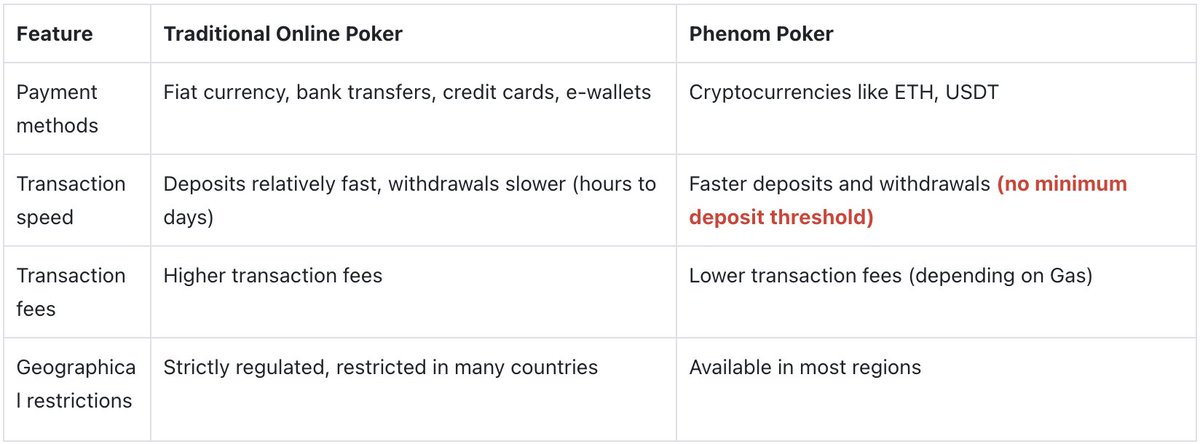
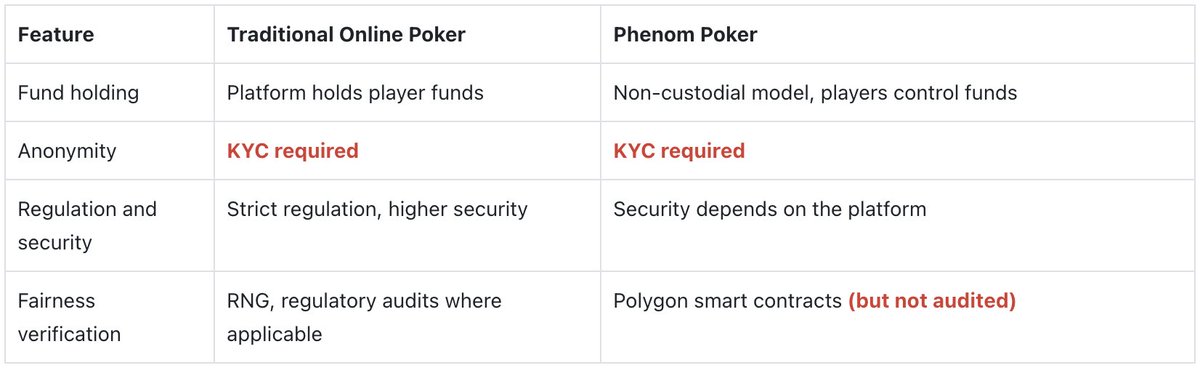
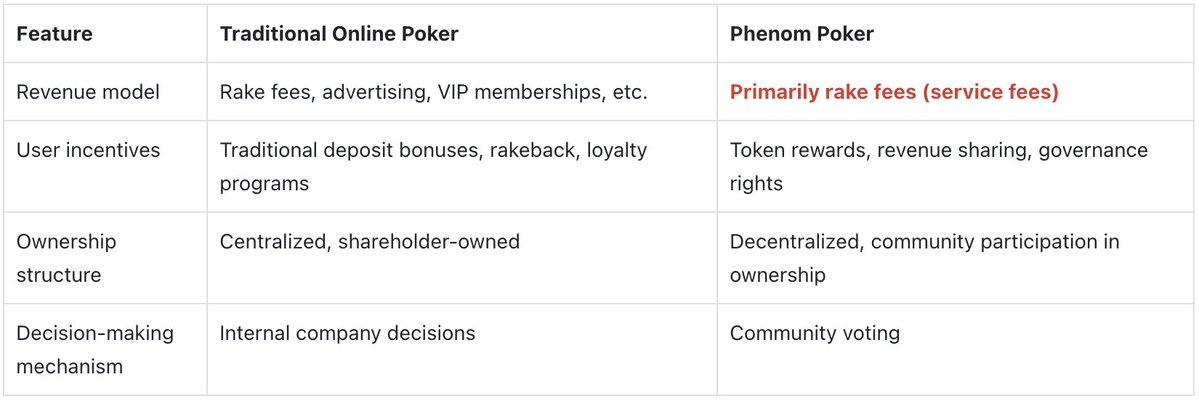
Traditional online poker platforms and Web3 Phenom Poker differ significantly across multiple dimensions:
(1)Payment and Transactions
(2)Security and Transparency
(3)Business Model and Incentives
Summary: Phenom Poker's Innovations
Through comparison with traditional online poker platforms and other Web3 poker projects, Phenom Poker demonstrates the following core innovations:
1. True community ownership model
Phenom Poker's most significant innovation lies in its true implementation of the "players as owners" concept:
▪️Differentiation: Unlike other platforms, Phenom truly realizes the "players as owners" concept
▪️Implementation: 50% of tokens distributed to the player community, ensuring players have substantial voice
▪️Value proposition: Player interests deeply bound with platform interests, incentivizing long-term participation
In contrast, while ICE Poker also adopts token incentives, it does not explicitly distribute platform ownership to players
2. Direct Revenue Sharing Mechanism
Phenom Poker's revenue sharing model is transparent:
▪️Differentiation: 50% of net income automatically distributed to token holders, directly sharing in platform success
▪️Implementation: Automatically paid weekly in USDT form, no additional actions required
▪️Value proposition: Provides passive income stream, enhancing user stickiness and platform loyalty
3. Low Barrier to Entry Model (Even Zero Entry Barrier)
▪️Differentiation: No need to purchase expensive NFTs (compared to ICE Poker's $3,700 entry fee)
▪️Implementation: Earn tokens through gameplay and referrals, truly achieving "play-to-earn"
▪️Value proposition: Lowers entry barriers, expanding potential user base (no minimum entry capital requirement)
This low-barrier strategy helps attract traditional poker players to the Web3 space, expanding the user base.
4. Value-Anchored Token Economy
▪️Differentiation: Token value directly linked to platform's actual revenue, not speculation-driven
▪️Implementation: Price automatically calculated based on formula, with price protection mechanisms
▪️Value proposition: Provides stable, predictable token value growth path, reducing volatility
5. Closed-Loop Token Ecosystem
(Compared to ICE tokens that can go to nearly $0, in the special industry of poker, standalone tokens may even have advantages, as the closed-loop design may protect token value from external speculation)
▪️Differentiation: Tokens not traded on external exchanges, maintaining circulation within the community
▪️Implementation: Can only be redeemed through the platform, cannot be transferred to other parties
▪️Value proposition: Ensures 100% ownership remains within the poker community, preventing interference from speculators
Phenom Poker represents a bold innovative attempt of Web3 in the online poker space. By directly distributing platform ownership and revenue to the player community, Phenom Poker is challenging the business model of traditional online poker platforms and exploring a more decentralized, transparent, and user-friendly development path.
Despite facing multiple challenges such as governance evolution and regulatory compliance, Phenom Poker's innovative model still demonstrates significant potential. If it can successfully address these challenges, Phenom Poker has the potential to become a benchmark project in the Web3 gaming space and bring transformative impact to the traditional online poker industry. However, it's worth noting that its closed economic model and smart contract security could become its sword of Damocles!
5
17
1,990

29 Feb 2024
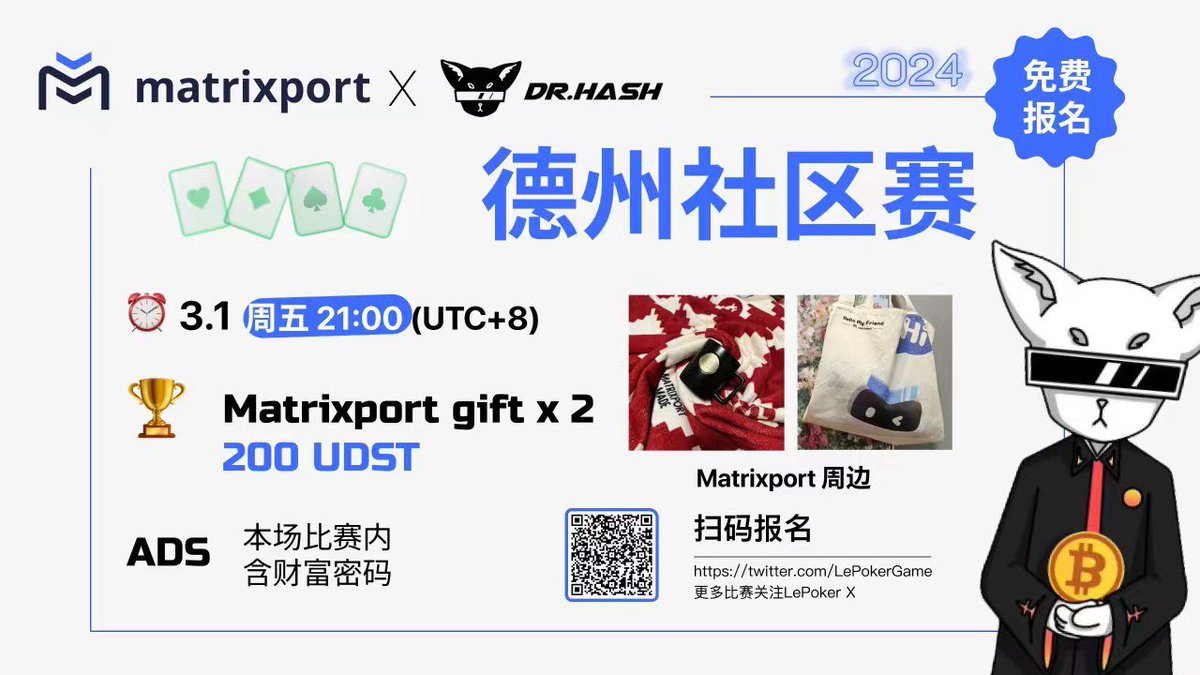
#Matrixport X Dr.Hash 德州锦标赛来啦!!!
免费报名
⏰ 比赛时间:3月1日 21:00 (UTC 8)
🏆总奖池: 200 UDST 2份 Matrixport 精美周边
财富密码:加入教授基金在 Matrixport 的私域策略 #BlockInfinity #,专属访问码 LY901 ,共同增长财富!
(复制本口令打开 Matrixport APP 直接访问)invest.matrixport.com/fund/z…
奖池:
🥇第一名 :50 USDT & Matrixport gift
🥈第二名:30 USDT & Matrixport gift
🥉第三名:20 USDT
🏅 第四-第十名: 10 USDT
🏅第十一-第十六名 : 5 USDT
更多比赛更新 : linktr.ee/lepoker
点击下方 ⬇️ 🚀参与比赛 一键报名 t.me/DrHashClub
1
1
5,738



25 Nov 2017
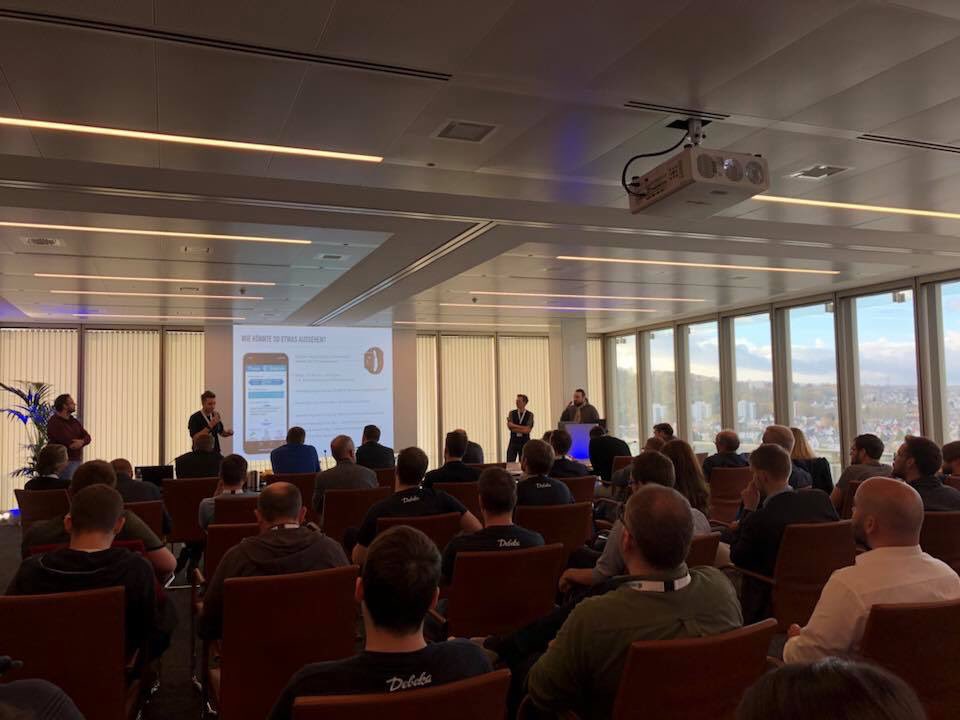
BlockInfinity on stage at #insurhack
8 Oct 2017

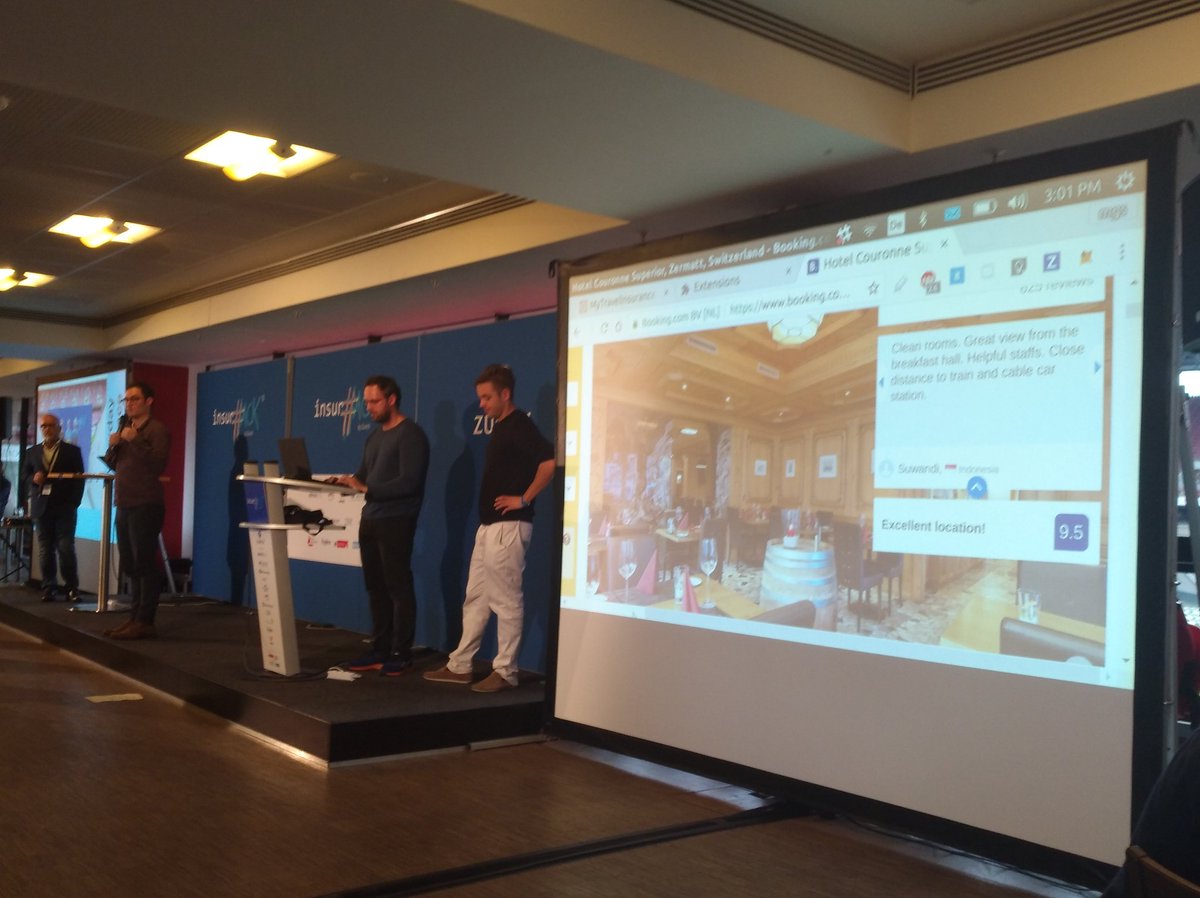
FlightDelay Skiing holiday weather insurance from blockinfinity.com #insurhack #blockchain #ethereum @blockchain_comp @zurich_de
2
25 Nov 2017
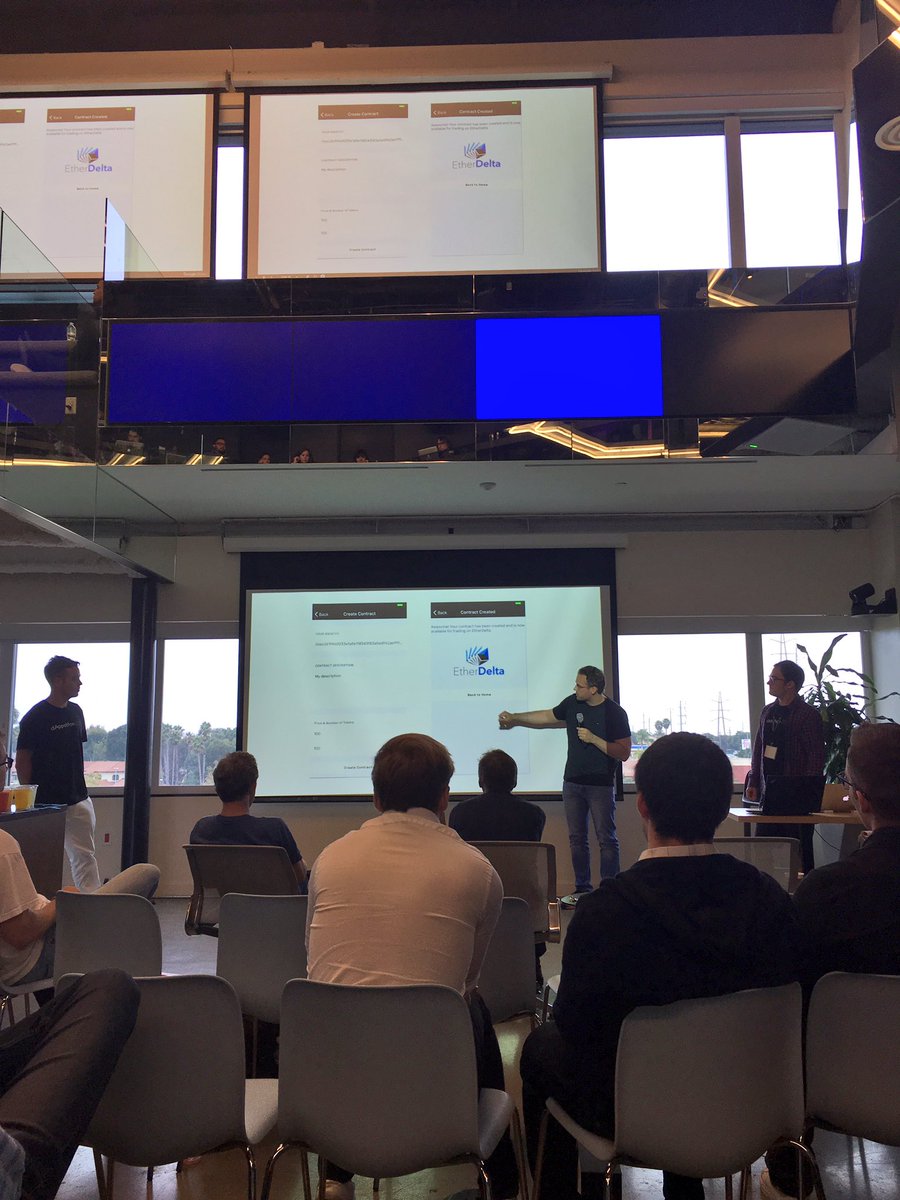
BlockInfinity at the DAppathon in Manhattan Beach, Los Angeles.

Hc2 allows you to sell your future work hours to finance your education. Team BlockInfinity. #dAppathon
1
4

Hc2 allows you to sell your future work hours to finance your education. Team BlockInfinity. #dAppathon
6