
Apr 28
What are Consiliums in Ubix.Network?
Unlike traditional blockchain networks, where all nodes follow the same rules, UBIX uses the Consiliums model — independent blockchains within the network. Each consilium (or "consensus") has its own rules, consensus mechanism, and even tariffs.
🔹 What is a Consilium?
A Consilium is an integrated blockchain that operates according to its own rules and can have its own network of participants. It is an ideal tool for creating specialized blockchains that can function within the broader UBIX ecosystem. Each node in the network can belong to several consiliums, creating a flexible model of interaction.
🔹 Key Features of Consiliums:
Each Consilium has its own consensus mechanism, allowing customization for specific use cases.
The ability to implement different rules and settings, which is convenient for businesses that want to create unique blockchains.
Provides high scalability because new blockchains can be added without significant changes to the main network.
💡 This approach transforms UBIX into a platform for blockchain customization, where every business can build its own unique infrastructure.
#BlockchainModularity #Web3 #Innovatio
6
27
671

Jan 11
Supermodularity as the Core of Rialo's Modular Blockchain Evolution
1/5: Blockchain design has long debated modularity vs. monolithicity. @RialoHQ research elevates this, arguing that true value emerges when components combine to create exponential synergies. Unlike basic modularity (decoupling layers like consensus and execution), supermodularity ensures the whole exceeds the sum—vital for throughput, speed, and composability in modern chains. Drawing from economic theory, it reduces inefficiencies like double marginalization, where layered costs compound. Rialo positions this as foundational for scalable DeFi and beyond, addressing early debates where monolithic designs prioritized simplicity but limited upgrades. #Rialo #BlockchainModularity
2/5: Technically, supermodularity is rooted in set theory: for a function f, it's supermodular if f(A ∪ B) f(A ∩ B) ≥ f(A) f(B). In Rialo, apply this to layers—e.g., parallel execution (boosting TPS) combined with privacy modules yields secure, high-speed apps. Compare to Ethereum's rollups: modular but suboptimally synergistic due to gas overheads. Rialo's approach minimizes this by designing interfaces for emergent utility, like staking yields feeding directly into service credits. Analysis: This could cut dev costs by 40%, per implied middleware critiques in docs, enabling more innovative dApps without redundant layers.
3/5: Use case deep dive: In RWAs, supermodularity lets tokenized assets (e.g., real estate) interact with AI agents for automated yields. Monolithic chains like early Bitcoin struggle here, as tight coupling limits upgrades. Rialo's supermodular staking (Stake-for-Service) supermodularly enhances this, converting yields to ops credits without separate tokens—solving capital-consumption splits. Critique: Over-reliance risks fragmentation; Rialo counters with standardized composability protocols, ensuring ecosystem cohesion.
4/5: Future implications: As blockchains integrate Web3 with AI, supermodularity enables hybrid ecosystems—e.g., Rialo interoperating with Solana for parallel privacy. Technical challenge: Balancing submodular elements (e.g., consensus security) requires game-theoretic modeling. Rialo's research hints at simulations showing 10x adoption gains in sensitive sectors like healthcare data, where privacy and execution layers combine for compliant, efficient systems.
5/5: Why it matters for devs: Build supermodular contracts on Rialo for apps that scale virally. Thoughts on modularity's next wave? #CryptoTech


It is truly unfortunate to see the recent news of Ledger users facing the stress of the Global-e data breach.
This situation proves a critical, if painful, point: true security must extend far beyond the hardware itself to protect the people behind the devices.
Even if your device is secure, your data remains a systemic liability if it resides in a centralized, plaintext database.
3
6
145

6 Aug 2025
🔥 Anoma is redefining blockchain interoperability with fractal scalability! By enabling:
✅ Modular chain composability
✅ Custom security/speed tradeoffs
✅ Unified developer experience
✅ Cross-chain atomic settlements
It solves the biggest pain points of:
✨ Fragmented liquidity ✨ One-size-fits-all chains ✨ Isolated ecosystems
The fractal architecture empowers:
🔹 Global financial rails
🔹 Hyperlocal dApps
🔹 Enterprise-grade private chains
🔹 Gaming-optimized ledgers
All while maintaining:
📌 Consistent state management
📌 Shared security pools
📌 Seamless asset transfers
No more compromises between:
⚡ Throughput vs decentralization
🔐 Privacy vs composability
🌐 Global vs local use cases
Anoma delivers:
🚀 Purpose-built chains
🧩 LEGO-like flexibility
🤝 Native interoperability
💡 Intent-centric design
The future is fractal! #Anoma #BlockchainModularity
1
2
36

7 Jun 2025
8/ 🚀 Why It’s a Game Changer:
Rome’s modular approach separates sequencing from execution, letting L2s focus on what they do best. It’s a scalable, decentralized path to a unified blockchain future. #BlockchainModularity
2
32

12 May 2025
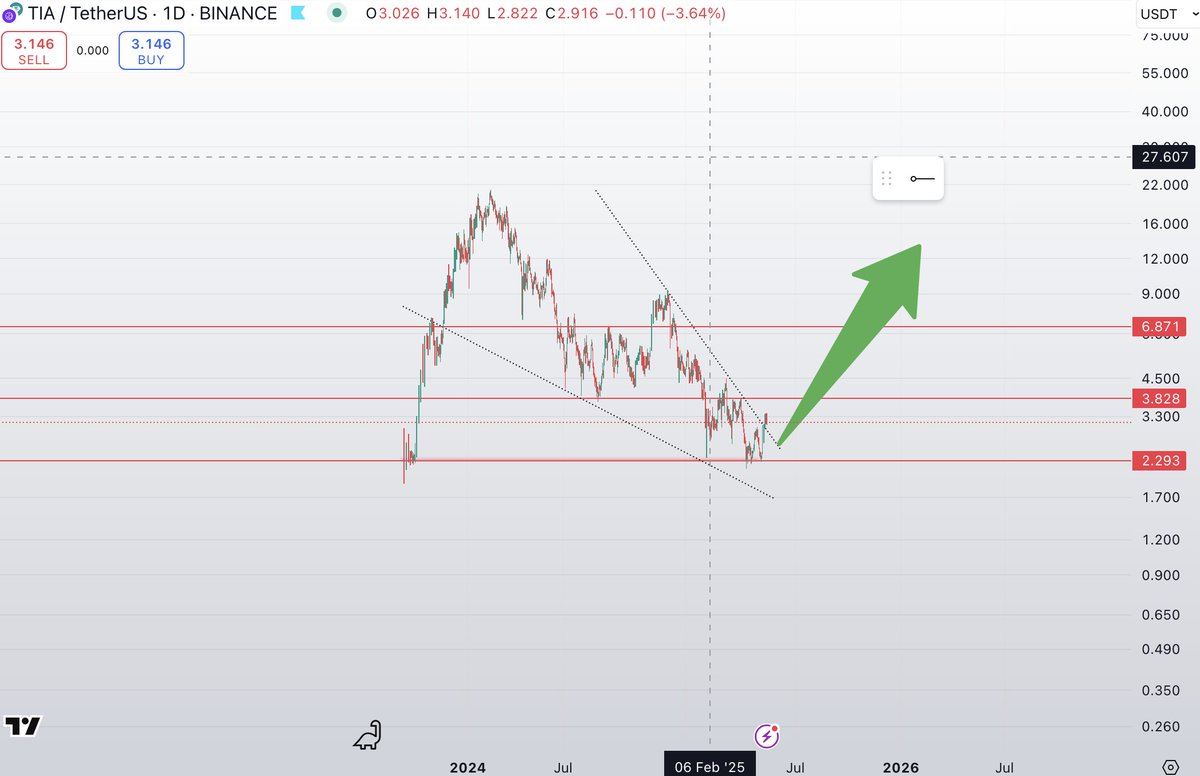
🧠 $TIA at $2.50 — “I don’t get it… blocks inside blocks?”
📈 $TIA at $6.00 — “Maybe this modular thing actually makes sense?”
🚀 $TIA at $25.00 — “ALL IN! This is a blockchain revolution! It’s the Apple of Layer 1s!” 💸
This isn’t investing — it’s the journey from “I don’t understand” to “Why didn’t I buy more?” 🎢
Those who studied Data Availability are already on the ranch 🧢
#TIAcoin #CelestiaRun #BlockchainModularity
1
6
2,164

10 Apr 2025
Ethereum is focused on modular upgrades instead of monolithic architecture. Will this modular future win the scalability race? #Ethereum #BlockchainModularity #ETH #DeFi #DeFi #BTC Layer 2 scaling. Early adopters win. #Blockchain Community is strength. Community is strength.
1
2
25

Get ready for the future of tech! @0G_labs fuses AI precision with blockchain modularity, crafting a bold new frontier for adaptive, decentralized networks.
ØgLabs
#AIPrecision #BlockchainModularity #DecentralizedNetworks #AdaptiveBlockchain #TechInnovation #AIBlockchainFusion

4
6
88

8 May 2024
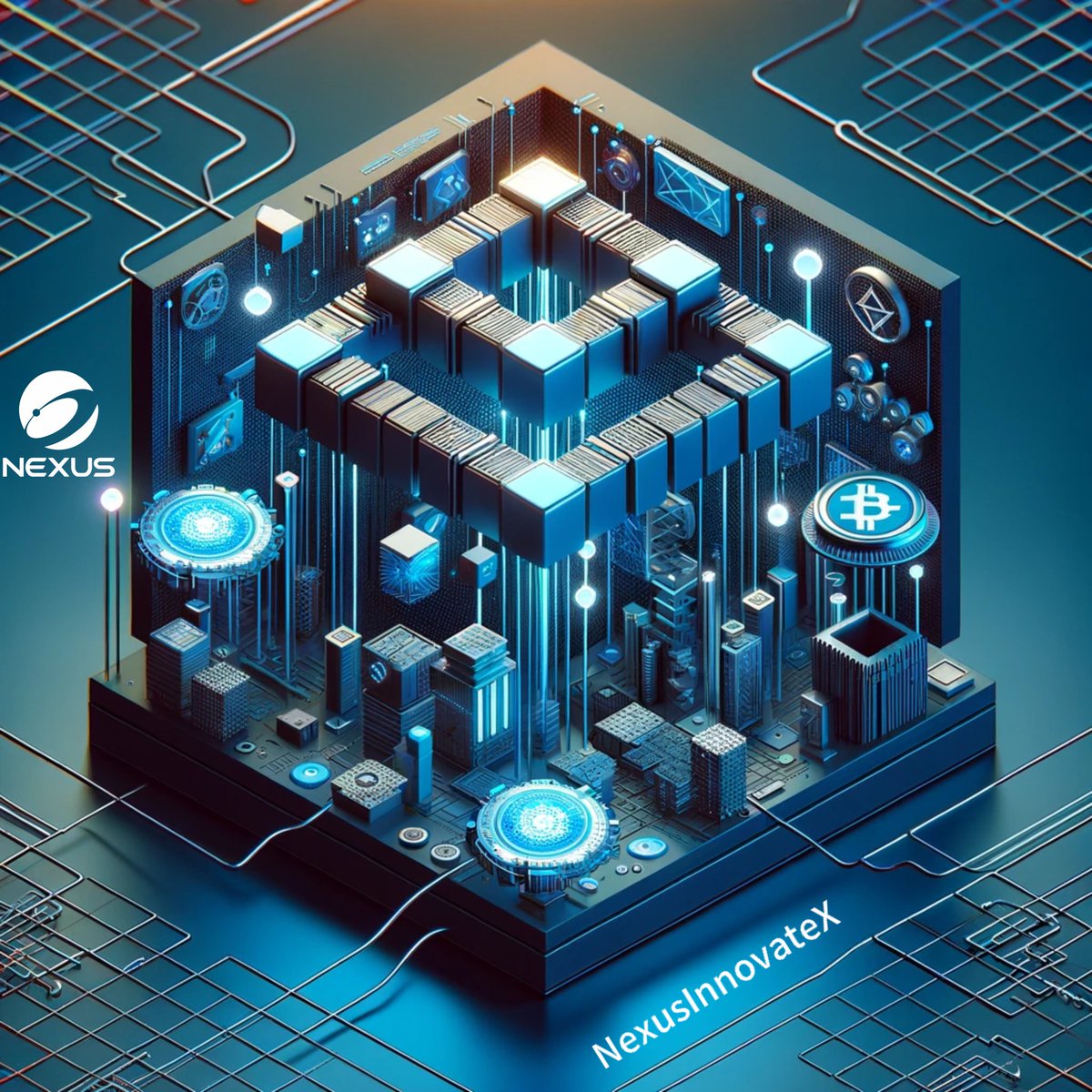
Our 3D Chain architecture mirrors the latest #BlockchainModularity trends, offering unparalleled scalability and flexibility. How do you prefer to maximize your crypto? Liquid staking or traditional? Comment below! 🔽 $NXS #Cryptocurency #Staking
1
2
5
100

14 Apr 2024
🌟 If You find this thread useful Repost it & Follow us for More Latest Crypto Analysis, News, Updates & Crypto Insights @crypto__fossa 🙏🏻 #CryptoFossaGems🏹
#Dymension #BlockchainModularity #RollApps #DeFi #NFTs #CryptoGaming #CryptoNews #BlockchainTechnology #CryptoInfluencer
2
16