
This is what Claude says about the build currently.
KinetiCAD
The stack
React 19 with Vite 8 and TypeScript 6 in strict mode for the front end. Three.js r184 running on WebGPU for rendering (no WebGL2 fallback, intentionally cutting-edge target). OpenCascade.js handling B-rep modelling in a Web Worker via Comlink. Rapier3D 0.12.0 doing physics in a separate Web Worker. Zustand for state. Tailwind for styling. WASM modules loaded from CDN for production reliability.
The two-worker architecture matters: CAD compilation and physics solving stay off the main thread, so the UI never stutters while the engine grinds.
What it does
Parametric modelling end to end. Sketch on global planes, extrude with Add / Cut / New Body operations, boolean Union / Subtract / Intersect on within-part features, multi-feature parts with full feature trees, edge and face picking with topology metadata, joint creation (Revolute with motor, Fixed), live physics simulation with step diagnostics.
All in the browser. No server-side computation. No installs.
The hard problem we cracked
Mate pivot points were being stored in world coordinates and passed to Rapier, which expects part-local frame. Rapier's constraint formula is anchor = bodyPosition bodyRotation × pivotLocal. When you feed it world coordinates as local, the anchor swings in an arc as the body rotates and the whole part orbits instead of spinning in place.
Fix: a worldToLocalPoint conversion at mate creation time, converting the captured pivot from world space to each part's local frame before storing. Three line change to the pivot validation function. Anchors now coincide at sim start so no jump, and the local-frame Z-component stays invariant under Z-axis rotation so no drift.
The maths (the receipts)
Target: 30 RPM = π rad/s = 3.141592653589793
Measured on the deployed build, windmill rotor with 4 blades and inner hub:
bodyBangvelMag: 3.14159270 to 3.14159298 (sample range) bodyBangvel.x: 3.24e-16 bodyBangvel.y: -3.78e-10 bodyBangvel.z: 3.14159
Error from π: 3e-7 rad/s. Stability: ±5e-7 across 23 seconds of simulated time. Off-axis components at the floating-point precision floor.
Better than 1 part in 10 million accuracy, with zero drift over a long run. Industrial CNC machine tolerances aim for 1e-3 to 1e-5. This is two orders of magnitude tighter.
What's NOT tested
I'm being upfront. We've verified the Revolute mate path and the basic modeller flow that produced the windmill. I have NOT this weekend re-verified: boolean operations across edge cases, mate types other than Revolute and Fixed, multi-mate kinematic chains, the hole feature, save/load (which doesn't exist yet), multi-loop sketch profiles, sketch on a selected face. The README documents the known issues honestly.
Anyone forking this gets a working demo and a clear list of what to build next. Pull requests welcome.
2
343

24 Apr 2025
Golf Tip: Stop Rotating Your Upper Body! Shift Weight Instead
#GolfSwing #GolfTips #GolfLesson #GolfDrills #ImproveYourGame #GolfTechnique #BodyRotation #WeightShift #GolfFitness #GolfTraining
3
23
218
52,680

20 Nov 2024
Get that club to whip through by rotating your body. Open your hips and let the momentum work for you. That’s how you finish strong! #OpenSwing #BodyRotation
4
48
7,794

30 Aug 2024
A lot of coaches teach to have a smooth entry with the hand in freestyle. We disagree. It’s much faster to aggressively enter the water with your arm extended as far as possible.
Here’s a sneak peak at our upcoming video release on our subscription (check out our website) where national swimmer Jerome Heidrich was slowing down his hand before entering the water.
Through our progression of drills we had Jerome aggressively throwing his hand into the water, making a splash and going faster!
Sign up for the full length video only at
theraceclub.com
#theraceclub #swimtechnique #swimcoach #trcswimcamp #swim #swimming #swimcamp #freestyle #bodyrotation #couplingmotions
1
5
20
1,678
19 Aug 2024
The 6 kick body switch drill maybe the most transformative drill for freestyle (and backstroke).
At first most swimmers will feel a ‘sticky spot’ as they rotate the body from one side to another.
Ralf Tribuntsov shows us what that ‘sticky spot’ looks like in the first part of this video. We call it a 2 step rotation.
The core is used to relaxing during this 'sticky spot' where the rotation slows down.
Unlearning this is critical to get a fast and efficient stroke.
After working on this drill for a few 25’s Ralf shows us what a smooth, powerful and fast rotation looks like.
Combine this motion with strokes and he’s going to be much faster!
#theraceclub #swimtechnique #swimcoach #trcswimcamp #swim #swimming #swimcamp #freestyle #bodyrotation #couplingmotions
1
8
32
2,465
8 Mar 2024
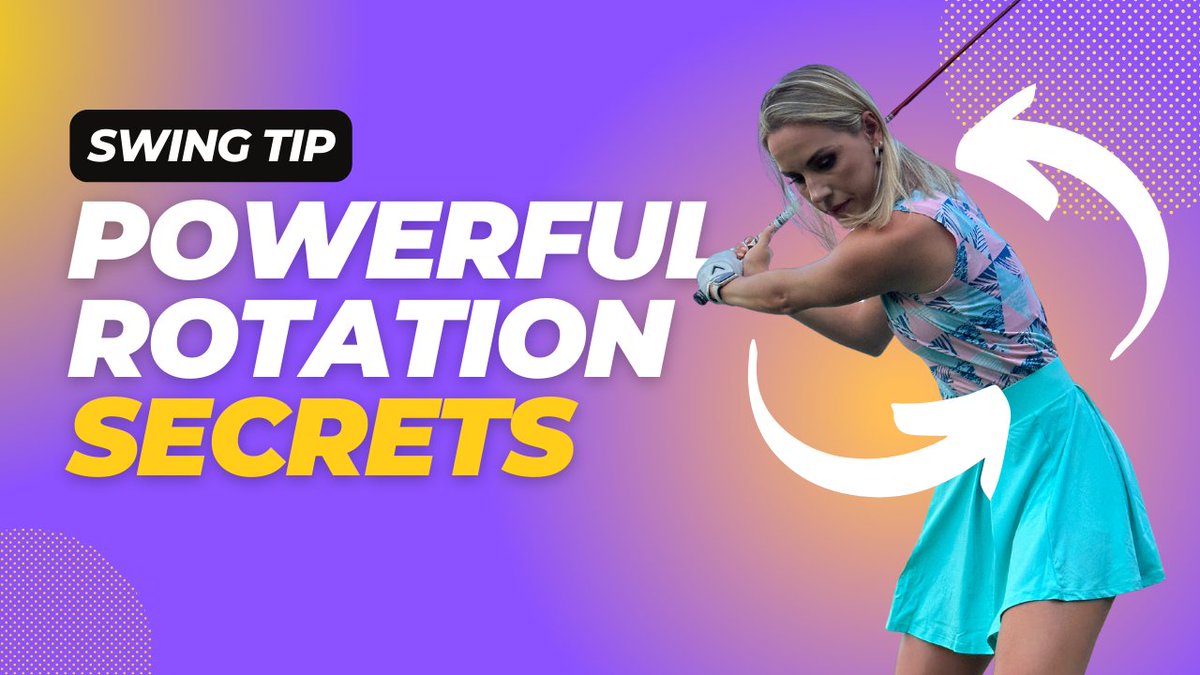
🌟Unlock a More Powerful and Accurate Golf Swing with these BODY ROTATION SECRETS!
Dive into the essentials with my latest video on YouTube 👉 youtu.be/_SnG20lkcEc?si=HwQb…
#bodyrotation #golftipsdaily #golftips #coachcarolin #golfcoach #golfswing #golfing #golfgirl
4
993

6 Oct 2020
有償のアセット買わなくても以下を制御するスクリプト書くだけで出来ます
SetIKPositionWeight, SetIKRotationWeight, SetIKPosition, SetIKRotation -> 手足の位置・回転
SetLookAtWeight, SetLookAtPosition -> 見てる物の位置
bodyPosition, bodyRotation -> 腰の位置・回転
1
1
3

24 Jun 2019
By slowing down the backswing, you give the shoulders and hips more time to turn, then you can turn on the power!! #garethmaybingolf #galgormcastle #whataview #bodyrotation
4
1
45
18 Apr 2018
Fun to see some great improvement to Declan’s swing, body now moving much more efficiently. #garethmaybingolf #galgormcastle #bodyrotation #sequence #speed #legaction
1
9
2 Apr 2018
Really sound advice for young kids! #garethmaybingolf #galgormcastle #dontrushit #fundamentals #bodyrotation #drivechipandputt #masters
1
1
11
24 Mar 2018
A better understanding of how the body should work through the swing has helped Olivia in her long game and also filtered into her short game. #garethmaybingolf #galgormcastle #bodyrotation #athletic #throwingballs
7
10 Mar 2018
Pretty impressive at 12 years old! #garethmaybingolf #galgormcastle #speed #spin #bodyrotation #shortgame
3
15
20 Feb 2018
Great job by this student learning how to use his body better to allow him to cover the ball for more compression and consistency. #garethmaybingolf #galgormcastle #bodyrotation
1
12

16 Aug 2017
Not Enough Space To Walk In VR Solution? Tiny Little Balls #StriderVR @striderVR
youtube.com/watch?v=UZP942aP… #BodyRotation and #LinearMovement
16 Jun 2017
5
11

20 Feb 2017
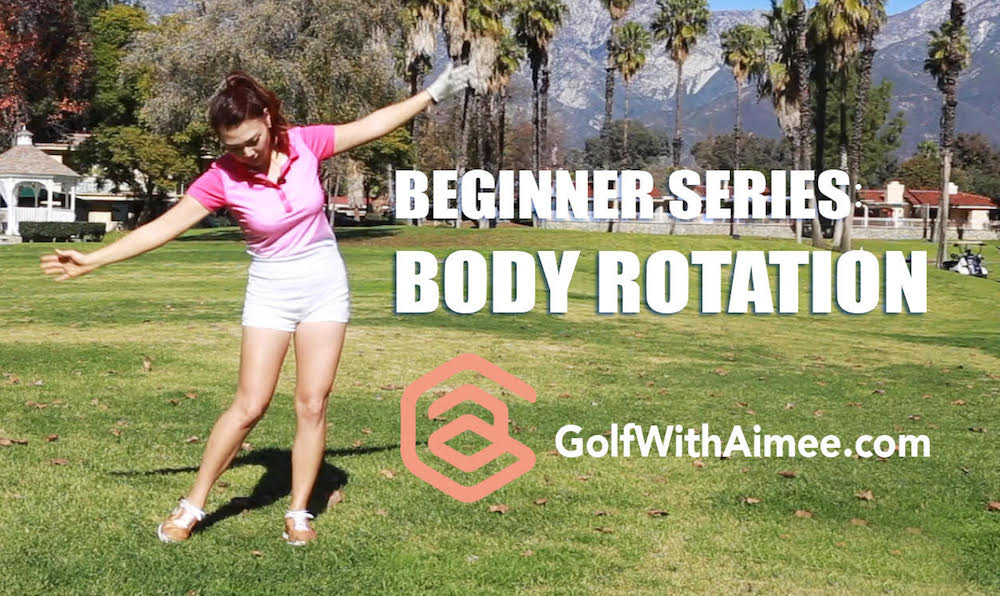
Excited to bring you the 2nd vid in the beginner series - #BodyRotation - golfwithaimee.com/swing-like… #golf #golflessons #practicemakesperfect
2

4 Jan 2017
SWINGFIX video coming tomorrow about #bodyrotation and how too much could be bad for a short… instagram.com/p/BO26kaWDSQy/
1
4 Jan 2017
SWINGFIX video coming tomorrow about #bodyrotation and how too much could be bad for a short #swing #golf #Yorkshire
1
3

18 Nov 2016
Love this from #leetrevino could watch them swings all day #bodyrotation #golfswing #golfer… instagram.com/p/BM8kE_KjWjU/
3

18 Apr 2016
Great #Drill for Stabilizing the #ClubFace with Better #WristConditions and #BodyRotation on the… instagram.com/p/BEVGkGpQkY5/
1