
11 Dec 2024
Primary Hyperhidrosis
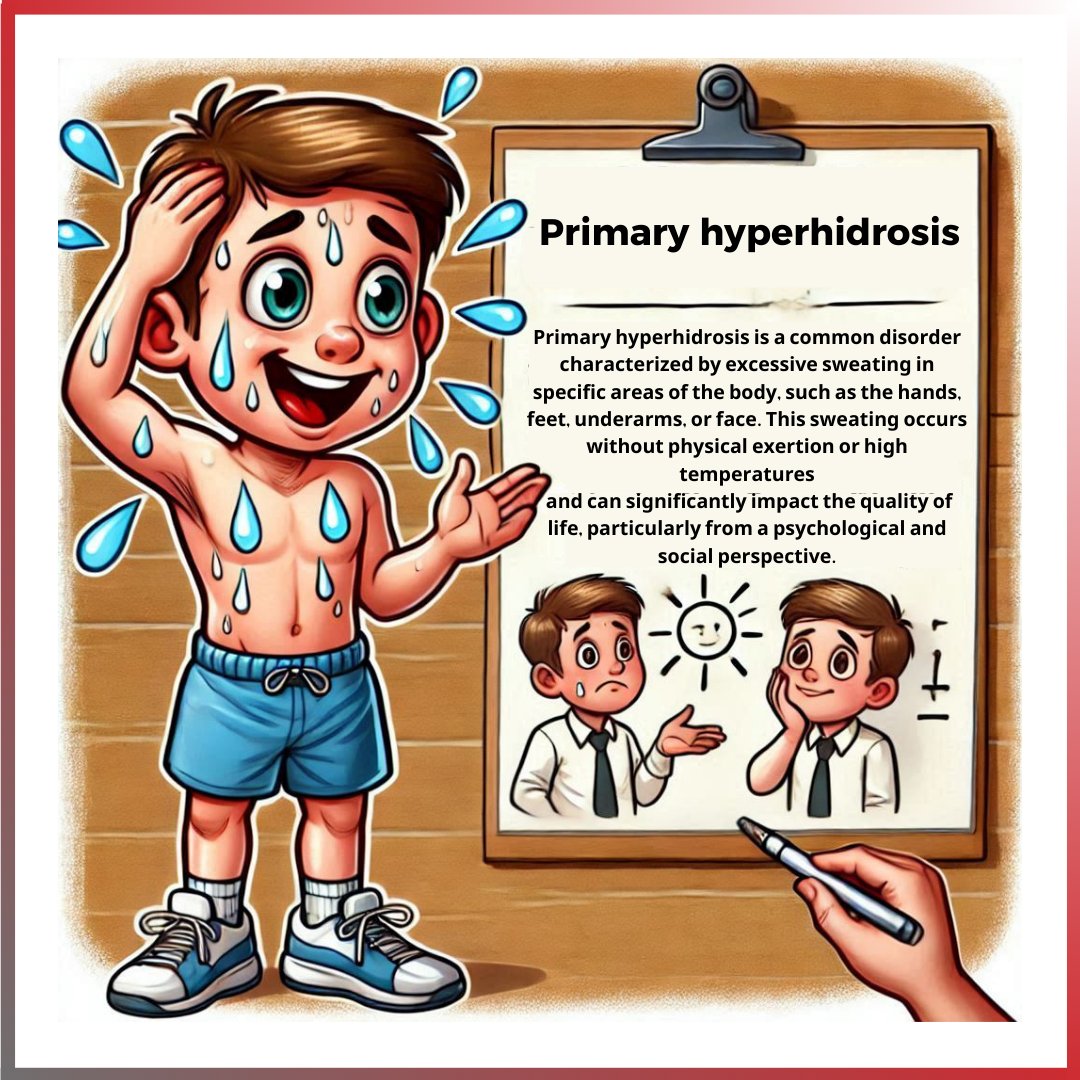
Primary hyperhidrosis is a common disorder characterized by excessive sweating in specific areas of the body, such as the hands, feet, underarms, or face. This sweating occurs without physical exertion or high temperatures and can significantly impact the quality of life, particularly from a psychological and social perspective.
----------------------
Causes of Primary Hyperhidrosis
Primary hyperhidrosis is not linked to general health problems like infections or glandular diseases. The primary causes include:
1. Overactivity of the Sympathetic Nervous System:
- The sympathetic nervous system, responsible for stress responses, including activating sweat glands, becomes overly active without any clear trigger.
2. Genetic Factors:
- Studies suggest genetic predisposition plays a role, increasing the likelihood of developing the condition if a family member is affected.
3. Unspecified Gland Dysfunction:
- Some researchers believe the overactivity of sweat glands themselves might be the root cause.
----------------------
Common Symptoms of Primary Hyperhidrosis
1. Excessive Sweating in Specific Areas:
- Commonly affected areas include the hands, feet, underarms, and face.
- Sweating is usually symmetrical (occurs equally on both sides of the body).
2. Profuse Sweating Without Triggers:
- Sweating can occur at any time, even during rest or in cold weather.
3. Psychological and Social Impact:
- Embarrassment in social situations or at work.
- Reduced quality of life due to constantly managing sweat, such as changing clothes or dealing with sweaty hands.
----------------------
Preventive Measures for Primary Hyperhidrosis
While the condition cannot be entirely prevented, the following steps can help reduce its severity:
1. Using Strong Antiperspirants:
- Products containing aluminum salts (e.g., aluminum chloride) help block sweat ducts.
- Regular application, preferably on dry skin before bedtime, is recommended.
2. Avoiding Dietary Triggers:
- Spicy foods, hot beverages, and stimulants can exacerbate sweating.
3. Managing Stress and Anxiety:
- Stress activates the sympathetic nervous system, increasing sweat production.
- Techniques such as meditation, deep breathing, or yoga can help reduce stress levels.
4. Wearing Suitable Clothing:
- Opt for breathable cotton fabrics that absorb sweat and avoid synthetic materials that can worsen sweating.
----------------------
Treatment Options for Primary Hyperhidrosis
1. Medical Treatments:
- Prescription Antiperspirants:
Contain higher concentrations of aluminum chloride compared to over-the-counter products.
Recommended and monitored by a doctor.
- Oral Medications:
Anticholinergic drugs like glycopyrrolate reduce gland activity.
Possible side effects include dry mouth and vision disturbances.
2. Non-Surgical Treatments:
- Botox Injections:
Botulinum toxin injections target and inhibit sweat glands in the affected areas.
Results last for 6-12 months and require regular maintenance.
- Laser Treatment:
Laser therapy destroys sweat glands in the treated area.
Provides long-term results with minimal side effects.
3. Surgical Treatments:
- Surgical Removal of Sweat Glands:
Involves removing sweat glands in highly affected areas, such as the underarms.
Used as a last resort and offers permanent relief.
- Thoracic Sympathectomy:
A surgical procedure to cut or suppress nerves responsible for signaling sweat glands.
Reserved for severe cases unresponsive to other treatments.
4. Iontophoresis:
A device passes a low electrical current through the skin to reduce sweating in hands and feet.
Requires regular sessions for effective results.
----------------------
Psychological and Social Impact of Primary Hyperhidrosis
Hyperhidrosis affects more than just physical health; it significantly impacts mental and social well-being:
- Shame and Social Withdrawal:
Sufferers may avoid shaking hands or sharing tools and equipment.
- Reduced Confidence:
Constant embarrassment lowers self-esteem.
- Anxiety and Depression:
Hyperhidrosis can worsen existing anxiety or depression.
When to See a Doctor?
Seek medical advice if:
1. Sweating is excessive and disrupts daily activities.
2. Over-the-counter antiperspirants fail to control the condition.
3. Other symptoms such as weight loss, rapid heartbeat, or night sweats occur (these could indicate other health issues, such as hyperthyroidism).
----------------------
Conclusion
Primary hyperhidrosis is a condition that significantly impacts those affected. Management options range from over-the-counter antiperspirants to advanced treatments like Botox, laser therapy, and surgery for severe cases. The key to managing the condition lies in understanding it, seeking the right treatment, and maintaining confidence and social engagement.
#Primary_Hyperhidrosis #Excessive_Sweating #Skin_Health #SelfCare #Hyperhidrosis_Treatment #Health_Tips #Excessive_Perspiration #Mental_Health #Botox_For_Sweating #Hyperhidrosis_Management #Natural_Remedies #Healthy_Lifestyle #Laser_For_Sweating #Daily_Care #Confidence_Boost #Primary_Hyperhidrosis_Care #RAITI #RAITI_Medical
References
pmc.ncbi.nlm.nih.gov/article…
mayoclinic.org/diseases-cond…
3
2
402