
Jun 14
**🧠 NEURALINK — BEYİN-BİLGİSAYAR ARAYÜZÜNDE YENİ DÖNEM**
━━━━━━━━━━━━━━━
**📌 OLAYIN ÖZÜ**
🔹 Elon Musk: Neuralink felçli bireylerin hareket yetisini, görme engellilerin görme yetisini geri kazandırabilir.
🔹 Şirket 2026 itibarıyla 3 aktif klinik çalışma yürütüyor: Telepathy, VOICE, Blindsight.
🔹 Toplam implant sayısı: ABD'de 11, İngiltere'de 7, Kanada'da 2 — dünya genelinde 21 katılımcı.
━━━━━━━━━━━━━━━
**🔬 NASIL ÇALIŞIYOR?**
🔹 N1 çipi beyne yerleştiriliyor — nöral sinyalleri okuyup dijital komuta çeviriyor.
🔹 Hasar görmüş sinir yollarını atlıyor; beyin ile cihaz doğrudan iletişim kuruyor.
🔹 Çip 1.024 elektrot içeriyor — insan saçından ince robotik iğnelerle yerleştiriliyor.
📌 Pil kablosuz şarj — dışarıdan görünmüyor, MRI uyumlu.
━━━━━━━━━━━━━━━
**🦾 TELEPATİ — HAREKETİ GERİ KAZANDIRMAK**
🔹 İlk insan implantı: Ocak 2024 — omurilik felçlisi Noland Arbaugh.
🔹 Sadece düşünerek bilgisayar ve telefon kontrol etti.
🔹 CONVOY çalışması: robotik kol kontrolü — çok boyutlu hassas hareket gösterildi.
🔹 Hedef: dakikada 140 kelime iletişim hızı.
📌 ALS, omurilik hasarı ve beyin sapı felcinde aktif denemeler sürüyor.
━━━━━━━━━━━━━━━
**👁️ BLİNDSİGHT — GÖRMEYE KAVUŞMAK**
🔹 Gözleri ve optik siniri atlayarak görsel kortekse doğrudan sinyal gönderiliyor.
🔹 Doğuştan kör bireyler dahil, hiç görmemiş kişilerde de çalışabilir.
🔹 FDA "Breakthrough Device" (öncü cihaz) statüsü aldı — Haziran 2025.
🔹 İlk insan implantı: BAE'de Cleveland Clinic Abu Dhabi iş birliğiyle 2026'da planlandı.
📌 Musk: yeterli elektrotla doğal görme kapasitesini aşabilir — kızılötesi bile mümkün.
━━━━━━━━━━━━━━━
**🗣️ VOICE — KONUŞMAYI GERİ KAZANDIRMAK**
🔹 Konuşma üretiminden sorumlu beyin bölgelerini okuyor.
🔹 Hedef: ALS ve felç nedeniyle konuşma yetisi kaybolanlara gerçek zamanlı konuşma.
🔹 FDA "Breakthrough Device" statüsü bu çalışmaya da verildi.
📌 2026 itibarıyla aktif klinik deneme aşamasında.
━━━━━━━━━━━━━━━
**📊 RAKAMLAR & HEDEFLER**
🔹 2026: 21 aktif katılımcı — 3 ülke.
🔹 2031 hedefi: 20.000 implant.
🔹 Şirket değeri: ~9 milyar dolar (2023 yatırım turu).
📌 Rekabet: Synchron, Blackrock Neurotech, BrainGate — ama Neuralink en hızlı büyüyen.
━━━━━━━━━━━━━━━
**⚠️ RİSKLER & ELEŞTİRİLER**
🔹 Beyin ameliyatı riskleri: enfeksiyon, doku hasarı, implant arızası.
🔹 Erken denemelerde bazı elektrot iğneleri geri çekildi — sinyal kaybı yaşandı.
🔹 Uzun vadeli güvenlik verisi henüz yok.
📌 Musk'ın iddialı açıklamaları bilimsel çevrelerde "aşırı iyimser" olarak tartışma konusu.
━━━━━━━━━━━━━━━
**🎯 NETİCE**
📌 Neuralink artık hayvan deneylerinden insan klinik çalışmalarına geçti — felç, ALS ve körlükte somut sonuçlar var.
📌 Blindsight, göz veya optik sinir olmaksızın görme sağlıyorsa tıp tarihinin en büyük kırılma noktalarından biri olacak.
📌 2031'de 20.000 implant hedefi çok iddialı — ancak FDA hızlandırılmış onay sürecine aldı, teknoloji düşündüğümüzden hızlı ilerliyor.
2
262

Jun 14
A speech BCI just got more accurate using a trick from ML leaderboards: don't trust one decoder — train ten and let them vote. New from the Stanford / UC Davis / BrainGate team, the first real-time test. Word error 33.7% → 26.0%. 🧵
1
37

Jun 13
Lack of competition?
NASA and the Chinese were his competition when he got into Space.
Musk’s companies face competition across multiple high-stakes industries.
Tesla (Electric Vehicles, Autonomy, Energy)
Tesla leads in EVs but faces intense pressure globally:
1) BYD (China) Often the world’s top EV seller by volume, strong in affordable models and batteries.
2) Rivian Strong U.S.A rival with adventure-focused trucks/SUVs (e.g., R1T/R2 models directly challenging Cybertruck/Model Y).
3) Legacy automakers: Ford (Mustang Mach-E), GM (various EVs like Equinox), BMW (i4/iX), Mercedes, Hyundai/Kia (Ioniq series), Lucid (luxury range-focused).
And there’s more: Polestar, Volkswagen group, NIO.
In robotics: Waymo (Alphabet), Chinese firms, and traditional suppliers. In energy/storage: Various battery and solar players.
SpaceX (Launch, Starlink, Human Spaceflight). At the moment SpaceX dominates reusable rockets and rideshare, but rivals are advancing:
1) Blue Origin (Jeff Bezos)
2) Rocket Lab
3) United Launch Alliance (ULA) (Boeing/Lockheed) — Strong in U.S. national security/government contracts (Vulcan).
Many Others: Firefly Aerospace, Relativity Space, Arianespace (Europe), emerging players like Stoke Space or Sierra Space.
Neuralink competes with:
Synchron —Paradromics — Blackrock Neurotech, Precision Neuroscience, BrainGate.
X (formerly Twitter): Competes with Meta (Threads/Instagram), Bluesky, TikTok, traditional media.
Musks edge comes because he does compete. Governments stagnate when they don’t compete and settle for past products.
The president of SpaceX is female he promotes the best!
1
150

Jun 13
Every single thing on that list ran on public money. You just recited a list of taxpayer-funded programs and credited them to one man's generosity.
Walk your own list:
"Space capability back to America so we don't rely on Russia" — that was a NASA program. Literally. NASA's Commercial Crew Program paid SpaceX $2.6 billion in 2014 to build Crew Dragon, for the stated purpose of ending our dependence on Russian Soyuz seats. The contract is now worth about $4.9 billion. The independence you're thanking Musk for is something the public bought — we paid him to build it.
Electric cars — Tesla was nearly bankrupt in 2010 and survived on a $465 million federal Energy Department loan. Every sale was juiced by the $7,500 federal EV credit, and Tesla booked billions reselling regulatory credits to other automakers. That's not his gift to us; it's our subsidy to him.
Home solar — underwritten by the 30% federal solar tax credit. Rural internet — Washington spends billions subsidizing rural broadband; that's a government priority Starlink bills into. Brain implants — paralyzed people were already controlling computers and robotic arms through NIH- and DARPA-funded research (BrainGate) more than a decade before Neuralink, which is still in early human trials.
So no — he didn't "benefit others with his trillion." The public benefited others with the public's money, handed the companies the upside, kept none of the equity, and the man walked away the richest person on Earth. The receipts come to at least $38 billion in contracts, loans, subsidies and credits.
And even if every bit of it were pure private genius: a rocket doesn't deliver a round of chemo. A brain chip in clinical trials doesn't pay a disabled vet's monthly check. Starlink doesn't keep a rural hospital open. The VA, Medicare, Medicaid and Social Security exist to do the things innovation structurally won't — and "he made cool products" has never once been a reason a person gets to skip taxes. Your surgeon saves lives and still files a 1040.
Building things and paying your share aren't opposites. He can do both. He just doesn't.
1
1
227


these people are trying to kill the spirit of international scientific cooperation in the name of their sketchy-ass businesses
there is no “sputnik moment” in neuroscience
scientists and medical professionals publish results openly and routinely travel the world to learn the best techniques to bring home
trying to play the China card to get rid of protections on human health and safety so you can use them as guinea pigs to sell poorly-conceptualized products is not okay
and it’s not like brain chips haven’t been approved before. deep-brain stimulators are commercially available. so are auditory brainstem implants. and seizure suppressors (RNS). and spinal cord and vagus nerve stimulators. and investigational BCI has been around for literally decades (eg BrainGate).
as someone who did BCI work (and gene therapies directly injected into the brain, so, y’know, not like I’m squeamish), this mad dash to do invasive BCI ‘because it sounds cool and futuristic’ is deeply unsettling, particularly when paired with the demand we reduce protections on patient safety under the vague threat of geopolitical competition.

China’s beating the US in neuroscience:
“There is a very real possibility that without significant regulatory reform, if you’re a wealthy American, in 10 years, the only place you’ll be able to get your state-of-the-art cancer care is in Shanghai,” said Max Hodak, former president of Elon Musk’s Neuralink.
semafor.com/article/06/10/20…
1
1
11
624


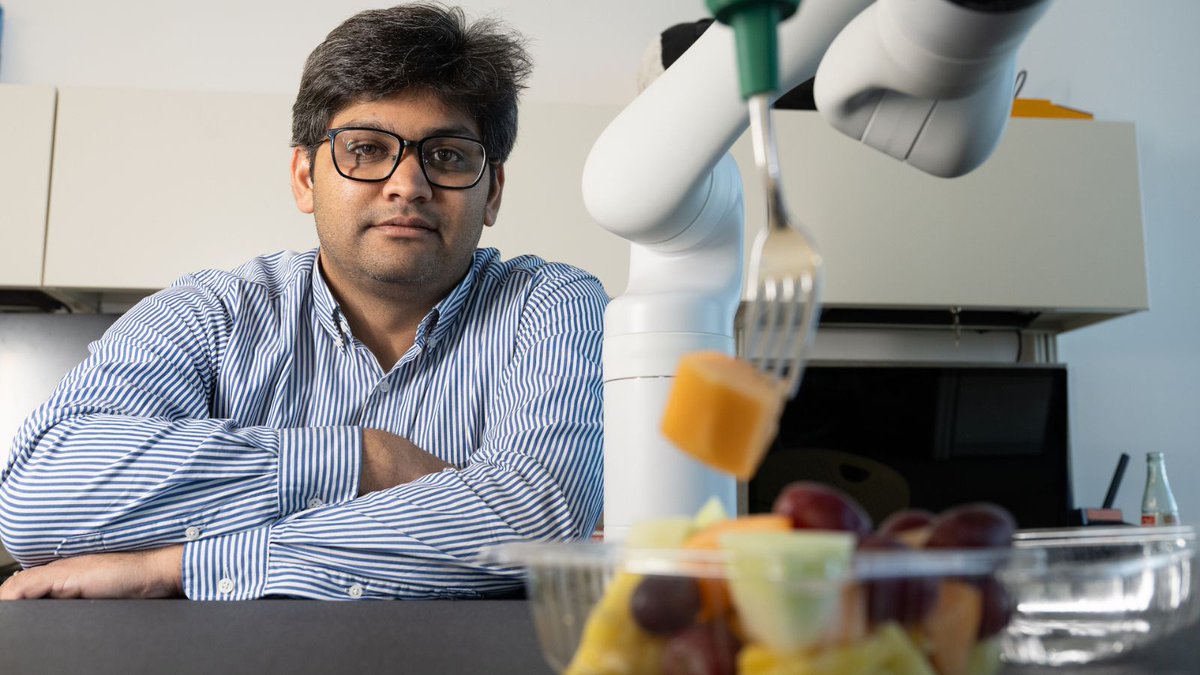
Rice and @bcmhouston are joining BrainGate, a consortium focused on clinical trials for brain-computer interfaces, to advance next-generation neuroprosthetics. The outcomes could lead to intuitive assistive robotics for people with paralysis. news.rice.edu/news/2026/clin…
1
1
6
445

May 29
We’re so excited to welcome @BCMNeurosurgery and @RiceNeuro to the BrainGate consortium!
@SameerShethMD @NicoleProvenza #NishalShah #Neurotech #BCI
bcm.edu/news/clinical-trial-…

Rice and Baylor College of Medicine are joining the @BrainGateTeam consortium to develop brain-controlled robotic assistive devices that could help people with tetraplegia eat and drink independently. #BCI #Neurotech
Find out more: news.rice.edu/news/2026/clin…
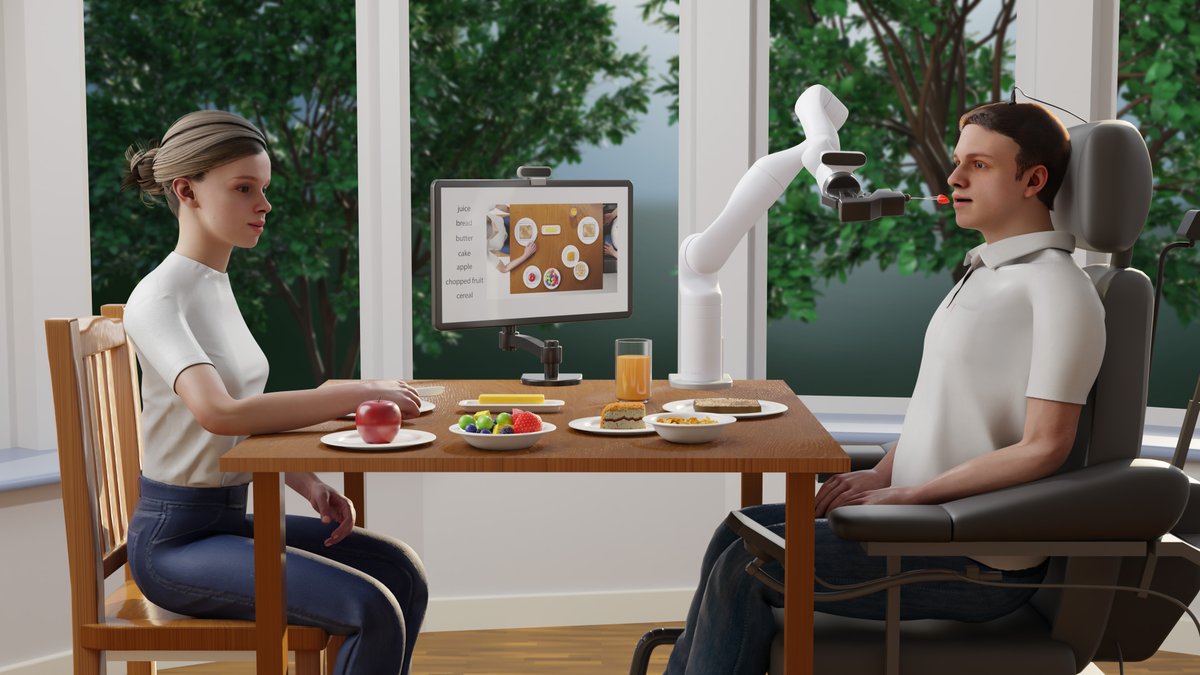
ALT AI-generated image of man seated at table and eating assisted by robotic arm controlled via brain-computer interface technology, with a woman caregiver observing
1
1
13
1,009

May 29
Excited to share our team at BCM @NicoleProvenza
and I and Rice @nishalpshah will be joining the BrainGate consortium! This clinical trial focuses on developing assistive robotic technologies for individuals with paralysis to help improve quality of life.
bcm.edu/news/clinical-trial-…
1
3
16
1,641

Congratulations @nishalpshah, @SameerShethMD, @NicoleProvenza and their team and welcome to the BrainGate Consortium! I'm very happy to be working with you.
Rice and Baylor College of Medicine are joining the @BrainGateTeam consortium to develop brain-controlled robotic assistive devices that could help people with tetraplegia eat and drink independently. #BCI #Neurotech
Find out more: news.rice.edu/news/2026/clin…
ALT AI-generated image of man seated at table and eating assisted by robotic arm controlled via brain-computer interface technology, with a woman caregiver observing
19
2,151


May 24
Excitotoxicity is simply not an in vivo concern. BrainGate, Neuralink, EcoG, our decades of DBS for movement disorders...none of these have excitotoxicity as a real risk.
These aren't neurons on a dish you're capturing from or even when when stimulate.
Im skeptical on widespread BCI use but know youre bullish. But completely concede that if it ever comes to pass for commercial use it will obviously be non invasive. But that's because of the risks of surgery, not excitotoxicity. Few would ever get a brain surgery/procedure without a brain or spinal cord problem simply because of the very real risk of the surgery itself. And of course invasive BCIs do have some real technical challenges that non invasive dont - gliosis/scarring, microforces on the implant, power constraints the first two leading to long term signal degradation.
But of course non invasive BCIs have even BIGGER technical challenges. Its the whole reason why if you have an SCI you get a Synchron or Neuralink and not a skull cap. Signal fidelity and spatial resolution. Those have improved, AI has some real potential to help in decoding poor fidelity and I do think those will continue to get better for non invasive so with you there.
1
2
52

May 24
cochlear implants have been restoring hearing since 1984. deep brain stimulators have been treating parkinson's tremors since 1997. retinal implants existed before neuralink was founded. brain-computer interfaces that let paralyzed patients move cursors shipped from braingate in 2006.
neuralink's contribution is a higher electrode count and a surgical robot that places them faster. that's genuinely useful engineering. but framing it as "he built the future" erases 40 years of neurosurgeons, biomedical engineers, and patients who volunteered for far riskier early devices with no celebrity CEO attached.
2
58

May 24
People have controlled computers with their minds since the 1970s (Jacques Vidal) and with invasive BCIs since the 1990s (locked-in patients). Tetraplegic Matthew Nagle got a Utah array in 2004 as part of the BrainGate clinical trial and controlled a computer cursor with his BCI.
1
2
79

May 10
Move your right hand right now. The brain region that just fired is the same one Neuralink is reading in Noland Arbaugh.
His motor cortex doesn't know the spinal cord is severed. When he imagines moving his hand, the same population of neurons fires that fired before his diving accident. 50 to 100 milliseconds before any muscle would have moved, those neurons send action potentials toward the spinal cord. The cord no longer carries the signal. Neuralink reads it on the way out.
The N1 implant has 1,024 electrodes spread across 64 polymer threads thinner than a human hair, embedded 3 to 5 mm into the motor cortex. Each electrode records voltage spikes from neurons within 50 to 100 microns. The chip samples at 20,000 Hz per channel and an ML decoder maps the firing pattern to cursor velocity.
Here's the part that matters. About a month after surgery, Neuralink disclosed that 85% of Arbaugh's threads had retracted from his cortex. He went from 1,024 electrodes to roughly 150. He kept his cursor control. Neuralink rewrote the decoder, and his bits-per-second eventually exceeded the pre-retraction baseline.
That tells you where the progress is. Matthew Nagle controlled a cursor with a 96-electrode Utah array in 2004. BrainGate participants have been typing, moving robotic arms, and playing video games for two decades. The hardware jump from 96 to 150 working electrodes is incremental. The decoder jump is where the curve bends.
Neuralink's actual contributions are specific. Robotic implantation. Wireless link. Fully implanted form factor. A decoder that kept performing when 85% of the hardware failed. The chip intercepts motor commands the brain was already producing, and the algorithm gets sharper at reading them.
The 4.0 GPA, the speaking career, the book are all downstream of one thing. Arbaugh moves a cursor using the same neural population he used before he was paralyzed. That's the trick the field has been refining since the Utah array hit human cortex in 2004.

Noland Arbaugh’s life has been completely transformed
“I can control a computer with my thoughts”
As the first human to receive a Neuralink brain implant, the man who was once paralyzed after a diving accident is now:
• Playing video games for hours using only his mind
• Earning a 4.0 GPA while studying neuroscience in college
• Running his own business
• Building a thriving speaking career with paid keynotes and global appearances
He’s traveling the world, inspiring audiences, and even writing a book - all powered by a brain chip
What used to be science fiction is now reality
Neuralink is not just restoring lost abilities - it’s unlocking the next chapter of human potential
12
5,255

All mind reading machines and such
• Utah Array (intracortical microelectrode array)
• NeuroPort Array
• Michigan Probe (silicon neural probe)
• Neuropixels Probe
• Deep Brain Stimulation (DBS) implant (e.g., Medtronic Activa)
• Responsive Neurostimulation (RNS) system (e.g., NeuroPace RNS)
• Cochlear Implant
• Vagus Nerve Stimulator (VNS)
• Electrocorticography (ECoG) grid/strip (subdural electrodes)
• Stereotactic EEG (sEEG) depth electrodes
• Transcranial Magnetic Stimulation (TMS) device
• Transcranial Direct Current Stimulation (tDCS) device
• Electroencephalography (EEG) headset (clinical/consumer)
• Magnetoencephalography (MEG) system
• Functional MRI (fMRI) scanner
• Wireless EEG/BCI headsets (consumer brands)
• Neuroprosthetic control systems
• BrainGate system
• Neuralink Telepathy implant
• Synchron Stentrode
• PRIMA Retinal Implant (Science Corp)
• Argus II Retinal Prosthesis
• Tobii Eye Tracker systems
• Emotiv EPOC headset
• EyeSeeCam wearable eye-tracking camera
• Utah Slant Array
• Blackrock Neurotech arrays
• Paradromics BCI
• Precision Neuroscience Layer 7 Cortical Interface
• Synchron endovascular BCI
• Medtronic DBS systems
• Boston Scientific DBS
• NeuroPace RNS System
• Abbott DBS
• Visual Cortical Prosthesis (e.g., Orion by Second Sight)
• Intracortical Visual Prosthesis
• fNIRS systems
• Pupil Labs eye trackers
• SMI Eye Tracking Glasses
• OpenBCI headset
• Muse headband
• NextMind (Meta) fNIRS/EEG
• Kernel Flow fNIRS helmet
• Artinis BCI systems
• g.tec Unicorn EEG
• CGX Dry EEG systems
• ANT Neuro EEG
• BioSemi ActiveTwo
• EGI Geodesic EEG
• Neural Dust wireless sensors
• MOANA (Magnetic) BCI
• Focused Ultrasound (FUS) neuromodulation
2
3
6
189

May 1
Convicted former Harvard scientist rebuilds brain computer lab in China | David Kirton, Reuters
Summary
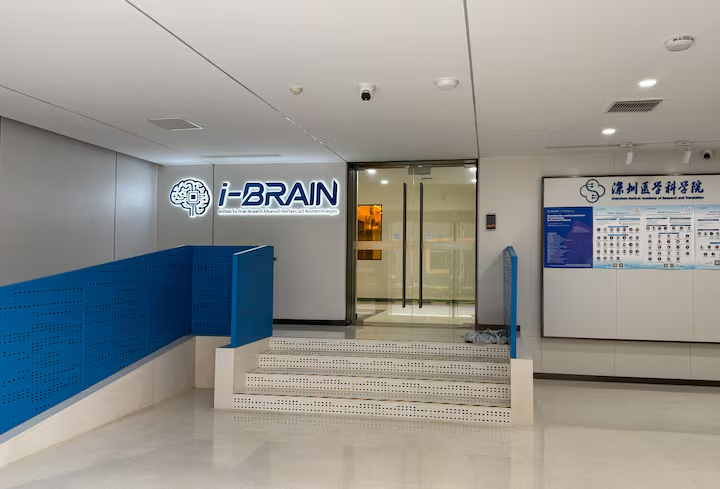
- Charles Lieber leads China's i-BRAIN lab with advanced resources and state funding
- Lab is recruiting researchers for studies on monkeys as models for human brain-computer interfaces
- Case highlights limits of U.S. safeguards on technology with military uses, analysts say
---
An American scientist convicted of lying to U.S. authorities about payments from China while he was at Harvard University has rebuilt his research lab in Shenzhen to pursue technology the Chinese government has identified as a national priority: embedding electronics into the human brain.
Charles Lieber, 67, is among the world’s leading researchers in brain-computer interfaces. The technology has shown promise in treating conditions such as ALS and restoring movement in paralyzed patients. But it also has potential military applications: Scientists at China’s People’s Liberation Army have investigated brain interfaces as a way to engineer super soldiers by boosting mental agility and situational awareness, according to the U.S. Defense Department.
Lieber was found guilty by a jury and convicted in December 2021 of making false statements to federal investigators about his ties to a Chinese state program to recruit overseas talent, and tax offenses related to payments he received from a Chinese university. He served two days in prison and six months under house arrest, and was fined $50,000 and ordered to pay $33,600 in restitution to the Internal Revenue Service. During the case, his defense said he was suffering from an incurable lymphoma, which was in remission, and he was fighting for his life.
Three years after he was sentenced, Reuters has learned that Lieber is now overseeing China’s state-funded i-BRAIN, or the Institute for Brain Research, Advanced Interfaces and Neurotechnologies, with access to dedicated nanofabrication equipment and primate research infrastructure unavailable to him at Harvard. The lab is an arm of the Shenzhen Medical Academy of Research and Translation, or SMART.
“I arrived on April 28, 2025 with a dream and not much more, maybe a couple bags of clothes,” Lieber said of his move to China at a Shenzhen government conference in December. “Personally, my own goals are to make Shenzhen a world leader.”
Lieber, through an assistant, declined an interview request, citing “current commitments.” He didn’t respond to written questions from Reuters.
SMART last year appointed Lieber as an investigator, according to a post on i-BRAIN’s website dated May 1, 2025. That news was covered by some media outlets. The same day, i-BRAIN said Lieber had also been appointed its founding director – an announcement that went unreported at the time.
This story is the most comprehensive account of Lieber’s activities since he moved to China. Reuters is reporting for the first time that his lab has access to dedicated primate research facilities and chip-making equipment; that it sits within a sprawling ecosystem of state-backed institutions bankrolled by billions of dollars in government funding; and that it is housed within an institution that is luring top scientific talent back from the United States.
In 2011, Lieber was named the world’s top chemist of the preceding decade in a set of scientific rankings published by Thomson Reuters, the parent of Reuters news agency. Thomson Reuters, which in 2016 sold the business that compiled the rankings, declined to comment.
Some analysts say Lieber’s ability to reconstitute his laboratory after a federal criminal conviction for lying about his ties to China shows how U.S. safeguards on technology with potential military uses haven’t kept pace with Chinese government efforts to acquire it. That concern is amplified because of Beijing’s military-civil fusion strategy, whereby civilian scientific resources and research are shared with the military.
“China has weaponized against us our own openness and our own efforts for innovation,” said Glenn Gerstell, a nonresident senior adviser at the Center for Strategic and International Studies and former general counsel of the U.S. National Security Agency from 2015 to 2020. “They’ve flipped that and turned it around against us, and they’re taking advantage of it.”
The Chinese Ministry of Science and Technology and the defense ministry didn’t respond to questions about China’s development of brain-computer interfaces. SMART and i-BRAIN also didn’t reply to requests for comment about their research and the recruitment of Lieber.
PRIMATE RESEARCH
Lieber’s new perch appears to give him richer resources than he had in the United States.
In Shenzhen, i-BRAIN in February installed a deep ultraviolet lithography system made by semiconductor-equipment giant ASML (ASML.AS), opens new tab, according to the lab’s website. The Dutch company’s machines print the tiny circuits essential to cutting-edge chips. At Harvard, Lieber used shared lithography equipment at the university’s Center for Nanoscale Systems. The center serves more than 1,600 users annually, according to its website.
i-BRAIN’s model is two generations behind restricted machines, but still likely to cost around $2 million, according to Jeff Koch of semiconductor-research firm SemiAnalysis.
ASML told Reuters it wouldn’t comment publicly about its customers.
On the same campus, Lieber also has access to Brain Science Infrastructure (BSI) Shenzhen, a research lab with 2,000 primate cages and dedicated space for i-BRAIN’s work, according to the latter’s website. Many researchers in the field consider primate trials a prerequisite for human trials for invasive brain-computer interfaces. The BSI facility is part of the Chinese Academy of Sciences and is funded by the Shenzhen government. None of them responded to questions about brain-computer interface technology and the role of primate research in its development.
Domestic and international researchers are being recruited by i-BRAIN for electrophysiology studies on rhesus monkeys as models for human brain-computer interfaces, according to a September 2025 post on its website, which invites prospective applicants to contact Lieber.
There is no indication that Lieber conducted primate research at Harvard. The elite Massachusetts university closed its New England Primate Research Center in 2015 under sustained pressure over animal welfare and funding challenges.
Jung Min Lee, a researcher who co-authored nanofabrication papers with Lieber at Harvard, has joined him at i-BRAIN as research associate professor, according to its website. Lee, who couldn’t be reached for comment, is an expert in stitching flexible electronics into brain tissue.
Harvard didn’t respond to Reuters questions about Lieber and Lee.
John Donoghue, a Brown University professor and neuroscientist who pioneered a brain-computer interface system known as BrainGate, said primate work is “absolutely critical” in translating neural interface technology to humans, but faces regulatory and funding hurdles in the United States.
“With so many hassles with non-human primate research here, to have somebody give you all this support, access to technology, a concentrated center, a national initiative – those are things that are very attractive,” he told Reuters.
SMART’s 2026 budget, funded entirely by Shenzhen’s government, rose nearly 18% to about $153 million. The academy’s budget papers don’t indicate the proportion of that funding dedicated to i-BRAIN.
SMART was established in 2023 under founding president Nieng Yan, a structural biologist. Her return to China a year earlier after five years at Princeton University was hailed in domestic media as the homecoming of a “goddess scientist.” Yan and Princeton didn’t reply to Reuters questions about her role at Shenzhen and the recruitment of Lieber.
Alongside SMART sits the legally separate but functionally twinned Shenzhen Bay Laboratory, which launched in 2019 with a five-year budget from Shenzhen’s government of around $2 billion. Both are based in Guangming Science City, a national science hub of manicured parks and waterways. The two institutions share the same leadership and offices, and will also occupy a dedicated 750,000-square-meter site that is under construction at a planned cost of $1.25 billion. Shenzhen Bay Laboratory didn’t respond to a request for comment.
Signs guiding visitors to SMART’s premises are emblazoned with the slogan: “Innovate with the Party.” A Reuters reporter was denied access to i-BRAIN’s offices while trying to deliver a letter to Lieber.
Lieber joins at least six others who have moved to SMART from U.S. institutions, though all of them are Chinese-born researchers returning home.
China named brain-computer interface technology a national growth priority in its new five-year plan in March 2026. Zheng Shanjie, head of China’s National Development and Reform Commission, said in October that the rise of brain-computer interfaces and related technologies “will be equivalent to creating another Chinese high-tech sector in the next 10 years.”
The U.S. Defense Advanced Research Projects Agency is also investing in brain-computer interfaces for drone and cyber defense applications, according to the agency’s program description. Research projects led by Lieber at Harvard received over $8 million in funding from the Defense Department since 2009, court documents show. The Pentagon didn’t respond to questions about the technology’s military uses and Lieber’s role at Shenzhen.
VYING FOR A NOBEL PRIZE
Lieber’s 2021 conviction was one of few wins for the U.S. Justice Department’s China Initiative, launched during the first Trump administration to counter Chinese economic espionage and intellectual-property theft. The initiative was wound down under President Joe Biden after a record of failures and criticism for racial profiling.
While still on supervised release, Lieber obtained court approval for at least three trips to China in 2024, including one that U.S. District Judge Denise Casper granted for “employment networking,” court documents show. Judge Casper didn’t respond to a request for comment.
Lieber’s defense team said in a pre-sentencing memorandum in 2023 that the scientist had been suffering from lymphoma and was largely confined to his home, leaving only for medical appointments, brief walks, and occasional visits to a local farm. During a 30-year career at Harvard he spent over 80 hours a week in the lab, and when not working, Lieber spent time “coaching wrestling, and growing giant pumpkins in the back yard,” according to his defense.
Lieber acknowledged being “young and stupid” in getting involved with China’s Thousand Talents Program, the state-backed initiative to recruit overseas experts, his lawyer told the court in 2021. When he was arrested in 2020, Lieber told FBI agents he “wanted to win a Nobel Prize” and be recognized for his work, according to prosecutors.
The FBI declined to comment and the Justice Department didn’t respond to questions.
The Lieber case illustrates a broader failure of U.S. policy, some analysts say.
“If you think of him as a vector for tech acquisition that runs contrary to U.S. interests, we identified that, punished him, and that did nothing to stop the big-picture trend,” said Emily de La Bruyère, co-founder of China-focused consultancy Horizon Advisory and a senior fellow at the Washington-based Foundation for Defense of Democracies, a nonprofit research institute considered hawkish on foreign policy.
Gerstell, the former U.S. official, described Lieber as “Exhibit A” in how U.S. legal tools are inadequate.
“This is a guy who was convicted of precisely the thing that we want him to be convicted of in this context, and yet the minute he's released from house arrest, he’s off in China,” he said.
reuters.com/world/china/conv…

6
7
20
1,869

Apr 28
Our nervous system is the most sophisticated information-processing system ever observed. We're constraining that processing power to sequential keystrokes and taps on a screen.
Neural interfaces will close that gap and create one of the most exciting investment opportunities in venture capital of the decade. At Delphi Ventures we're publishing our full investment thesis on how we're approaching the space that is as exciting to invest in as it is complex:
delphiventures.io/writings/n…
For decades, the technology has been proving itself, building on the electrochemical nature of the nervous system to deliver some of the most consequential outcomes in medicine. Deep brain stimulation reducing Parkinson's tremors (mdpi.com/2227-9059/13/10/243…). Spinal cord bridges returning mobility to paralysed patients (pmc.ncbi.nlm.nih.gov/article…). Cochlear implants restoring hearing (link.springer.com/article/10…)
Now, neurotech is transcending medicine – moving from treating disease to redefining how humans interact with machines altogether. @ModdedQuad controlling a computer with thought alone. @ALScyborg getting his voice back through Neuralink and ElevenLabs (-> youtube.com/watch?v=CJn0WRKw…). Synchron's patient navigating an iPad via Apple's native BCI (brain-computer interface) protocol. Tomorrow, bidirectional neural interfaces will let technology read and write to the nervous system, extending human cognition itself – from sensory feedback and cognitive modulation to, eventually, merging human and machine intelligence.
Neural interfaces are the natural next step in a long trajectory of humans becoming more integrated with technology – command line to graphical interfaces, buttons to touchscreen, complex menus to conversational AI. Each step has made technology more intimate and intuitive. Now BCIs complete that arc and the market is starting to wake up to the next paradigm of human-machine interaction.
However compelling, investing in neurotech is complex. The field is governed by frontier science and the lab-to-market translation is notoriously difficult. Clinical timelines, biocompatibility at scale, regulatory questions and ethical concerns no previous technology has had to answer.
That's why at Delphi we've spent the past 2 years building conviction through a precise scientific and engineering lens – discussing with founders and researchers, mapping the market, distinguishing science projects from commercial potential. Our neurotech thesis (delphiventures.io/writings/n…) condenses that work into one piece – defining the opportunity and laying out the framework that governs our investment approach.
If you're building, researching or simply thinking about the immense potential in this space – let's talk!
And if you're in NYC and want to experience the frontier yourself, sign up for @SynaptrixAI's study (calendly.com/synaptrix/data-…) – and control a wheelchair with your thoughts alone (no implant required).
Or consider participating in some of the most exciting established neurotech trials: 🔬 Neuralink: neuralink.com/trials/ 🔬 Paradromics: paradromics.com/clinical-stu… 🔬 BrainGate: braingate.org/clinical-trial… 🔬 Blackrock Neurotech: blackrockneurotech.com/for-p…
delphiventures.io/writings/n…
6
1,346

Apr 26
🤫ZzZzz #World
Dikkat ! bunlar sadece birkaçı… ⏳ #Aklet
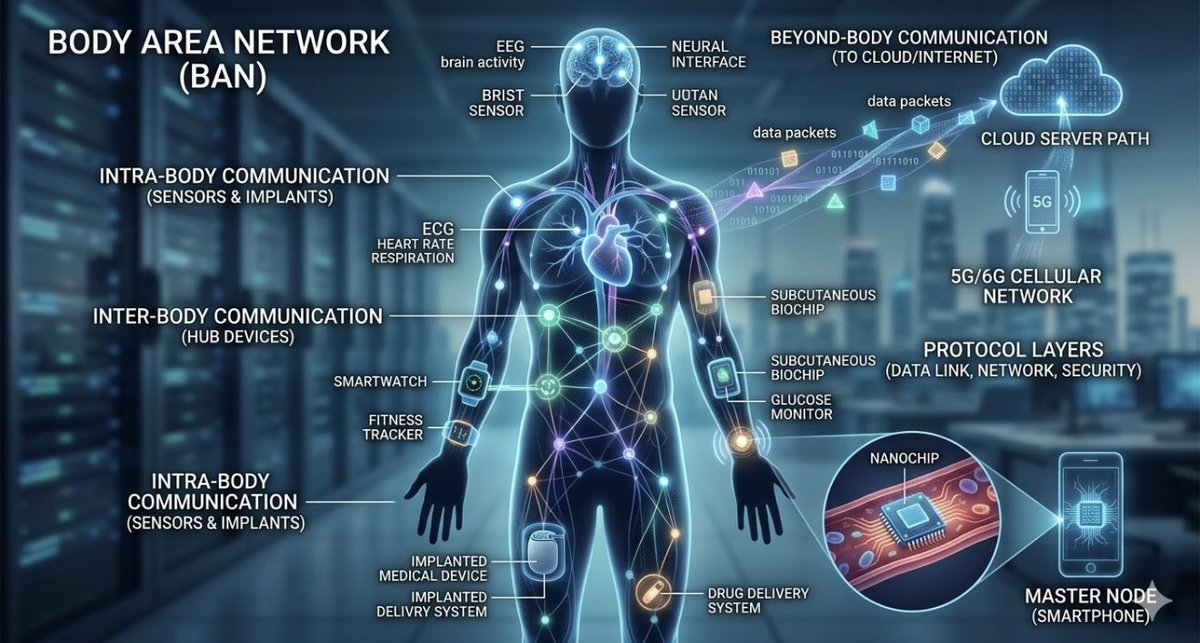
Mind Control & Remote Neural Monitoring PATENTS
(Zihin Kontrolü ve Uzaktan Nöral İzleme PATENTLERİ)
Wireless / Remote Mind Reading & Control
(Kablosuz / Uzaktan Zihin Okuma ve Kontrol)
US 20240065594
Radyo dalgalarıyla invaziv olmayan zihin okuma
US 2024009480 A1
“Nöral toz”
KR20170009037 A
EEG/genetik harita kullanan zihin kontrol sistemi
US 395134 A
Beyin dalgalarının
uzaktan izlenmesi
US 6011991 A
Beyin aktivitesi izleme yoluyla iletişim
DE10253483 A1
Beyin korteksini etkileyen düşünce aktarımı
Stentrode BCI - Damar içine yerleştirilen kablosuz nöral arayüz
US 5289438A (1994) Beyin dalgalarını çıkış cihazlarına çevirme yöntemi ve sistemi
Voice-to-Skull (V2K) / Synthetic Telepathy & Microwave Auditory Effects
(Kafatasına Ses / Sentetik Telepati ve Mikrodalga İşitsel Etkiler)
US 4877027A (1989)
İşitme sistemi (darbeli mikrodalgalarla doğrudan beyinde duyulabilir ses)
US 4858612A (1989)
İşitme cihazı
US 6587729B2
Radyo frekansı işitme etkisi kullanarak konuşmayı duyurabilen cihaz
Christopher deCharms - Gerçek zamanlı fMRI ile beyin öz-düzenleme
US 6996201
US 7595783
US 9246665
Consumer & Experimental Neural Tech
(Tüketici ve Deneysel Nöral Teknoloji)
US 20100105473 A1
Beyin dalgalarıyla çalışan zihin kontrol oyuncağı
Neural Interfaces & Thought-to-Computer Systems
(Nöral Arayüzler ve Düşünceden Bilgisayara Sistemler)
Duke University patenti - Nöral sinyallerin kablosuz iletimi
US 8350804 B1 -
MSI kullanan düşünce kontrollü sistem
US 7788877
B2 - EEG/nöron sinyalleriyle nöral
bozulma tespiti
BrainGate - Utah Array implantı ile çoklu patentler, EEG ile dikkat temelli yardımcı BCI’lar
Micromachines 2024 patenti - Bluetooth ve
Wi-Fi ile kablosuz BCI
Eureka Patsnap patenti
Kablosuz giyilebilir
yüksek veri kapasiteli BCI
DARPA N3 Programı - Yüksek bant genişlikli nöral arayüz için invaziv olmayan çift yönlü BCI (devam ediyor)
Mind Manipulation & Nervous System Control
(Zihin Manipülasyonu ve Sinir Sistemi Kontrolü)
US 4,335,800 -
Beyin / merkezi sinir sistemi üzerinde değişiklik
US 6,233,353 B1 -
Sinir sistemlerinin uzaktan manyetik manipülasyonu
US 3,014,477 (1956) -
Hipnotik indükleyici
US 3,060,795 (1958) -
İşitme
US 3,060,795 (1958) -
İşitme cihazı (RF/mikrodalga işitsel iletim)
US 6587729B2 -
Radyo frekansı işitme etkisi ile konuşmayı
ileten cihaz
US 3,989,794 (1976) -
Radyo frekansı işitme etkisinin uzaktan kontrolü
US 20200390360A1
(2020) - V2K/RNM mağdurlarının ve operatörlerin otomatik tespiti
US 20200275874A1 (2020) - V2K/RNM mağdurlarını ve uzaktan saldırganları tanımlama yöntem ve sistemi
#MindDataSet #MindControl
#Brainwashing
#DogadaKal #HayattaKal
#DogalKal #KitleKontrol
Devamı yakında..🔜 ⏳
1
8
25
536