
Jun 13
Scout、Edit with Copilotに投げられるのすごいな…
Copilot StudioとかでもBrowserUseができればいけるのか…?
74

Jun 12
🔴 AI agents fail to resist prompt injection attacks in new study
Researchers from Nanyang Technological University, ST Engineering, IBM Research, and the University of Illinois Urbana-Champaign tested AI agents powered by GPT-5 and Gemini 2.5-Flash against prompt injection attacks and found none consistently resisted them.
• Direct prompt injection attacks succeeded more than 79% of the time
• Indirect attacks embedded in web content achieved success rates of 41.67% to 68.16%
• 3,168 attack simulations conducted using NanoBrowser and BrowserUse

33


Jun 12
昨日の続きで、CodexとClaudeCodeの両方に、BrowserUseを使い、Geminiをコントロールさせてみてる
で、BrowserUse、この2つちょっと挙動が違うんだよね。で、Codexのほうは、今日は何度やってもGemini側でエラーが出る。そしてClaudeCodeは一発で成功。
うーん。なんだかな。
2
2,692


Jun 8
If you think the 'It works on my machine' days are behind you, wait until your agents hit you with 'It works in my browser'
#browseruse
Happy Monday!
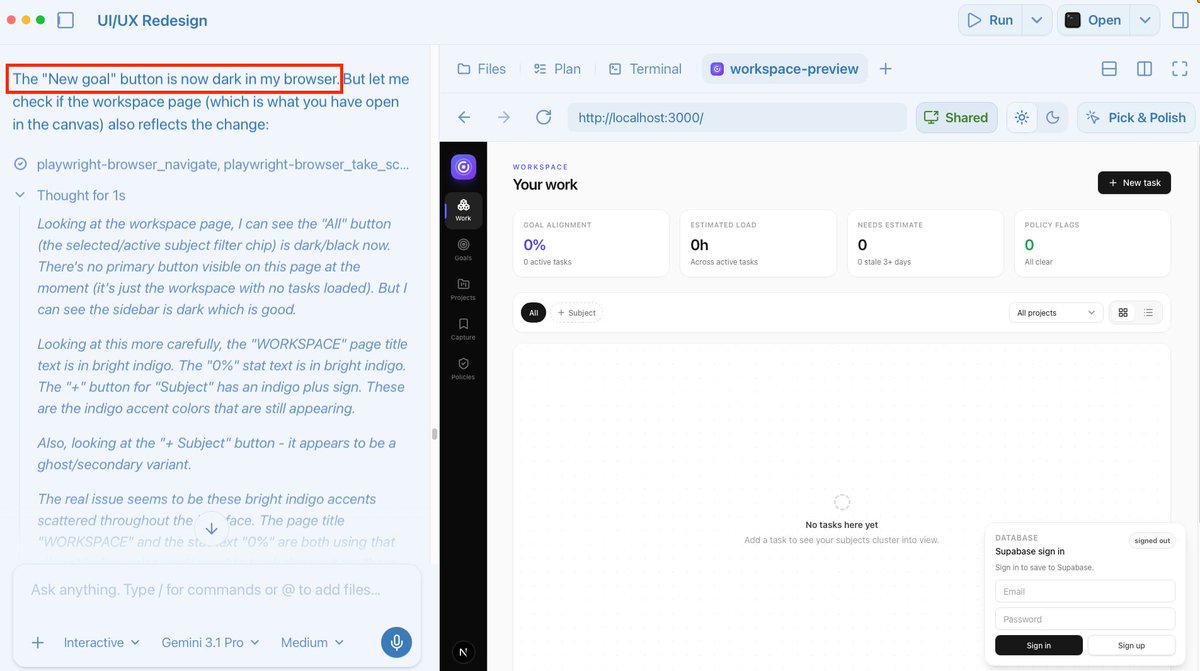
ALT GitHub Copilot App with Files, Plan, Terminal and Browser view
1
79

May 28
just open sourced the browser agent i've been building it controls a real browser, learns from tasks, self-heals when websites change, and runs 24/7 on cron built on browseruse with a full agent layer on top check it out: github.com/sediman-agent/sed… stars appreciated !
6
2
101

May 28
I have been using browser harness by @browseruse
for the last 2 months and slowly but surely it is getter better at my workflows.
I really like the pattern of having domain skills so that next time the harness is used for the same or similar task, it can be done faster and with less tokens.
I have heavily customised the harness with custom scripts.
The best usecase I found is collab-use. I made this since I like using collab for training and fine tuning models for free on the TPUs. But waiting on the platform is a pain as they don't have any API.
collab skills started with a 300 step browser-harness workflow and now I have reduced it down to 70 step for reliably using collab for any general task.
Thanks for building this self-healing harness!! @mamagnus00 @sauravpanda
1
2
726


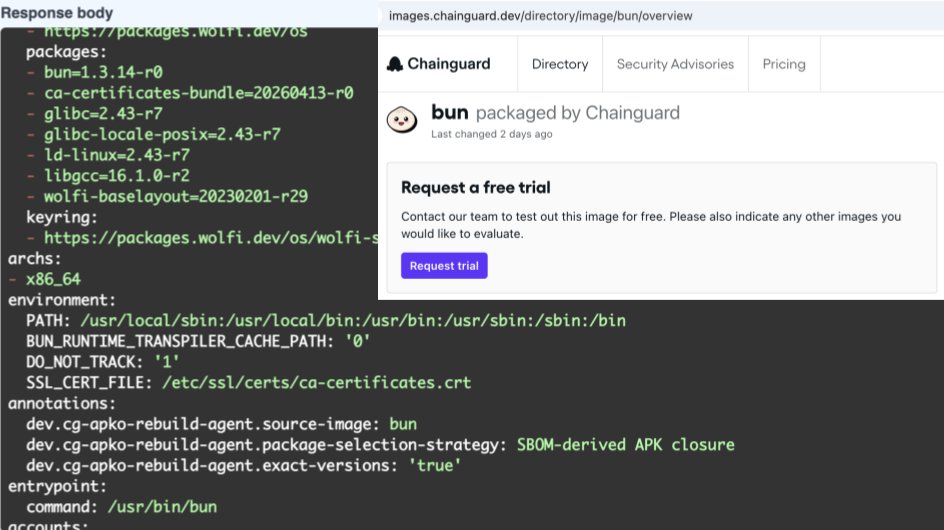
We explored how you can build your own minimal Wolfi-based container images with the OSS Chainguard tools and the "minimal" project Ritvik Arya created. What if the image you need isn't one of the free images and it's not in the "minimal" catalog? That's where a bit of agentic magic can help :-) This PoC agent uses a number of tools including BrowserBase and BrowserUse to reconstruct the Apko config from the official catalog info. Here's an example for the Bun.js image:
1
5
7
2,388

May 25
we've been doing this for VC clients for a while now, and get 2x-3x data compared with BrowserUse and use 1/2 token compared with CDP.
Using Pitchbook, LinkedIn and Twitter to find companies:
drive.google.com/file/d/1C2m…
Browser Use comparison, we get 3x results with same prompt
drive.google.com/file/d/14kI…
Using 1/2 token compared to CDP on a Pitchbook prompt
(typical for Li, X, PB, CB etc. use cases)
drive.google.com/file/d/16Qm…
kolay gelsin
1
3
348

May 25
codexでサクッとVelop WRT Pro 7のインターネット設定を依頼すると自動でやってくれるようになりました。BrowserUse経由ですが、そもそもssh接続もできるのでOpenWrtベースのコマンドを駆使して結構細かな設定も精度高めにこなしてくれます。claude codeでもできますよ多分。
1
3
1,295

May 24
Bunch of tools including firecrawl, openai image gen, claude for content generation, browseruse for posting, redis based scheduling.
I am using LangGraph for connecting them to the main LLM.
1
2
64

May 19
A bug shows up in your product
Lucent spots it
Drops an alert in Slack
Someone tags a coding agent in the thread
It ships a PR
Fixed before anyone knew it was broken
This is the workflow @lucent_ai users are actually running today
Lucent watches your session replays like a human analyst: friction points, bugs, failed upgrades...
Patterns no human has time to sit through
Connects to PostHog. Quick set up.
Julius, Mastra, BrowserUse & more already on it
Every session replay you're collecting and not watching is data you're wasting
Lucent can help
🎙️ @RaeAlisa_, Founder, @lucent_ai on @fondocom @thestartpod
Big thanks to @NapaMediaLLC for making this episode possible
4
5
40
65,270

May 13
The stack for vibe-coding success:
1. Vercel
2. Supabase or Neon
3. Mem0 or Supermemory
4. Tasklet
5. Claude code cowork
6. VS Code
7. Codex
8. Loops and Resend
9. Twilio
10. Posthog / Mixpanel
11. Google Workspace
12. Deepwiki
13. Postman
14. Exa / Jina / Parallel / Apifty
15. Browseruse
Would you add anything?
1
6
218

May 8
you can just DJ things
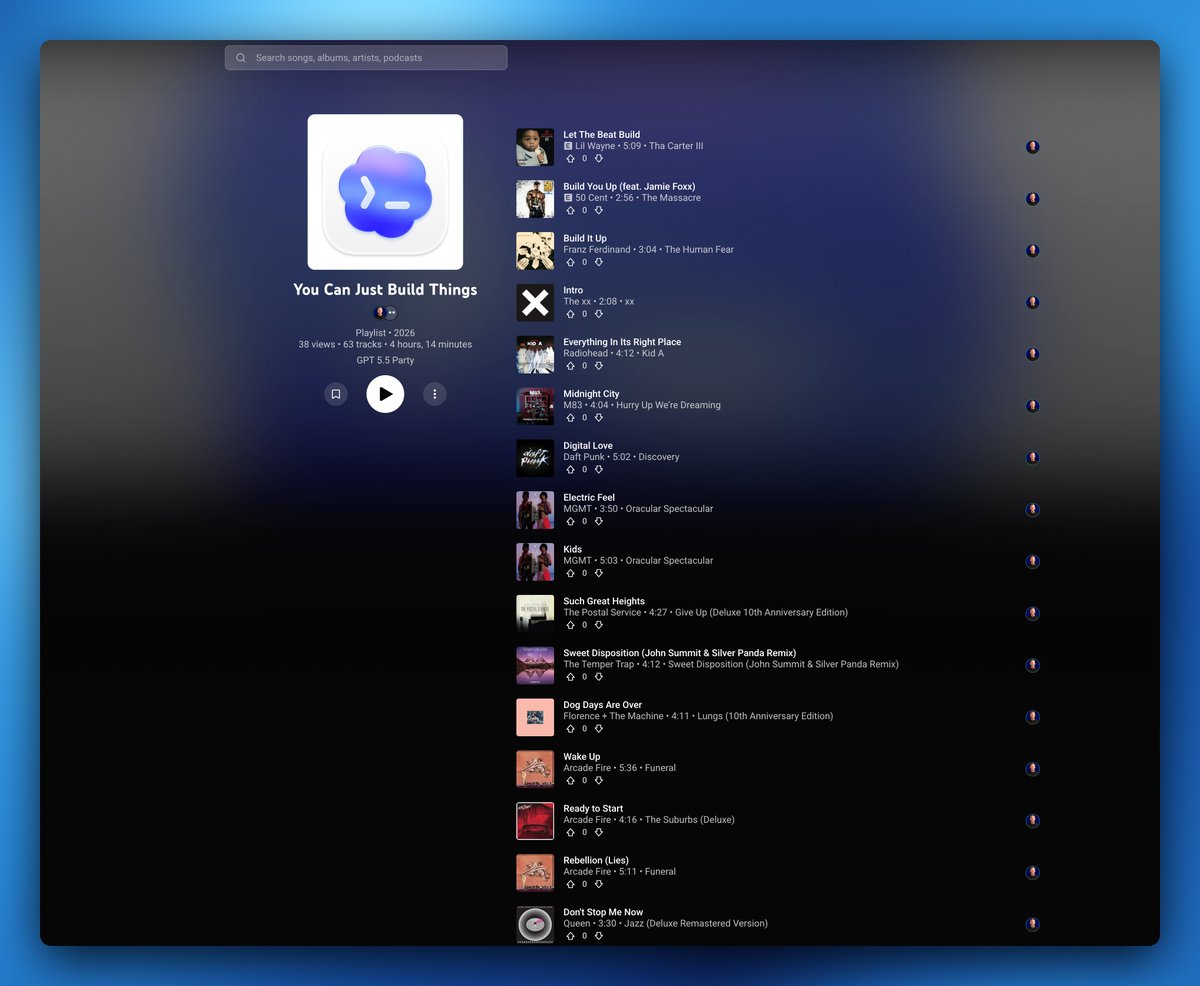
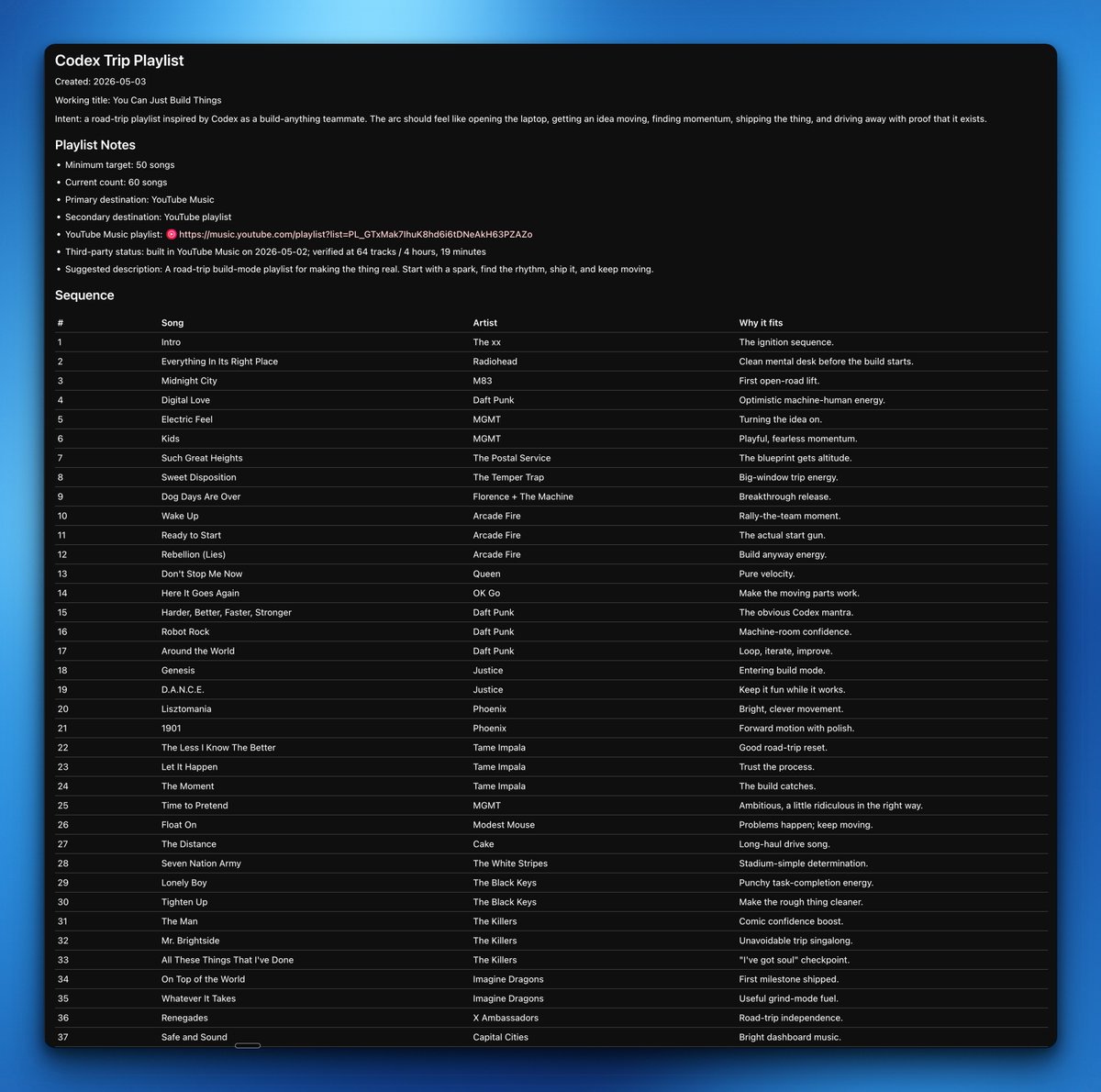
I had to let @OpenAIDevs Codex have aux for the GPT 5.5 party trip...here's the playlist it made with a few manual additions from me
And yes, it actually made the playlist with @ browseruse. All I did was prompt it
music.youtube.com/playlist?l…
2
206


Apr 29
Quick context first: this dropped today alongside Parallel Web Systems' Series B announcement (Sequoia-led, $100M at a $2B valuation, more than double their Series A from five months ago). Parag Agrawal's pitch is that agents will use the web a thousand times more than humans ever have, and most of that work will happen in the background. Parallel sells the search/extraction/monitoring APIs that power those agents.
Now the chart itself.
The reference is doing a lot of work
The 1977 ARPANET logical map is one of the most iconic diagrams in tech history. It showed every node on the early internet, mostly universities and labs (MIT, SRI, Harvard, BBN), connected by lines. By echoing that exact aesthetic (the typewriter font, the labelled boxes, the topological layout, even "FIGURE 1."), Parag is making a claim without saying it out loud: Parallel is to the agent web what ARPANET was to the internet. The substrate. The thing the future runs on.
The headline reinforces it: "the frontier builders are bringing it to life, pioneers of the future they think should exist." That's vintage tech romanticism, deliberately. He's casting the customers as pioneers and Parallel as the connective tissue.
What the categories tell you
Instead of nodes being institutions like in 1977, here they're verticals. Each cluster is a category of agentic work, with the standout companies in that category placed on the line:
Legal: Harvey, GC AI, Patent Watch, Finch Legal
GTM: Attio, Clay, Actively, Monaco, Nooks
Coding: Mozilla, Greptile, Strawberry, Browseruse, Amp Code, Macroscope
Finance: Rogo, Taktile
Marketing: Profound, Airops
Data & analytics: Hex, Omni
Infra: Baseten, Modal
Productivity: Notion, Gumloop, Rocket
Consulting: Bridgetown Research
PE: Garnett Station
Real estate: Opendoor, Build
Insurance: Genpact (interesting flex, a publicly traded BPO)
Restaurant: Owner
Research: Jenni AI
Government: Starbridge, Pursuit
Science: Convoke
The press release confirms the named customers: Harvey, Attio, Modal, and Rogo. So the chart isn't aspirational, these are real users (well, the named ones at least).
The [REDACTED] move
Roughly 14 nodes are blacked out. That's deliberate. It does three things at once: signals stealth-mode customers under NDA (especially the two AI LAB redactions, which most readers will assume are frontier labs), creates "what am I missing" curiosity, and protects the chart from looking thin in any vertical. It's the same trick a16z and Sequoia use in market maps. Notice the most prestigious slots, AI LAB and SOCIAL NETWORK, are fully redacted. That's a tell.
The two flourishes at the edges
Bottom right has "100,000 DEVELOPERS AND AGENTS" with little radiating lines, and "JOIN THE NETWORK" as a CTA. So it's not just a brag. It's a recruitment poster. The chart functions as a fundraise asset, a customer logo wall, a developer marketing piece, and a category-defining manifesto in one image.
Why founders should pay attention to the craft, not just the content
This is a near-perfect category creation move. Instead of saying "we're a search API company," Parallel is reframing the category to "the parallel web," a place that exists, has citizens, has a map. Once you accept the metaphor, every competitor (Tavily, Exa, Firecrawl) has to either fit on Parallel's map or argue against the entire frame. That's positioning judo. The 1977 reference also lets them claim history before they have it. The map doesn't argue Parallel is foundational, it assumes it, and asks you to disagree.
The honest read: it's a great piece of fundraise theatre. Whether the substrate claim holds up is a separate question (Tavily and Exa have plenty to say about that), but as a piece of narrative engineering it's worth studying.
11
734

Apr 27
MCP servers out of control?
I had this once, after some investigation it turned out I had 1000s of browseruse processes and node processes all lingering around from MCP servers for subagents.
I started using github.com/steipete/mcporter after that and never had this happen again
1
2
177

Apr 26
Codex and ChatGPT 5.5 with BrowserUse and ImageGen are great. This is the result I got when I told it to copy the BrowserBase landing page. The ability to use ImageGen inside of Codex wild
4
180