
We will never forget the Save Act, zero presidential appointments or the Covid casedemic
Jun 15

DO YOU SUPPORT THE SAVE AMERICA ACT REQUIRING PROOF OF CITIZENSHIP AND VOTER ID FOR FEDERAL ELECTIONS?

1

The government and Fauci lied about covid from day one... real-world data can be manipulated, and the risk of bias, data suppression, or flawed gathering methods is just about a given in any massive public health effort by any Gov.... Because data is collected by government agencies, pharmaceutical companies, and health systems—all of whom have varying institutional, financial, and political motivations.... independent journalists, and data scientists have pointed out several legitimate vulnerabilities in how vaccine data is gathered and analyzed.
Conflicts of Interest: Pharmaceutical companies fund and run their own initial clinical trials. This gives them a powerful incentive to present data in the most favorable light possible to secure regulatory approval.
Under-Reporting vs. Over-Reporting: Passive reporting databases like VAERS can be skewed. Doctors or patients might fail to report an injury because they assume it is unrelated (under-reporting), or anti-vaccine campaigns can intentionally flood the system with unverified reports to create a false spike (over-reporting).
Shifting Definitions: Changing how a "COVID-19 death" or a "fully vaccinated person" is defined (e.g., not counting someone as vaccinated until 14 days after their shot) can alter the resulting statistics and potentially mask immediate adverse reactions.
You can believe everything they said was true... but at 73 yrs old I have seen this play many times.. It was a "PCR false-positive Casedemic"..
Robert A. Heinlein: "Love your country, but never trust its government."
James Madison: "The truth was that all men having power ought to be distrusted to a certain degree."
John Adams: "The only maxim of a free government ought to be to trust no man living with power to endanger the public liberty."
Ronald Reagan: "Government is not the solution to our problem, government is the problem."
P.J. O'Rourke: "You can't trust the government to do anything right-except, of course, to conspire and cover up. Then it becomes diabolically efficient."
1
14
We will never forget the Save Act, any unapproved presidential appointments and certainly not the Covid casedemic….

Patriots are done with John Thune — a powerful open letter to the Senate Majority Leader is going VIRAL demanding he RESIGN immediately on behalf of 77.3 MILLION Trump voters!
“Dear John Thune… Resign.” Simple, direct, and exactly what millions are screaming after months of RINO obstruction, blocking the SAVE America Act, and sabotaging Trump’s America First agenda. The swamp is being exposed and Patriots want real fighters leading the Senate.
Zoe here — independent American Christian woman at America Pulse News — time to clear the roadblocks and let Trump deliver.
@AmericaPulseNew
Drop a comment if you want Thune to resign TODAY and repost this everywhere — Senate GOP, listen to the people or get replaced! 🇺🇸🔥
#ResignThune #RemoveTheRINOs #SaveAmericaAct #MAGA #AmericaFirst #TrumpWasRight #DrainTheSwamp

10

This is all true and criminal.
But what makes it even worse and more criminal is that the virus is clinically indistinguishable from influenza. So, to create a mandate to sell billions of vaccines, they had to also create a casedemic with fake PCR test results.
globalintrospective.beehiiv.…
1
3
185
I'm on his side... I never got the jab... was one of the first to speak out against the "shot in every arm" agenda and the censorship of great guys like him...Just want to be sure we aren't like the people who created the "false positive casedemic"... we get the facts right.
1
21
We will never forget the Save Act , Presidential appointments or the Covid casedemic….you have over played your hand
1
3
34

May 27
Wrong, it's an inconvenient lie.
The ONS changed and obfuscated their stats weekly.
We had death for any reason within 28d of a positive PCR test up to 30Ct, then up to 60d.
The NHS were dancing in wards taking the piss out of us.
It was a fearmongering casedemic to control us.
2
3
41


May 16
The fake news trying to pull another “casedemic” typical… Hanta means bullshit in case you didn’t know.
May 10

Hanta Virus = Fraud, Lies, Nonsense & Scam
🔎🔎🔎 Ask @Grok:
Please translate "hanta" from both Hebrew and Hungarian to English.
x.com/NotOpCue/status/205242…
🔎 In Hebrew slang, “hanta” (חַנְטָה / chanta) translates to scam, lie, nonsense, fraud, or something fake — like calling BS on something.
🔎 In Hungarian, “hanta” is slang for nonsense, crap, balderdash, empty talk, or lies — basically “bullshit” or a tall tale.
🔎🔎🔎 The masses are being tested by the cabal again, will they fall for another plandemic, fear mongering, mandates, PCR testing, all ending in mass vaccination with the goal of causing more death and disease?

2
4
1,022

May 13
The politicians, "public health" inc. and the media are equally responsible for these types of mental health outcomes by exaggerating the risk of Covid through fear-based messaging, the testing casedemic and the extreme mandates. No accountability, no justice.
May 13

Parents Sent To Prison After Isolating Kids For Four Years Over COVID Fears zerohedge.com/medical/parent…
3
10
152

May 12
They cannot he allowed to begin testing asymptomatic people.
That’s how they stage a Casedemic by juicing up the PCR tests.
1
2
47

May 12
The PCR (Polymerase Chain Reaction) test was invented by Kary Mullis for which he received the Nobel Prize in Chemistry in 1993. Unfortunately, the PCR Test for has been used in a fraudulent manner. With the PCR technique, tiny bits of DNA can be amplified, so they can be measured by conventional devices. This amplification is called the Cycle Threshold, or CT for short. The CT can be adjusted on the PCR machine from 20 to 40. A CT under 30 gives accurate test results. A CT above 30 makes the test too sensitive and gives high rate of false positives, a test that is falsely listed as positive for live virus. The CT for C0\/lD testing for was set to 40, an obvious fraudulent use of the test. The result of this high CT has been a “Casedemic” which has created "inflated fake case numbers" and needless fear in the population. Multiple peer-reviewed studies using viral culture, growing live virus in cells, found that samples with high CT values (>33–35) rarely or never yielded culturable (i.e., infectious) virus. Thus, the term "casedemic", a term describing surging "fake case" counts driven more by ultra-sensitive detection of non-infectious material than by widespread active illness. This fraud fueled public fear, lockdowns, and policy decisions.
See References:
La Scola, Bernard, et al. "Viral RNA Load as Determined by Cell Culture as a Management Tool for Discharge of SARS-CoV-2 Patients from Infectious Disease Wards." European Journal of Clinical Microbiology & Infectious Diseases, vol. 39, no. 6, June 2020, pp. 1059–1061. doi.org/10.1007/s10096-020-0… (PubMed: pubmed.ncbi.nlm.nih.gov/3234…).
This study of 183 positive samples found 100% culture positivity at low Ct (13–17) dropping to 0% at Ct ≥34—directly supporting that high-Ct positives frequently detect non-viable material.
Bullard, Jared, et al. "Predicting Infectious Severe Acute Respiratory Syndrome Coronavirus 2 from Diagnostic Samples." Clinical Infectious Diseases, vol. 71, no. 10, 17 Dec. 2020, pp. 2663–2666. doi.org/10.1093/cid/ciaa638 (PMC: pmc.ncbi.nlm.nih.gov/article…).
Analysis of 90 positive samples showed no infectious virus recoverable above certain CT thresholds, leading to non-infectious detections of "fake cases".
Singanayagam, Anika, et al. "Duration of Infectiousness and Correlation with RT-PCR Cycle Threshold Values in Cases of COVID-19, England, January to May 2020." Eurosurveillance, vol. 25, no. 32, 13 Aug. 2020. doi.org/10.2807/1560-7917.ES… (full text: eurosurveillance.org/content…).
This large UK study linked high CT values to sharply reduced culturability/infectiousness (e.g., ~8% culture-positive >Ct 35), lending evidence to the "casedemic" critique of high-CT protocols inflating case numbers.
May 12

RED ALERT: Former COVID Task Force coordinator Deborah Birx is now calling for “widely available” PCR testing for Hantavirus, including in schools, and many people are noticing the exact same pandemic playbook that preceded the chaos of 2020.
The real red flag is not the virus itself. It’s watching the same fear infrastructure suddenly reactivate in real time—PCR testing, asymptomatic spread warnings, quarantine language, hazmat imagery, and nonstop media coverage telling the public not to panic.
Birx openly argued that viruses should be tracked through PCR testing instead of symptoms, the same testing system that used to inflate COVID case counts and justify lockdowns across the world.
At the exact same time, Fox News is now airing “deadly outbreak” coverage featuring quarantine centers, hazmat suits, and warnings about possible spread, while officials simultaneously insist there is “nothing to worry about.”
@Fynnderella1 pushed back directly, stating: “You can’t spread Hantavirus asymptomatically. Period.”
So why does this suddenly feel so familiar again?
Watch @zeeemedia's report before this escalates any further.
3
1
4
255
May 12
The PCR (Polymerase Chain Reaction) test was invented by Kary Mullis for which he received the Nobel Prize in Chemistry in 1993. Unfortunately, the PCR Test for has been used in a fraudulent manner. With the PCR technique, tiny bits of DNA can be amplified, so they can be measured by conventional devices. This amplification is called the Cycle Threshold, or CT for short. The CT can be adjusted on the PCR machine from 20 to 40. A CT under 30 gives accurate test results. A CT above 30 makes the test too sensitive and gives high rate of false positives, a test that is falsely listed as positive for live virus. The CT for C0\/lD testing for was set to 40, an obvious fraudulent use of the test. The result of this high CT has been a “Casedemic” which has created "inflated fake case numbers" and needless fear in the population. Multiple peer-reviewed studies using viral culture, growing live virus in cells, found that samples with high CT values (>33–35) rarely or never yielded culturable (i.e., infectious) virus. Thus, the term "casedemic", a term describing surging "fake case" counts driven more by ultra-sensitive detection of non-infectious material than by widespread active illness. This fraud fueled public fear, lockdowns, and policy decisions. See References:
La Scola, Bernard, et al. "Viral RNA Load as Determined by Cell Culture as a Management Tool for Discharge of SARS-CoV-2 Patients from Infectious Disease Wards." European Journal of Clinical Microbiology & Infectious Diseases, vol. 39, no. 6, June 2020, pp. 1059–1061. doi.org/10.1007/s10096-020-0… (PubMed: pubmed.ncbi.nlm.nih.gov/3234…).
Widely cited (>1,000 times). This study of 183 positive samples found 100% culture positivity at low Ct (13–17) dropping to 0% at Ct ≥34—directly supporting that high-Ct positives frequently detect non-viable material.
Bullard, Jared, et al. "Predicting Infectious Severe Acute Respiratory Syndrome Coronavirus 2 from Diagnostic Samples." Clinical Infectious Diseases, vol. 71, no. 10, 17 Dec. 2020, pp. 2663–2666. doi.org/10.1093/cid/ciaa638 (PMC: pmc.ncbi.nlm.nih.gov/article…).
Widely cited (>1,500 times). Analysis of 90 positive samples showed no infectious virus recoverable above certain Ct thresholds, reinforcing the statement's point on sensitivity leading to non-infectious detections.
Singanayagam, Anika, et al. "Duration of Infectiousness and Correlation with RT-PCR Cycle Threshold Values in Cases of COVID-19, England, January to May 2020." Eurosurveillance, vol. 25, no. 32, 13 Aug. 2020. doi.org/10.2807/1560-7917.ES… (full text: eurosurveillance.org/content…).
Widely cited (>1,100 times). This large UK study linked high Ct values to sharply reduced culturability/infectiousness (e.g., ~8% culture-positive >Ct 35), lending evidence to the "casedemic" critique of high-Ct protocols inflating case numbers.
4
1
5
253

Bad analogy.
X-rays confirm to what extent legs are broken and where - when pain and deformation (symptoms) indicate it as a possibility.
PCR tests, during the pandemic were used to screen for traces of a virus where no Covid symptoms existed. Positive tests became ‘cases’ regardless of symptoms.
The Covid pandemic was, due to industrialised use of PCR screening, actually a PCR ve result ‘casedemic’.
7
1
26
2,283

Apr 25
Yes COVID was a casedemic driven by positive PCR tests with a high FDR in people who were asymptomatic (who therefore didn't die and were irrelevant).
But you can't say on one hand that PCR overcounts cases and the other hand that the fact that there was no flu was because PCR for flu overcounted flu cases.
Do you see the problem?
Hence why constantly referencing the high false discovery rate for PCR for COVID undermines any claim that PCR for COVID drove the absence of flu.
Flu was absent. Not a testing anomaly, not because of masks or measures.
Explain why.
2
8
190

Apr 23
he also invented a fraudulent version of PCR to create a CaseDemic
1
1
6
76

Apr 7
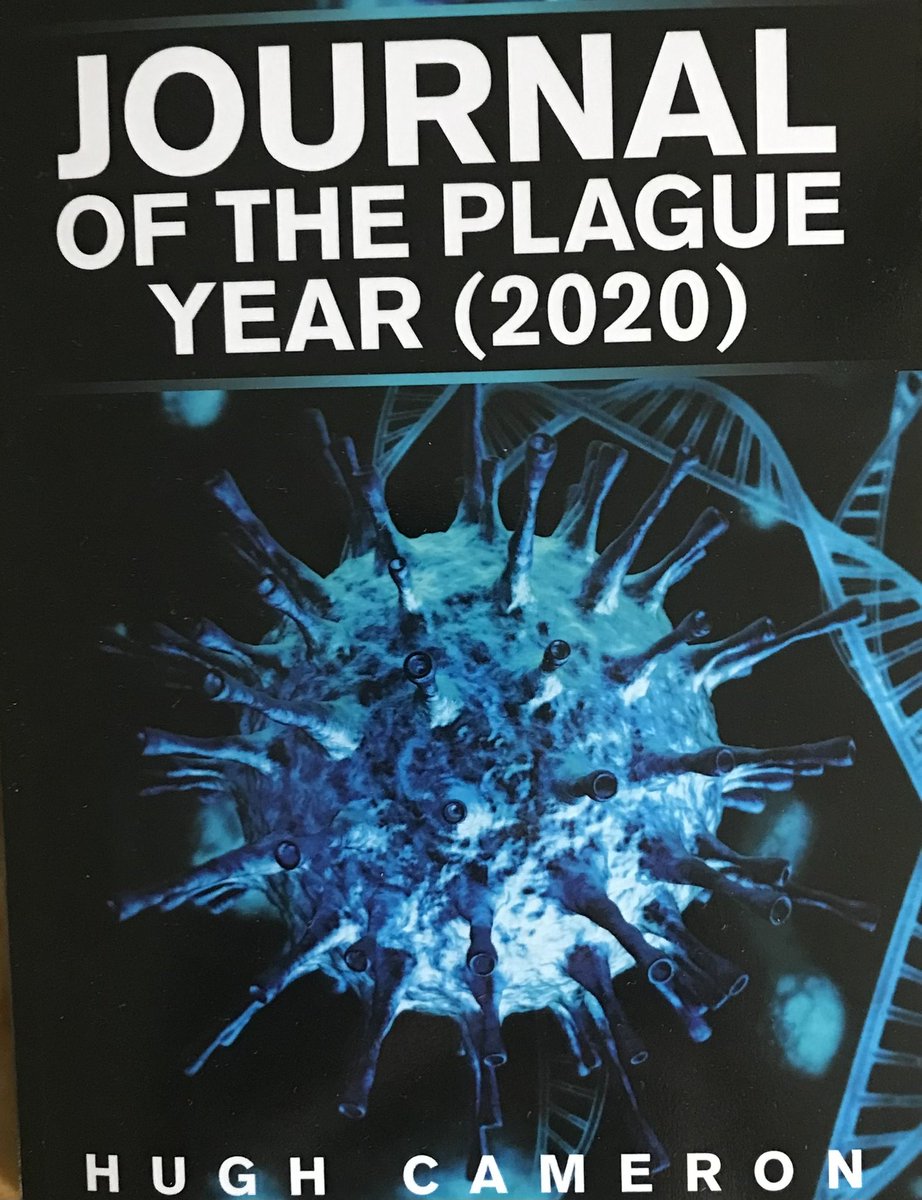
Sadly so! It was a Casedemic produced by positive cases as demonstrated by the fake PCR test, when there were almost no sick people. Google Journal of the Plague Year 2020.
3
32

The casedemic fraudulent PCR lockdown finally comes to an end for another season.
When will the anti-lockdown bandwagon rally against this insanity? Keep it ticking over in farming we will be locked down again as a nation.
Apr 2

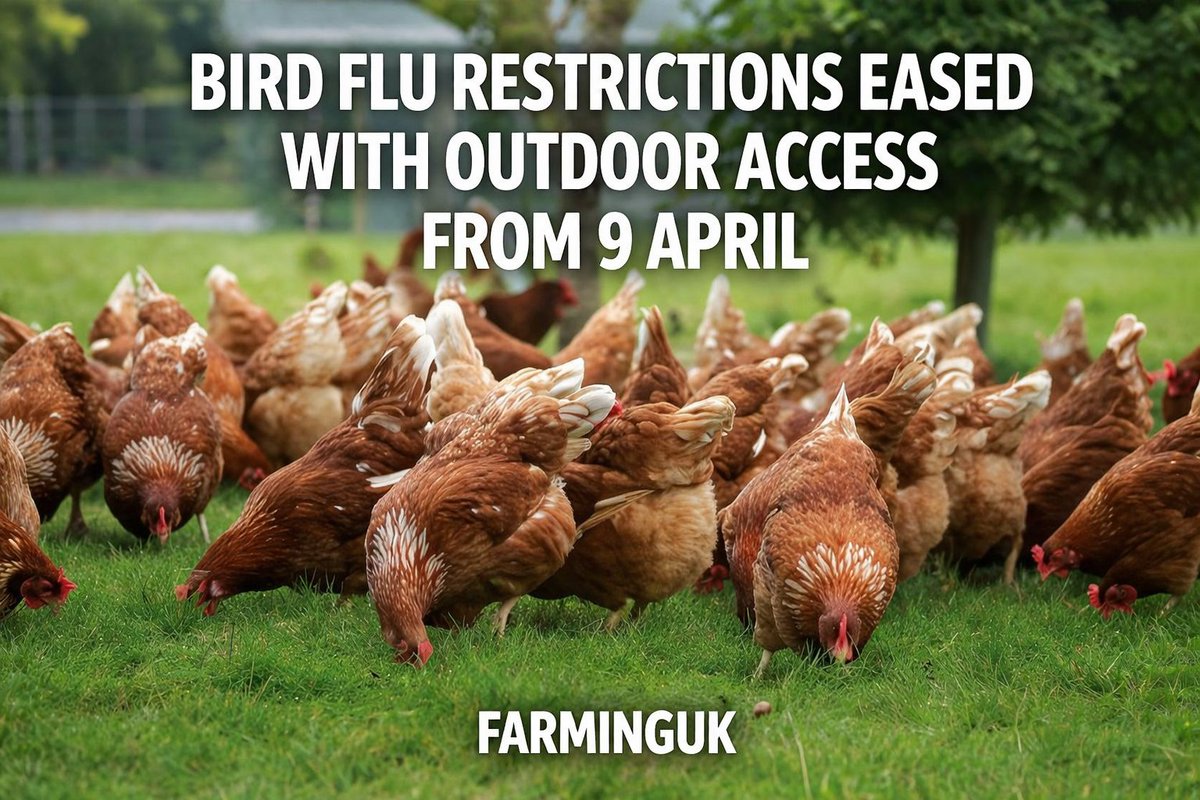
🐔 Poultry keepers to let birds outside again from 9 April. Defra has confirmed housing rules will be lifted as bird flu risk levels fall — allowing flocks back outdoors after months inside
READ MORE: farminguk.com/news/bird-flu-…
3
10
326

Mar 22
Meningitis-B can only be accurately diagnosed by lumbar puncture, not by RT-PCR. Most people carry the bacteria harmlessly, not in their meninges. This is potentially another casedemic scam.
2
5
32
1,172