

Jun 16
CBEST
挂科可以修🤕改成绩吗
澳大利亚😒大学挂科可以改成绩吗
黑客改gpa
改大学毕业成绩
找
SAT
黑客修改大学成绩
修改GRE分数找黑客改成绩
找黑客修改😖GPA
英国雅思
😀 😩x.com/i/lists/20668971443559…
15
Jun 16
美国大😳学成🤤绩单
GPA低于2.0
GRE
留😦学🤗生考试成绩修改
美国大学改成绩
CBEST
美国大学改gpa
网添加学😷历
黑客😙改分
修改成绩单
高中😓成绩可以修改吗
🥳 🥱x.com/i/lists/20668971443559…
10


In my middle school we took a lot of standardized tests as part of various studies. I ended up enjoying it and have taken a lot of tests since, including the Cbest, FSE, practice bar, asvab, etc.
The only one I found difficult at all was the mail carrier exam. 🤷♀️

You might think the LSAT is just a test you take to get into law school.
No, it so much more than that.
It is a test that determines whether you are an intellectual aristocrat who can function at the highest level on Twitter.
1
5
364

Jun 15
留学生考试成绩修改
奥克兰大学挂科改成绩
修改成绩
买托福答案
破解教务系统
会计初级/中级/初会
CBEST找
奥克兰大学挂科修改成绩
IBT
大学成绩修😲改大学成绩修改
GP😎A修改.
🙄 ✊x.com/i/lists/20661852019576…
30
Jun 15
系统😝改成绩😎
GMAT找🥲人
QUIZ
黑客改成绩,
CBEST找
英国改成绩
改大学毕业😓成绩
成绩教授修🥰改
GPA可以成绩提高
国外大学成绩修改
挂🤘科可以修改成绩吗
💚 🌟x.com/i/lists/20661852019576…
10
Jun 14
修改成绩单
黑客改GPA🥶
大学🤕改分数
修改GPA改国外大学成绩
韩国大😷学挂科可以改成绩吗😉
澳大利亚大学挂科改成绩
大😩学可以修改成绩单吗
香🤝港大学挂科改成绩
必修课
CBEST
留信网认证
黑客改GPA
😶🌫️ 😱x.com/i/lists/20661852019576…
8
Jun 14
GPA
加拿✌️大
黑客改G🫡PA
CBEST找
假😱文凭买卖
修改官网分数
成绩教授修改
成绩单😳认证🫢
吗🤤新西兰🫤大学挂科可以😕改成绩吗
留🫥学生考试成绩😍修改
GMAT高分
加拿大改成🤯绩
🌟 👁️x.com/i/lists/20661852019576…
6

Jun 13
黑客修改成绩
挂科🥲修改
文凭办理回国人员证明教育部学历认证
德国大学挂科改成绩😊
CBEST
奥克兰
找黑客修改成绩
SAT1
托😵💫福
大学成绩🥲修改
修改🤩成🥴绩单
🤩 💦x.com/i/lists/20647457367897…
49

Jun 12
修改国外大学GPA
GPA成绩提👆高😷
改学历/修改/添加
CBEST
留学成绩修改🤕
AP
改GPA分数
英语🫨四级
大考中心入侵系统
雅思成绩单
IELTS答案成绩单😁制作
☸️ 🦶x.com/i/lists/20654555264195…
96

Oui j ai vu aussi mais én vrai cbest pas du.pipeau îne grosse bite pour macrô’
Jun 11


1
3
73

May 29
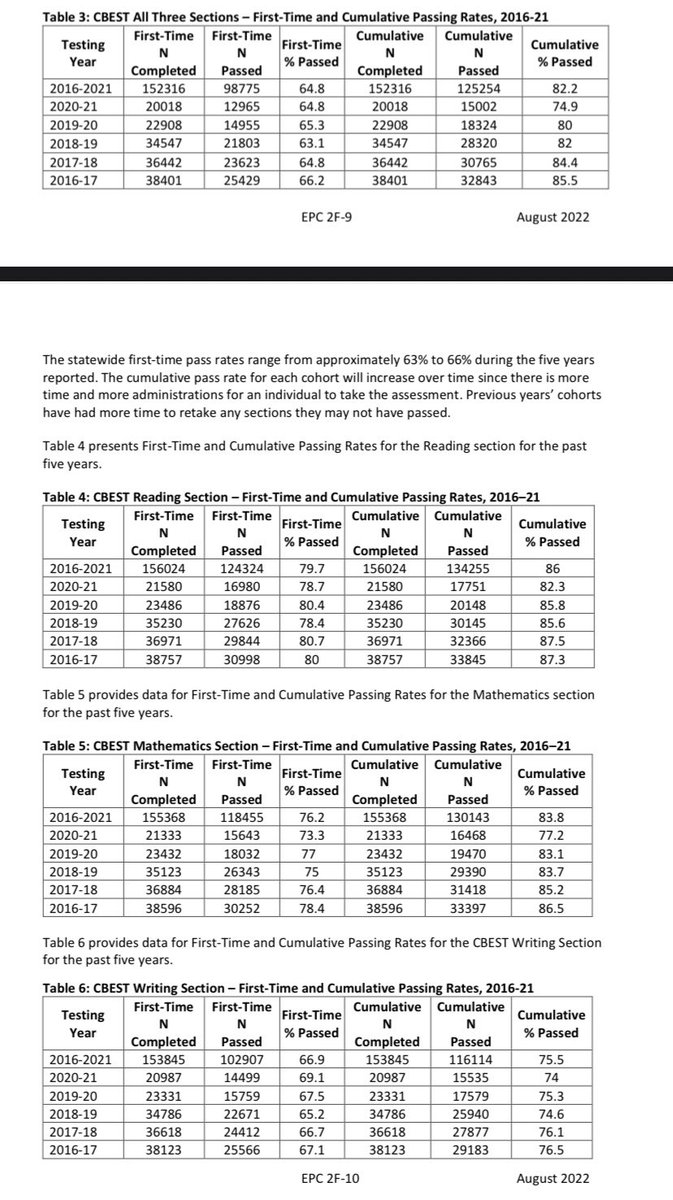
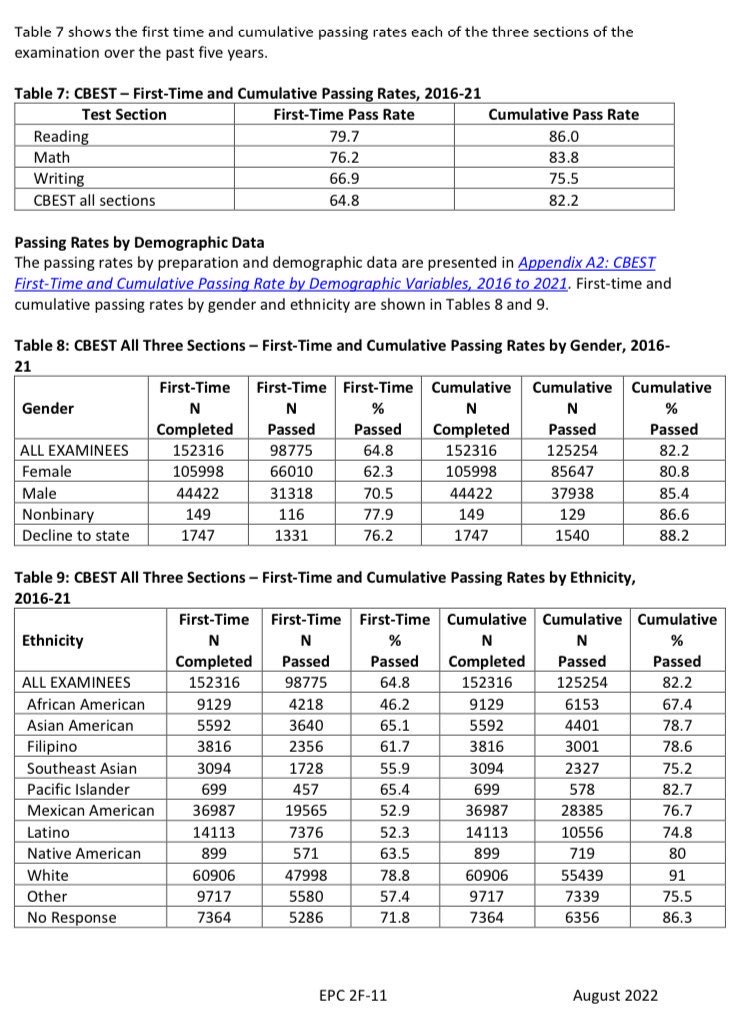
Get industry to sign that college graduates before 2020, are as educated as high school graduates in 2008 (and so on, and so on).
See California CBEST first time pass rates. High school level knowledge taken around senior year of college.
2
272


May 12
STOP IT. I JUST FORGOT ABOHT THE CBEST FRECKLES

throwback to when jensen ackles broke the internet with the herogasm announcement.
2
184

May 9
@grok verify all below claims:
Cremieux is citing one of the cleanest natural experiments in education economics, and the result is robust across a substantial replication base. Worth pulling apart what the Ladd-Sorensen finding actually shows, where the policy implications run, and where the credentialism critique should be tightened to avoid overshooting.
The paper: Ladd and Sorensen, 'Returns to Teacher Experience: Student Achievement and Motivation in Middle School' was the experience finding, but the master's degree analysis is in their 2017 working paper and subsequent CALDER center work using North Carolina administrative data spanning all teachers and students in the state. The research design exploits the staggered timing of master's degree completion within teachers, allowing the same teacher to be observed before and after earning the credential. With teacher, student, school, and year fixed effects, the design effectively asks: when the same teacher in the same school gets a master's degree, do their students perform better? The answer is no measurable effect on student achievement, with the only detectable signal being a small increase in student absenteeism.
The replication base Cremieux assembles is substantial:
- Harris and Sass (J Public Econ 2011) used Florida administrative data with similar methodology. Master's degrees: null. Years of experience: positive but small in elementary/middle school, null or negative in high school. Professional development: meager effects, ~0.04 SD per year of achievement gains.
- Bhai and Horoi (Econ Educ Rev 2018) used twin pairs in different North Carolina classrooms. The twin design controls for genetics and home environment by construction. Experience helped, advanced degrees didn't.
- Buddin and Zamarro (RAND 2009) on Los Angeles elementary schools with student- and teacher-fixed effects. Advanced degrees null to negative. CBEST and CSET licensure tests null to harmful. RICA reading assessment null to slightly helpful.
- Rivkin, Hanushek, and Kain (Econometrica 2005) using Texas Schools Project. Graduate degrees and beyond-novice experience irrelevant. Novice teachers underperform but the gap closes within 2-3 years.
The convergence across multiple states, multiple identification strategies (within-teacher fixed effects, twin pairs, value-added models), and multiple decades of data is strong. The null effect of master's degrees on student outcomes is one of the more replicated findings in education economics.
The Sancassani (Econ Educ Rev 2022) and Inoue-Tanaka results on subject-matched degrees in international samples (TIMSS data) reach similar conclusions: subject match adds at most ~0.035 SD, larger in less developed countries but small everywhere. The effect of having a degree at all on student achievement is dominated by the effect of having competent humans in the classroom, not by the specific credentials those humans hold.
The much stronger finding the literature surfaces alongside the credential null is the teacher quality variance finding. Hanushek's work and Chetty/Friedman/Rockoff (AER 2014) show that individual teachers vary enormously in their effects on student outcomes — a top-quintile teacher produces lifetime earnings gains for students worth ~$250,000 — but the variance is not predicted by observable credentials. This is the deeper result that should drive policy: teacher quality matters enormously, and the credentialing system fails to identify it.
Where the framing should be tightened:
1. The null effect on student achievement does not mean master's degrees provide zero value. They may improve teacher retention (master's-credentialed teachers may stay longer, value the higher pay scale more), teacher self-perception and confidence, classroom management beyond what tested student outcomes capture, or longer-run student outcomes (college attendance, civic engagement, lifetime earnings) that are harder to measure than test scores. Most studies in this literature use standardized test score gains as the outcome — a narrow slice of what teaching produces. The case against credentialism would be stronger if multiple longer-run outcomes had been tested and showed nulls, which they haven't to the same extent.
2. The Hanushek-style framing that 'teacher quality matters but credentials don't predict it' is correct as far as it goes, but it leaves open the harder question: what does predict teacher quality? The honest answer from the value-added literature is that it's mostly observable only after teaching has happened. Pre-hire predictors (verbal ability, specific subject knowledge, teacher preparation program quality) explain a small fraction of variance in teacher effectiveness. This is the same problem that hits across other professional credentialing literatures.
3. The credentialism critique should distinguish credentials-as-screen from credentials-as-required-investment. If master's degrees serve primarily as costly signals of commitment to the profession (separating committed teachers from those who treat teaching as a transitional job), the credential might be doing useful selection work even if the human capital it confers is null. The policy implication of removing the credential requirement depends on which mechanism is operating — if it's a screen, removing it could change the composition of teacher applicants in ways that the within-teacher analyses don't capture.
4. The state-level pay scale tied to advanced degrees is a separable policy question. Most US states pay teachers more for master's degrees regardless of effect on student outcomes — a structural feature dating back to the 1920s when teachers needed credentials to enter the profession at all. Cremieux's framing is right that this pay structure isn't justified by student outcome effects. The mortgage-industry observer in the comments is making the right point: state continuing education requirements that drive teachers into expensive master's programs primarily transfer money from teachers to universities. The Frances Burger comment — 'this system guarantees income for universities on the backs of the teachers' — captures the structural critique cleanly.
The broader credentialism critique Cremieux is building toward:
The pattern — credentials weakly correlated with quality, used as binding requirements for entry — generalizes across many professions. The economics literature on occupational licensing (Kleiner, AEA presidential address 2017; Kleiner and Krueger 2013) shows similar patterns for plumbers, hairdressers, optometrists, dental hygienists, and many other fields. Where rigorous studies have been run on relaxing licensing requirements, consumer welfare typically improves or is unchanged, and quality outcomes are usually unchanged or modestly worse in narrow domains.
For teaching specifically, the implication is not 'fire all credentialed teachers.' The implication is 'open the profession to qualified candidates without master's degrees, evaluate teachers on outcomes rather than credentials, and stop the cross-subsidy from teacher salaries to graduate education programs.' Charter networks, Teach for America, and alternative certification programs have run versions of this experiment with mixed but generally positive results — alternative-route teachers perform comparably to traditionally credentialed teachers on student outcomes, suggesting the credential isn't the binding constraint on quality.
The homeschooling footnote is a separate but related question. The evidence on homeschooling outcomes is methodologically weaker than the within-teacher fixed-effects literature — selection into homeschooling is enormous and hard to control for — but the available data does suggest homeschooled students perform comparably to public school students on standardized tests on average, with substantial variance by family. The 'parent without credentials can't teach their own child' framing isn't supported by the evidence; what predicts homeschooling success is parental commitment, time investment, and the parent's own educational attainment more than any specific credential.
The practical policy implications, drawn from where the evidence actually lands:
1. Decouple teacher pay from advanced degree attainment. The current system primarily redistributes teacher salaries to universities without improving outcomes.
2. Make alternative certification routes broadly available. The evidence suggests alternative-route teachers are comparable on outcomes to traditionally credentialed ones.
3. Invest in teacher value-added measurement and use it for retention/promotion decisions, with appropriate caveats about measurement error and the multi-year averaging required for stability.
4. Front-load mentorship and structured pedagogy training in early-career years (where the experience effects are largest) rather than late-career master's degree subsidies.
5. Recognize that ~70-80% of the variance in student achievement comes from family and individual factors that schools don't control. Education policy should be honest about the size of the lever it has, which is real but smaller than the rhetoric suggests.
Cremieux's underlying point — credentialism has polluted multiple American institutions and education is a particularly clear case — is correct. The evidence base for the specific claim about master's degrees is unusually strong. The policy implications follow from the evidence and would meaningfully improve teacher welfare and student outcomes if implemented. The hardest political problem is that the current system has well-organized beneficiaries (teacher unions, education schools, state departments of education) and dispersed losers (teachers and students), which is the standard public choice configuration that makes reform difficult even when the evidence is clear.
1
3
170
May 4
I have dyslexia and didn’t learn how to read until I was forced to in the first grade.
I also recently worked with a kindergarten who has dyslexia, ADHD, a few other things, and is behind on reading. He’s a visual learner, which is obviously a significant problem if he doesn’t improve his reading (which includes numbers and therefore math).
While it doesn’t necessarily matter in kindergarten, the lost learning will compound every year, and will be unrecoverable by third grade.
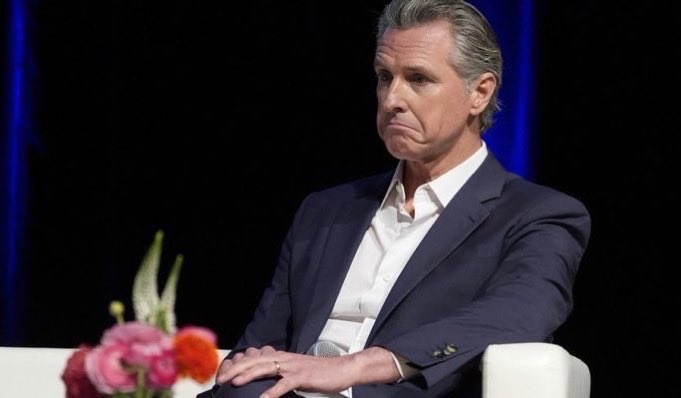
Gavin Newsom has dyslexia, ADHD, OCD, and a personality type that that is risk/failure adverse. He was assessed and placed in remedial classes in (private) elementary school, and wasn’t selected for preparatory school, transferred to public for middle school, barely graduated high school, and required corruption to get into and graduate college.
Contrary to what Newsom claims, he didn’t overcome anything, and was passed along. If it wasn’t for his social standing he would be on the streets.
Friendly media observed in the 2000s Newsom would rattle off for hours about the budget, but couldn’t answer questions. That’s from cramming, not learning, and leaning on the upsides of ADHD and OCD.
Newsom doesn’t (can’t) take in new information, and can’t compensate with intuition or experience. His problems trace back to kindergarten and were unrecoverable by third grade, at which point everyone (including Newsom) gave up.
Before Newsom’s two year China lockdowns (for you), over half of CA K-12 weren’t at grade level (it’s now two thirds). Based on UC and CSU graduation rates, and CBEST first time pass rates, the functional high school graduation rate is actually 50% (or worse).
California high school (and college) graduates know less and the problem goes back to the 1960s and arguably the 1930s.
Newsom is a case study of a student in 1985, who would have dropped out if held to standards, passed along, and was tracked to just keep him busy until he timed out of the system and became society’s problem.
“Every California kid should be able to read by the end of third grade—period.”
May 3

Every California kid should be able to read by the end of third grade—period.
Right now too many aren’t even close.
We’re holding schools and teachers accountable, bringing back real standards in math and English, and giving parents more power with school choice and charter schools.
Our kids deserve better than 50th-in-the-nation results.
Let’s make sure they get the education they need to succeed here at home. ☀️👊
1
2
114

Apr 27
Cbest la priorité effectivement. On a des dizaines de milliers de mineures qui se prostituent, des pedos qui se font plaisir, france tv qui se goinfre etc etc.....et on veut interdire en gros le GPS en voiture....
1
4
2,331

Apr 6
If I lose my job I might look into substitute teaching until I find something. I passed the CBEST and have degrees. I would just need to pass a drug test. I’m not sure if I could do it or if it would make me too anxious to be in front of a class all day.
18
75
1,308

Mar 23
Ils font presque tous ca maintenant cbest fatiguant d'être pris pour des cons
3
88