
Jun 8
US Army orders $11.2M drone kits to detect chemical, biological threats | Atharva Gosavi, Interesting Engineering
Deliveries are expected to begin in Q2 2026, with the kits being built across facilities.
Teledyne Technologies Incorporated has announced that Teledyne FLIR Defense has secured an $11.2 million contract from the U.S. Army’s Capability Program Executive for Chemical, Biological, Radiological and Nuclear Defense to deliver more than 45 advanced CBRN unmanned aerial system kits.
The award is centered on equipping frontline units with unmanned systems that can detect, map, and assess hazardous environments without putting soldiers directly in danger.
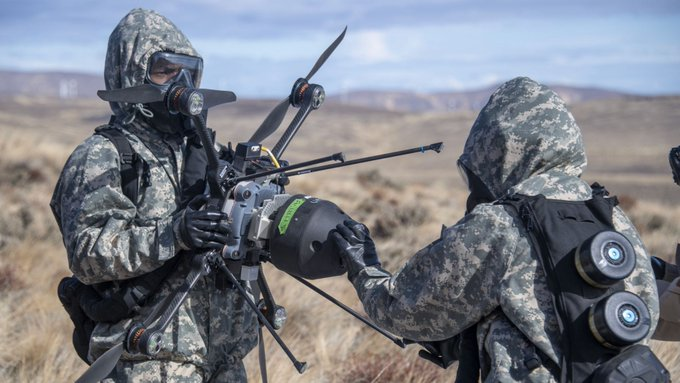
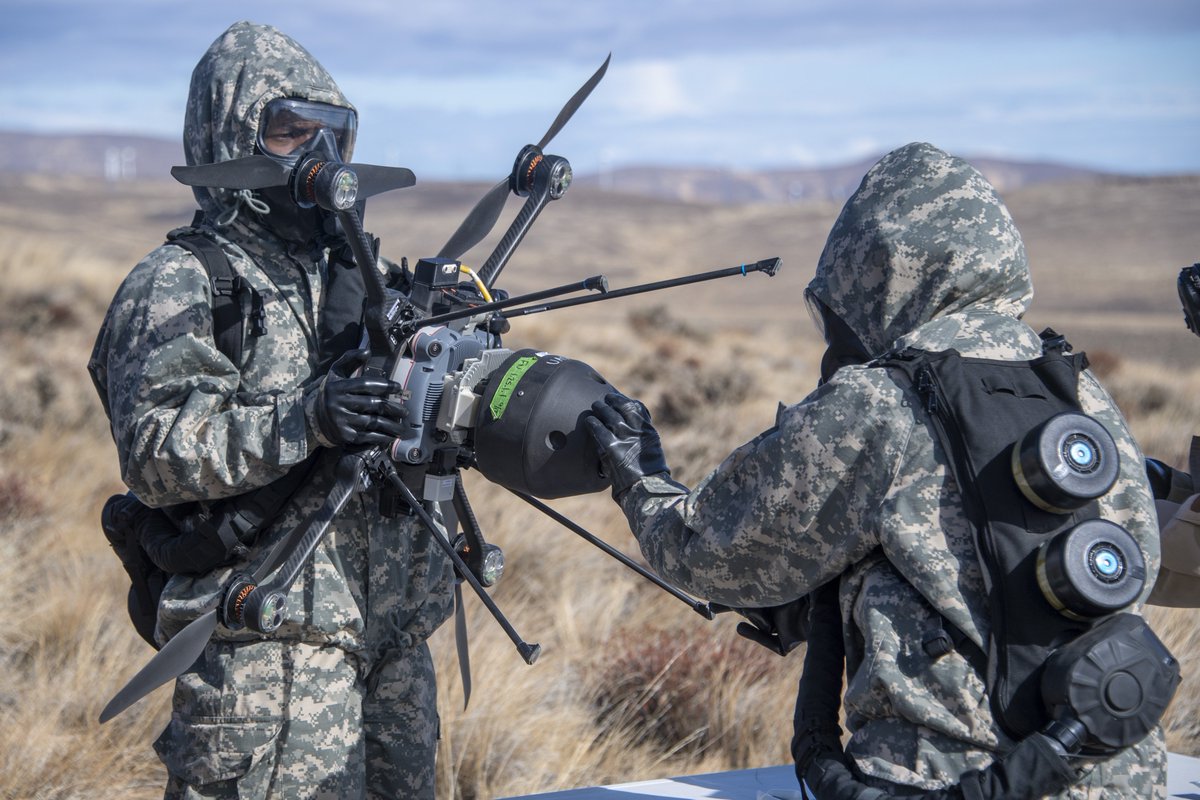
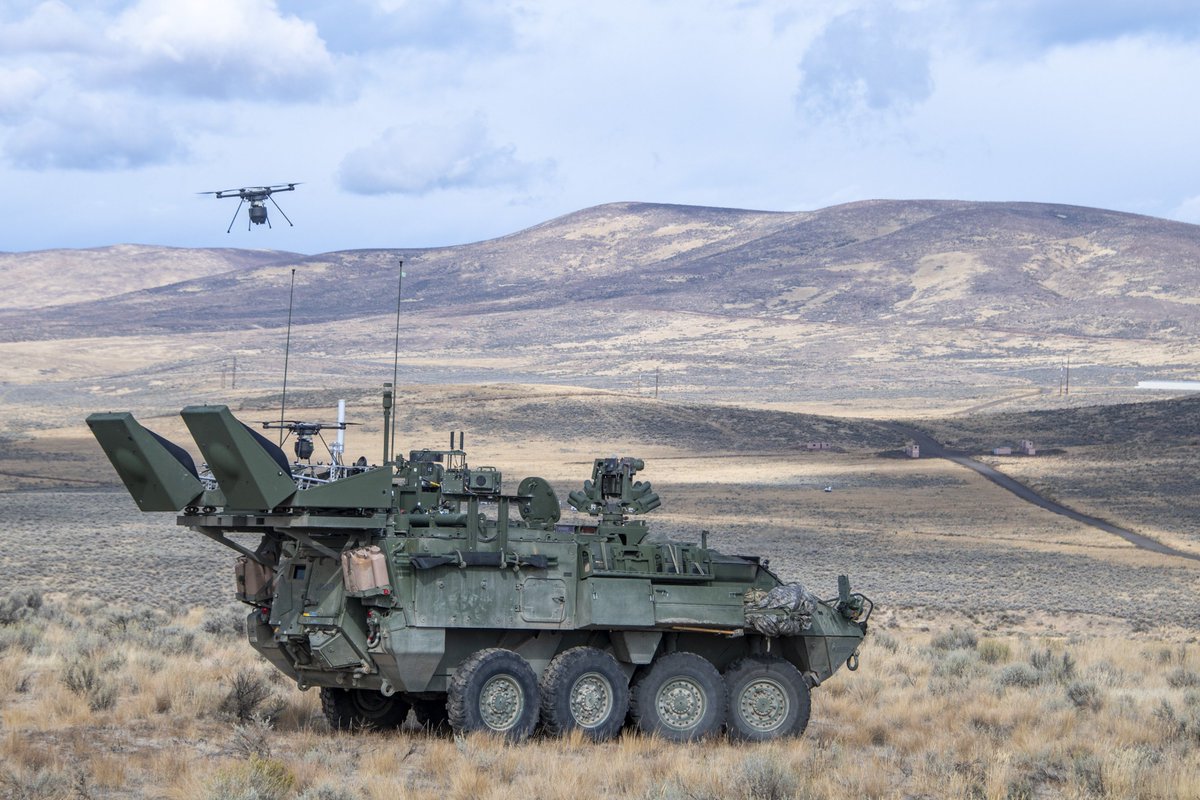
The kits are based on Teledyne FLIR’s R80D SkyRaider unmanned aerial system and will include modular chemical, biological, and radiological detection payloads, along with resilient communications technologies.
“Safe-guarding soldiers from weapons of mass destruction is at the core of our mission,” said Dr. JihFen Lei, President of Teledyne Defense and Aerospace Group and Senior Vice President of Teledyne Technologies.
“These SkyRaider-based sensor kits dramatically improve how units can detect and map CBRN hazards without exposing warfighters to dangerous environments,” he added.
Drone kits built for CBRN threat detection
The kits were developed under the U.S. Army’s Chemical, Biological, Radiological, and Nuclear Sensor Integration on Robotic Platforms program, known as CSIRP.
The program is focused on rapidly prototyping and fielding modular sensor solutions that can enhance drones and unmanned ground vehicles.
According to the announcement, CSIRP brings together advanced sensing, artificial intelligence, machine learning, autonomy, and communications technologies to improve robotic platforms used in hazardous environments.
For this contract, the R80D SkyRaider drone has been specially configured with semi-autonomous CBRN search and survey capabilities developed under the CSIRP program.
Once deployed, the drone can autonomously locate and characterize CBRN threats, giving operators a safer way to understand the risks present in contaminated areas.
Using detection payloads mounted on the drone, operators can view real-time hazard data through mapping, targeting, and communications tools.
This allows dismounted frontline units to rapidly assess contaminated environments while keeping personnel out of harm’s way.
Carrying modular payloads
Each kit includes the R80D SkyRaider drone carrying a selection of chemical, biological, and radiological detection payloads. The payload suite includes the Teledyne FLIR MUVE B330 biological sensor and features autonomous operation.
The modular nature of the system is a key part of the Army’s CSIRP effort, which aims to field sensor solutions that can be integrated onto robotic platforms for different operational needs.
In this case, the SkyRaider-based kit gives units a mobile aerial platform that can support CBRN search, survey, and hazard characterization missions.
The technology is intended to strengthen how frontline units respond to environments where chemical, biological, radiological, or nuclear hazards may be present.
Instead of sending soldiers directly into contaminated zones, operators can use the drone to gather hazard data remotely and in real time.
Deliveries expected in 2026
The sensor kits will be built at Teledyne FLIR Defense facilities in Elkridge, Maryland, and West Lafayette, Indiana. Additional engineering work will be performed in Stillwater, Oklahoma.
Deliveries under the $11.2 million contract are expected to begin in the second quarter of 2026.
For Teledyne FLIR Defense, the award adds to its work in integrated CBRN detection solutions and unmanned sensing systems.
For the Army, the SkyRaider-based kits represent another step toward using robotic platforms to help soldiers detect, map, and respond to dangerous battlefield hazards from a safer distance.
interestingengineering.com/i…
2
15
1,293

Jun 4
🇺🇸 Teledyne FLIR Defense received $11.2 million contract from U.S. Army’s Capability Program Executive for Chemical, Biological, Radiological and Nuclear Defense (CPE CBRND) to deliver more than 45 advanced CBRN unmanned aerial system (UAS) kits. @flir
For the contract, the company will integrate its R80D SkyRaider UAS with a suite of modular, semi-autonomous CBRN detection payloads developed under the Army’s Chemical, Biological, Radiological, and Nuclear Sensor Integration on Robotic Platforms (CSIRP) program.
Using the detection payloads mounted on the drone, operators can view real-time hazard data through mapping, targeting, and communications tools. Once deployed, the #SkyRaider can autonomously locate and characterize #CBRN threats.
8
38
1,401

6 Dec 2024
Eric Wayne Burlison is the current U.S. representative for Missouri's 7th congressional district.
Military bases in the 7th congressional district:
Fort Leonard Wood is a significant U.S. Army installation located in the south central Missouri Ozarks, which falls within the general region of the 7th congressional district. Key details about Fort Leonard Wood include:
- Covers more than 61,000 acres
- Home to the 1st Engineer Brigade, 3rd Chemical Brigade, and 14th Military Police Brigade
- Provides training for various military units
- Located about two and a half hours southwest of St. Louis
- Nicknamed "Fort Lost in the Woods" due to its remote location
Fort Leonard Wood is actively involved in developing and testing advanced military technologies. The base serves as a hub for experimenting with cutting-edge innovations aimed at enhancing various aspects of military operations. Some of the advanced technologies being worked on at Fort Leonard Wood include:
Emerging Technologies Assessment
The Maneuver Support Battle Lab (MSBL) at Fort Leonard Wood conducts annual events called Maneuver Support and Protection Integration eXperiments (MSPIX) to assess new technologies. In 2024, they evaluated 16 emerging technologies, including:
- Unmanned aircraft systems (UAS) with software programmed to detect subsurface explosives in real-time
- Robotics for engineering operations (REO) providing standoff and autonomous terrain shaping
- Chemical, biological, radiological, and nuclear sensors in robotic platforms (CSIRP) for unmanned and autonomous area reconnaissance
3D Printing and Construction
Fort Leonard Wood has demonstrated 3D printing of concrete technology, which can rapidly erect structures. This innovation has potential applications in expeditionary construction and rapid deployment of military infrastructure.
Energy Innovation
The base is working on several energy-related projects to improve efficiency and resilience:
- Propane-Air Mixing Plant for synthetic natural gas production
- Combined heat and power plants to increase energy efficiency
- Preparations for transitioning to electric vehicles (EVs) in non-tactical fleets
Operational Energy Research
The Construction Engineering Research Laboratory (CERL) at Fort Leonard Wood is conducting research on operational energy usage. They have developed the Deployable Metering and Monitoring System (DMMS) to collect data for making informed energy decisions in military operations.
These advancements demonstrate Fort Leonard Wood's commitment to developing and testing technologies that enhance military capabilities, improve energy efficiency, and support the Army's modernization efforts.

4
257

17 Aug 2023
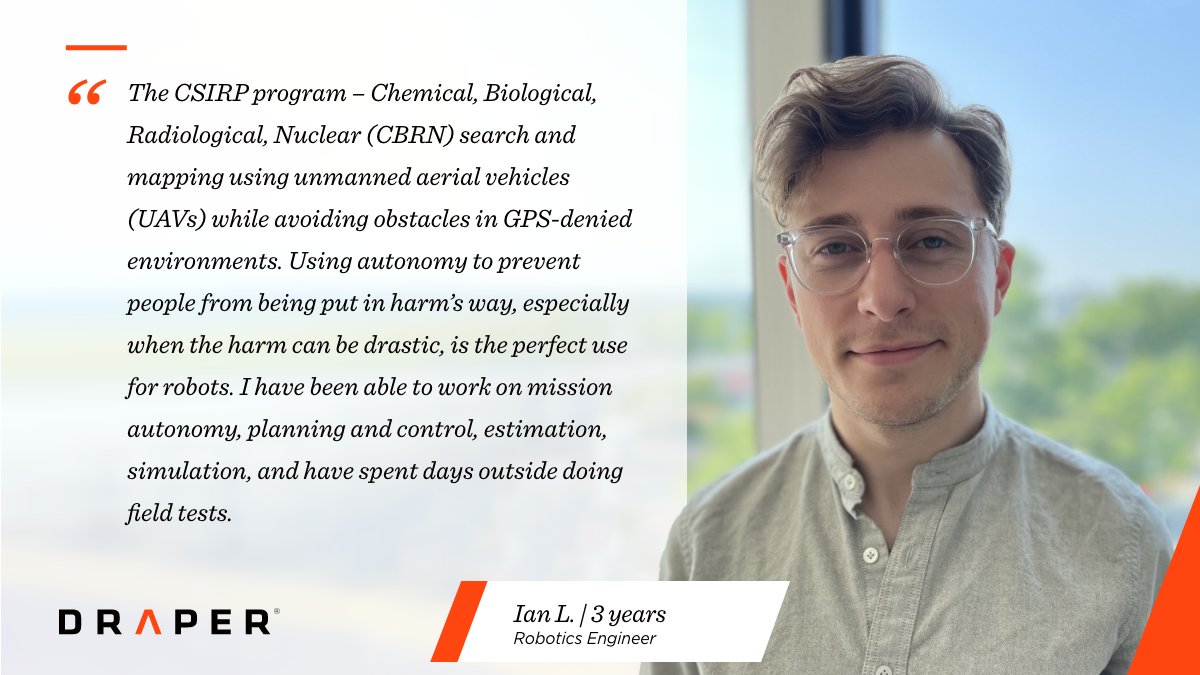
Meet Ian! He is a Robotics Engineer. His favorite project he has worked on is CSIRP, which is a CBRN Sensor Integration on a Robotic Platform, the system is capable of searching even small, cluttered places and detecting CBRN hazards. draper.com/draperfeatures/CS…
2
293


28 Dec 2022
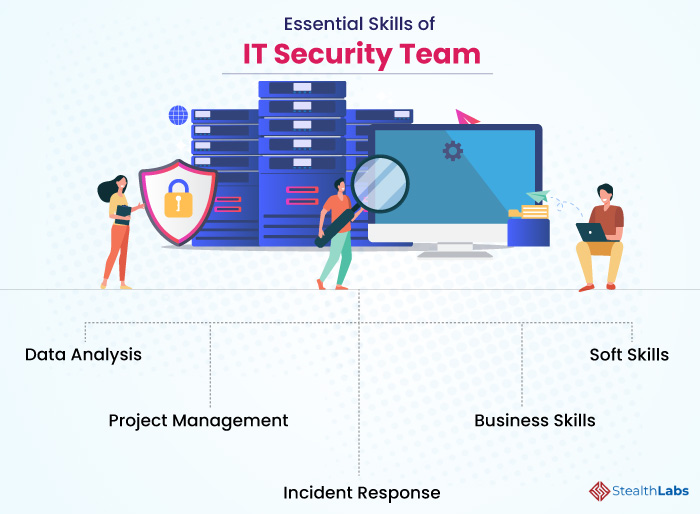
#ITprofessionals need to be able to collect data & use it to inform the adoption of robust security measures in order to develop an effective #cybersecuritystrategy
@stealthlabsinc #CyberSecuritySkills #ITsecurityteam #CSIRP #CyberSecuritySolutions #ITsecurityexpert #ITsecurity
2
109

Not having a cybersecurity incident response plan (CSIRP) in place 🚩🚩🚩
In the face of rising cyber attacks, being prepared to quickly and effectively respond is critical to limiting damage…a CSIRP can help! Here’s how: go.mend.io/3tAFHNQ
#MendIt #MendTogether

1
7
3 Nov 2022
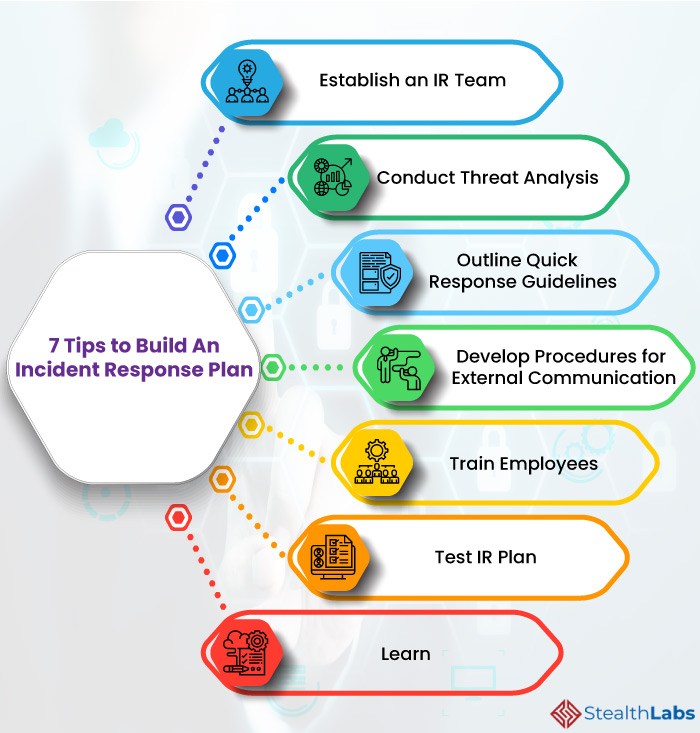
There are different kinds of IR teams, including internal, external, and hybrid. Experts in breach management, threat intelligence, malware analysis and incident detection should be included on the IR team.
@stealthlabsinc #CyberIncidentResponse #CSIRP #CIRP #ITSecurityServices
1
6

13 Sep 2022
Probably doesn't come as a surprise ...
DLP is only useful for preventing accidental data leaks. It's next to useless against any threat actor.
Insurance ... they are now starting to not only ask for your CSIRP etc, but also EVIDENCE you use it and stick to the steps.
1
3
23 Jun 2022
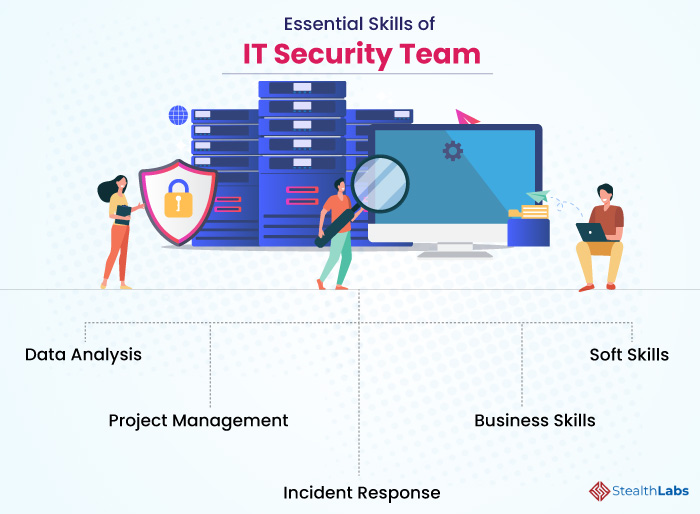
What Skills Should Your #ITSecurity Team Have?
Here’s a list of five essential skills that your cyber security team needs in order to protect the company from cyber-attacks. bit.ly/3OboFyu
@stealthlabsinc #CSIRP #ITServices #cybersecurityservices #ITsecurityservices
1
4

Expanding on #3:
A hardcopy phone tree is vital... it can't be ransomwared
If your CSIRP doesn't include legal and PR, it's incomplete
If it lacks an out-of-band comm's plan, it's incomplete.
9 Mar 2022

basic checklist of things to do BEFORE you have a cyber incident:
1. have a CSIRP (incident response plan) in place
2. make sure your colleagues have READ the CSIRP
3. have a contact list so people know who to call during an incident
4. have a contact at local law enforcement
2

9 Mar 2022
I'd also add that you should exercise your CSIRP so people get used to the process. When the shit hits the fan you want your team to react based on their training
1
2

9 Mar 2022
basic checklist of things to do BEFORE you have a cyber incident:
1. have a CSIRP (incident response plan) in place
2. make sure your colleagues have READ the CSIRP
3. have a contact list so people know who to call during an incident
4. have a contact at local law enforcement
25
71
414

7 Dec 2021
Tired of losing sleep over #cyberattacks? @Optiv breaks down best practices to prepare you for the real thing. #CSIRP bit.ly/3IrvPMG

2

3 Oct 2021
Happy #CyberSecurityAwarenessMonth! I'll keep it simple. #CyberSecurity is REAL! We need to think twice before we click on anything! Make sure you have a CSIRP For more Cyber Tips join us this THURSDAY October 7th at the in person Cyber Fireside in Bergen County NJ -
1
5
5

1 Sep 2021
❝⠀⠀⠀⠀⠀⠀⠀⠀𝐓𝐀𝐆𝐒⠀
#thementalistrp #criminalmindsrp #csirp #chicagopdrp #lawandorderrp #lawandordersvurp #criminalrp #multiverserp #crimerp #freerol #horrorrp #aurp
1

16 Jun 2021
#知らないでは済まされないセキュリティー
クイズに答えてスキルアップ ⤴️
<第22問>
サイバー攻撃が発生した際のインシデント対応計画を何と言う?
✅ A: CSIRP or ✅ B: BSIRP
#セキュリティークイズ
#企業で求められるセキュリティー
#サイバーセキュリティー
#日本IBM

1
6

31 Mar 2021
RT @JPEOCBRND: Using #CBRN Sensory Integration on Robotic Platforms (CSIRP), we can help keep both Warfighters and military working dogs out of the hazard space.
x.com/JPEOCBRND/status/13743…
1
5

28 Mar 2021
{{Open to AU/Crossover SLs including but not limited to the following fandoms:
#LawAndOrderRP #SVURP #Lawandordersvurp #NCISRP #SOARP #SonsOfAnarchyRP #CSIRP #DexterRP #HannibalRP #CriminalMindsRP #BonesRP #CrimeRP #HorrorRP }}
2
12 Feb 2021
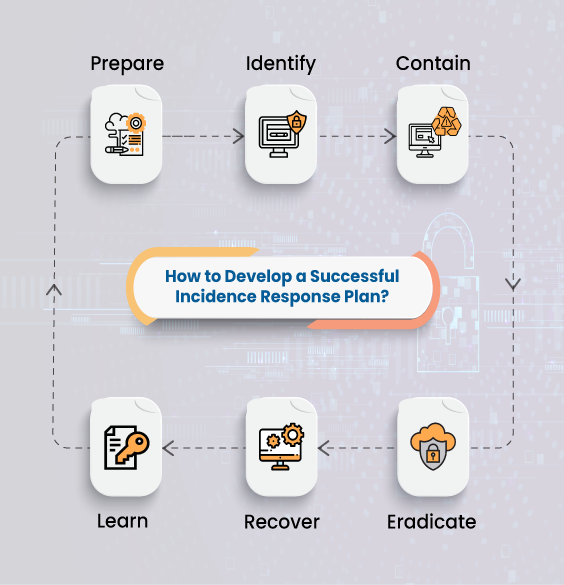
An incident response plan is a set of tools and procedures that your #security team can use to identify, eliminate, and recover from #cybersecurity threats.
It is designed to help your team respond quickly and uniformly against any type of external #threat.🔐✅
#CSIRP #Data
5
7