
16 Apr 2025
ปูนซีเมนต์ต้านแผ่นดินไหว ลดการพังทลายจากแรงสั่นสะเทือนลง 50%
.
อ่านข่าวเพิ่มเติมที่ : posttoday.com/smart-life/722…
.
#แผ่นดินไหว
#ปูนซีเมนต์
#CSRGF
#ภัยธรรมชาติ
#โรงไฟฟ้าพลังงานความร้อนใต้พิภพ
#SmartLife

780

26 Feb 2025
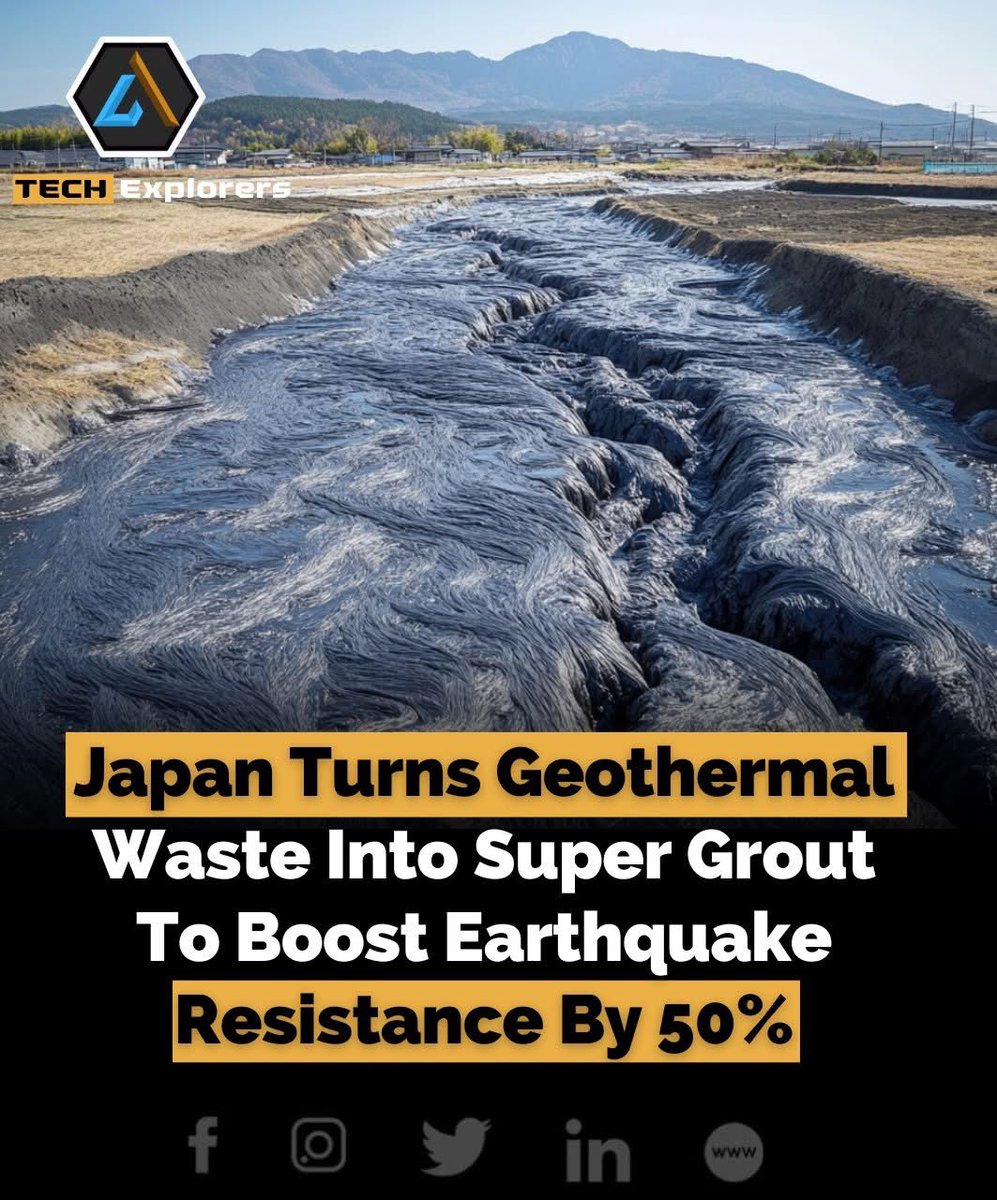
Japanese scientists, led by Professor Shinya Inazumi from the Shibaura Institute of Technology, have developed an eco-friendly grout called Colloidal Silica Recovered from Geothermal Fluids (CSRGF), which uses waste fluids from geothermal plants to strengthen soil.
This innovative material offers a sustainable alternative to traditional grouting methods, helping stabilize buildings, roads, and tunnels while reducing carbon emissions.
Grouting is crucial in earthquake-prone areas as it prevents liquefaction — a process where soil loses its strength during seismic activity — and CSRGF has shown to improve liquefaction resistance by 50% compared to conventional grouts. It spreads easily underground, hardens efficiently, and meets environmental safety standards. Beyond earthquake protection, CSRGF reinforces coastal defenses, protects against erosion, and helps preserve historic buildings without harming the ecosystem.
With its affordable and scalable production, using existing geothermal waste, this breakthrough material pushes the construction industry closer to carbon neutrality by 2050. The research team plans to expand real-world testing, aiming to build greener, more resilient infrastructure globally.
#GeothermalEnergy #SustainableConstruction #SoilStabilization #GreenTechnology #EarthquakeSafety #ClimateResilience #CarbonNeutrality #CSRGF #Innovation #TechNews
1
513

24 Oct 2014

2 Jul 2011
(˘⌣˘)ε˘`) RT @ghea_oktarin: Goodluck buat pacar @adit_insomnia yg lagi nge host @Gogirlmagz ... http://tmi.me/csRGF