
RT @kanalas_lili: Van egy csomagom ami pár ezer Ft 70db 20 perces videóim, 40 intim képet 15perces videó cset és 2óra hossza tali, érdekel…
52
lau retweeted

Szia valakit ma le szophatok ? 😘
Csomag ♥️
Sex cam ♥️
Sex cset ♥️
Sex cam
Sex tali ami tabu mentes 😌ragd a számba a jó farkad 💦
Írj itt vagy Watsap 304112868 ♥️

2
16
125
1,854
Kari retweeted
Szia Rt like ha te farkadon is így lehetek 🍆💦
Írj rám 😘
Csomag 😘
Sex cam 😘
Sex cset 😘
Sex tali ami tabu mentes 😘
Írj itt vagy Viber 304112868 😘😘
2
12
83
839

Postdocs are a good example. These are paid positions. There is no admission committee with ulterior motives. A principal investigator places an ad for a postdoctoral position in a scientific journal. The PI has one major motivation: research success. The ability to obtain tenure and receive continued grant funding is based almost exclusively on research output.
The PI also benefits from cheap grad student labor.
•The NCSES — Survey of Graduate Students and Postdoctorates in Science and Engineering (GSS) found that temporary visa holders account for 53% of all engineering postdocs and 56% of physical science and math postdocs working in U.S. higher education. In many R1 research institutions, international scholars constitute the vast majority of lab personnel driving day-to-day experimental work.
•Center for Strategic and International Studies (CSIS) — The STEM Shortage:
An analysis of how the domestic doctoral shortage impacts defense R&D, artificial intelligence development, and semiconductor manufacturing.
CSIS details that the U.S. defense industrial base and advanced technology sectors face severe talent constraints because federal labs and defense contractors require U.S. citizenship for security clearances. Because the vast majority of advanced doctoral and postdoctoral researchers in specialized computing and material sciences are foreign nationals, there is a structural disconnect: plenty of cutting-edge research is happening in U.S. universities, but a critically small fraction of that doctoral talent can transition into sensitive domestic security roles.
csis.org/analysis/retaining-…
•Georgetown University Center for Security and Emerging Technology (CSET)
CSET reports that international STEM Ph.D. graduates have exceptionally high "stay rates" in the U.S. (around 80% to 90% for Chinese and Indian doctorates remain in the country for at least five years post-graduation). Their research demonstrates that the U.S. innovation economy is completely dependent on retaining these foreign doctorates and postdocs, as the volume of domestic citizen Ph.D. grads is fundamentally insufficient to sustain current commercial and academic AI research labs.
cset.georgetown.edu/publicat…
•National Academies of Sciences, Engineering, and Medicine (NASEM) — The Postdoctoral Experience Revisited
The Core Issue: This consensus study evaluates why domestic citizens avoid the doctoral and postdoctoral path.
US students are unwilling to sacrifice years of low pay (student stipends and later postdoc pay). With undergraduate degrees they can obtain good salaries without sacrificing ~6-7 years.
In contrast, pursuit of an advanced degree and postdoc for a foreign student often is a path to citizenship. They are more willing to make the sacrifice for the prize.
nap.nationalacademies.org/ca…
1
47

Jun 13
Üniversitede onaylı bir fen öğretim programını tamamlamak veya
CSET (California Subject Examinations for Teachers) fen sınavlarını geçmek.
Ortaokul fen öğretmenleri için özellikle Foundational-Level General Science yeterliliği önemlidir.
1
45
RT @Mercike000000: Halli 🍆💦lenél a helyébe ?
Ha szeretnéd hogy így szopjalak akor írj
Csomag 😘
Sex cam 😘
Sex cset 😘
Sex tali 🍑💦
Írj rám b…
35

RT @DominikaHorvt11: Gyertek bátran csinibe raktam magam
Szex kam 🍆Szex cset 💋
Csomag vásárlások ma kedvezményesek ❤️🥰😝😏🍆💧 t.co/Aa…
16

Jun 13
we're not talking enough about how this order restricts "any foreign national," "including foreign national Anthropic employees" EVEN from inside Anthropic now cannot use the model.
CSET reports that in 2023, 217 leading US-based AI researchers were foreign-born or educated. This new policy if taken at its word WILL affect people on O-1 Visas, H-1B's, and green card holders who work at Anthropic.
This policy is self-sabotage on the US's existing AI research if it lasts.
Jun 13

The US government, citing national security authorities, has issued an export control directive to suspend all access to Fable 5 and Mythos 5 by any foreign national, whether inside or outside the United States, including foreign national Anthropic employees.
The net effect of this order is that we must abruptly disable Fable 5 and Mythos 5 for all our customers to ensure compliance.
Access to all other Claude models is not affected.
We apologize for this disruption to our customers. We believe this is a misunderstanding and are working to restore access as soon as possible.
Read our full statement: anthropic.com/news/fable-myt…
2
4
265

Jun 13
CSET estimates 70% of top AI researchers were born abroad.
This policy won't work as-is, and some part of that discussion will need to resolve ASAP.
Jun 13
The US government, citing national security authorities, has issued an export control directive to suspend all access to Fable 5 and Mythos 5 by any foreign national, whether inside or outside the United States, including foreign national Anthropic employees.
The net effect of this order is that we must abruptly disable Fable 5 and Mythos 5 for all our customers to ensure compliance.
Access to all other Claude models is not affected.
We apologize for this disruption to our customers. We believe this is a misunderstanding and are working to restore access as soon as possible.
Read our full statement: anthropic.com/news/fable-myt…
1
1
180


Nelisiwe retweeted

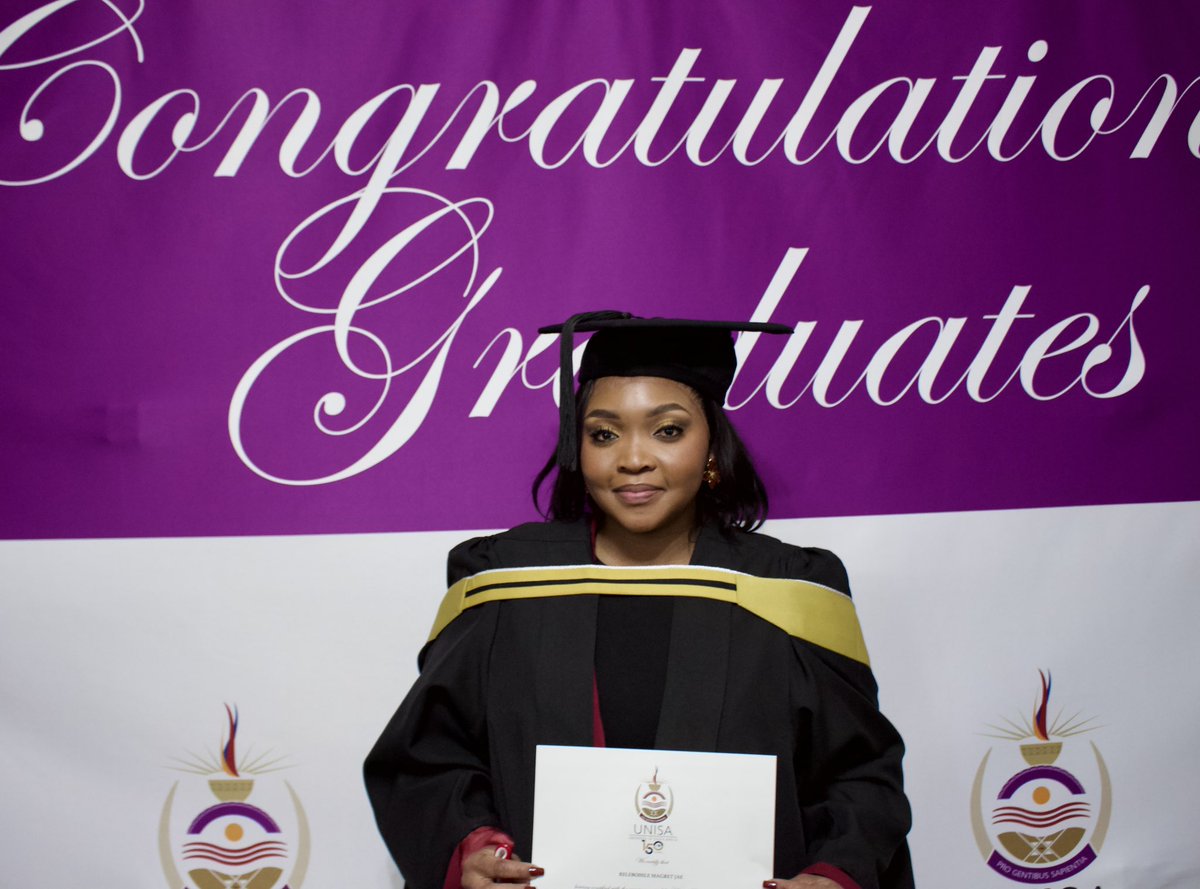
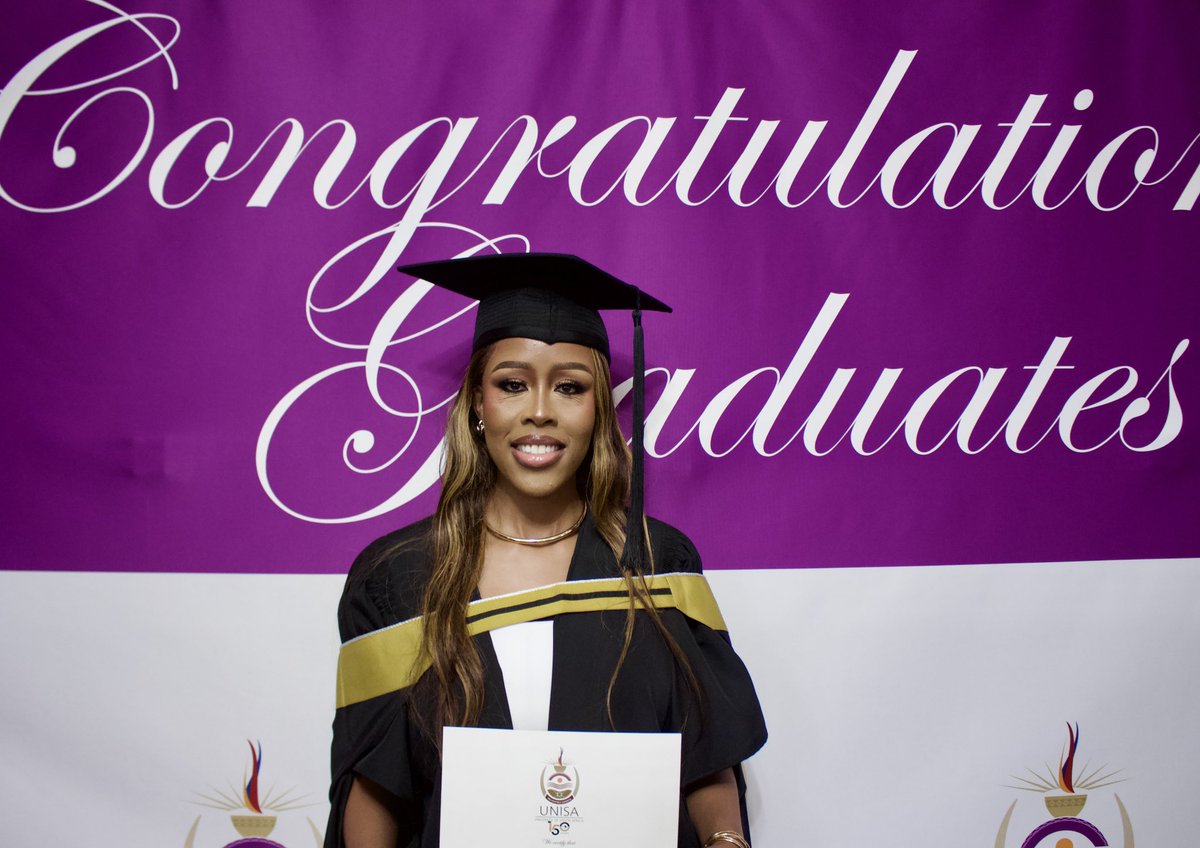
As we continue to shine the spotlight on our #CSET graduates, help us congratulate the following #CSETers who just obtained their Bachelor of Engineering Technology Honours Degrees. Ms Relebohile Jae, Honours in Electronic Engineering (Cum Laude) and Ms Morgadi Kanakga also received her Honours Degree in Industrial Engineering. Well done on the your achievements. We celebrate your achievement.
#UnisaCSET
#Unisa150andBeyond
3
28
1,191