Dr. Michael R. Hart 🏳️🌈 retweeted

Jun 12
This Pride Month, we are reminded of the brave leaders of the Stonewall riot who stood up against oppression. CalEPA is committed to honoring the progress those leaders made, and to creating safe spaces for members of the LGBTQIA2S community, now and beyond.
10
6
8
401

Blame Sacramento. And Sierra Club types. CalEPA blocks clearing. CARB blocks burning. Even though a wild-fire ecosystem. Coastal Commission/ CEQA blocks fire remediation. Props banned effective firebreak herbicides. Judges allow radical-eco NGO's with no legal standing to sue.
2
1
91

Jun 10
Not....I have insider track.
It doesn't mean it will happen.
It means...people who are in CalEPA are WORRIED it will happen. They can see the writing on the proverbial wall.
2
28

Jun 9
La théorie, LIBE : «Méga feu : le réchauffement a rendu les incendies de Los Angeles 35 % plus probables »
Les faits: Rapports officiels (LADWP, CalEPA, etc.) confirment un système d’eau qui a été dépassé, réduisant l’efficacité des pompiers et contribué à la propagation rapide
1
20
Jun 9
La théorie, LIBE : «Méga feu : le réchauffement a rendu les incendies de Los Angeles 35 % plus probables »
Les faits: Rapports officiels (LADWP, CalEPA, etc.) confirment un système d’eau qui a été dépassé, réduisant l’efficacité des pompiers et contribué à la propagation rapide
1
25

Even Pete Wilson isn't a hardcore conservative. He was pro-abortion and created the modern CalEPA.
1
42

Jun 8
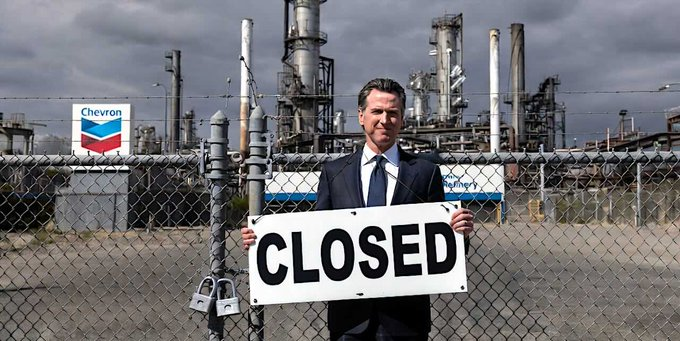
Climate Change Superstition Still Rules California | Lloyd Billingsley, The American Spectator
At the end of May, the California Air Resources Board extended the “Cap-and-Invest” program through 2045, with changes that allegedly provide a “long-term signal for the market.” [some emphasis, links added]
CARB maintains the path toward the state’s 2030 and 2045 “climate targets,” while supporting “affordability for Californians by managing costs and maintaining a clear long-term signal for clean energy investment in the state.”
If that leaves people confused, they might start with the climate targets.
The “California Global Warming Solutions Act of 2006” fought “anthropogenic climate change” that had “led to higher overall worldwide temperatures, reduced snowpack in the higher elevations, greater fluctuations of temperature and precipitation, global sea level rise and more frequent and severe extreme weather events,” and so on.
The Act gave no sense that these issues were a matter of debate.
In Unsettled: What Climate Science Tells Us, What It Doesn’t, and Why It Matters, Steve Koonin shows that the catastrophic prophecies of “global warming” have gone unfulfilled.
California policy shows no recognition of this reality. The state targets carbon dioxide (CO2), a naturally occurring gas.
The “Cap-and-Trade” program, now called “Cap and Invest,” places a “cap” on businesses that CARB deems “polluters” and responsible for most of the state’s “greenhouse gas” emissions. Companies can purchase allowances or “trade” them with entities that have allegedly cut their emissions.
Trouble is, CARB regulations do not cover foreign energy importers, and that creates a problem for the state’s oil and gas refiners.
CARB’s proposed amendments would revise offset limits, establish an emissions containment reserve, and shift free allowance allocations from gas companies to electric utilities.
Jodie Muller of the Western States Petroleum Association called that “a move in the right direction,” but California refineries “need long-term certainty to make the investments that keep energy reliable and affordable for consumers.”
Two refineries recently ceased operations, and the state’s seven remaining refineries will be watching. As they face looming shutdowns, Californians might recall some realities about CARB, whose primary target is the people.
Prime mover Mary Nichols, a lawyer, not a scientist, has been touting $5-a-gallon gas since the 1990s. Nichols kept on staff Hien Tran, who claimed to have earned a PhD in statistics from UC Davis, when it was actually from a diploma mill in a New York City UPS office.
Tran authored “Methodology for Estimating Premature Deaths Associated with Long-term Exposure to Fine Airborne Particulate Matter in California.”
This report was the basis for new regulations to severely restrict trucking and heavy machinery in California.
Legitimate scholars called the report flawed, but Nichols shrugged off the fakery as “a very annoying distraction.”
Tran was suspended and demoted, but CARB kept him on staff. If anybody called for Nichols’s resignation, nothing emerges in the record.
True to form, CARB’s Southern California headquarters is the Mary D. Nichols Campus.
When politicians impose misguided policy, the people can remove them from office at the ballot box. That does not apply to CARB, an appointed body of political cronies in the style of the Coastal Commission.
The people might wonder if they need an unelected body with an annual budget of $1.2 billion when the state also deploys the California Environmental Protection Agency (CalEPA) with a budget of $5.5 billion. The Golden State prefers to build bureaucracies instead of refineries, a dynamic that affects other states.
Last year, in response to refinery shutdowns in California, Nevada Governor Joe Lombardo announced “a coordinated initiative to strengthen Nevada’s fuel supply chain and reduce vulnerabilities to regional and national disruptions.” The governor’s state could be the key to a new plan.
The federal government owns more than 80 percent of Nevada. To reduce regional and national disruptions, President Trump should sell or lease federal land to oil and gas refiners. That could help provide the long-term energy certainty the people need.
California, meanwhile, remains at war with refiners. That will not change until reality replaces climate change superstition as the basis for public policy.
climatechangedispatch.com/cl…
2
3
27
1,925

To find out if there are hazardous chemical sites near you visit the CalEPA-regulated site portal at siteportal.calepa.gov, which has an interactive map showing you regulated sites. ktla.com/news/orange-county/…
7
7
3,391

May 28
No thanks. Even if they only manufactured parts for commercial jets, we still want them out of our communities. They have 37 recorded violations with CalEPA, 5 of which are still open. They also have a history of workplace safety issues and complaints. They can operate, just not in communities.
2
226

May 27
Want to know if you live near a business regulated by CalEPA? Map shows all the locations cbsnews.com/losangeles/news/…
3
2
2,804

May 26
As a Californian, he is correct though, and it’s a long standing cancer.
Once I did a project for CalEPA. They had 6 CIO’s, making $$$$. They spent $500k on studies to replace some old network gear that cost $350k to replace. There was no functional difference other than justifying the CIO’s making a show of arguing with one another. This was back in like 2005.
1
3
82
May 26
While the threat of a catastrophic explosion in Garden Grove has passed, environmental and health risks remain. CalEPA has staff working on this incident across the state. It remains crucial to follow guidance from local authorities.
5
13
27
2,710

May 23
And the governor is supposed to have CalEPA and other regulatory agencies to provide oversight for locations such as these. If he’s issuing emergency declarations now, might he have provided oversight before the current emergency?
1
2
21