
Apr 24
Why do we release open source software?
This post shares how we see the software cycle and the way to create impactful software with staying power.
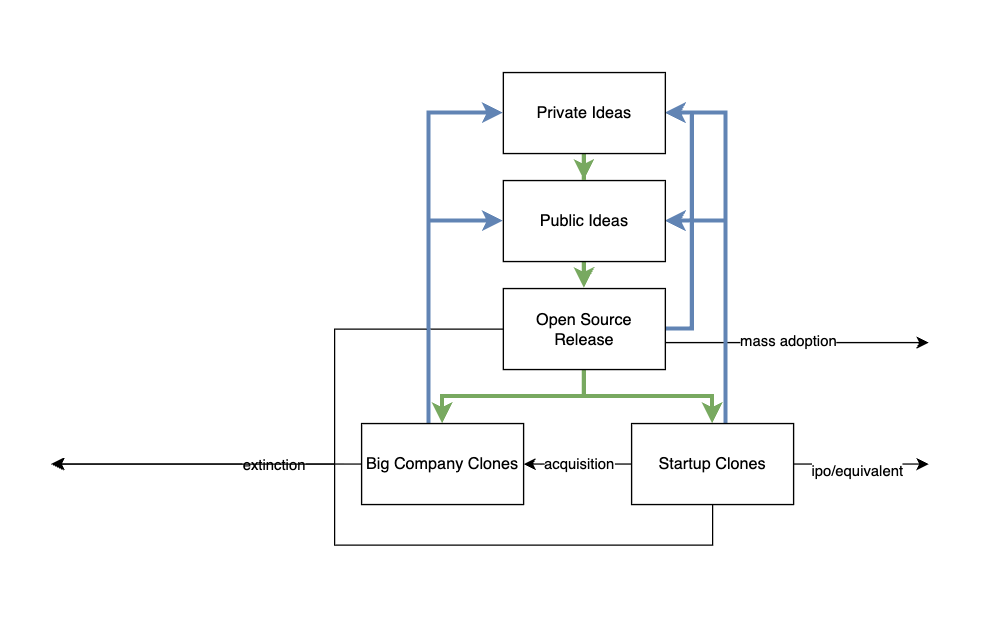
Software lives in a memetic commercial lifecycle.
An idea starts private, becomes public, gets released, gets copied, gets improved, gets absorbed by the market, then either becomes infrastructure, gets acquired, gets cloned, or dies.
Private Ideas
↓
Public Narrative / Teasers / Research / Demos
↓
Release
↓
Early Adoption
↓
Community Feedback Loop
↓
Ecosystem / Integrations / Standards
↓
Clones, Forks, Competitors, Acquirers
↓
One of four outcomes:
→ Default standard
→ Profitable niche
→ Acquisition / absorption
→ Commoditization / extinction
Software does not survive just because it is released. It survives because users, developers, companies, documentation, integrations, tutorials, templates, plugins, influencers, and customer workflows start orbiting around it.
The cycle
1. Private ideas
This is where the software is still invisible. The organization has maximum control but zero market gravity.
At this stage, the danger is building in isolation. A private idea can feel brilliant internally while being irrelevant externally.
The goal here is not secrecy forever. The goal is to sharpen the thesis before exposure.
Good questions:
“What painful thing does this solve?”
“Who needs this badly?”
“Why now?”
“What becomes easier, cheaper, faster, or newly possible because this exists?”
2. Public ideas
This is the narrative layer: blog posts, demos, private betas, devlogs, livestreams, whitepapers, waitlists, conference talks, benchmark claims, GitHub previews, Discords, design partners.
This stage creates expectation before the full artifact exists.
For open source especially, the public idea is often as important as the code. People need to understand:
“This is not just another library. This is a new way to think.”
The strongest releases usually have a simple conceptual hook:
“React: UI as components.”
“Docker: ship the environment with the app.”
“Stripe: payments for developers.”
“Supabase: open-source Firebase.”
“ChatSetter: your DMs handled in your voice.”
The public idea makes the software legible.
3. Release
Release is not just “put code on GitHub.”
A proper release includes:
A clear use case.
A working quickstart.
A beautiful demo.
Docs that make someone successful in 10 minutes.
A reason to share it.
A license strategy.
A distribution strategy.
A business strategy.
A roadmap.
A credibility signal.
Most software dies at release because the artifact exists, but the adoption surface is too weak. People do not know what it is, why it matters, how to start, who it is for, or why they should trust it.
4. Adoption
After release, the goal is not merely users. The goal is habit formation.
There are weak users and strong users.
Weak user: tries it once.
Strong user: builds something with it.
Very strong user: teaches someone else.
Extremely strong user: builds a business, workflow, plugin, tutorial, integration, or community around it.
That is when software starts gaining staying power.
5. Clones and competitors
Clones are not always bad. They are often proof that the idea is valuable.
Your diagram has “Big Company Clones” and “Startup Clones.” I’d keep those, but I’d change the interpretation:
Big company clone = validation distribution threat.
Startup clone = category expansion narrative competition.
Fork = governance challenge.
Acquisition = one possible capture path.
Extinction = failure to maintain relevance, trust, velocity, or distribution.
The mistake is thinking clones only steal value. Sometimes clones educate the market for you. The original can still win if it owns trust, community, standardization, brand, velocity, or the best commercial experience.
6. Mass adoption
Mass adoption usually happens when the software crosses from “tool” to “default.”
That means people stop asking, “Should we use this?”
They start asking, “Why wouldn’t we use this?”
At that point the software has become part of the environment.
The improved model
The better version is not a straight line. It is a set of reinforcing loops (flywheels):
Idea → Narrative → Release → Users → Feedback → Better Product → More Users
Release → Developers → Plugins/Templates/Integrations → Ecosystem → Lock-in
Release → Clones → Market Education → More Category Demand → Stronger Original
Users → Revenue → Better Team → Better Product → More Users
Community → Trust → Contribution → Velocity → Standardization
The winners are not always the best first product. They are the ones that create the strongest loops.
What an organization should do
The organization should decide what it wants to become before release.
There are four different goals, and they require different behavior:
Maximum market penetration → reduce friction
Maximum staying power → build ecosystem and trust
Maximum impact → shape the category narrative
Maximum profitability → capture value around the usage
You do not maximize all four the same way. You sequence them.
The usual winning sequence is:
Adoption first.
Trust second.
Ecosystem third.
Monetization fourth.
Dominance fifth.
Before release
The organization should create the category story first.
Not:
“We built a tool that does X.”
Better:
“The old way is broken. Here is the new way.”
The release should have a strong point of view. People adopt software faster when it gives them a new identity.
Examples:
“I am not manually managing servers anymore.”
“I am not duct-taping seven tools together anymore.”
“I am not building UI the old way anymore.”
“I am not answering every DM manually anymore.”
The organization should also pick the right license/business model.
For open source:
ModelBest forRiskPermissive OSSFast adoption, developer love, standardsBig companies can clone/host itCopyleftProtecting opennessCan reduce enterprise adoptionOpen coreAdoption monetizationCommunity may distrust feature gatingDual licenseCommunity enterprise captureMore complex positioningSource-availableProtecting SaaS revenueNot truly open source; lower community trustHosted OSS/cloudBest default for many devtoolsRequires operational excellence
The key question is:
“Where do we want value to be free, and where do we want value to be paid?”
A strong open-source company gives away the thing that creates adoption and charges for the thing that creates business certainty.
Usually that means charging for:
>Hosting.
>Scale.
>Security.
>Compliance.
>Teams.
>Permissions.
>Analytics.
>Support.
>Enterprise integrations.
>Managed infrastructure.
>Premium workflows.
>Reliability.
>Convenience.
At release
The release should be treated like a product launch, media event, developer onboarding campaign, and category declaration at the same time.
A strong release package includes:
> A landing page that explains the shift.
>A 2-minute demo.
>A 10-minute quickstart.
>A “why this exists” essay.
>A comparison page.
>A starter template.
>A Discord/Slack/community space.
>A public roadmap.
>A contribution guide.
>A few lighthouse users or design partners.
>A clear commercial path.
The most important thing: people should be able to experience the “aha” immediately.
For developer software, that might mean:
npm install
one command
working result
visible magic
For business software, that might mean:
connect account
import data
see useful output
feel immediate relief
For AI software, it means:
give it context
watch it do something valuable
feel like a capability was unlocked
After release
This is where most organizations fail.
They release, get attention, then the market moves on.
The real work is converting attention into infrastructure.
The organization should aggressively build:
Docs.
Examples.
Templates.
Use-case pages.
Customer stories.
Benchmarks.
Integrations.
Migration guides.
Tutorials.
Community rituals.
Partner programs.
Certification/training.
Events.
Content from users.
A marketplace if relevant.
The goal is to make the software feel bigger than the company.
That is the moment it starts gaining staying power.
How to defend against clones
You do not defend against clones by hiding forever. You defend by making the original harder to replace.
The best moats are:
Brand.
Trust.
Community.
Speed.
Distribution.
Data.
Ecosystem.
Integrations.
Hosted convenience.
Enterprise relationships.
Governance legitimacy.
Compatibility with the standard you created.
For open source, governance is a moat. If people believe the project is stewarded fairly, they are less likely to follow a fork.
For commercial software, workflow depth is a moat. If the product becomes embedded in the customer’s daily operations, clones have to copy not just features, but behavior, trust, history, and switching costs.
How to maximize market penetration
Remove friction everywhere.
Free tier.
Generous open-source core.
Instant demo.
Clear docs.
Low setup cost.
Templates.
Integration with tools people already use.
No weird conceptual burden.
No “book a demo” wall for simple users.
Make it easy to try, easy to understand, easy to share, and easy to teach.
The biggest adoption killer is ambiguity.
People should instantly know:
What is it?
Who is it for?
What do I do first?
What result should I expect?
Why is this better than the old way?
How to maximize staying power
Create dependency, but not in an evil way.
The best staying power comes from becoming the place where important work accumulates.
That can be:
Data.
Workflows.
Team habits.
Plugins.
Templates.
Customer records.
Community knowledge.
Deployment infrastructure.
Automations.
Historical context.
APIs other people build on.
The more useful things connect to the software, the harder it is to remove.
Staying power also comes from trust. Users need to believe:
This will still exist next year.
The team is serious.
The roadmap makes sense.
The community is alive.
The product will not rug-pull them.
The company understands the problem deeply.
How to maximize impact
- Impact comes from changing behavior, not merely shipping features.
- The organization should publish the philosophy behind the software.
- A great release should make people say:
- “I hadn’t thought about it that way before.”
- That is how software becomes cultural.
- For maximum impact, the organization should name the old world and the new world.
Example structure:
>> Old world: fragmented, manual, slow, expensive.
>> New world: integrated, automated, adaptive, accessible.
This software is the bridge. Impact increases when users can explain the idea to others in one sentence.
How to maximize profitability
Profitability comes from capturing value without choking adoption.
The dangerous mistake is monetizing too early at the point of curiosity.
The way:
Free or cheap to try.
Easy to adopt.
Paid when value becomes obvious.
Charge when the user is making money, saving time, reducing risk, scaling usage, adding team members, or needing reliability.
Good monetization points:
Usage.
Seats.
Premium workflows.
Managed hosting.
Enterprise support.
Security/compliance.
Advanced integrations.
Automation volume.
Analytics.
Dedicated success.
SLA/reliability.
For open source, the best paid product is often not “the code.” It is: “The easiest, safest, fastest, most reliable way to get the outcome.”
The rule
The organization should not think of release as the end of building.
Release is the birth of the market organism.
The code is only one part.
The full organism is:
Code
story
docs
community
trust
integrations
distribution
business model
ecosystem
governance
velocity
That is what survives.
--- Strategic prescription for the organization ---
An organization releasing software should do this:
Build the thing privately, but test the story publicly.
Release with a sharp thesis, not just features.
Make the first user experience insanely fast.
Give away enough value to create adoption.
Charge for scale, reliability, convenience, and business-critical usage.
Treat clones as market validation, but move faster than them.
Build community before competitors build category ownership.
Turn users into teachers.
Turn integrations into switching costs.
Turn the product into a standard.
Turn the standard into a business.
The highest-value outcome is not merely “people use our software.”
The highest-value outcome is:
The market starts organizing itself around your software.
1
1
4
295

Capture More Than Moments 📸
Experience photography like never before with the 50MP camera on Philips smartphones.
Every click tells a sharper, brighter story.
.
.
.
#PhotographyRedefined #PhilipsMobile #CaptureMore #ZenotelIndia #PhilipsMobilePhone #PhilipsSmartphone

2
4
180

21 May 2025
Your pocket powerhouse is here! 💥
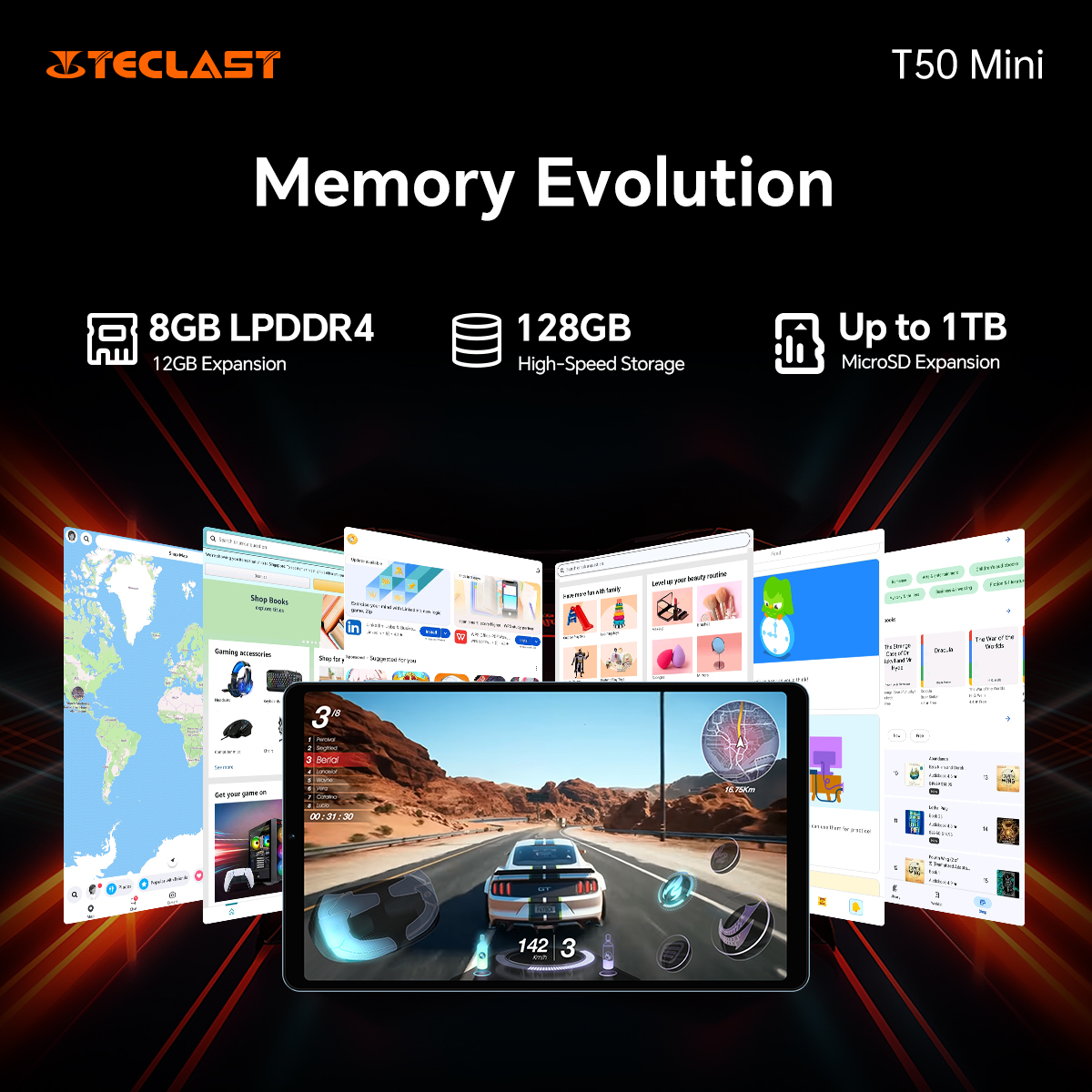
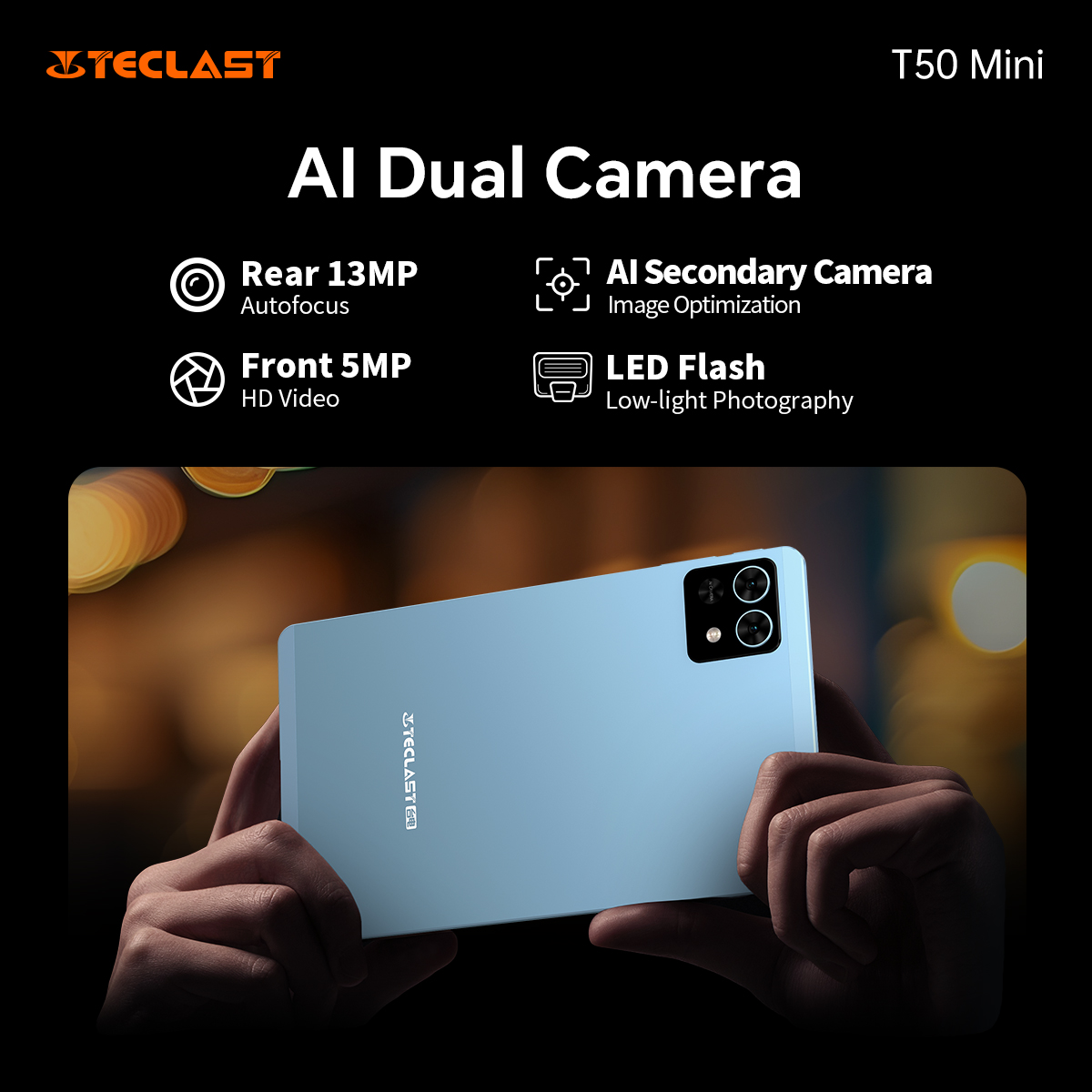
T50 Mini packs a punch with 8 128GB storage 💾 13MP 5MP dual cameras 📸 studio-level sound 🔊. Snap crystal-clear pics 🌄, binge your favorite shows 🍿, and store all your adventures—no compromises!
👉 Level up today: geni.us/t50minisnsae
#Teclast #T50Mini #PowerInYourPocket #CaptureMore

2
10
284

14 Apr 2025
Your camera AND your hoodie deserve this bag 🧥📸 OneGo Lite doesn’t play favorites with your essentials. Tag your overpacking friend!
@lloydcarig
#PGYTECH #camerabackpack #backpack #OneGoLite #camera #drone # #GearUp #CaptureMore #StayOrganized #CreativeEssentials
1
2
14
2,095
8 Apr 2025
How is this possible? 😱 OneGo Lite organizes chaos in seconds. Swipe to see it transform from camera bag → travel bag → everyday hero. 🧥📸
#PGYTECH #camerabackpack #backpack #OneGoLite #camera #drone # #GearUp #CaptureMore #StayOrganized #CreativeEssentials
8
1,587
3 Apr 2025
Unboxing the ultimate carry companion! 🎥📦 OneGoLite backpack is even better in person—wait for the clamshell reveal! 😍
#PGYTECH #camerabackpack #backpack #OneGoLite #camera #drone # #GearUp #CaptureMore #StayOrganized #CreativeEssentials
2
6
1,160
26 Mar 2025
Creamy perfection for your daily carry ☁🎒 The OneGo Lite isn't just pretty - 180° access, quick-attach points & hidden security pocket make it as smart as it is stylish.
#PGYTECH #camerabackpack #backpack #OneGoLite #camera #drone # #GearUp #CaptureMore #StayOrganized




1
22
3,145

7 Mar 2025
🌸🍃 Spring Sale Just Got Even Better! 🍃🌸
Now, the QooCam series joins the deal—UP TO 20% OFF! 🎉
Capture, create, and relive your moments in immersive detail.
🗓 March 7 - 20
🛒 Shop Now: us.kandaovr.com/products/qoo…
#kandao #qoocam3ultra #qoocamego #qoocam3 #SpringSale #CaptureMore
#qoocam360 #3Dcamera #360camera #8kcamera #DiscountDeals

1
4
233

18 Feb 2025
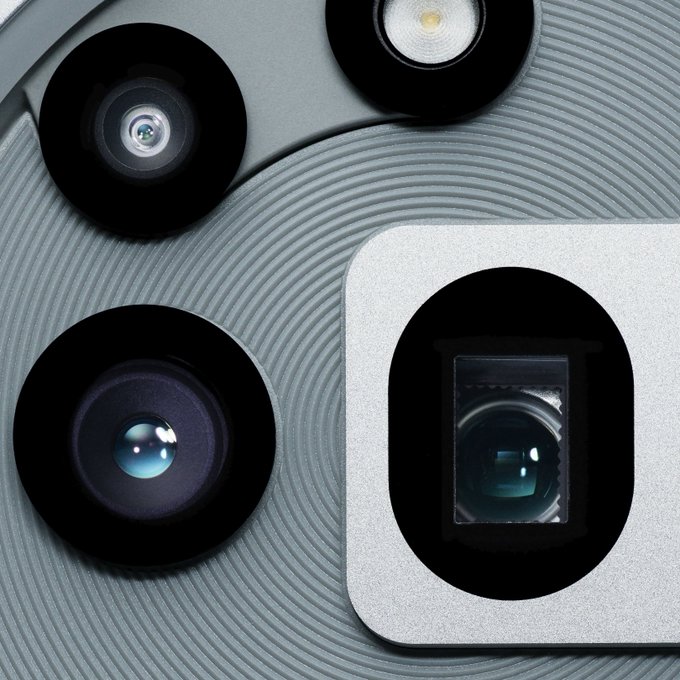
Crystal clear details, even when you zoom in. 🔍✨ Get ready to #CaptureMore with the #NothingPhone3aPro. See photography in a new light.
3
183

27 Nov 2024
🎉 Black Friday at Benbo: Incredible Deals on Tripods! 🎉
This Black Friday, take your photography to new heights with exclusive discounts on Benbo tripods! 📸✨
#BlackFriday #BenboTripods #PhotographyGear #TripodDeals #CaptureMore

2
4
103

🎉 Black Friday at Benbo: Tripod Accessories at Unbeatable Prices!
This Black Friday, elevate your photography game with exclusive deals on Benbo tripod accessories! 📸✨
👉 bit.ly/3Xcs3k2
#BlackFriday #BenboTripods #PhotographyDeals #TripodAccessories #CaptureMore

3
3
123

12 Oct 2024
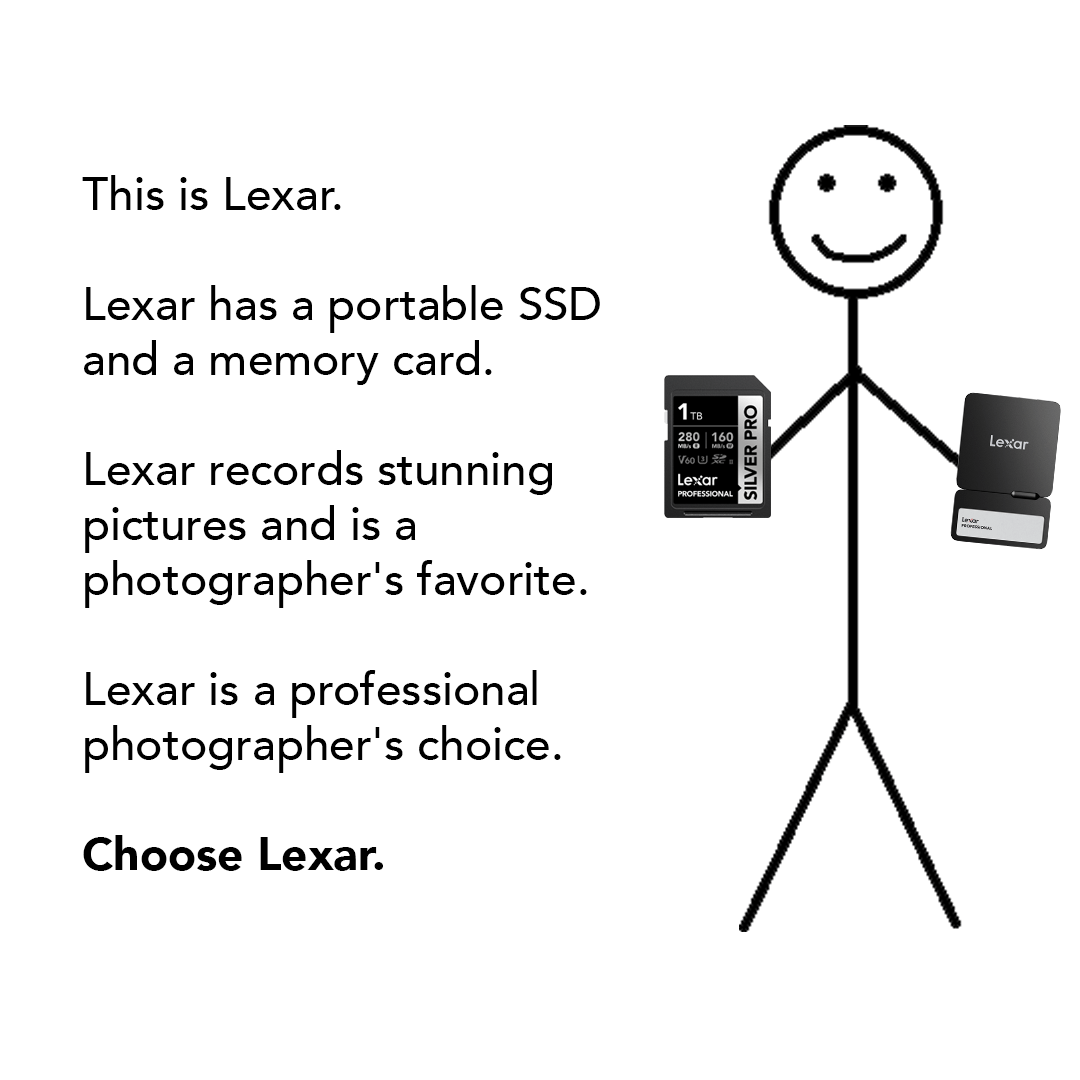
With the Lexar Professional Go and Memory Card Silver PRO SD, exploring your passions is easier than ever 📸
RT if you have Lexar.
#Lexar #LexarProfessionalGo #memorysilvercardsd #memorycard #CaptureMore #4KVideos #Videography #Photography #ProfessionalGo #vlogging #vlog
3
277

3 Oct 2023
Say hello to Snagit 2024!
Elevate your visuals, streamline workflows, and boost productivity. Capture, annotate, and share like a pro.
No more endless meetings—upgrade or start your free trial today!
bit.ly/3ZBOxKz
#Snagit2024 #CaptureMore
1
2
6
469

3 Oct 2023
Say hello to Snagit 2024!
Elevate your visuals, streamline workflows, and boost productivity. Capture, annotate, and share like a pro.
No more endless meetings—upgrade or start your free trial today!
bit.ly/3ZBOxKz
#Snagit2024 #CaptureMore
1
3
7
800

12 Mar 2021
We really liked what @vivo_global did with #VivoX50Pro and their partnership with @ZEISSLenses definitely made the #VivoX60Series even more exciting.
Thoughts??
@Vivo_India #nextwaveofrevolution #Imaginebeyond #capturemore #liveeverymoment #vivoX60 #GreedyTech #AskGreedyTech


1
2

28 Oct 2020
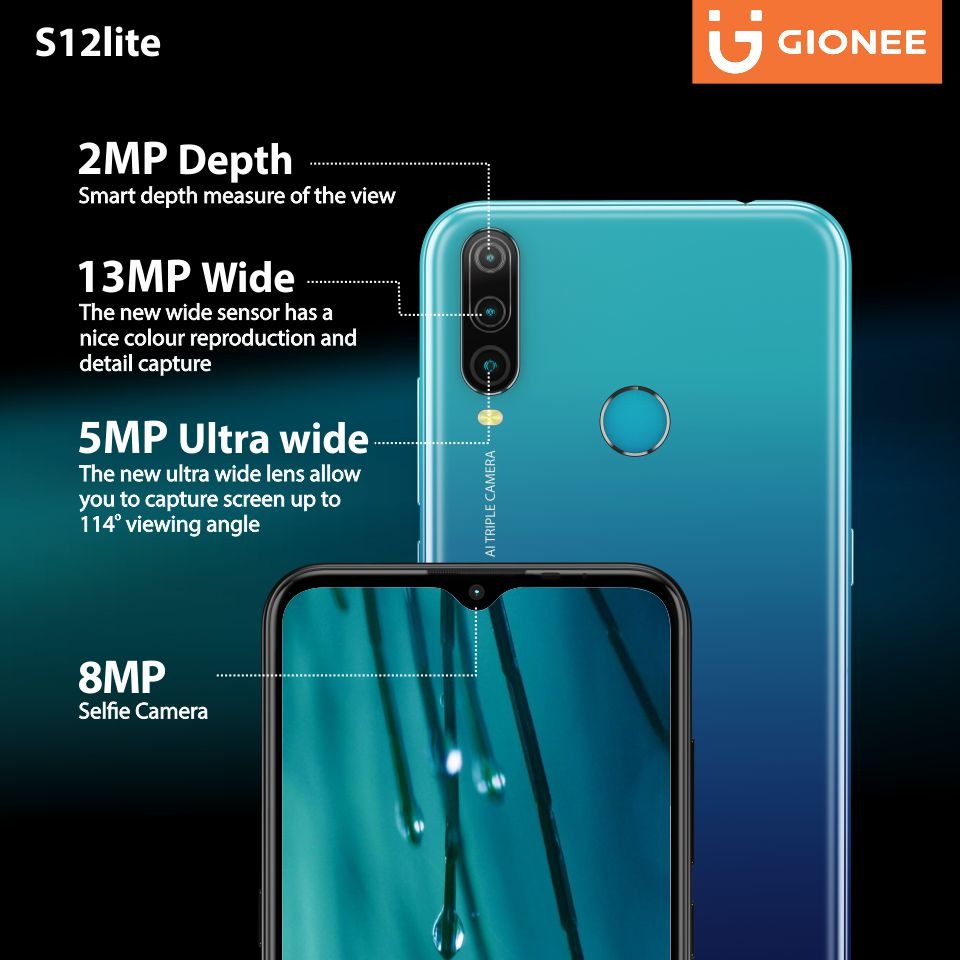
The latest #GioneeS12Lite comes with AI Triple camera, 4000mAh battery and lots of exciting features that helps you to capture More and show More!
Visit: gionee.ng/S12lite to learn more.
#CaptureMore
#GioneeS12lite
#GioneeSmartphone
4
2
11

28 Apr 2020
Small but mighty 💪
#Sandisk
#beyondtelecom
@SanDisk
#SandiskIndia #photographer #camera #CaptureMore

2


15 Aug 2019
I picked up my camera again. #CaptureMore
The Night Cafe kicks off in 30mins, #confessionsThursday.
Don’t miss it!!!

6
4
71

18 Jul 2019
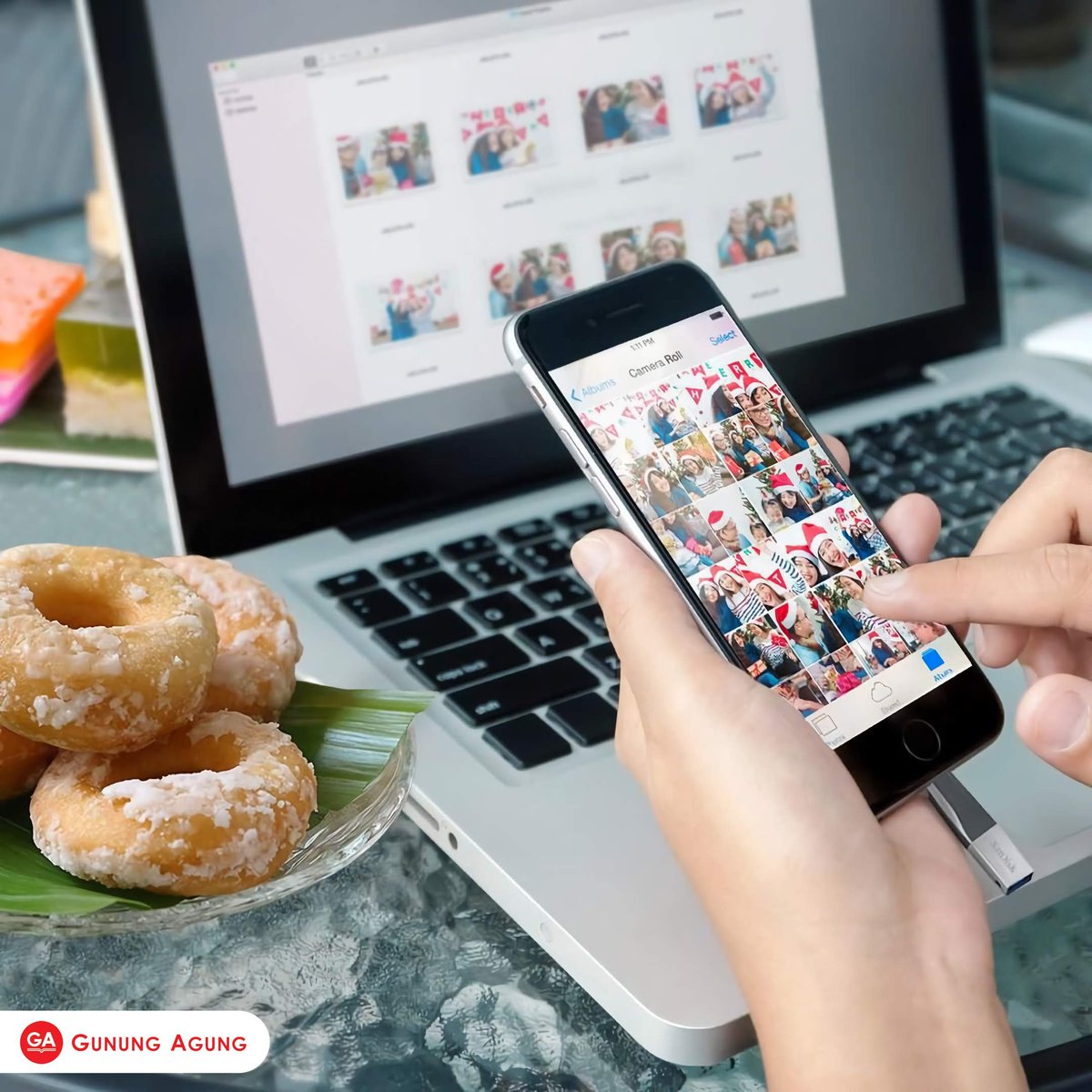
Halo Sahabat Gunung Agung!
Jadikan ruang penyimpanan iPhone kamu lebih besar dengan Sandisk Mini iXpand FalshDrive!
Dapatkan eksklusif hanya di Gunung Agung 😊✨📱
#ixpand #ixpandflashdrive #sandisk #capturemore #morespace #flashdrive #otg #iphonephotography #photos #memories
1