🚨🇿🇦 Sjoe! June 30 Is Coming: Mzansi's Anger Is Boiling Over — But Who Gets Burned? ~ 🚨⚖️ When Citizens Become Enforcers: South Africa's Dangerous June Gamble ~ 📅💣 Countdown to June 30: Is South Africa Repeating the Mistakes of 2008 and 2015?
In the townships of Ekurhuleni and beyond, a self-declared ultimatum collides with governance failure, turning legitimate frustration into a national gamble with innocent lives. What begins as street-level anger over jobs and borders now tests whether South Africa can enforce its own rules — or watch them burn.
Sjoe! On a crisp June morning in Benoni, the air thick with dust and determination, hundreds from Greater Benoni marched under the “Mabahambe” chant. Sticks and shields in hand, they passed shuttered immigrant shops in Actonville and Wattville.
The demand rang clear: foreigners must leave by 30 June or face “different action.”
Organisers like Phakela Mthakathi insisted it was only the undocumented. Yet on the ground the message shifted. Businesses were told to sack every foreign worker — papers or not. Shops closed preemptively.
The line between enforcing the law and collective expulsion vanished like smoke from a spaza fire. That fracture, is no small thing.
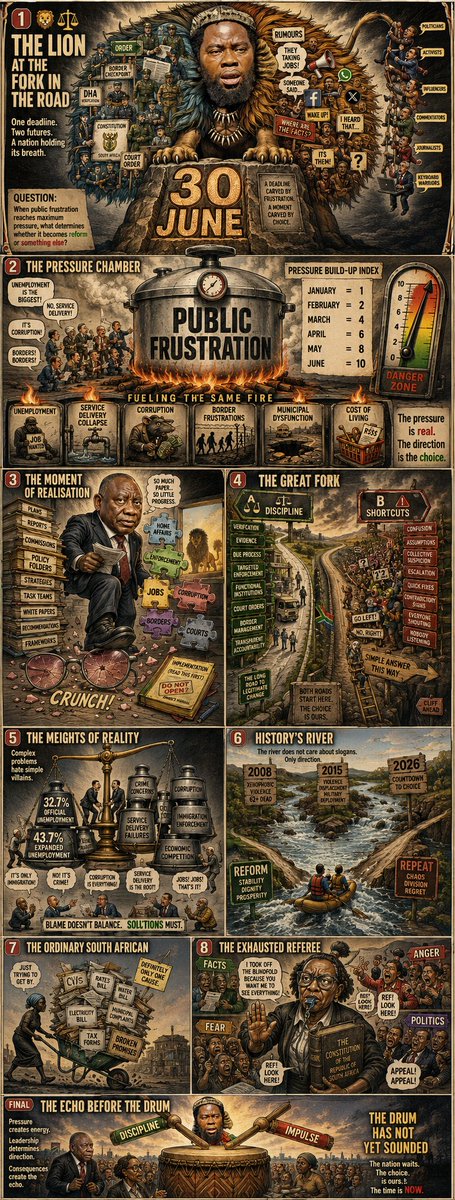
Legitimate exhaustion with porous borders, unemployment above 32% official (43% expanded), Madlanga-exposed local capture, and visible strains on services is real. But channelling it into methods that punish origin rather than legal status risks turning righteous pressure into the spark for avoidable tragedy.
The evidence network proves it: legitimate anger over illegal immigration is being weaponised into broader scapegoating that erodes the very rule of law it claims to defend, placing innocents in the crossfire of a self-fulfilling prophecy.
Sjoe, those shouting loudest about sovereignty now perform their own arbitrary removals while the state they decry watches.
Introduction: The Fracture That Demands a Network of Cumulative Evidence
When citizens exhausted by years of corruption, porous borders and sky-high unemployment decide to take enforcement into their own hands, at what precise point does righteous pressure cross into the spark for tragedy?
This article’s central claim, tested through a robust network of cumulative evidence, is clear: in the June 2026 marches led by figures like Phakela Mthakathi and March and March, legitimate grievances are being weaponised into broader scapegoating that undermines constitutional order and endangers lives on all sides.
The network draws from constitutional law, historical patterns of xenophobic violence, documented governance failures in Ekurhuleni via the Madlanga Commission, parliamentary crime data, and early-warning frameworks like Genocide Watch Stage 6.
It is falsifiable and convergent: the self-imposed 30 June deadline in Benoni and East Rand hotspots has crystallised every failure into a dangerous focal point. From the initial Phakela query through fine-line protests-versus-xenophobia debates, crime statistics, cartoon analyses, police incidents and local Madlanga ties, the conversation has built this case step by step.
Sjoe! The reader in Ekurhuleni knows this is not theory — it is the street outside your window.
Sjoe, if only the solution were as simple as a strong cup of rooibos and honest talk.
Questions Stirring:
Why does this matter for every ratepayer who has waited for service delivery or watched potholes deepen?
Can citizen pressure force reform without replicating the arbitrary power it condemns?
Where is the examination of leadership control?
These questions matter because they determine if Ekurhuleni’s pain becomes national healing or another scar.
Context: When “Fix the Borders” Becomes “Fix Everyone Who Looks Foreign”
Let us speak plainly, as one neighbour to another in Mzansi. Illegal immigration means presence without valid papers under the Immigration Act. Lawful enforcement belongs to DHA verification, SAPS action and court due process.
Scapegoating redirects real frustrations — job competition in the informal economy, service delivery collapse, crime perceptions — onto an entire group by origin. In the Ekurhuleni backyard, Madlanga Commission revelations of tender fraud and rogue EMPD elements make distrust visceral.
Parliamentary replies show immigration offences rank high among foreign national arrests, alongside assault and shoplifting. These facts fuel anger that began with “undocumented only” but broadened in East Rand marches to documented workers and legal residents. Shops in Actonville and Wattville closed preemptively.
The evidence network traced this evolution meticulously from Phakela’s introduction to rejection of Ramaphosa’s June 7 five-point plan (raids, borders, anti-corruption, dedicated courts).
Sjoe, the common view is understandable — people are tired. But the leap to private enforcement violates Section 9 equality and creates the vacuum history warns against.
Stirring Questions:
How can we hold both the legitimacy of border enforcement and the peril of bypassing it?
How does one distinguish genuine pressure from overreach on the streets of KwaThema or Springs?
Why does Madlanga fuel feel so potent yet lead to shortcuts?
These matter because they force every South African enduring infrastructure pain to ask if frustration is building solutions or repeating cycles that have already cost lives in 2008 and 2015.
Evidence Network: Four Independent Lines Converging on One Truth
1. Constitutional and Statutory Law — The State’s Monopoly on Force
The Immigration Act and Constitution are not suggestions. Only authorised officials may verify and remove. Ramaphosa’s June 7 address was explicit: enforcement rests with the state. Employers face penalties for undocumented hires; dedicated courts aim to speed lawful deportations. In Benoni on 5-8 June, marchers instructing businesses to ignore valid permits substituted their deadline for this architecture.
Sjoe!
Picture the absurdity — self-styled patriots, frustrated by years of weak borders and unemployment, now act as their own immigration officers while lecturing the state on failure. One almost admires the entrepreneurial spirit, if only it weren’t aimed at the Constitution.
This creates de-facto expulsions without due process, risking arbitrary harm and economic disruption in informal hubs.
The evidence network starts here because law is the foundation lawful pressure must respect.
2. Historical Pattern — Rhetoric, Deadlines and the Vacuum
2008 left at least 62 dead. 2015 saw military deployment after similar rhetoric and displacements. The current pattern — inflammatory language, unmet citizen deadlines, “cannot guarantee safety” warnings alongside “different action” hints — echoes precisely.
Phakela Mthakathi’s repeated peace calls contrast with on-ground pressures and pre-emptive closures. Human Rights Watch and GroundUp reports document the broadening from undocumented to all foreigners in East Rand actions.
Leaders rejecting state authority now disclaim control over the forces they unleash. In high-unemployment areas, the post-30 June vacuum invites opportunists. History is not destiny, but ignoring it is folly. The timeline — from early deadline setting to June intensification — makes this line undeniable.
3. Governance Failure as Fuel — Madlanga and Local Capture in Ekurhuleni
Ekurhuleni residents live the Madlanga realities: tender irregularities, rogue policing, collapsed services. Marchers in Benoni, Springs and KwaThema explicitly cite these as justification for private enforcement. Real as the grievances are — governance service delivery experiences underscore them — they do not license targeting nationality over legal status.
Sjoe, communities ravaged by one capture (municipal) now turn to another (citizen vigilante).
Institutional vacuums filled by self-appointed enforcers accelerate risks rather than resolve them.
4. Early-Warning Frameworks — Stage 6 Polarisation in Motion
Genocide Watch’s Stage 6 describes polarisation through scapegoating and us-versus-them rhetoric. Broadening demands, deadline defiance, intimidation signals and pre-emptive fear align. FW de Klerk Foundation and HRW echoes reinforce: no higher stages yet, but the machinery grinds.
Phakela the Lion, the xenophobia fine line, crime data, police incidents — ties genuine pain (unemployment, services, Madlanga) to methods risking darker outcomes.
Questions Stirring:
When these four lines converge — law, history, governance, early warning, how can citizen pressure compel DHA reform without eroding the monopoly on force?
What internal discipline is missing in March and March?
Why does local corruption make shortcuts seductive yet deadly?
These questions matter because they separate sustainable accountability from self-inflicted wounds that history has already shown us.
Synthesis: Lawful Pressure or Recurring Wound
The lines do not sit parallel; they interlock like a well-built braai grid. Constitutional law forbids the private actions visible in Ekurhuleni. History predicts the outcome of uncontrolled deadlines. Madlanga explains the fuel. Polarisation flags the risk. Together they form a testable case: the 30 June deadline converts real grievances into danger.
Imagine choosing lawful pressure: raids intensify, borders tighten, corrupt officials face prosecution, dedicated courts deliver. Trust rebuilds one verified deportation, one jailed employer, one transparent process at a time. In Ekurhuleni the self that craves quick vengeance yields to the citizen demanding durable order.
Sjoe, performance soars because the path is evidence-backed, not emotional shortcut. The stakes sit in shuttered shops and fearful families.
The evidence network proves the claim: anger is real; the methods dominant risk tragedy. The choice narrows daily.
Objections Addressed: The Hard Questions Deserve Straight Answers
Critics say the state’s long failure justifies citizen action. Empathetically true — Madlanga and daily struggles prove it — yet bypassing verification produces arbitrary harm, not faster justice.
Others insist the focus stays undocumented. Ground evidence from East Rand marches shows broadening in practice. Economic competition is real; collective punishment by origin is not competition but the shortcut that destroys order for all.
The evidence network engages these because pain deserves honesty. It insists the cure must not replicate the disease.
Conclusion: The Choice That Remains
The network of cumulative evidence proves legitimate anger over illegal immigration is being weaponised into broader scapegoating that erodes the rule of law, placing innocents in the crossfire. From Ekurhuleni streets to national alerts, the 30 June deadline crystallises failures while offering off-ramps through disciplined pressure on DHA reform, borders, prosecutions and courts.
Sjoe!
Mzansi stands at the brink.
The shadow looms over Ekurhuleni and beyond, but agency remains.
Insist that enforcing the law never means becoming the law unto ourselves. Choose wisely before the calendar turns.
The beloved country deserves better than another recurring tragedy.
#SjoeMzansi 😳🇿🇦
#DeadlineDrama 📅💥
#BenoniBombshell 💣🏘️
#RuleOfLawOrNah ⚖️🤷♂️
#NotEveryForeignerBru 😬🌍
#FixTheBordersNotTheConstitution 🚧📜
#MzansiPressureCooker 🍲🔥
#HoldTheStateAccountable 🏛️👀
#DontBurnTheVillageToCatchTheGoat 🐐🔥🏘️
#ChaosLoading ⏳💥
#June30Jitters 😬📅
#EishNotAgain 😭🇿🇦
#SjoeThisEscalatedQuickly 😳📈
#KeepCalmAndCheckThePermit 📋👀
#OneWhistleTooMany ⚽📢
#MunicipalityPartTwo 🤦♂️🏛️
#Stage6NoChill 😬⚡
#BorderProblemsNeedBorderSolutions 🚧🇿🇦
#NotWithMyPothole 🕳️😂
#WattvilleWorries 😟🏘️
References:
GroundUp. (2026, June 5). Hundreds march in Benoni, warning immigrants to leave by 30 June.
groundup.org.za/article/hund…
Human Rights Watch. (2026, May 20). South Africa: New waves of xenophobic attacks.
hrw.org/news/2026/05/20/sout…
The Presidency. (2026, June 7). Address by President Cyril Ramaphosa on migration.
thepresidency.gov.za/address…
Daily Maverick. (2026, June 8). Foreign nationals must go: Marchers reject Ramaphosa's intervention.
dailymaverick.co.za/article/…
Genocide Watch. (2026). South Africa country profile and updates.
genocidewatch.com/home/categ…
FW de Klerk Foundation. (2026). Statements on rising xenophobia. Relevant commission and parliamentary records as examined in conversation.
Additional primary sources: IOL parliamentary replies on foreign crime categories; Madlanga Commission proceedings; Stats SA Q1 2026 labour data.