
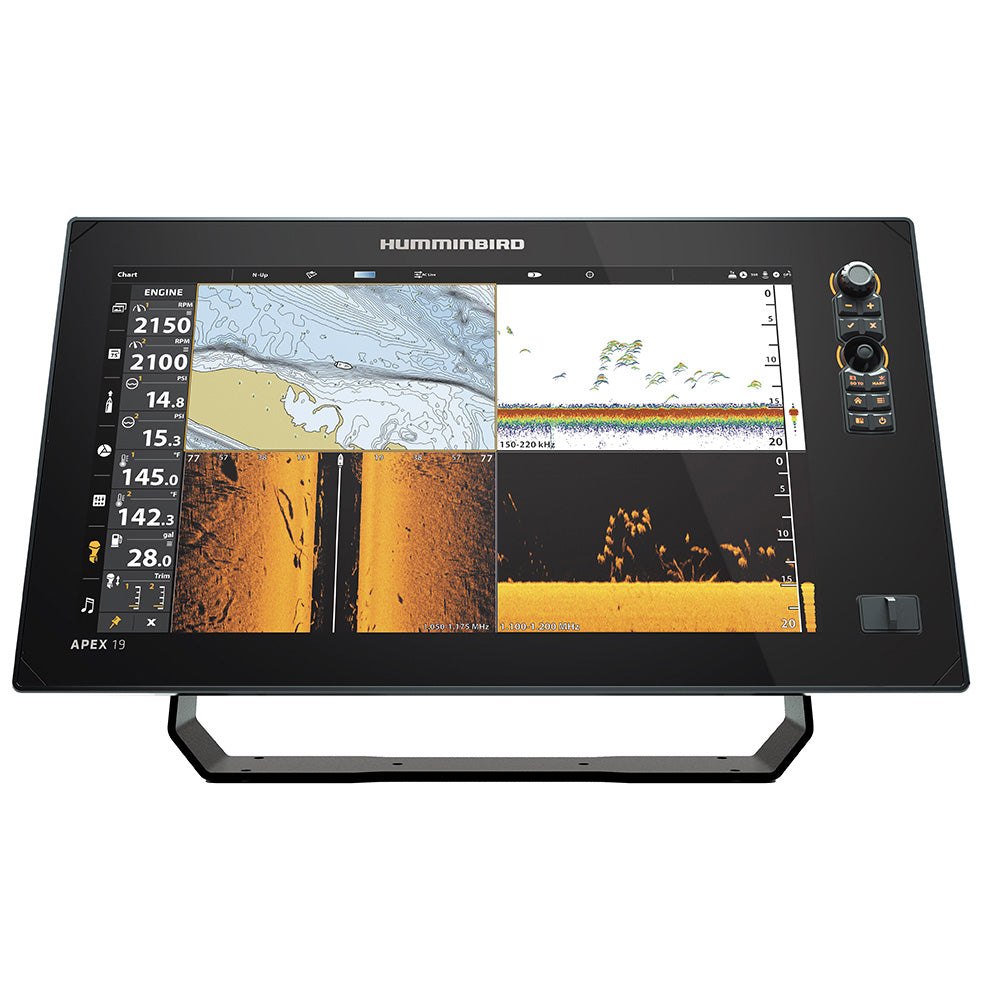
Humminbird APEX® 19 VX MSI Chartplotter/Fishfinder w/Transom Mount Transducer dlvr.it/TT4Bw1 #Humminbird #Fishfinder #Chartplotter #MarineNavigation #SonarImaging
14

"None of you libtards know how to find a bass hole"
*Switches on 3 thousand dollar Garmin chartplotter*
7
56

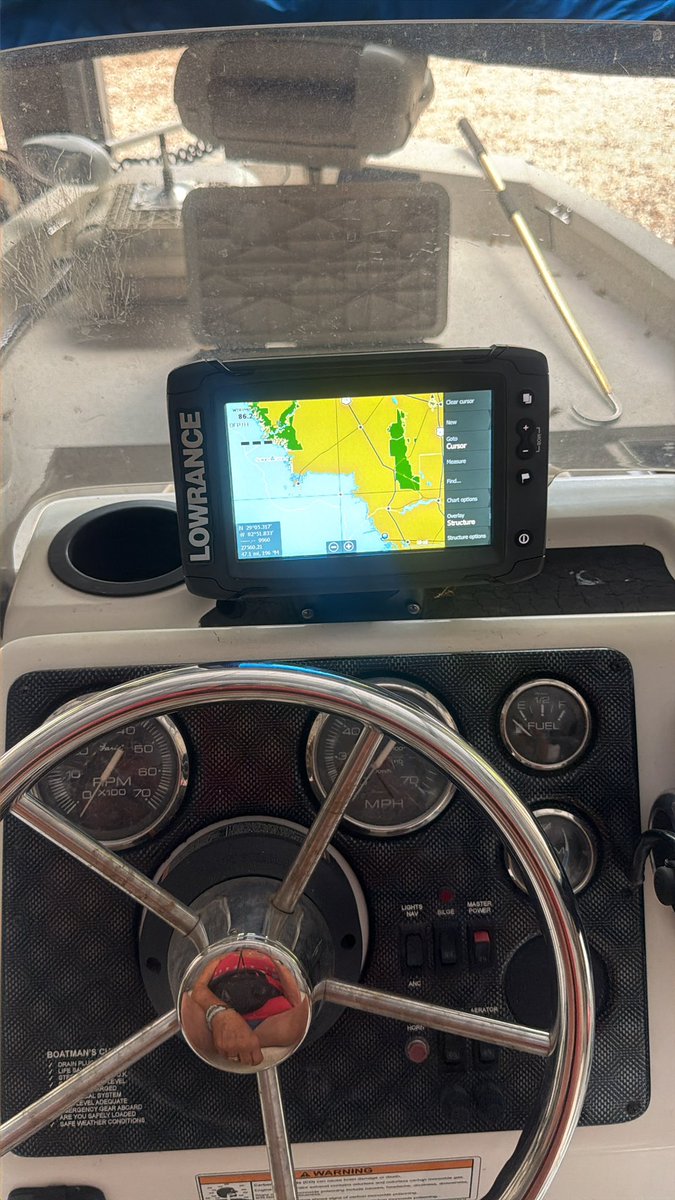
Capt and crew drilling the pasture with millet and I'm trying to deal with a chartplotter that's making me crazy!
2
124

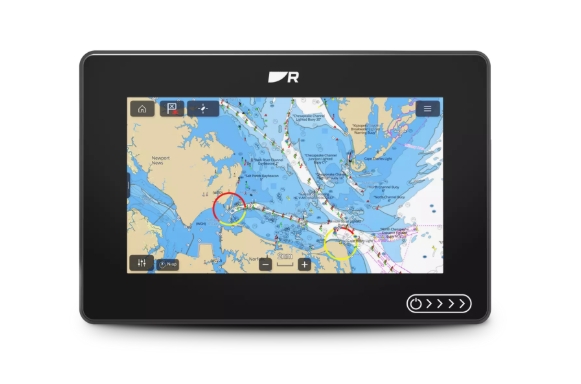
Raymarine Unveils Axiom 2 Chartplotter and Next-Generation LightHouse Charts onthewater.com/raymarine-unv… #teamstripersniper #stripedbass #fishing
2
35


really? my sailboat B&G chartplotter has 15 m precision
1
7
230

Mar 7
An integrated chartplotter and AIS doesn't replace the need for navigation—it just replaces a dozen small skills with one single, catastrophic assumption.
2
18

Feb 23
Ok... Let's turn up the juice.
@grok assess Claude's research report. Think from 1st principles. Creative problem solving. Don't be lazy. Maybe you can come up with another solution.
claude.ai/public/artifacts/1…
"Automating the ocean lookout: collision avoidance for solo sailors
A solo sailor can reliably automate collision detection today for roughly $3,000–$5,000, using a layered system of AIS, duty-cycled radar, and smartwatch alarms — enough to extend sleep from 20-minute fragments to 60–90 minutes with acceptable risk. No single sensor covers all threats, but combining an always-on AIS transponder (which catches virtually all commercial ships) with periodic radar sweeps (which catch everything else with a radar signature) and routing alarms to a vibrating wristband creates a watch-keeping system that outperforms the human eye in most conditions. The technology exists, is proven in ocean racing, and fits within a typical bluewater sailboat's power budget. What it cannot do — and nothing can — is detect semi-submerged containers, sleeping whales, or waterlogged debris at any useful distance. That residual risk is inherent to ocean sailing.
Every sensor has a blind spot, which is why layering matters
The fundamental challenge is that no detection technology covers all threat types. AIS detects only vessels that transmit — and coastal observation studies show just 17% of observed vessels carry AIS. In the open ocean this percentage rises dramatically (virtually all commercial ships over 300 GT are mandated to transmit), but fishing boats, small craft, and debris remain invisible to AIS. Radar sees anything with a radar cross-section — metal hulls, large structures — but struggles with wooden fishing boats, fiberglass dinghies, floating containers at the waterline, and marine mammals. Thermal cameras detect heat signatures from engines and bodies but lack range (typically under 1 nautical mile) and cannot calculate closest point of approach.
The math is unforgiving. At a combined closing speed of 20 knots, two vessels first visible at 8 nautical miles have roughly 24 minutes before collision. A radar guard zone set at 6 nm provides 18 minutes of warning — enough to wake a sailor, assess the situation, and take action. AIS, with its 20–30 nm detection range, provides even earlier warning for equipped vessels. But a semi-submerged container drifting at the waterline, invisible to radar and AIS alike, offers zero warning at any distance. This is the gap that remains unsolved.
The most dangerous threats to solo sailors, ranked by detection difficulty:
Commercial ships (easily detected by AIS and radar; danger is from speed, not invisibility)
Fishing boats without AIS (detectable by radar if metal-hulled; wooden boats much harder)
Floating containers (roughly 733 lost annually excluding catastrophic events; most sink within days, but refrigerated units can float for weeks)
Whales and marine mammals (Sea Shepherd researchers claim 99% of "UFO" collisions are actually whale strikes — likely an overestimate, but whale collisions are confirmed and significant)
Waterlogged debris, logs, deadheads (essentially undetectable by any technology at useful range)
The five technologies that actually work, ranked
After evaluating every detection method from marine radar to iPhone LIDAR, five technologies emerge as viable for solo sailors, each with distinct strengths.
Solid-state marine radar with guard zone alarms is the single most important sensor. Modern dome radars from Garmin, Simrad, and Raymarine feature timed-transmit modes that periodically sweep the horizon (e.g., a 30-second scan every 5 minutes), check for targets in a user-defined guard zone, sound an alarm if anything appears, then return to low-power standby. The Raymarine Quantum 2 draws just 17W transmitting, 7W standby, and 2W in sleep mode — the lowest of any radar tested. The Garmin Fantom 18x offers the finest duty-cycle control, programmable down to the second, with a standby draw of only 4W and Doppler MotionScope that color-codes approaching targets. Simrad's Halo 20 provides VelocityTrack Doppler at 20W typical draw with instant-on from 3.9W standby. All three detect targets from 6 meters to 24–48 nautical miles, with realistic detection of a large commercial vessel at 6–12 nm and a typical sailboat at 2–4 nm. Prices range from $1,800 to $3,100 for the radar dome alone (a compatible chartplotter is also required).
AIS Class B transponder is the most power-efficient detection system at just 2–3W continuous. A transponder both receives other vessels' AIS broadcasts and transmits your own position, making you visible to commercial shipping — critical because many ship officers rely primarily on AIS. The Vesper Cortex stands out as an integrated solution: it combines Class B SOTDMA AIS, VHF radio, GPS, heading sensor, and smartphone-connected collision alerts in a single unit drawing roughly 7W. Its SmartAIS feature continuously calculates closest point of approach for all AIS targets and escalates audible warnings through the handset and phone app. The Digital Yacht AIT5000 and em-trak B954 are strong standalone transponder alternatives at $700–$1,500. AIS is essential but insufficient alone — it is blind to every vessel that doesn't transmit.
SEA.AI thermal AI camera system represents the cutting edge, born directly from the solo ocean racing world. Originally developed as OSCAR for IMOCA 60s after the founder's terrifying Mini Transat experience, SEA.AI now equips 25 of 40 Vendée Globe boats in the 2024–25 edition. The system mounts thermal and RGB cameras (typically at the masthead), processes images through an AI trained on over 10 million maritime objects, and detects floating hazards — containers, logs, unlit boats, buoys, even people in the water — that radar and AIS miss entirely. Detection range reaches approximately 0.5 to 1 nautical mile depending on model and target size. The consumer Watchkeeper line, launched in 2024, starts at $4,990 for the Lite (daytime-only RGB camera) and reaches $27,990 for the Sail 1024 (thermal RGB, 1.08 nm detection). These generate escalating audio and visual alarms but do not autonomously steer — unlike the racing version, which can adjust the autopilot within 3 seconds of detection.
Passive radar detectors offer an ultra-low-power backup layer. The Mer-Veille (manufactured by Ciel-et-Marine in France) detects S-band and X-band radar emissions from other vessels, drawing under 1W. When a ship's radar beam paints your boat, the detector sounds an alarm and indicates the approximate bearing. This works reliably for commercial vessels running traditional magnetron radars but is less effective against modern low-power broadband radars. The legendary CARD (Collision Avoidance Radar Detector) from the 1990s had a cult following among cruisers but ceased production after its inventor's death. The Sea-Me radar target enhancer ($1,000–$2,000) takes the opposite approach: it amplifies incoming radar signals and re-transmits them, making your small boat appear much larger on other vessels' radar screens while simultaneously alerting you to being scanned.
DIY Raspberry Pi AIS alarm represents the budget floor. A Raspberry Pi running SignalK open-source marine software, paired with a dAISy HAT AIS receiver ($65), creates a fully functional AIS collision alarm system for under $200 drawing just 2–3W. SignalK's collision-detector plugin calculates CPA/TCPA for all AIS targets and can trigger alarms through multiple channels — smartphone push notifications, smartwatch vibration, or a simple GPIO-connected buzzer. The Nordkyn Design ultra-low-power AIS alarm circuit takes this even further: a dedicated SR161 AIS receiver drawing 0.7W runs continuously, triggering a buzzer whenever any AIS signal is received — on the principle that in mid-ocean, any AIS reception warrants investigation. Total consumption: under 1.5 Ah per day at 12V.
iPhone LIDAR is physically impossible for this purpose
The iPhone Pro's LIDAR sensor operates at 940nm wavelength using a vertical-cavity surface-emitting laser array with a maximum range of 5 to 10 meters. The gap between this capability and the minimum useful detection range at sea (1 nautical mile = 1,852 meters) is a factor of 370×. Due to the inverse fourth-power law governing LIDAR returns (signal strength drops as R⁴), bridging this gap would require approximately 18.7 billion times more transmitted power — or equivalently, a receiver aperture hundreds of times larger than the iPhone's tiny lens.
This is not an engineering limitation that better software or future iPhone models could overcome. It is a hard physics boundary. The iPhone LIDAR was designed for augmented reality at arm's length: room scanning, face mapping, and camera autofocus. Its 940nm wavelength is actively hostile to maritime use — water vapor absorbs strongly at this frequency, and maritime fog can attenuate near-infrared signals by 130–480 dB per kilometer. Even the most advanced automotive LIDAR systems (Luminar, AEye), using 1550nm fiber-amplified lasers consuming orders of magnitude more power through much larger optics, achieve only 250–500 meters of reliable detection. Military rangefinders reach kilometers, but only by using Class 3B/4 lasers that are not eye-safe and cost $100,000 .
The iPhone's camera, however, is genuinely useful at sea. AIS apps like Boat Beacon ($10) provide internet-sourced AIS collision warnings with a 30 nm radius. Paired with a FLIR ONE thermal camera attachment ($200–$400), the iPhone can detect vessel heat signatures at 1–3 nm at night. And a portable WiFi AIS receiver ($200–$500) feeds true VHF AIS data to the phone independent of cellular coverage. These phone-based solutions represent real value — just not through the LIDAR sensor.
What the Vendée Globe teaches about real-world failure modes
The 2020–21 Vendée Globe provided a brutal laboratory for testing collision avoidance systems. Seven of 29 starters reported collisions with unidentified floating objects; six retired or lost significant time. Boris Herrmann's collision with a 30-meter Spanish fishing trawler — while sleeping, just 85 nm from the finish line, while running in third place — is the defining cautionary tale. He had radar, AIS, and the OSCAR camera system aboard. The radar did not alarm. The OSCAR's optics were fouled by spray. His AIS transmitter had failed in the Southern Ocean. Every layer of his defense had degraded simultaneously.
Thomas Ruyant's hull cracked from a suspected container strike in the Tasman Sea at 17–18 knots, forcing retirement. Kito de Pavant's 2016–17 Vendée Globe ended when he struck a sperm whale near the Crozet Islands (confirmed by video showing the whale in his wake). In the 2024–25 edition, Herrmann again suffered foil damage from an unidentified object 900 nm off Brazil's northeast coast.
These incidents reveal the critical failure modes. Sensor degradation is the most insidious: salt spray clouds camera lenses, corrosion attacks connectors, antenna cables chafe at mast penetrations, and power supply fluctuations cause intermittent shutdowns. False negatives — the system failing to alarm on a real threat — are the deadly failure mode, and they increase in rough weather precisely when collision risk is highest (sea clutter masks radar returns; spray fouls cameras; heavy rain attenuates all signals). False positives are the annoying failure mode: Boris Herrmann notes that SEA.AI "beeps for every bird that flies past." Too many false alarms cause fatigue-impaired sailors to disable or ignore the system — a well-documented human factors problem.
The IMOCA class has responded with the EXOS24 project, a consortium of Pixel sur Mer, SEA.AI, and ENSTA Bretagne developing fully integrated sensor fusion — radar AIS AI cameras feeding a unified threat assessment that can autonomously calculate and execute avoidance maneuvers through the autopilot. The target is universal adoption across the IMOCA fleet by 2028.
Legally, solo sailing exists in a gray zone. COLREGS Rule 5 requires "every vessel shall at all times maintain a proper look-out by sight and hearing as well as by all available means." A solo sailor asleep is technically non-compliant. The phrase "all available means" is often interpreted as requiring use of whatever technology is aboard, which could support an argument that automated systems partially satisfy the rule. In practice, specialist marine insurers accept the reality of solo sailing, and no solo racer has been prosecuted for failing to maintain lookout while sleeping. But relying exclusively on automated systems without any human oversight would likely not satisfy insurers or courts in the event of a collision.
The practical system a solo sailor should build today
The optimal approach layers three systems that cover each other's blind spots, fits within a 20W average power budget, and routes all alarms to a wrist-worn device that physically wakes the sailor.
Layer 1 — Always-on AIS ($700–$1,850, 3–7W continuous). A Class B SOTDMA AIS transponder runs 24/7 with CPA/TCPA alarms set to trigger at 3 nm. The Vesper Cortex is the strongest option because it integrates VHF, AIS, heading sensor, and smartphone collision alerts in one unit at 7W. Budget alternative: Digital Yacht AIT5000 at $700–$900 and 3W. This layer catches every commercial ship and most larger vessels — the highest-probability collision threat in shipping lanes. Daily energy cost: 72–168 Wh.
Layer 2 — Duty-cycled radar ($1,800–$3,100 plus MFD, 5–9W average). A solid-state radar in timed-transmit mode scans the horizon periodically — a 30-second sweep every 5 minutes — and alarms if anything enters the guard zone. This catches everything AIS misses that has a radar cross-section: metal-hulled fishing boats, other yachts, large debris. The Raymarine Quantum 2 offers the lowest power draw (2W sleep between scans). The Garmin Fantom 18x offers the finest duty-cycle control. In shipping lanes or reduced visibility, switch to continuous operation. Daily energy cost at 10% duty cycle: 120–216 Wh.
Layer 3 — SignalK integration hub ($100–$200, 4W). A Raspberry Pi running SignalK aggregates AIS and radar alarm data via NMEA 2000, runs collision-detection calculations, and routes alerts to multiple outputs simultaneously: a TWatchSK smartwatch ($35–$60) that vibrates on the sailor's wrist, smartphone push notifications via WilhelmSK or Pushover, and a loud cabin buzzer via GPIO relay. This layer ensures no alarm goes unnoticed regardless of where the sailor is sleeping. Daily energy cost: 96 Wh.
Total system cost: $2,700–$5,200 (assuming an existing chartplotter; add $800–$1,500 if a new MFD is needed). Total average power draw: ~14–20W (336–480 Wh/day), which is sustainable on a well-equipped 35–45ft sailboat with 200–300W of solar panel capacity. The entire system fits within the electrical budget even in pessimistic generation scenarios when combined with good power management — keeping the chartplotter display off except during active navigation, duty-cycling the radar aggressively in open ocean, and using the Cortex handset or smartwatch as the primary alarm interface rather than a power-hungry MFD.
For sailors with larger budgets, adding a SEA.AI Watchkeeper ($4,990–$19,990) provides the thermal AI layer that detects floating objects invisible to both radar and AIS — the containers, logs, and unlit boats that cause the most catastrophic damage. This is the technology that 25 of 40 Vendée Globe boats now carry, and it fills the most dangerous gap in the layered system. However, its sub-1-nm detection range means it provides only 90–180 seconds of warning at typical sailing speeds — enough for an autopilot correction but barely enough to wake and orient a sleeping sailor.
Conclusion: reliable automation with irreducible risk
The technology to automate ocean watch-keeping exists today and is battle-proven in the world's most demanding solo races. A layered system of AIS, radar, and intelligent alarm routing can detect the vast majority of collision threats and wake a sleeping sailor with enough warning time to act. The cost has dropped to the point where a $3,000–$5,000 investment provides genuinely life-saving capability within a small sailboat's power constraints.
What the technology cannot do is eliminate all risk. Semi-submerged objects, marine mammals, and small non-metallic debris remain largely invisible to every sensor available at any price point. The EXOS24 sensor-fusion project and SEA.AI's evolving AI represent the frontier — and within 3–5 years, expect integrated detect-assess-avoid systems to reach the cruising market at accessible price points. But for now, the honest assessment is that automated watch-keeping allows a solo sailor to sleep longer and safer, not to sleep without risk. The ocean still demands respect for what it refuses to reveal.
"
1
5
761

Feb 3
Chartplotter Alırken Nelere Dikkat Edilmeli? yelkenci.org/chartplotter-al… @Yelkenci aracılığıyla
3
20

Jan 13
God why am I spending 850 dollars on a chartplotter/radar with dome power cable and thru hull
3
3
12
519

8 Dec 2025
It's Santa. His sleigh is in the shop. He rented a 2000HP cigarette boat with a Garmin chartplotter to reach the children of the world.
3
34

4 Dec 2025
15x3 Ultrawide Chartplotter 👉 bit.ly/48X98hB
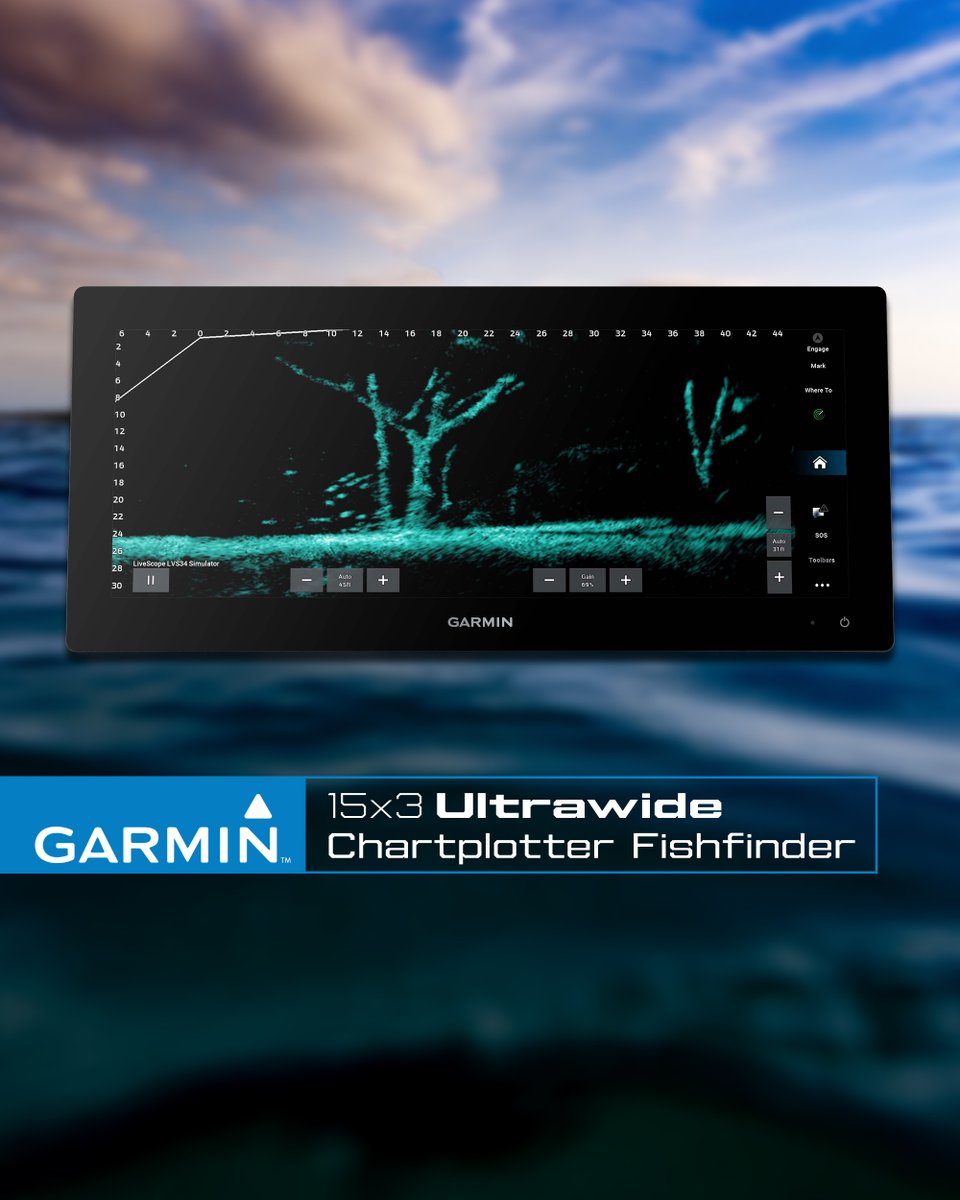
Offering wider viewing angles, accurate colors, and superior clarity, the @Garmin GPSMAP 15x3 Ultrawide Chartplotter enables anglers to experience the benefits of split screens, allowing them to organize, size, and place data precisely where needed. Featuring a sleek aesthetic in an ultra-wide edge-to-edge glass format, the 15x3 Ultrawide Chartplotter expands your viewing horizons with more pixels and a high-resolution screen that's 74% wider than standard 9" chartplotters.
#TackleWarehouse #Garmin #UltrawideChartplotter #Chartplotter
9
1,073

1 Dec 2025
Windfinder, Het Getij, anchor alarm, Marine Traffic for AIS info and sometimes a compass to aline/check with the compass aboard. Chartplotter OpenCPN (also avail. as Android app) with o-charts maps on laptop.
2
204

17 Oct 2025
A new boat. 18' flats boat. Hewes or Maverick. 225 horse Yamaha, minkota troller, Garmin GPS/chartplotter. Livewell and fish boxes. K-top if it's a special occasion.
1
3
1,209

14 Oct 2025
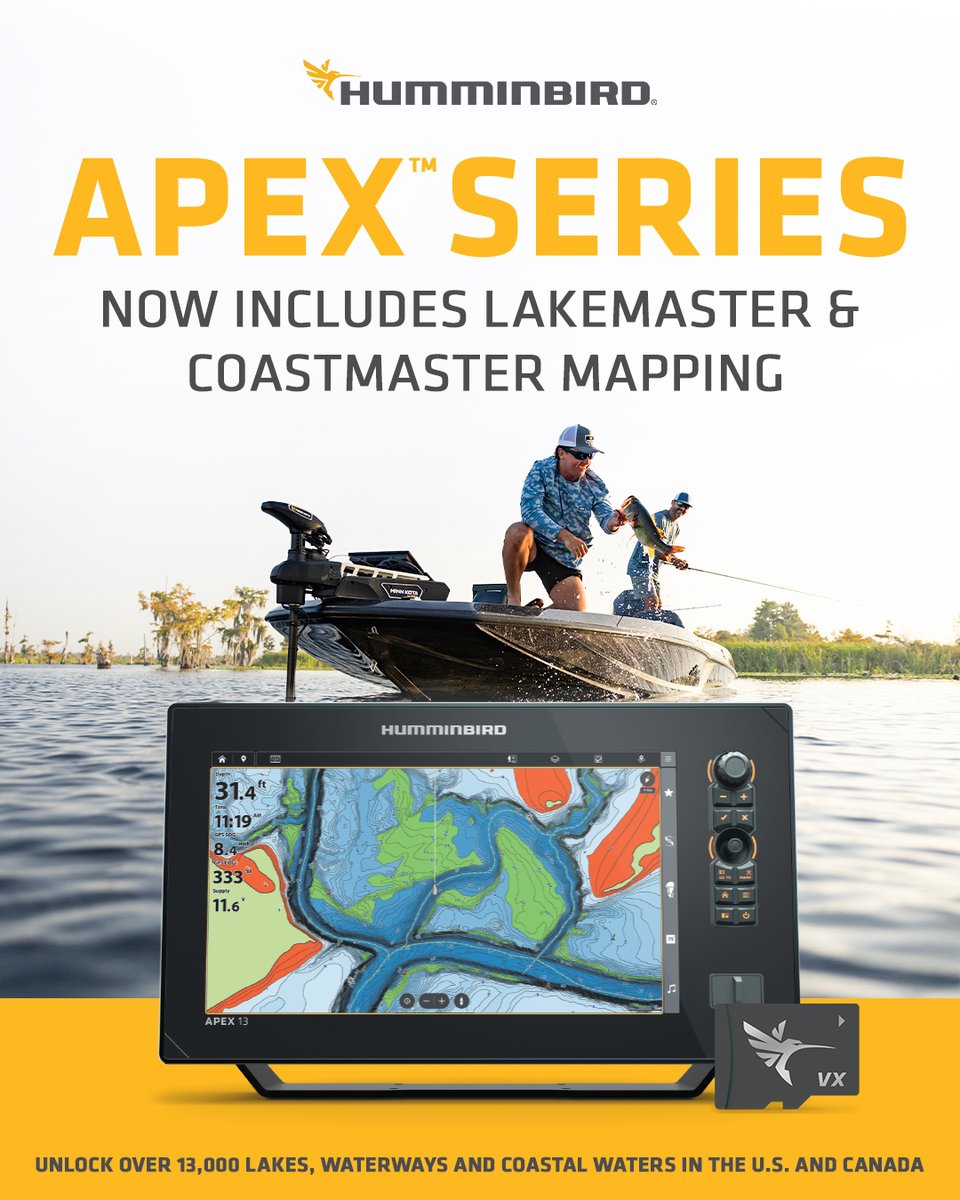
The Humminbird® APEX™ chartplotter now includes LakeMaster® & CoastMaster® mapping in the box. #Humminbird
Learn more ➡️ bit.ly/4pZcDM9
5
7
1,074


31 Aug 2025
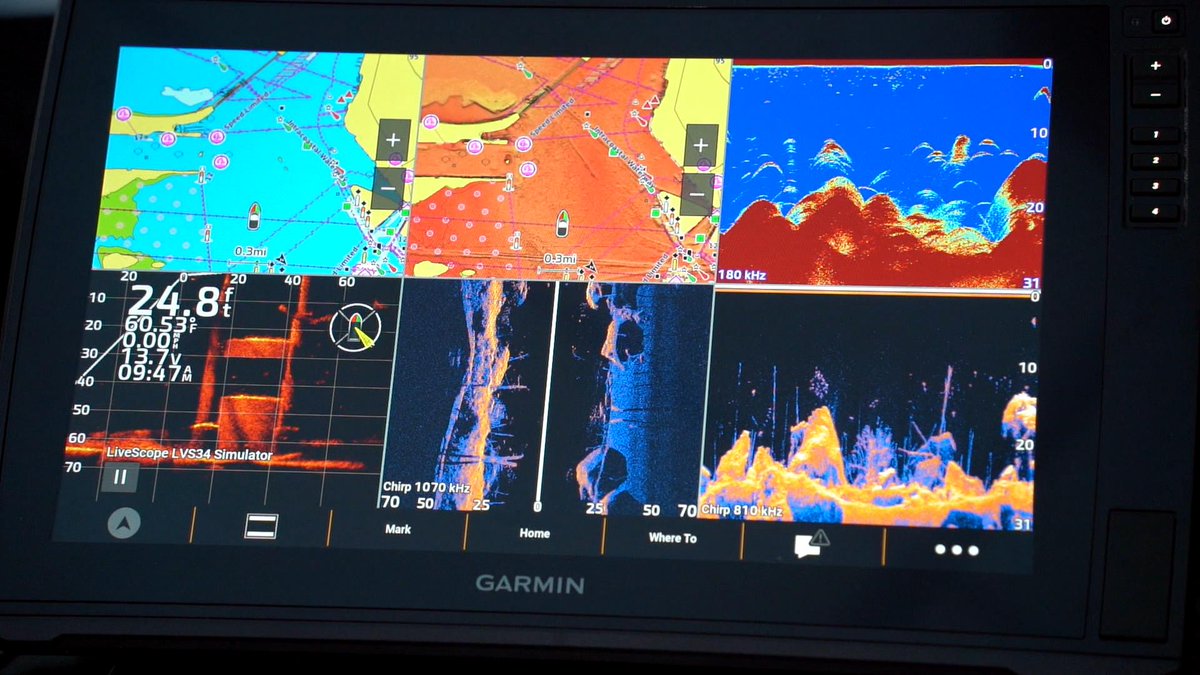
Customize the screen layout to contain the details you want to see on the @garminfishhunt ECHOMAP Ultra 2 16-inch chartplotter series.
#FishGarmin #GarminPro #GarminFishHunt #ECHOMAP #Ultra2 #Fishing
4
109

9 Aug 2025
Yes I sailed with LORAN. It was painful. You needed special charts and difficult calculations and I hope you remember where you put the ten point dividers.
But we have these things called advanced computer chips now.
Your device does all the work for you. You wouldn’t even know if your phone or chartplotter is using gps or loran without looking at the settings
1
1
20

7 Aug 2025
My chartplotter is a Chyneesium automotive android center console running bootleg deutsch software
*ahem* fuck raymarine. your shit is way too shamelessly expensive for also being made in Chyna. And having SeaTalk NG be a different plug despite just using NMEA 2000 is disgusting
2
4
107

30 Jun 2025
Awalnya, utk menampilkan data AIS, wajib digunakan suatu alat yg disebut Chartplotter yg biasanya dipasang di pelabuhan/instalasi pemantauan alur pelayaran yg berada di darat. Di kapal, digunakan perangkat ECDIS/Electronic Chart Display & Information System utk tujuan yg sama.⬇️
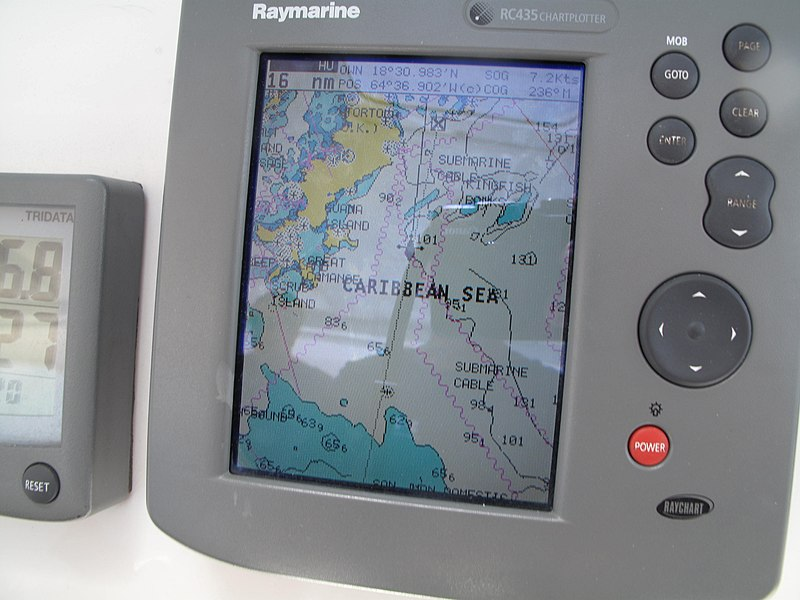
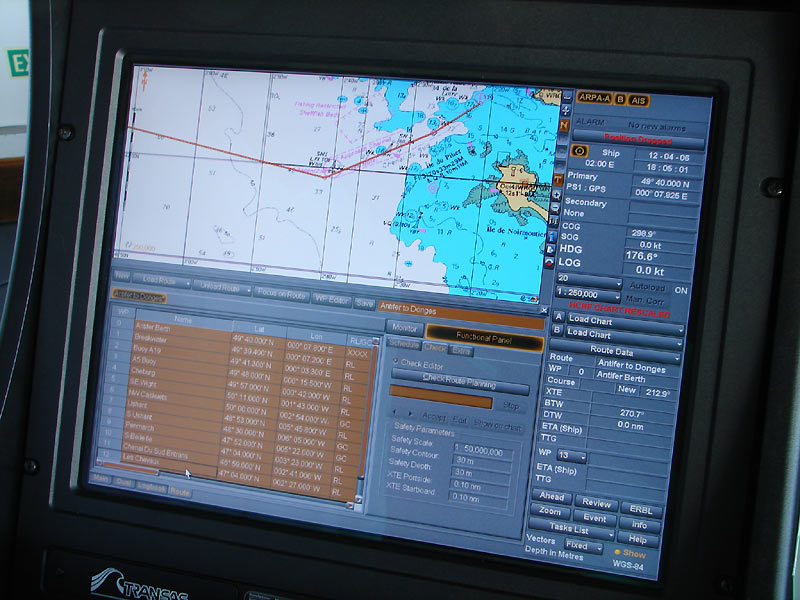
1
2
106