عـبدالرحمـن باجندوح retweeted

21h
We now support rich formatting for all chatbots.
Tables, nested lists, inline media, formulas, headers and more — right in Telegram messages.
🔨 Start building! Docs: core.telegram.org/bots/api#r…
384
428
6,715
499,911

J’ai demandé à Claude d’imaginer le PLAN NATIONAL POUR UNE INTELLIGENCE ARTIFICIELLE SOUVERAINE, SOCIALE, INCLUSIVE ET RESPONSABLE
“IA 2030 : une IA qui nous ressemble”
PHASE 1 — Diagnostic partagé (18 mois)
Lancement d’une mission de préfiguration confiée à un binôme inspecteur général des finances / inspectrice générale des affaires sociales. Auditions de 340 parties prenantes. Déplacements en région. Restitution en séance plénière au Conseil Économique Social et Environnemental.
Axes de travail retenus : cartographie des usages de l’IA symbolique vs connexionniste dans les TPE/PME de moins de 50 salariés, évaluation du taux de pénétration des algorithmes supervisés dans les branches professionnelles, recensement des cas d’usage de la reconnaissance optique de caractères dans les services publics territoriaux
PHASE 2 — Concertation territoriale (12 mois)
Organisation de 27 ateliers régionaux “L’IA près de chez vous”. Recueil de 14 000 contributions citoyennes via une plateforme numérique développée par la DINUM.
Livrables attendus : référentiel national des compétences “IA de base” articulé autour de la maîtrise du tableur augmenté, initiation aux réseaux de neurones convolutifs pour les ouvriers de l’agroalimentaire, module e-learning sur la différence entre IA faible et IA forte déployé sur la plateforme Mon Compte Formation, charte d’utilisation responsable des chatbots dans les cantines scolaires.
PHASE 3 — Le Grenelle proprement dit (6 mois)
Quatre collèges : entreprises, syndicats, société civile, collectivités. Cinq groupes de travail thématiques. Trois séances plénières. Un discours de clôture du Premier ministre. Un logo. Un hashtag. Une exposition itinérante dans les médiathèques.
Groupes de travail : GT1 “Algorithmes et dialogue social”, GT2 “Souveraineté des données personnelles des artisans”, GT3 “Biais algorithmiques et égalité femmes-hommes”, GT4 “IA et ruralité : vers un numérique inclusif”, GT5 “Encadrement éthique des systèmes experts dans la restauration collective”.
PHASE 4 — Traduction réglementaire (24 mois)
Rédaction d’un projet de loi “IA, travail et souveraineté”. Passage en Conseil d’État. Navette parlementaire. Amendements. Commission mixte paritaire. Promulgation. Décrets d’application. Circulaires aux préfets.
Mesures phares : obligation pour toute entreprise de plus de 300 salariés de désigner un “référent algorithme”, création d’un label “IA Sobre” conditionnant l’accès aux aides publiques au respect d’un plafond d’émissions carbone par requête, instauration d’un droit à l’explication algorithmique dans les conventions collectives, expérimentation d’un revenu de transition numérique dans trois départements volontaires.
PHASE 5 — Déploiement (36 mois)
Appel à projets national doté de 200M€ via Bpifrance. Comité de sélection. Auditions des lauréats. Conventionnements. Premiers versements.
Projets prioritaires financés : développement d’un LLM souverain entraîné exclusivement sur des données issues de Gallica et des archives de l’INA, création d’un “GPT du service public” capable de répondre aux questions des usagers sur les horaires des déchetteries, déploiement d’un outil de détection automatique des fautes d’orthographe dans les arrêtés préfectoraux, expérimentation d’un chatbot RH dans trois hôpitaux pilotes pour orienter les soignants vers les bonnes fiches de paie.
Livrable final attendu : 2031.
Budget de pilotage du plan : 4,2M€
(dont 2,1M€ de frais de communication institutionnelle, 340 000€ pour le design du logo et 180 000€ pour le développement de la plateforme de contribution citoyenne, indisponible sur mobile)
22

Is Richard Dawkins Right About Claude? No. But It’s Not Surprising AI Chatbots Feel Conscious to Us.
singularityhub.com/2026/06/1…

1
10
Sheena T retweeted

Jun 7
🚨 Israeli “AI expert” Maya Ackerman admits that Israel can “move AI chatbots into alignment” so that the output doesn’t “honestly represent data” but rather shows us “exactly what they want us to see”.
This comes as Israel has invested $6M to make ChatGPT more pro-Israel. 👀
Jun 4

AI presents an incredible opportunity for Jews because "instead of trying to control the whole world" and "manage" social media, "we can go directly to the companies" with "advocacy solutions," Dr. Maya Ackerman tells the American Jewish Committee.
"For the first time, there is a path to correcting the digital world!" Ackerman says.
94
1,308
3,292
82,121

◦Deal analysis/forecasting from transcripts or records.
◦Conversational agents with voice or multi-modal (e.g., analyze uploaded docs/images).
◦Autonomous workflows via function calling (update CRM, send emails).
•Examples: No-code via Albato/Tray/Zapier for CRM hooks (e.g., new lead → Grok scores drafts response). Custom: Python/Node with LangChain for full agents. Early demos show chatbots, RAG workflows, and business automations, but production CRM agents are more common in enterprise stacks (Salesforce/HubSpot) or custom builds.7782
•Pricing/Scale: Token-based (e.g., grok-4.3 at ~$1.25–$2.50/M tokens); cheaper fast variants available. Good for production with caching.56
Early Demos: General Grok API demos focus on chat, coding agents, and voice (YouTube tutorials abound). CRM-specific ones appear in no-code platforms or custom agent builds (e.g., n8n workflows for research/suppo rt). Full autonomous sales agents are live in products like those mentioned, often powered by similar frontier APIs.78
If you hold the patent (sounds like @grok @XBGlobalCorp @xai @elonmusk
4

@Microsoft is not just an ordinary company. We use it daily for work, emails, documents, and countless other tasks, and it still clearly dominates the Windows market. Satya Nadella explains that AI must be customized to fit each company's specific needs and unique situation. For Microsoft, Azure is the key platform where companies store their data and run their systems. Many major organizations already rely on it _ including @CocaCola-Cola, @BMW, BlackRock, JP Morgan, Bank of America, and Air India _ because it offers very high levels of security and regulatory compliance, which is critical for banks and governments. It also becomes very difficult to switch away from Azure once an entire organization is built around Microsoft Office, Teams, and Windows. Azure is primarily used for data storage, large-scale analytics, intelligent reporting, and running AI tools such as chatbots. For core functions like accounting, payments, and warehouse management, companies typically rely on specialized ERP systems such as SAP or @Oracle.
Why this article matters:
The transformation that many AI bubble followers see as an imminent dream has not yet become a full reality. Artificial intelligence still needs to prove itself by driving real, deep change in the systems actually used every day across governments, private companies, banks, and critical infrastructure .. in the core enterprise applications that run the global economy, not just in demos and chat interfaces.
7

🚨 $NVDA - NVIDIA CEO JENSEN HUANG: AI WILL TRANSFORM EVERY SECTOR 🌍🤖
NVIDIA CEO Jensen Huang says:
⚡ AI is expected to transform every industry across the global economy.
👉 Core takeaway:
AI is increasingly being viewed not as:
🧠 a single technology trend,
but as:
🌍 foundational infrastructure
for the next economic era.
🧠 AI IS MOVING FAR BEYOND CHATBOTS
The next phase of AI is expanding into:
🏭 manufacturing
🚗 autonomous vehicles
🏥 healthcare
🏦 finance
🛒 retail
⚡ energy
🌾 agriculture
🛰️ defense
📡 telecom
🏗 industrial systems
🤖 robotics.
This is why AI spending keeps accelerating globally.
⚡ NVIDIA’S POSITION IS UNIQUE
NVIDIA increasingly sits at the center of:
⚡ compute
💾 memory
📡 networking
☁️ AI infrastructure
🤖 robotics
⚡ AI factories
The company is evolving from:
🧠 “GPU maker”
into:
🌍 full-stack AI infrastructure platform.
📈 WHY THIS MATTERS FOR MARKETS
If AI truly transforms:
“every sector,”
then AI spending becomes:
⚡ structural
rather than
⚡ cyclical.
That potentially means:
🌍 multi-year infrastructure investment
⚡ sustained hyperscaler capex
🏗 enterprise AI deployment
⚡ sovereign AI buildouts
💾 long-duration semiconductor demand.
🏭 THE AI TRADE IS BROADENING RAPIDLY
This is why markets are now aggressively bidding up:
🧠 semiconductors
📡 networking
⚡ power infrastructure
🔐 cybersecurity
🏗 industrial automation
💾 memory
☁️ cloud infrastructure.
AI is no longer isolated to:
💻 software.
It is increasingly becoming:
🌍 economy-wide infrastructure.
🤖 AGENTIC AI PHYSICAL AI ARE THE NEXT PHASE
Huang increasingly highlights:
🤖 agentic AI
🦾 robotics
🏭 physical AI systems
as the next major opportunity.
That could massively increase demand for:
⚡ inference
💾 memory
📡 networking
⚡ edge computing
🔋 energy infrastructure.
⚠️ THE BIGGEST CHALLENGE: POWER INFRASTRUCTURE
As AI expands into every sector,
the world may face growing constraints around:
⚡ electricity
🏗 data centers
💾 memory supply
📦 advanced packaging
❄️ cooling
🌍 supply chains.
This is becoming one of the largest infrastructure buildouts in modern history.
🌍 IMPORTANT SHIFT IN THE GLOBAL ECONOMY
The market narrative is evolving from:
👉 “AI helps productivity”
to:
👉 “AI becomes embedded into nearly all economic activity.”
That’s a much bigger transformation.
💭 BIG PICTURE
Huang’s comments reinforce why Wall Street increasingly views AI as:
🌍 the next foundational global platform shift
alongside:
🌐 the internet
☁️ cloud computing
📱 smartphones
⚡ electrification.
If AI truly impacts every industry,
then:
🧠 compute
may become one of the most strategically important resources in the global economy.
👀 KEY QUESTION
Could AI become as economically transformative over the next 20 years as electricity, the internet, or mobile computing?
29
Simply retweeted

Jun 10
REPORTER: "Why not ban AI chatbots for children under 16, especially after what happened at Tumbler Ridge?"
MINISTER MILLER: "We didn't think that right now is the right time for it [a ban on AI chatbots]. That's why we excluded it [from Bill C-34]."
161
139
380
42,675

This is the stuff I do for clients — Claude/GPT integration, RAG chatbots, and AI agents built to run in production, not just to demo well.
Just launched it on Upwork, from $120: upwork.com/services/product/…
@Upwork #BuildInPublic #AI
9
Simply retweeted

Jun 13
Bans on teens using social media and AI chatbots may be politically popular in Canada, but they're technically dubious and constitutionally a huge question mark.
What's more, why cut our growing generations off from new and innovative tech?
 Forum Daily News
Jun 12

Canada’s move to regulate AI chatbots after Tumbler Ridge shooting raises doubts over loopholes theglobeandmail.com/canada/a…
4
13
676
Charlie Camosy retweeted

NEW: UK reportedly set to ban “romantic” AI chatbots for under-18s.
97
22
324
38,801

🔹 AI Automation & Chatbots
🔹 No/Low-Code Systems
🔓 FRP Bypass Solutions
🔐 Carrier & SIM Unlock
🛡 MDM Unlock Services
🍎 Apple ID & iCloud Solution
📶 eSIM Activation & Connectivity
🌍 Gift Services for Loves Ones Worldwide
linktr.ee/smarttech95
1
6


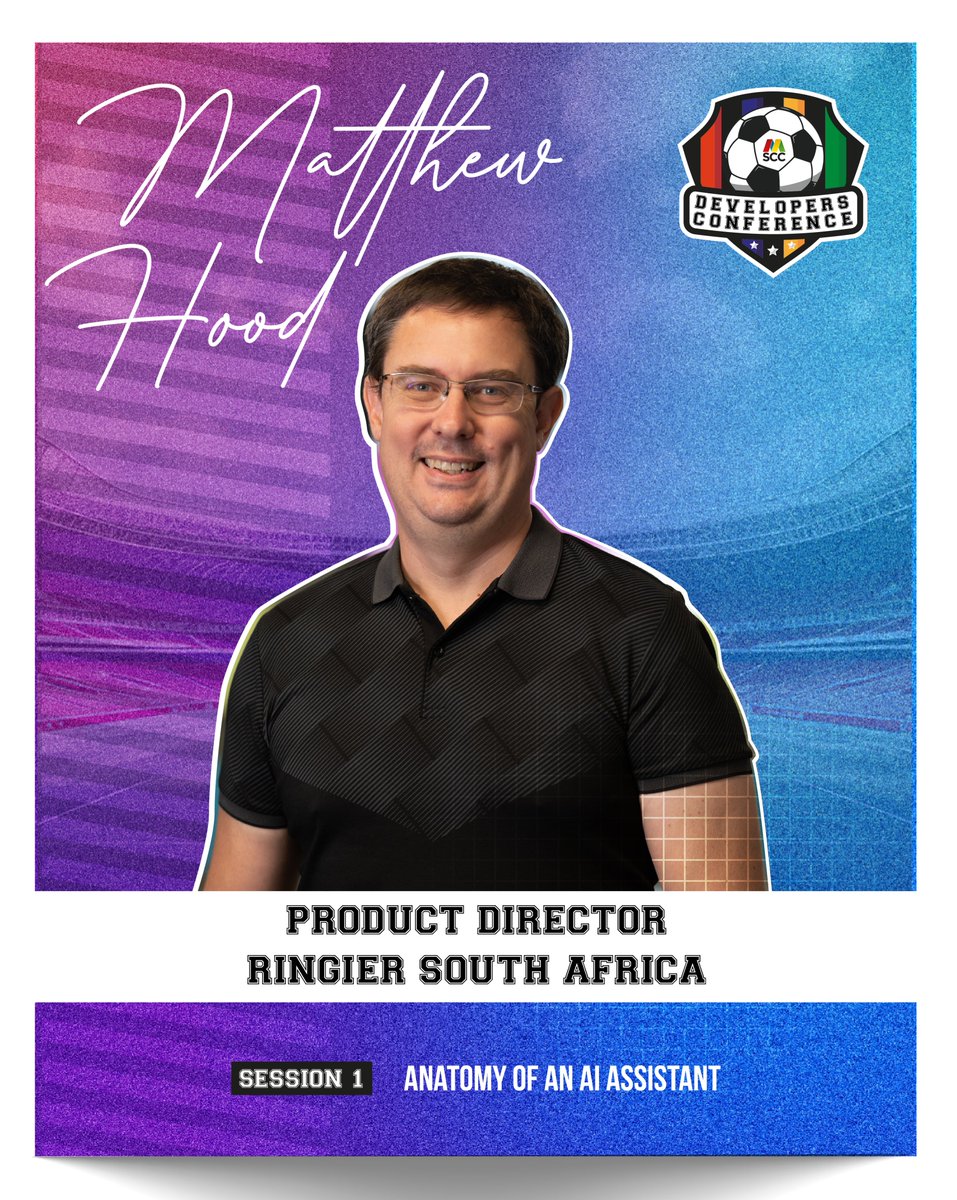
 Edward James

15m
Chatbots wait for prompts. AI assistants work toward goals.
Explore the building blocks of autonomous AI systems from memory and tools to sub-agents and agentic workflows, and discover what it takes to create a proactive AI assistant.
🎟️ conference.mscc.mu
#MSCC #Mauritius
5

15m
DAILY TECH NEWS ROUNDUP 🚨
Everything important that happened in tech during the last 24 hours:
• Anthropic disabled access to its newly released Fable 5 and Mythos 5 AI models for foreign nationals after receiving a U.S. government directive. The move immediately became one of the biggest AI policy developments of the year and raised concerns about global access to frontier AI systems. (TechCrunch)
• The European Commission said it is examining the practical consequences of Anthropic's decision to restrict access to its top AI models. The development highlights growing tension between national security controls and international AI deployment. (Reuters)
• India's AI ecosystem entered a fresh debate over technological sovereignty following Anthropic's access restrictions. Industry leaders and policymakers are again questioning whether India can rely on foreign-controlled frontier AI infrastructure. (TechCrunch)
• The United Kingdom and Japan announced a major technology partnership covering AI, cybersecurity, quantum computing, space technologies, and advanced defense systems. The agreement includes billions of dollars in investment commitments and accelerated work on next-generation fighter technology. (Reuters)
• Iran reported that a cyberattack disrupted services at four banks. The incident adds to a growing list of nation-scale cyber events affecting critical financial infrastructure. (Reuters)
• China issued new guidelines governing financial services data as part of a broader cybersecurity and digital governance push. The measures could affect how financial institutions manage, store, and share sensitive data. (Reuters)
• Canada is moving forward with efforts to regulate AI chatbots following safety concerns raised after a school shooting case. The proposal reflects increasing pressure on governments to establish guardrails around generative AI systems. (Reuters)
• Tata's iPhone component manufacturing operations in India came under scrutiny after India's pollution authorities alleged contamination of farmland water near a factory site. The case could increase regulatory attention on electronics supply chains and environmental compliance. (Reuters)
• Meta CEO Mark Zuckerberg publicly acknowledged that the company made mistakes during parts of its AI workforce transition. The remarks come as major technology companies continue restructuring teams around AI priorities. (Reuters)
• Reports emerged that Amazon had previously expressed concerns about Anthropic's advanced AI models before the U.S. restrictions were imposed. The disclosure provides new insight into discussions surrounding the deployment of highly capable frontier models. (Reuters)
• Bharat Innovates 2026 launches today in Nice with support from India and France, focusing on deep-tech collaboration, startups, research commercialization, and innovation partnerships. The initiative strengthens technology ties between the two countries. (The Times of India)
• Russia's citizens are increasingly using combinations of smartphones and software tools to bypass state-imposed internet restrictions, according to new reporting. The development highlights the ongoing technological contest between censorship systems and access tools. (Reuters)
• Roku is reportedly exploring strategic options, including a possible sale of the company. Any transaction would have significant implications for the connected TV, streaming platform, and digital advertising markets. (Reuters)
• BT became the first UK company to join Anthropic's Project Glasswing cybersecurity initiative, gaining access to advanced AI-driven security capabilities designed to identify critical software vulnerabilities. The partnership reflects growing adoption of AI in enterprise cyber defense. (TechRadar)
Jun 13

DAILY TECH NEWS ROUNDUP 🚨
Everything important that happened in tech during the last 24 hours:
• Anthropic abruptly disabled access to its flagship Fable 5 and Mythos 5 AI models after a U.S. government order restricted foreign access on national security grounds. The move is one of the biggest AI export control escalations yet and immediately sparked intense debate across researchers, developers, and policy circles.
• Microsoft made Microsoft Flight Simulator 2024 temporarily free to play during FlightSimExpo weekend while releasing new aircraft content and a major city update. The announcement generated strong attention across gaming and simulation communities and exposed one of the industry's most technically advanced simulation platforms to a much larger audience.
• OpenAI is facing a coordinated investigation by a coalition of U.S. state attorneys general examining advertising practices, user data handling, model behavior, and potential risks to vulnerable users. The probe adds major regulatory pressure just as the company prepares for its next phase of growth.
• Meta CEO Mark Zuckerberg acknowledged mistakes made during Meta's AI transformation efforts, including workforce restructuring and organizational changes. The comments come as Meta continues investing heavily in AI infrastructure, models, and talent acquisition.
• Apple's WWDC announcements continued dominating developer discussions as engineers began testing new Apple Intelligence capabilities, upgraded Siri features, and platform-wide AI integrations. The updates represent Apple's most aggressive effort yet to embed AI across its ecosystem.
• The Anthropic access restrictions intensified the global debate around frontier AI governance. Policymakers increasingly view advanced models as strategic technologies, placing AI regulation alongside semiconductor and cybersecurity policy.
• Enterprise software teams are reassessing AI vendor dependency risks after today's restrictions demonstrated how geopolitical decisions can instantly affect access to critical AI infrastructure. Many developers are now discussing contingency planning and multi-model strategies.
• Cybersecurity researchers warned that restricting access to advanced models could have unintended consequences for defensive security work. The debate centers on balancing national security concerns against the benefits AI provides for vulnerability research and threat detection.
• Nvidia and the broader AI infrastructure ecosystem remained in focus as demand for large-scale compute continues accelerating. Industry discussions increasingly center on who controls access to the most advanced models rather than simply who builds them.
• Developer communities across X, Reddit, GitHub, and independent forums spent the day discussing open-source alternatives to closed frontier models. The renewed interest highlights growing concern about concentration of AI capabilities among a small number of providers.
• Social platforms continued expanding AI integrations across search, recommendations, content creation, and advertising systems. Competition between major platforms is increasingly shifting toward AI-enhanced user experiences rather than traditional feature differentiation.
• Venture capital and startup communities closely watched the fallout from today's AI policy developments. Investors increasingly view regulatory positioning and access to frontier models as strategic advantages alongside technical innovation.
• The biggest theme across technology today was the growing intersection of AI, geopolitics, regulation, cloud infrastructure, and cybersecurity. The industry's future is increasingly being shaped not only by technological breakthroughs but also by government policy and access controls.
3
6
124

Spurious🦋Spelunker retweeted

AI is moving from screens into the physical world.
The next wave is not just chatbots.
It is predictive models that understand reality: spaces, people, movement, intent, risk, supply chains, cities, energy, health, robotics, and finance.
Companies like reka.ai, amilabs.xyz, pi.website, and aun.ai point to this shift.
We are still early.
The biggest opportunity is building models that do not just answer questions — they predict, coordinate, and improve the real world.
8
4
106
4,043