
#नोएडा_इंटरनेशनल_ऐयरपोर्ट से फ्लाइट बुक करने वाले हैं? तो पहले जान लीजिए कौन सा #City_Code डालना होगा .....
#NoidaInternationalAirport #CityCode




4

Jun 13
The future of RWA isn't tokenizing buildings , agree
It's digitizing cities.
Before assets become tokenized, cities need:
• data
• users
• businesses
• trust
• distribution
We're starting from the ground layer
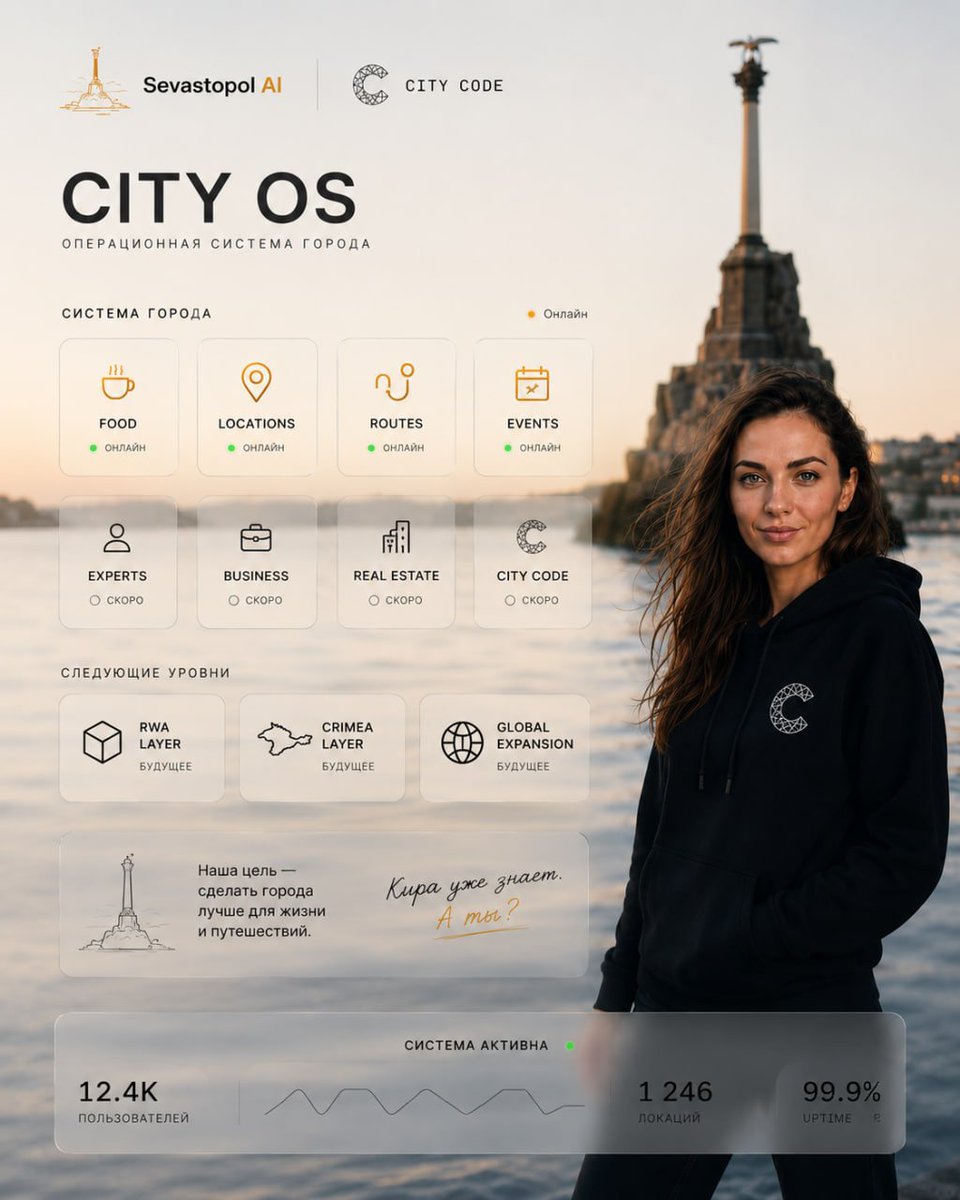
Sevastopol AI → City Code → RWA Infrastructure.
One city first. Then any city.
And meet Cyra🫶
The first resident of Sevastopol AI
Today she helps people discover places, routes and events
Tomorrow she becomes the interface of a new city ecosystem
#CityCode
2
9
158
Jun 11
What did I do last summer - or, say, summer 2016, ten years ago?
I was finishing school, making plans for the future, enjoying life, loving myself, my family, and my ex-girlfriend
I was also training every single day. I earned a Master of Sports in water polo, and I also achieved solid results in Muay Thai, classic boxing, and competitive swimming
Why am I telling you this? I don’t know - but today, once again, I had to pop my shoulder joint back in place, and I thought: for the last five years I’ve been putting off “stable sport” or at least regular fitness for a later, more suitable day. Well, that day never came
Why am I telling you this? I don’t know either - but here’s the point: there is never a perfect moment or day to start (a lesson from Yurich)
So, despite any objective or subjective reasons and excuses - let’s get Yurich’s flabby body back in shape
Love u
#YuRichSport #CityCode

1
1
4
114

A new partnership milestone has been recorded as @citycodemortgag Bank Ltd. joins forces with the 20th Edition of Africa International Housing Show 2026 as an official partner for Africa’s biggest housing and construction gathering.
The partnership with CityCode Mortgage Bank Ltd. reinforces the growing collaboration between the housing and financial sectors in driving accessible home ownership, real estate growth, and sustainable infrastructure development in Nigeria and beyond.
As a mortgage institution dedicated to providing innovative housing finance solutions, CityCode Mortgage Bank Ltd. brings valuable expertise and support to the mission of expanding affordable housing opportunities for Africans.
AIHS 2026 will feature high-level conferences, international exhibitions, investment forums, policy dialogues, networking opportunities, and strategic business engagements with stakeholders from across the globe.
Together, we are shaping the future of housing in Africa through innovation, partnerships, and sustainable development.
Register now: africahousingshow.com/visito… and secure your participation in the continent’s foremost housing and real estate event.
#AIHS2026 #AfricaHousing #MortgageFinance #RealEstateNigeria #AffordableHousing #HousingInnovation #UrbanDevelopment #ConstructionAfrica #PropertyInvestment #InfrastructureDevelopment #AIHS20Years #africainternationalhousingshow

1
4
32

Mar 8
GM, saw a nasty variant of lane-invite phishing targeting @re crews this morning: a QR “claim link” that looks like a normal re:// deep link, but actually routes you to a perfect clone and pushes a wallet prompt that isn’t a claim at all, it’s an ERC‑2612 permit or a delegated session bind that grants spender rights over your bond and stable balance
What really happens:
1) You scan → wallet opens with prefilled lane city fields, everything looks legit
2) The typed data hides a spender that isn’t the @re binder, plus max allowance on USDC/USDT or a session that can move funds to a proxy
3) No funds move instantly, but the attacker can pull later via transferFrom or auto‑fund hooks the moment you “top up” for a window
Sanity check before you sign:
- Real @re claim prompts list: ClaimScope, LaneID, CityCode, Epoch, PayoutRouteID, ReviewTTL
- Domain binding must be the official app, not a lookalike; deep link should resolve to your installed client, not an in‑wallet browser
- Spender = @re binder, value = minimal, TTL = short; any “infinite” or unknown spender is a red flag
Playbook:
1) Never sign claims from a QR if it opens an in‑wallet browser
2) Verify spender TTL, reject opaque permits
3) Use a fresh session key for claims, hold bonds on Crew Card until claim confirms
4) If you signed wrong, revoke allowance immediately, rotate the session key, then rebind clean
Are you checking typed data fields on every claim or trusting the UI to be honest #Security #ops $RE
12
12
81

Feb 27
The City of Portland is prepared to assess fines when a detention facility creates a public nuisance, activating City Council legislation designed to protect health and safety near the U.S. Immigration and Customs Enforcement facility in South Portland.
City Administrator Raymond C. Lee III today issued a temporary administrative rule enabling the City to enforce a new city code that establishes fines for nuisances near detention facilities. The rule will remain in place for up to 180 days while the City completes the permanent administrative rulemaking process.
The new code bars the owner of private property where a detention facility is located from releasing – or allowing – chemical substances that impact people’s safety and enjoyment. It also bans contamination that makes the structure unsafe, uninhabitable, or a threat to public health. Fines begin at $5,000 for a first offense.
Visit the city’s website to learn more.
portland.gov/hello/news/2026…
#Portland #CityCode #CommunitySafety

ALT Photo of the Bell at Portland City Hall. Portland takes first steps to enforce new rules on chemical munitions at detention facilities. Portland.gov/News. City of Portland seal and wordmark.
4
3
600


15 Oct 2025
LAST NIGHT'S DIG INTO CONTRACTORS WHO PERFORMED POST-INCIDENT CONSTRUCTION AT UVU FOLLOWING THE KIRK HOMICIDE:
not complete yet- but good information to backfill
__________________________________
Relevant findings:
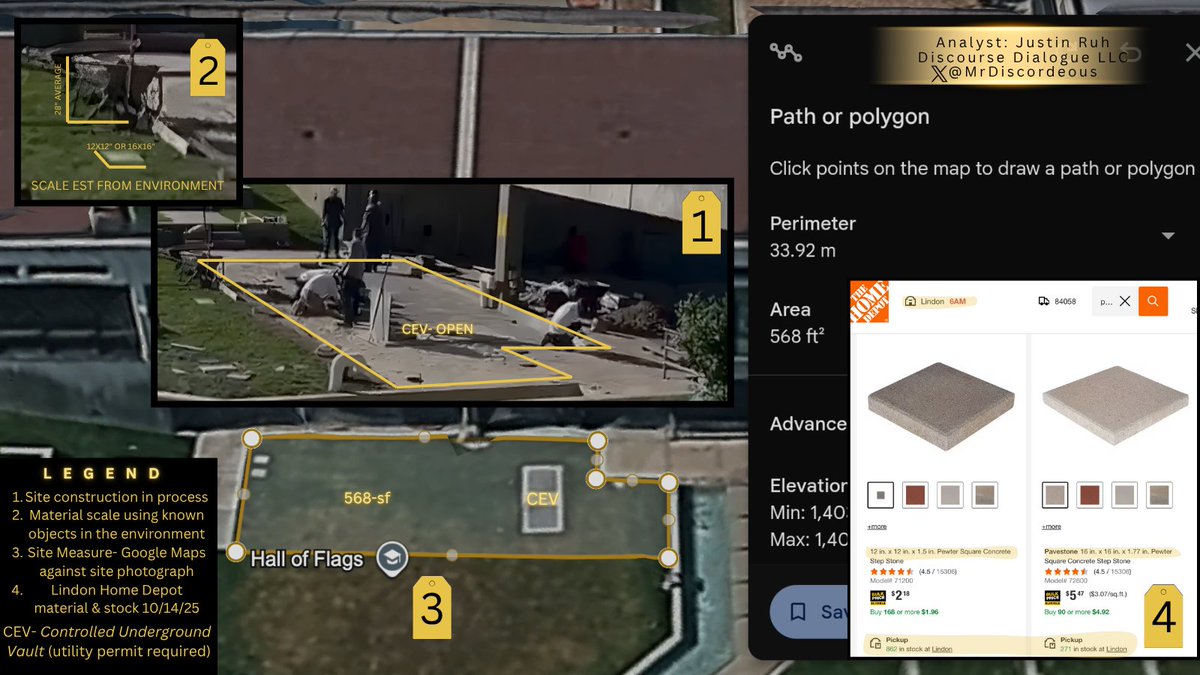
Section 1/A (see slide)
Commercial brick/paver masons are extremely rare (5% nationally)
Section 2/A
The pavers used on the project reflect a stock defect at the nearest supplier
Section 2/B (See slide)
I modeled the square footage of the UVU project and sourced locally available cement pavers, scaling from known objects in the workspace
Section 3
Inconclusive
Section 4/A
Construction permits require a minimum of 2 WEEKS
S4/B
Records request form- requires John Doe/Payment
S4/C
Permits required- conservation of values GENERAL
S4/D
Zoning definitions regarding pavers
S4/E
Permits not required or required- pavers not listed**
S4/F
Actual principal member of Precision Granite & Marble LLC
__________________________________
UVU Construction Research
Persons of interest:
Matt Robinson- owner of:
Precision Granite and Marble LLC (St. George, Utah)
Brad Padgett- owner of:
Precision Granite LLC (same/similar business in UT)
Theory:
Either party may have completed construction work seen at UVU covering the location where CK was sitting at the time of the crime. If not these parties, what masonry contractor did?
Theory Examination By Point & Considerations:
1. Labor:
Public/Government Masonry workers are highly skilled & scarce in the job force, making up only 5% in their field. This demand requires scheduling in advance for project executions.
A. (SOURCE-CMHA2025 Report)
WHEN WERE THEY SCHEDULED?
2. Material:
Consumer stores like Home Depot generally stock enough paving & masonry blocks aimed to satisfy repairs or small projects.
Lindon, UT Home Depot stock 10/15/25
(12x12 Pewter Square Concrete 862ct)
(16x16 Pewter Square Step Stones 271ct)
A. (SOURCE-Home Depot Lindon UT)
UVU Paving Project (568sf/ 30% waste 170sf)
B. (SOURCE-Google Maps)
WHAT IS THE BLOCK MODEL/SKU & WHO SUPPLIED IT?
3. Equipment:
A skid steer, commonly referred to as a “Bob Cat,” was used to excavate the soil at the scene. Additional equipment used includes a dump truck, dump trailer (more?) The “Bob Cat” can be transported by a heavy-duty pickup truck on a flatbed trailer.
CAN EQUIPMENT OWNED BY THE ACCUSED BE FOUND AT THE JOB SITE?
4. Permits:
Before any dig is performed, utility locating is required by telecoms & FCC, power, and water suppliers. Note the location of the utility vault. (1-4 day average lead time) This extends with city & county permits requiring detailed project designs, including the total “scope of work” submitted before work commencement. (1 week- 30days lead time) Permits required a general contractor’s license and a bond to be held by the contractor in most cases.
A. PRE-Construction meeting Step-5 (2 weeks)
(SOURCE-Orem.Gov)
B. Orem Records Request- City Recorder
(SOURCE- Orem Recorder.Gov)
C. Permit Required For Project per 22-14-7. Conservation of values.
(SOURCE- Orem-22-14-7 Section B#2)
D. Article 22-2. Definitions (ZONING-Pavers Fig. 10)
(SOURCE- Orem CityCode)
E. Permits- require/do not require
(SOURCE- Orem Permits- paver not listed)
WHO SUBMITTED THE PERMIT/UTILITY LOCATING AND OR PROVIDED A BOND?
F.MATT ROBINSON
Precision Granite and Marble LLC (St. George, Utah)
Principal: Clint Robinson
Addr: 583 N 3050 E St. George, Utah, 84790
Phone: (435) 632-3066
Employees: 3
Revenue: USD 500,000
Founded: 2013
ISIC Codes: 4100, 5229
NAICS Codes: 236
F. (SOURCE- AllBiz)
1
4
343
15 Oct 2025
Ok, so here is where I am landing this until later- feel free to use any of this information. No public offices or businesses were open to call, so I primarily focused on researching the legality of the permit process/requirements/located the most likely purchased stone etc.
We’re getting close….
Relevant findings:
Section 1/A
Commercial brick/paver masons are extremely rare (5% nationally)
Section 2/A
The pavers used on the project reflect a stock defect at the nearest supplier
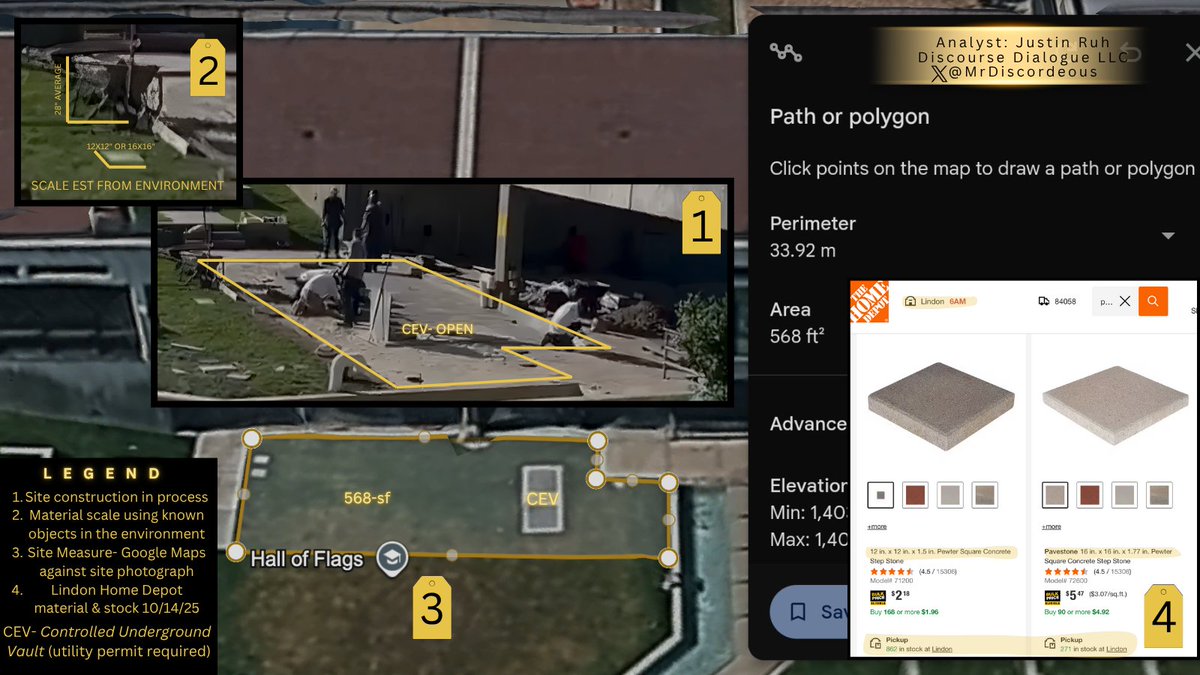
Section 2/B (See slide)
I modeled the square footage of the UVU project and sourced locally available cement pavers, scaling from known objects in the workspace
Section 3
Inconclusive
Section 4/A
Construction permits require a minimum of 2 WEEKS
S4/B
Records request form- requires John Doe/Payment
S4/C
Permits required- conservation of values GENERAL
S4/D
Zoning definitions regarding pavers
S4/E
Permits not required or required- pavers not listed**
S4/F
Actual principal member of Precision Granite & Marble LLC
WHO WANTS TO DO THE RECORDS REQUEST? 8)
________________________________________
UVU Construction Research
Persons of interest:
Matt Robinson- owner of:
Precision Granite and Marble LLC (St. George, Utah)
Brad Padgett- owner of:
Precision Granite LLC (same/similar business in UT)
Theory:
Either party may have completed construction work seen at UVU covering the location where CK was sitting at the time of the crime. If not these parties, what masonry contractor did?
Theory Examination By Point & Considerations:
1. Labor:
Public/Government Masonry workers are highly skilled & scarce in the job force, making up only 5% in their field. This demand requires scheduling in advance for project executions.
A. (SOURCE-CMHA2025 Report)
WHEN WERE THEY SCHEDULED?
2. Material:
Consumer stores like Home Depot generally stock enough paving & masonry blocks aimed to satisfy repairs or small projects.
Lindon, UT Home Depot stock 10/15/25
(12x12 Pewter Square Concrete 862ct)
(16x16 Pewter Square Step Stones 271ct)
A. (SOURCE-Home Depot Lindon UT)
UVU Paving Project (568sf/ 30% waste 170sf)
B. (SOURCE-Google Maps)
WHAT IS THE BLOCK MODEL/SKU & WHO SUPPLIED IT?
3. Equipment:
A skid steer, commonly referred to as a “Bob Cat,” was used to excavate the soil at the scene. Additional equipment used includes a dump truck, dump trailer (more?) The “Bob Cat” can be transported by a heavy-duty pickup truck on a flatbed trailer.
CAN EQUIPMENT OWNED BY THE ACCUSED BE FOUND AT THE JOB SITE?
4. Permits:
Before any dig is performed, utility locating is required by telecoms & FCC, power, and water suppliers. Note the location of the utility vault. (1-4 day average lead time) This extends with city & county permits requiring detailed project designs, including the total “scope of work” submitted before work commencement. (1 week- 30days lead time) Permits required a general contractor’s license and a bond to be held by the contractor in most cases.
A. PRE-Construction meeting Step-5 (2 weeks)
(SOURCE-Orem.Gov)
B. Orem Records Request- City Recorder
(SOURCE- Orem Recorder.Gov)
C. Permit Required For Project per 22-14-7. Conservation of values.
(SOURCE- Orem-22-14-7 Section B#2)
D. Article 22-2. Definitions (ZONING-Pavers Fig. 10)
(SOURCE- Orem CityCode)
E. Permits- require/do not require
(SOURCE- Orem Permits- paver not listed)
WHO SUBMITTED THE PERMIT/UTILITY LOCATING AND OR PROVIDED A BOND?
F.MATT ROBINSON
Precision Granite and Marble LLC (St. George, Utah)
Principal: Clint Robinson
Addr: 583 N 3050 E St. George, Utah, 84790
Phone: (435) 632-3066
Employees: 3
Revenue: USD 500,000
Founded: 2013
ISIC Codes: 4100, 5229
NAICS Codes: 236
F. (SOURCE- AllBiz)
2
1
3
147

24 Jun 2025
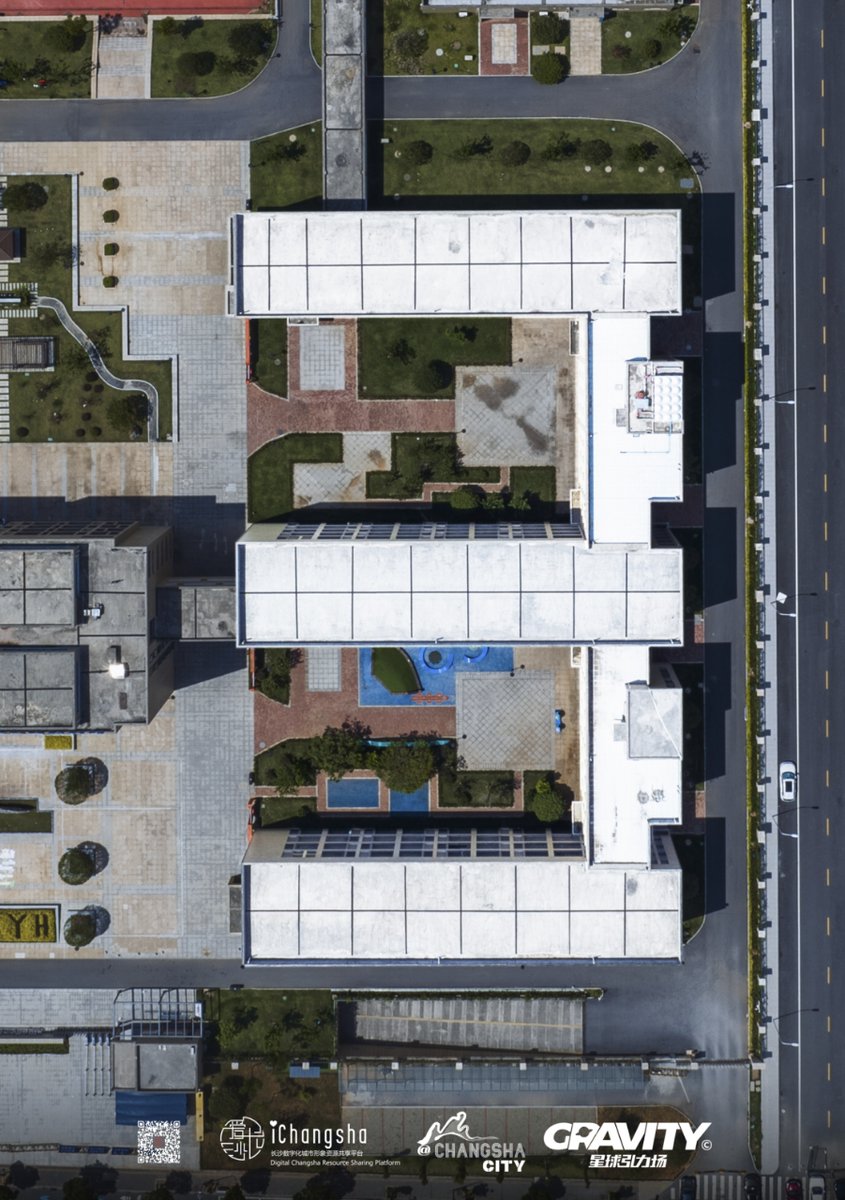
🏙️ “0731” — The Digital Code That Tells Changsha’s Architectural Story 🔍✨
From ancient eaves to modern skylines, discover how a number became the soul of a city.
#Changsha #thisischangsha #Architecture #citycode #digitalart #ArchitecturalStorytelling #FromPastToPresent #SkylineSips #citysoul #urbanheritage #History #modernmeetstraditional #DigitalCity #urbanexploration #culture #BuildingTheFuture



3
118

30 Mar 2025
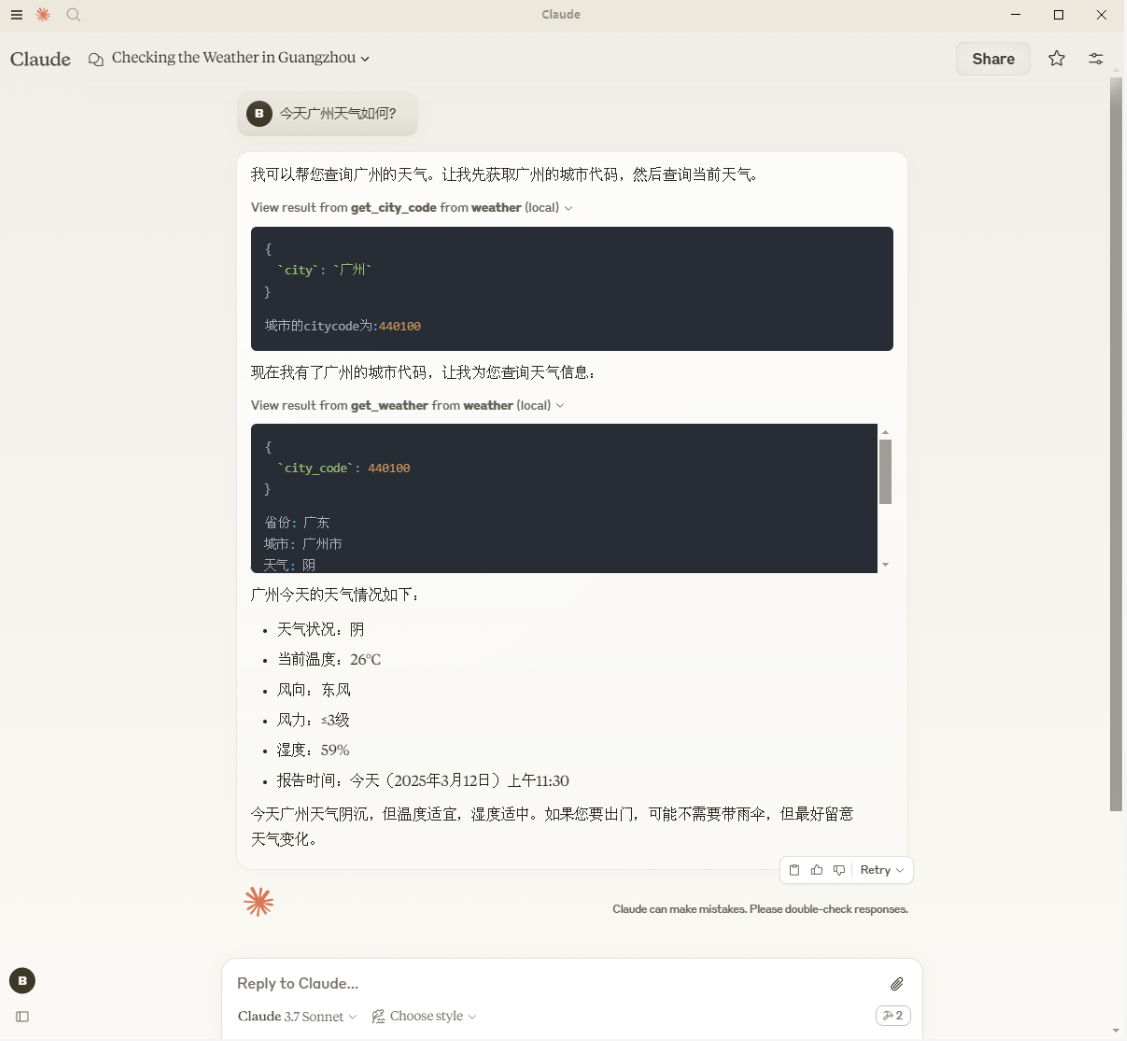
⚙️ 用 Python 实现 MCP Server(5/5) 使用
现在可以正式使用了!🎉
我们可以询问 Claude 某个城市的天气如何。它会调用两次 MCP Server:
1️⃣ 第一次获取城市对应的 citycode
2️⃣ 第二次通过 citycode 获取具体的天气情况 🌧️
最终,Claude 会给出一个合理的响应。✅
1
3
55

10 Dec 2024
Lawyers at Citycode Mortgage Bank Limited
Location: Lagos
Salary: N500,000 Per Month
Role Overview:
📌 As a Lawyer, you will be responsible for advising the organization on a variety of legal issues related to financial services.
Key Responsibilities:
> Draft, review, and negotiate contracts, agreements, and other legal documents
> Advise on regulatory compliance, financial regulations, and corporate governance matters
> Represent the institution in legal proceedings, including disputes or negotiations with clients, regulators, or third parties
Apply here jobsintelregion.com/lawyers-…
15
18
9,079

10 Dec 2024
Lawyers at Citycode Mortgage Bank Limited
Location: Lagos
Salary: N500,000 Per Month
QUALIFICATION:
> Interested candidates should possess a Bachelor`s Degree in Law
> A Qualified Lawyer with a valid practicing license
Key Responsibilities:
📌 Draft, review, and negotiate contracts, agreements, and other legal documents
📌 Advise on regulatory compliance, financial regulations, and corporate governance matters
📌 Represent the institution in legal proceedings, including disputes or negotiations with clients, regulators, or third parties
Apply here jobsintelregion.com/lawyers-…
3
7
3,309

10 Dec 2024
Lawyers at Citycode Mortgage Bank Limited
Salary: N300,000 - N500,000 monthly.
Location: Lagos
Employment Type: Full-time
Interested candidates should possess a Bachelor`s Degree in Law
A Qualified Lawyer with a valid practicing license
5-7 years of experience in financial law, banking, or corporate law
In-depth knowledge of financial regulations, compliance, and legal risk management
Excellent written and verbal communication skills
trong negotiation, analytical, and problem-solving skills
Ability to work independently and as part of a team in a fast-paced environment
CV to: corporateservices@citycodemortgagebank.com using the job title as the subject of the mail.
#GROK
1
1
474
10 Dec 2024
Lawyers at Citycode Mortgage Bank Limited
Salary: N300,000 - N500,000 monthly.
Location: Lagos
Employment Type: Full-time
Interested candidates should possess a Bachelor`s Degree in Law
A Qualified Lawyer with a valid practicing license
5-7 years of experience in financial law, banking, or corporate law
In-depth knowledge of financial regulations, compliance, and legal risk management
Excellent written and verbal communication skills
trong negotiation, analytical, and problem-solving skills
Ability to work independently and as part of a team in a fast-paced environment
CV to: corporateservices@citycodemortgagebank.com using the job title as the subject of the mail.
4
9
3,110



9 Nov 2024
The streets aren't friendly. Stay smart and be streetwise.
#poetry #citycode
peakd.com/hive-161465/@amieg…
1
4
34

13 Aug 2024
🛒 **New Thornton Code Alert** 🛒
Abandoned shopping carts are now declared a public nuisance! 🌆 Businesses must retrieve off-premises carts within 1 hour of closing or face retrieval fees. Let’s keep our community clean and vibrant! 💪
📞 Contact Thornton Code Compliance: 303-538-7517 | Code@ThorntonCO.gov
#ThorntonCO #CommunityFirst #CityCode #CleanCity

1
2
128
