New scientific descriptor dropped.
“super-bonkers extreme crazy land”
😭
#ClimateDisruption #SuperElNiño
Jun 8

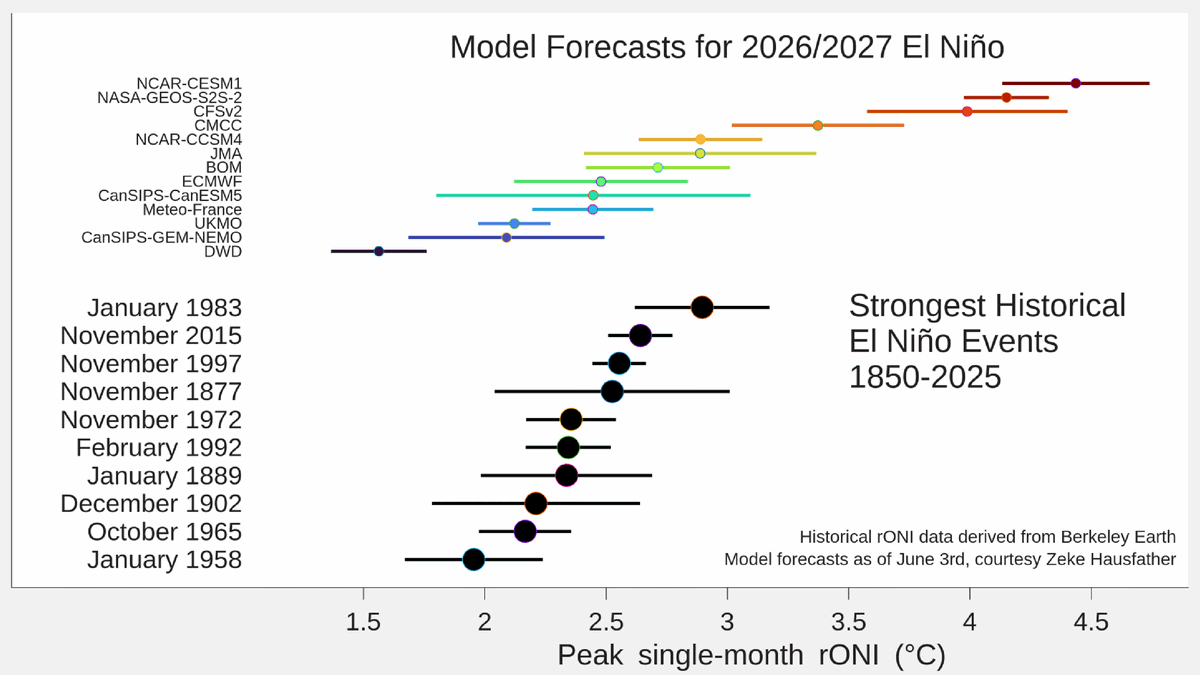
A powerful El Niño Event is expected to develop during 2026.
How powerful? Well the seasonal forecasting models are currently all over the place.
So, somewhere between a Top 10 event in modern history and super-bonkers extreme crazy land. 🤔
2
92
So, by 2 °C temperature rise—due around 2032-2037, the carbon fluxes reverse as permafrost melts. Increased primary production (plants growing), which it was hoped would increase to recapture the organic carbon metabolized to CO2 (optimistically…or to CH4 if anaerobic only) after being thawed, drops, vastly increasing net greenhouse gas release.
Another phrase for amplifying climate feedback is vicious cycle.
#SRMnow #ClimateDisruption #AmplifyingFeedback
Jun 4

Next study that we trigger a massive runway warming just now as we will reach 2°C of mean warming around 2030...
But its not visible in models but in all these mechanistic/observational studies on how systems will behave if studied more closely...
"Permafrost carbon vulnerability, particularly concerning temperature thresholds and old carbon mobilization, remains a critical uncertainty in climate projections. Through a five-year, multi-level warming experiment on the Tibetan Plateau, we investigate these dynamics using >40,000 hourly flux measurements combined with vertical CO2 concentration and δ13C-CO2 profiling. Here we demonstrate under low-to-moderate warming (<2 °C), respiratory carbon loss (Reco) increments exceed photosynthetic carbon uptake (GPP) gains by 1–16 fold, driving a quantitative shift toward ecosystem carbon source. Extreme warming (2−4 °C) triggers a surge in growing-season deep carbon loss to 59% Reco, while GPP declines precipitously. The decoupling between Reco and GPP drives a qualitative transition to strong carbon source, implying the existence of a tipping point within 2−4 °C. Projected to end-of-century warming levels (2.69 °C) across Tibetan permafrost regions, this could release 24−47 g CO2 m−2 yr−1 old carbon. These findings establish quantitative thresholds for permafrost carbon vulnerability and inform carbon-climate feedback projections in global cold regions."
nature.com/articles/s41467-0…
1
3
4
189

Mar 31
The sooner we deploy solar radiation modification at sufficient scale, less hysteresis will have the chance to build up.
Risks associated with SRM have been widely, wildly overestimated, while the risks of delay grow day by day.
#ClimateDisruption #SRMnow
See linked paper.
Mar 31
We reach net zero and all will be nice and well is increasingly being proven wrong by recent papers
Here another one - cloud feedbacks would remain, along with ocean warming for a long time, while GHGs would slowly decline.
The problem is, that GHG levels slowly decrease while clouds would continue to decline ocean heat uptake rates could even go up as clouds determine how much heat enters the oceans.
If we add recent estimates from e.g. thawing permafrost soils, even continued increases in GHG levels despite us having reached zero emissions become increasingly likely.
If we assume that recent ocean heat uptake rates are way too high already continued ocean warming would further intensify upper ocean stratification which then would backfire on marine heatwaves and ocean heat uptake shifting to shallower depths which could also cause clouds further to decline...
Here what they write:
Climate mitigation strategies have been proposed to halt and potentially reverse global warming trends by the mid-twenty-first century. Previous studies have shown different aspects of climate irreversibility at regional or global scales, but the roles of clouds and atmospheric radiation remain elusive. Using the fully coupled NCAR Community Earth System Model, version 2 (CESM2), we examine climate reversibility in a scenario where the atmospheric carbon dioxide (CO2) concentration gradually increases starting in 2015 (∼400 ppm) until 2075 (∼800 ppm) and then decreases back to the 2015 level. We find that the lowest reversibility of surface temperature occurs in the Southern Hemisphere mid–high latitudes. In addition to the slow ocean response, profound cloud–radiation feedbacks are identified in this study, which contribute to regional temperature irreversibility. Cloud properties and radiative effects show the lowest reversibility over 30°–45° and 60°–75°S. The strong inertia of the Southern Ocean circulations and the Atlantic meridional overturning circulation (AMOC) jointly induce hemispheric surface temperature asymmetry on a 60-yr time scale, leading to a southward shift of the Hadley cell with a narrowed subsidence branch and a persistent moisture divergence over 30°–45°S during the removal of CO2. The resultant humidity reduction decreases low-level cloud fraction and liquid water path, contributing to anomalous shortwave radiation that suppresses local temperature recovery. Moreover, subpolar clouds in the Southern Hemisphere are closely connected with Antarctic sea ice which exhibits substantial irreversibility following the Southern Ocean circulation responses. Our findings demonstrate that coupled ocean–atmosphere processes involving cloud and radiation feedbacks collectively determine climate reversibility and shape regional climate change patterns.
"Surface Temperature Reversibility and the Roles of Clouds on the Decadal Time Scale"; h/t Jan Umsonst
journals.ametsoc.org/view/jo…
1
4
4
435
Mar 22
Ya know, I’m not gonna call this as a tipping point, but this is what a strong tipping point would look like. And we’d only have certainty that something like this was in fact a tipping point three or more years after the fact.
Whether it not it is, we should treat it like it is & get our sh*t together, because even if it isn’t, as things are, we’re not prepared to deal with crossing real tipping points, now, or three years from now.
#ClimateDisruption

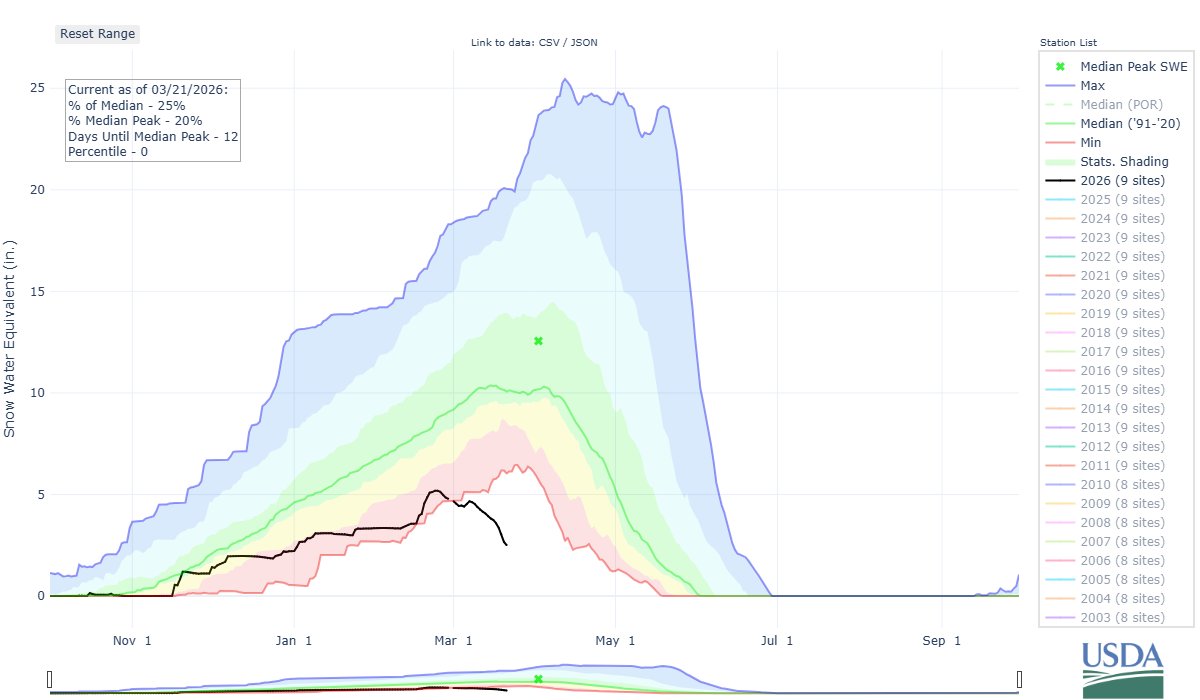
Snowpack is nose-diving across the west right now.
The Upper Colorado-Dirty Devil Basin has half as much snowpack as it's previous daily record LOW for March 21st.
To say it is bad is an understatement.
2
3
11
1,251

Jan 6
That’s what you get with #ClimateDisruption.
(New term, better than Climate Change. More descriptive, and a covers the dramatic, even out-of- character, events we see these days.
And it foils the nutjobs deniers).
Let’s make it trend now.
It will, one day.
2
45
14 Dec 2025
I think that if ECS is 4.5 or 4.8C (which seem likelier to me than 3 or 3.5C), there would have to be a thorough reanalysis of when tipping elements are likely to be activated, & how quickly their effects activate others. Beyond that, for purposes of conservative estimation to know what we need to do to avoid cascading amplifying feedbacks, my best guess is that there’s systematic underestimation of the minimum activation temperatures & maximum effect due to the scientific reticence bias.
This is why any risks of well orchestrated #SRM are likely much lower overall than risks we face if we don’t do SRM.
That’s why I’m stridently for #SRMnow as the best strategy for effectively turning the tide on #ClimateDisruption.
1
3
3
75
22 Nov 2025
We are on a different trajectory since 2020, arguably since 2015.
The only real difference between this & an uncontrolled geoengineering experiment is that there’s neither intent nor correct directionality to mitigate #ClimateDisruption.
But this also tells us we can do far, far better, if only we try.
#SRMnow
22 Nov 2025

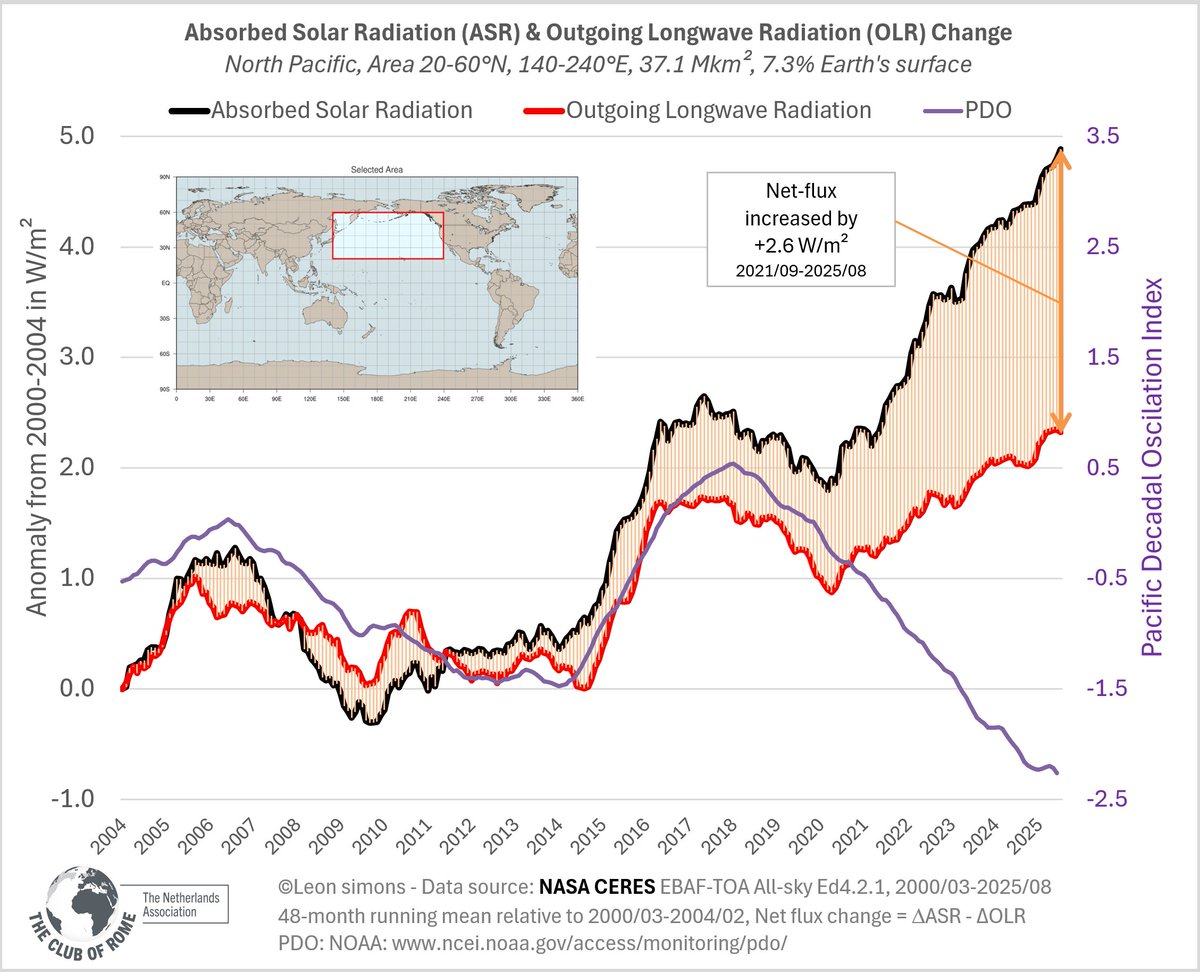
Another month of NASA CERES satellite data and it's only getting worse!
Another 0.11 W/m² added to the 4-year average Net-flux increase over the North Pacific.
The level of Absorbed Solar Radiation is almost 5 W/m² higher than the start of this century.
3
4
676
12 Oct 2025
The monster under the sea-bed is real.
#ClimateDisruption
#AmplifyingClimateFeedbacks
#SRMnow
#CDRnow
#Methane
#Clathrates
1/
11 Oct 2025
Planet-heating methane is escaping from cracks in the Antarctic seabed as the region warms, with new seeps being discovered at an “astonishing rate,” scientists have found, raising fears that future global warming predictions may have been underestimated. cnn.it/4h5g0gb
2
2
2
535
23 Aug 2025
“Regime shift” in reference to climate or ecology, is how scientists say, “shit’s gonna go down.”
#ClimateDisruption #AmplifyingFeedbacks
(See also above quoted.)


Emerging evidence of abrupt changes in the Antarctic environment
Nerilie J. Abram, Ariaan Purich et al.
20AUG2025
nature.com/articles/s41586-0…
PDF
nature.com/articles/s41586-0…
Abstract
Human-caused climate change worsens with every increment of additional warming, although some impacts can develop abruptly.
The potential for abrupt changes is far less understood in the Antarctic compared with the Arctic, but evidence is emerging for rapid, interacting and sometimes self-perpetuating changes in the Antarctic environment.
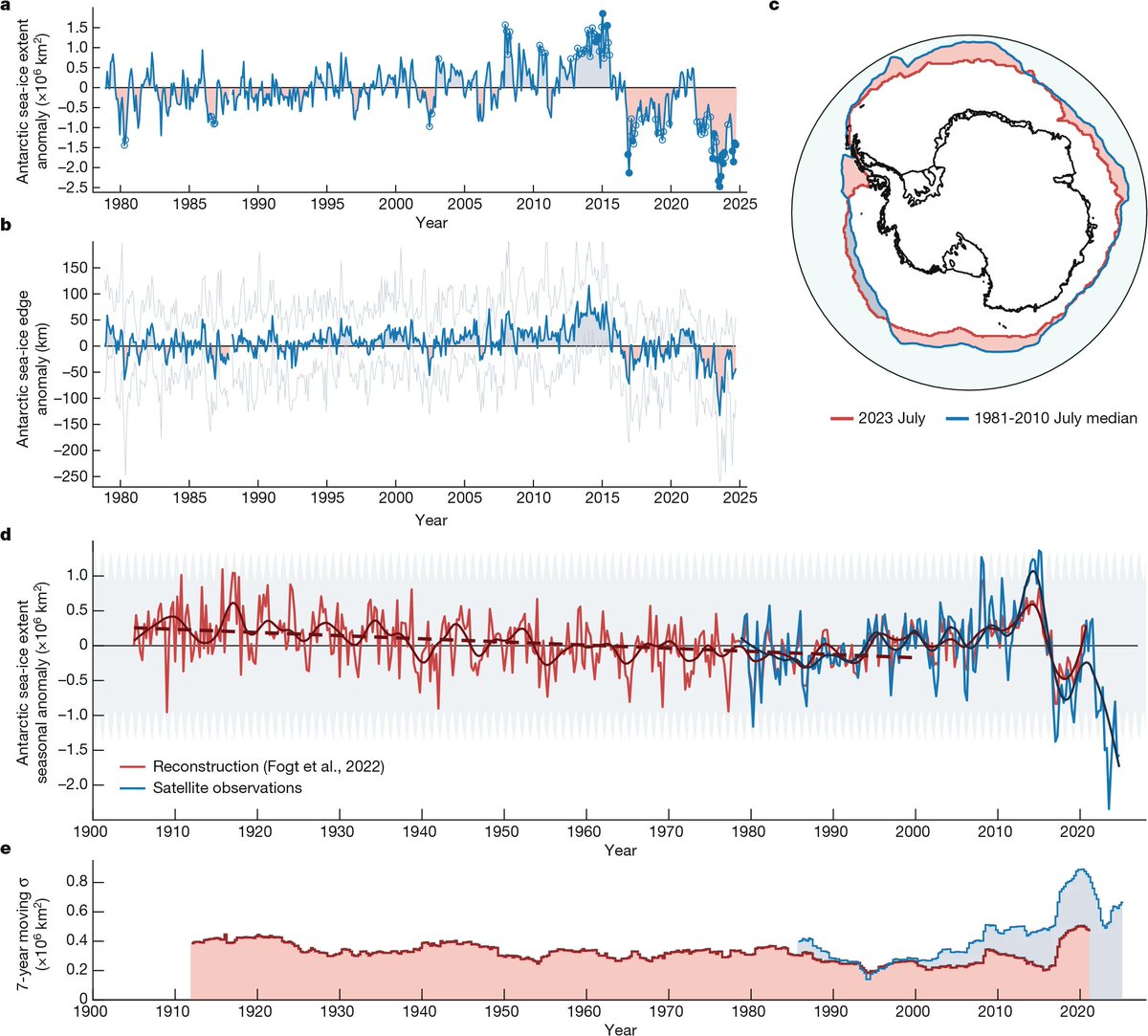
A regime shift has reduced Antarctic sea-ice extent far below its natural variability of past centuries, and in some respects is more abrupt, non-linear and potentially irreversible than Arctic sea-ice loss.
A marked slowdown in Antarctic Overturning Circulation is expected to intensify this century and may be faster than the anticipated Atlantic Meridional Overturning Circulation slowdown.
The tipping point for unstoppable ice loss from the West Antarctic Ice Sheet could be exceeded even under best-case CO2 emission reduction pathways, potentially initiating global tipping cascades.
Regime shifts are occurring in Antarctic and Southern Ocean biological systems through habitat transformation or exceedance of physiological thresholds, and compounding breeding failures are increasing extinction risk.
Amplifying feedbacks are common between these abrupt changes in the Antarctic environment, and stabilizing Earth’s climate with minimal overshoot of 1.5 °C will be imperative alongside global adaptation measures to minimise and prepare for the far-reaching impacts of Antarctic and Southern Ocean abrupt changes.
a, Antarctic sea-ice extent anomalies in satellite observations relative to 1981–2010 monthly mean climatology.
Open circles indicate monthly anomalies in excess of ±2σ and filled circles indicate those in excess of ±3σ.
b, Median (blue line) monthly anomalies and interquartile range (grey lines) in the sea-ice edge compiled for the maximum northerly extent in 2° longitudinal sectors around Antarctica, calculated relative to 1981–2010 monthly median.
In 2023 the median sea-ice edge around Antarctica had contracted 61 km southward relative to 1981–2010 conditions, and the sea-ice edge distribution was significantly different (P < 0.01; Wilcoxon rank sum test) from any previous year since satellite observations began.
c, Map showing sea-ice extent for July 2023 (red line) relative to 1981–2010 July median (blue line). Red (grey) shading shows regions where the sea-ice edge in July 2023 was farther South (North) than the 1981–2010 median.
d, Historical context of Antarctic sea-ice extent seasonal anomalies from an observation-based reconstruction21 (red; Methods), shown alongside satellite-derived sea-ice extent (blue).
Thick, dark curves show 7-year LOESS filters of the seasonal data, and dashed red line shows the reconstructed twentieth century linear trend (0.43 ± 0.06 million km2 decline from 1905 to 1999).
Datasets plotted relative to their 1981–2010 mean, and grey shading shows ±3σ range of observed seasonal sea-ice extent anomalies over 1981–2010.
Out of the 464 seasons in the 1905–2020 ‘best-fit’ sea-ice reconstruction (shown), only 3 exceeded the 3σ level of observed 1981–2010 climatology, and none fell below −3σ.
Across all reconstruction members21, only 16 of the 3,480 seasons fall below −3σ (Methods). For comparison, 7 out of 8 seasons since summer 2022/23 have been below −3σ, and winter of 2023 was below –6σ.
e, Moving seven-year standard deviation of seasonal sea-ice observations (blue) and reconstruction (red), plotted at the final season of each seven-year window.
2
2
3
270
8 Jul 2025
#ClimateDisruption is like a progressive disease.
8 Jul 2025

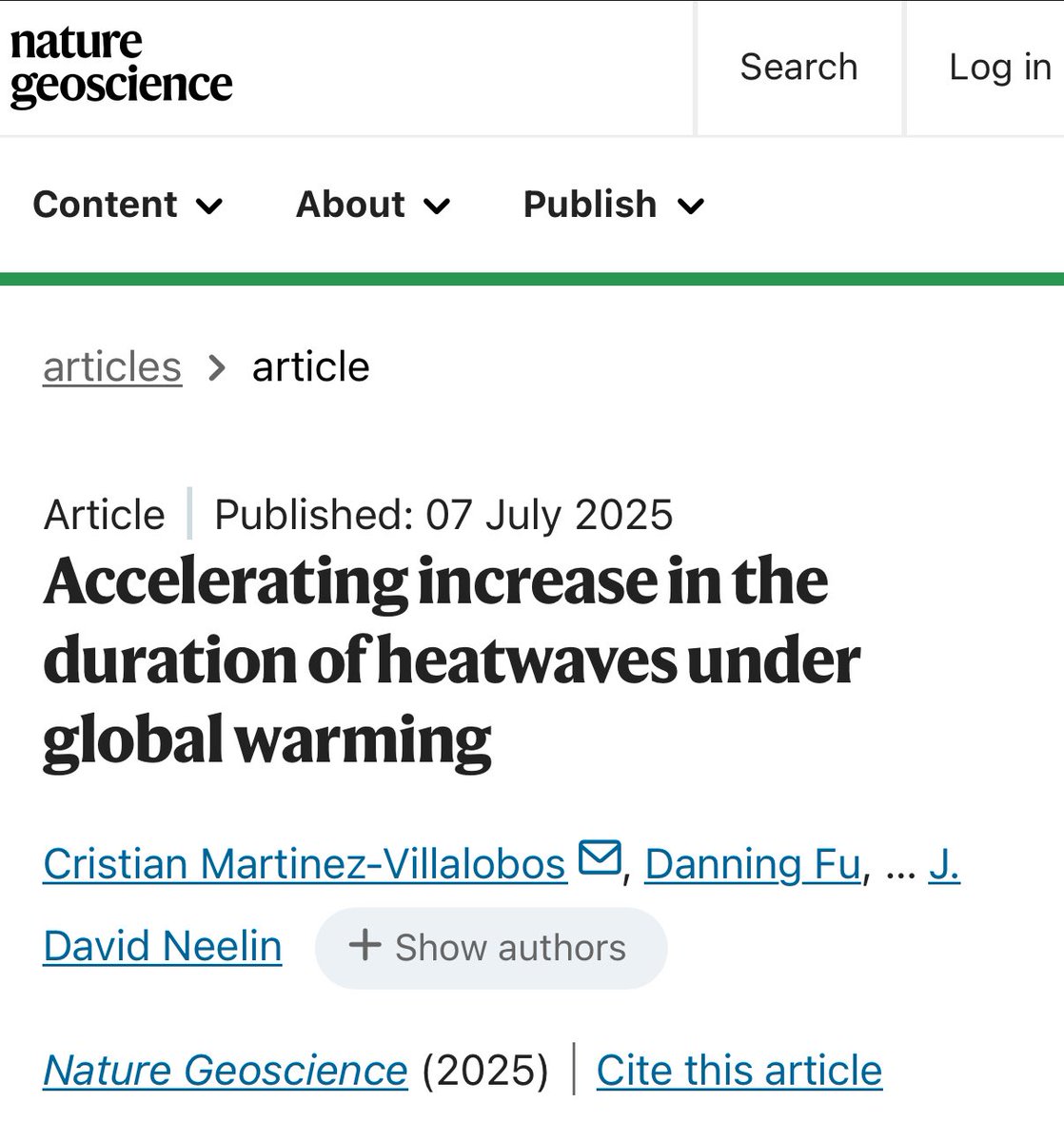
“Each increment of regional time-averaged warming increases the characteristic duration scale of long heatwaves more than the previous increment.”
1
3
67
6 Jul 2025
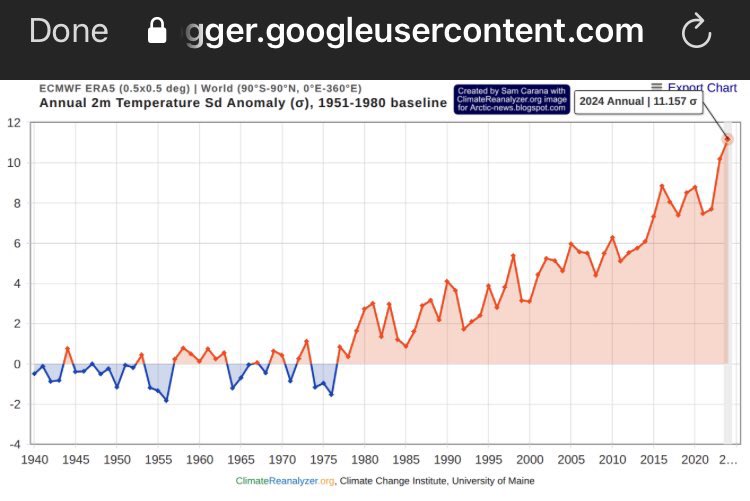
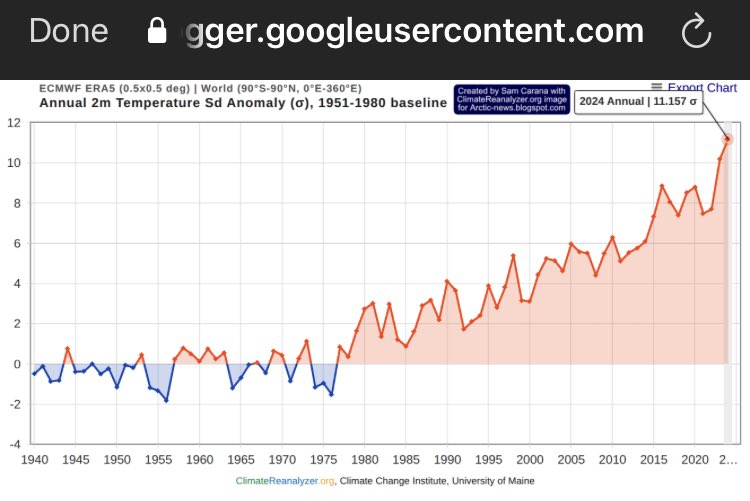
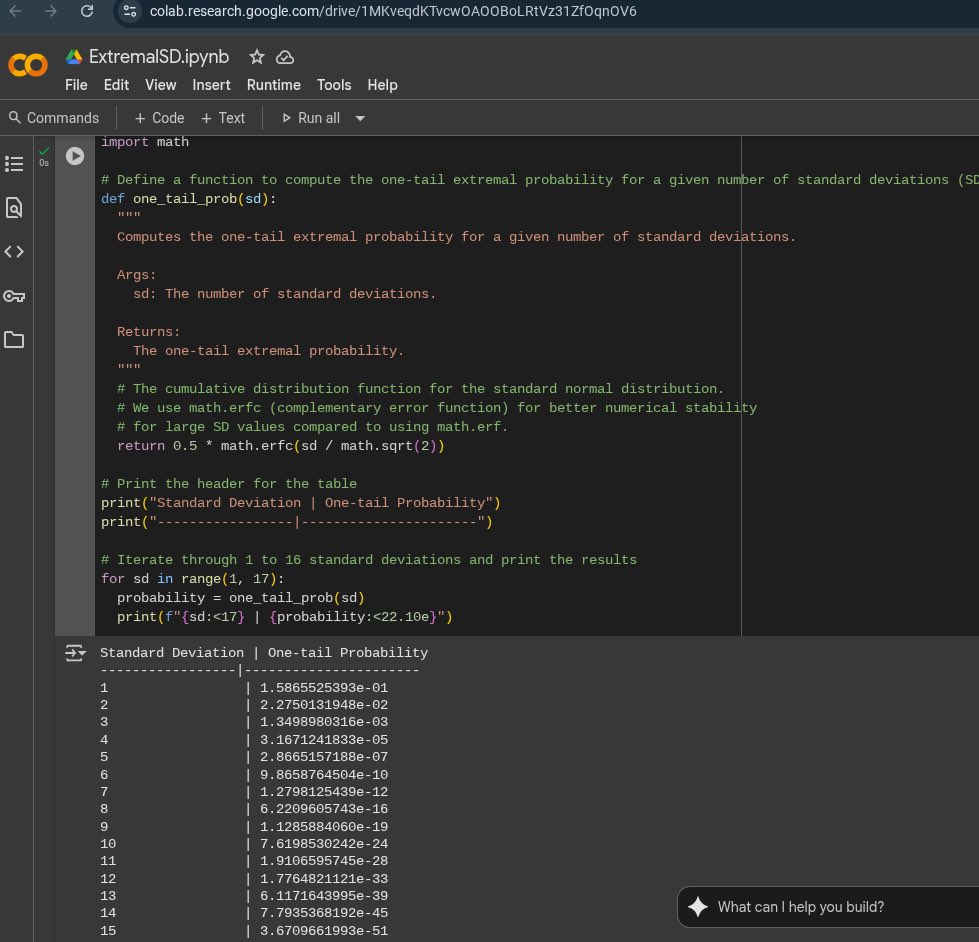
The odds of this would be smaller than the volume fraction of a literal drop in the literal world ocean.
Congratulations everyone, we did it.
🤦♂️😭
#ClimateDisruption
[Just to not bury the lede for once.]
6 Jul 2025

So, to convey just how improbable 11 standard deviation excursions are, if there were no climate disruption and the variation were purely random (normally distributed), the odds of this would be smaller than the volume fraction of a literal drop in the literal world ocean.
Congratulations everyone, we did it.
🤦♂️😭
#ClimateDisruption
x.com/i/grok/share/ac47ot4Xl…
2
8
4,006
6 Jul 2025
So, to convey just how improbable 11 standard deviation excursions are, if there were no climate disruption and the variation were purely random (normally distributed), the odds of this would be smaller than the volume fraction of a literal drop in the literal world ocean.
Congratulations everyone, we did it.
🤦♂️😭
#ClimateDisruption
x.com/i/grok/share/ac47ot4Xl…
1
1
6
594
4 Jul 2025
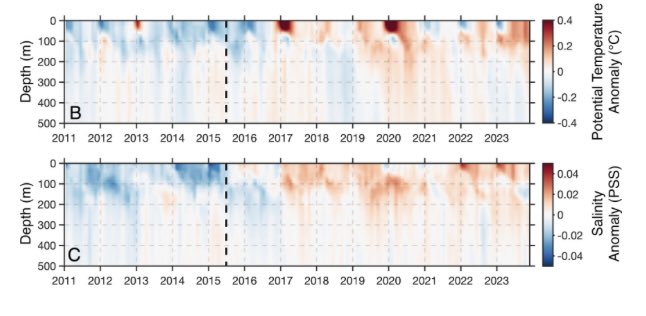
Arctic salinization due to shift in the Southern Ocean Overturning Circulation.
May reduce refreezing of melted Antarctic sea ice.
Upwelling of long-dissolved CO2 locally changes the ocean from a carbon sink to a carbon source.
#AmplifyingClimateFeedbacks
#ClimateDisruption
Link follows.
3
4
8
1,063

16 Jun 2025
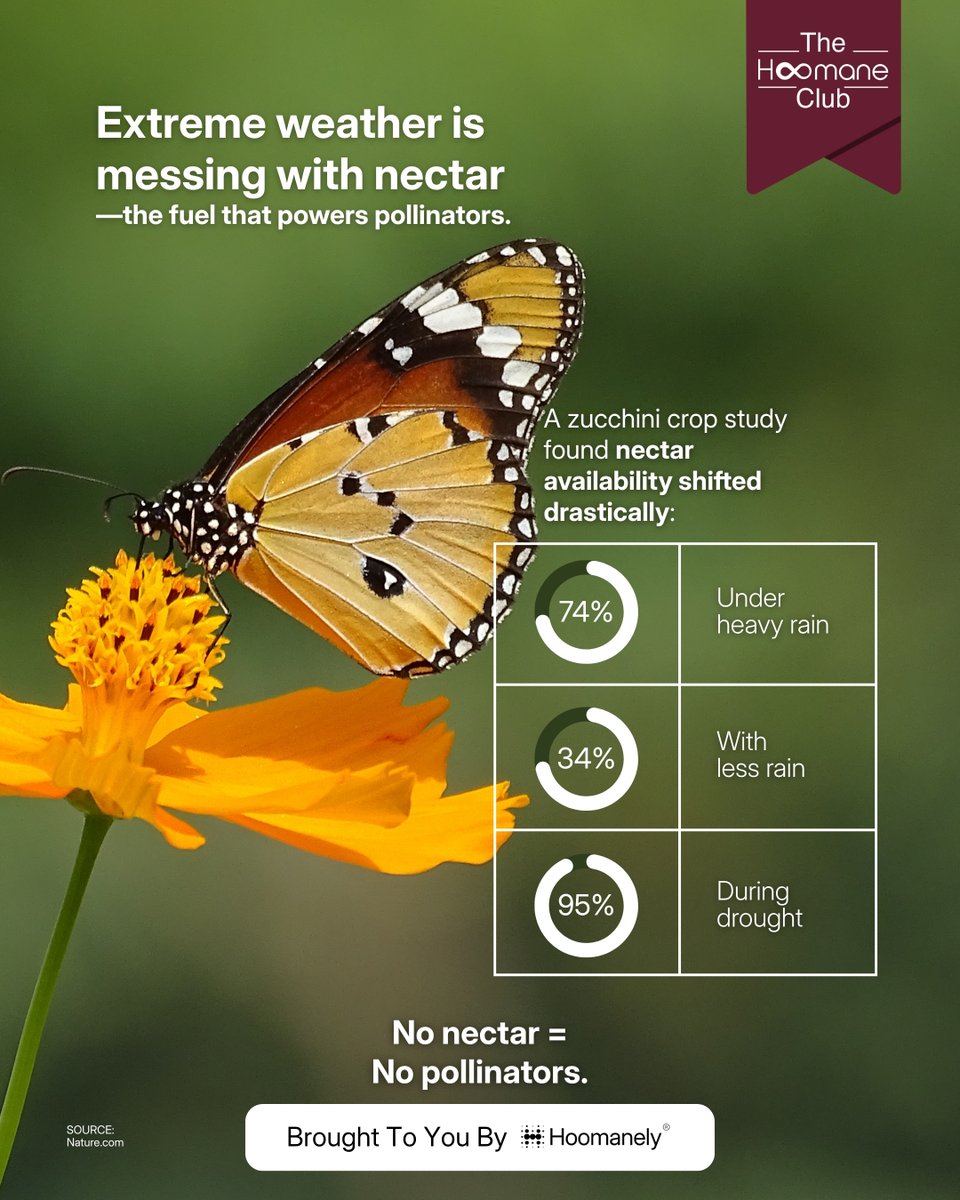
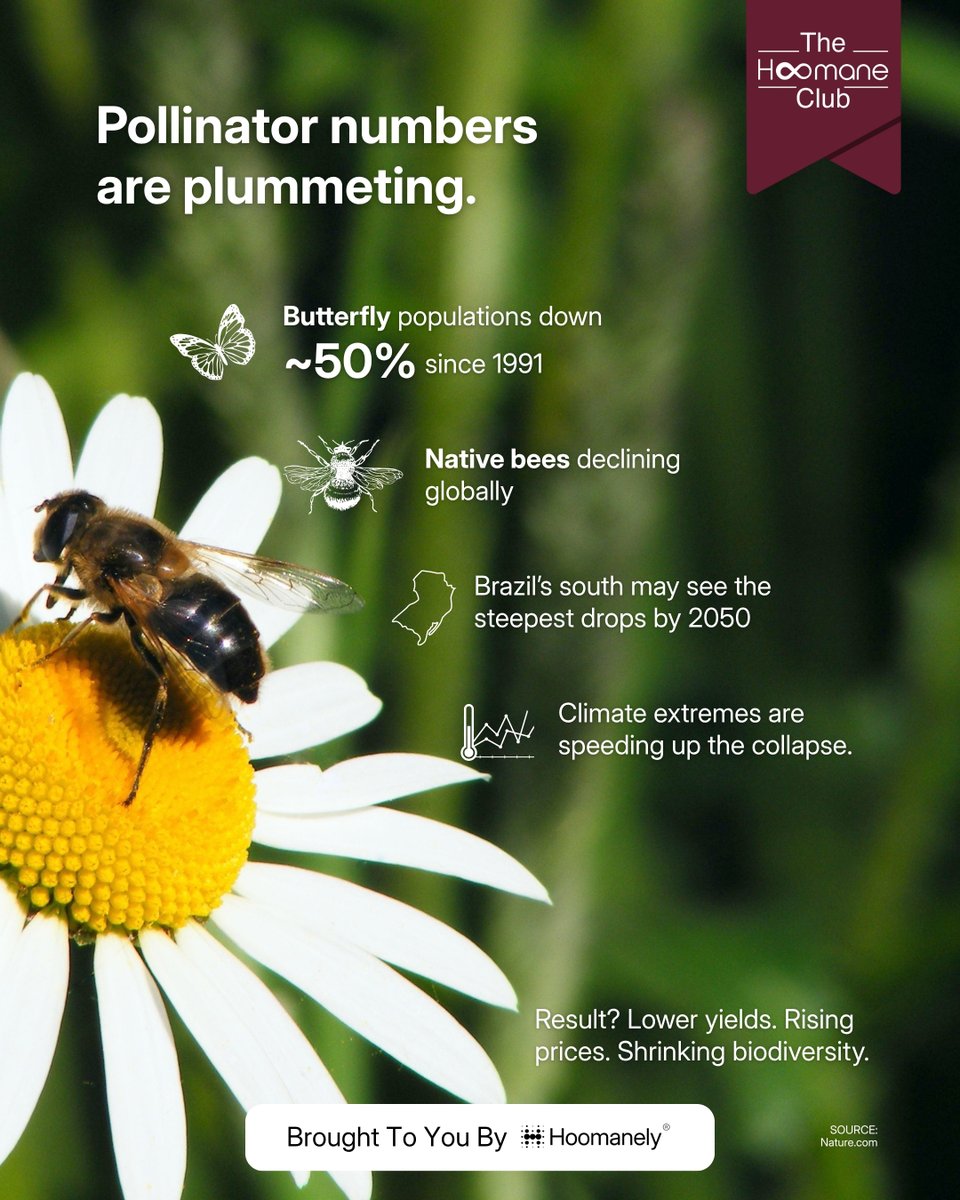
What’s quietly collapsing under #climate stress might just change what ends up on our plate.
Read the blog—link in bio.
#TheHoomaneClub #Hoomanely #THCWrites #PollinatorCrisis #ClimateDisruption #FoodSecurity #SustainableFarming


1
2
8
28 May 2025
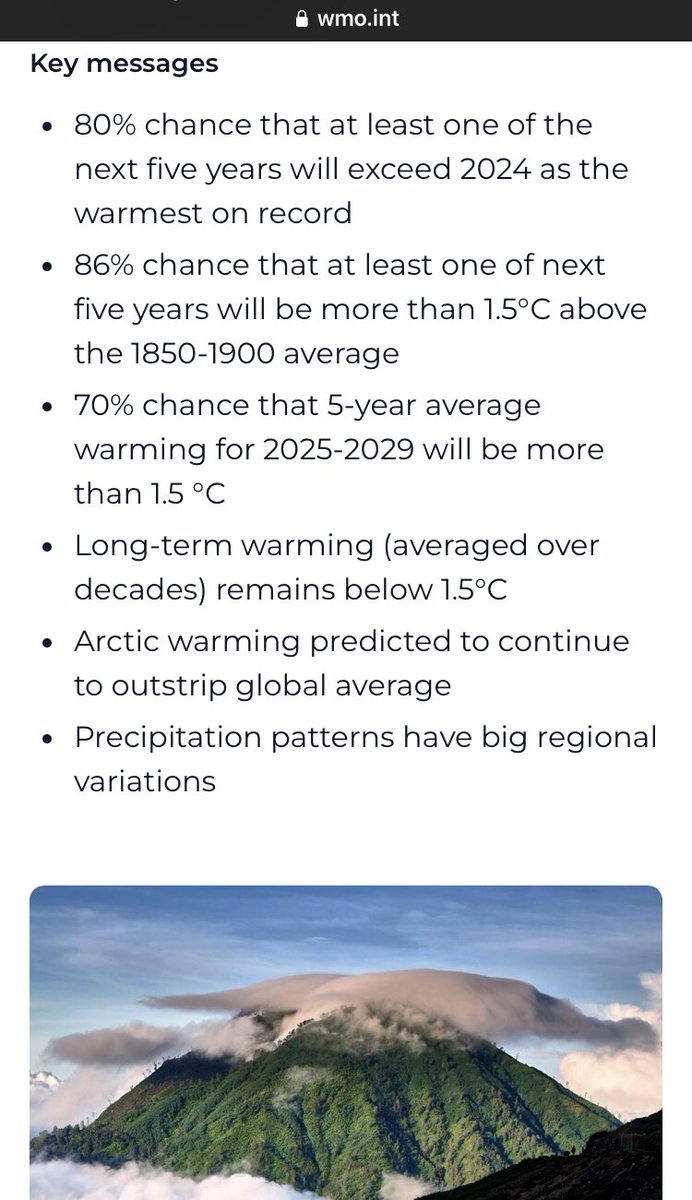
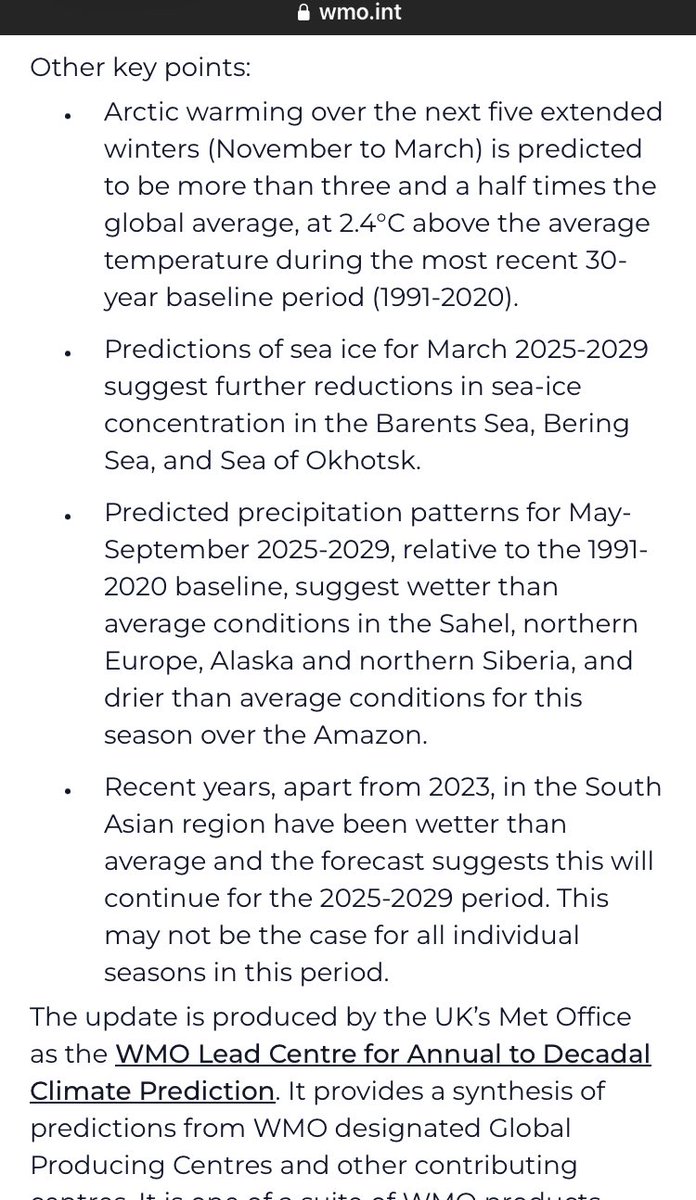
Update by @WMO:
‘70% chance that 5-year average warming […] will be more than 1.5C’
Tipping element risks of amplifying feedbacks inevitably consequently elevated.
If we don’t get serious about turning down the heat—solar radiation modification methods like Space-Based SRM, Marine Cloud Brightening, Albedo Enhancement, Stratospheric Aerosol Injection—soon, it won’t be long till we’re cooked.
#SRMNow
#SpaceBasedSRM
#ClimateDisruption
#SixthMegaExtinction
28 May 2025

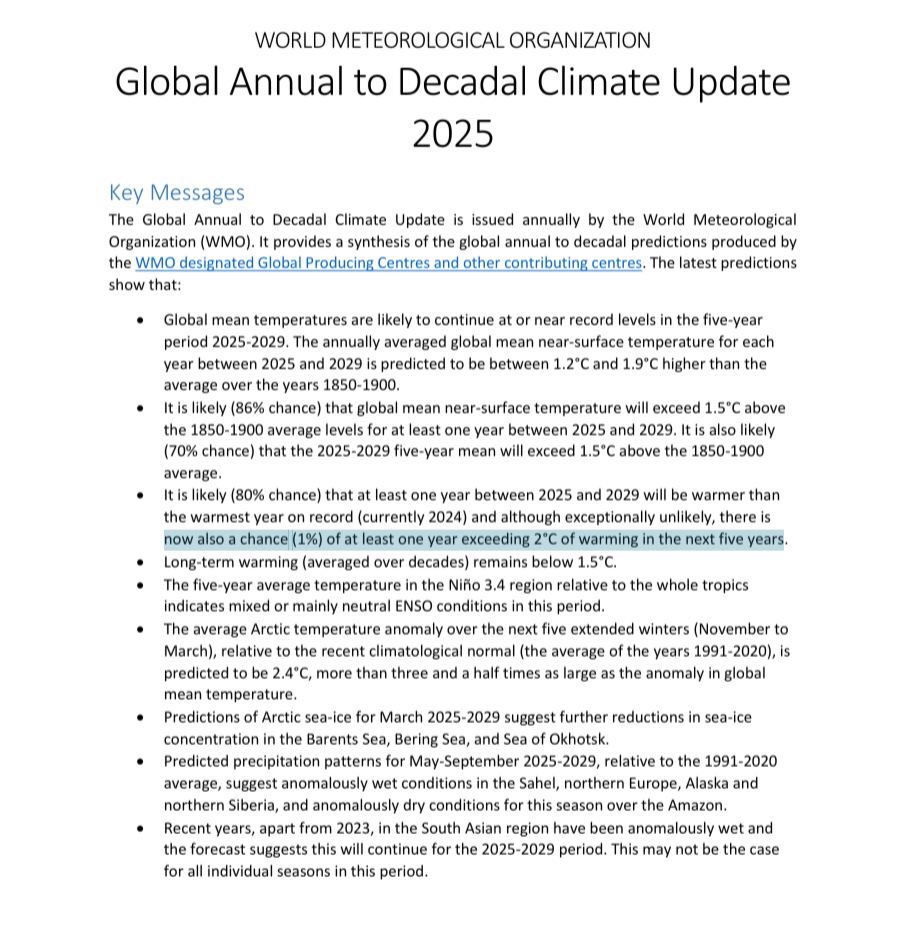
The WMO Global Annual to Decadal Climate Update (2025–2029) projects that global temperatures are expected to continue at or near record levels in the next five years.
Check out the full update: bit.ly/43ySTEm
4
5
295
20 May 2025
#ClathrateGun #MethaneRelease
‼️⚠️‼️
We don’t know enough, but what we do know tells us there’s no time to waste.
#SRMnow #SpaceBasedSRM #ClimateDisruption #AmplifyingFeedbacks
#AvoidClimateRunaway
youtu.be/uS0V31i_BhY?si=vTlo…
3
3
135
25 Apr 2025
#ToxicAlgaeBloom driven by #ClimateDisruption killing #MarineMammals at record levels off the coast of #SouthernCalifornia
(Runoff from #PalisadesFire is only the icing on the cake—it’s also occurring far away from the Palisades.)
See report video.
1/

Increasing whale, dolphin deaths linked to toxic algae in Southern California ktla.com/news/local-news/inc…
1
1
2
128

29 Mar 2025
CG Breaking : रायगढ़ - मुंगेली में 41 डिग्री के पार पहुंचा पारा || Weather Update ||
#ChhattisgarhNews #chhattisgarhheatwave #raigarh #mungeli #temperature #heatalert #summer #weatherupdate #cgweather #breakingnews #extremeweather #stayhydrated #heatstroke #indianweather #climatedisruption #hotweather #publichealth #weatherwarning #cgnews #heatrecords #survivesummers #BreakingNews #AsianNewsBharat
2
36

22 Jan 2025
🔵 Around 70% of the global freshwater is stored in glaciers and ice sheets, however these ice formations are rapidly retreating due to #ClimateDisruption.
@UNESCO and the @WMO officially launch the International Year of Glaciers' Preservation, marking a crucial milestone in global efforts to protect the vital ice that provides freshwater to over 2 billion people.
Full press release: unes.co/mfa8c4

3
24
46
5,439