

Really like how straightforward y'all made the submission process.
The trading math example in the video is perfect for showing exactly what to do. If you spot LLM mistakes often, Codatta is worth checking out.
5


The signal around Codatta Io improves when automation stays connected to real user intent, and that helps the idea reach the right people faster.
1
31


22h
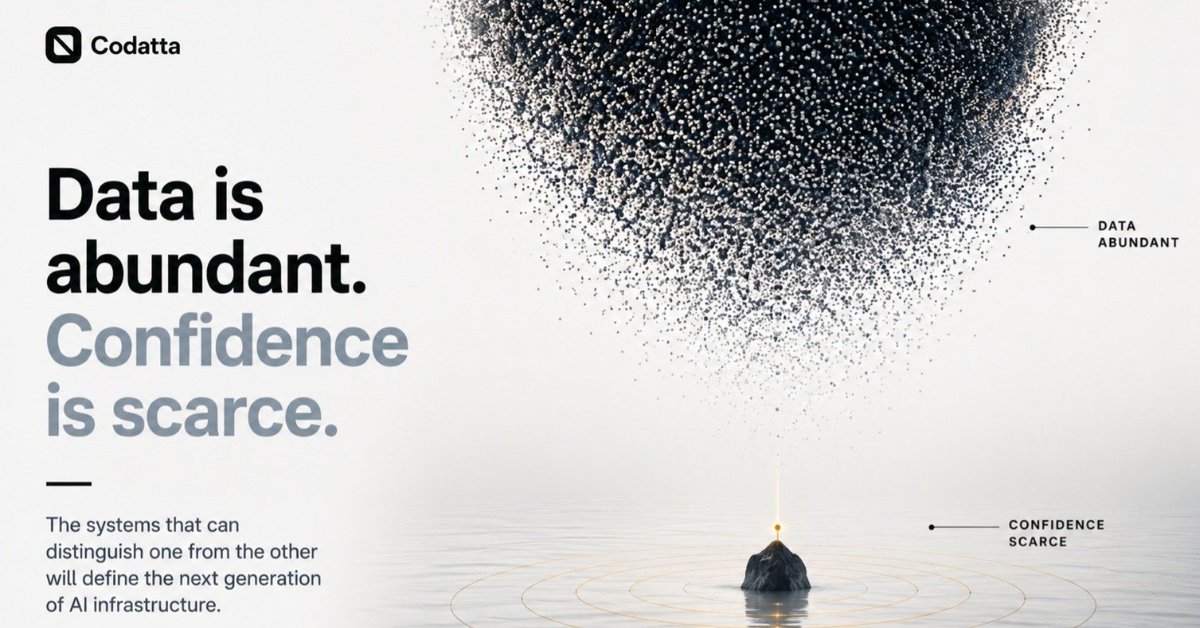
Data is abundant | Confidence is scarce.
The systems that can distinguish one from the other will define the next generation of AI infrastructure.
Information has never been easier to access. Every transaction, interaction, annotation, and digital footprint adds to an expanding pool of data. Yet abundance does not guarantee reliability.
Data can be incomplete, outdated, biased, duplicated, or inaccurate. Without mechanisms to assess quality, scale creates the illusion of certainty.
The real challenge is no longer collecting information. It is determining what deserves trust.
Confidence shifts the conversation from "Do we have enough data?" to "Can we rely on it?" Can its origins be traced? Has it been validated? Can its reliability improve over time?
As AI becomes embedded in critical systems, trust must become part of the foundation. The future belongs to infrastructures that continuously evaluate information, strengthen reliability, and make confidence measurable and transparent.
At @codatta_io, this philosophy guides the creation of knowledge systems for the AI era.
Through decentralized participation, structured validation, and confidence frameworks, Codatta transforms fragmented information into traceable, verifiable knowledge assets designed to support intelligent systems at scale.
Because data alone is abundant.
The ability to determine what deserves trust is rare.
And the systems that master that distinction will shape the future of AI.
57
52
147

Jun 13
Codatta focuses on the context behind annotations rather than just the final label, incorporating contributor reputation, validation history, participant agreement, and quality checks to build confidence in the data instead of treating each annotation as an isolated submission
1
21

Jun 13
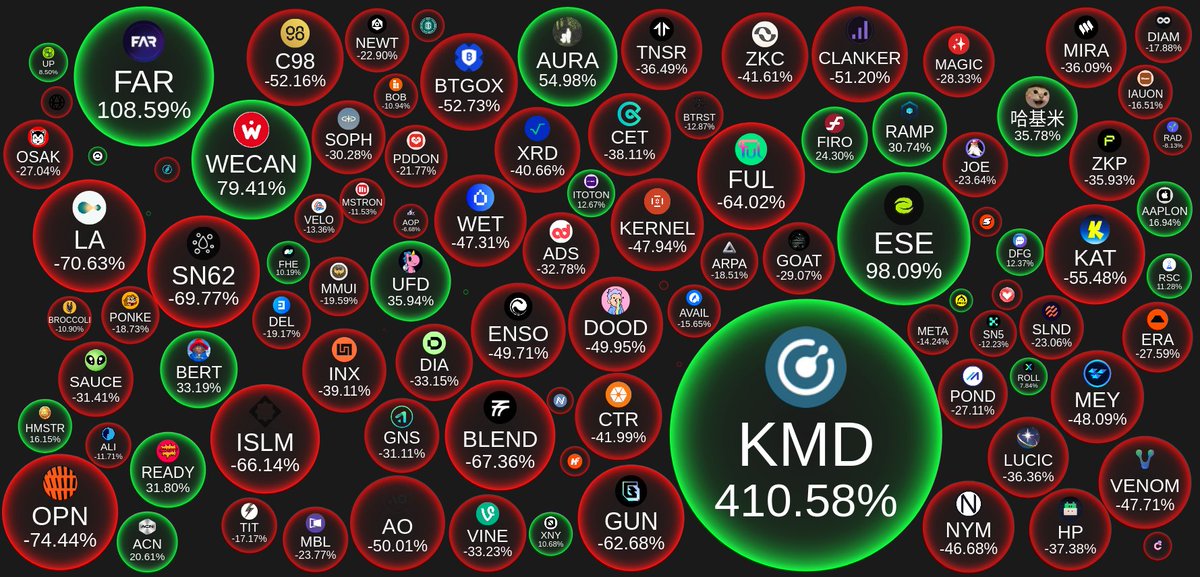
90D Market Movers (Ranks 801-900)
$KMD (Komodo) 410.58%
$FAR (FAR Labs) 108.59%
$ESE (Eesee) 98.09%
$WECAN (Wecan Group) 79.41%
$AURA (Aura) 54.98%
$UFD (Unicorn Fart Dust) 35.94%
$哈基米 (哈基米) 35.78%
$BERT (Bertram The Pomeranian) 33.19%
$READY (Ready Cards) 31.80%
$RAMP (RAMP) 30.74%
$FIRO (Firo) 24.30%
$ACN (AITECH Cloud Network) 20.61%
$AAPLon (Apple Tokenized Stock (Ondo)) 16.94%
$HMSTR (Hamster Kombat) 16.15%
$ITOTon (iShares Core S&P Total US Stock Market Tokenized ETF (Ondo)) 12.67%
$DFG (Defigram) 12.37%
$RSC (ResearchCoin) 11.28%
$XNY (Codatta) 10.68%
$FHE (Mind Network) 10.19%
$UP (Superform) 8.50%
$ROLL (RollX) 7.84%
$DODO (DODO) 3.07%
$EDEN (OpenEden) 1.99%
$AGGon (iShares Core US Aggregate Bond Tokenized ETF (Ondo)) 0.13%
$USDM (USDM) 0.11%
126


Jun 12
Codatta shows that AI data is layered messy and constantly evolving not linear
7

Jun 12
Exactly real AI data isn't neat; that's why tools like Codatta matter.
6
Jun 12
As artificial intelligence becomes increasingly integrated into how we work, research, and make decisions, the quality of the knowledge supporting these systems takes on greater importance.
AI systems learn from patterns embedded within the information they receive.
When that information is fragmented, outdated, inconsistent, or difficult to verify, the reliability of the resulting outputs becomes harder to establish.
Capability without confidence creates uncertainty.
This is why knowledge infrastructure matters.
Knowledge infrastructure represents the systems, processes, and mechanisms that transform raw information into assets people can rely on.
It answers questions that become increasingly important as intelligent systems scale:
• Where did this information originate?
• How was it validated?
• Can its quality be assessed?
• Has it been continuously reviewed?
• Why should others trust it?
Without answers to these questions, information remains difficult to evaluate, regardless of how abundant it may be.
Trust does not emerge automatically from scale.
Larger datasets do not guarantee better outcomes.
More contributors do not inherently improve quality.
Confidence must be built deliberately through transparency, accountability, validation, and ongoing assessment.
The organizations shaping the next generation of AI will understand this distinction.
They will recognize that information gains value when its reliability can be demonstrated, not assumed.
At @codatta_io, this principle guides the approach to building for the AI era.
By combining decentralized participation with structured validation and confidence mechanisms, Codatta is helping transform fragmented information into knowledge assets that are traceable, verifiable, and continuously evaluated.
The objective extends beyond creating another repository of data.
It is about establishing the foundations that enable intelligent systems to operate with greater confidence and trust.
The future of AI will not be determined solely by the sophistication of its models.
It will also be shaped by the quality of the knowledge infrastructure supporting them.
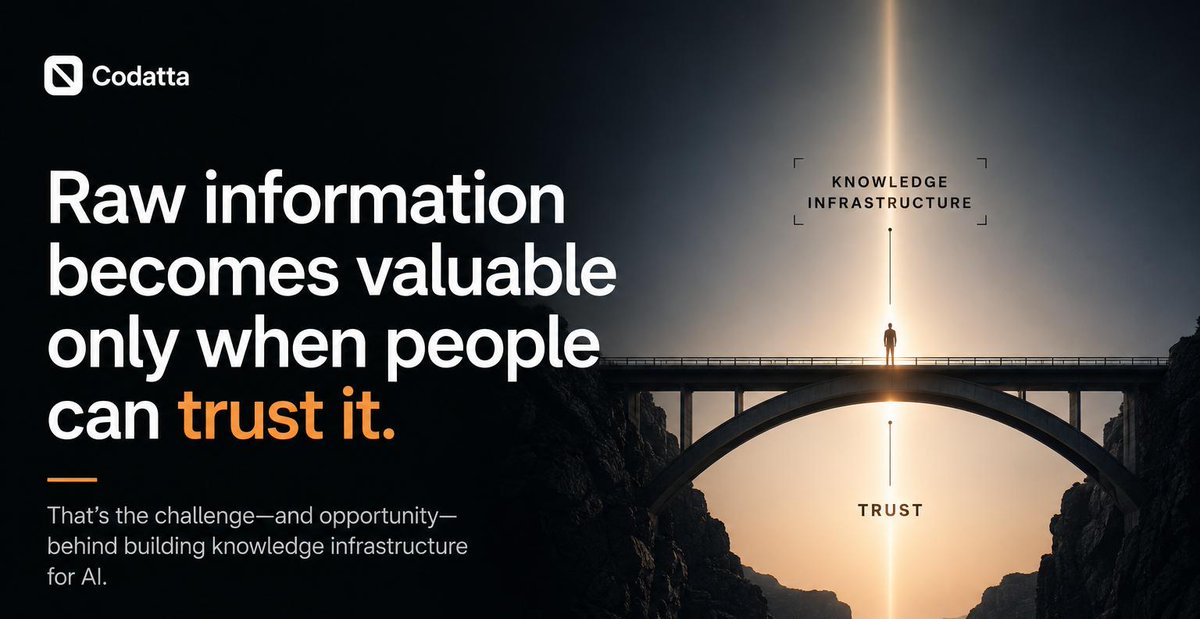
Because raw information, on its own, has limited value.
Its true potential is realized when people can trust it.
1
55
52
197

Jun 12
Codatta is focused on something important: keeping data traceable.
1
4


Jun 12
两真一假——AI数据版。
其中一条是假的。是哪一条?
1. 一张错误标注的图片可能悄悄拖垮整个模型。
2. 大多数公开的AI数据集会标注谁做了标注。
3. Codatta 验证者在贡献生效前会重新检查。
猜猜看👇
8