

May 20
2/ What breaks Indic ASR in production: codemix. Rs. 4,500. 98XXXXXXXX. Brand names. Addresses.
Models weren't trained on any of it. Whisper (@OpenAI ) hears a Telugu phone number and returns garbled digits. @DeepgramAI fares better but still misses most of it.
1
30

May 12
As the industry figures out these new tools we're going to see the emergence of a key new skillset:
Architecting your codebase for agents.
There's an enormous gap between what coding agents are capable of in theory and what they can achieve in practice.
Most of this gap is down to the environment that the agent is operating in. How quickly they can get feedback on their work. How they know whether they're on the right track. Which guardrails are in place. Whether they can run code in isolation.
Unless you've intentionally designed your codebase around these constraints then you're leaving some of the biggest productivity gains on the table. Spoiler alert: Almost no one has.
In an agent-first codebase the guardrails keep it on track. If it makes mistakes your tooling gives it feedback so that it can correct course. You can spin up many agents working in parallel and view their work in an isolated environment before merging it. Your agents write thorough tests because the agent that writes the code and the agent that writes the test are kept separate. When agents fail on a task you put measures in place to prevent them from making the same mistake twice.
Do all that and you end up with a system that lets teams ship much higher quality software, faster and cheaper than ever before.
In a legacy codebase it's a different story. Either you have to carefully review every line of code, or your codebase is going to deteriorate incredibly quickly. If you don't catch the agents' mistakes in time, that code becomes part of their context - they will reliably copy the same mistakes again and again until you've created a monster. An unreviewable mess that no human can recover, and the agents can't help you either. You're stuck.
"I'll just review the code" you say, and sure, but agents produce more code than a 10x engineer, faster than a human can realistically understand it. If humans have to review every line then they become the bottleneck. You become a slave to the agent.
You're reading code, telling the agents where they messed up, and waiting for them to fix it. That is a miserable existence. It's slow, frustrating, and it's hard to feel like the agents are actually empowering you.
And in this case "legacy" doesn't just mean old software. Most new codebases fall under this category too. If you did not intentionally design for AI-powered development then it is simply impossible to unlock the potential. Your project will go fast at first and then, quality and velocity will fall off a cliff - sometimes gradually, sometimes immediately.
"Better models drop every few months, doesn't that change the equation?" - No. This problem is fundamental to LLMs and software engineering in general. Either your codebase is set up for fast iteration and feedback or it isn't. Better models will not save you.
It is really difficult to take an existing codebase and make it agent ready. It's not impossible, but it requires a lot of work and coordination. It needs a systematic approach.
At codemix we've figured out what works. If you'd like to learn more my DMs are open.
99


They also codemix tho but with French. But yea they’re very much grounded in their Yorubaness
1
21

Apr 13
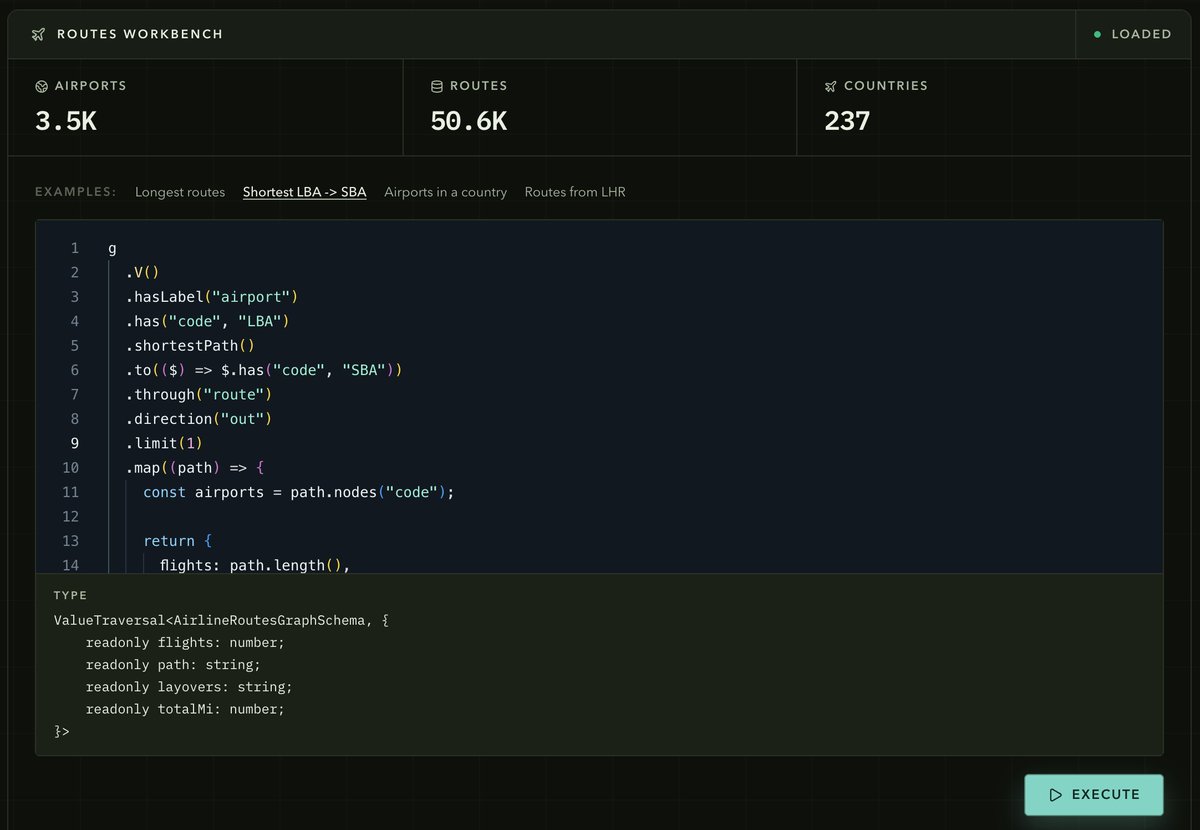
We’re gradually open sourcing key parts of the codemix stack, first up is codemix/graph - a fully type-safe, realtime, offline-first, reactive graph database that lives in a CRDT (Y.js), written in TypeScript.
1
2
2
247

Apr 12
Then we switch to "Eno".
We codemix and switch, ki gbogbo e daru mo X loju.
Apr 12

X is now automatically translating other languages into English.
Means we cannot have our Yoruba Day on this app again @Letter_to_Jack.
56
Apr 8
codemix changes that. it doesn't start by writing code, it figures out what you actually want, it surfaces questions that you didn't consider yet, it puts the human in the driving seat and guides them towards success
1
73
Apr 8
Ripping off the band-aid. After a lot of hard work we're launching the beta of codemix today. codemix helps you build very ambitious software. not demos, real products that you can launch and sell
Apr 8

It’s (beta) launch day! codemix is a living spec for your product that’s always up to date. One shared source of truth for humans and coding agents about what your product is, and how it should work. Plan mode is over. Stale specs are dead. codemix is alive.
1
197
Apr 8
we’ve been using codemix to build codemix for several months now, we think it’s transformative. we’re so excited to see what you build. check it out at codemix.com
24
Apr 8
if you’ve already got a product, and you want to stop wasting time and tokens on coding agents that go off-track and build slop, codemix will help you ship better features, faster than ever before.
1
30
Apr 8
if you’re building something completely new, codemix will help you turn your idea into a real product faster and better than any app builder or raw coding agent.
1
17
Apr 8
sometimes that drift is intentional - in those cases codemix updates the spec to match the new reality as soon as your PR is merged. the spec is always up to date.
1
13
Apr 8
when the code is written, codemix reviews the PR to make sure that what got built matches the spec. drift gets identified and flagged.
1
13
Apr 8
when you’re ready to build, connect coding agents via MCP or use the codemix CLI. codemix produces detailed implementation tasks from your changes, ready to be fed to your agents or passed directly to tools like Linear.
1
30
Apr 8
codemix thinks like an expert product manager and a seasoned software architect. it helps you discover edge cases, gaps and unanswered questions. it keeps the human in control over what gets built.
1
25
Apr 8
codemix makes this understanding searchable and authoritative. to edit your product, you edit the spec via chat, collaborative diagramming and text editing. it’s like a high-level IDE for your product, not your code.
1
37
Apr 8
codemix builds a high-level understanding of what your product really is, your use cases, your user journeys, your business model. It understands the meaning behind your code. from today we’re in open beta at codemix.com, it’s free to start.
1
38
Apr 8
It’s (beta) launch day! codemix is a living spec for your product that’s always up to date. One shared source of truth for humans and coding agents about what your product is, and how it should work. Plan mode is over. Stale specs are dead. codemix is alive.
2
1
2
403

Apr 1
‘CodeMix Ft. Bee-Boy, Mostheart, Tee-Stix, Treezy Lee, With Production From Nutzo Tha Great’ is on #SoundCloud on.soundcloud.com/OtPWCi064L…
1
21