
1h
There'a rarely a clean and perfect "solution" in war. German U-boats in WW2 presented a huge tactical and asymmetrical problem, and the "solution" was a complex array: sea escorts, underwater tech, close air support, caravan style clustering of ships, codebreaking and HUNTING.
1
1
32

Agents and assets, spies and spycraft, black ops and covert ops, codebreaking and cryptanalysis, deception and disinformation, reconnaissance and surveillance, sabotage and subversion, stealth and subterfuge, honeypot and wetwork
1
1
35

PowerUp Nintendo retweeted

Ciphermaniac's Codebreaking Run Errand = EXACTLY WHAT JAMES KOWALSKI NEEDS!
One more Telepathic Psychic Energy sets up Lillie's Clefairy ex for the game winning Full Moon Rondo!
#PokemonTCG
5
84
12,953

Let me list some more wonder weapons for both sides
Allied:
Nuclear bombs
Dam busting bomb
Proper radar usage
Advanced codebreaking with early computers
Bunker buster bombs
German:
Cruise missile v1
Ballistic missile v2
Guided Anti ship weapons fritz x and hs293
2
14
662

Radiocarbon dating puts it at 1404-1438. The script has 20-30 distinct characters and follows the statistical patterns found in all natural languages. After 600 years and every codebreaking tool ever invented, no one has read it. What IS the Voynich Manuscript?
0%
Real unknown language
0%
Elaborate hoax
0%
Invented language
0%
Something else (reply)
0 votes • 5 hours
1
12

I agree Alan Turing is a much more important historical figure than people know. But you didn’t learn about him in school because the British kept their enigma codebreaking classified for decades after WWII in case another war started and it could be used again.
3
2
19
540

The Voynich Manuscript (MS 408) is NOT an encrypted text – it is a visual database! 📜🔍
For over 100 years, experts have failed to crack the code because they are trying to read it like a language. It is actually a complex, iconic-combinatorial modular system. 🧩
Here are the key takeaways from my research:
1️⃣ No letters, just building blocks: The system uses 185 characters that work like LEGO bricks. It consists of architectural root forms (containers) and variable filler elements.
2️⃣ Tironian Shorthand: The glyphs are based on the logic of medieval shorthand (per Cappelli). Each character is a compressed operational command, not phonetics.
3️⃣ Flower-Text Chains: The text is controlled via "anchors." The main image (macro-anchor) sets the theme, and the initials (secondary-anchor) define the function—like a flow chart!
4️⃣ Forget EVA: Transcription models like the "Extensible Voynich Alphabet" (EVA) are misleading. MS 408 is a visual encyclopedia for medical and natural philosophical secret knowledge. 🌿🧪
We need to stop trying to "read" the text and start deconstructing the modular system geometrically.
What do you think? Is this the end of the Voynich mystery? Let me know in the comments! 👇
#VoynichManuscript #MS408 #HistoryMystery #CodeBreaking #Paleography #Science #IndependentResearch #LüthMethod #Voynich #AncientTech
youtu.be/-y854azmtpk?si=eAfE…
34

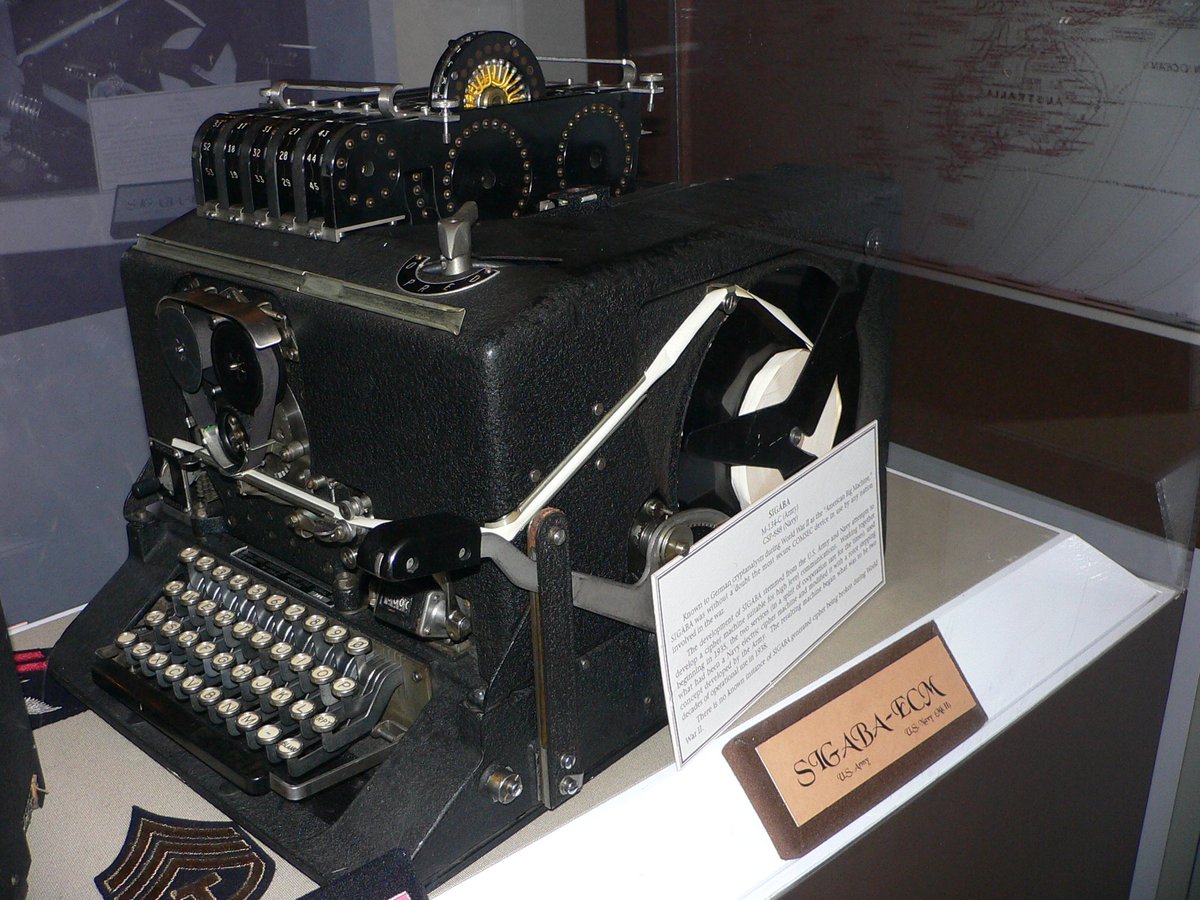
another less popular story: codebreaking. allied forces had managed both extremely secure cipher like the SIGABA and successful joint deciphering structure against even advanced axis codes (bletchey park, FRUMEL, HYPO etc).
the latter...the axis weren't able to attain that level of interoperability or success with codebreaking.
Jun 10

The US were hitting Japanese targets with remote controlled bombers during WW2. People go nuts over the German and Japanese superweapons but often they were far behind what the allies were working on but never fielded
50

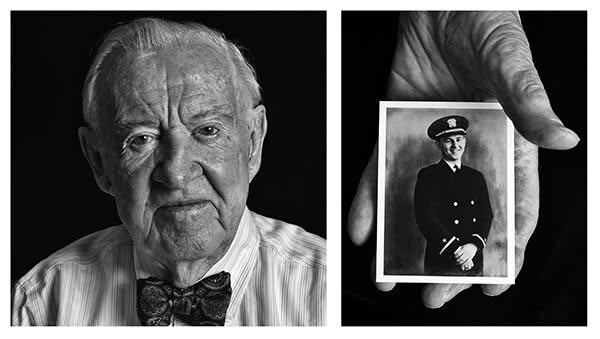
Fact: Supreme Court Justice John Paul Stevens served in the Navy during WW2 in a codebreaking unit. His service included cracking the code key in Operation Vengeance, the assassination of Yamamoto. Sure, he wasnt always right legally, but he gave a life of service to this country
15
David C Helms retweeted

Jun 11
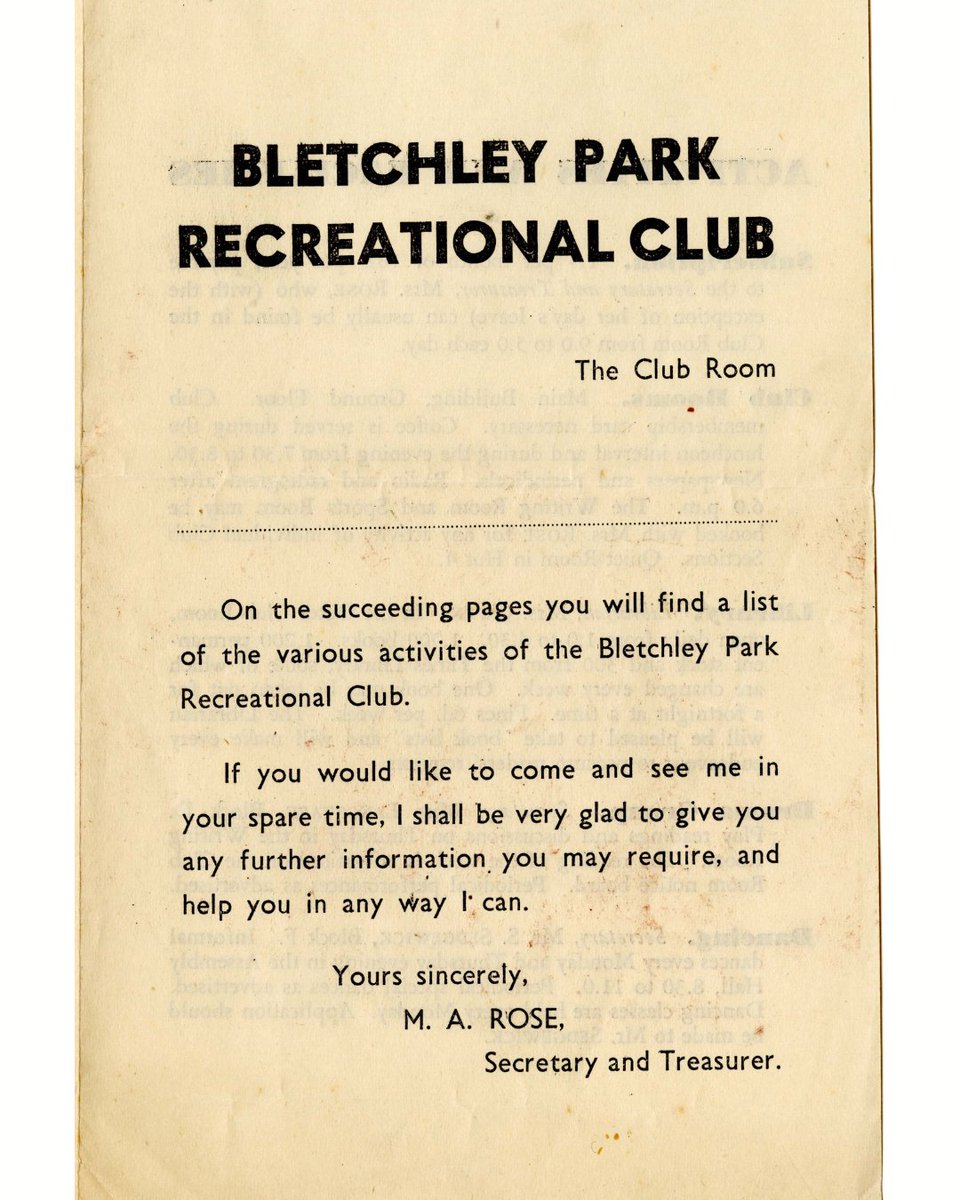
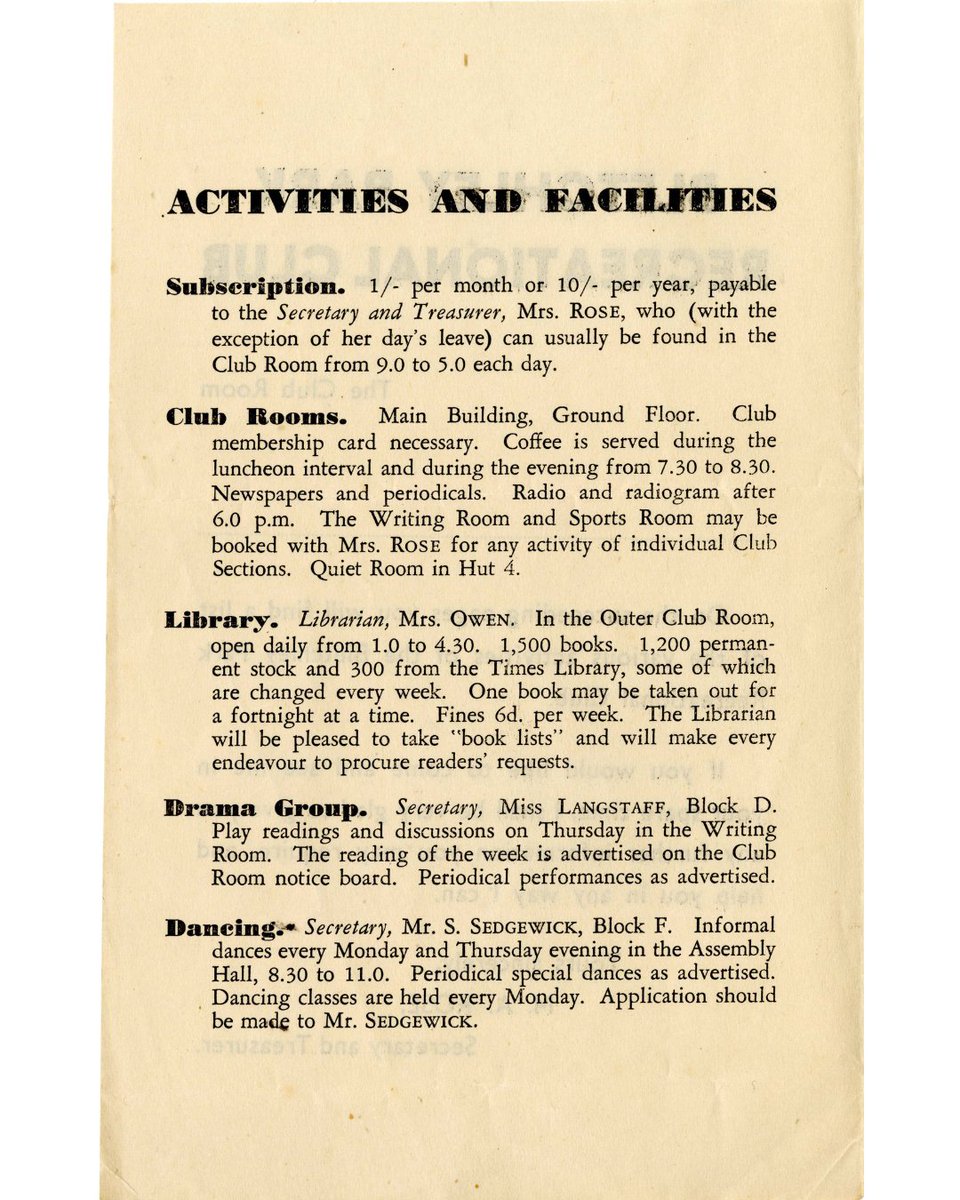
Life at Bletchley Park wasn't all codebreaking.
During the war, staff could take part in a variety of recreational activities and social groups through the Recreational Club, helping to build friendships and boost morale.
If you had been at Bletchley Park, what activity do you think you would have taken part in?
Pictured: Recreational Club pamphlet (outside & inside), D-1118_001 and D-1118_002.
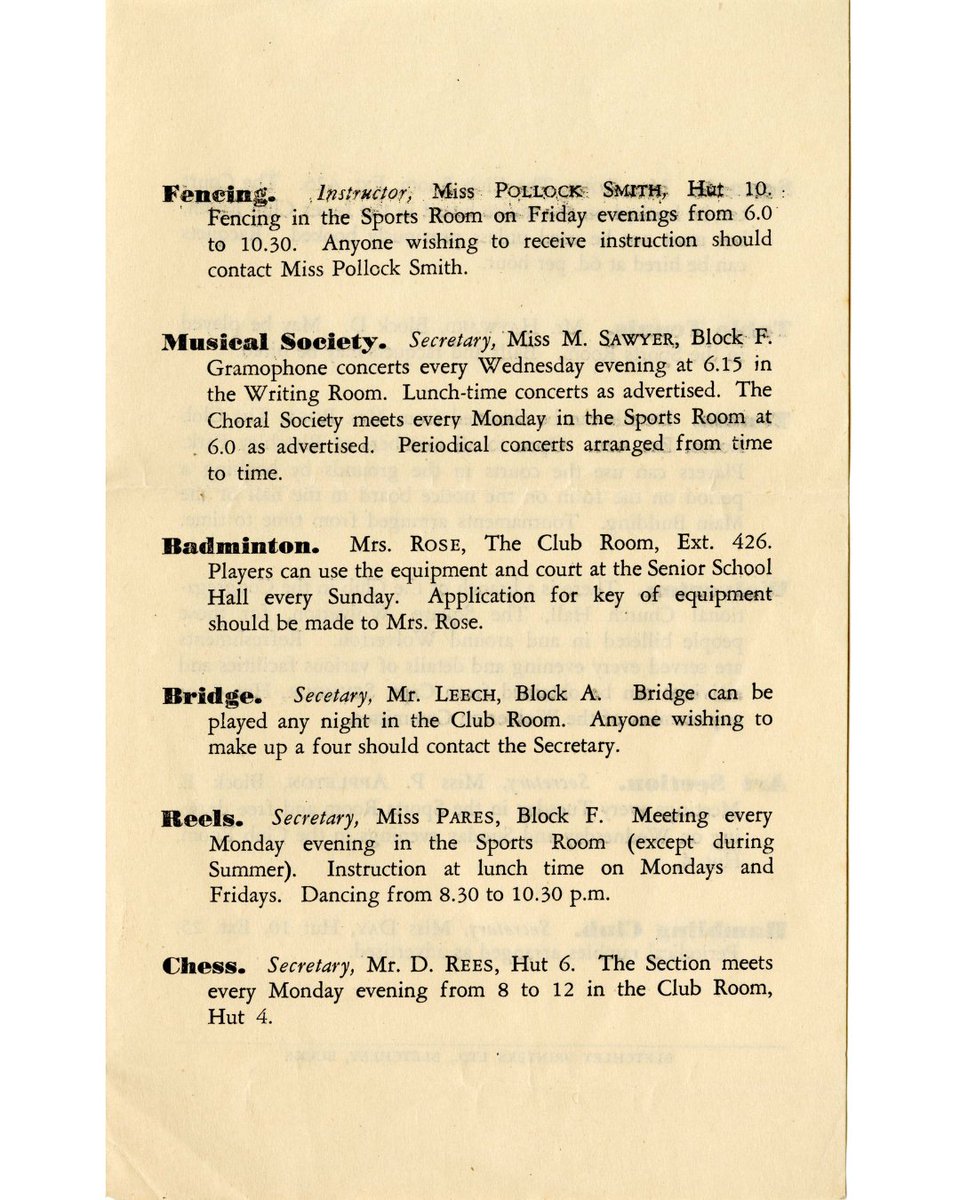
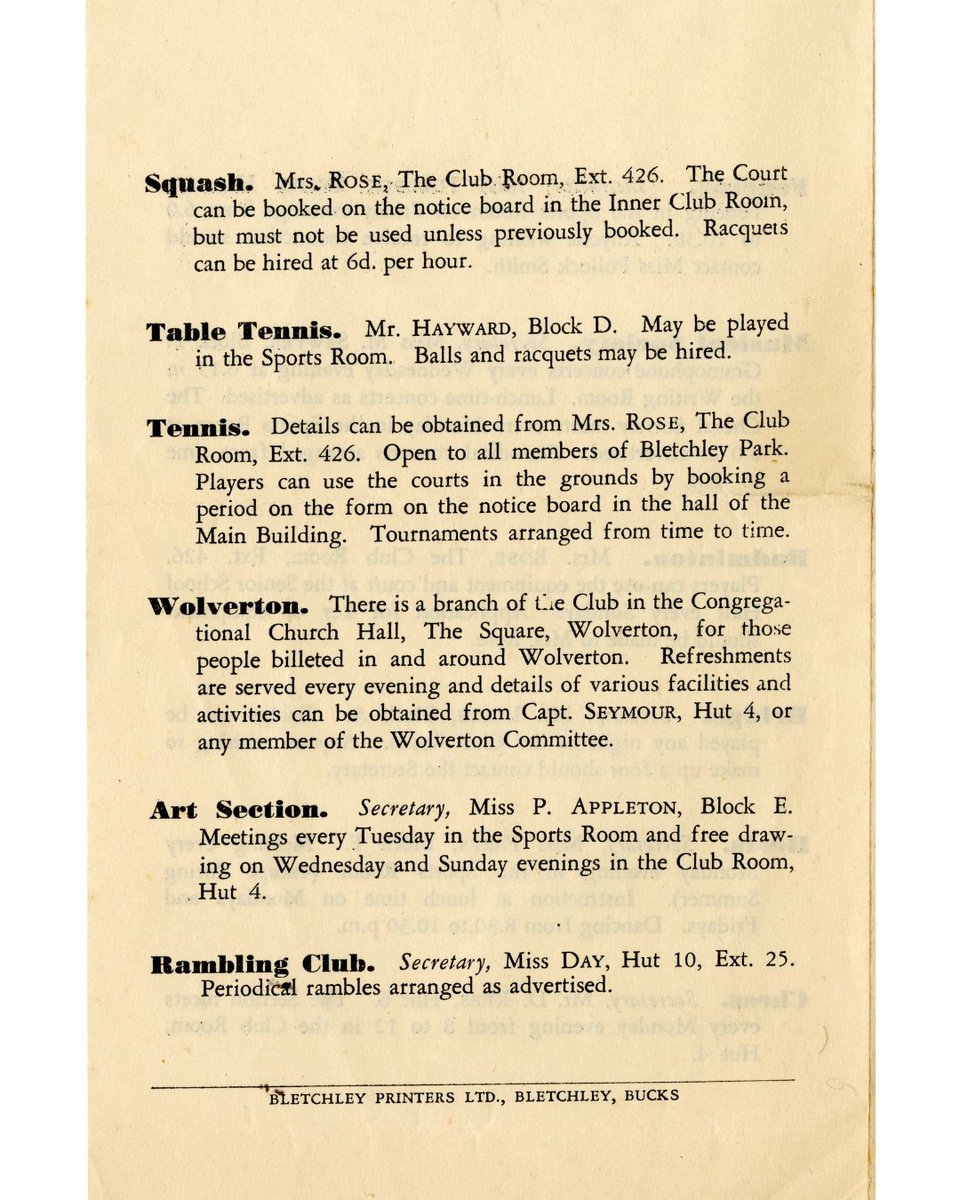
2
6
36
1,364

Jun 11
AMAN is not just “the intelligence directorate.” Unit 8200 is not just “cyber.” Together with GEOINT, HUMINT, AI/data systems, battlefield command networks, and target-generation pipelines, they form one of the most consequential intelligence-to-operations machines in the world.
The current draft is useful, but it reads like an old official explainer. The biggest issue: it is dated. The line saying the head of the Military Intelligence Directorate is Maj. Gen. Tamir Hayman reflects the 2021 context of the IDF page you quoted. As of the IDF’s own August 22, 2024 announcement, Maj. Gen. Shlomi Binder entered the role of Head of the Intelligence Directorate, replacing Maj. Gen. Aharon Haliva.
1. Biggest correction: label the text as a 2021 snapshot
The date matters.
Your excerpt says:
“29.12.21”
That makes it a historical snapshot, not a current profile. The post should not present it as current unless it updates leadership, post-October 7 reforms, and the controversies around Unit 8200’s data/AI role.
Better opening:
“This IDF profile from December 29, 2021 describes the public-facing structure of the Military Intelligence Directorate before October 7 changed the entire Israeli intelligence conversation.”
That instantly makes the post smarter.
2. Best central thesis
Use this:
“Unit 8200 is often called Israel’s NSA, but that comparison is incomplete. It is not only a signals-intelligence collector. It sits inside a military intelligence architecture that turns intercepted signals, geospatial data, human sources, AI tools, and battlefield reporting into warnings, targets, cyber operations, and real-time combat decisions.”
Reuters describes Unit 8200 as the equivalent of the U.S. NSA or Britain’s GCHQ, the largest single military unit in the IDF, and a unit whose secretive activities range from signals intelligence to data mining and technological attacks.
3. The post needs an “AMAN is a system” diagram
The current draft lists units. That is not enough. Make it a pipeline:
Collection → processing → analysis → warning → targeting → combat integration → feedback loop
Then map the units:
Unit 8200: SIGINT, cyber, communications interception, data mining, cryptology, electronic intelligence, technical collection.
Unit 9900: visual/geospatial intelligence, satellite/aircraft imagery, maps, terrain models, 3D urban mapping, battlefield visualization. The IDF’s official page lists Unit 9900 as one of the three main Military Intelligence Directorate units, and reporting on Unit 9900 describes its role in visual/geographic intelligence and mapping from satellites and aircraft.
Unit 504: HUMINT, source handling, interrogation / battlefield human intelligence, operational support near combat zones. The Jerusalem Post describes Unit 504’s role as more operational and military-focused than Mossad or Shin Bet, with a major role in ongoing operations.
Research / assessment layer: turns raw collection into judgments, warnings, scenarios, and national estimates.
Operations layer: passes intelligence into command headquarters, air operations, ground maneuver, special operations, cyber activity, and target generation.
Best line:
“AMAN is not a library of secrets. It is a factory that turns uncertainty into operational decisions.”
4. The “three units” line is useful but too simple
The IDF public page says the directorate is made up of three main units: 8200, 9900, and 504, with Unit 8200 as the biggest and main information-gathering unit.
But a serious post should add:
“This is the public-facing structure. It should not be mistaken for a complete map of every classified sub-unit, liaison cell, research division, AI program, special technology group, or operational compartment.”
That line avoids oversimplification.
5. The strongest “obscure thought input”: Unit 8200 is a national nervous system
The best metaphor is not “spy unit.”
It is:
Unit 8200 is a nervous system.
It listens.
It senses.
It stores.
It decodes.
It translates.
It correlates.
It predicts.
It alerts.
It helps generate targets.
It feeds operations.
It learns from battlefield outcomes.
That is why the unit matters far beyond cybersecurity.
Best line:
“8200 is not merely a cyber unit. It is part of Israel’s sensorium — the layer through which the state hears, maps, classifies, and acts on its environment.”
6. Add the post-October 7 rupture
No modern post about AMAN or Unit 8200 should ignore October 7.
The IDF’s own 2025 investigations, reported by Times of Israel, found major Military Intelligence Directorate failures before the Hamas attack, including flawed assumptions, insufficient skepticism, surveillance limitations, data-management gaps, and an overemphasis on technology at the expense of basic intelligence functions.
That is the crucial modern context.
Better line:
“Before October 7, Unit 8200 symbolized Israeli technical dominance. After October 7, it also became a case study in the limits of data, AI, and surveillance when institutional assumptions are wrong.”
7. The deepest lesson: data superiority can create blindness
This is the most important “genius-level” insight.
The post should not just say Unit 8200 is powerful. It should say:
“The danger of a powerful intelligence machine is that it can mistake collection volume for understanding.”
The IDF investigations reportedly found that large data access helped create a false sense that Hamas was transparent, while officials failed to focus enough on gaps in their own assumptions.
Best line:
“The October 7 failure was not simply a failure to collect. It was a failure to believe what collection was already showing.”
That is much more sophisticated than “Unit 8200 missed it.”
8. Add the “conceptzia” angle
Israel has an old intelligence trauma from the 1973 Yom Kippur War: the danger of a fixed concept or conceptzia — a dominant assumption that filters out contradictory evidence.
Apply that to 2023:
“The more advanced the collection system becomes, the more dangerous the wrong master assumption becomes. A weak intelligence service misses signals. A strong intelligence service can drown in signals while still protecting the wrong theory.”
That is the key.
9. The “startup nation” section is missing
Unit 8200 is not only a military unit; it is a talent pipeline into Israel’s cyber and tech economy. Reuters notes that Unit 8200 personnel are selected from young people, including highly competitive feeder programs, and many go on to careers in Israel’s high-tech and cybersecurity sector.
But do not make this a simple success story.
Better:
“Unit 8200 is one of the most unusual military-to-private-sector pipelines in the world: teenagers enter a military intelligence environment, solve real cyber/data problems under pressure, then leave with networks, credibility, and operational instincts that feed Israel’s startup ecosystem.”
The obscure point:
“This makes Unit 8200 not only an intelligence organ but an economic engine.”
10. But add the shadow side of the startup pipeline
The same pipeline raises hard questions:
What happens when military surveillance skills become private surveillance products?
How do alumni networks influence cybersecurity markets?
How do intelligence methods migrate into commercial products?
How do private cloud and AI firms become extensions of military data systems?
How do democratic societies audit technologies built by people trained in classified environments?
Best line:
“The 8200-to-startup pipeline is innovation. It is also technology transfer from the battlefield into the marketplace.”
11. Add the Microsoft/Azure controversy
A current post should include this because it is one of the clearest recent examples of Unit 8200’s modern scale.
In September 2025, Microsoft said it found evidence supporting elements of Guardian reporting that an IDF unit used Azure storage and AI services in connection with broad or mass surveillance of civilians in Gaza and the West Bank, and Microsoft disabled specified Israeli Ministry of Defense subscriptions and services. AP reported that Microsoft reduced access to cloud and AI services after reviews found its products were used to support mass surveillance of Palestinians, and AP specifically connected Azure subscriptions to Unit 8200 reporting.
This is a major missing element.
Suggested line:
“The modern 8200 story is no longer just antennas and codebreaking. It is cloud infrastructure, AI services, civilian telecom data, corporate terms of service, and human-rights governance.”
12. Add the ethical controversy layer
In 2014, 43 veterans of Unit 8200 signed a public refusal letter saying they would no longer serve in operations involving Palestinians, alleging widespread surveillance of innocent Palestinians and misuse of personal information. The Guardian reported that the signatories alleged “all-encompassing” intelligence collection on Palestinians, including information used for political persecution, blackmail, or recruitment of collaborators.
This belongs in any serious profile.
Not as an anti-Israel slogan.
As an institutional fact:
“Unit 8200 has produced extraordinary technical capability, but also public dissent from former insiders about the ethics of mass surveillance under occupation.”
13. The best “balanced framing” sentence
Use this:
“To Israel’s defenders, Unit 8200 is a life-saving intelligence machine that helps prevent attacks, rescue hostages, and preserve a small state under constant threat. To its critics, it is also a mass-surveillance engine embedded in a military occupation and increasingly connected to automated targeting and civilian data collection. Both frames must be addressed.”
That is a strong, serious paragraph.
14. The post should not romanticize “all zones”
The IDF public page says Unit 8200 operates “in all zones” and in wartime joins combat field headquarters to enable faster information flow.
The better interpretation:
“This means 8200 is not only strategic. It is tactical. Its intelligence can move directly into brigade, division, air-force, special-operations, and targeting workflows.”
Best line:
“The gap between interception and action has collapsed.”
That is the modern warfare point.
15. The “kill chain” concept should be included carefully
Use a non-operational, high-level description:
Find → fix → classify → decide → strike / detain / monitor → assess
Unit 8200 can contribute to the “find/fix/classify” layers. Unit 9900 can add location and visual context. Unit 504 can add human-source or interrogation context. Commanders and political authorities make operational decisions, at least formally.
Best line:
“The modern intelligence question is not only what is collected. It is how quickly collection becomes action.”
16. The missing “raw data vs intelligence” distinction
The current draft says information is collected, processed, and evaluated. Good, but too generic.
Add:
Raw data: intercepts, images, metadata, coordinates, chatter, device signatures.
Information: cleaned, translated, tagged, searchable data.
Intelligence: contextualized judgment.
Warning: a decision-relevant alert.
Targeting support: operationally usable intelligence.
Assessment: confidence-rated interpretation.
Best line:
“Collection is not intelligence. Intelligence is data after judgment.”
October 7 showed why that matters.
17. The missing “AI and data-mining” dimension
Reuters noted that Unit 8200’s secretive activities include data mining, and that one commanding officer had said the unit used AI technology to help select Hamas targets.
A modern version should include:
AI-assisted translation,
pattern detection,
entity resolution,
social-network mapping,
voice/text analytics,
target nomination,
large-scale storage,
cloud computing,
image recognition,
geospatial fusion,
and automated alerting.
Best line:
“8200’s modern power is not just listening. It is turning listening into searchable, model-ready data.”
18. The “cloud intelligence” layer is the new frontier
This is a high-value angle.
The old intelligence model:
state-owned servers,
classified networks,
military facilities,
national hardware.
The new model:
commercial cloud,
AI services,
vendor contracts,
cross-border data centers,
corporate compliance,
terms of service,
employee protest,
human-rights review,
and jurisdictional risk.
Best line:
“The cloud has become a new intelligence battlefield — not because the cloud is secret, but because military secrecy now depends on civilian infrastructure.”
19. The most important obscure thought: intelligence is now a supply chain
Unit 8200 should be framed as part of an intelligence supply chain:
chips,
servers,
cloud providers,
undersea cables,
telecom switches,
cyber exploits,
language models,
translation systems,
satellite imagery,
commercial datasets,
contractors,
alumni networks,
and battlefield command systems.
Best line:
“Modern intelligence is not an agency. It is a supply chain.”
That is the deep insight.
20. Add “signals are political”
Another missing layer:
A SIGINT unit does not merely collect neutral facts. What it chooses to collect, translate, preserve, flag, escalate, ignore, or interpret becomes political.
Best line:
“Surveillance does not just reveal reality. It prioritizes reality.”
That is especially important in occupation, counterterrorism, and urban warfare.
21. Add “the warning paradox”
Unit 8200 and AMAN exist to warn. But warning is only successful if decision-makers believe it and act.
The October 7 investigations reportedly found that the Intelligence Directorate had information about Hamas invasion concepts but treated them as aspirational or unrealistic.
Best line:
“An intelligence service can collect the warning and still fail if the institution refuses to imagine the warning is real.”
22. Add “red team / dissent” as the genius solution
The post should not only describe the unit. It should say what modern intelligence systems need.
Genius-level solution: mandatory adversarial analysis cells inside AMAN.
They should be empowered to ask:
What if our core assumption is wrong?
What if the enemy is deliberately appearing weak?
What if tactical drills are operational rehearsals?
What if silence is preparation?
What if our surveillance coverage is not as complete as we believe?
What evidence would prove our current assessment false?
Best line:
“Every intelligence machine needs an internal heretic office.”
23. Add “data humility” as a doctrine
The IDF handover ceremony for Shlomi Binder included language about learning from failure, asking hard questions, and not assuming intelligence knows everything.
Turn that into a doctrine:
Data humility:
assume gaps exist,
map unknowns,
reward dissent,
separate collection confidence from interpretation confidence,
force scenario diversity,
treat enemy deception as normal,
audit failed predictions,
and avoid “dashboard certainty.”
Best line:
“The most dangerous intelligence product is a clean dashboard built on dirty assumptions.”
24. Add “collection can become moral injury”
The 2014 Unit 8200 refuseniks matter because intelligence work can create moral injury. People may not pull triggers, but they may enable targeting, detentions, blackmail, or life-altering actions.
Best line:
“In modern war, the person behind a screen may be far from the blast but close to the decision.”
That is a powerful human layer.
25. Add “Mossad vs Shin Bet vs AMAN” clarity
Readers often confuse Israeli intelligence bodies.
Simple public-facing distinction:
AMAN / Military Intelligence Directorate: military intelligence, battlefield intelligence, strategic warning, technical collection, support to IDF operations.
Mossad: foreign intelligence and covert operations outside Israel.
Shin Bet / ISA: internal security and counterterrorism, especially inside Israel and Palestinian territories.
Unit 8200: within AMAN, heavily associated with SIGINT/cyber/data.
Unit 9900: within AMAN, visual/geospatial intelligence.
Unit 504: within AMAN, military HUMINT / operational human intelligence.
Best line:
“Mossad is the myth. Shin Bet is the internal security reality. AMAN is the military brain. Unit 8200 is one of its most powerful sensors.”
26. Add “why 8200 is unusually young”
Unit 8200 reportedly recruits young people from competitive programs, and Reuters says its personnel are selected from late teens and early twenties, with many later moving into high-tech/cybersecurity.
That produces a unique culture:
young,
high-IQ,
fast-learning,
low hierarchy,
high responsibility,
rapid experimentation,
elite social networks,
startup-like teams,
and high technical risk tolerance.
Best line:
“Unit 8200 weaponizes youth before the private sector monetizes it.”
27. Add “why this produces both brilliance and fragility”
Youth elite selection startup culture produces:
speed,
innovation,
technical audacity,
ownership,
and creative problem-solving.
But it can also produce:
overconfidence,
groupthink,
institutional mythology,
underweighting old-school HUMINT,
faith in data,
and disdain for low-tech enemy methods.
Best line:
“The same culture that creates technical brilliance can also create strategic arrogance.”
28. The “IDF official wording” is too sanitized
The official IDF text says soldiers work day and night on improving collection, processing, and evaluation, while developing systems and tools for intelligence tracking.
Rewrite it:
“In plain English: AMAN’s job is to detect threats early, understand adversaries, support military planning, feed decision-makers, and move intelligence fast enough that it changes events before events change Israel.”
That is clearer.
29. Suggested “key facts” section
Replace the current block with:
Key facts:
The Military Intelligence Directorate, often referred to as AMAN, is the IDF’s central military intelligence body.
Its public mission is to provide warning and intelligence to Israel’s government and military in routine and wartime.
The IDF’s public page describes three main units: 8200, 9900, and 504.
Unit 8200 is the largest and most famous, often compared to the NSA/GCHQ, and is associated with SIGINT, cyber, data mining, technological attacks, and close wartime integration with combat headquarters.
Unit 9900 handles geospatial and visual intelligence, including mapping, satellite/aircraft imagery, and 3D battlefield visualization.
Unit 504 handles military HUMINT and operational intelligence support, including close support to ground forces.
After October 7, AMAN and Unit 8200 faced deep scrutiny over intelligence failures, including flawed assumptions, data-management gaps, insufficient skepticism, and imbalance between technology and basic intelligence work.
30. The post should have a “before / after October 7” structure
This would make it much stronger.
Before October 7:
Unit 8200 was framed as elite, near-mythic, innovative, world-class, and central to Israel’s cyber dominance.
After October 7:
The same system became a warning about overreliance on data, AI, surveillance, and assumptions of intelligence superiority.
Best line:
“October 7 did not make Unit 8200 irrelevant. It made the question sharper: how can one of the world’s most advanced intelligence systems see so much and still miss the decisive event?”
31. Add “operational intelligence vs strategic warning”
This distinction is essential.
Unit 8200 may be excellent at:
finding devices,
intercepting communications,
mapping networks,
supporting operations,
producing targets,
and conducting cyber activity.
But strategic warning requires:
understanding intent,
challenging assumptions,
imagining surprise,
reading silence,
detecting deception,
and persuading commanders.
Best line:
“The skills that win a raid are not always the skills that prevent a surprise war.”
32. Add “the enemy gets a vote”
A good intelligence system can be defeated by adversary adaptation:
compartmentalization,
couriers,
handheld radios,
face-to-face meetings,
low-tech comms,
deception drills,
false normalcy,
and operational silence.
Best line:
“The enemy studies the sensor as much as the sensor studies the enemy.”
33. Add “low-tech beats high-tech” angle
An elite cyber/SIGINT apparatus can be vulnerable when the adversary shifts to:
paper maps,
in-person briefings,
simple radios,
motorbikes,
commercial drones,
tunnels,
human couriers,
and rehearsals disguised as training.
Best line:
“A billion-dollar intelligence stack can still be surprised by a disciplined low-tech plan.”
34. Add “Unit 8200 is not a magic box”
The post should avoid both hype and demonization.
Do not write:
“8200 knows everything.”
Do not write:
“8200 controls everything.”
Write:
“8200 is powerful, but it is still constrained by collection gaps, legal/political priorities, enemy deception, analyst interpretation, command culture, and the willingness of leaders to act on warnings.”
Best line:
“No intelligence unit is omniscient. The myth of omniscience is itself an intelligence risk.”
35. The “post-event accountability” layer
Aharon Haliva resigned as head of Military Intelligence after taking responsibility for October 7 failures; Reuters reported he accepted responsibility and called for a national investigation. Yossi Sariel, who commanded Unit 8200, also resigned after the failure, according to multiple reports and IDF-related coverage.
Use that carefully:
“Leadership changes are not reform by themselves. The harder question is whether the organization changed its assumptions, incentives, dissent mechanisms, and data culture.”
36. Add “the intelligence failure was cultural, not only technical”
Times of Israel’s reporting on IDF investigations emphasized flawed culture, overconfidence, lack of skepticism, data-management gaps, and imbalance between technology and basic intelligence.
Best line:
“The post-October 7 lesson is brutal: intelligence failure can be cultural even when collection is technologically advanced.”
37. Add “what to watch next”
A sharp post should say what matters now:
Does AMAN rebuild HUMINT capability?
Does it strengthen open-source intelligence?
Does it change warning doctrine?
Does it create red-team cells?
Does it reduce overreliance on AI?
Does it improve data governance?
Does it diversify analytical dissent?
Does it separate target-generation success from strategic-warning success?
Does it audit the role of commercial cloud and AI vendors?
Does it create privacy and legal boundaries around mass surveillance?
Best line:
“The real reform test is not whether AMAN gets better tools. It is whether it gets better doubt.”
38. Add “civilian tech accountability”
The Microsoft controversy shows that civilian tech vendors can become part of military intelligence systems. Microsoft said it does not provide technology to facilitate mass surveillance of civilians and disabled specified services after finding evidence supporting elements of media reporting. AP reported Microsoft disabled services after reviews determined products were used to support mass surveillance of Palestinians.
The post should ask:
What due diligence should cloud providers perform?
Can companies verify military customers without accessing classified content?
What happens when national-security contracts conflict with human-rights policies?
How should cloud providers audit foreign military use?
What if a unit shifts data to another subscription?
Best line:
“The new intelligence oversight question is not only what states do. It is what corporations enable.”
39. Add “AI targeting and human decision” nuance
Be careful. Do not say AI autonomously chooses targets unless sourced.
Better:
“AI and data tools may assist target discovery, prioritization, translation, and analysis, but the key oversight question is how much human judgment remains meaningful when machine systems generate lists at massive speed.”
Best line:
“A human-in-the-loop is not enough if the loop is moving too fast for human judgment.”
40. The best “missing elements” list
Your post should add:
current head of AMAN,
post-October 7 resignations and reforms,
Unit 8200’s comparison to NSA/GCHQ,
Unit 9900’s GEOINT function,
Unit 504’s HUMINT function,
the distinction between collection and assessment,
the role of AI/data mining,
the Microsoft/Azure controversy,
the 2014 refusenik letter,
the intelligence failure lessons,
the startup pipeline,
the human-rights controversy,
and the central question of oversight.

IDF Intelligence Directorate & Unit 8200 🇮🇱🕴️👀
"The Military Intelligence Directorate is one of the oldest Directorates in the IDF. It was established as soon as the state of Israel was founded. The head of the Military Intelligence Directorate is Major General Tamir Hayman.
29.12.21 (December 29, 2021)
The main mission of the Military Intelligence Directorate is to supply the government and IDF with intelligence warnings and alerts daily and during wartime to protect Israel from threats. In order to enable security forces to defend Israel against threats, the Intelligence Corps must utilize many resources and tightly track terrorist activities and developments in Arab countries as well as technological advancements worldwide.
Tracking the growth of terrorist organizations requires in-depth intelligence collection. Intelligence information comes from a variety of sources and is processed by Intelligence Corps soldiers to create an updated situation assessment.
The corps’ soldiers work day and night on improving their methods for better collection, processing and evaluation of intelligence information. Constantly developing new systems and tools for intelligence tracking is also crucial. The soldiers are responsible for transmitting the information and updating it in real time.
The directorate is made up of 3 main units- the 8200 Unit, the 9900 Unit and the 504 Unit. The biggest of which is the 8200 Unit, the Military Intelligence Directorate's main information gathering unit. Soldiers in the unit are in charge of developing and utilizing information gathering tools, analyzing, processing and sharing of the gathered info to relevant officials. The unit operates in all zones and in wartime, they join combat field headquarters in order to enable a faster flow of information."
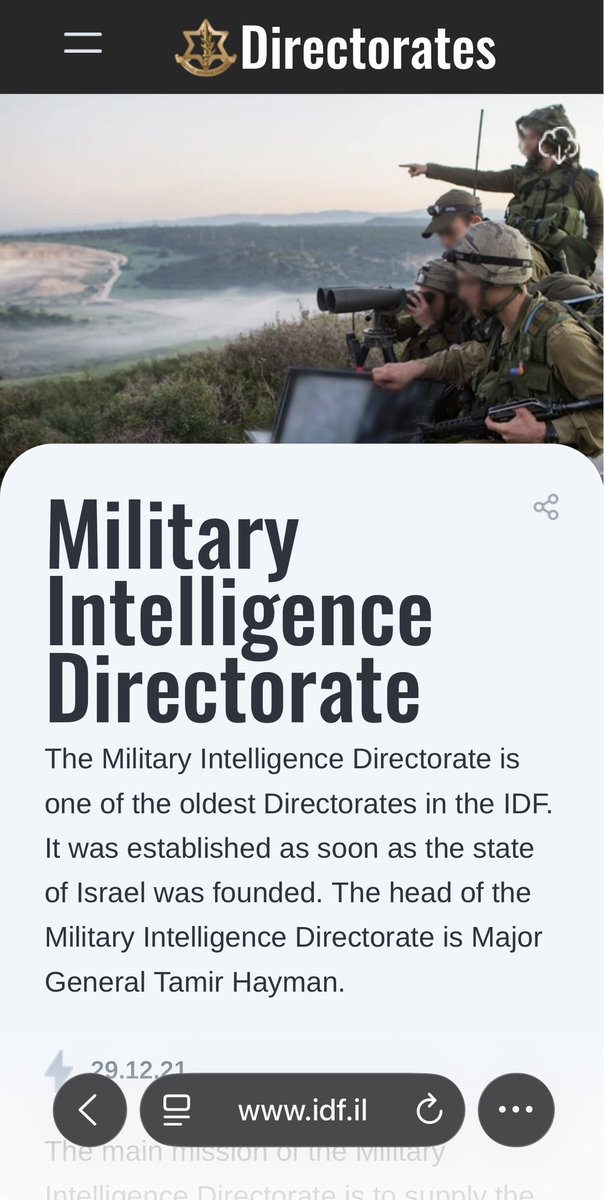

1
1
2
889

Jun 10
I just want to thank you for being a bit of clarity/reality in the middle of this ongoing absolutely ridiculous "codebreaking" bullshit. I have been rolling my eyes at this barrage of psyop garbage for 5 years, just watching total flipouts finding "signs". Exhausting 🥺🙈☠🧐
1
3
43