

Jun 3
2026 is the acquisition season in crypto:
• @RobinhoodApp → @WonderFi
• @moonpay → @dflow & @decentdao
• @0xPolygon → @Coinme & @0xsequence
• @AztecLabs → @ZKPassport
• @zama → @TokenOps_xyz
crypto M&A deal value hit $8.6B in 2025 and it seems deal activity is continuing into 2026 as well.
1
6
523


Jun 2
Bro dem send me $5k na $4k i receive 🤣🤣🤣
Na god go punish coinme
3
33
5,330

May 29
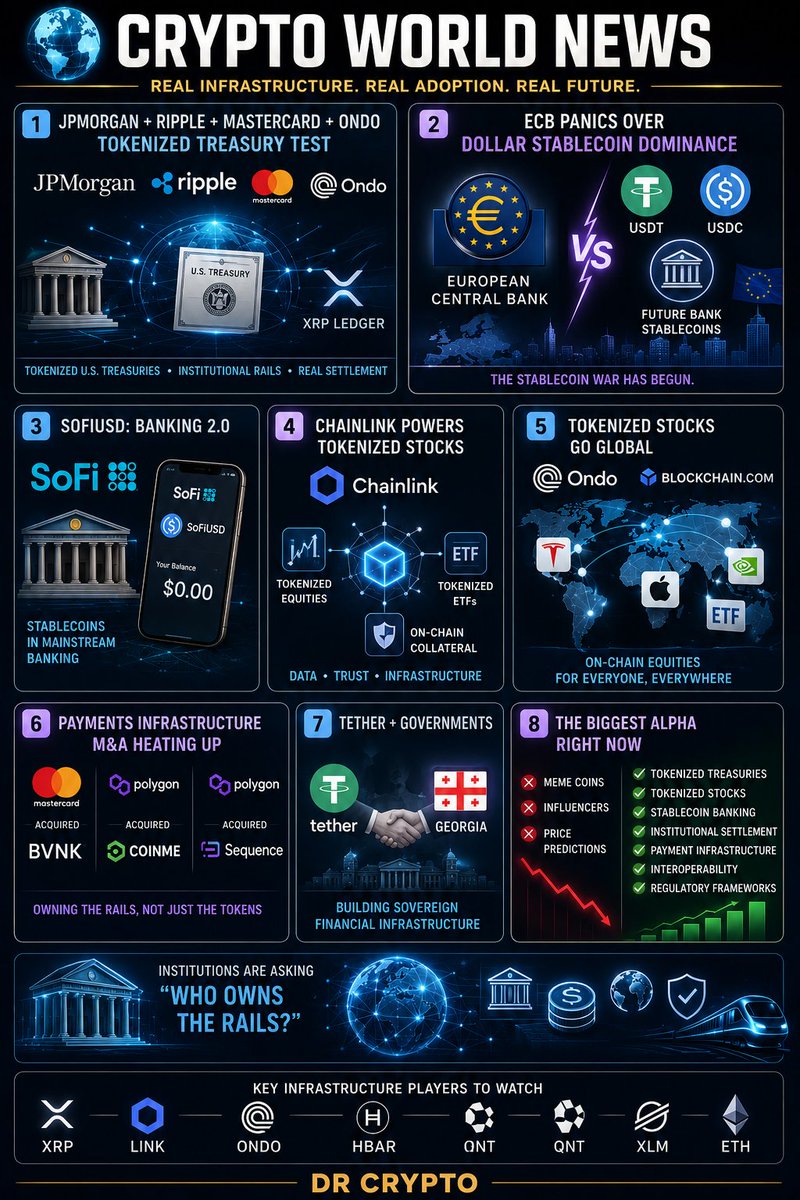
🌏Crypto World News..
This is the level people are missing right now:
🚨 JPMorgan Ripple Mastercard Ondo Quietly Completed One Of The Most Important Financial Tests Yet ..This is not a rumor.
JPMorgan’s Kinexys platform, Mastercard, Ripple, and Ondo completed a cross-border redemption of tokenized U.S. Treasuries using the XRP Ledger.
Read that again...
Not crypto trading.
Not memes.
Not DeFi speculation.
Tokenized U.S. Treasuries moving through institutional infrastructure.
This is exactly what people have been talking about for years regarding:
XRP tokenization settlement rails real-world assets
Now it is actually happening.
🏦 The ECB Is Panicking About Dollar Stablecoin Dominance
🧐One of the most overlooked stories globally:
The European Central Bank is actively pushing back against expansion of euro stablecoins because they fear financial instability and increasing dominance of dollar-backed digital assets.
Translation:The stablecoin war has begun. Not crypto vs banks. Dollar stablecoins vs sovereign monetary systems.
Europe is worried that: USDT,USDC,future bank stablecoins..could become more influential than local digital currencies. That is a geopolitical story.
💵 SoFi May Have Just Started The Stablecoin Banking Era
Everyone is underestimating this.>>SoFi made SoFiUSD available to nearly 15 million users.
This is the first glimpse of: Banking 2.0
🔗 Chainlink Quietly Became Core Infrastructure For Tokenized Stocks
Most people still think LINK is "just an oracle."
Meanwhile Ondo integrated Chainlink Data Feeds to support:
tokenized equities
tokenized ETFs
on-chain collateral markets
on Ethereum.
If tokenized stocks become mainstream:
LINK becomes critical infrastructure.
🌍 Europe Just Took A Massive Step Toward On-Chain Equities and Ondo launched tokenized U.S. stocks and ETFs for Europe.
People are focused on crypto coins.
Meanwhile financial firms are building:
tokenized Tesla
tokenized ETFs
tokenized equities.... for global markets.
The future exchange may not look like NYSE.
It may be blockchain based.
🔥 The Real M&A Story Nobody Is Talking About
Payments infrastructure has become the hottest acquisition sector in crypto.
Major examples:
Mastercard acquiring BVNK
Polygon acquiring Coinme
Polygon acquiring Sequence
all focused on stablecoin payment infrastructure.
This is not about tokens.
This is about owning financial rails.
🏛️ Tether Governments
Tether working with Georgia to launch a government-backed stablecoin initiative = biggest signs yet that crypto firms are entering sovereign financial infrastructure. A government relationship.
💡 The Biggest Alpha Right Now
Everyone is watching:
❌ meme coins
❌ influencers
❌ price predictions
Meanwhile the real money is flowing toward:
✅ tokenized Treasuries
✅ tokenized stocks
✅ stablecoin banking
✅ institutional settlement
✅ payment infrastructure
✅ interoperability
✅ regulatory frameworks
The smartest institutions are no longer asking:
"Which coin wins?" They're asking: "Who owns the rails?"
And that is where the next phase of crypto is being built.
#XRP #LINK #ONDO #HBAR #QNT #XLM #ETH #Tokenization #Stablecoins #RWA #Blockchain #Finance #Crypto
1
9
42
1,076

May 21
The acquisition numbers provide useful context.
🔹 Polygon Labs’ Coinme Sequence deals were valued at more than $250M
🔸 @Coinme brings fiat access and physical cash infrastructure
🔹 Sequence brings embedded wallets and cross-chain UX
🔸 Together with Polygon, they processed $1B offchain sales and $2T onchain transfers
1
2
8
1,613
May 21
The Open Money Stack is Polygon’s attempt to connect these pieces.
🔹 Coinme adds licensed U.S. fiat on/off-ramp infrastructure
🔸 Sequence adds wallet infrastructure and cross-chain orchestration
🔹 The aim is to reduce vendor fragmentation for payment teams
🔸 Execution depends on whether businesses adopt the stack in production
1
1
9
1,718

May 20
Polygon spent $250M building the Open Money Stack.
Here's what it actually does:-
Every company building payments on crypto hits the same wall:
One chain = limited reach
Many chains = you're now managing 5 bridges, 5 liquidity pools, 5 compliance headaches
Nobody wants to deal with that
@0xPolygon : one API, routes across any chain.
User sends money → stack figures out the route → money arrives
The user never picks a chain, never even sees one.
- Security is the part most cross-chain setups get wrong.
-Most bridges rely on a group of validators to sign off on transactions.
- That's a trust assumption. And trust assumptions get exploited.
- Agglayer uses ZK proofs instead a transaction only settles if the math balances. No committee. No multisig. No attack surface.
What's in the stack:
- Polygon Chain = settlement in ~1 second
- @Agglayer = cross-chain routing with ZK security
- @TrailsHQ = bridge swap payment in one click
- Wallet infra = enterprise-grade, via @0xsequence
- Ramps = fiat in and out via @Coinme
Use the whole thing or just the parts you need.
Already live:
→ Meta paying creators in USDC on Polygon
→ Visa settling stablecoins on Polygon
→ Modern Treasury running stablecoin payments on Polygon
→ $205M routed cross-chain
Head of Payments at polygon @JamalRaees said it straight:
"We are not going to replace Swift. We're going to adopt it and enhance it using blockchain."
Not trying to breakdown TradFi. Just plugging into it with better rails.
The whole point: move money anywhere, settle on any chain, and the person sending never thinks about any of it.
That's the product.
May 19

.@jamalRaees, Head of Payments at @0xPolygon, on $250M spent building the Open Money Stack:
"We will support as many chains & networks as we can."
"We are not going to replace the Swift network. We're going to adopt it and enhance it using blockchain."
11
9
68
2,989

May 16
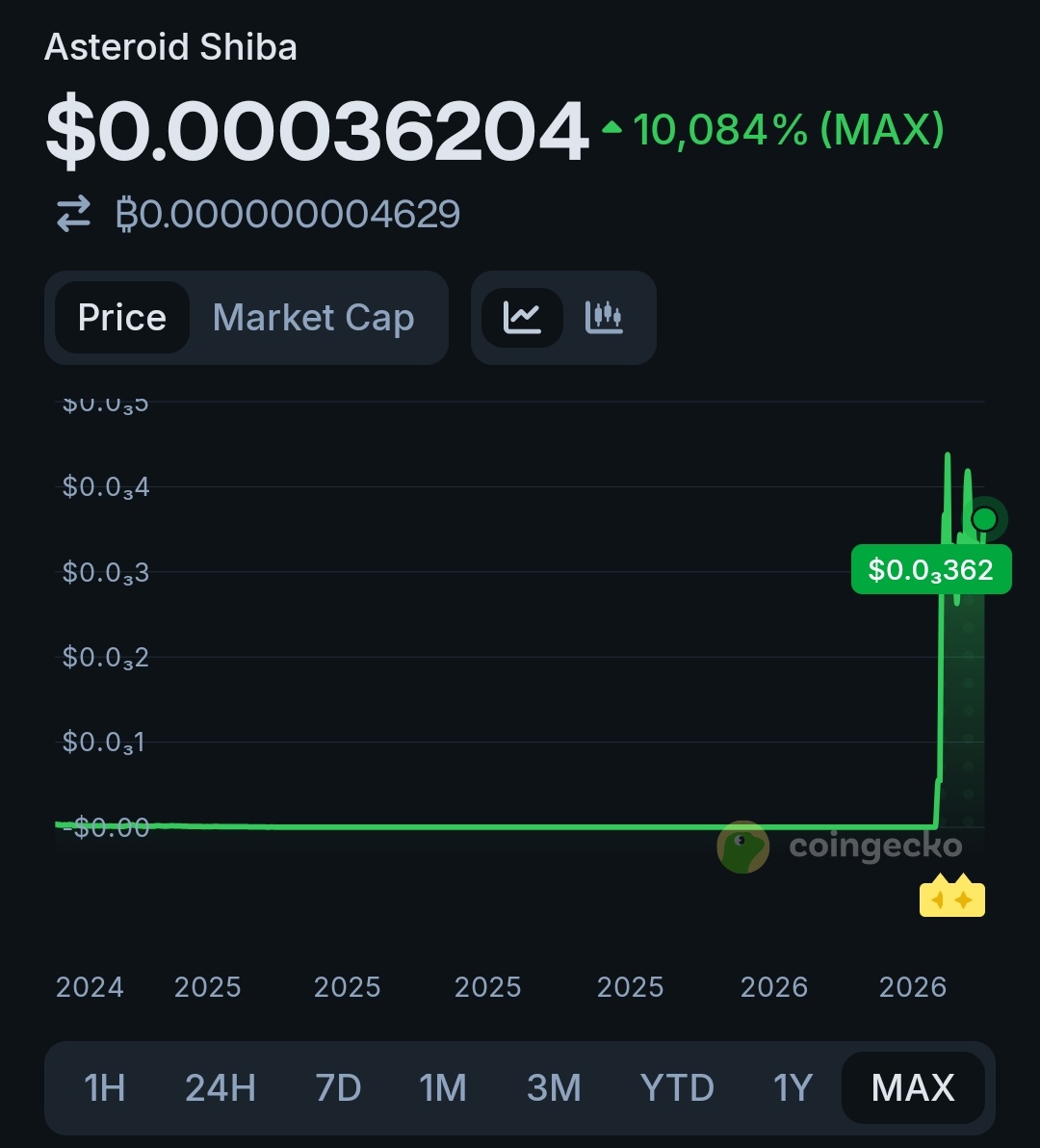
$ASTEROID surged 819,000% in 7 days. Here's the real story behind it.
Liv Perrotto — a 15-year-old cancer patient — designed a plush Shiba Inu toy called "Asteroid" before she passed away. That toy flew as the zero-gravity indicator on SpaceX's Polaris Dawn mission. [Bitcoin Foundation]
Her mother shared eight questions Liv had hoped to ask Elon Musk. He responded, answering all of them. That interaction went viral — and within minutes, traders connected the narrative to crypto markets. [Bitcoin Foundation]
One trader turned a single ETH into nearly $470,000 within hours. Another held for 580 days before exiting with close to $392,000. [Bitcoin Foundation]
The token has no utility. No whitepaper. No development team.
It has no official connection to SpaceX or Elon Musk despite the narrative fueling its rise. [Coinme]
This is what crypto in 2026 looks like.
A story about a young girl whose dream touched space — turned into a tradable asset overnight.
Both things are real. And together they define where we are. 🫡
4
3
37
1,560

💥 Crypto adoption won’t come from making users learn wallets, gas fees, and transaction hashes. It comes from making onchain finance feel as simple as the apps people already use.
That’s the gap @Coinstancy is closing with its U.S. expansion.
By integrating the Open Money Stack’s on-and-off ramps (services provided by @Coinme, being acquired by @0xPolygon Labs, subject to regulatory approval), Coinstancy now connects traditional payment rails directly to $USDC on Polygon through a licensed and regulated enterprise crypto payments platform with 50,000 U.S. cash access points.
The result: compliant, accessible stablecoin savings designed to feel more like a payment app than a complex crypto workflow. 🚀
🔽 VISIT
polygon.technology/blog/case…
#Polygon_Space1
2
2
12
422


May 15
From Tahiti to global finance 🌍
Excited to see Coinstancy featured by Polygon for our work making stablecoin savings accessible to everyday users through Coinme fast, low-cost infrastructure
May 15

Coinstancy is building on the Open Money Stack.
Using our on/off-ramps (with services via Coinme), they built a stablecoin savings product available to mainstream U.S. users.
> Cash in or out at 50K physical locations
> Near-instant deposits withdrawals
> USDC settlement at sub-cent costs

1
2
11
7,541


May 15
Coinstancy is building on the Open Money Stack.
Using our on/off-ramps (with services via Coinme), they built a stablecoin savings product available to mainstream U.S. users.
> Cash in or out at 50K physical locations
> Near-instant deposits withdrawals
> USDC settlement at sub-cent costs
23
42
253
9,988
May 14
US access matters 🇺🇸
That is why Coinstancy works with @Coinme to support access for eligible US users through regulated infrastructure.
For users, the goal is simple. Make it easier to move from cash or crypto into a savings experience built around Polygon, USDC, and smoother access.
Infrastructure is not the headline. It is what makes the product usable.
1
1
7
375
May 14
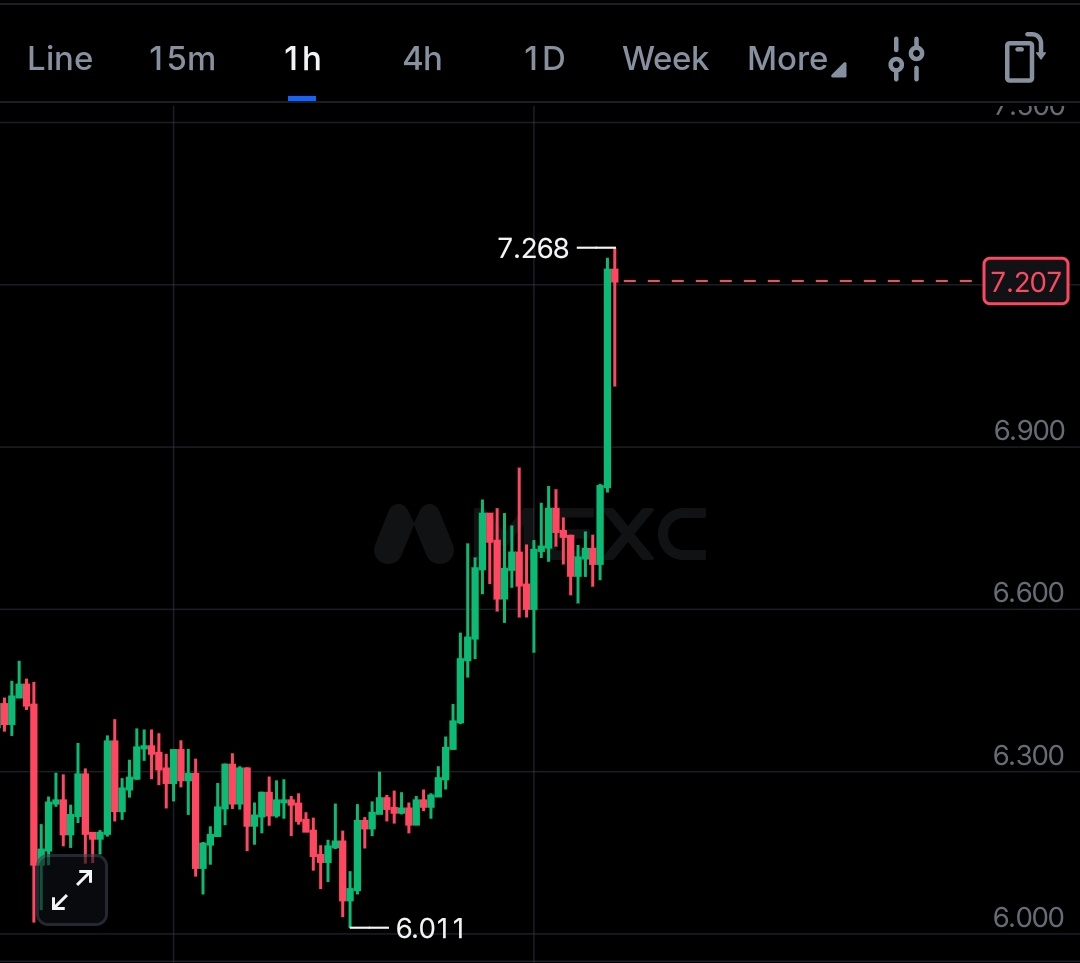
$RIVER up 9% today. Here's the full picture.
Buy volume surged with an 82% spike in 24-hour trading volume — suggesting concentrated buying interest as the token broke above its recent trading range. [Coinme]
The project itself is real:
River is a chain-abstraction stablecoin ecosystem. Its core product satUSD lets you collateralize assets on one blockchain and mint stablecoins on another — without using bridges. [EAK Digital]
But the risks are still there:
94% of token supply is controlled by just 5 wallets. Futures volume exceeds spot trading by over 80 times — meaning this is heavily leverage-driven. [DropsTab]
A major unlock released tokens worth $89M earlier in 2026, with an additional $249M worth of linear emissions scheduled — creating persistent sell pressure. [101 Blockchains]
Real technology. Real risks.
The supply concentration alone should make anyone cautious.
Trade it if you want. But know exactly what you're holding. 🫡
@River4fun
8
25
837

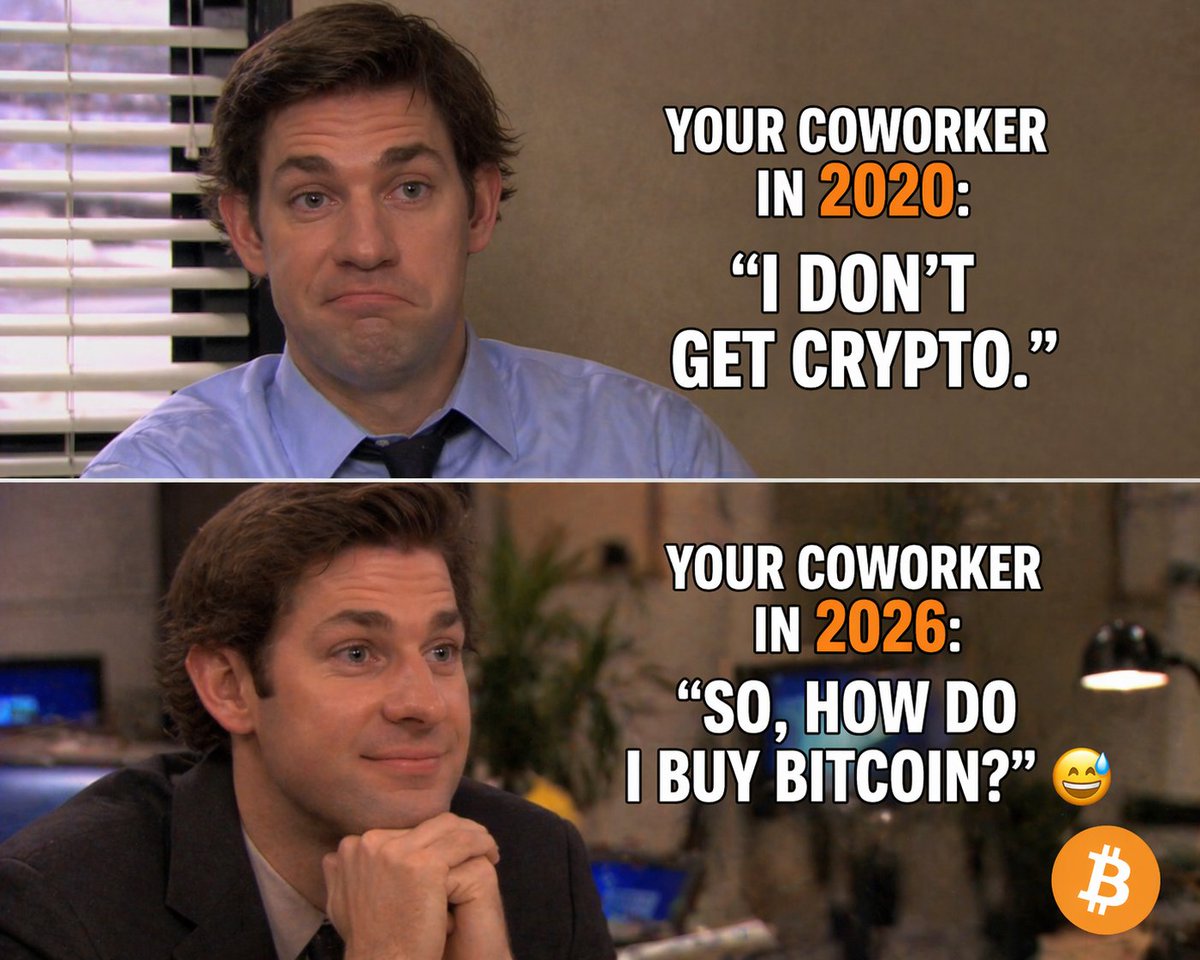
Your coworker in 2020: "I don't get crypto."
Your coworker in 2026: "So, how do I buy Bitcoin?" 😅🟠
#Bitcoin #Coinme #CryptoAdoption
3
6
129