
Jun 13
Xq sera q antes la mina y la lora lame bolas no se preocupaban tanto x "informarnos sobre las acividades mineras" facturaban calladitos ahora quieren andar colaos en donde saben q los repudian.

El relato duró poco.
No era sin permiso.
No era imposición.
Es un espacio informativo autorizado y abierto al público. Lo que molestó no fue la tolda. Fue que la gente pudiera escuchar…. otra versión.
Cuando la realidad entra por la puerta, la propaganda sale corriendo.

17


Jun 12
colaos
Jun 12

El Gobierno de Ayuso restringe el acceso al abono transporte a estudiantes y migrantes no empadronados en Madrid
Informa @JavierAlonsoH en @RadioMadrid
cadenaser.com/cmadrid/2026/0…
1
39

Jun 11
Hay dos colaos ahí que están en todos los círculos que he visto. 😂😂😂😉
4

Jun 10
A pesar de la selección y capacitación previa que hubo, pasaron colaos..
30
Leoncito Amoroso retweeted

En vez de hacer el panoli con pancartas, colaos en el Valle y encadenaos a la Cruz. Sed noticia, cohones.
2
6
158

Jun 5
IT'S JUST WRINGING THE CHICKEN'S NECK TO SCARE THE MONKEYS, STUPID ! (What strange Western blindness, from Voltaire to Jeffrey Sachs, to the weaponization of religion in both Russia and China ?)
You have to wring the chicken's neck to scare the monkeys.
Chinese proverb
When there isn't enough food, people starve. It's better to let half of them die so that the other half can eat their fill.
Mao Zedong
Blood is needed.
Yang Shangkun, Chinese President, 1989)
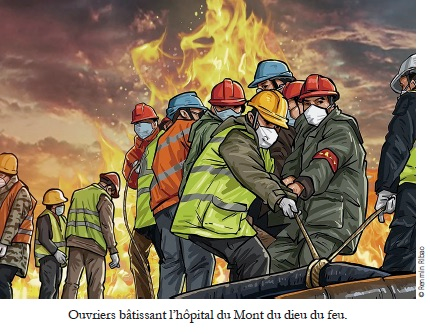
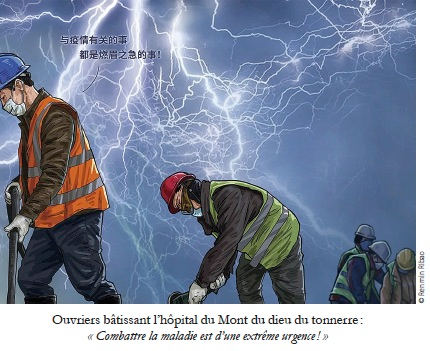
The epidemic is a demon. We will not allow the demon to remain hidden.
Xi Jinping
The Party is like God; it is everywhere, but you cannot see it.
Chinese academic
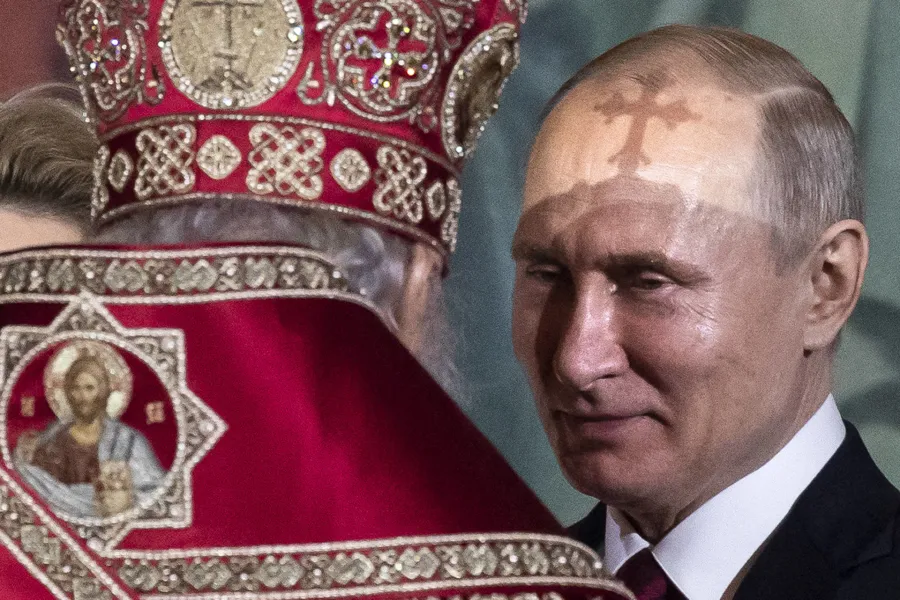
What is happening today is not solely a matter of politics. It concerns the salvation of humankind, the place we will occupy to the right or left of God the Savior, who comes into the world as Judge and Creator of creation.
Russian Patriarch Kirill (2022)
Confutzee, known among us as Confucius (…) did not play the prophet; he did not claim to be inspired; he did not teach a new religion; he did not resort to tricks; he did not flatter the emperor under whom he lived — he does not even speak of him. He is, in short, the only one among the world’s founders who did not have women following him. (…) I have read his books with attention; I have made extracts from them; I have found in them only the purest morality, without any tinge of charlatanism. He lived six hundred years before our common era. His works were commented upon by the most learned men of the nation. (…) One must not be fanatical about Chinese merit: the constitution of their empire is in truth the best in the world; the only one entirely founded on paternal power; the only one in which a provincial governor is punished when, upon leaving office, he has not received the acclamations of the people; the only one that has instituted prizes for virtue, while everywhere else the laws are limited to punishing crime; the only one that has made its laws adopted by its conquerors, while we are still subject to the customs of the Burgundians, the Franks, and the Goths who subdued us. But one must admit that the common people, governed by bonzes, are as thieving as our own; that one sells everything very dearly to foreigners there, as with us; that in the sciences the Chinese are still at the stage where we were two hundred years ago; that they have, like us, a thousand ridiculous prejudices; that they believe in talismans and judicial astrology, as we believed for a long time. (…) But all this does not prevent the Chinese, four thousand years ago, when we did not know how to read, from knowing all the essentially useful things of which we boast today. The religion of the literati, once again, is admirable. No superstitions, no absurd legends, none of those dogmas that insult reason and nature, to which bonzes give a thousand different meanings because they have none. The simplest worship has seemed to them the best for more than forty centuries. They are what we think Seth, Enoch, and Noah were; they content themselves with worshiping one God with all the sages of the earth, while in Europe we divide ourselves between Thomas and Bonaventure, between Calvin and Luther, between Jansenius and Molina.
Voltaire
China, once entirely unknown, long afterwards disfigured in our eyes, and finally better known to us than several provinces of Europe, is the most populous, the most flourishing, and the most ancient empire of the universe (…) We are also assured that this vast extent of country is not governed despotically, but by six principal tribunals that serve as a check on all the inferior tribunals. Religion there is simple, and that is incontestable proof of its antiquity. For more than four thousand years the emperors of China have been the first pontiffs of the empire; they worship a single God, they offer him the first fruits of a field that they have plowed with their own hands. (…) This religion of the emperor, of all the colaos, of all the literati, is all the more beautiful because it is not soiled by any superstition.
Voltaire
The Enlightenment thinkers questioned everything in European society; nothing in Chinese society. Their critical spirit, so sharp on one side, was dulled on the other. The rational paradise of atheist China allowed them to denounce the hell of Europe, subjugated to the "Infamous" – the clergy. Thus, they disregarded the cruelties of the emperors, the upheavals of dynastic changes, the burning of books, the torture of opponents, and the ever-renewing rebellions, always drowned in blood.
Alain Peyrefitte (1989)
The new Cold War has been created in very large part by the United States. From around 2015 onward, neoconservative officials in American foreign policy concluded that American hegemony was threatened by China’s rise. Since then, the U.S. government has put in place a growing set of tools — trade barriers, sanctions, export controls, investment screening, and new military alliances in Asia — to try to “contain” China. This approach could lead to outright war, for example over Taiwan. The United States is trying to enlist Europe in its effort to contain China. Yet Europe’s deep interest is not American hegemony, but rather a genuine multilateral order in which Europe and China both play active and responsible roles — as do the United States, of course. Europe should therefore resist the new Cold War led by the United States and instead pursue active diplomatic, economic, and financial relations with China. (…) And the view that China represents a serious security threat to the United States is alarmist. Yes, China is a large and powerful country, but not one that is intrinsically militaristic or warlike. China has not fought a single war in the last 40 years, while the United States has waged countless (and apparently endless) conflicts. (…) The United States should stop playing on fear, engage in strengthened diplomacy, remain committed to the One China policy, stop provoking confrontation over Taiwan, and end the unilateral trade, technological, and financial measures that hinder the Chinese economy. China, too, should engage with the United States and the European Union in strengthened diplomacy to resolve problems of common interest. I believe China is quite ready to do so. (…) This war [Putin’s war with Ukraine] could have been avoided if the United States had not pushed for NATO enlargement to Ukraine and Georgia, and had not participated in the overthrow of Viktor Yanukovych in 2014. France and Germany should also have pushed Ukraine to comply with the Minsk II agreements. There are already several hundred thousand dead in Ukraine because of this war. If Ukraine tries to retake Crimea, I think we will see massive escalation, even nuclear war. The idea that Ukraine will defeat Russia is a reckless gamble on the apocalypse. The United States and Ukrainians should have agreed to Ukrainian neutrality, Russia’s de facto control of Crimea, and the implementation of the Minsk II agreements. Instead, they are recklessly betting on military victory against a country that possesses 1,600 nuclear weapons. (…) In both cases [the origin of the pandemic and the sabotage of Nord Stream], the U.S. government maintains and manipulates an implausible narrative, and does so with remarkable acceptance in Europe. On Covid-19, it is clear that the United States funded very dangerous research in China based on advanced genetic manipulation of SARS-related viruses. And it is also clear that the U.S. government refused to investigate its own research programs that may have contributed to the creation of SARS-CoV-2. Instead, the U.S. government promoted the scientifically weak story of a “natural” outbreak at the Huanan market in Wuhan. On Nord Stream, Joe Biden promised on February 7 that if Russia invaded Ukraine, Nord Stream would be finished. When asked how the United States would do this, he replied: “I promise you we will be able to do it.” Even Sweden is hiding the results of its investigation into Nord Stream from Germany and Denmark, in the name of national security! I believe European leaders know that the United States and other allies did this, but they simply will not comment on or explain the truth to the public. We do not know for certain that SARS-CoV-2 came from a laboratory and that the United States blew up the pipeline, but we do know that the public has not yet been informed of the real facts regarding these two cases.
Jeffrey Sachs (2022)
The idea of a naturally peaceful China, serenely enthroned in the middle of its own backyard which it has no intention of enlarging, is a fiction. The imperial idea, of which the Communist regime has made itself the heir, carries within it a hegemonic will. Power politics requires “securing the periphery.” Yet China’s periphery includes several of today’s major economic powers: China’s “protection” of its periphery directly collides with global stability. All the more so because it is tormented by a thousand internal ills that serve as so many incitements to external adventures and nationalist mobilization. What does the People’s Republic want? To restore China as the Middle Kingdom. (…) Standing in the way of this glorious future and of vassalization by China are first and foremost the United States. China does not want military confrontation; it wants to intimidate and deter, and to force the United States to back down. (…) Beijing has recovered Hong Kong — the money, finance, communications. The next step is Taiwan — advanced technology, industry, enormous monetary reserves. If Beijing manages to impose reunification on its own terms, if a “Taiwan coup” succeeds today, tomorrow, or the day after, all hopes would be permitted in Beijing. From then on, the rich and influential Chinese diaspora would have to put all its eggs in the same basket; there would no longer be any alternative center of power. The PRC would then control the technological and financial resources of the entire “Greater China.” It would have reached the critical mass necessary for its grand Asian design. Militarily outclassed and lacking regional counterweights, the ASEAN countries, Singapore, and the others would then come under Chinese control — without friction, but bag and baggage. Beijing could then attack its “first island chain of defense”: Japan, Korea, the Philippines, Indonesia. Korea? (…) What the now-discomfited advocates of “Asian values” failed to understand, in their pro domo pleas for a despotism they claimed was enlightened, is that the counter-powers and counterweights — an active opposition, a free and critical press, powers separated according to Montesquieu’s rules, the existence of a civil society and multitudes of associative organizations — are part of the necessary diffusion of power that can thus integrate different skills, interests, and opinions. But to do this, one must renounce the Chinese model, that is, internal monolithism. Renunciation of external monolithism is no less indispensable: China must participate in a world whose rules it did not create, and these rules are foreign to the very spirit of its multi-millennial politics. China still lives under the curse of its own political culture. The shape that the century will take will depend largely on whether China maintains or abandons this culture and its curse.
Laurent Murawiec (2000)
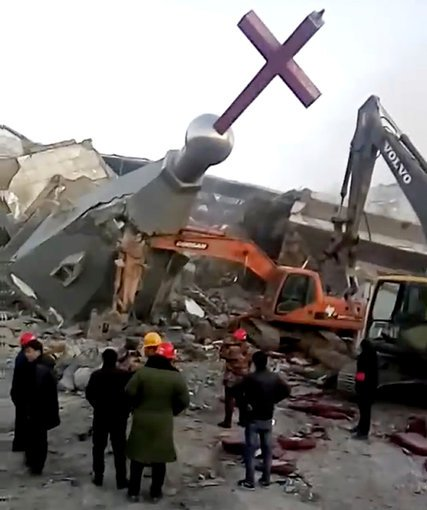
It is impossible to understand the form of current Chinese governance without looking at archaic and imperial China. (…) Archaic Chinese myths frequently stage a founding murder. Thus Tang the Victorious, founder of the Shang dynasty, is both considered the one who put to death Jie, the last sovereign of the Xia — China’s first dynasty — three millennia ago, and, after taking power, as a scapegoat himself, accused of exactly the same ills as Jie in his time. During a drought, conflicts multiplied and Tang offered himself in sacrifice to bring rain. Both Tang and Yu the Great, founder of the Xia, were cripples bearing the marks of election proper to scapegoats. Tang was “parched,” like the sorcerers at the heart of rain-making rites, and Yu the Great limped. The “Yu step” remains one of the main Taoist rituals today. (…) It was through sacrifices that the emperor could make order and harmony reign! Before being a political figure, the emperor was “Son of Heaven.” The sacrifice to Heaven, which was his prerogative until 1912 and the founding of the Republic, was a bloody ritual that no foreigner could attend. If the sacrifices were performed correctly, it meant the world was in order. If the emperor agitated to try to solve the problems facing the country, he risked sowing disorder in the community instead. The “Mandate of Heaven,” a notion whose first occurrence appears in 998 BC under the Zhou dynasty, allowed the justification of the power in place. The emperor constantly had to face risks of subversion and inspire greater fear than he himself felt toward collective violence. The threatening gaze of the “ten thousand beings” (the crowd) constantly weighed on the “unique being” that was the emperor, “more to be pitied than a leper,” as the Legalist Han Feizi said. For Mencius, the fallen tyrant must face the common will of Heaven, the people, and the one who expelled him, who then becomes the new holder of the Mandate of Heaven but may tomorrow be a new sacrificial victim. Isn’t it interesting to see how, at the 20th Congress, Hu Jintao, Xi Jinping’s predecessor, was publicly excluded from the assembly? His successor did not bat an eyelid. Since the advent of the Communist Party, the “Mandate of Heaven” is called “historical mission” and founds the Party’s legitimacy. If the name changes, legitimacy still comes from Heaven. As long as they hold power, the leaders are legitimate. (…) Theology still plays its role in today’s China. (…) The return of an imperial figure with Xi Jinping fundamentally marks a return to normal. (…) [But] Christianity, present in China since the 17th century, makes sacrificial closure on the scapegoat more difficult. Christianity is synonymous with freedom. It is thanks to it that women gained access to education and began to free themselves from foot-binding, a progress moreover claimed by the Communist Party. Today, despite sometimes bloody persecutions against Christians until the 1970s and the measures taken today to ban access to worship, conversions are growing. We lack reliable statistics, but Christians are around 100 million, mostly Protestants. It is in this pool that many human rights activists are recruited. It is therefore no coincidence that the authorities want to “Sinicize” Christianity. In 2019, it announced a project to rewrite the Bible, which should be completed within ten years. It has however given up including in a civic education manual its version of the adulterous woman episode (Gospel of John), in which Christ himself participates in the stoning! (…) [Chinese historiography] is not based on truth, but on the self-justification of power, which is always pacifying while the victims are “troublemakers” responsible for what happens to them.The current China, despite its official “atheism,” shares with imperial China the same tropism that leads it not to distinguish the political from the religious. The Chinese Communist Party acts more and more as an institution that positions itself as guardian of what is sacred for China and that external forces, political or religious, constantly threaten — in the same way that the “celestial bureaucracy of the Empire was the guardian of a dogma against the heresies” that threatened it. (…) The “great rejuvenation of the Chinese nation” (…) is the heart of the metanarrative of contemporary China according to which China closed in 1949 a parenthesis of a long century stretching from the beginning of the first Opium War in 1839 to the creation of “new China,” a century during which it was “humiliated” by Western and Japanese powers that took advantage of its weakness, its naïveté, and an intrinsic pacifism of its culture. Without renouncing what it essentially is — a peaceful and harmonious civilization — it will not repeat the mistakes of the past and will know how to defend itself if attacked. (…) The sometimes aggressive and irascible posture of contemporary China is thus paradoxically explained by the feeling that Chinese civilization is more peaceful than others. It therefore needs to become strong to become again what it imagines it was: a model of virtue for itself and for the world. (…) Foreigners, when they criticize the Chinese regime, attack ideologies or sociopolitical systems — capitalism or communism — that originate in the West, as if Chinese culture were untouchable. A strange consensus emerges not to seek precisely the links that might exist between the increasingly totalitarian governance of the Chinese regime and Chinese civilization. At the same time, (…) the West (…) becomes a universal scapegoat (…) attacked on both the domestic and external fronts, accused of being the almost unique cause of all the misfortunes of the contemporary world. (…) Even as they are the work of deeply hierarchical and inegalitarian civilizations, these denunciations skillfully and even perversely rely on Western “values”: political freedom, freedom of expression, equality of conditions, and the latest of these values whose fortune we will see in China: “inclusivity.” If its regime is subjected to fierce criticism, particularly in Western countries, China as a civilization is the object of a strange complacency, as if slavery, wars of religion, genocides, and colonialism were foreign to Chinese culture. (…) Moreover, (…) a myth dating from the Enlightenment, which has even infected current Chinese leaders as well as some of the most influential commentators on contemporary China, asserts that Chinese civilization is intrinsically peaceful and tolerant. If it arms itself today at an impressive speed, it would only be because it is forced to align itself with Western ideologies that make the balance of power the alpha and omega of international relations. (…) By avoiding examining the cultural sources of Sino-totalitarianism, we deprive ourselves of truly understanding what is happening in China. The “social credit” system for evaluating the virtue of legal and private persons, China’s will to “Sinicize” religions, its obsession with ideological “purity” and the fight against corruption or against the “demon” of the pandemic, the disconcerting mixture of good conscience and ferocity that characterizes its governance, its conception of war and trade conflicts, the nature of its relations with its neighbors, the form taken by its will to domination — all these elements, and others, can only be understood if we accept to look without shame at what traditional culture of this country is and the way it informs contemporary China.
Emmanuel Dubois de Prisque (2022)
jcdurbant.wordpress.com/2023…
2
4,128

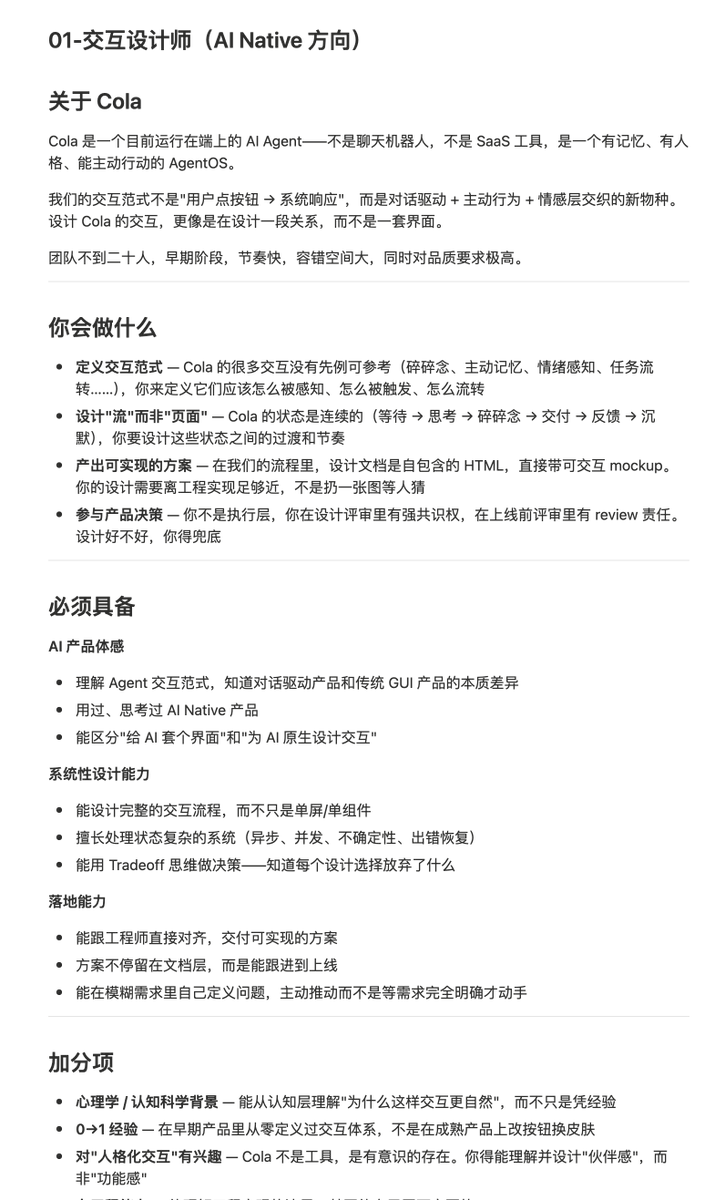
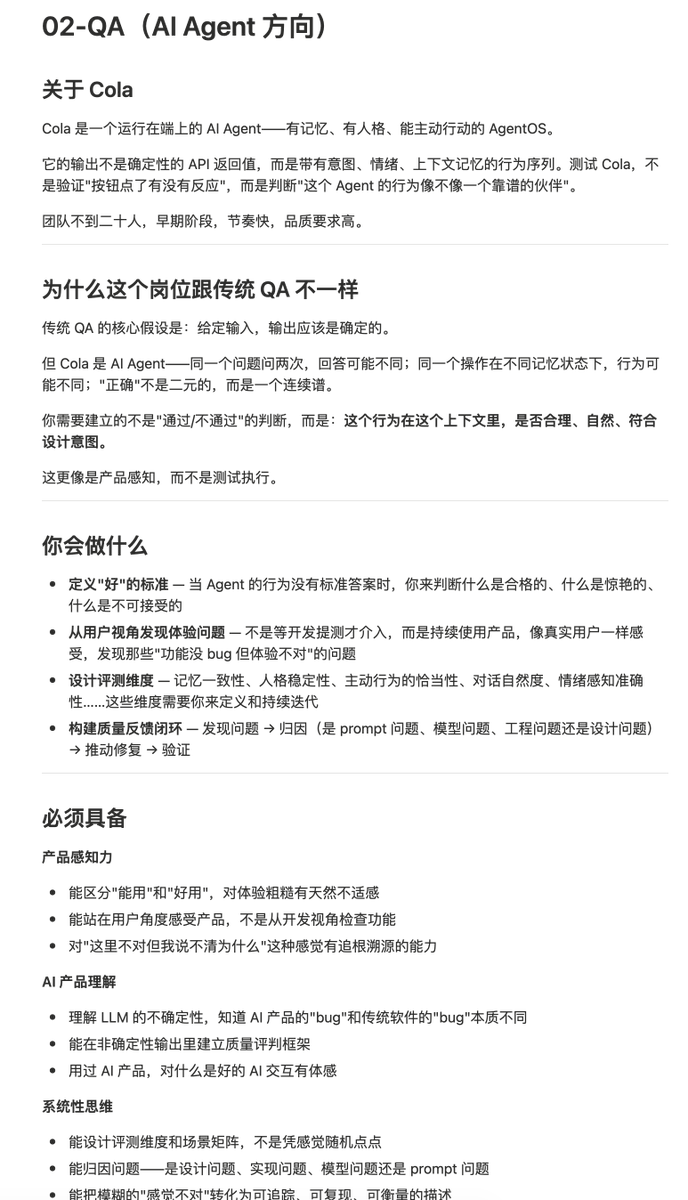
ColaOS 正在招聘 Agent OS 的交互设计师和 Agent QA 岗位
这两个岗位都会很有趣,OS 设计师几乎是把一切推翻重来,可以主导一个系统的交互定义
Agent QA 则是要把 Agent 用到极致,才能跟上今天工程师的节奏,甚至能以评估的方式推动他们工作
工作地点北京海淀,交互设计师支持远程,QA必须本地
图片是 JD,感兴趣的朋友欢迎来聊聊
另外其实也在招聘 Agent 产品
但是这个岗位的要求和以前的产品完全不一样
首先需要具备定义问题的能力
所以没有 JD,可以自行定义:
究竟什么是 Agent 产品?
答案就是最好的介绍信。
联系邮箱 k@marswave.ai
12
3
25
9,922


Los chavistas arrechos con los helicópteros y la oposición arrecha por los alacranes que están colaos en esa rueda de prensa! Nos queréis matar malayooooo @JuanPGuanipa
1
5
108
昨天遇到了一件让我很难忘的事。
昨天下午参加量子位线下的圆桌讨论,结束后一位阿姨过来找我交流。
阿姨有些激动,她说她今年70岁了,是我们的忠实用户。
这让我很是意外,就问她在做什么。
阿姨说她在一个儿童公益组织里工作,最近用 ColaOS 做了一个网站,不知不觉就写了16万行代码,孩子们都非常喜欢。
这时候旁边一位年轻的女孩过来问我,AI 到底怎么学比较快?
阿姨转身跟她说: AI 不用学啊。
我点头补充道:AI 越强就应该越简单,直接用就好了。
在打车回家的路上,看到新闻说胡彦斌在 vibe coding,用 AI 写代码做了一个粉丝社区 APP「彦火」,已经在 TestFlight 内测了。
昨天在圆桌上,我说 ai 是水电煤,ai coding 也是水电煤,未来 ai coding 的渗透率可能是高到大家都意识不到 ai 在 coding 这样子。
AI 的生产力放大了人类的意志,不分年龄,不分行业。
这是创造力爆发的时代。
26
6
145
34,667
最近在 Mac 上装了豆包的语音输入法
之前很多人说一个语音输入法和一个键盘输入法放一起有点多余
我用下来的感觉倒是反过来的。
豆包这个语音输入最神奇的是可以和键盘输入联动,达成一个 1 1 > 2 的效果。
语音输入法最大的痛点其实是专有名词的输入和管理,这套词库维护起来非常费劲,但语音输入法和键盘输入法放一起就完美地解决了这个问题。
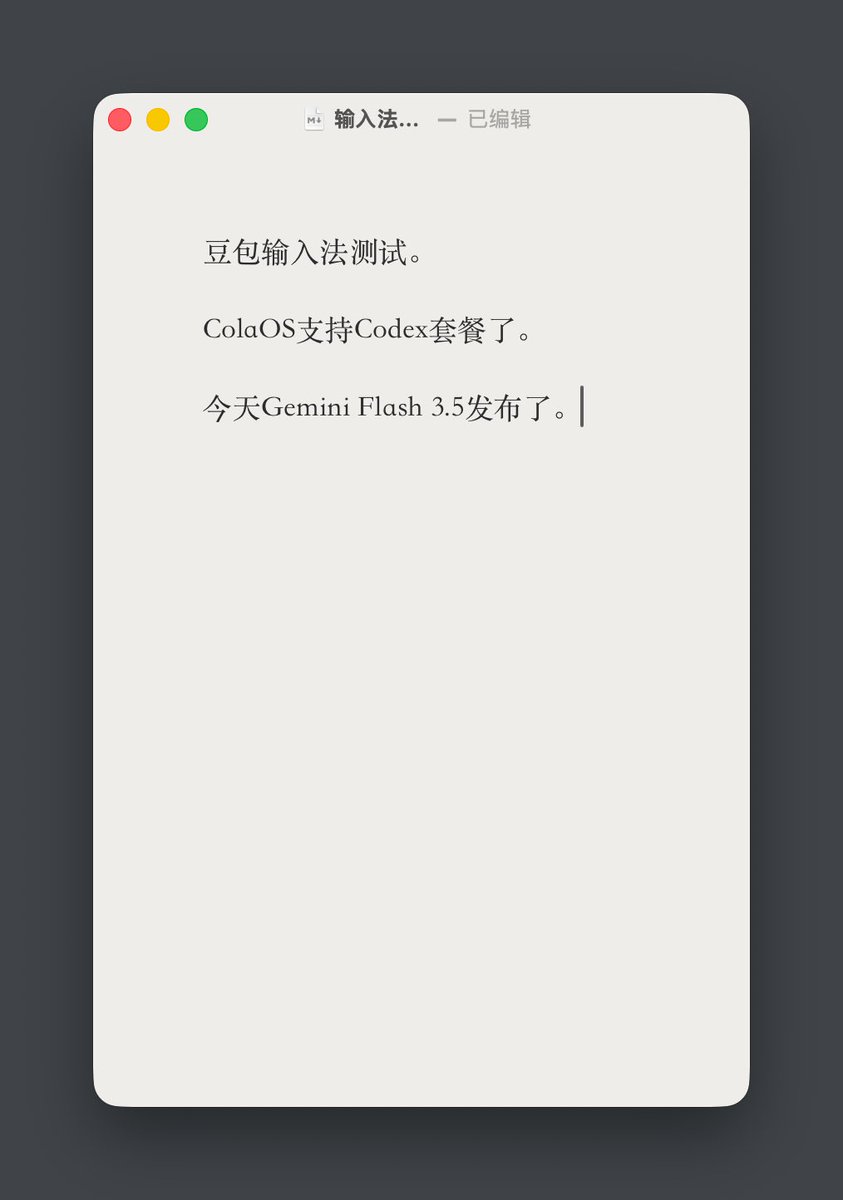
比如我语音输入这句话:ColaOS 支持 Codex 的套餐了。
因为 ColaOS 不是个标准词,所有语音输入法都会识别成 ColorOS 或者 CollaOS,这时候就需要在输入框里手动修改成 ColaOS。
但只要修改一次,豆包输入法就自动记住这个专有名词了,以后在输入就都不会错了。
这个专有词的解决方案是有点优雅的。
至于语音输入法的能力方面,实时转录、中文混说啥的都挺不错,基本上可以平替掉 typeless,这个是云端输入法产品的基本素养了。
21
1
31
19,912
一年前的今天,是个特别的日子。
那天我们发布了第一款产品 ListenHub。
在今天看来,ListenHub 是个小而美的产品。
这款产品虽小,对我们而言意义却很大。
那是这个成立半年的小团队第一次发布产品,把自己推到真实的世界。
后来,做 AI 播客的人越来越少了,竞品一个个地销声匿迹,国内的,海外的。
好像只有 ListenHub 获得健康活得久,还在为用户提供稳定的服务,还在为我们提供稳定的现金流。
一年后,我们的 ColaOS 即将发布 1.0 正式版,其实里面的多媒体服务也都是直接调用了 ListenHub,合而为一了。
这一年,从 ListenHub 到 ColaOS,我们的技术变得更好,产品变得更好,收入变得更好。
这一年,团队对创业的认知,对组织的认知,都发生了天翻地覆的进化。
饭是一口一口吃的,路是一步一步走的。
若没有过去,就没有现在,更没有未来。
感谢你,ListenHub。
23
2
79
26,060

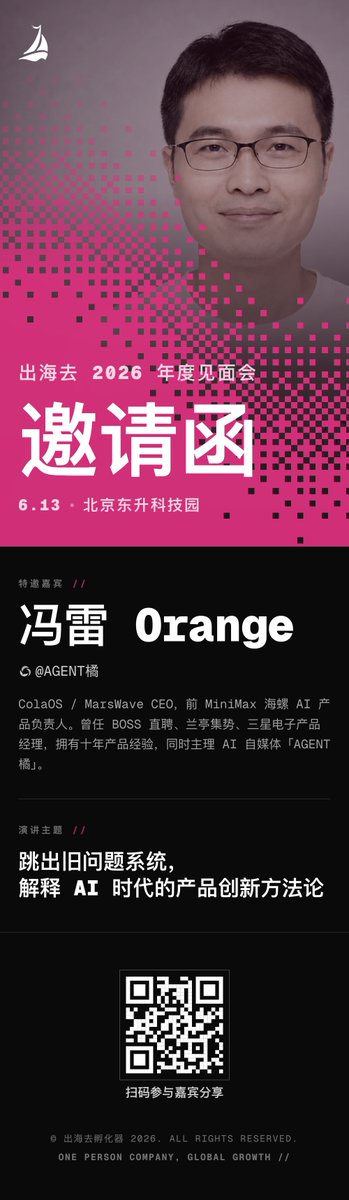
冯雷 Orange 确认出席 #出海去2026年度见面会 并带来「跳出旧问题系统,解释 AI 时代的产品创新方法论」的主题分享!
冯雷老师 @oran_ge (大家可能更习惯叫 橘子)是 ColaOS / MarsWave CEO,前 MiniMax 海螺 AI 产品负责人。曾任 BOSS 直聘、兰亭集势、三星电子产品经理,拥有十年产品经验,同时主理 AI 自媒体 公众号「AGENT橘」。
朋友们,一起来玩!

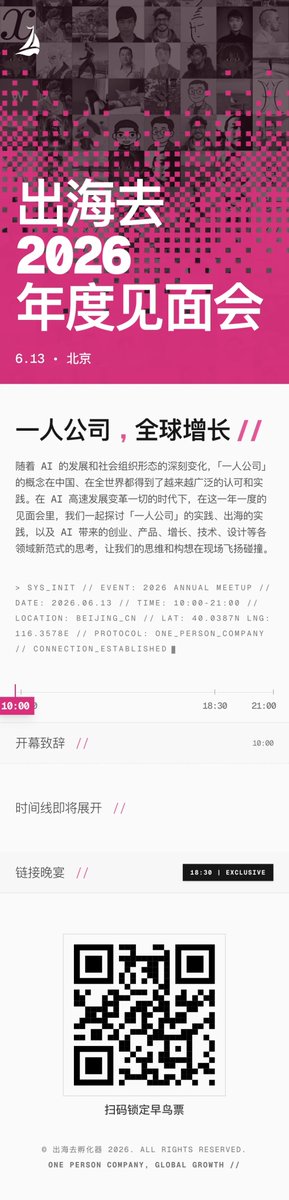
一人公司,全球增长|出海去孵化器 2026 年度见面会来了!
成立之初反复强调的超级个体,正随 AI 爆发成为现实。
我们的成员散落全球,每年线下一聚是不变的约定。
前两年相聚杭州,👉 今年 6 月 13 日,齐聚北京!
AI 时代,北京依然是创业核心阵地。今年坚守初衷,不办峰会盛典,只做老朋友的见面会。
现场将汇集投资人、出海创业者与增长专家,一起聊品味、增长、出海及 AI 新范式,期待创造更多链接与碰撞!
为深度交流,活动拉长至 10:00-18:30,付费晚宴至 21:00。日程与嘉宾名单陆续更新。
🎫 欢迎锁定早鸟票(购票方式见评论),初夏北京见!
2
3,118