
Joined February 2013
- Tweets 36,275
- Following 853
- Followers 566
- Likes 65,757
10,134 Photos and videos


SICKOS OF THE WORLD, UNITE ! (What strange religion... that keeps generating strangely sick cases ?)
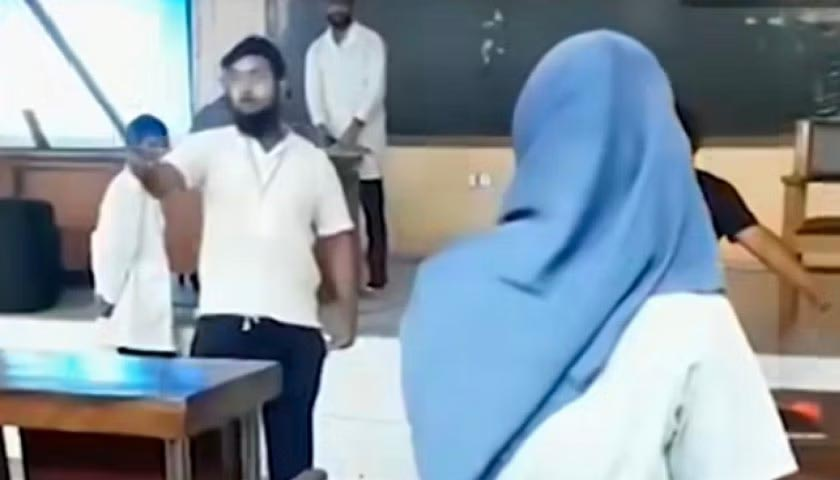
Police in Kishoreganj yesterday (28 October) arrested the man who entered a classroom wielding a stick in the capital's Sir Salimullah Medical College on Sunday (27 October), reports Prothom Alo. The arrested youth has been identified as Zubair Ali (Taki), said Abdullah Al Mamun, the officer-in-charge of Kishoreganj Sadar Model Police Station. A video of the Sunday incident that spread on social media showed the man entering the lecture gallery of Sir Salimullah Medical College with a stick in his hand and his head wrapped in a black bandana. He shouted and struck the floor with the stick, causing panic among the students in the class. The college authorities notified the law enforcement agencies, but the young man had left the scene before the police arrived. "Instructions for Zubair's arrest were issued from Dhaka soon after the video of the incident went viral on social media. The youth was arrested after reviewing the video footage. A team from the Kotwali Police Station took him to Dhaka last night," OC Abdullah Al Mamun told Prothom Alo. Citing the family, he said, "The family members of the arrested individual have informed that he has some mental health issues. "However, we cannot comment further without advice from a medical professional," he added.
The Business Standard (October 29, 2024)
tbsnews.net/bangladesh/youth…
Aren’t those the guys that always go crazy and shoot everybody?
George (Seinfeld)
The simplest surrealist act consists of taking to the streets with a gun in hand and firing at random into the crowd as long as you can.
André Breton
There are some of them (Javanese) who if they fall ill of any severe illness vow to God that if they remain in health they will of their … and as soon as they get well they take a dagger in their hands, and go out into the streets and kill as many persons as they meet, … These are called amuco.
Duarte Barbosa (1516)
To run amock is to get drunk with opium… to sally forth from the house, kill the person or persons supposed to have injured the Amock, and any other person that attempts to impede his passage.
Captain James Cook (1772)
It’s madness, a kind of human rage… a fit of senseless, murderous obsession. It’s undoubtedly linked, in some way, to the climate, to that dense, stifling atmosphere that weighs on the nerves like a storm, until they snap… A Malay man, any ordinary, gentle man, is peacefully drinking his beverage… he sits there, listlessly, indifferent and listless… and suddenly he leaps up, grabs his dagger, and rushes into the street… he runs straight ahead, always ahead, without knowing where… Whatever crosses his path, man or animal, he slays with his kris, and the smell of blood makes him even more violent… As he runs, drool forms at his lips, he screams like a man possessed… but he runs, runs, runs, no longer looking left, no longer looking right, doing nothing but running with a shrill scream, holding his bloodstained kris straight ahead of him in this terrifying dash… The villagers know that no power in the world can stop an amok… and when they see him coming, they shout, from as far away as they can, as a warning: “Amok! Amok!” and everyone flees… But he, hearing nothing, continues his run; he runs without hearing, he runs without seeing, he strikes down everything he encounters… until he is shot down like a rabid dog or collapses, utterly exhausted and foaming at the mouth.
Stefan Zweig (1922)
Individual Islamists may appear law-abiding and reasonable, but they are part of a totalitarian movement, and as such, all must be considered potential killers (...) a just-graduated student named Mohammed Reza Taheri-azar, 22, and an Iranian immigrant, drove a sport utility vehicle into a crowded pedestrian zone. He struck nine people but, fortunately, none were severely injured. (...) Mr. Taheri-azar represents the ultimate Islamist nightmare: a seemingly well-adjusted Muslim whose religion inspires him, out of the blue, to murder non-Muslims. Mr. Taheri-azar acknowledged planning his jihad for more than two years, or during his university sojourn. It's not hard to imagine how his ideas developed, given the coherence of Islamist ideology, its immense reach (including a Muslim Student Association at UNC), and its resonance among many Muslims. Were Mr. Taheri-azar unique in his surreptitious adoption of radical Islam, one could ignore his case, but he fits into a widespread pattern of Muslims who lead quiet lives before turning to terrorism. (...) This is what I have dubbed the Sudden Jihad Syndrome, whereby normal-appearing Muslims abruptly become violent. It has the awful but legitimate consequence of casting suspicion on all Muslims. Who knows whence the next jihadi? How can one be confident a law-abiding Muslim will not suddenly erupt in a homicidal rage? Yes, of course, their numbers are very small, but they are disproportionately much higher than among non-Muslims. This syndrome helps explain the fear of Islam and mistrust of Muslims that polls have shown on the rise since September 11, 2001. The Muslim response of denouncing these views as bias, as the "new anti-Semitism," or "Islamophobia" is as baseless as accusing anti-Nazis of "Germanophobia" or anti-Communists of "Russophobia." Instead of presenting themselves as victims, Muslims should address this fear by developing a moderate, modern, and good-neighborly version of Islam that rejects radical Islam, jihad, and the subordination of "infidels."
Daniel Pipes (2006)
The debate rests on the question about whether the presence of a mental health diagnosis is enough to state that it was a driver of the radicalization-linked behavior or whether it was just one ingredient in the individual’s vulnerability profile and grievance structure. (...) This debate is on-going within the wider study of crime as well. On the one hand, a strand of research assumes a consistent causal link between psychiatric symptoms (where they are found to be present) and criminal behavior. On the other hand, a more nuanced strand of research argues there are “a (small) group of offenders whose symptoms relate directly to crime and a (larger) group whose symptoms and crimes are not directly related.” For example, various studies illustrate that the offender (across a range of crimes) experienced his/her psychiatric symptoms at the time of the (often violent) crime between 4% and 18% of the time. There is no reason to suggest this should be any different for a terrorist subset of offenders. If anything, one might presume the figures to be lower given the wider ideology and ideologues underpinning it provide a grievance and set of instructions on who to target and how. A complex mixture of personality, situational, and personal drivers (among others) likely drives most general crime. Terrorism is no different but for the addition of an overarching ideology. The presence of this ideology in the motivational mix therefore likely lessens the relative cognitive response to mental health problems. It is simply too early to come to a definitive answer regarding the role of mental health problems and various forms of Islamic State terrorism. Mental disorders appear more prevalent among those inspired by Islamic State than those directed by it. Beyond that, however, it is difficult to make clear conclusions. The available open-source information is clouded by poor reporting practices, the tendency to treat all mental health disorders equally, and the fetishized way mental health is reported. The answer is likely to differ wildly from case to case depending upon the individual’s diagnosis, prior life experiences, co-existence of other stressors and vulnerabilities, and lack of protective factors. (...) What we see from the existing research is that lone-actor terrorism is usually the culmination of a complex mix of personal, political, and social drivers that crystalize at the same time to drive the individual down the path of violent action. This should be no different for those inspired by the Islamic State. Whether the violence comes to fruition is usually a combination of the availability and vulnerability of suitable targets and the individual’s capability to engage in an attack from both a psychological and technical capability standpoint. Many individual cases share a mixture of personal life circumstances coupled with an intensification of beliefs that later developed into the idea to engage in violence. What differs is how these influences were sequenced. Sometimes personal problems led to a susceptibility to ideological influences. Sometimes long-held ideological influences became intensified after the experience of personal problems. This is why we should be wary of mono-causal ‘master narratives’ about how this process unfolds. Mental health problems are undoubtedly important in some cases. Intuitively, we might see how in some cases it can make carrying out violence easier. In other cases, it may make the adoption of the ideology easier because of delusional thinking or fixated behaviors. However, it will only ever be one of many drivers in an individual’s pathway to violence. In many cases, it may be present but completely unrelated. The development of radicalization and attack planning behaviors is usually far more labyrinthine and dynamic than one single factor can explain, be it mental disorders (today’s go-to silver-bullet explanation), online radicalization (another popular silver-bullet explanation), or root causes that encompass socio-demographic characteristics. We must also bear in mind that the relationship between mental health problems and terrorist engagement is just one part of the story. Given the scale and types of violence being conducted by the Islamic State, many perpetrators will develop mental health problems as a byproduct of involvement as opposed to it being a driver of involvement. There will also be a generation of children who were born within the Islamic State and/or trained as fighters, many of whom will return to their parents’ country of origin in the coming years. The interface of mental health practitioners and the Islamic State will, therefore, not just be limited to assessing the risk of whether someone will become a terrorist but will be extended to safeguarding and treatment. In conclusion, after many years in the dark, the link between mental health problems and terrorist engagement is now often the “go-to” explanation. This is partially due to the studies, cited above, that showed the relatively high rates within specific terrorist sub-samples. These studies coalesced in time with an uptick in Islamic State lone-actor plots and attacks and were latched onto by media, the public and policymaker communities hungry for intuitively appealing and straightforward answers. Much of the nuance within these studies was lost, however. Just because a factor (such as mental disorder) was present, does not make it causal. Nor does it necessarily make it facilitative. It may be completely irrelevant altogether. Contemporary media reporting may have led to a potentially overinflated sense of how prevalent the link truly is and how closely tied it is to the individual’s pathway into terrorism.
Emily Corner and Paul Gill (2017)
If we once focused on postal conditions and security at post-office installations when workers (between 1986 and 1997) snapped under the thematic pretense of job stress, and if we investigated the nexus of video games, drugs, cults, and counter-culture alienation when suburban youths went on shooting sprees, then it seems legitimate to look for commonalities when someone self-identifies as a rather radical Muslim and shouts « Allahu Akbar! » as he fires — in the same manner that the mad driver in North Carolina, or the killer in Seattle, or the homicidal driver in San Francisco afterwards said they were acting out of Islamic religious fervor against Jews or Westerners.
Victor Davis Hanson (2009
Radicalisation is a youth revolt against society, articulated on an Islamic religious narrative of jihad. It is not the uprising of a Muslim community that is victim to poverty and racism: only young people join, including converts who did not share the “suffering” of Muslims in Europe. These rebels without a cause find in jihad a noble and global cause, and are consequently instrumentalised by a radical organisation (al Qaeda, ISIS), that has a strategic agenda. There are no psychiatrically specific patterns for radicals. Some come from dysfunctional families, some from “normal” families. Some second-generation radicalised Muslims have a family (and often a recent one) with young children (...) Frustration and resentment against society seems to be the only “psychological” trait often shared. Psychologists who study radicalisation (Fethi Benslama in France, for instance) detect a psychological (not psychiatric) state of “suffering,” a discrepancy between expectations and social outcome, a need for recognition – in other words, a narcissistic crisis that makes radicals more open either to nihilism or to the narrative of heroism that al Qaeda or ISIS offers. The religious dimension gives them a framework of personal restructuration: the truth, the good, a clear set of norms, brothers in arms, an unambiguous objective, and salvation, although the latter is not necessarily understood in terms of the paradise as described in the Koran. In fact, few of them speak explicitly about paradise. The nihilist dimension (revenge, suicide) seems to supersede the utopian one (to build a new and just society). (...) The majority of the radicals come from second-generation Muslims born in Europe, and most of the others are converts; almost none came as a young adult or as a teenager to Europe from the Middle East. Apart from that, there is no common sociological background – or, more exactly, the Muslim radicals share the sociological background of most second-generation Muslims (some are not integrated, others have diplomas and jobs), while converts come from diverse milieus (mainly working class and lower middle class). (...) Many have histories of petty delinquency and drug dealing. Before turning born-again or converts, they shared a youth culture that had nothing to do with Islam. But most of them share the pattern of a sudden and rapid “return” to religion (or conversion) immediately followed by political radicalisation. There is a clear “breaking point,” often linked with a personal crisis (jail, for instance). It is clearly a youth movement. Almost all of them became radicalised to the dismay of their parents and relatives (a huge difference if we compare them with Palestinian radicals). Most parents not only disapprove of their children’s radicalisation but also actively try to bring them back or even to have them arrested by the police. In this sense the radicals don’t express an anger shared by their milieus or by the Muslim “community.” It is also a peer phenomenon: whatever the concrete circumstances of their meeting may be (neighbourhood, jail, internet or sports clubs), the radicalisation takes place in the framework of a small network of friends. This puts them at frequent odds with the traditional view of family and women in Islam. These groups are often mixed in gender terms, and the women often play a far more important role than they themselves claim (as Hayat Boumeddiene did in the Charlie Hebdo killers’ team). They intermarry among themselves, without their parents’ consent. In this sense they are closer to the ultra-left groups of the 1970s. There is often a siblings’ solidarity: many radicalise following a brother’s radicalisation (pairs of brothers include the Kouachis and the Abdeslams). Very few of them had a history of militancy, either political (pro-Palestinian movements) or religious (local mosques, Tabligh, Muslim Brothers or even mainstream Salafism). They were almost never pillars of a local Muslim congregation. Contrary to a widely shared belief, they never mobilised for Palestine and (almost) never spent time with the Muslim Brothers. (...) In other words, their radicalisation is not the consequence of a long-term maturation either in a political movement (Palestine, extreme left, extreme right) or in an Islamic environment. It is a relatively sudden individual jump into violence, often after trying something else (Mohamed Merah, for instance, tried to enlist in the French army). The recruitment process follows different patterns. The more common seems the radicalisation inside a small network of peers, where nominal Muslims and non-Muslims meet because they live in the same neighbourhood, share the same patterns of petty delinquency, found themselves together in jail, or are members of the same family (like the Kouachis). This tightly knit network dimension is often reinforced by matrimonial links (marriage to the sister of one’s own friend, for instance). Some “lone wolves” follow a process of self-radicalisation and try to get in touch with more hardened radicals. A final process is recruitment through the internet, which mainly involves young women who are systematically and rapidly contacted when they inquire online about Daesh, jihad or Islam in general. For the others, the internet doesn’t seem to be the place of recruitment but a tool of communication, propaganda and information. The unusually high proportion of converts has been systematically overlooked because it contradicts the (culturalist) idea that individual radicalisation reflects the radicalisation of a frustrated Muslim community. (...) The main motivation of young men joining jihad seems to be the fascination for a narrative we could call “the small brotherhood of super-heroes who avenge the Muslim ummah”: This ummah is global and abstract, and never identified with a national cause (Palestine, or even the Syrian or Iraqi nations). In Iraq the foreign volunteers don’t identify with the local Arab population they are supposed to support (which is why they need either imported spouses or sex slaves). Palestine is not at the core of the mobilisation process. (Palestinians are mainly supported by progressive people and cultural Muslims, not by the Salafists, because theirs is seen as a “profane” cause.) The narrative is built using schemes taken from the contemporary youth culture, including video games like Call of Duty. The narrative is “staged” using not only modern techniques, but also very contemporary aesthetics, with a special role for aesthetics of violence, which is also found in places with no Islamic reference (Columbine, the Mexican Narcos). Two “figures” are of particular importance: the suicide bomber and the chevalier, the first being linked with what I call a “generational nihilism,” the second with video games. In both cases what is at stake is self-realisation (as an answer to frustration). The revolt is expressed in religious terms for two reasons. First, most of the radicals have a Muslim background, which makes them open to a process of re-Islamisation (almost none of them having been pious before entering the process of radicalisation). Second, jihad is the only cause on the global market. If you kill in silence, it will be reported by the local newspaper; if you kill yelling “Allahuakbar,” you are sure to make the national headlines. The ultra-left or radical ecology is too bourgeois and intellectual for them. When they join jihad, they adopt the Salafi version of Islam because Salafism is both simple to understand (don’ts and do’s) and rigid, providing a personal psychological structuring effect. Moreover, Salafism is the negation of cultural Islam, the Islam of their parents and of their roots. Instead of providing them with roots, Salafism glorifies their own deculturation and makes them feel like better Muslims than their parents. Salafism is the religion, by definition, of a disenfranchised youngster. Incidentally, we should make a distinction between religious radicalisation and jihadist radicalisation. There is of course an overlap, but the bulk of the Salafists are not jihadist, and many jihadists don’t give a damn about theology. None of the radicals has a past history of piety. Most of them either broke with the Islam of their parents or had no religious transmission from their parents (which may be because they are converts, or orphans, like the Kouachi brothers, or had non-practising parents). Almost none followed a real process of religious education. Their religious knowledge is small (some brought with them Islam for Dummies). When they said that they were going to learn Islam in Pakistan or Yemen, it was to appease their parents: in fact, they go for jihad. Radicals have a loose or no connection with the Muslim communities in Europe. A sense of surprise tends to be evident in the aftermath of a terrorist action. Investigators and journalists who meet the family and the entourage of the attacker are told the same story: “He was a quiet, nice boy (variation: he was just a petty delinquent), and he was not pious, drank alcohol, had girls etc., except that recently his attitude has drastically changed.” Few of them were regular “parishioners” in a local mosque. None of them was active in religious activities (proselytism): when they preach Islam it is to recruit other radicals, not to spread the good news. This explains why (1) the close monitoring of mosques brings little information; (2) imams have little or no influence on the process of radicalisation; (3) “reforming Islam” does not make sense: they just don’t care about “what Islam really means.” There is no theological dimension. Their knowledge of Islam is minimal and they don’t care, although the religious myth plays an emotional role. We tend too much to identify religion with theology (what does Islam say about jihad?); while there is certainly an important religious dimension in the way they experience their struggle, it is not an ideological rationalisation of Islamic theology. Religiosity, not theology, is the key. They are not the vanguard of a European (or Middle Eastern) Muslim community that would tend to see them as heroes. On the contrary, they have little connection with this community, they have broken with their families (the fact that they desperately try to convert their families shows their degree of estrangement, not of proximity), and they don’t arouse fascination except of course among their peers. They don’t even reconnect with a real Muslim local society in Syria or Yemen. To promote a “moderate Islam” to bring radicals back to the mainstream is nonsense. They just reject moderation as such. To ask the “Muslim community” to bring radicals back to normal life is also nonsense. Radicals just don’t care about people they consider as traitors, apostates or collaborators as long as they don’t choose the same path. To consider Islam only through the lens of “fighting terrorism” will validate the narrative of persecution and revenge that feeds the process of radicalisation. The priority, beyond building a more sophisticated intelligence system, is to debunk the narrative of heroism, to break the “success story” of ISIS as being invincible (including on the ground) and to let Islam in Europe appear as a “normal” religion. (...) The aim is to accentuate the estrangement of radicals from the Muslim population and to dry up the narrative of Islam as the religion of the oppressed.
Olivier Roy (2015)
We can no longer tell the difference between revolutionary terrorism and a madman shooting into a crowd. Humanity is preparing to plunge into utter madness. Perhaps this is necessary. Terrorism forces Westerners to reflect on how far we have come in the last two thousand years. Certain forms of violence now seem intolerable to us. We would no longer accept Samson shaking the pillars of the Temple and perishing while killing everyone with him. Our fundamental contradiction is that we are the beneficiaries of Christianity in our relationship to violence and that we have abandoned it without realizing that we were dependent on it.
René Girard
The same cultural and spiritual force that played such a decisive role in the disappearance of human sacrifice is now bringing about the disappearance of the human sacrifice rituals that once replaced it. All this seems to be good news, but only on the condition that those who relied on these ritual resources are able to replace them with sustainable religious resources of a different kind. Depriving a society of the rudimentary sacrificial resources on which it depends without offering alternatives is to plunge it into a crisis that will almost certainly lead to violence.
Gil Bailie (2008)
jcdurbant.wordpress.com/2009…

This was the scene in Bangladesh as Islamic militants stormed a medical school classroom, weapons in hand, yelling: “Educating women is haram!”
Islam is the enemy of civilization.
1
1
294

Jun 12
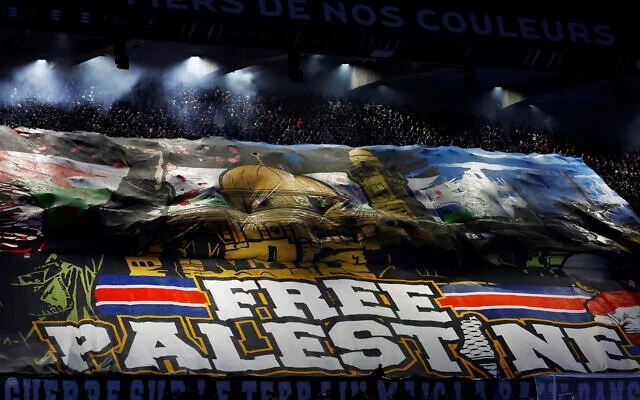
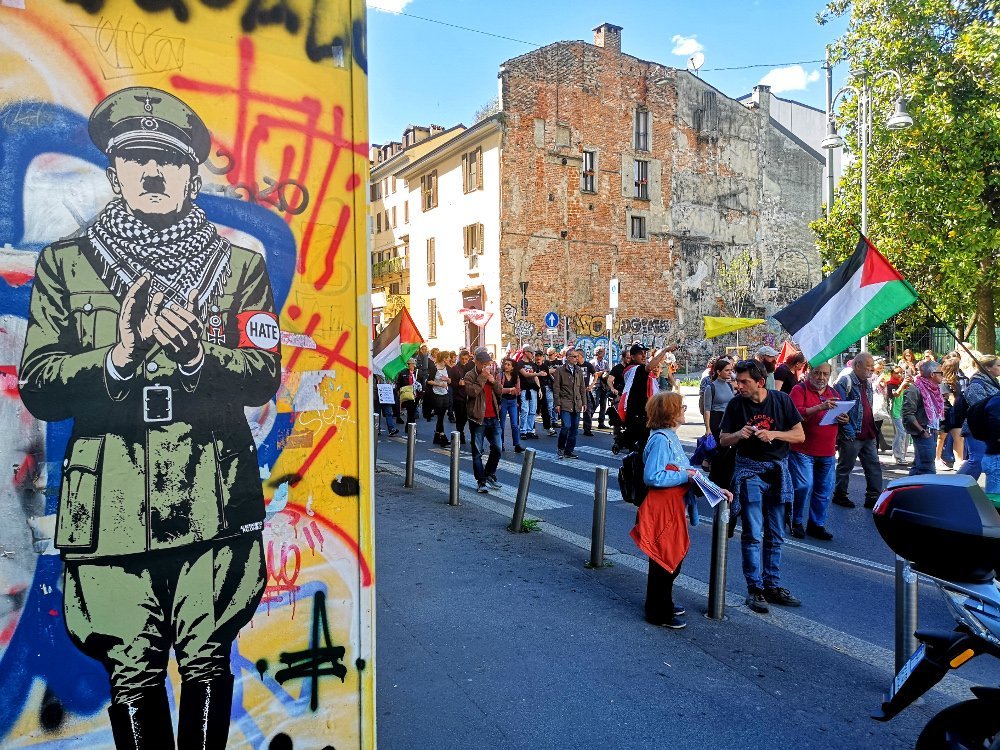
WHAT FRANKENSTEIN LEFT ? (When hiding behind anti-Zionism, decolonial and climate word madness with the convergence of struggles between Moscow-Beijing-Tehran-Doha' s Axis of evil, US campuses and an envious Global South... the wildest post-October 7 reversal of the political and moral reference points of the last century gives us Pétain's heirs now defending the Jews and the radical left going full antisemitic ?)
Anti-Zionism presents itself as a virtuous ideology. Once the Enlightenment and its virtues have been meticulously deconstructed and rejected, anti-Zionism becomes the only virtue capable of uniting those who have deconstructed everything.
Eva Illouz (2024)
The united front tactic is simply an initiative whereby the Communists propose to join with all workers belonging to other parties and groups and all unaligned workers in a common struggle to defend the immediate, basic interests of the working class against the bourgeoisie. Every action, for even the most trivial everyday demand, can lead to revolutionary awareness and revolutionary education; it is the experience of struggle that will convince workers of the inevitability of revolution and the historic importance of Communism.
Comintern (1922)
Fighting in support of the non-Islamic banners is forbidden. (...) Under these circumstances, there will be no harm if the interests of Muslims converge with the interests of the socialists in the fight against the crusaders, despite our belief in the infidelity of socialists (...) whether (...) in Baghdad or Aden. The fighting (...) these days, is very much like the fighting of Muslims against the Byzantine in the past [when]The Muslims' fighting against the Byzantine converged with the interests of the Persians.
Osama bin Laden (2003)
That’s why I want blacks in America, people of color, American Indians, Hispanics, and all the weak and oppressed in North and South America, in Africa and Asia, and all over the world, to know that when we wage Jihad in Allah’s path, we aren’t waging Jihad to lift oppression for the Muslims only, we are waging Jihad to lift oppression from all of mankind, because Allah has ordered us never to accept oppressions, whatever it may be.
Ayman al-Zawahiri (2007)
The appalling rise of xenophobia and racism in Europe and the United States in the wake of divisive populist politics (read Trump, Brexit, etc.) (…) has exposed the colonial matrix as the untouched structure of power and knowledge – and the attendant nostalgia for empire. (…) This is a specific case of the virus of coloniality and how it infects our minds and makes us ‘see’ what the rhetoric of Western modernity wants us to see. (…) The problem with coloniality of knowledge (…) is that it makes us believe in the ontology of what the (…) ‘universal fictions’ have convinced us to believe. (…) Decoloniality, which was no longer decolonisation as it was during the Cold War, became a proliferating project and organisation of disobedient conservatism. Decolonial disobedient conservatism is the energy that engenders dignified anger and decolonial healing, and its main goals are to delink in order to re-exist, which implies relinking with the legacies one wants to preserve in order to engage in modes of existence with which one wants to engage.
Walter D. Mignolo (Coloniality is Far from Over, and So Must Be Decoloniality, 2014)
The state of Israel is now committing the worst crime known to humanity, and this particular genocide has some unique characteristics that set it apart from others on the recent record. First of all: from its outset, this genocide has been ‘a transnational effort’, coordinated and organised by the advanced capitalist countries of the West together with the state of Israel. . (…) No other genocide on the list since the Holocaust has presented such a picture. From Bangladesh to Guatemala, Sudan to Myanmar, genocides might have been perpetrated with varying degrees of complicity from the capitalist core: but here we are dealing with something qualitatively different. (…) What we are seeing now might be the first advanced late capitalist genocide. (…) The first thing we said in these early hours consisted not so much of words as of cries of jubilation. Those of us who have lived our lives with and through the question of Palestine could not react in any other way to the scenes of the resistance storming the Erez checkpoint: this maze of concrete towers and pens and surveillance systems, this consummate installation of guns and scans and cameras – certainly the most monstruous monument to the domination of another people I have ever been inside – all of a sudden in the hands of Palestinian fighters who had overpowered the occupation soldiers and torn down their flag. How could we not scream with astonishment and joy? Same with the scenes of Palestinians breaking through the fence and the wall and streaming into the lands from which they had been expelled; same with the reports of the resistance seizing the police station in Sderot, the ethnically clean colony they built on top of the village of Najd, occupied since 1948. These were the first reactions I shared with those closest to me. But the second: immense trepidation. (…) One component of the definition of genocide is the ‘physical destruction in whole or in part’ of the targeted group of people; and in Gaza, a central category is precisely that of physical destruction. Already in the two first months, Gaza was subjected to utter and complete destruction. Already before the end of December, the Wall Street Journal reported that the destruction of Gaza equalled or surpassed that of Dresden and other German cities during the Second World War. (…) This time, unlike in 1948 or 1950, however, the destruction of Palestine is playing out against the backdrop of a different, but related process of destruction: namely, that of the climate system of this planet. (…) Are there any specific moments of articulation between the destruction of Palestine and the destruction of the Earth? By moments of articulation, I mean points where one process impacts and forms the other, in a reciprocating causation, a dialectic of determination. My answer is yes, indeed, such moments of articulation have linked up in a rather tight sequence for almost two centuries now. (…) 1840 was a pivotal year in history, for both the Middle East and the climate system. It marked the first time the British Empire deployed steamboats in a major war. (…) In 1840, the British Empire first proposed the colonisation of that country by Jews. (…) 57 years before the first Zionist congress, 77 years before the Balfour declaration, 107 years before the partition plan, the chief architect of the British Empire near the summits of its power here laid down the formula for the colonisation of Palestine. (…) 1840 saw the first mania for what we now know as the Zionist project. It had been in the making for a few years. (…) the moment that ignited the globalisation of steam, through its deployment in war, was also the moment that conceived the Zionist project. (…) Before Zionism was Jewish, it was imperial. ’ (…) The destruction of Palestine and the destruction of the Earth play out in broad daylight. (…) Destruction and construction are interpenetrating opposites that presuppose one another: the destruction of the planet is the construction of fossil fuel infrastructure; the destruction of Palestine is the construction of racial colonies (…) Limiting, stopping, reversing the destruction of Palestine and planet therefore require, as a logically unassailable condition, the destruction of fossil fuel infrastructure and racial colonies – not necessarily their physical destruction; but necessarily their decommissioning and repurposing, in the cases where that is possible, and where not, on the path to their abolition, yes, their physical destruction. (…) The genocide in Gaza provides a useful object lesson in callousness. In the climate catastrophe, the lives of non-white multitudes in the global South do not count. They are expendable, valueless. (…) Perhaps we can then specify this as the first technogenocide. A technogenocide would be defined as a genocide that is 1.) executed by means of the most advanced military technology, and 2.) at least partly animated by the drive to restore its supremacy after a humiliatingly successful challenge. (…) But against it, the Palestinian resistance still stands. I think the real disgrace in the West is that the left cannot clearly and without equivocation support the Palestinian struggle for self-emancipation. (...) we stand with the resistance and we are proud.
Andreas Malm (2024)
The mere jargon of decoloniality, often descending into outright bombast (…) with near-total uniformity, consistency, and monotony (…) reads as a loop of quasi-ritualized, self-repeating, almost incantatory terms and phrases that, in their sheer vertiginous range and repetitiveness, parody a genuine theoretical system. (…) Thus, the Westernization said to be antithetical to decoloniality gives us not only a corresponding “de-Westernization” but even a subsequent, explicitly counterreformational danger of “re-Westernization.” (…) Whatever the deeper reasons for it, this factual deficit is crucial to the critique and critical decipherment of the jargon of decoloniality — almost as if its terminological extravagances and redundancies and its flat-out rhetorical hubris were ironic compensation for an underlying historical vacuum. (…) key categories such as the colonial matrix of power and decoloniality itself remain supra-historical absolutes that possess near-mythical origins not subject to historicization. (…) By rejecting as Eurocentric and Westernized all claims to universality, Mignolo (…) clears a path for the surreptitious reentry of still other, thinly disguised universals far more insidious than self-parodies like pluriversality — so long, that is, as they possess the alibi of being anti-Western. Indeed, Mignolo’s explicit championing of the anti-Western “civilization-states” of China, Russia, and Iran exposes a flagrant decolonial flirtation with autocracy and great-nation chauvinisms. (…) But how much really separates a decoloniality fixated on a Manichaean hostility to the West from the right-wing and authoritarian populisms currently ascendant across Europe, not to say North America?
Neil Larsen (2023)
The ultimate ʹfull‐circleʹ irrationalism of anti‐semitism as an ideology is that it does not actually need Jews. There can be anti‐semitism without a single Jew. This is precisely because anti‐semitism is an ideology which claims to provide cosmic understanding. Central to the ideology are demonic notions which quite clearly transcend the material presence of Jews. (...) the identification of Jewry with the devil makes Jewry responsible for all satanic influences. (…) Much of what the Left poses as anti-Zionism is transcendental: it relates neither to the struggle of the Palestinians nor to what the Israeli state is actually doing. Rather it is concerned with ascribing world power to Zionism and holding all Jews in the world responsible for this. (…) This form of ʹanti‐zionismʹ transcends anything done by the Israeli state—or even the very existence of that state. It could just as easily exist without Israel, without Zion and even without zionism. A ʹsocialismʹ which perceives zionist influence throughout the world, from Downing Street to the White House, stopping off at the B.B.C., is no different from the classic anti‐semitic imagery of Jews being ʹrootless cosmopolitansʹ, without a state of their own, feeling no loyalty to any particular state but only to themselves. (…) The imagery is the same, the existence of Israel is quite irrelevant. Anti‐zionism without Zion has the same transcendental qualities as anti‐semitism without Jews; it has no necessary relationship to anything a real zionist, or real Jew is doing. It exists in the air quite apart from material reality—except for the reality it creates for Itself.
Steve Cohen (1984)
The human and social sciences position themselves on the side of justice, and their epistemology is one that seeks to unmask and denounce power wherever it may be. From that moment on, this means that all our knowledge is directed and organized around the question of who holds power, who hides it, and how. After the 1970s, minorities made a forceful entry into history—at least in the West. And through this forceful entry, minorities succeeded in creating two new epistemologies and two new forms of knowledge. The rallying point of these forms of knowledge is what I call “powerism”. The idea that all social relations are relations of power, and that the role of academics is to discover and unmask the multiple and diverse forms of power. Here, one can mobilize feminist theory, Foucault, Marx, or Gramsci. All of this is mobilized for this great enterprise. From the 2000s onward (...) post-colonialism and post-colonial studies became very important. (...) Particularly in the United States, because starting in the 1960s (though the awareness came later), people became conscious of the deep, systemic nature of American racism (...) When this awareness emerged, a kind of telescoping occurred between racism inside the United States and post-colonial studies. (...) Israel appears as a settler-colonial society. It seems to correspond in an entirely schematic way—since these are whites arriving in a region—for those who do not know that the Jews were there a very long time ago, well before even the Muslim invasion. So these models are telescoped together, and Israel is made into the paradigm of all the errors and crimes of the West. (...) At the beginning of 1984, the Ministry of Truth makes everyone repeat: war is peace, slavery is freedom, ignorance is strength. We had this way of reworking language under totalitarian regimes. What has happened is a complete subversion of language and words, making them say exactly the opposite of what they mean—but this time in a democratic regime. (...) You actually do two things (...) first (...) you forbid the association of certain words. You cannot be Zionist and feminist at the same time. This is why many feminist groups have absolutely and completely denied the sexual violence (...) that occurred on October 7, because they did not want feminism to be kidnapped or hijacked for the Zionist cause. (...) The other strategy is the one invented (or at least perfected) by the Soviets (...) the association of words (...) The Soviets never stopped flooding us with propaganda that associated, for example, Zionism with racism. And so there is a repetition effect—and that is how propaganda works: by repeating something and associating concepts, one subverts the concept, makes it lose its original meaning, and gives it the meaning one wants it to have. It is as if one put a worm in an apple, and suddenly the worm begins to work on the apple slowly until, in the end, you see only the worm. There is no more apple. The worm has eaten all the apple around it. (...) It is truly subverting a word from the inside. (...) the inversion of the political and moral reference points of the last century that helped us distinguish the left from the far right. The heirs of Pétain are today defending the Jews, and the radical left has become antisemitic. In my already long life, I have never witnessed such a reversal of reference points. (...) This antisemitism hides behind anti-Zionism. (...) Anti-Zionism is an antisemitism that conceals itself behind politics. It is mediated by the ideologies promoted by adherents of the Global South—Brazil, China, Iran, Russia—against the West. If the general pattern of anti-Zionism has for decades given the impression of being constant, something new emerged in recent months with October 7. What strikes one first is the globalized synchronization of events (...) from the growing homogeneity of university and artistic elites and from the influence of Islamist organizations within Western institutions, such as Students for Justice in Palestine, which has spread across the United States and opened branches in France. (...) the inversion, homogenization, and synchronization of discourses are unprecedented. When the equation between anti-Zionism and racism emerged in the 1970s, it was still marginal and controversial. It was still the case in 2001, when it was voiced at the World Conference Against Racism in Durban organized by UNESCO. But today it seems to have truly become part of what the philosopher Antonio Gramsci called “common sense.” It has become a doxa. It is the result of a long-term propaganda campaign conducted by the former USSR, the Muslim Brotherhood, and Iran, which now form a unified core on this issue. One must also count twenty years of groundwork by the Boycott, Divestment, and Sanctions (BDS) movement within universities and the art world. What we are experiencing is a kind of culmination of this campaign. (...) Jews are no longer part of the minorities to be defended. Jews have become the powerful (...) At the same time, it became more difficult to be antisemitic because of the Shoah. Jews temporarily enjoyed the status of protected victims. (...) A new social fracture emerged between those from immigration and the Jews. There is also a competition between the memory of the extermination of European Jews and that of colonization, which feels sidelined. (...) There is a backlash with the rise, from the 2000s onward, of the decolonial reading grid. Antisemitism finds no place in it because colonial history better explains economic exploitation, which excludes the Shoah. There is also a whole geopolitical context to evoke, particularly after the 1950s, with the spread of Soviet antisemitism, relayed by Arab antisemitism, which had a more political character marked by opposition to Israeli nationalism. It spread in the bloc of socialist countries and, beyond that, in the West. A figure like Angela Davis, a member of the Communist Party, for example, served as a transmission belt for this propaganda that amalgamates the Black cause, the Palestinian cause, and Soviet anti-Zionism. One must also mention the weight of South Africa, where Blacks very early saw Israel as their enemy. This hatred stems from the fact that during apartheid, Israel sold arms to South Africa and was consequently often associated with colonialism. When Israeli far-left organizations began to describe what was happening in the occupied territories as “apartheid,” this sealed the process. It is no coincidence that it was South Africa that brought the case to the International Court of Justice accusing Israel of “genocide.” The left has replaced the proletariat with the figure of the immigrant and, by metonymy, with the immigrant’s “religion.” Islamism is seen by the left as a reaction to Western imperialism. Everything that is not Western is perceived through the prism of colonization. There is also an objective alliance. Arab and Iranian propaganda has extremely skillfully integrated Soviet propaganda and thus found the right keywords that go to the heart of the mental and moral galaxy of the Western left. It is enough to make words like “racism,” “global warming,” “colonialism,” “imperialism” work to stimulate these objective alliances. (...) there is an extremely intelligent and large-scale attempt by Islamists to use the semantic chains of the left. The identification of the left with Islam would not have been possible if there had not first been a reverse movement from Islamists toward the left. Did Osama bin Laden not say himself that if alliances with impious people—that is, the left—allowed victory, then it was worth it? Islamists have very intelligently pirated the rhetoric of the left by referencing racism and anti-imperialism, even though their program is nothing other than a program of conquest. Anti-Westernism has almost become the backbone of the international left. It is an ideological space so vast that it can accommodate a great number of orientations and fantasies. (...) This (...) became an unprecedented moral failure when the university presidents auditioned by Congress could not clearly condemn calls for the genocide of Jews. It was not difficult for the American far right to instrumentalize this bankruptcy. It is the first time a minority has been so violently attacked by others while the university does not protect it. The Jewish minority found itself in conflict with LGBTQ people, African Americans, Latinos… The university is not equipped to arbitrate between different minority groups but to protect them. It is this function that has been routed. In fifty years, there has been a spectacular reversal of values. Students seem to me much more confused. They make no distinction between reactions to the death of George Floyd and pro-Palestinian positions of demonstrators who applauded the mass murders of October 7. 1968 was festive. (…) Students demand divestment, that is, the withdrawal of intellectual, economic, or financial cooperation agreements between their universities and Israel. Opposing Israel has become equivalent to the anti-capitalist and anti-racist struggle of yesteryear. They no longer demand only the end of the Occupation but the territories since 1948—that is, the entirety of the State of Israel—and not only those annexed at the end of the Six-Day War of June 1967. In fact, for the demonstrators, it is no longer about obtaining peace but about annihilating Israel. And the confrontation becomes almost physical because it is a real war, with the idea of the pure and simple disappearance of one of the two parties. It is the first time that so many people are demanding the dismantling of the Jewish state, the only state in the world that guarantees the security of these Jews. There is a singularity in the debate here that is quite difficult to grasp. They will tell you that it is only about Israelis and not Jews, but it is obvious that one would not speak with such lightness and moral conviction of the disappearance of Israel if they were not Jews. Rima Hassan wrote “Israel is a monstrosity without a name” and Aymeric Caron declared that supporters of Israel and himself do not belong to the same human species. This is not without recalling the dehumanization of Jews by the Nazis. Think of something more subtle, for example the fact that the British director Jonathan Glazer—like other Jewish artists or intellectuals—must dissociate himself from Israel in order to continue to belong to his professional group. This is a step that no non-Jew takes, as if these artists had to give proofs that they belong to humanity by offering pledges of anti-Zionism. But one must also mention the fact that there is a kind of desensitization to the accusation of antisemitism that is worrying, like a general fatigue in the face of it. It is no longer serious to be accused of antisemitism! That is very worrying. Take a terrifying slogan like “Long Live October 7th.” It would have us rejoice at the massacre of Jews every day, that it lasts and lasts, that it be repeated. This sadistic pleasure, I had never heard it from the left. In Canada, Charlotte Kates, who was the leader of a far-left demonstration and the author of this phrase, did not disavow herself. One has the impression that something is malfunctioning. On one side, calling people with a vagina “women” provokes the fury of transgender people who feel humiliated because they do not have a vagina but are women. But when there are eliminationist slogans celebrating the massacre of civilians, beheaded children, families burned alive, there is no objection. It is impossible to see this as anything other than a derangement of the intellectual, political, and moral map, especially on the left. What is fascinating is that there are completely different discourses and interests that have allied themselves. A conservative, religious, Nazi discourse grafts itself onto an ultra-progressive discourse. It is like when Lula and Chavez, two symbols of the left, celebrate Iran, which is at the forefront of obscurantism, while Iran celebrated them by calling them “the leaders of the anti-imperialist camp.” Anti-Western groups try to advance their interests by conveying content completely opposed to traditional left values (religion, justification of terrorism, hatred of the West). This left has become a sort of Frankenstein! The great novelty is that Jews no longer feel protected by social democracy, whereas for decades it had protected them. It is the collapse of a paradigm. (...) once again Jews are the stake in tectonic shifts that go beyond them. (...) For the first time since the end of WWII, Jews are once again solely responsible for their own destiny.
Eva Illouz (2024)
jcdurbant.wordpress.com/2026…

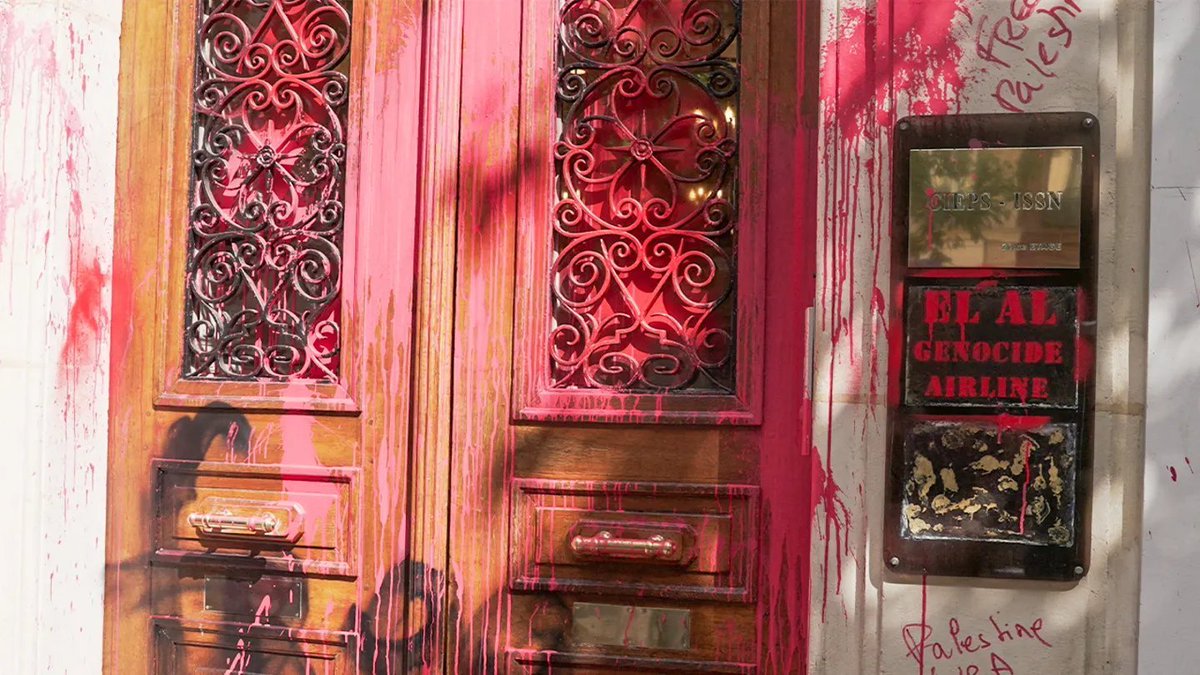
3
3
807
Jun 13
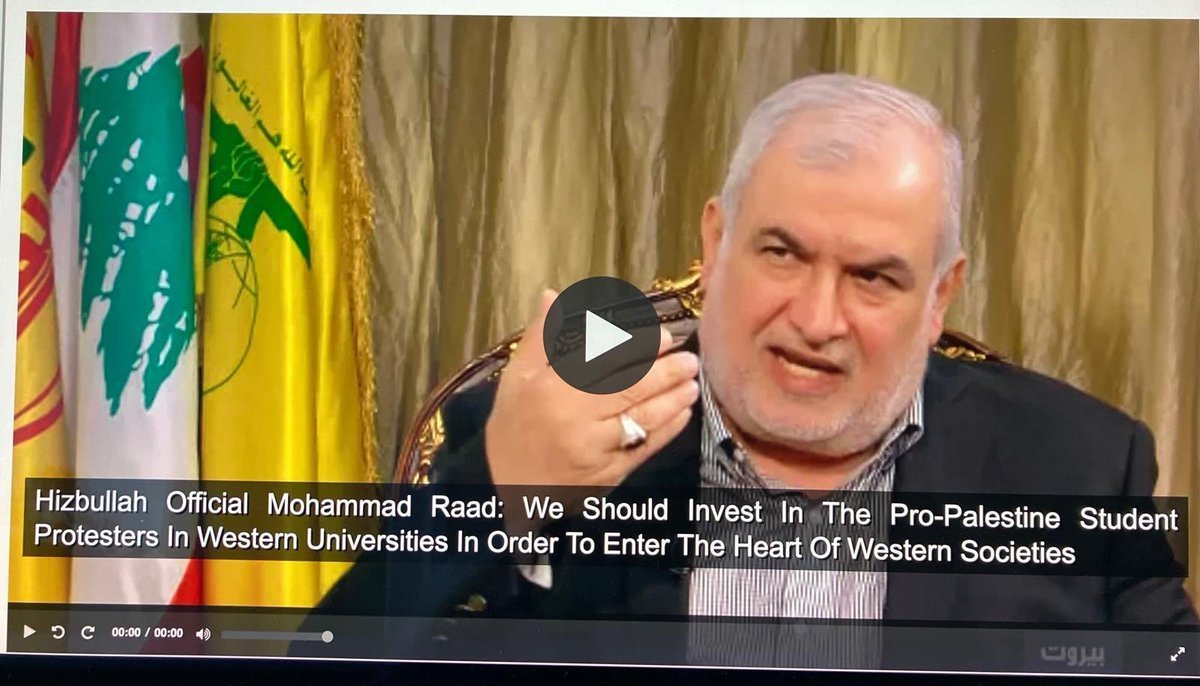
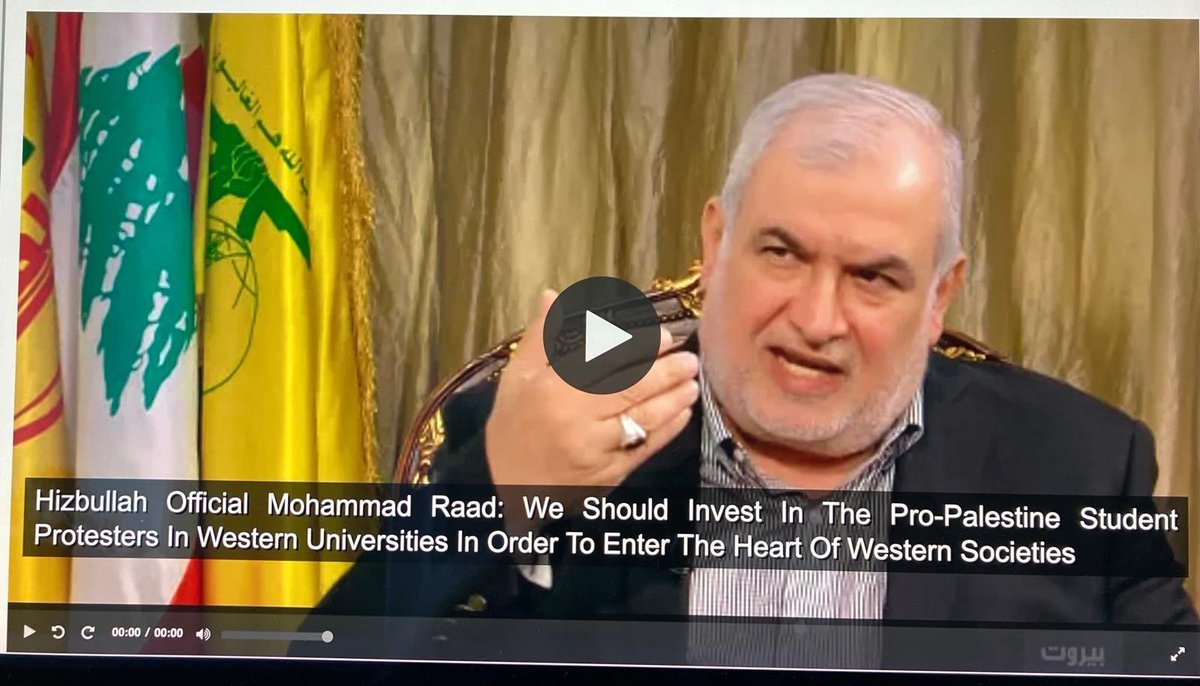
WE NEED TO ENTER THE HEART OF WESTERN SOCIETIES (What decades-old Comintern-like plan by Hezbollah and the Iranian regime to destroy America and Europe from within... using our own students ?)
"I believe that we should rely on the ability of the Arabs and Muslims to invest in the changes we are witnessing, specifically the involvement of Western students in the demonstrations in the West. There are Arab students who are demonstrating in the West, and this is something that we can understand, but the Western students who are demonstrating in support of Palestine... We rely on our ability to invest in this positive activity by these students in the future. (...) We should invest in the Western students. We need to enter the heart of Western societies. We need to address the people in the West. (...) This is a challenge. We should do it.
Ali Al-Hajj Hassan (Hezbollah’s Head of Youth Section, Russia Today TV, June 11, 2024)
memri.org/tv/hizbullah-mp-mo…
"We have seen the mobilization of students and youth in the West. Yesterday, for example, I participated in a symposium with young people from America, Britain, and various other countries. We agreed that it is our duty today, as student and youth organizations, to unite and become as one, for the sake of Palestine. We need to establish this global front in support of Palestine. We said that anyone capable of connecting with those students at Western universities should urge them to make sure that the launching of the new academic year will be marked by Palestine, the defense of Palestine, and the slogans of liberating Palestine and stopping the aggression against Gaza. We have asked students and student organizations in Western countries to make their voices 'loud' and that they should raise it as much as they can, and fill the public squares and universities, and the social media platforms in their countries, in defense of Palestine. [We told them] that they have a great impact... Western civilization is a colonialist civilization. It is a criminal, enslaving, occupying, terrorist civilization."
Ali Al-Hajj Hassan (Hezbollah’s Head of Youth Section, Al-Manar TV, August 2024)
memri.org/tv/hizbullah-offic…
The Islamic Republic of Iran and its network of proxies (often identified as Axis of Resistance) have a long history of activities targeting the United States, as opposing America constitutes one of their foundational dogmas. Said activities range from influence operations and propaganda to terrorist and military attacks. Tensions between the two sides have substantially escalated in the wake of the October 7, 2023 attacks in Israel and the conflict that followed making an assessment of these activities and their possible future developments highly relevant. While most of the anti-American activities by Iran and its proxies have been carried out in the greater Middle East, some of them have taken place inside America. Iran and its proxies have, in fact, been operating inside the United States for decades, engaging in a broad array of nefarious activities that can be divided into three main categories: lethal operations, procurement and propaganda. (...) America is home to a broad web of entities (mosques, Islamic centers, schools, student groups) and individuals with close personal, financial, organizational, and ideological links to the Iranian regime and its proxies. They spread Iran’s religious and political worldview, glorifying the regime and its allies, undermining America and disseminating antisemitic views. The New York-based Alavi Foundation is arguably the most prolific actor in the spread of Iranian regime influence in the United States. With its multimillion-dollar budget, it either directly owns or funds through grants, no-interest loans, and donations a broad array of mosques and entities nationwide that disseminate Tehran’s viewpoint. In 2008, the Department of Justice filed a civil forfeiture complaint against Alavi, arguing that it “secretly served as a front for the Iranian government and as a gateway for millions of dollars to be funneled to Iran in clear violation of U.S. sanctions laws.” In 2017, a jury found Alavi guilty, but the judgment was overturned by the appellate court due to procedural errors in the district court’s rulings. The legal battle is ongoing. This report identified more than a dozen organizations that disseminate pro-Iranian regime and pro-Hezbollah viewpoints and operate schools and mosques nationwide that host radical preachers who weave anti-US and antisemitic sentiments throughout their teachings. Some of the most important ones are based in Houston, New York and Potomac, Maryland. Additionally, Dearborn, Michigan is a particularly important hub, as it hosts several prominent institutions disseminating Tehran’s worldview. Many of the key individuals behind this web of entities maintain close connections to the Iranian regime, frequently traveling to Iran and actively participating in Iranian soft power organizations like Ahlul Bayt World Assembly and Al-Mustafa International University. Many of the Iran-aligned institutions identified in the report host events like commemorations of the anniversary of the 1979 Iranian Revolution and the anniversary of the death of Iran’s first post-revolution Supreme Leader, Ayatollah Khomeini; ceremonies memorializing the lives of IRGC-Quds Force Commander Qassem Soleimani and Hezbollah spiritual leader Hussein Fadlallah; and Quds Day, a day of protest against Israel declared by Khomeini in 1979 and commemorated the last Friday of every Ramadan. Particularly troubling is the presence in the suburbs of various American cities of Islamic schools—some of which receiving state funding—that teach the Iranian regime’s interpretation of Islam and political worldview to scores of American children. US authorities have repeatedly highlighted that “Iran typically relies on individuals with preexisting access to the United States for surveillance and lethal plotting” and, similarly, that “the arrests of individuals in the United States allegedly linked to Hezbollah's main overseas terrorist arm and their intelligence collection and procurement efforts demonstrate Hezbollah's interest in long-term contingency planning activities here in our homeland.” In substance, the possibility that Iran and its proxies could mobilize known and trusted assets based in the US rather than hired guns to carry out some kind of violent action in the future is a concrete one. In light of these dynamics, procurement and propaganda networks should be seen as natural recruitment pools for Iranian security apparatuses and their proxies seeking to plan attacks. Hezbollah is the oldest and most established of Iran’s proxies. It has long operated in the US, and Program on Extremism research has identified 142 US- based individuals who have been prosecuted for Hezbollah-related activities since 2000. Most individuals provided financial assistance to the group as money launderers/ bundlers/fraudsters and goods smugglers. About 13% of the prosecutions related to individuals who provided operational support as human smugglers, weapons procurers, and surveillance operatives. Clusters of friends or family members, some of them based out of Michigan, New York, California and North Carolina, play a central role in Hezbollah’s activities in the United States, particularly in fundraising operations. Iran and its proxies are also active in Canada and many Latin American countries. Exactly as in the US, their activities in those countries range from the creation of extensive propaganda centers to networks engaged in procurement and other financial activities and, occasionally, terrorist attacks (most recently, Brazil thwarted an alleged Hezbollah attack against Jewish targets in 2023). Many Latin American countries constitute a highly permissive environment that allows Tehran and its proxies to operate almost undisturbed. This dynamic poses a security challenge, not just to those countries, but also to the United States, given their geographical proximity. Given the heightened geopolitical tensions that have followed the October 7, 2023 attacks and Iran’s unrelenting commitment to highly adversarial positions towards the United States, an in-depth understanding of its networks inside the US and throughout the Western Hemisphere is of paramount importance. This required awareness applies not just to actors who are directly engaged in violent actions, but also to procurement and propaganda networks, as they not only serve useful roles for Tehran in and of itself, but can also potentially be utilized to support or carry out attacks.
Lorenzo Vidino, Lara Burns, Sergio Altuna, Rosa Cabus Carrera, Cynthia Martinez and Jake Gilstrap(George Washington university, October 9, 202)
extremism.gwu.edu/sites/g/fi…
“The Rosenbergs are dead and life goes on. (…) You already pulled that trick on us with Sacco and Vanzetti, and it worked. This time, it won’t. (…) You will never make us believe that the execution of the Rosenbergs was merely a ‘regrettable incident,’ or even a judicial error. It is a legal lynching that covers an entire people with blood and denounces once and for all, and with éclat, the failure of the Atlantic Pact and your inability to assume the leadership of the Western world. (…) And what kind of country is this, whose statesmen are forced to commit ritual murders to be forgiven for having ended a war? (…) There is definitely something rotten in America. (…) Do you remember Nuremberg and your theory of collective responsibility? Well! It is you today to whom it must be applied. You are collectively responsible for the death of the Rosenbergs — some for having provoked this murder, others for having allowed it to be committed. You have allowed America to become the cradle of a new fascism. It will be useless to explain to us that this isolated murder is not comparable to Hitler’s mass exterminations. Fascism is not defined by the number of its victims, but by the way they are killed. And why this unleashed rage against a man and a woman about to die? Why this hatred that has stupefied the world? Why? Because you had the impression that they wanted to take your bomb from you! (…) As for the atomic secret, it is the fruit of your sick imagination: science develops everywhere at the same pace, and the manufacture of bombs is only a question of industrial capacity. In killing the Rosenbergs, you simply tried to stop scientific progress by a human sacrifice. Magic, witch hunts, autos-da-fé, sacrifices… we are touching here the heart of the problem: your country is sick with fear. You are afraid of everything: the Soviets, the Chinese, the Europeans. You are afraid of each other, you are afraid of the shadow of your own bomb. What a fine bunch of allies! And you want to show us the way! You are dragging us into war through terror (…) So do not be surprised if we shout from one end of Europe to the other: Beware, America has rabies. Let us cut all the ties that bind us to her, otherwise we too will be bitten and driven mad!”
Jean-Paul Sartre (“The Animals Sick with Rage,” Libération, June 22, 1953)
Around 1925, the Comintern entrusted Münzenberg and his propaganda machine with a little-known but large role in giving shape and political function to the Communist Party of the United States as it was to be under Stalin. At that time, the American party, that congregation of the militant naïve, home and battleground for John Reed and Louise Bryant, needed to be re-assembled. It had been left in a shattered state by its late-Leninist internal struggles combined with devastating police action inflicted on it by what later became the FBI. (…) For the world proletariat of 1925, the leading counter-myth to the myth of revolution was, by far, the idea of America. That vision—the notion of the melting pot, the Golden Door, the Land of Opportunity— is what held the real political attention of the International. To the Bolsheviks, this was the true American menace. And in 1925, the task of the American party was to counteract it. So Münzenberg’s first idea was to create and sustain a worldwide anti-American campaign that would focus its appeal upon the mythology of the country’s immigration. The purpose of such a campaign would be to instill a reflexive loathing of the United States and its people as a prime tropism of left-wing enlightenment. To undermine the myth of the Land of Opportunity, the United States would be shown as an almost insanely xenophobic place, murderously hostile to foreigners. To this end, Münzenberg surveyed his options, in search of a cause that would disgrace America in the eyes of the proletarian foreign-born. He found it in the obscure case of two anarchist immigrants who’d got themselves into some very bad trouble: Niccola Sacco and Bartolomeo Vanzetti. (…) Together with the Dreyfus case, this is perhaps the most famous legal struggle in the whole history of modern propaganda and injustice. It seemed at first incredible to me that this epochal case could have been manipulated at such a distance, and so cynically. And indeed the origins of the Sacco–Vanzetti case are far more complex than that. Yet in one sense the Sacco–Vanzetti campaign does turn out to have been “Münzenberg’s idea.” It was indeed at Münzenberg’s instigation that Communist propaganda networks worldwide took up the plight of the two Boston immigrants and made it the centerpiece of a vast new anti-American operation—just as a little later it was Willi’s executive decision to turn the Scottsboro Boys into prime martyrs for the International. The Comintern and Willi’s organization were the ones who transformed a case of troubled local injustice into a worldwide cause célèbre. (...) Francis Russell, in his Sacco and Vanzetti: The Case Resolved (1986), describes the European demonstrations: "Demonstrations took place that autumn in France and Italy, with lesser demonstrations in Switzerland, Belgium, Spain, Portugal, Scandinavia, and South America. A bomb exploded in the American embassy in Paris. Another was intercepted in the Lisbon consulate. Reds in Brest stoned the consulate there. American consuls in Mexico were threatened with death if Sacco and Vanzetti were executed. In Rome, thousands of workers marched on the American embassy demanding justice for their compatriots." Some of this agitation was anarchist inspired, some actually spontaneous, but most of it was directed by Communist leaders in Paris (…) What followed was orchestrated multinational mass hysteria. August 22 was the night of the executions, and around them the apparat, poising itself for the outpouring of international grief, organized a vast international deathwatch. Francis Russell describes the event: After the news flashed from Charleston that Sacco and Vanzetti had at last been executed, the reverberations were international. Demonstrations in American cities were duplicated and in many places exceeded all over Europe. In Paris the Communist daily Humanité printed an extra sheet on which was splashed the single block word “Assassinés!” Crowds surged down the Boulevard Sebastopol, ripping up lampposts and tossing them through plate glass windows. Protective tanks ringed the American embassy, and sixty policemen were injured when a mob tried to set up barricades there. Five thousand militants roamed the streets of Geneva the evening before the executions, overturning American cars, sacking shops selling American goods, gutting theaters showing American films. One of the greatest demonstrations in the history of the Weimar republic took place in Berlin; there were tumultuous demonstrations in Bremen and Wilhelmshaven and Hamburg, and a two hour torchlight parade in Stuttgart. During that turbulent week, half a dozen German demonstrators were killed. No one was killed in England, but on the night of the executions, a crowd gathered in front of Buckingham Palace and sang “The Red Flag.” (...)So the American Communist Party was revived, in part, to function as a local instrument in a worldwide and remarkably successful effort to create a new anti-American myth, the support and development of which persisted for decades to come. (...) The objective was to ‘Stalinize glamour culture, while giving the apparatus a cash cow capable of producing a large and untraceable quantity of American currency that was so badly needed to finance various operations around the world.’ (...)You do not support Stalin. You do not call yourself a communist. You do not declare your love for the regime. You do not call on people to support the Soviets. Never. Under no circumstances. You claim to be an open-minded idealist. You do not understand politics, but you think that ordinary people get a raw deal. You believe in open-mindedness. You are shocked, frightened by what is happening in our own country. You are frightened by racism, by the oppression of workers. You think the Russians are attempting a great human experiment and you hope it succeeds. You believe in peace. You aspire to international understanding. You hate fascism. You think the capitalist system is corrupt. You repeat this constantly and you say nothing more, nothing more.”
Stephen Koch (Double Lives: Stalin, Willi Münzenberg and the Seduction of the Intellectuals, 1994)
jcdurbant.wordpress.com/2006…
“This campaign must serve as an example for the application of the united front tactic on a global scale.”
Dimitri Manouilski (Secretary of the Executive Committee of the Communist International, 1928)
“It is difficult to explain, and doubtless even more difficult for a new generation to understand, how the ‘intellectuals’ and the ‘artists’ of our country jumped with such abandoned and fanatical credulity into the Russian hell of 1920. They quoted hackneyed phrases and slogans. They were carried away by a starry-eyed patriotism promoted by the fraudulent Communist organization called the Lincoln Brigade. The holy name was a charm that guaranteed safety and victory. The bullet struck the Bible instead of the heart.”
Katherine Ann Porter (1977)
jcdurbant.wordpress.com/2007…
“I announce to the entire world that if the infidels stand in the way of our religion, we will oppose the entire world and we will not cease until their annihilation. We will emerge from this either all freed or we will obtain an even greater freedom, which is martyrdom. Either we will stand shoulder to shoulder to celebrate the victory of Islam over the world, or we will all attain eternal life through martyrdom. In both cases, victory and success will be ours.”
Ruhollah Khomeini (Paris, 1979)
"When Khomeini returned from exile to Tehran, his first foreign visitor was Yasser Arafat, a purebred Sunni. The PLO had already been training Khomeini’s men in guerrilla warfare and terrorism for a long time. Moreover, the latter had a long tradition of cooperation with the Egyptian Muslim Brotherhood — the mother house of Arafat, of Fatah, and of muscular Sunnism."
Laurent Murawiec (Th mind of Jihad, 2009)
jcdurbant.wordpress.com/2013…
“Communists cannot trust bourgeois legality. It is their duty to create everywhere, parallel to the legal organization, a clandestine body capable of fulfilling its duty to the revolution at the decisive moment.”
3rd Condition of the Third International/Comintern (July 1920)
“The heart and soul of the Soviet secret services was subversion. Not the collection of intelligence, but subversion: active measures aimed at weakening the West, sowing discord in all kinds of Western alliances, particularly NATO, sowing discord among the allies, weakening the United States in the eyes of the peoples of Europe, Asia, Africa, and Latin America, and thus preparing the ground in case a real war broke out. Making America more vulnerable to the anger and mistrust of other peoples. In this sense, the Soviet secret services were truly unrivaled. … The programs — which organized all kinds of congresses, peace congresses, youth congresses, festivals, women’s movements, trade union movements, campaigns against American missiles in Europe, campaigns against neutron weapons, allegations that AIDS… had been invented by the CIA… all kinds of forgeries and falsified documents — [were] aimed at politicians, the academic community, and the general public. … It was truly a global campaign, often not only sponsored and financed, but also conducted and manipulated by the KGB. And this was again an integral part of the campaign aimed at weakening the military, economic, and psychological climate in the West.”
Maj. Gen. Oleg Kalugin (KGB)(CNN interview, June 27, 2007)
“A perfectly prosperous state can, in a matter of months or even days, be transformed into a theater of violent armed conflicts, thanks to political, economic, informational, humanitarian, and other non-military measures applied in coordination with the protest potential of the population.”
General Valery Gerasimov (Chief of the General Staff of the Russian Armed Forces, 2013)
Arafat was an important KGB secret agent (…) Just after the 1967 Six-Day War, Moscow appointed him president of the PLO. It was the Egyptian leader Gamal Abdel Nasser, a Soviet puppet, who proposed this appointment. In 1969, the KGB asked Arafat to declare war on ‘American imperial Zionism’ at the first summit of the Black International of Terrorism, a neo-fascist pro-Palestinian organization financed by the KGB and Libyan Muammar Gaddafi. The imperial-Zionist war cry pleased Arafat so much that he later claimed to have invented it. But in fact, ‘imperial Zionism’ is a Moscow invention, a modern adaptation of The Protocols of the Elders of Zion, and for a long time the favorite tool of the Russian secret services for fomenting ethnic hatred. The KGB always considered antisemitism and anti-imperialism as an abundant source of anti-Americanism.”Yuri Andropov“We had to instill a Nazi-type hatred of Jews throughout the Islamic world and turn this weapon of the emotions into a terrorist bloodbath against Israel and its main supporter, the United States. (…) Islam was obsessed with preventing the occupation of its territory by infidels, and it would be very receptive to our portrayal of the U.S. Congress as a rapacious Zionist body aiming to turn the world into a Jewish fiefdom.”
Ion Mihai Pacepa (former head of Romanian intelligence, 1990)
“Let us reflect on the failure of those avant-gardes who preached to us the non-existence of the real! We must enter a conception of time in which the Battle of Poitiers and the Crusades are much closer to us than the French Revolution and the industrialization of the Second Empire. (…) Europe (…) has once again become, after Communism, that infinitely vulnerable space that the medieval village must have been in the face of the Vikings. (…) There is a resignation of reason here. It resembles in some ways the aporias of pacifism, of which we have seen how much they could encourage bellicosity. (…) We must therefore awaken sleeping consciences. Wanting to reassure is always contributing to the worst.”
René Girard (2007)
jcdurbant.wordpress.com/2025…
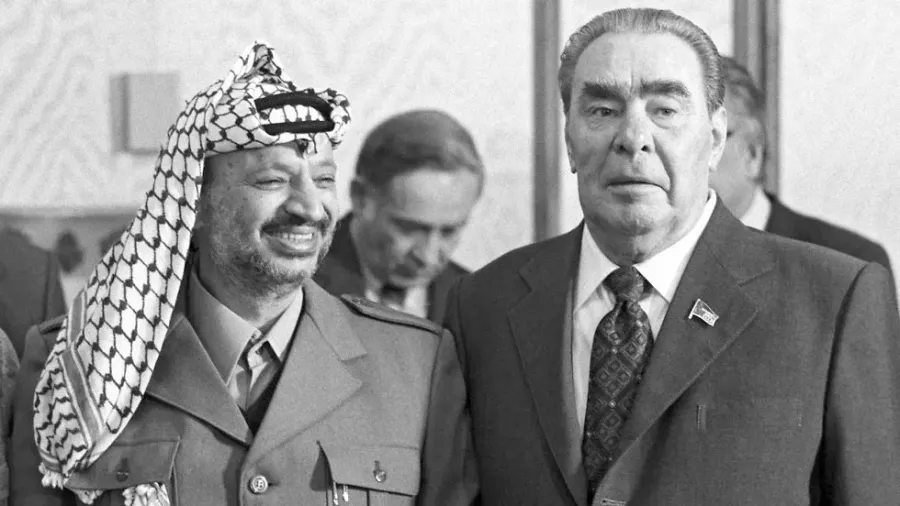
2
6
975
BUT THEN WHY DO YOU KEEP TRYING TO NEGOTIATE WITH THEM, STUPID PUTIN POODLE ?
Jun 12

Muslims went crazy after Secretary of State Marco Rubio said this:
"Radical Islam doesn’t want just a small caliphate in Iraq or Syria. They see the United States as the greatest evil on Earth and seek to dominate the entire West. Radical Islam is revolutionary, it wants endless expansion, terrorism, assassinations, and total control. They hate America, Europe, Israel, and every Muslim nation that partners with us. Orlando, Pensacola, and domestic attacks prove it.
Radical Islam is a clear and imminent threat to the world."
I agree with every single word he said.
2
12
DON'T KNOW MUCH ABOUT HISTORY
x.com/VividProwess/status/20…

4
Jun 12
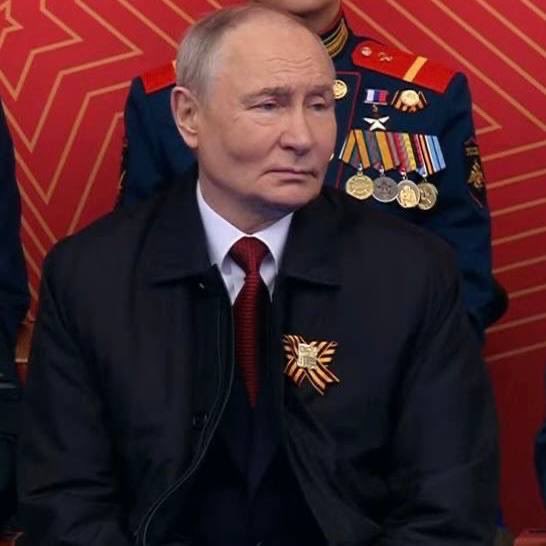
SEE YOU IN MOSCOW !

Putin has declared his readiness to meet with Zelenskyy and discuss a cessation of hostilities—though only in Moscow.
Judging by recent events at the front, Zelenskyy has accepted this offer.
The Armed Forces of Ukraine (AFU) are expected to reach Moscow by the end of the summer, enabling the parties to agree on peace.
"Strictly according to schedule"
t.me/MirovichMedia/14793
1
14

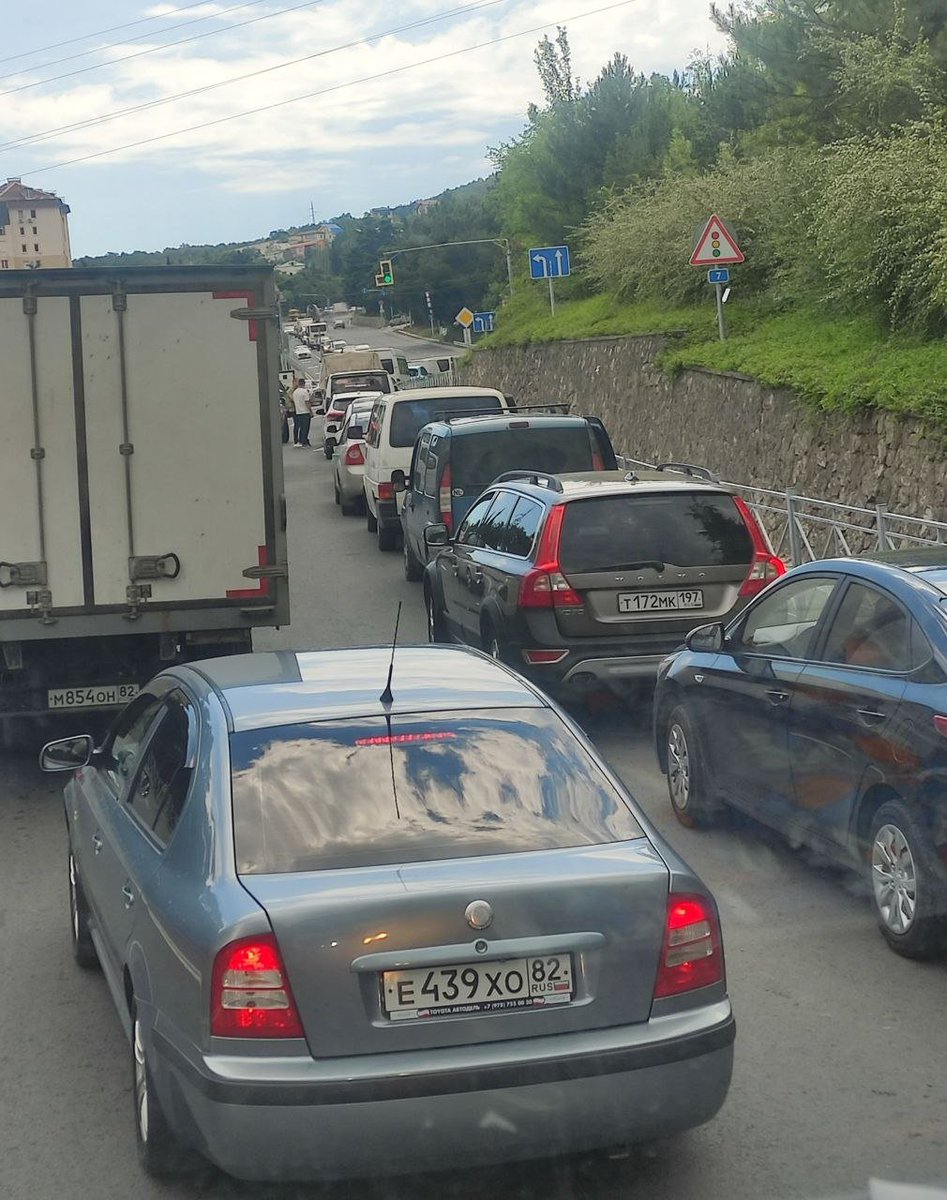
Absolute chaos in Crimea as fuel has totally run out.
Drivers line up for days with no hope of enough to leave the penninsula.
1
6

Russian Z-bloggers post footage of Ukrainian drones freely flying over Russian-occupied Crimea, attacking fuel trucks and military targets.
They predict that soon this will lead to "panic and total collapse of all main roads."
8
C'EST MAINTENANT QU'ILS NOUS DISENT !
Jun 12

Enfin !
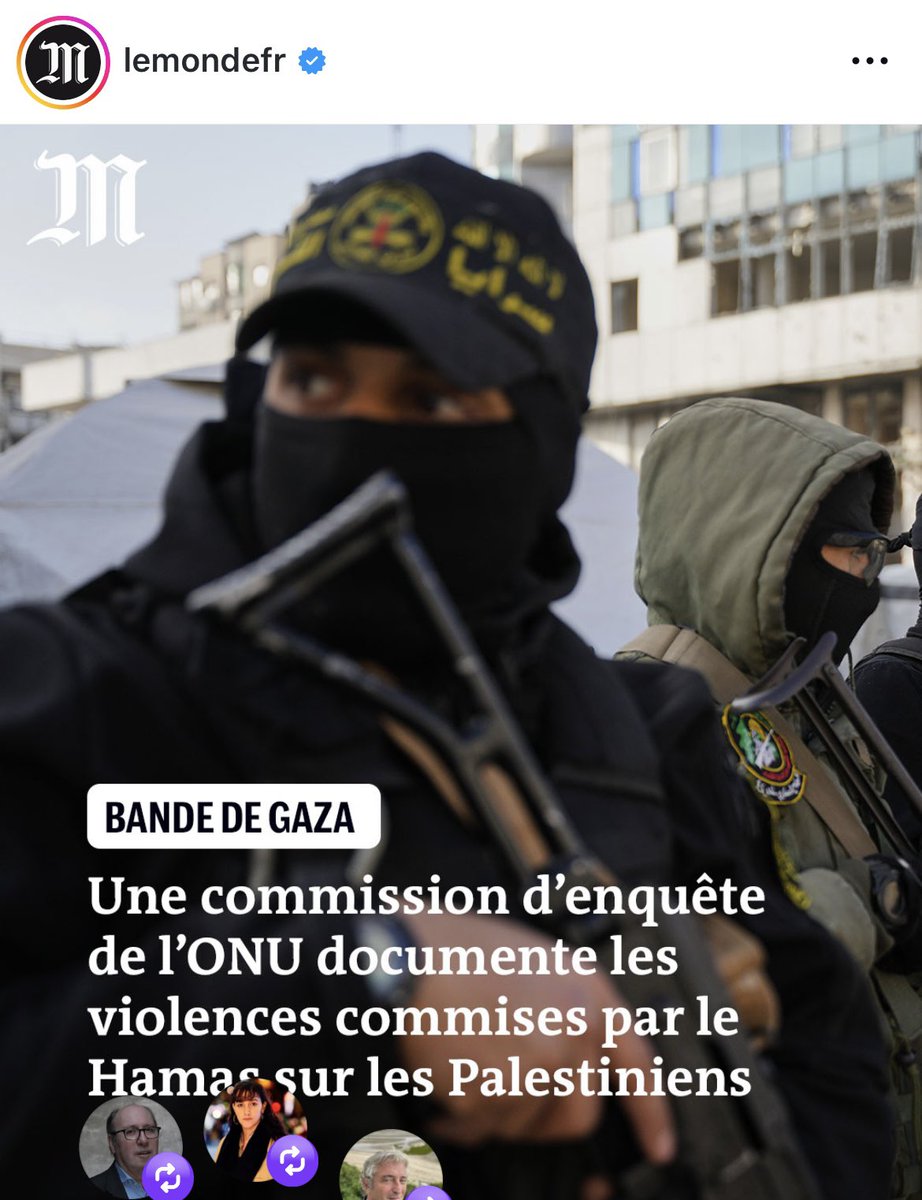
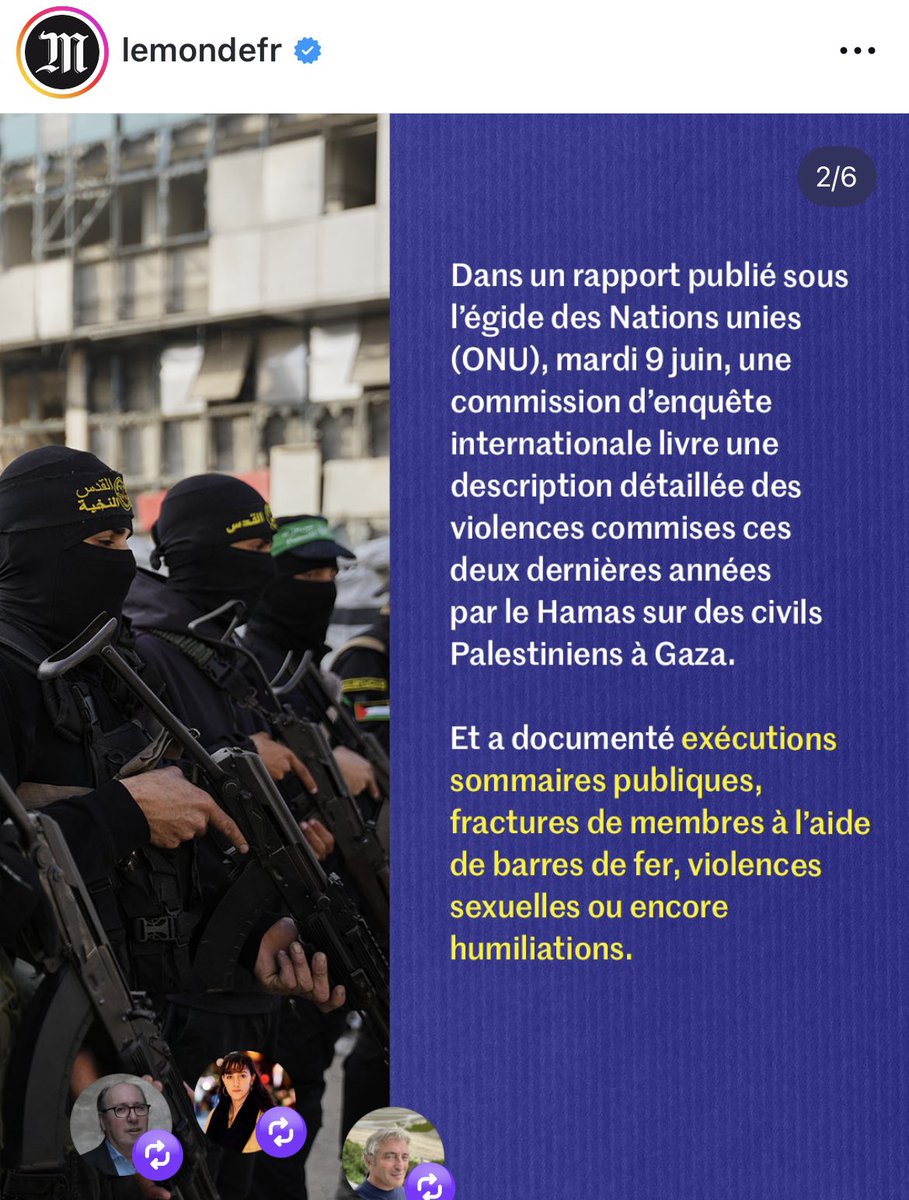
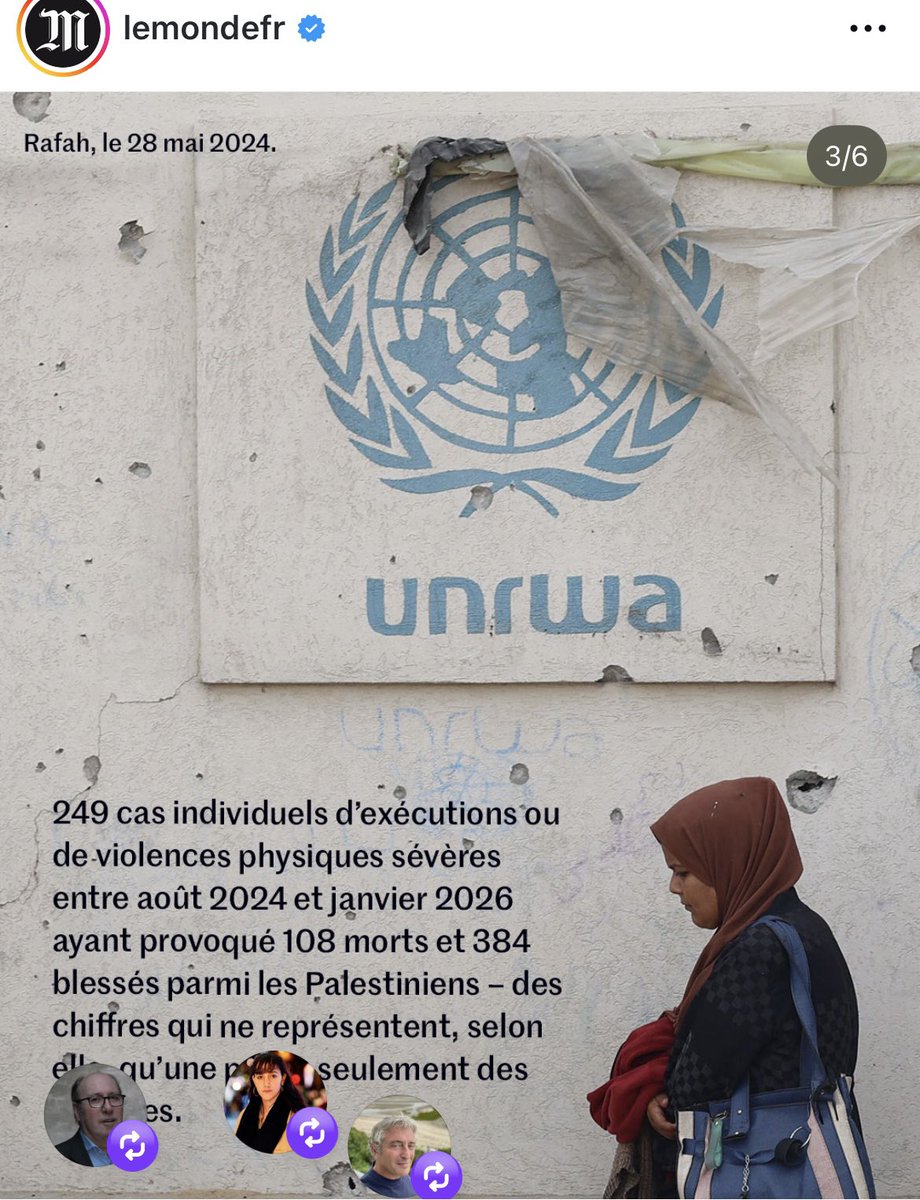
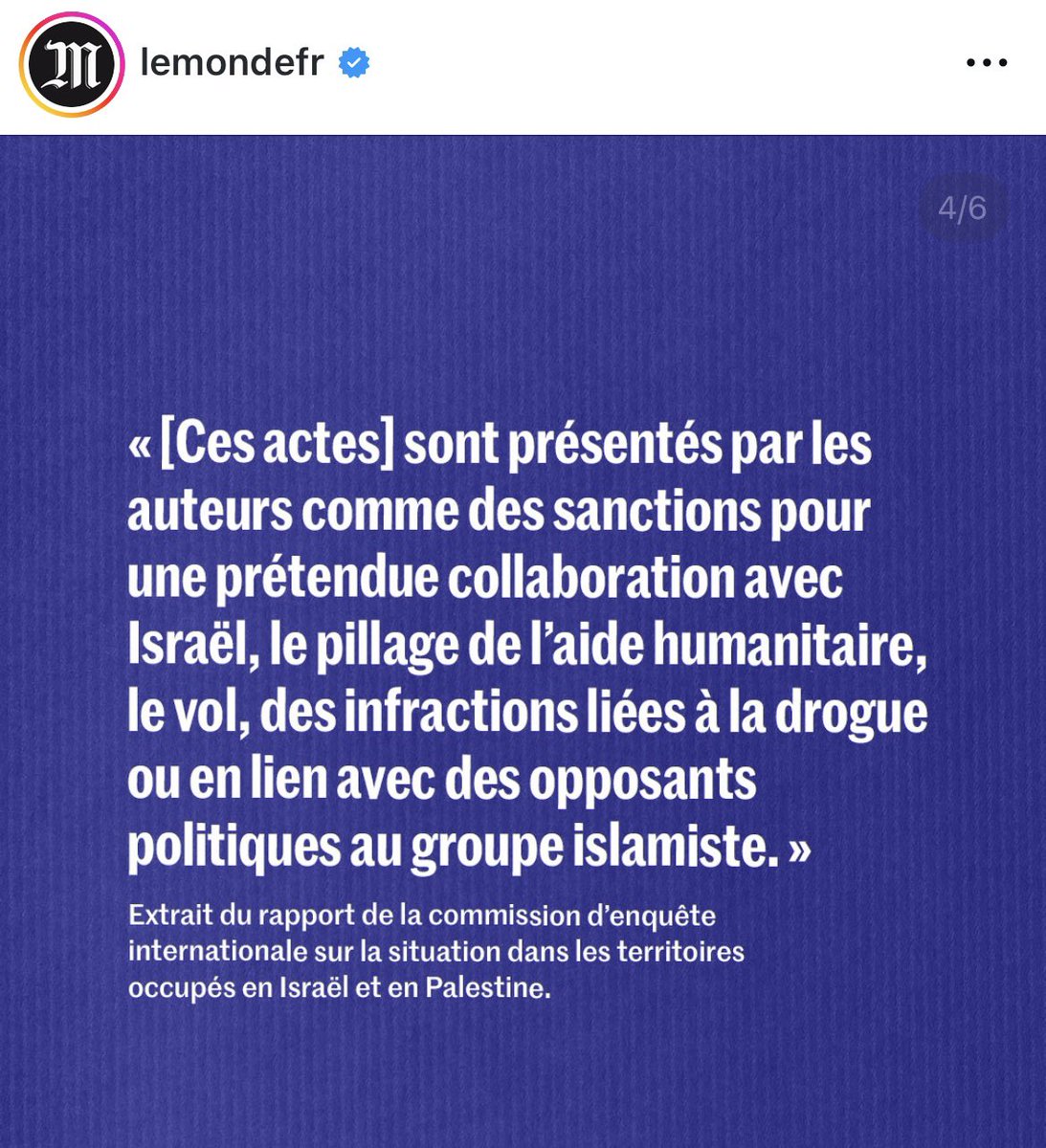
L’ #ONU cesse de se vautrer dans l’indécence et la “musique” #Albanese et publie un rapport accablant sur les exactions , tortures , éliminations de palestiniens commises par le #Hamas .
Après le procureur de la CPI , Karim Khan , affirmant , en mai dernier , qu’il n’y a “aucun #genocide à Gaza , ces deux institutions internationales donnent raison à tous ceux qui refusent totalement l’emploi du terme “ genocide” et dénoncent la dictature islamiste du Hamas , tout en dénonçant l’extrême droite de #Netanyahou , les massacres de Gaza et les colons ultra radicalisés .
3 ans de vomissures de toute la meute #LFI , d’une partie de la gauche aussi pour arriver à cette réalité .
La leçon est cruelle pour tous ceux qui se sont amusés à s’exprimer sur ce conflit et les règles de droit international auxquelles ils ne comprennent pas grand chose , pas plus qu’ils ne savent rien de ce proche-orient complexe et qui échappe au manichéisme et aux prose simplistes . C’est accablant d’irresponsabilité pour les uns, de cynisme électoral pour les autres . Et d’hypocrisie absolue pour l’extrême droite, qui a réussi à recycler et masquer son antisemitisme fondateur .
On fera les compte en 2027 et cette question , ces négligences et fainéantises de langage et d’analyses pèseront lourd dans la balance , quoique chacun en pense
Via @lemondefr
#Gaza
#Israel
#7Octobre
1
“Jewish women are too ugly to be raped, maybe with a condom.”
This is what this vile woman with the terror flag decided to say when she saw a sign that says “rape is not resistance.”
These people are truly evil. I feel sick.
5

SPOT THE ERROR !
Just months after Russian drones rained on the city, in Dubai, the Burj Khalifa tower celebrates the filth and squalor of the most disgusting sack of shit country on earth for "Russia Day".
6
Jun 9
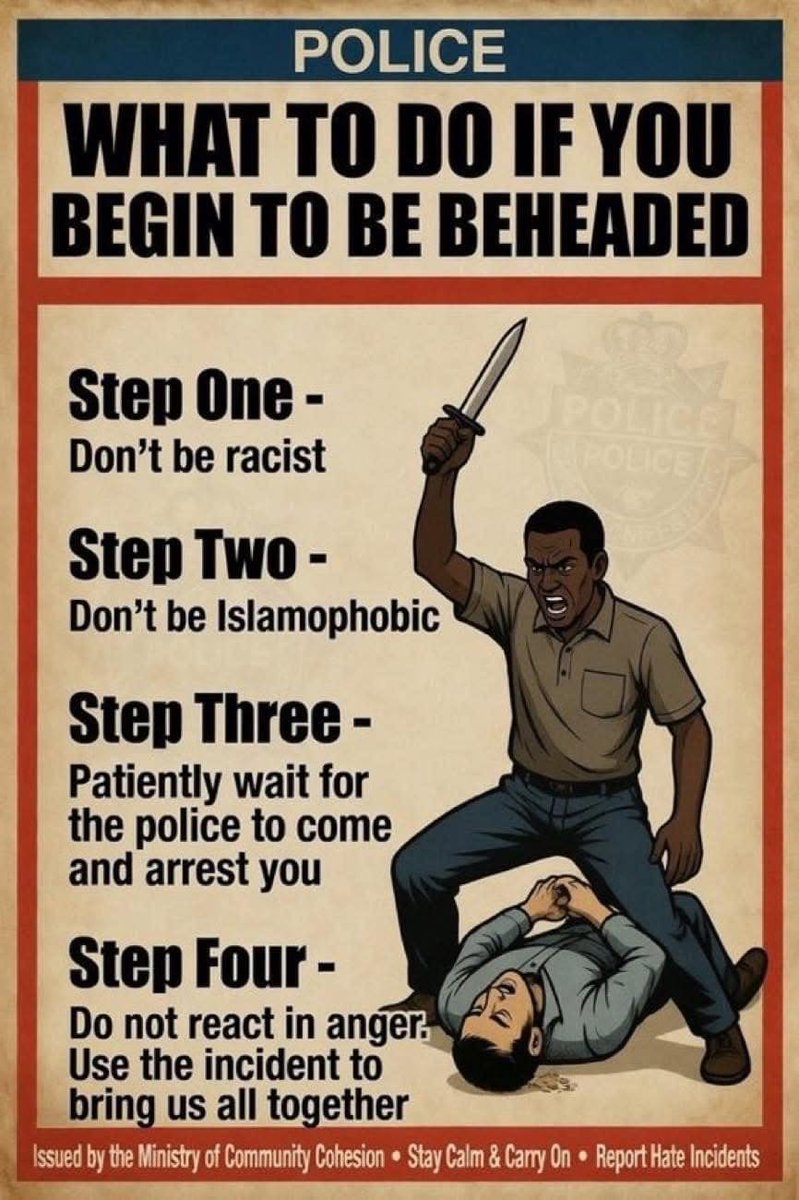
STAY CALM AND CARRY ON (In case of course there are no Jews around to blame it on !)
10
1
1
561

Palestinien 🇵🇸 en Allemagne :
« Avec l’aide de Dieu, nous vous achèverons. Nous détruirons le dernier chrétien. »
4
FINALLY !
16h

Los musulmanes de toda Europa están conmocionados tras la histórica y valiente decisión de Suecia: dejará de usar el término «islamofobia», acuñado por los Hermanos Musulmanes, por considerarlo un concepto manipulado políticamente para silenciar las críticas al islam.
La ministra de Asuntos Exteriores sueca, Maria Malmer Stenergard, anunció que su gobierno presionará a la Unión Europea y a las Naciones Unidas para que dejen de usar este término fraudulento.
El concepto de «islamofobia» fue diseñado deliberadamente para equiparar la crítica legítima a la doctrina islámica con el racismo. Se utilizó como arma para silenciar el debate sobre textos islámicos fundamentales que contienen mandamientos para hacer la guerra, violar y someter a los no musulmanes.
Suecia acaba de reconocer lo que millones de europeos ya saben: criticar una religión que abiertamente llama al asesinato y la esclavitud sexual de los no creyentes no es una fobia, sino sentido común y autoconservación.
Esto supone un duro golpe para el lobby islamista en toda Europa.
¿Estás de acuerdo con la decisión de Suecia?
2
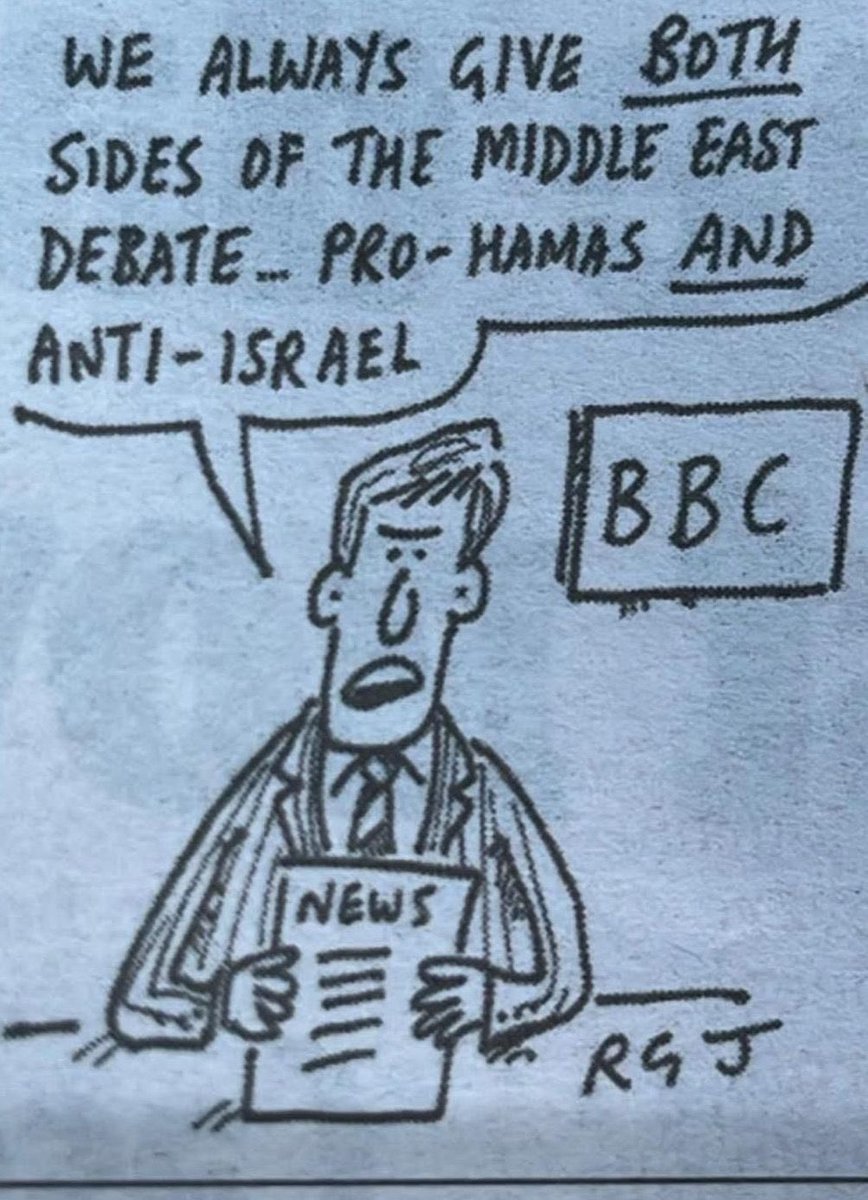
MORE OBJECTIVE THAT THE BBC, YOU DIE !

7

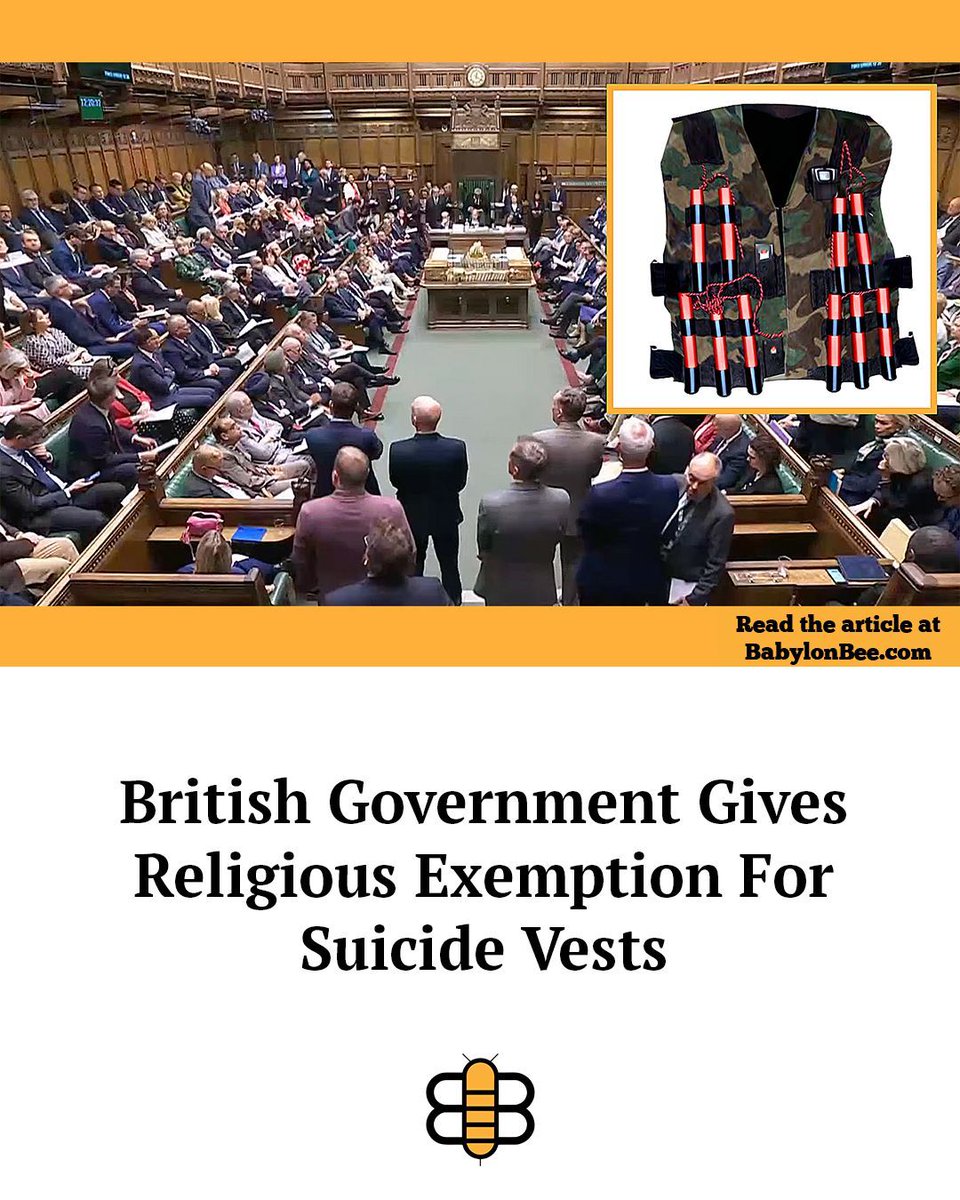
LOOK, MA, NO TOWN !
This video of Gaza in ruins is going viral.
Almost every destroyed house you see in this video was either used by Hamas, was booby-trapped, or had a tunnel shaft inside it.
Israel has only defended itself.
Gaza brought this destruction on itself.
4

⚠️ GRAPHIC REPORT
A new UN report says Hamas terrorists carried out hundreds of cases of extrajudicial punishment against Gaza residents.
The abuses reportedly included executions, kneecappings, severe beatings, and assaults using metal pipes and concrete blocks that left victims with broken bones.
The report highlights the brutal repression faced by Gazans under Hamas, yet the ‘activists’ only seem to be concerned with protecting Hamas.
@MiddleEast_24
3
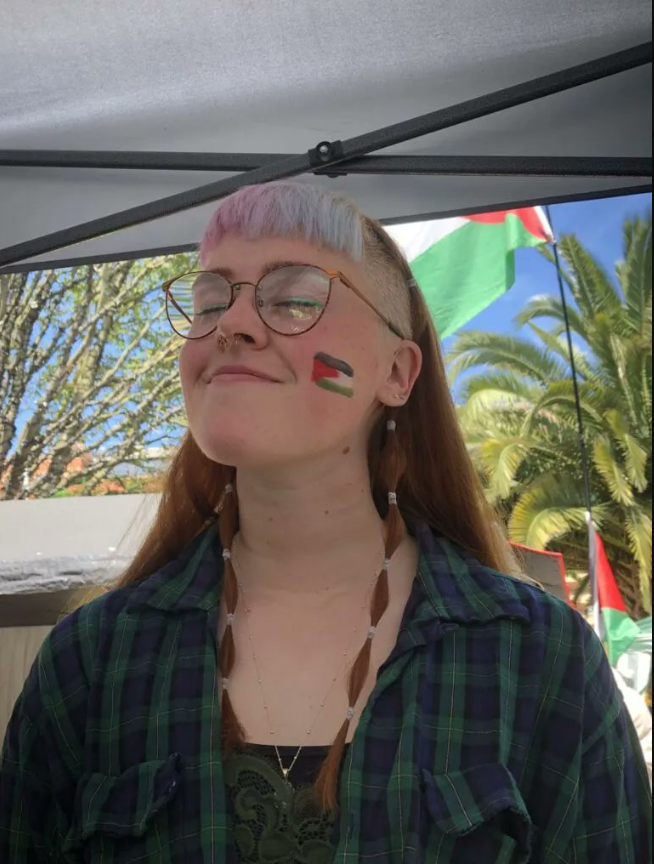
MAKE THEM PAY !
bbc.com/news/articles/ce9501…

This far-left woke idiot, Charlotte Head, thought you could break into a government facility, start chimping out, and nothing would happen.
She's just been sentenced to six years.
5
Jun 12
KEEP UP THE GOOD WORK !
Jun 12

40 Hezbollah terrorists killed
Israel has refused to bow down in front of Iran backed Hezbollah.
Israeli Airforce just targeted a hideout of Hezbollah in Tyre, Lebanon.
Over 100 have been killed in 7 seperate strikes by the Israeli Airforce in last 24 hours.
1
1
8

🔴ELIMINATED: 7 Hezbollah terrorists operating from an underground route in southern Lebanon.
The route was used by the terrorists to store ammunition, mortars & food supplies to support attacks against IDF soldiers from the area.
Following their elimination, Kalashnikov rifles & military equipment were located on the terrorists.
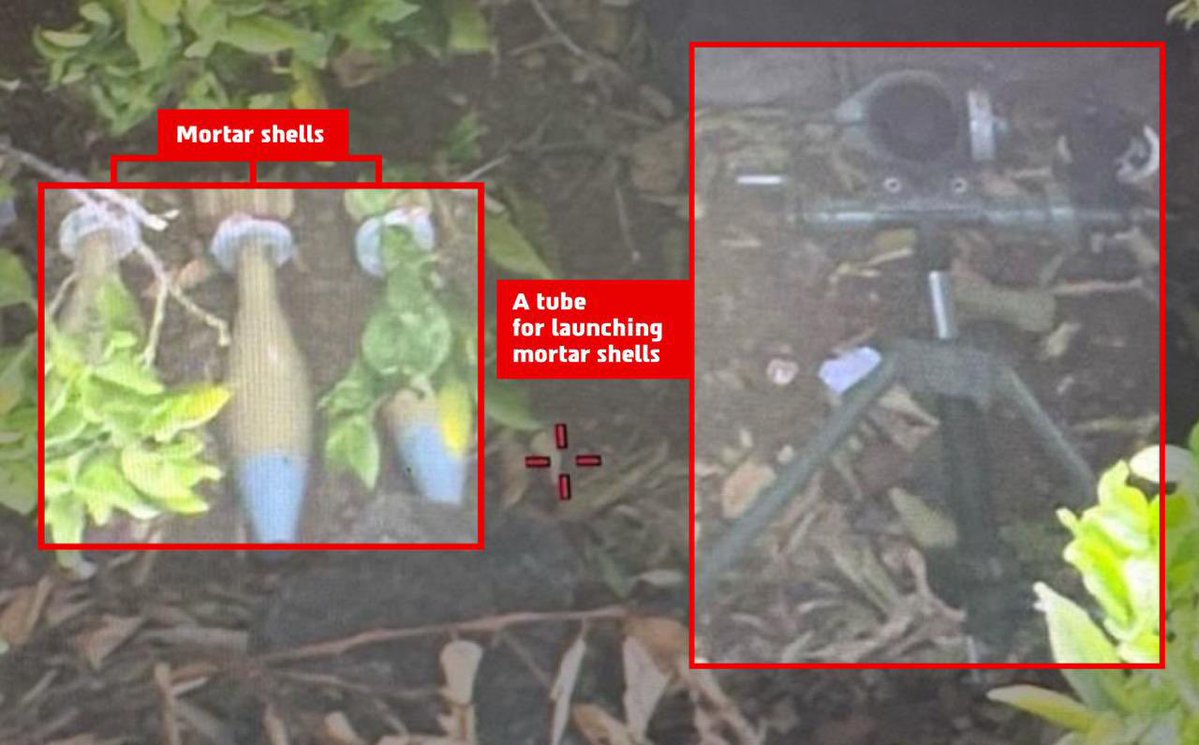
1
9