
Jun 11
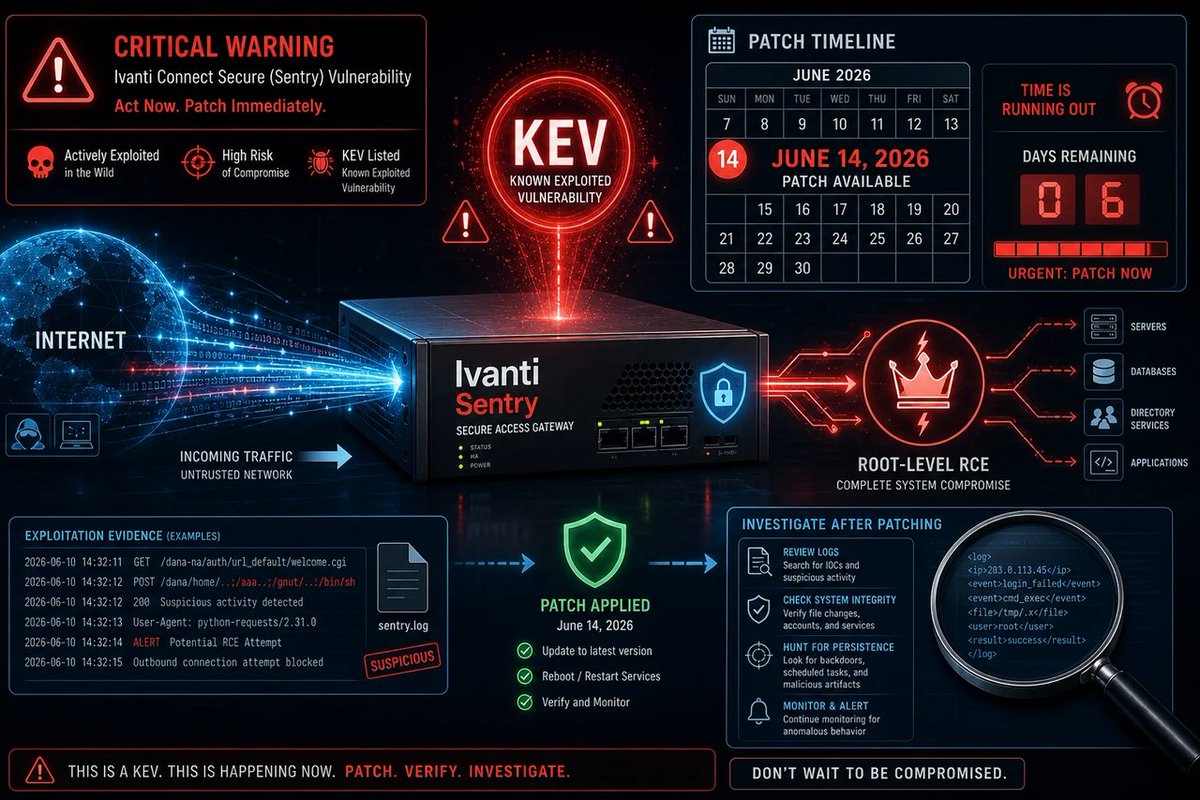
🪟 CISA slaps Ivanti Sentry with KEV: “root RCE, no auth, actively exploited” = your perimeter isn’t a perimeter. Patch by June 14 or enjoy the support queue. #Windows #Microsoft #CISA #Ivanti
windowsforum.com/threads/cis…
#PatchManagement #CommandInjection #CisaKev #IvantiSentry
17

Jun 9
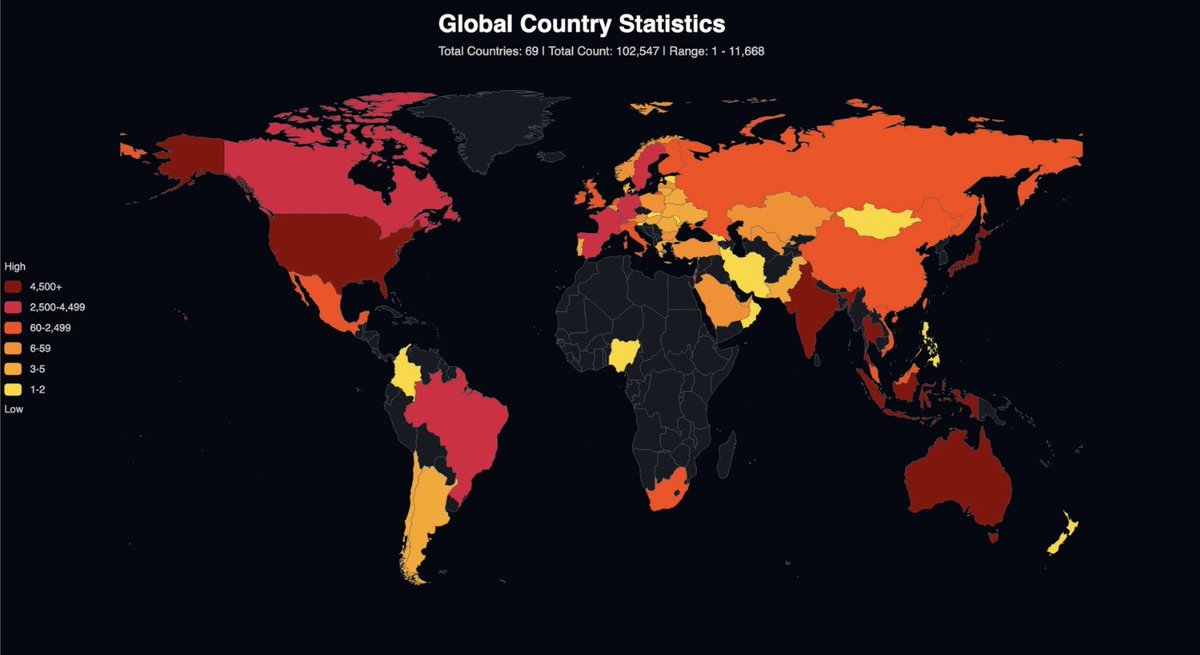
⚠️ LiteLLM – Command Injection via MCP Preview Endpoints (CVSS 8.7, CISA KEV)
CISA has added CVE-2026-42271 to its KEV catalogue. The vulnerability affects LiteLLM, a widely deployed AI gateway proxy.
Two preview endpoints could be tricked into running attacker-supplied commands directly on the proxy host. Because they only required a valid API key with no permission check, any authenticated user could execute arbitrary commands on the server.
Affected versions: LiteLLM 1.74.2 up to (not including) 1.83.7
Mitigation: Upgrade to LiteLLM 1.83.7 or later. Federal agencies must remediate by June 22, 2026. Restrict and audit API key issuance, and limit proxy exposure to trusted users only.
Modat Magnify Query: product="LiteLLM API" OR product="LiteLLM"
The platform: magnify.modat.io/
#threatintel #vulnerability #CVE202642271 #LiteLLM #CommandInjection #RCE #infosec #KEV #ModatMagnify
1
4
8
1,173

iT4iNT SERVER LiteLLM Flaw CVE-2026-42271 Exploited in the Wild, Chains to Unauthenticated RCE dlvr.it/TSxs5j VDS VPS Cloud #Cybersecurity #Vulnerability #CVE202642271 #CommandInjection #Hacking
37

Day #20 of #100DaysOfCyber | Lab : Exploitation d'une faille d'OS Command Injection
Hier, on a vu la théorie sur le fonctionnement de l'OS Command Injection. Aujourd'hui, je suis passé à la pratique !
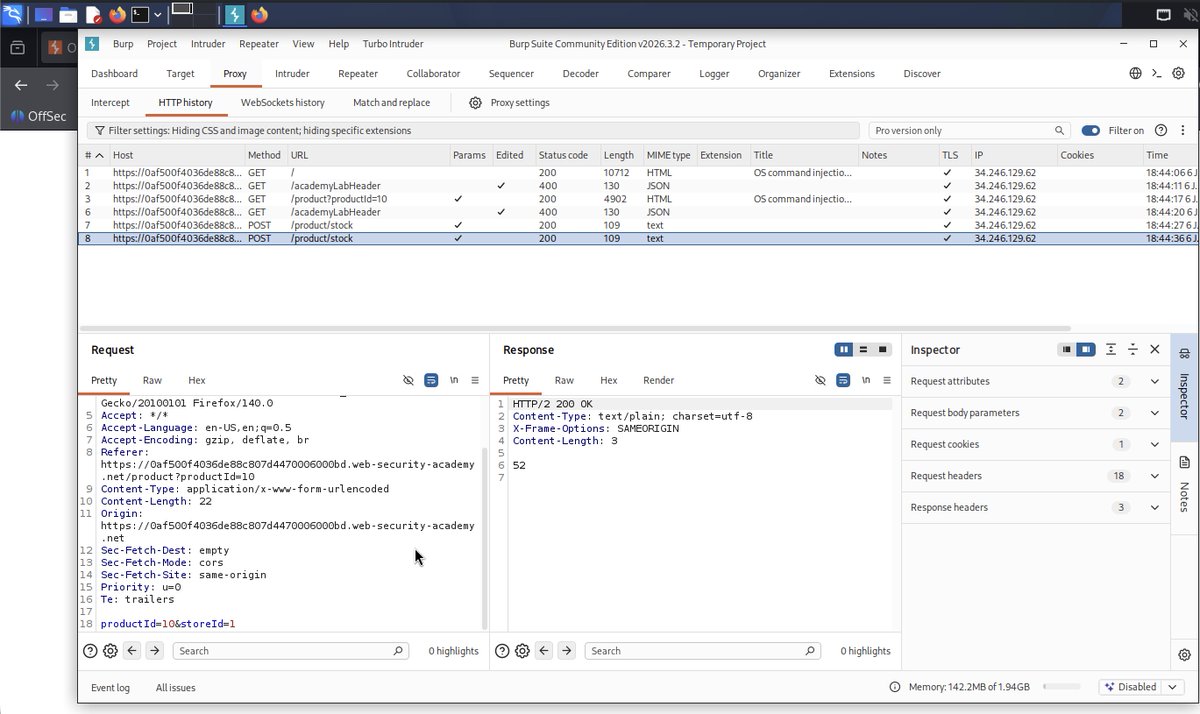
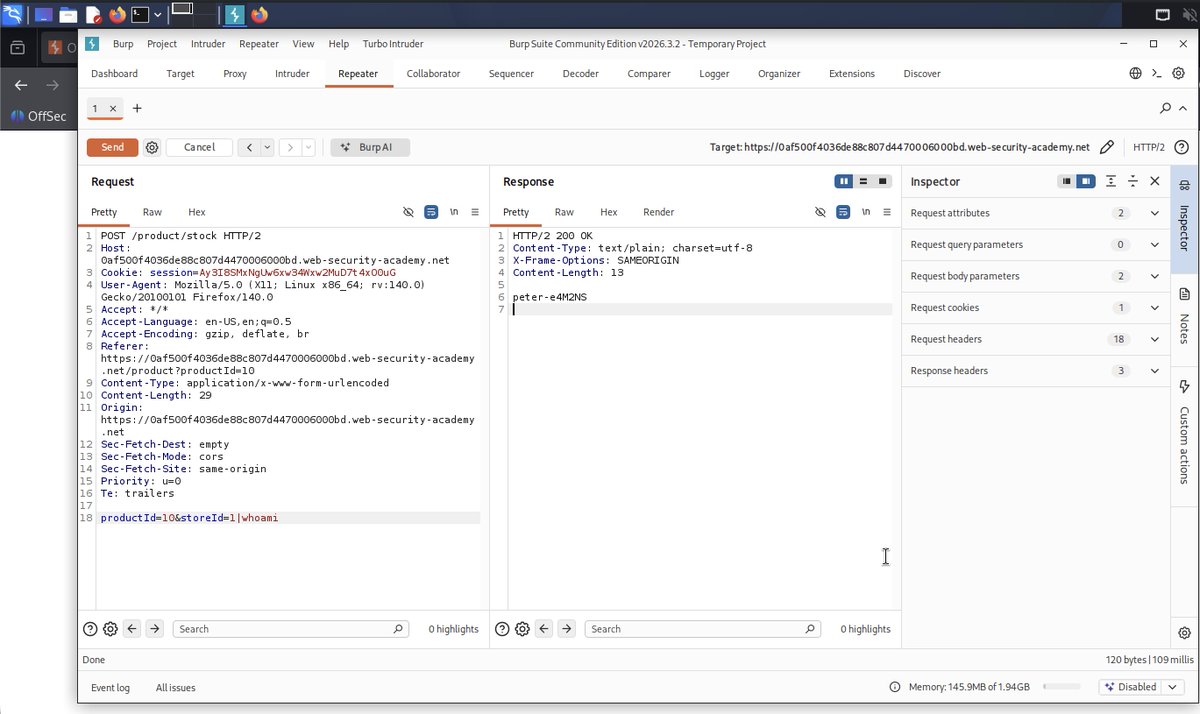
L'application exécute une commande système en arrière-plan qui contient des paramètres fournis par l'utilisateur (le productId et le storeId), et elle renvoie directement le résultat brut de la commande dans la réponse HTTP.
Le déroulement de l'exercice :
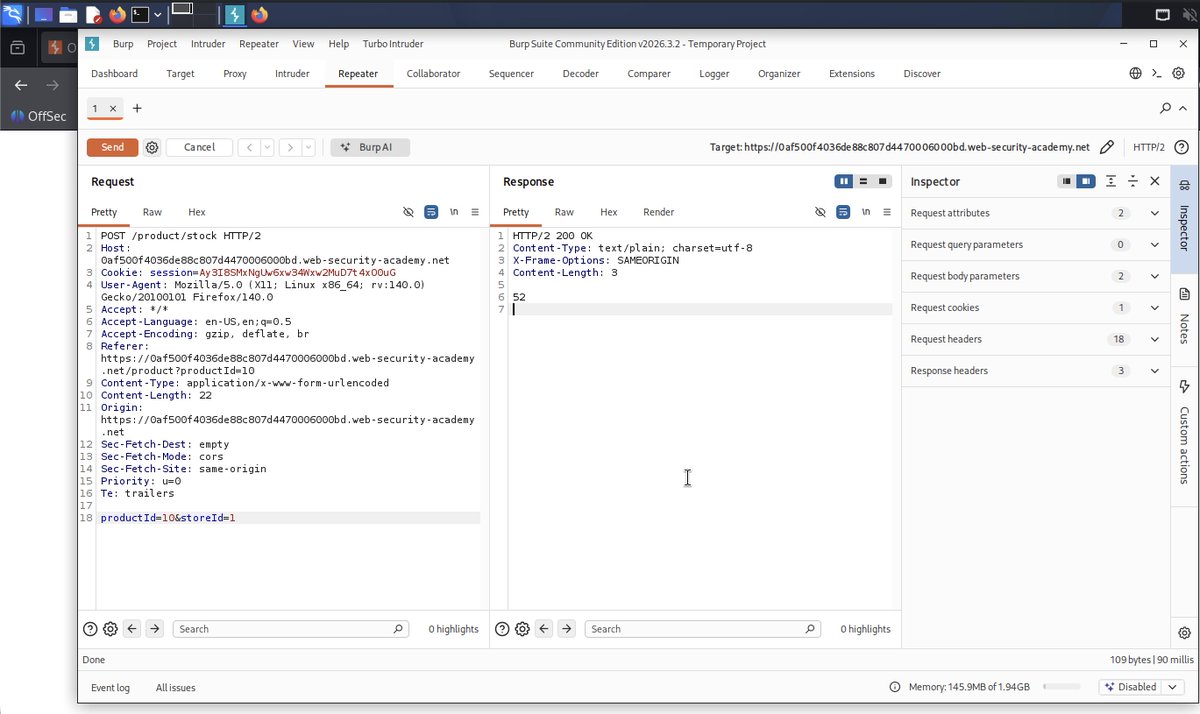
- L'interception de la requête : En faisant une vérification de stock sur un produit, j'ai intercepté la requête POST /product/stock avec Burp Suite. Dans le corps de la requête, on voit les paramètres classiques : productId=10&storeId=1. Le serveur me renvoie le nombre d'articles restants (ex: 52).
- L'injection : J'ai envoyé la requête dans Burp Repeater pour tester si les entrées étaient nettoyées. À la place d'un simple identifiant pour le storeId, j'ai injecté l'opérateur de chaînage | suivi d'une commande système. Mon paramètre est devenu : storeId=1|whoami.
- L'exécution de code : Le symbole | (pipe) force le terminal du serveur à exécuter la commande qui suit. Comme le backend ne filtre absolument rien, il a exécuté whoami et m'a renvoyé directement le nom de l'utilisateur système actuel dans la réponse HTTP : peter-e4M2NS
Pour la partie théorique sur le fonctionnement global de cette vulnérabilité, j'en ai parlé en détail lors de mon post du Day 19
#Un dev qui comprend la sécurité.
#Un pentester qui comprend le code.
@BirameCMR @_makh0u
#Cybersecurity #WebSecurity #PortSwigger #BurpSuite #CommandInjection #RCE #Backend #FullStack
4
8
348
Day #19 of #100DaysOfCyber : Le concept du jour l'#OS #Command #Injection
Après avoir vu les exécutions de code via les uploads de fichiers, aujourd'hui on va parler d'une autre faille hyper critique : l'OS Command Injection (Injection de commandes système).
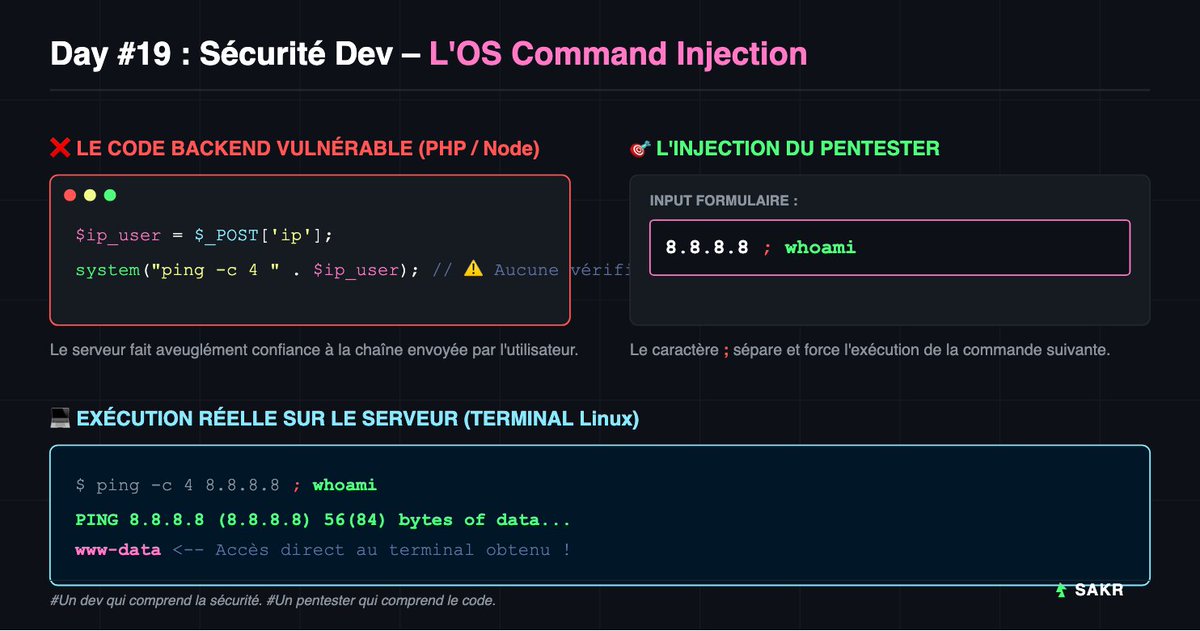
Le concept est simple : cette faille arrive quand le backend prend une entrée utilisateur et la passe directement à une fonction qui exécute des commandes sur le terminal du serveur (comme system() ou exec()), sans rien nettoyer.
Imaginez une application web où le dev veut créer une fonctionnalité pour tester la connectivité d'une adresse IP. Côté code backend, il fait ça :system("ping -c 4 " ip_user);
Ce que le dev attend : L'utilisateur tape 8.8.8.8, et le serveur exécute sagement ping -c 4 8.8.8.8.
Ce que fait le pentester : Il sait comment fonctionnent les terminaux. À la place d'une simple IP, il va injecter des opérateurs comme ;, && ou |. Par exemple, il va envoyer : 8.8.8.8 ; whoami.
Du coup, le serveur va exécuter aveuglément deux commandes à la suite : d'abord le ping, puis le ; va forcer le terminal à lancer la commande suivante : whoami.
À partir de là, le pentester a un accès direct au terminal. Il lui suffit d'enchaîner avec un ls -la, un cat pour lire des fichiers confidentiels, ou carrément injecter un Reverse Shell pour prendre le contrôle total de la machine.
#Un dev qui comprend la sécurité.
#Un pentester qui comprend le code.
@_makh0u
#Cybersecurity #WebSecurity #DevSecOps #Backend #CommandInjection #RCE #FullStack
4
9
296

Command Injection vulnerabilities often appear in upload ping or system utility features.
Payload chaining with SSRF or file reads can escalate to full RCE.
Every parameter touching the operating system deserves testing.
#BugBounty #CommandInjection #RCE #WebSecurity
3
100

Blind OS Command Injection with Output Redirection by MeetCyber meetcyber.net/blind-os-comma… #bugbounty #bugbountytips #bugbountytip #infosec #CommandInjection
1
9
591

Apr 30
⚙️ CVE-2026-7446: OS command injection in VetCoders mcp-server-semgrep 1.0.0 due to improper handling of the ID argument in the MCP interface. #CommandInjection #MCP #Security #CVE nvd.nist.gov/vuln/detail/CVE…
1
2
70

Apr 29
Command Injection
Input becomes control.
Sometimes… the system listens a little too well.
Command Injection is what happens when:
User input becomes system commands.
@tryhackme
#CommandInjection #WebSecurity #OWASPTop10
2
36

An 8.6 CVSS flaw (CVE-2026-31386) in LiteSpeed Web Server editions allows OS command injection and system compromise. Restrict WebAdmin access immediately.
#LiteSpeed #CVE #ServerSecurity #CyberSecurity #InfoSec #CommandInjection #WebHosting #OpenLiteSpeed
securityonline.info/server-s…

2
4
485

Mar 10
🚨 Commix — Automated OS Command Injection Exploitation Tool
If you're testing web applications for command injection, this open-source tool is definitely worth knowing.
🔎 Commix (Command Injection Exploiter) helps pentesters and bug bounty hunters automatically:
• Detect OS command injection vulnerabilities
• Exploit vulnerable parameters (GET / POST / Headers / Cookies)
• Execute system commands on the target server
• Launch interactive pseudo-shells for deeper testing
• Perform result-based, blind & time-based injection attacks
💡 Think of it as “sqlmap but for command injection.”
⚠️ Command Injection can lead to Remote Code Execution (RCE) — one of the most critical vulnerabilities in web applications.
🔗 Source:
github.com/commixproject/com…
#BugBounty #CyberSecurity #Pentesting #InfoSec #AppSec #EthicalHacking #RCE #CommandInjection

1
24
2,670
A critical 8.5 CVSS command injection flaw (CVE-2025-15568) in TP-Link Archer AXE75 routers allows complete root-level network takeover. Patch immediately.
#TPLink #ArcherAXE75 #CVE #InfoSec #CommandInjection #RouterSecurity #PatchAlert #Vulnerability
securityonline.info/home-net…
4
3
458

Feb 18
CVE-2025-8078: Remote Code Execution via CLI Command Injection #CVE20258078 #RemoteCodeExecution #CommandInjection #ZYXEL #Exploit rainpwn.blog/blog/cve-2025-8…
4
4
911

Feb 18
تحذير: ثغرة FileZen تستغل بنشاط
تم اكتشاف ثغرة خطيرة في برنامج FileZen لنقل الملفات، ويتم استغلالها حاليًا. JPCERT/CC أصدر تحذيرًا بشأن هذه الثغرة من نوع Command Injection التي تسمح للمهاجمين بالتحكم في النظام. هذا يعرض بيانات المنظمات للخطر.
* تحديث برنامج FileZen فورًا.
* تطبيق الإجراءات الوقائية الموصى بها من Soliton Systems.
* مراقبة سجلات النظام بحثًا عن أي نشاط مشبوه.
securityonline.info/jpcert-c…
#الأمن_السيبراني #FileZen #CommandInjection #CVEs
3
83
Feb 13
CVE-2025-9133: Configuration Exposure via Authorization Bypass #CVE20259133 #ZyxelVulnerability #AuthBypass #ConfigExposure #CommandInjection rainpwn.blog/blog/cve-2025-9…
8
726

Feb 5
Ongoing Attacks Exploiting Critical RCE Vulnerability in Legacy D-Link DSL Routers dlvr.it/TQnHmS #CyberSecurity #DLink #RCE #Vulnerability #CommandInjection

1
5
786
Jan 29
It's Never Simple Until It Is (Dell UnityVSA Pre-Auth Command Injection CVE-2025-36604) #DellUnityVSA #CommandInjection #CVE202536604 #PreAuth #watchTowr labs.watchtowr.com/its-never…
2
9
1,192
Jan 28
Remote Code Execution and Authentication Bypass in Materialise OrthoView (CVE-2025-23049) #OrthoView #RCE #AuthBypass #DICOMsecurity #CommandInjection outurnate.com/remote-code-ex…
5
9
1,437
Jan 3
JPCERT Confirms Active Command Injection Attacks on Array AG Gateways dlvr.it/TQ7mrG #CyberSecurity #CommandInjection #JPCERT #Vulnerability #SecurityAlert

2
790
11 Dec 2025
Should Security Solutions Be Secure? Maybe We're All Wrong - Fortinet FortiSIEM Pre-Auth Command Injection (CVE-2025-25256) #FortiSIEM #CommandInjection #CVE202525256 #PreAuth #SIEMCompromise labs.watchtowr.com/should-se…
3
972