
The 2026 @DeptofDefense @warriorgames will be held June 13-20. Teams from each branch including military service members with visible and invisible wounds going head-to-head in a series of adaptive sports. Good luck to all competitors! dodwarriorgames.com/

Just as SpaceX launches hundreds of satellites for competitors with fair terms and pricing, we will provide compute to AI companies that are taking the right steps to ensure it is good for humanity.
We reserve the right to reclaim the compute if their AI engages in actions that harm humanity.
Doing our best to achieve a great future with amazing abundance for all.
We will make mistakes, as to err is human, but always take rapid action to address them.
559
1,361
12,219
508,646
Alex Bates hat Strompreisangst retweeted

Think Greg Ip had the right line here -- more or less China can keep exporting longer than its industrial competitors can stay solvent ("China can stay irrational longer than foreign competitors can stay solvent")
so far net exports have been a winning formula
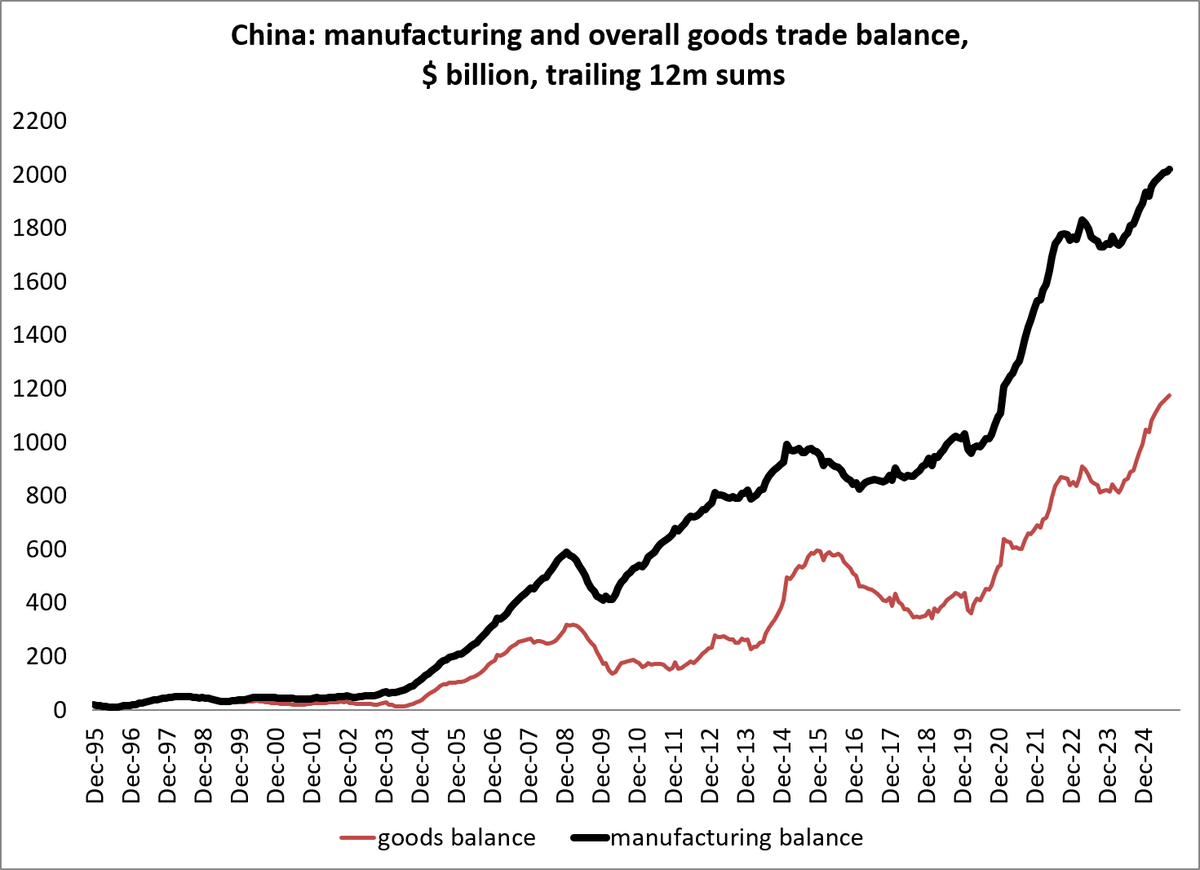

China took global market share through massive government subsidies driven by huge unsustainable debt. That’s just not going to prove a winning formula. China cannot export its way out of an economic car crash
3
4
24
5,699

Everyone is building AI agents.
Very few understand the agentic frameworks that actually power them.
In 2025, two frameworks dominate agent development —
not as competitors, but as complementary layers:
n8n — Visual Workflow Automation
What it does
• Visually connects AI agents with business tools and APIs
• Flow: Trigger → AI Agent → Tools → Action
• Removes integration complexity and speeds up deployment
Think of it as:
The orchestrator that plugs AI into your entire tech stack
—
LangGraph — Graph-based Agent Orchestration (LangChain)
What it does
• Enables stateful, cyclical, multi-step agent workflows
• Flow: State → Agents → Conditional Logic → State (loops)
• Designed for complex reasoning and coordination
Think of it as:
The brain managing advanced agent decision-making
—
When to use n8n
• AI business tool integrations
• Customer support and ops automation
• No-code or low-code workflows for teams
• Fast shipping with 700 integrations
When to use LangGraph
• Multi-agent reasoning systems
• Enterprise-grade AI applications
• Cyclical or long-running workflows
• Fine-grained state control and memory
—
Ecosystem strengths
n8n
• Visual builder for non-developers
• Self-hosted, open-source option
• Strong business automation community
LangGraph
• Deep LangChain integration
• LangSmith for observability and debugging
• Advanced state persistence and control
—
The real insight 👇
The best AI systems use both.
n8n → Visual orchestration and tool integration
LangGraph → Agent logic, reasoning, and state
Think in layers: business automation and intelligent decision-making
—
Your turn 👋
What would you build first?
A visually simple, tool-connected agent (n8n)?
Or a deeply orchestrated, reasoning-heavy agent (LangGraph)?
1
1
6

i found an insane app doing 221k views.
an app that teaches you how to play piano from tiktok videos.
they have 0 competitors.
“piano apps to play songs” has 261k weekly searches.
i bet they’ll make $10k very soon.

43
Charles Brida retweeted

Big biz lobbies government to pass rules that hurt smaller competitors. It's always been that way.
100 years ago, Heinz found a way to make ketchup without a preservative. Then it pushed government to kill off its competitors by banning that preservative.
The sleaze continues:
18
292
1,565
40,051

I should add that they've mostly been copied by smaller brands, but we can't exactly classify them as Dyelab's direct competitors.
4
❤️🔥 retweeted

chenle mentioned #haechan during his weibo live
chenle said his toughest competitors when it comes to aegyo in dream are haechan and jaemin 😭

1
475
2,470
29,336
steve blaxton retweeted

2h
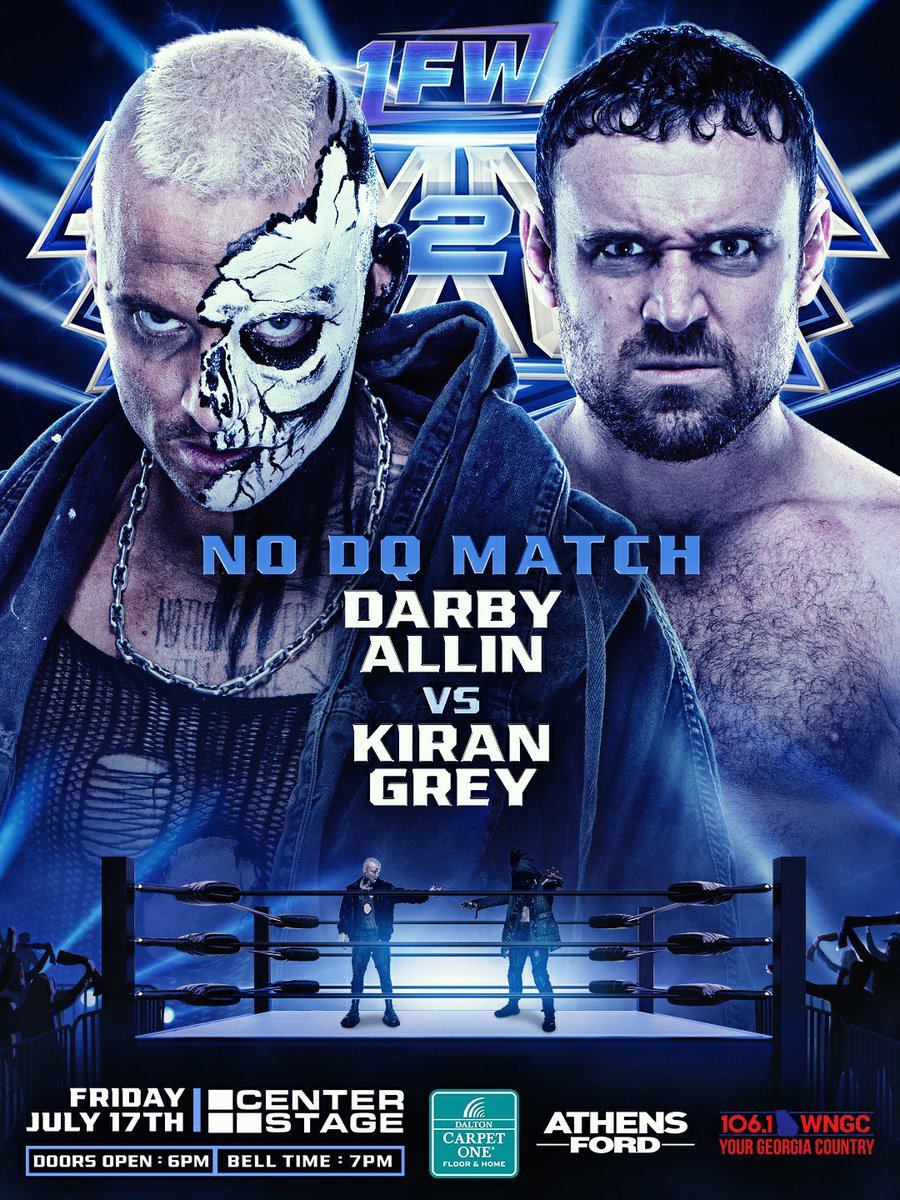
One of professional wrestling’s most fearless competitors is coming to Center Stage as @DarbyAllin steps into a No DQ Match against the dangerous Kiran Grey!
Don’t miss your chance to see Darby Allin LIVE and in person at 1FW Summer Stage 2 ticketmaster.com/event/0E006…
1
14
36
711

good content Nasa but your competitors are showing more.

2
ONi | Nitten 🔜 EVO retweeted

Important reminders for @Play2XKO competitors at #Evo2026!!
ALL competitors get Senna Pool Party skin set. Make it out of pools, and you get the FULL Pool Party skin set w/ all skins and accessories.
You MUST link your Riot and @StartGG accounts to be eligible.

6
10
114
3,510

Most ecom brands are still paying agencies $4K/month for 30 ad creatives.
I have built a workflow that can generate up to 550 videos per day for an ecom brand
It's generating UGC avatar videos the entire day and posting them onto creator-style accounts
Same audience. Same platform. 20x the volume.
Here's why this matters:
TikTok is actively pushing slideshows harder than any other format right now. Effective CPMs are running around $0.34 — roughly 20x cheaper than Meta.
And most ecom brands still aren't taking it seriously.
That gap is the opportunity.
The system is simple:
→ Find what's already going viral in your niche.
→ Feed it to Claude Opus 4.7 to reverse-engineer the hook.
→ Source images from Pinterest at zero cost.
→ Generate slides and AI UGC inside Arcads.
This isn't marketing…
It's distribution disguised as content.
The brands cracking systematic AI-powered distribution early are building a data and volume advantage their competitors can't catch.
6 months from now this becomes table stakes. Right now it's still arbitrage.
Stop briefing agencies. Start engineering distribution.
If you're an ecom brand who wants to learn the Ai UGC master class strategy, comment the word "scale" and I'll send it over to you for free

26

. FDR Raised Taxes on the Rich Significantly
Partially true.
The top marginal income tax rate rose sharply under FDR. It went from ~25-63% in the early 1930s (Hoover era) to 79% by 1936, then 88% in 1942, and peaked at 94% on incomes over ~$200,000 by 1944 (during WWII).
Corporate tax rates also increased.
However, effective tax rates (what people actually paid after deductions, loopholes, and credits) were much lower than the headline marginal rates. Many wealthy individuals and corporations avoided the highest brackets.
Federal tax revenue as a share of GDP did rise, but much of the increase came from broad-based taxation (including middle-class wage earners via expanded income taxes) and especially from WWII mobilization, not just soaking the rich.
2. This Created Medicare, Social Security, a Jobs Program, and Built the American Middle Class
Mostly inaccurate or heavily overstated.
Social Security: Yes, created in 1935 under FDR via the Social Security Act. It was a major New Deal achievement providing old-age pensions and unemployment insurance. Funded primarily by payroll taxes on workers and employers, not solely by taxes on the rich.
Medicare: No. Medicare was created in 1965 under Lyndon Johnson as part of the Great Society programs — 30 years after FDR left office and nearly 20 years after his death.
Jobs program: Yes, the New Deal included major public works and employment programs (WPA, CCC, etc.) that employed millions during the Depression. Unemployment fell from ~25% in 1933 but remained high (often 14-20%) until World War II spending finally ended the Depression.
Built an American middle class: Heavily overstated.The broad, stable American middle class (homeownership, rising real wages, suburban growth, consumer economy) largely emerged in the post-WWII boom (1945–1970s). Key drivers included:WWII victory and global economic dominance.
GI Bill (education and housing benefits for veterans).
Strong manufacturing base.
Low immigration for decades.
Technological/productivity gains.
Union power and wage growth.
The New Deal provided important safety nets and infrastructure, but it did not single-handedly create the middle class. High marginal tax rates during/after WWII coincided with growth, but economists debate causation (Keynesian stimulus vs. other factors like war destruction of competitors, pent-up demand, etc.).
Bottom Line
FDR did raise top marginal tax rates dramatically and created lasting programs like Social Security plus Depression-era jobs relief. These were responses to the Great Depression and had real effects on relief and long-term institutions.
The meme is misleading on Medicare (wrong president/era), oversimplifies the middle class boom (mostly post-WWII), and ignores that broad-based taxes and WWII spending played bigger roles than just "tax the rich."
High taxes on the wealthy were part of the era, but the U.S. already had progressive taxation before FDR. Economic recovery and middle-class expansion involved many factors beyond tax policy alone.
Claims like this often serve partisan narratives. The New Deal had genuine achievements in relief and reform, but it didn't magically build the modern middle class or create Medicare, and attributing everything to "taxing the rich" skips important context and timelines.
1
Marjorie Gowdy 💙🌻 📜🖋 🇨🇦🐴 🐾 💙 retweeted

It isn't as if there's a fixed amount of attention we need to pay to global problems, competitors, or adversaries. It may be the case that a lot of bad things are happening all at once, and we need to focus on all of them.
lnk.thebulwark.com/4dXFyLg
19
52
8,865


Then use Lyft, Waymo, or any of the local competitors. I don’t know what to you all - those services are all cheap and easy to us. Also most hotels offer a shuttle… stay close to the stadium.
If you are going to drink a ton, then pay the price to ride share… that’s on you.
4


The U.S. drug czar portrayed a menu of changes to anti-doping protocols being proposed by a World Anti-Doping Agency panel as moves that would "undermine the trustworthiness of the performances of competitors" at future Olympics. trib.al/tMencsl
13

The commercial real estate unwind in Metropolis will be hidden, with blame shifted away from those responsible. Big Tech and oligopolies, facing antitrust scrutiny and breakup pressures, are collapsing demand by downsizing, automating, and consolidating operations slashing office footprints while driving out smaller competitors.
This monopoly-fueled contraction gets pinned on “woke cities” or remote excuses, even as their own decisions enabled by lobby, regulatory capture and government handouts crumble downtown towers.
Designed Debt-fueled inflation and endless printing wealthy Tax free debt looping as a feature, shouldered by the public only tighten the clamp down on refinancing, masking accountability for the permanent structural damage.

Apollo Picks Austin Over New York As Wall Street's Migration South Continues zerohedge.com/markets/apollo…
29